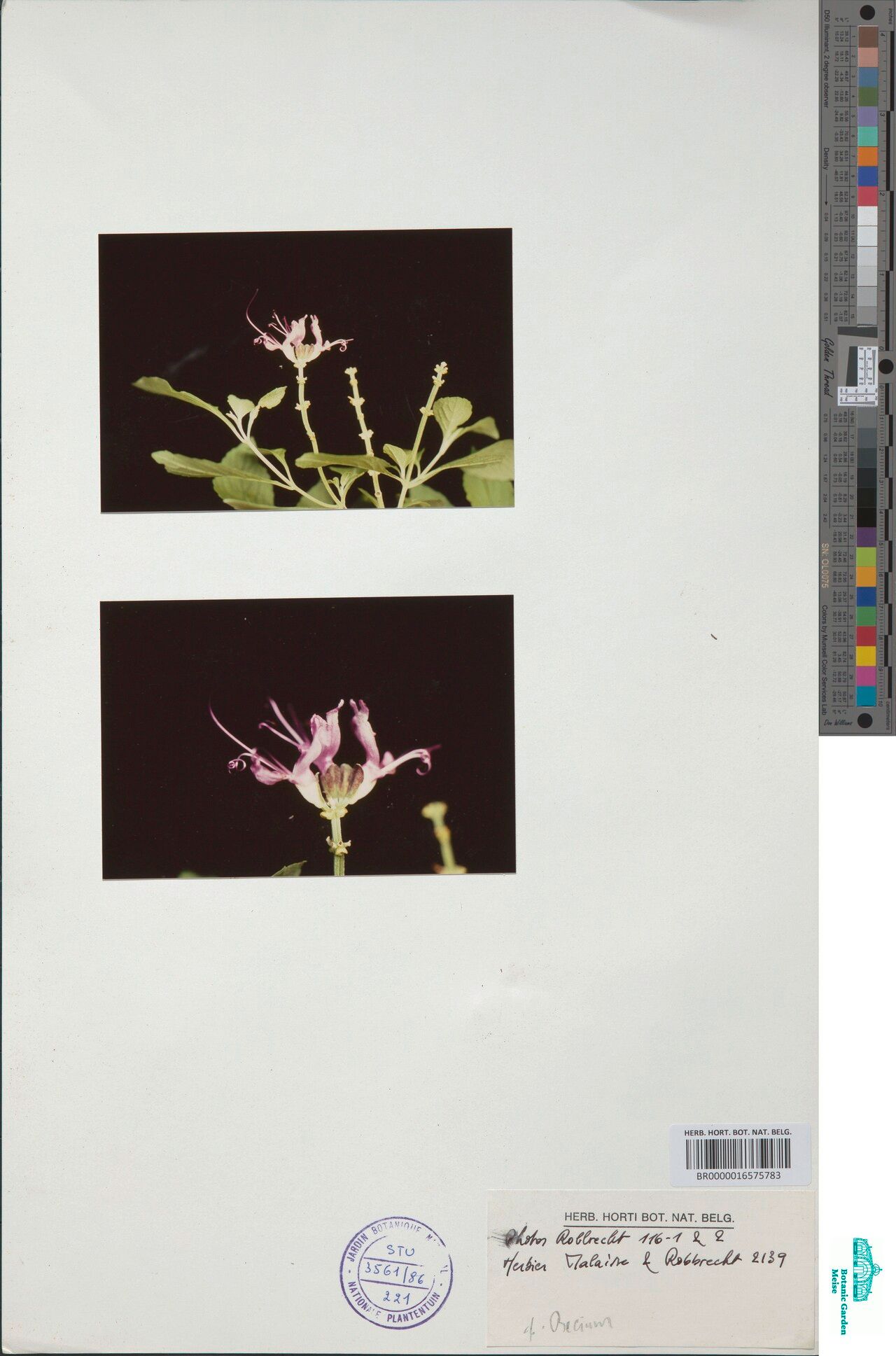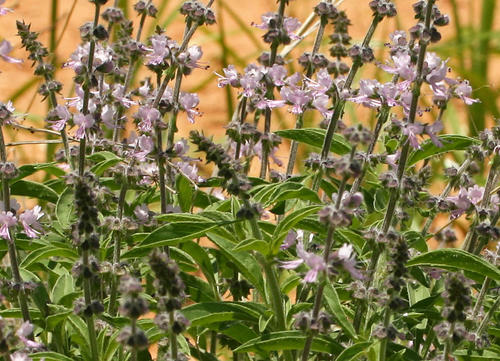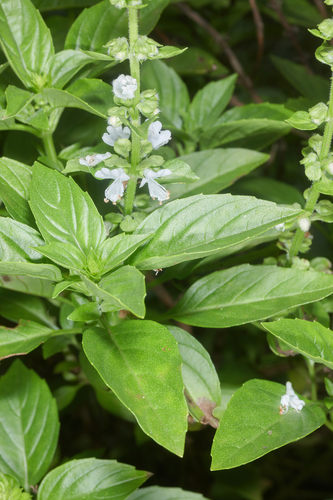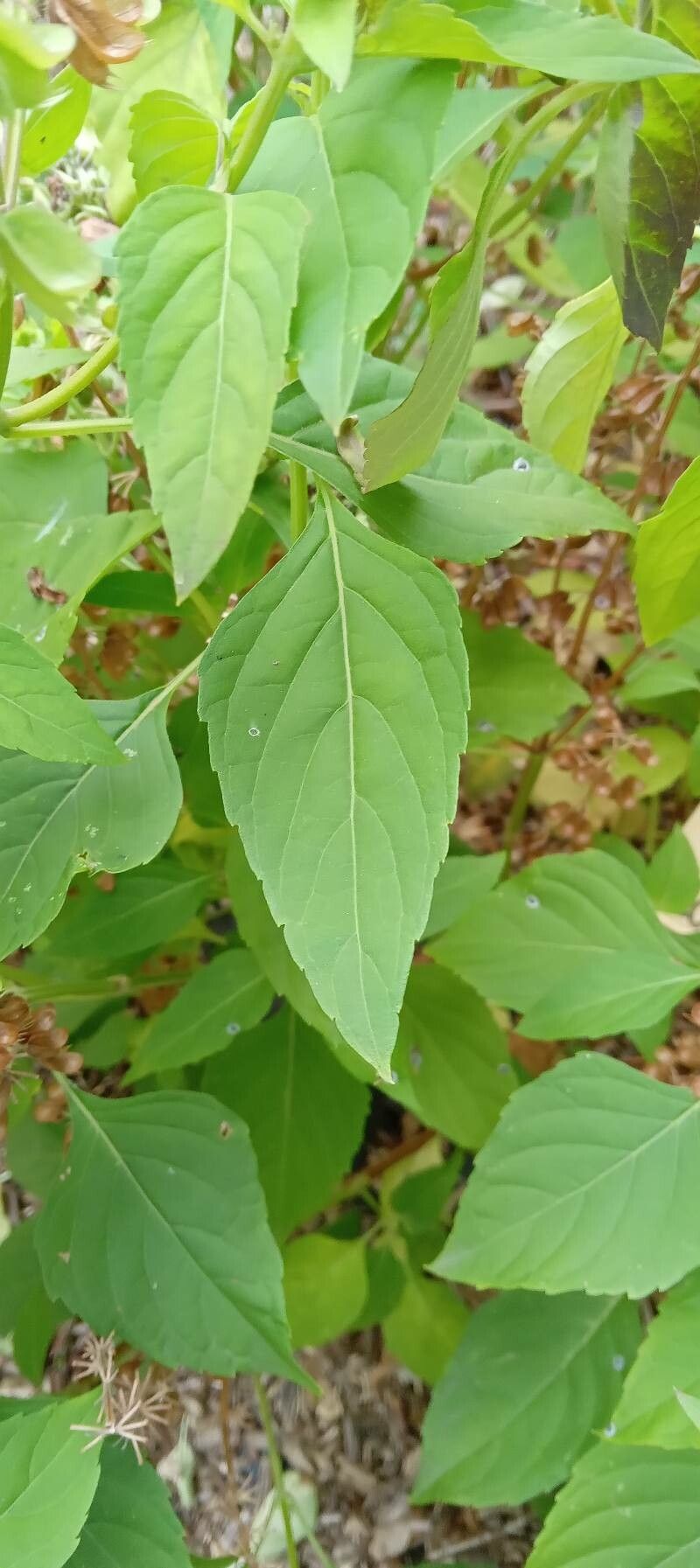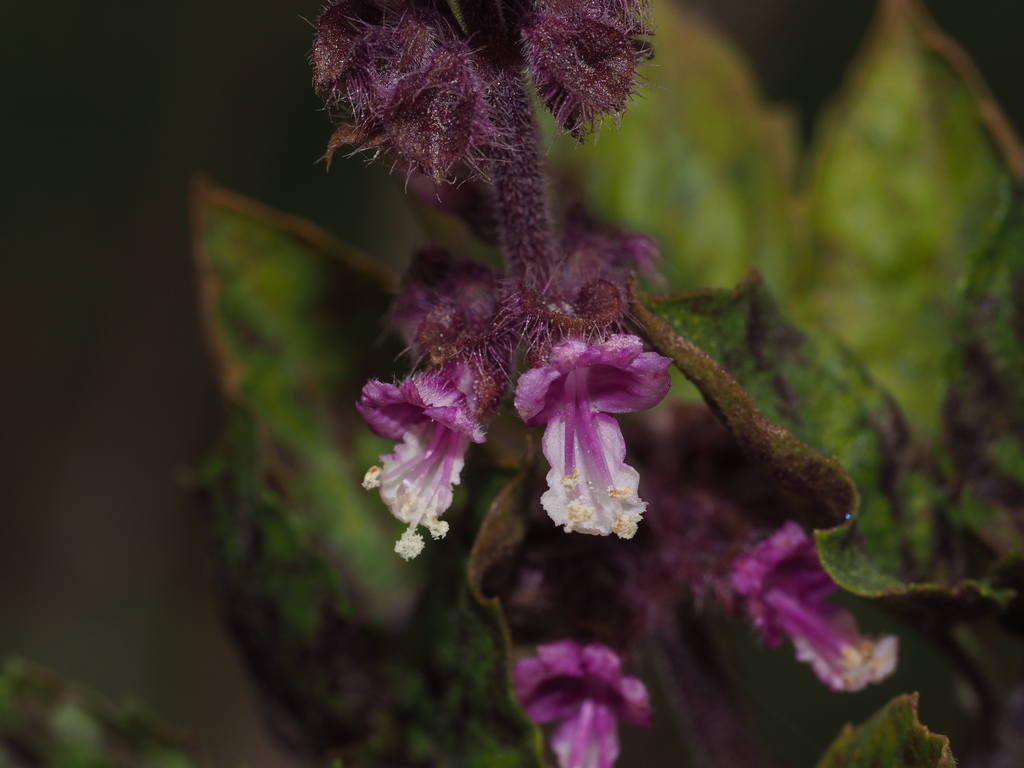
Ocimum tenuiflorum, commonly known as holy basil or tulsi, is a sacred plant in Hinduism that is widely cultivated in India and Southeast Asia. Belonging to the mint family, it is characterized by a strong aroma and a slightly bitter taste. The plant features green, oval-shaped leaves with serrated edges and can grow up to 60 cm tall.
Holy basil is renowned for its medicinal properties and has been used for centuries in Ayurvedic medicine to treat a variety of ailments, including respiratory disorders, fever, headaches, digestive problems, skin diseases, and insect bites. It contains essential oils, such as eugenol, which possess anti-inflammatory properties.
In Hinduism, the plant holds significant religious importance due to its association with Lord Vishnu. It is often grown near temples or homes where daily worship occurs.
Holy basil exudes a mint-like aroma combined with a camphor-like fragrance. The plant is compact, yet rich and abundant in scent and phenanthrene, with leaves that change colors. Its fragrance serves as a natural mosquito repellent, while its flowers attract bees and butterflies, making it an excellent nectar source. Consequently, holy basil contributes to honey production and creates a lively, buzzing environment. FUN FACT · FROM THE LIBRARY
Beyond its medicinal and religious uses, holy basil also has culinary applications. The leaves, whether fresh or dried, are used to flavor dishes such as soups and curries.
Overall, Ocimum tenuiflorum holds great cultural importance due to its diverse uses in medicine, religion, and cuisine, making it an integral part of Indian culture.
Holy basil, also known as Tulasi, Indian holy basil, or Tulsi, is a revered plant in Hinduism. It is believed to be a manifestation of the goddess Tulsi, who is considered an avatar of Lakshmi, the principal consort of Vishnu. The plant's scientific name is Ocimum tenuiflorum. Due to its spiritual significance in Hinduism, it is commonly referred to as holy basil in English.
Holy basil is generally disease-resistant and typically not prone to illnesses. However, it can develop leaf spots if light and ventilation are poor and if it is overwatered. The plant is regarded as easy to care for, since it only needs regular watering and little else. Holy basil is a good choice for people who lack the time and energy to provide frequent care.
How to keep Ocimum Tenuiflorum.
Light
Holy basil prefers locations with plenty of daylight. It can handle a bit of shade, but it especially favors places that receive most of the day's sun. This need for light supports holy basil's growth and health. Both insufficient and excessive sun can harm the plant's vitality.
Water
Native to South Asia, holy basil thrives in warm, humid climates with consistent moisture. While it can tolerate drought, it grows best in slightly moist soil and should be watered weekly. Applying mulch can help retain moisture and reduce the need for frequent watering.
Humidity
This plant will thrive in moderate humidity, which is probably the level in your home. However, misting it a few times a week can be very beneficial. Make sure the room has good ventilation.
Temperature
Holy basil favors a warmer climate and grows best at temperatures of 68 to 100 ℉ (20 to 38 ℃). Native to India, this plant flourishes in tropical conditions. In colder months, it’s important to make proper temperature adjustments to preserve its lush green leaves.
Fertilizer
Holy basil needs the most fertilizer during its active growth period, which takes place mainly in spring, summer, and early fall. Fertilizing provides essential nutrients the soil may lack, encouraging healthy root and stem growth and producing attractive foliage, a key characteristic of this plant.
Pruning
Holy basil benefits from regular pruning, particularly from early to late spring when it is actively growing. To encourage bushiness and improve air circulation, you can pinch back new growth and remove any dead stems, which also helps reduce the risk of pests. Be sure to use clean, sharp tools to ensure precise cuts.
Pot & Repot
When repotting Holy basil, select a pot 1-2 inches (2.5–5.1 cm) larger with ample drainage. Use a well-draining potting mix. Repot in spring or fall, ensuring that the root ball is slightly lower than the rim of the flower pot. Water thoroughly after repotting and place in a warm spot with indirect sunlight.
Toxicity
Holy Basil is non-toxic and suitable for human and animal consumption. In fact, it has been used historically to treat a variety of ailments and disorders. However, avoid using holy basil if you are allergic or sensitive to it or other Lamiaceae (mint) plants.
Further reading →
The toxicity and danger assessments provided are for reference only. We do not assure their accuracy, so it's crucial not to depend on them. Seek professional advice when necessary for accurate guidance.
Botanical profile.
- Plant Type
- Herb
- Life Cycle
- Perennial, Annual
- Genus
- Ocimum
- Family
- Lamiaceae
- Hardiness Zone
- 10-12
- Mature Height
- 30 cm to 91 cm
- Mature Spread
- 49 cm
- Leaf Color
- Green, Blue
- Leaf Type
- Evergreen
- Flower Color
- White
- Flower Size
- 2.54 cm
- Bloom Time
- Early summer, Mid summer
- Planting Time
- Spring
- Harvest Time
- Mid summer, Late summer
- Native Area
- Sri Lanka, India, Malaysia, Pakistan, Yemen, Brunei, Indonesia, Cambodia, Oman, Nepal, Philippines, Bangladesh, Laos, China, Afghanistan, Vietnam, Myanmar, Papua New Guinea, Thailand
Other names.
Reader questions.
How should I water my Holy basil plant?
When watering Holy basil, it is best to use filtered water at room temperature or slightly warmer. Tap water can contain harmful particles, so filtered water is preferred. The Holy basil originates from a warm environment, so cold water can be a shock to its system. Avoid overhead watering, as it can cause issues with the foliage. Instead, apply filtered room temperature water directly to the soil until it is completely soaked. This method is beneficial for the plant as it moistens the roots and helps them spread through the soil to collect necessary nutrients.
Why should I use fertilizer on my Holy basil?
All plants, including Holy basil, need soil nutrients for their growth. However, it's not always guaranteed that the soil where your plants grow will have all the necessary nutrients. To address this, fertilization and soil amendments are used to provide both basic and specific nutrients needed by your garden plants. For Holy basil, fertilizer is crucial to promote healthy root and stem development throughout the growing season. It also enhances the appearance of the plant's foliage, which is its main ornamental feature.
What are the sunlight requirements for Holy Basil?
Holy Basil needs a significant amount of sunlight throughout the day for optimal growth and health. It requires full sun, which means over 6 hours of sunlight daily, but it can also manage with partial sun, about 3-6 hours of sunlight. Too much or too little sunlight can negatively affect the plant's vitality. It's important to watch how sunlight moves through your garden to find spots with the perfect balance of light and shade, ensuring the plants thrive.
What is the optimal temperature range for growing Holy basil?
The optimal temperature range for growing Holy basil (Ocimum tenuiflorum) is between 68 to 100°F (20 to 38°C). Native to India and thriving in a tropical environment, Holy basil prefers warmer climates for optimal growth. It's important to ensure the plant is adjusted to proper temperatures during colder months to maintain its health. During the winter, temperatures should be kept above 20°C, and exposure to temperatures near or below 5°C can be detrimental to the plant. For those growing Holy basil outdoors, it's recommended to bring the plant indoors during autumn and place it near a bright window, while ensuring it is not too close to heaters to avoid damage.
What do I need to do if I give my Holy basil too much water or not enough water?
When caring for your Holy basil, it is important to avoid both overwatering and underwatering, but overwatering is a more common issue. Too much water can cause the stems and leaves to wilt and turn yellow. It can also lead to diseases like root rot, mold, and mildew that can kill the plant. Underwatering is less common due to the plant's drought tolerance, but it can still happen, resulting in brittle and brown leaves. To care for your Holy basil, it is crucial to recognize the signs of overwatering early. Some diseases caused by overwatering, such as root rot, may not be reversible if not addressed promptly. If you notice early signs of overwatering, reduce your watering schedule and check the soil quality. If the soil drains poorly, replace it with a loose and well-draining potting mix. On the other hand, if you observe signs of underwatering, simply water more regularly until the signs disappear.
When should I add fertilizer to my Holy basil?
Holy basil requires the most fertilizer when it is actively growing, which is usually during spring, summer, and early fall. During this time, you should feed it every two to four weeks. As winter approaches, you can gradually reduce the amount of fertilizer you give until you stop completely, as the Holy basil will have less active growth during winter.
Can artificial lighting be used for Holy Basil indoors, and if so, how?
Yes, artificial lighting can be used for Holy Basil indoors, especially when natural sunlight is insufficient, like in winter or less sunny spaces. It's crucial for promoting faster, healthier growth. Using LED lights is recommended as they can provide specific wavelengths needed by plants. Full sun plants require 30-50W/sq ft, partial sun plants need 20-30W/sq ft, and full shade plants need 10-20W/sq ft of artificial light. The light source should be placed 12-36 inches above the plant to mimic natural sunlight, and most plants need 8-12 hours of light per day.
How should I care for Holy basil in low temperatures?
In low temperature conditions, Holy basil's leaves may lighten in color below 1°C, turning brown or black after frost damage; the plant may exhibit wilting or drooping. To care for Holy basil in low temperatures, trim off the frost-damaged parts and move the plant to a warmer indoor environment to protect it from the cold. Placing the plant near a south-facing window ensures it receives ample sunlight. It's also important to avoid placing the plant near heaters or air conditioning vents as these can cause excessive dryness in the air. Keeping the plant's temperature above 20°C during winter and ensuring it does not fall below 5°C is crucial for its health.
How frequently do I need to water my Holy basil?
If your Holy basil plant is in a pot, the most precise way to determine if it needs water is by inserting your finger into the soil. If the top two to three inches of soil are dry, it's time to water it. If you have your Holy basil growing outdoors in the ground, you can use a similar method to test the soil. Again, if the top few inches of soil are dry, it's time to add water. In the spring and early fall, you will likely need to water this plant about once a week using this method. However, during extremely hot weather, you may need to increase the frequency to about twice a week or more. It's worth noting that mature and well-established Holy basil plants have a remarkable ability to withstand drought.
When is it best to not use fertilizer for my Holy basil?
Holy basil should be fed regularly throughout most of the year, which includes spring, summer, and most of fall. However, if you notice that you have given it too much fertilizer or fertilized it incorrectly, causing fertilizer burn or other problems, you should address the issue before resuming regular feeding. The only exception to regular feeding is during winter when Holy basil enters a dormant phase, especially if it is grown indoors in cold-winter areas. Feeding the plant during this dormant phase is unnecessary and can lead to fertilizer burn.
What are common symptoms of insufficient light in Holy Basil?
Common symptoms of insufficient light in Holy Basil include new leaves growing smaller in size, leggy or sparse growth, faster leaf drop, slower or no new growth, lighter-colored new leaves, and symptoms of too much sunlight exposure like chlorosis, sunscald, leaf curling, wilting, and leaf scorching. These signs indicate inadequate light conditions or excessive sunlight, impacting the plant's chlorophyll production and overall health.
What should I do if my Holy basil is exposed to high temperatures?
Holy basil should be kept below 38°C during the summer to prevent heat stress. Exposure to temperatures above 43°C may lead to lighter leaf color and increased susceptibility to sunburn. If your Holy basil has been exposed to high temperatures, trim away sunburned and dried-up parts of the plant. Move the plant to a location that provides shade during the midday and afternoon sun to protect it. Watering the plant in the morning and evening can help keep the soil moist and further protect the plant from the effects of high temperatures.