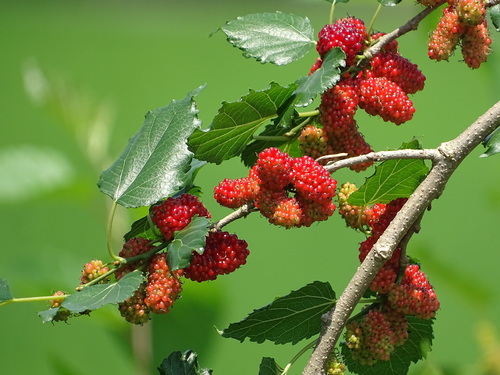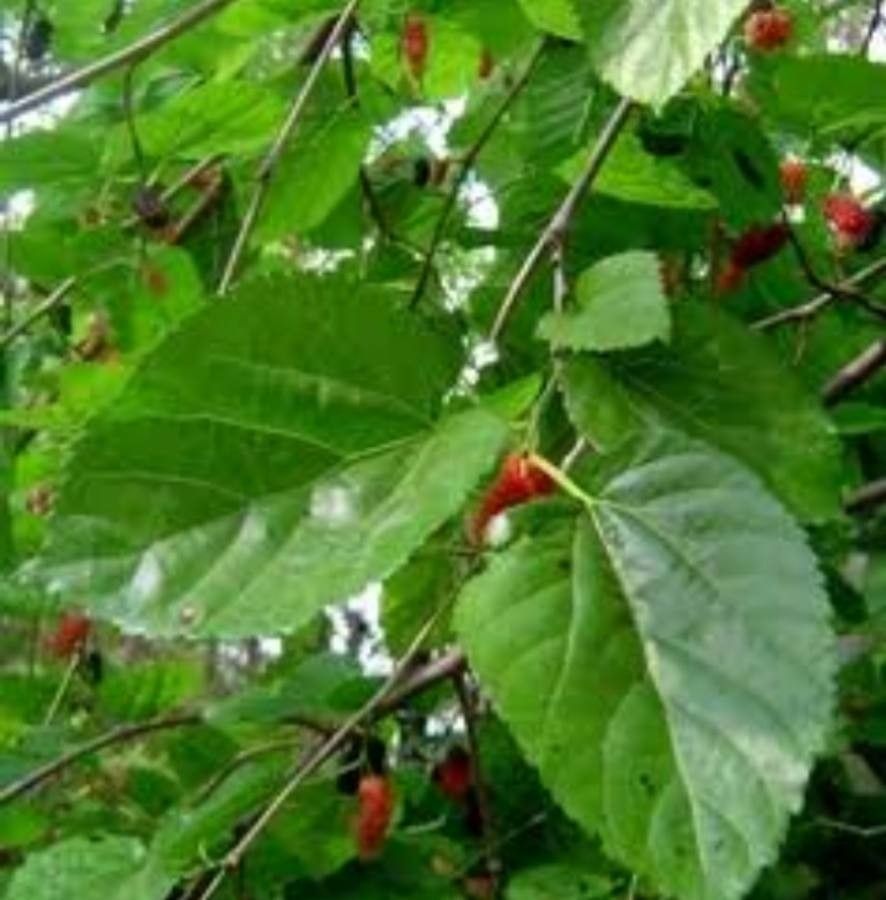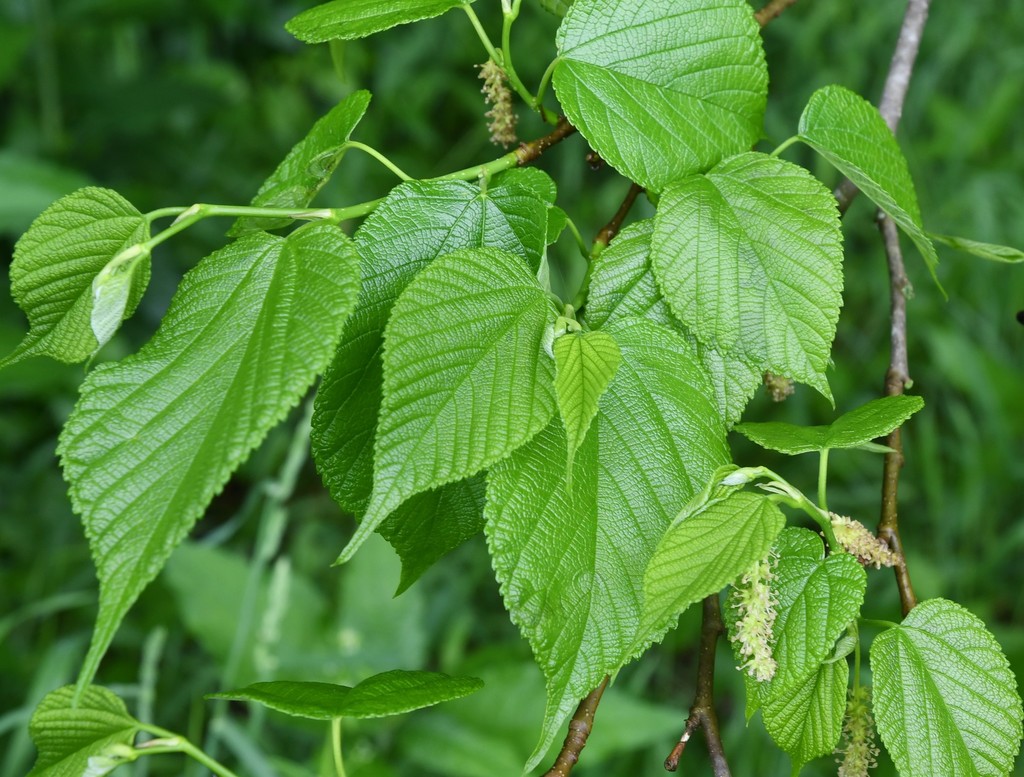
Morus rubra, commonly known as the red mulberry, is a deciduous tree native to North America. It can grow up to 70 feet tall and boasts a spreading crown with a diameter of up to 50 feet. Its leaves are alternate and simple, with serrated edges and an oval shape. In the spring, the tree produces small greenish flowers that develop into edible red or black berries by summer.
Red mulberry trees are adaptable to various soil types but thrive best in moist, well-drained soil. While they can tolerate partial shade, they achieve optimal growth with full sun exposure. These trees are commonly found along riverbanks or in forests.
For centuries, Native Americans have utilized the red mulberry for food and medicinal purposes, benefiting from its nutritional value and anti-inflammatory properties.
The red mulberry is the only mulberry species native to the eastern deciduous forests of the United States. In the same regions, you'll also find the white mulberry. You can distinguish the white mulberry from the red mulberry by looking at the undersides of its leaves, which lack hairs. Unlike the red mulberry, the white mulberry was introduced from Asia in the 1700s as part of an effort to start a silkworm industry. FUN FACT · FROM THE LIBRARY
Even today, the red mulberry is cherished for its fruit, which can be eaten fresh or used in jams, jellies, or pies. Additionally, it serves as a significant food source for wildlife, including birds and squirrels.
In summary, Morus rubra is an important native species that offers ecological benefits by supporting wildlife habitats while also catering to human needs with its edible fruit. This makes it a valuable addition to any landscape design plan.
Red Mulberry: Although mulberry trees often look similar, you can identify them by examining details like their leaves, bark, and fruit. This particular type of mulberry tree is notable for its reddish-brown bark. Its most recognizable feature, however, is its deep red berries, which are known for their sweet, delicious taste and striking color. The tree is called the red mulberry due to the red hues found on both its bark and berries.
Mulberry has strong resistance to disease and is typically not susceptible to illnesses. With regard to care, this plant is fairly low maintenance. When grown outdoors it needs only minimal watering, and larger specimens generally do not require pruning. Smaller plants, however, should be pruned after they finish blooming. Mulberryt is appropriate for anyone who has outdoor space, such as a garden or a deck, and it does not demand extensive experience in plant care.
How to keep Morus Rubra.
Light
Mulberry flourishes best with abundant sunlight, mirroring the conditions of its original environment. Adequate light is crucial for its well-being, as it impacts the plant's effectiveness in photosynthesis. It's also capable of tolerating places with slightly less sunlight. Too much or too little sunlight can detrimentally affect its development, potentially leading to leaf scorch or inadequate growth.
Water
Red mulberry flourishes in woodland and riverbank environments where there is moderate moisture. It prefers regular hydration but can also adapt to drought conditions. Ideally, it should be watered every 1-2 weeks. Generally grown outdoors, red mulberry benefits from mulching, which helps retain soil moisture during its active growing season.
Humidity
This plant will thrive in moderate humidity, which is probably the level in your home. However, misting it a few times a week can be very beneficial. Make sure the room has good ventilation.
Temperature
Mulberry, originating from Asia, thrives in a climate that's temperate, ideally featuring an average temperature that fluctuates between 32 to 95 ℉ (0 to 35 ℃). This kind of timber-like plant favors direct sunlight and can withstand hot summers, though it is unable to handle exceedingly warm temperatures. Sub-zero temperatures during winter could lead to harm or even kill it. Broadly cultivated for its tasty produce , it can acclimate to a variety of temperature conditions given appropriate maintenance.
Fertilizer
The Mulberry plant needs ample nutrients to produce fruit at its best. To encourage new growth and the formation of blooms, apply fertilizer in the early spring. Frequent fertilization supports the plant's health, promotes the growth of tastier fruit, and averts problems associated with nutrient scarcity, such as yellow leaves and substandard fruit yield.
Pruning
To ensure optimal growth and fruiting potential, red mulberries benefit from pruning in late winter, just before new growth begins. The main techniques involve removing dead branches, thinning crowded areas, and shaping the tree to improve air circulation and overall health. Pruning early not only prevents infections but also encourages vigorous regrowth.
Toxicity
Unripe fruit and milky sap from all parts have low toxicity if eaten. Symptoms include hallucinations and stomach upset. The ripe fruit is, of course, non-toxic and delicious. The berries have been used to make wine, jellies, pies, and a food flavoring additive for centuries.
Further reading →
The toxicity and danger assessments provided are for reference only. We do not assure their accuracy, so it's crucial not to depend on them. Seek professional advice when necessary for accurate guidance.
Botanical profile.
- Plant Type
- Tree
- Life Cycle
- Perennial
- Genus
- Morus
- Family
- Moraceae
- Hardiness Zone
- 3-10
- Mature Height
- 9.14 m to 20.12 m
- Mature Spread
- 9.14 m to 14.94 m
- Leaf Color
- Green
- Leaf Type
- Deciduous
- Flower Color
- Green, Yellow
- Flower Size
- 1.02 cm to 3.56 cm
- Bloom Time
- Mid spring, Late spring
- Planting Time
- Autumn
- Harvest Time
- Late spring, Early summer, Mid summer
- Native Area
- Turkey, India, Myanmar, Pakistan, Laos, China
Other names.
Reader questions.
When should I water my red mulberry?
Understanding when to water your red mulberry is vital for its health and productivity. Check the soil moisture by inserting your finger into the soil about 1-2 inches deep. If it feels dry, it's time to water. Observe the leaves for signs of wilting, drooping, or a change in color to yellow or brown, which are indicators of dehydration. Additionally, monitor the plant's weight and keep track of the time since the last watering. Avoid watering too early when the soil is moist to prevent root rot and other diseases, but also ensure not to delay watering for too long to avoid severe dehydration of the plant.
Why should I add fertilizer to my Red mulberry plant?
Plants continuously deplete the soil of nutrients, especially fast-growing types. Regular fertilization is important for Red mulberry to remain healthy and produce tasty fruit. If plants are not fertilized for a long time, they may face several problems. Nutrient deficiency can result in yellow leaves, reddish coloration, deformed shapes, withered tips, or dying parts of the plant. It can also lead to bark disorders, slow growth, poor shoot development, and a lack of fruit production.
What are the sunlight requirements for Red Mulberry?
Red Mulberry requires full sun, which means it needs more than 6 hours of sunlight daily, but it can also tolerate partial sun, about 3-6 hours of sunlight. It's essential to watch how sunlight moves through your garden to choose spots that offer the right balance of light and shade, ensuring the plants' well-being. Red Mulberry originates from environments that enjoy abundant light, thriving in such conditions. However, both the limitation and excess of sunlight can stress the plant, potentially harming its vitality.
What is the preferred temperature range for Red mulberry?
Red mulberry is a temperate woody plant that thrives in an average temperature range of 41 to 95°F (5 to 35°C). It is native to regions where the temperature varies from 14 to 86°F (-10 to 30°C) across different seasons. This plant has the ability to become dormant during cool winters and can shed its leaves in response to warm summer temperatures to cope with the seasonal temperature shifts.
How should I water my red mulberry?
Watering your red mulberry correctly is essential to its health. Prefer deep watering methods that allow water to reach the deep roots, supporting the plant's strength and stability. Use a watering can with a long spout to direct water to the base of the plant and avoid wetting the foliage, which can lead to fungal diseases. Consider using a moisture meter for more precise soil moisture measurement. Ensure to focus water at the base of the plant, avoiding the leaves and fruits to prevent fungal diseases.
What is the ideal time to fertilize my Red mulberry tree?
The optimal time to fertilize Red mulberry is in early spring, before the buds start to appear. During this time, the tree utilizes the stored reserves from winter to promote new growth. To support the development of blooms, it is recommended to fertilize about 2 to 4 weeks before the expected blooming period. This allows enough time for the nutrients to penetrate the soil, be absorbed, and distributed throughout the plant. It is possible to continue fertilizing during spring, but it is not advised to fertilize in autumn as it can result in excessive foliage growth late in the season, which makes the leaves vulnerable to winter damage.
How can artificial lighting assist in growing Red Mulberry indoors?
When natural sunlight is insufficient, especially in winter or less sunny spaces, artificial lighting becomes crucial for the growth of indoor plants like Red Mulberry. It is recommended to use LED lights, which can be customized to provide specific wavelengths of light needed by the plants. Full sun plants require 30-50W/sq ft of artificial light, partial sun plants need 20-30W/sq ft, and full shade plants need 10-20W/sq ft. The light source should be placed 12-36 inches above the plant to mimic natural sunlight, and most plants benefit from 8-12 hours of light per day.
How does Red mulberry adapt to winter conditions?
Red mulberry exhibits strong cold resistance and generally does not require special frost protection measures. However, to safeguard against temperatures dropping below its cold tolerance limit, it is advisable to wrap the trunk and branches with non-woven fabric or cloth. Additionally, watering the plant abundantly before the first freeze in autumn ensures that the soil remains moist and enters a frozen state, thus helping to prevent drought and water scarcity for the plant during winter and early spring.
How much water does red mulberry really need?
The red mulberry requires a considerable amount of water to thrive, indicated by lush, dark green leaves, and steady growth. For smaller pots, about 1.5 liters of water is sufficient, whereas larger pots may need up to 2-3 liters. Be cautious of overwatering, which can lead to yellowing leaves and root rot, and underwatering, which can cause wilting or leaf drop. Adjust your watering quantity as needed to maintain a healthy and lush red mulberry plant.
When should I not put fertilizer on my Red mulberry?
1. In the first year of growth, avoid fertilizing Red mulberry altogether. Be cautious about providing fertilizer unless it is absolutely necessary. 2. If you pruned 20% or more of the plant the previous year, do not fertilize it. 3. Avoid fertilizing diseased or damaged plants, as this can cause more harm than good. Instead, identify and address the root cause of the issue before considering fertilization. 4. Do not apply fertilizer after the peak of summer, as this can lead to excessive growth just before winter. 5. Red mulberry should not be fertilized during hot and dry times of the year, as dry soil does not deliver fertilizer effectively. Fertilization at this time can also stimulate growth that requires more water, which may not be readily available. 6. It is best to apply fertilizer earlier in the season when temperatures are cooler. 7. Keep in mind that Red mulberry can absorb fertilizer applied to nearby plants or lawns, so be careful not to unintentionally provide a double-dose of fertilizer.
What are the symptoms of light deficiency in Red Mulberry?
Red Mulberry may show several symptoms if it experiences light deficiency, including smaller new leaves, leggy or sparse growth, faster leaf drop, slower or no new growth, and lighter-colored or pale new leaves. These symptoms indicate the plant's struggle under suboptimal lighting conditions. Moreover, excessive sunlight can lead to chlorosis, sunscald, leaf curling, wilting, and leaf scorching, which negatively affect the plant's health.
What are the symptoms of Red mulberry experiencing low temperatures?
Red mulberry is notably cold-tolerant, flourishing best when the temperature remains above its critical minimum. If winter temperatures dip below this tolerance threshold, while no immediate damage may be evident, the branches may become brittle and dry out by spring, failing to produce new shoots. The recommended solution for this is to prune away any dead branches in the spring to encourage healthy new growth.