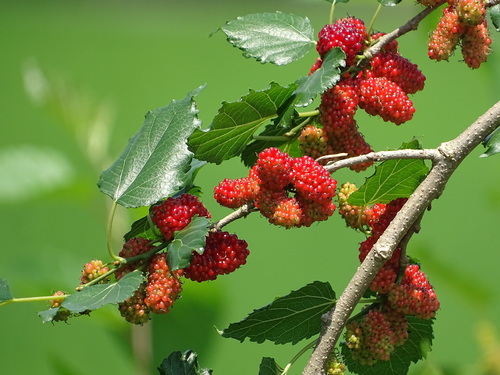
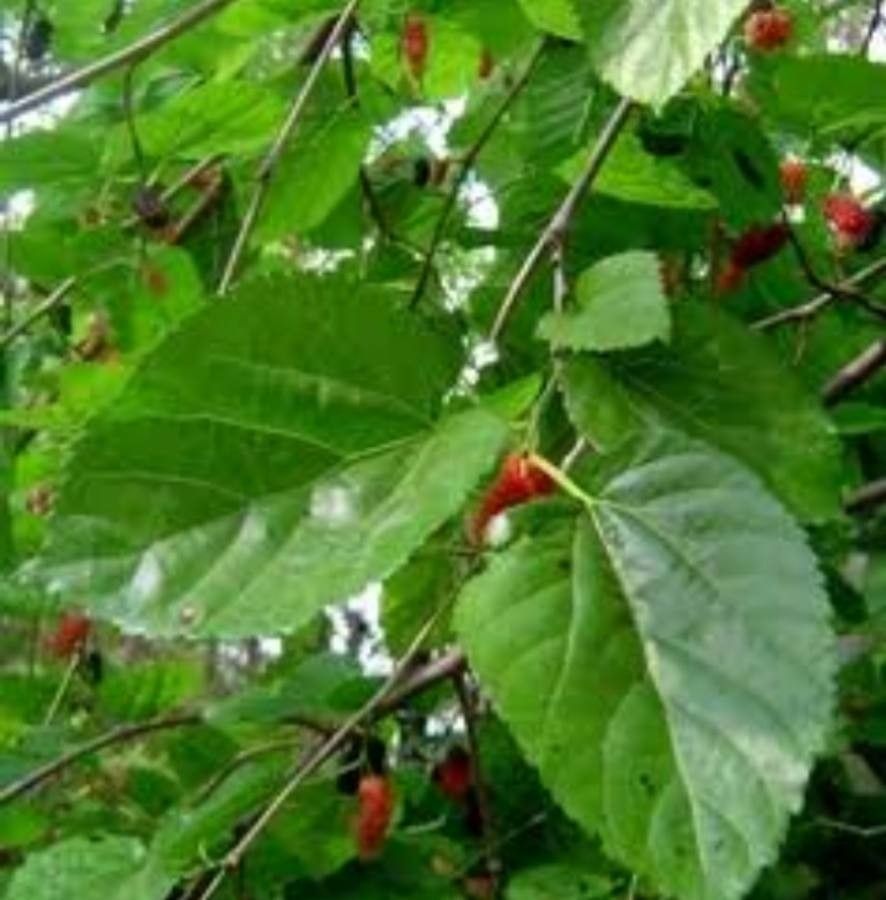
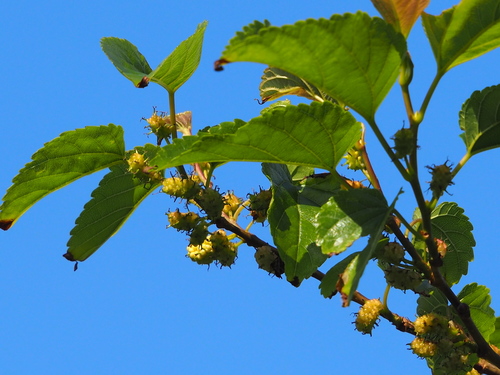
Morus celtidifolia, the Texas mulberry, is a plant species native to South America, Central America, Mexico, and the southwestern United States, ranging from Argentina north as far as Arizona and Oklahoma. In the US, it grows in canyons and on slopes, usually near streams, from 200–2,200 metres (660–7,220 feet) in elevation. It is very often referred to as "Morus microphylla," including in Flora of North America, but recent studies suggest that these names are synonymous with M. celtidifolia holding priority.Morus celtidifolia is a shrub or tree, sometimes reaching 7.5 m (25 ft) in height. It has much smaller leaves than the other two species in the US (M. alba and M. rubra), the blade usually less than 7 centimetres (2+3⁄4 inches) long. The edible fruits are red, purple, or nearly black, and are consumed by wildlife, and, historically, by Native Americans. In ancient (probably prehistoric) times, the Havasupai people introduced the species to the Grand Canyon.
Texas mulberry is resistant to disease and generally not susceptible to illnesses. As for maintenance, this plant is fairly low-maintenance. Planted outdoors it needs only minimal watering, and larger plants typically do not require pruning. Smaller plants, however, should be trimmed after they have finished blooming. The Texas mulberry is well suited to anyone with outdoor space, such as a garden or a deck, and does not demand extensive care experience.
How to keep Morus Celtidifolia.
Light
The Texas mulberry is native to open habitats like sunlit meadows and forest edges, where light is abundant. It performs best in full sun but can also tolerate partial sun, adapting well to a range of light conditions.
Humidity
This plant will thrive in moderate humidity, which is probably the level in your home. However, misting it a few times a week can be very beneficial. Make sure the room has good ventilation.
Temperature
Texas mulberry is quite adaptable to temperature, able to endure higher heat and significant temperature fluctuations. In hot weather, care should be taken to water sufficiently and offer appropriate shade to prevent sunburn. Conversely, Texas mulberry has limited tolerance for low temperatures. While it can tolerate some cold, excessively freezing conditions can cause frost damage.
Fertilizer
The Texas mulberry needs adequate nutrients to produce fruit at its best. Fertilize in early spring to promote new growth and bloom development. Regular feeding helps the plant remain healthy, yield tastier fruit, and prevents nutrient deficiency problems like yellow leaves and poor fruit production.
Botanical profile.
- Plant Type
- Tree
- Life Cycle
- Perennial
- Genus
- Morus
- Family
- Moraceae
- Hardiness Zone
- 7-10
- Mature Height
- 10.06 m to 14.94 m
- Mature Spread
- 7.92 m to 11.89 m
- Leaf Color
- Dark Green, Forest Green
- Leaf Type
- Deciduous
- Flower Size
- 0.20 cm to 0.25 cm
- Bloom Time
- Mid spring, Late spring
- Planting Time
- Spring, Autumn
- Harvest Time
- Summer
- Native Area
- Honduras, Mexico, Guatemala, El Salvador, Costa Rica