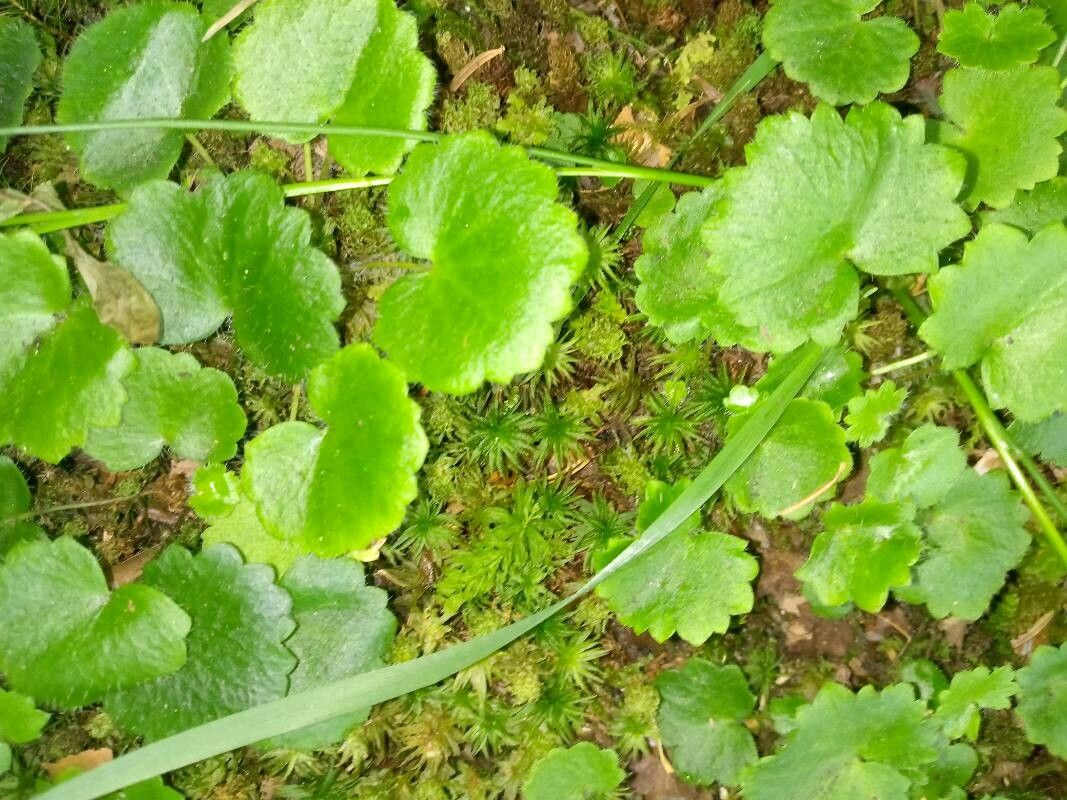
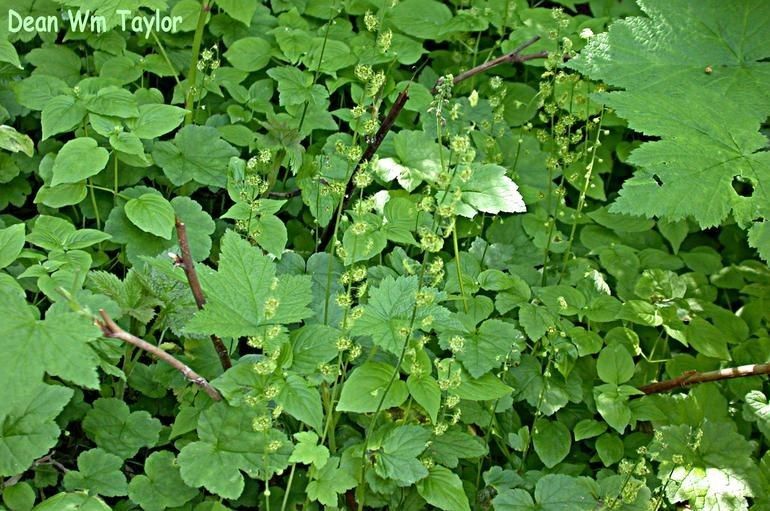
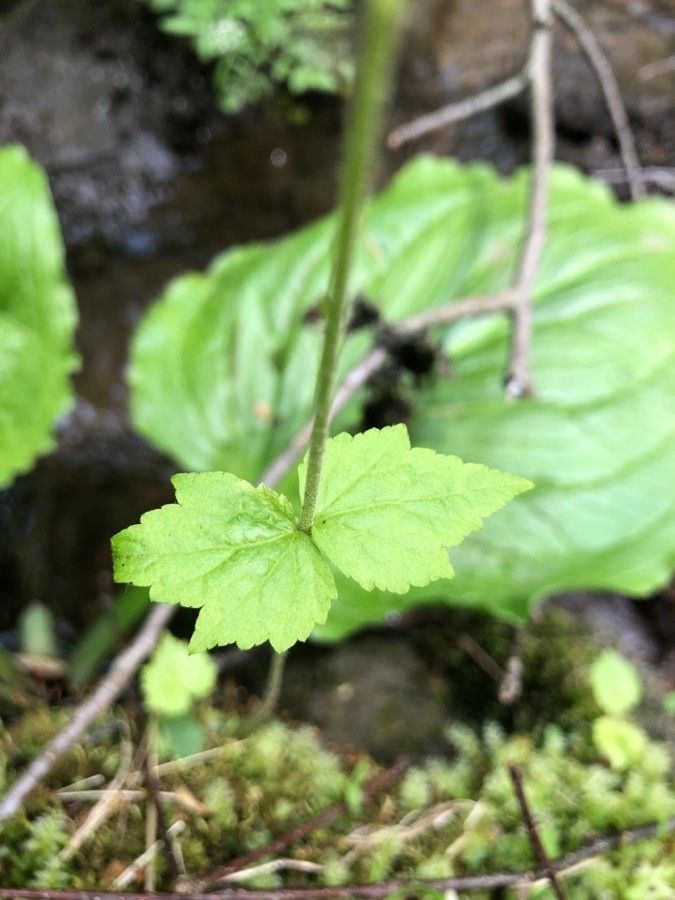
Mitella nuda, the naked bishop's cap or naked miterwort, is a plant in the genus Mitella. It has a single leaf, serrate but not deeply lobed, rising in single stalks from the ground. The leaf color is light green. Tiny white hairs arise perpendicular to the leaf surface. These are especially large and noticeable on the leaf top, but occur on the bottom also. The naked bishop's cap provides low ground cover and grows to be 1/4 inch to 1½ inches tall, not counting inflorescence.
Naked miterwort is fairly resistant to disease and typically does not suffer major health issues. However, it can be vulnerable to pests and diseases present in its environment. These problems are usually mild. In terms of upkeep, the plant requires moderate maintenance. It should be pruned regularly to preserve a neat appearance and support healthy growth. Fertilizing can also encourage flowering. Naked miterwort is suitable for people with outdoor spaces like a garden or patio and does not demand extensive gardening experience. It may need more care if grown indoors.
How to keep Mitella Nuda.
Light
Naked miterwort grows best with moderate sunlight but can also tolerate darker conditions. Although it can manage with less light, steady moderate sun promotes healthier growth and abundant flowering. Excessive sun exposure may cause wilting or discoloration.
Water
Naked miterwort thrives in moist, shady environments that mimic its natural woodland habitat. It needs consistent humidity and should be watered weekly to ensure optimal hydration. Mulching helps retain soil moisture and stabilize temperature during the growing season, enhancing its resilience as an herbaceous perennial.
Temperature
Naked miterwort originates from harsh climates and can tolerate temperatures from 32 to 77 °F (0 to 25 °C). The plants prefer cooler conditions, so hot summers may require mitigation measures.
Fertilizer
For Naked miterwort, the best time to fertilize is in early spring when the flowers begin to form. Applying an appropriate fertilizer leads to improved blooms and helps Naked miterwort produce attractive flowers. Fertilizing at that time guarantees strong flowering through the season and supplies energy for dormant growth periods.
Pruning
The naked miterwort features delicate, star-shaped flowers and soft green leaves. To promote bushiness and remove weak stems, it's best to prune the plant in early to mid-spring. Always use clean tools to prevent the spread of disease, and make your cuts above healthy buds to encourage growth and flowering.
Botanical profile.
- Plant Type
- Herb
- Life Cycle
- Perennial
- Genus
- Mitella
- Family
- Saxifragaceae
- Hardiness Zone
- 2-6
- Mature Height
- 8 cm to 20 cm
- Mature Spread
- 10 cm to 15 cm
- Leaf Color
- Green, Dark Green
- Leaf Type
- Semi-evergreen
- Flower Color
- White
- Flower Size
- 2.54 cm
- Bloom Time
- Early spring, Mid spring
- Planting Time
- Spring, Summer, Autumn
- Harvest Time
- Late spring, Early summer
- Native Area
- Russia, Japan, Mongolia, Koppen, China
Other names.
Reader questions.
What are the sunlight requirements for Naked Miterwort?
Naked Miterwort requires partial sun, meaning about 3-6 hours of sunlight, or full shade, which is less than 3 hours of sunlight daily. It's essential to understand how sunlight moves through your garden to choose the best spots for planting, ensuring that your Naked Miterwort gets the right balance of light and shade for optimal growth. If planting indoors or in areas with insufficient natural light, utilizing artificial lighting can be a great solution to provide the needed light for healthy development.
What is the native climate for Naked miterwort?
Naked miterwort, botanically known as Mitella nuda, thrives in harsh climates and is native to regions where temperatures range from 32 to 77 °F (0 to 25 °C). The plant prefers cooler environments and is highly cold-tolerant, making it well-suited for areas with colder climates. During hot summers, however, it may be necessary to implement mitigation strategies to protect the plant from excessive heat.
How does Naked Miterwort respond to different light conditions?
Naked Miterwort thrives best with moderate sunlight exposure but can survive in darker conditions. Although it can manage in lesser light, ensuring consistent moderate sun exposure promotes healthier growth and development, including ample flowering. However, overexposure to direct sunlight may lead to potential issues such as wilting or discoloration. For indoor plants, artificial lighting can adequately substitute natural sunlight, especially in less sunny spaces or during winter, with LED lights recommended for their efficiency.
How does Naked miterwort handle frost and winter conditions?
Naked miterwort is remarkably resilient to cold conditions and does not typically require specific frost protection measures during winter. To help the plant through the winter and early spring, it is recommended to water it generously before the first freeze in autumn. This ensures the soil remains moist when it enters a frozen state, which helps to prevent drought and water scarcity for the plant during the colder months.
What are the symptoms of insufficient light on Naked Miterwort?
When grown indoors with insufficient light, Naked Miterwort may display symptoms such as smaller than usual leaves, leggy or sparse growth, faster leaf drop, slower or halted new growth, lighter-colored or chlorotic leaves, sunscald, leaf curling, wilting, and leaf scorching. These symptoms indicate the plant's struggle with poor light conditions and highlight the need for better lighting practices to ensure plant health.
What should be done if the winter temperature drops below -40°C for Naked miterwort?
Although Naked miterwort is extremely cold-tolerant, winter temperatures should ideally remain above -40°C. If temperatures drop below this threshold, the plant may not show immediate signs of distress during winter, but there could be reduced sprouting or no sprouting at all come springtime. In such cases, it's recommended to remove any parts of the plant that have failed to sprout as a way to encourage new growth.
How can I address lighting issues for Naked Miterwort?
To optimize Naked Miterwort's growth in response to light issues, gradually introduce the plant to sunnier spots each week until it receives the desired 3-6 hours of direct sunlight daily. For indoor or large plants difficult to move, using a desk, ceiling lamp, or investing in professional grow lights for at least 8 hours a day can provide additional light. For outdoor plants, gradually moving them to sunnier locations helps prevent sunburn. Reducing obstacles like overhanging branches to increase sunlight and considering transplanting smaller plants during their dormant period to brighter locations can also be beneficial. Remember, while parts of the plant affected by insufficient light may not recover, new growth will be healthy with improved lighting.
How should Naked miterwort be cared for in high temperatures?
Naked miterwort struggles in high temperatures, particularly when the mercury rises above 25°C, leading to halted growth and increased susceptibility to rot. To care for Naked miterwort in such conditions, you should trim away any sunburned or dried-up parts of the plant. Moving the plant to a shaded area during the midday and afternoon sun, or employing a shade cloth, can help protect it. Additionally, watering the plant in the morning and evening can keep the soil adequately moist, aiding in keeping the plant healthy amid higher temperatures.