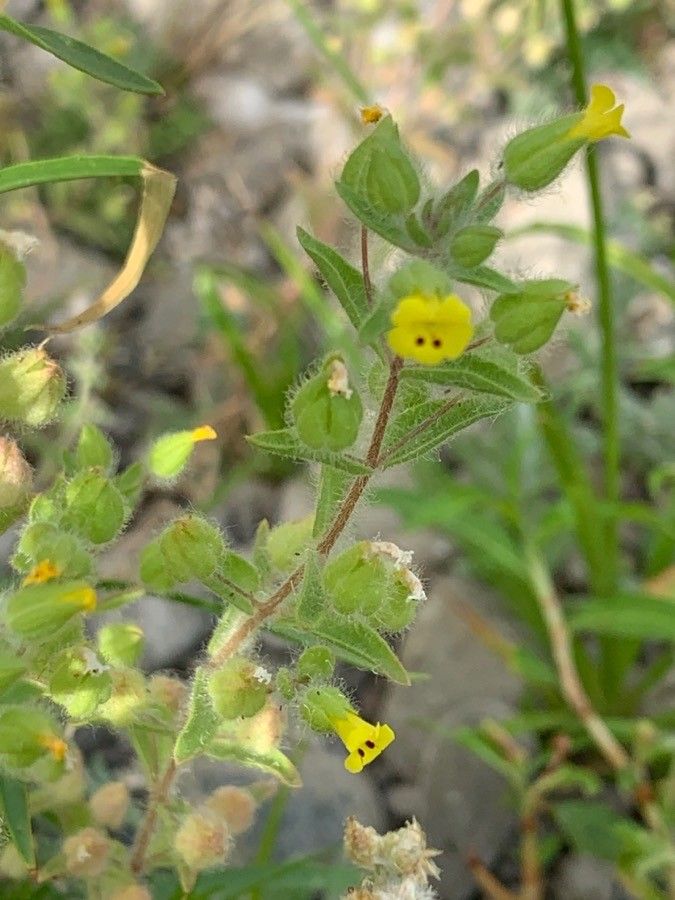
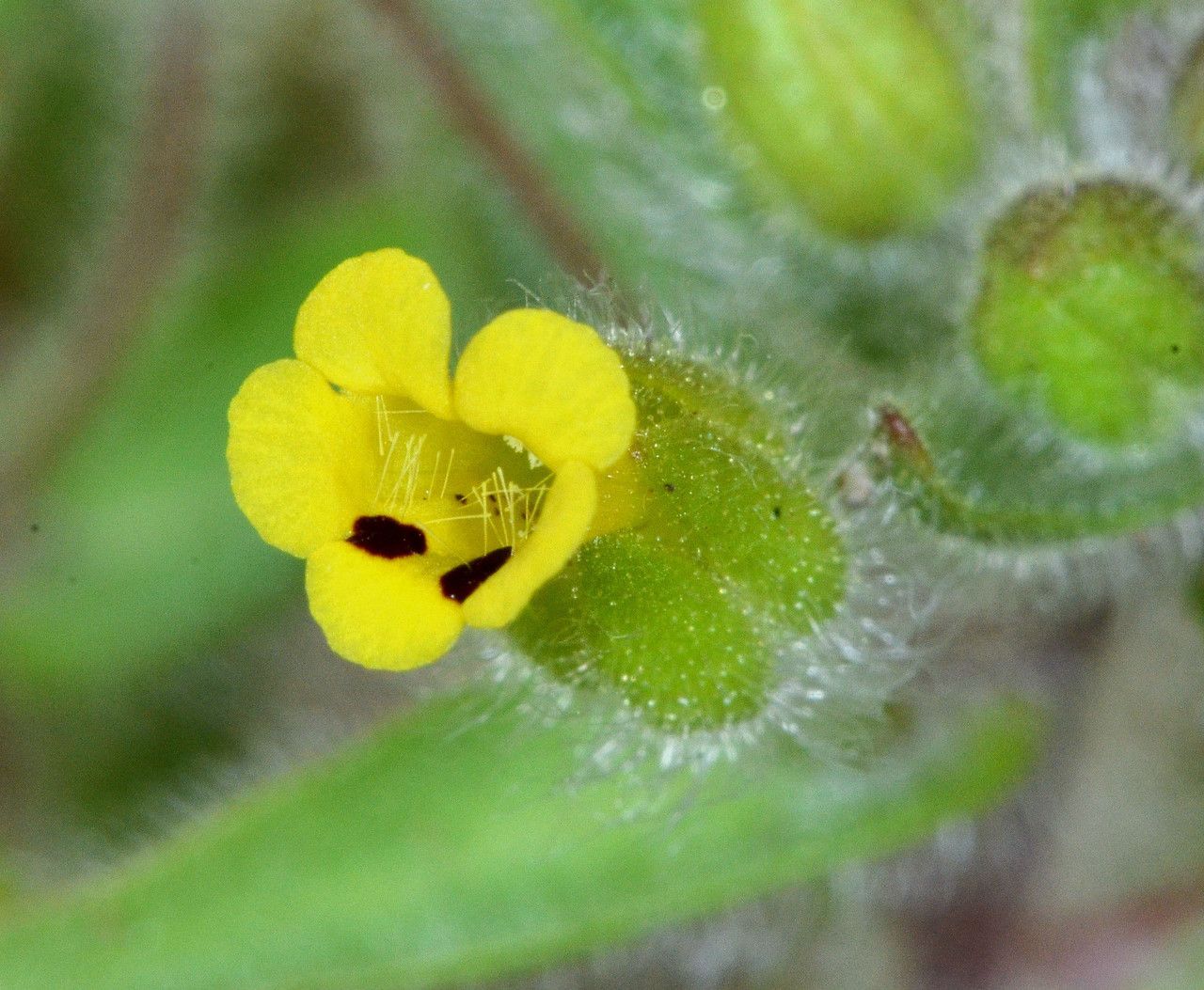
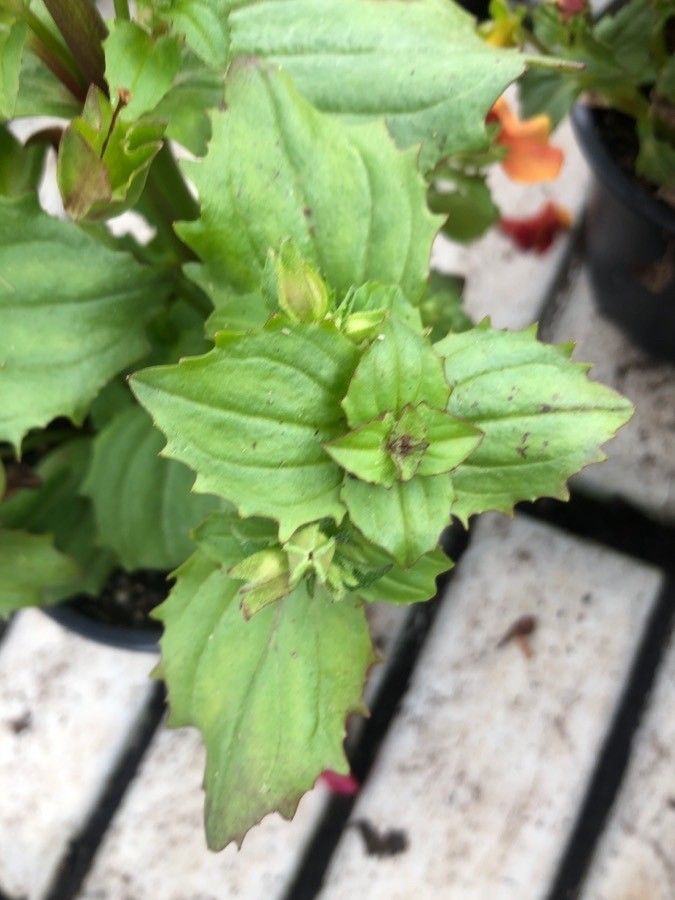
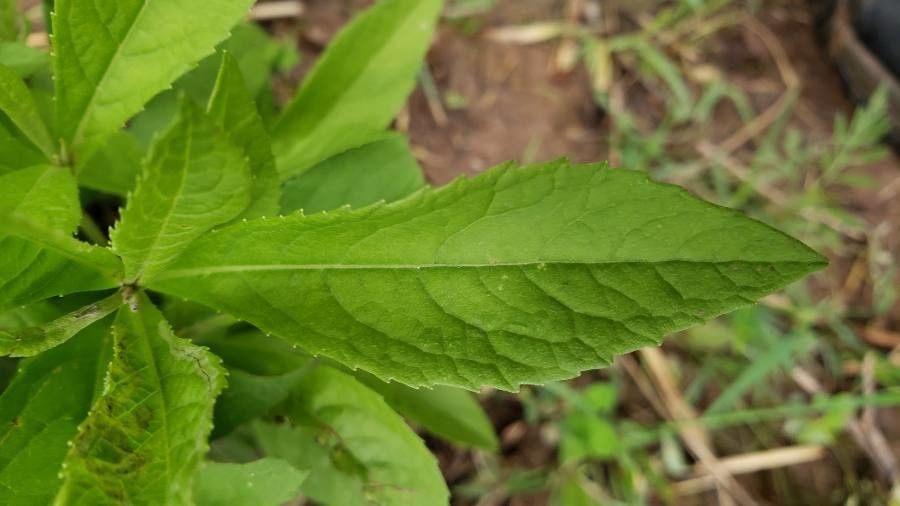
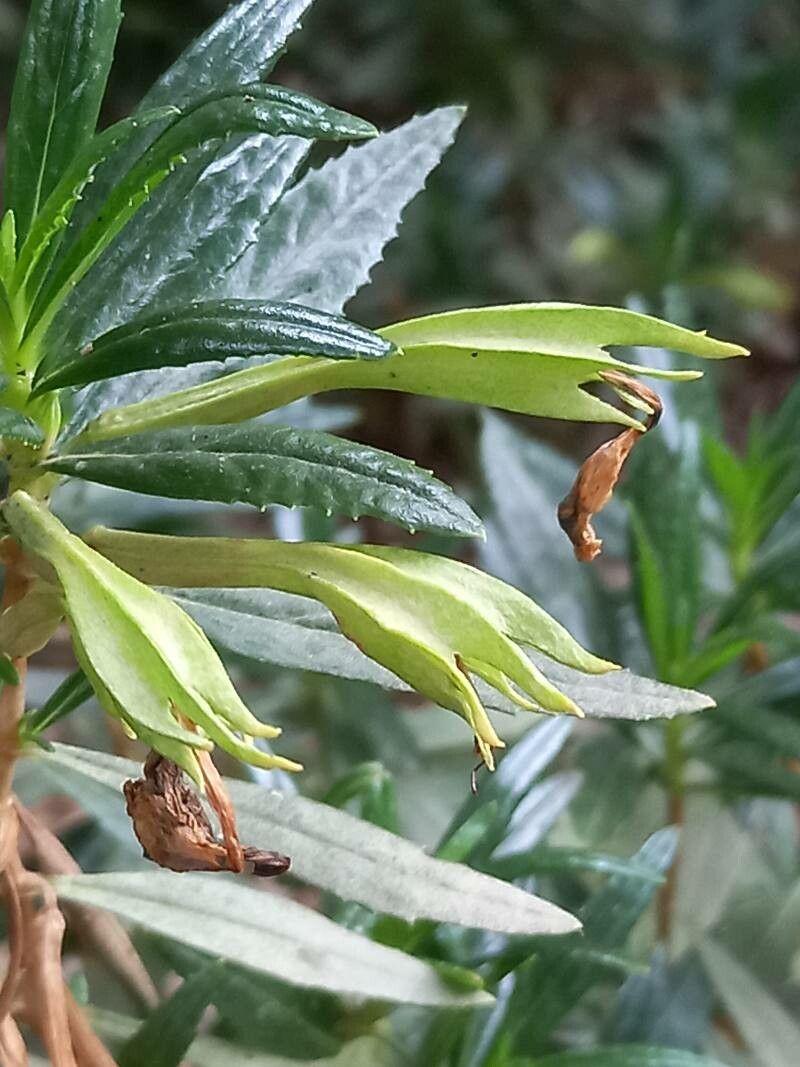
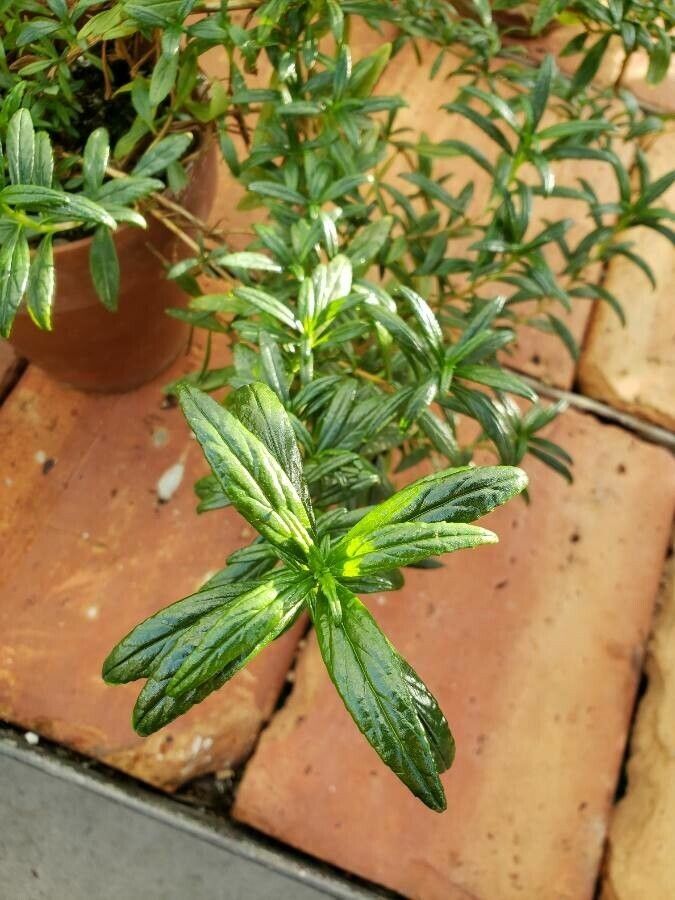
Mimetanthe is a genus of flowering plants in the family Phrymaceae. It has only one species, Mimetanthe pilosa, synonym Mimulus pilosus, known by the common names false monkeyflower and downy mimetanthe. It is native to the western United States (Arizona, California, Idaho, Nevada, Oregon, Utah and Washington State) and Baja California, where it grows in moist and disturbed habitat types. This plant is different enough from other monkeyflowers that it is treated in its own monotypic genus, Mimetanthe, or it may be retained in Mimulus.It is an annual herb growing to a maximum height of about 35 centimeters. It is coated densely in long hairs. The oppositely arranged, narrow or wide lance-shaped leaves 1 to 3 centimeters long. The tubular base of the flower is encapsulated in a calyx of sepals. The yellow flower corolla is under a centimeter long, divided into five rounded lobes at the mouth, and often dotted with red in the throat.
False monkeyflower has strong disease resistance and is generally not prone to illness. Still, it can be affected by pests and diseases present in its environment. Such infections are typically mild. Regarding care, this plant needs moderate upkeep. Regular pruning is necessary to preserve a neat appearance and healthy growth. Applying fertilizer can also encourage flowering. False monkeyflower is appropriate for anyone with an outdoor area, like a garden or patio, and does not demand extensive care experience. It may need more attention when grown indoors.
How to keep Mimulus Pilosus.
Light
The false monkeyflower is native to vibrant, open spaces and flourishes in abundant sunlight. While it can manage in semi-shaded conditions, it performs best when exposed to full sun. Being both annual and biennial, this plant is recognized for its affinity for sunny surroundings.
Temperature
False monkeyflower can acclimate to an extensive variety of temperature conditions, but its spread might still be constrained by various mixtures of heat and water circumstances. It flourishes optimally in hot climates during the summer season when there is an ample amount of rainfall or irrigation. Extended durations of overcast, wet weather or persistent high temperatures can heighten the probability of the False monkeyflower perishing. During the winter, ensuring necessary protection against the cold can bolster the plant's chances of survival.
Fertilizer
Once most of False monkeyflower's blooms have opened and reached full size, resume fertilizing. When blooms are at peak output, apply fertilizer every three to four weeks, weather permitting. Then, after False monkeyflower begins producing fewer new blooms, stop fertilizing; there's no need to fertilize when the plant can no longer produce more blooms.
Botanical profile.
- Plant Type
- Herb
- Life Cycle
- Annual
- Genus
- Mimulus
- Family
- Phrymaceae
- Hardiness Zone
- 8-10
- Mature Height
- 34 cm
- Mature Spread
- 10 cm to 20 cm
- Leaf Color
- Green
- Leaf Type
- Deciduous
- Flower Color
- Yellow
- Flower Size
- 0.76 cm
- Bloom Time
- Late spring, Early summer, Mid summer
- Planting Time
- Spring, Summer
- Harvest Time
- Mid summer, Late summer, Early fall
- Native Area
- Mexico
Other names.