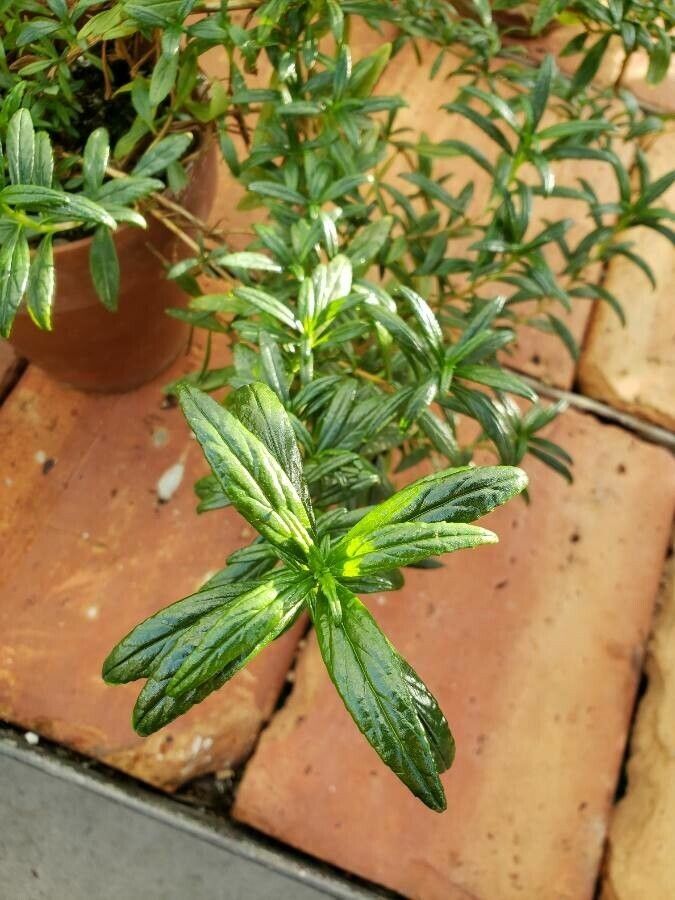
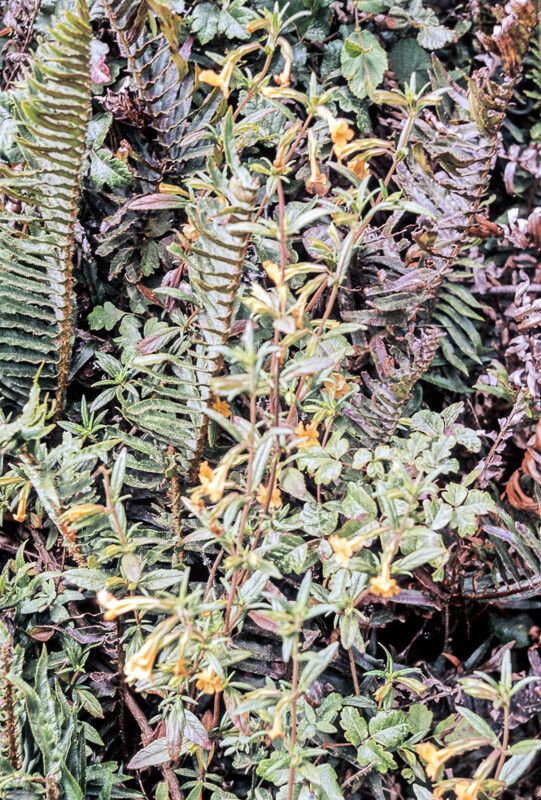
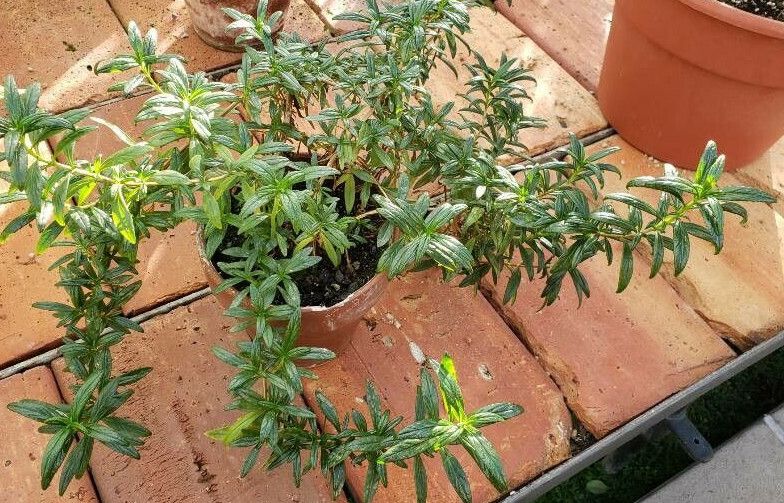
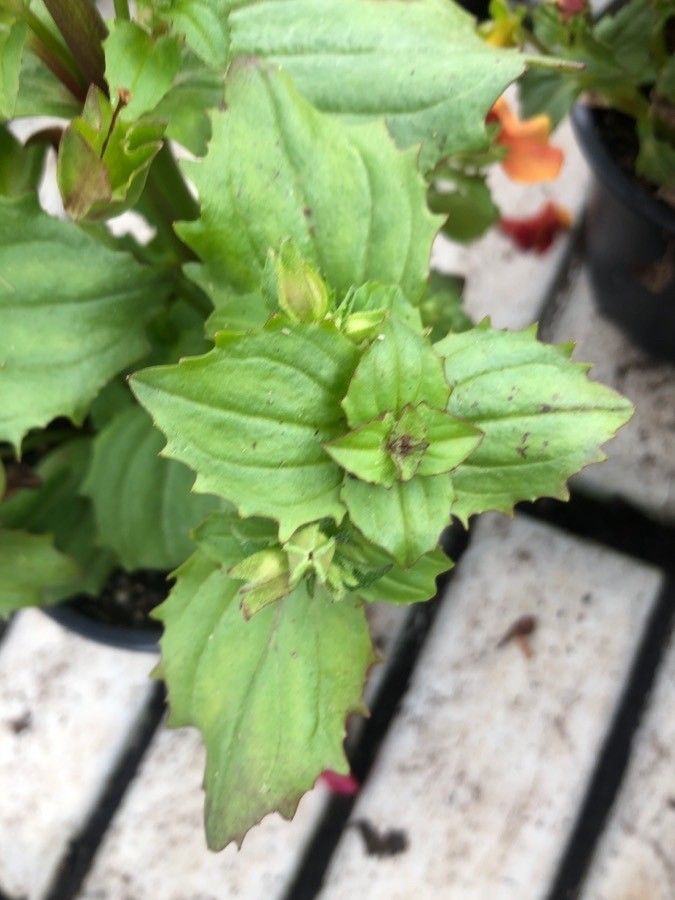
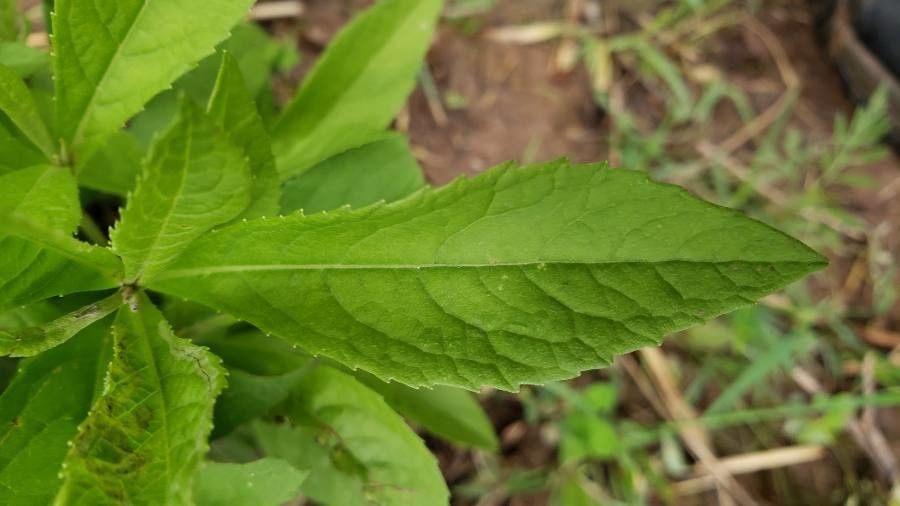
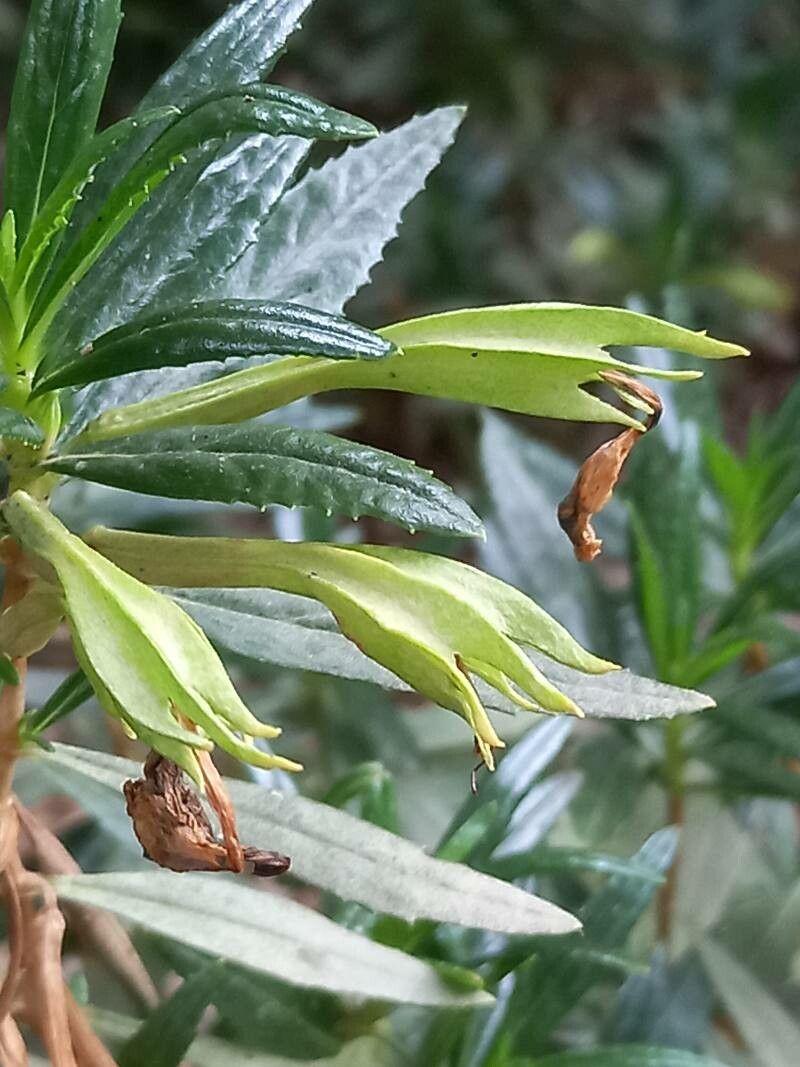
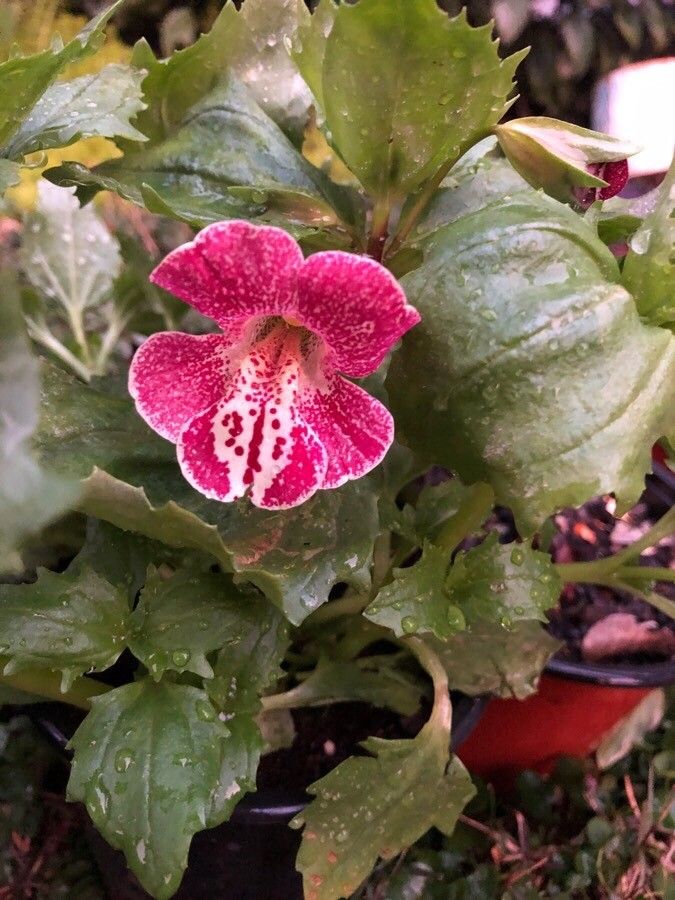
Mimulus aurantiacus, commonly known as sticky monkeyflower, is a flowering plant native to California and Baja California. Belonging to the Phrymaceae family, it typically thrives in chaparral, coastal sage scrub, and oak woodland habitats. The plant can grow up to 6 feet tall and features narrow, sticky leaves. Its tubular flowers, which come in shades of orange, red, or yellow, have five lobes each. Sticky monkeyflower blooms from late winter through early summer, attracting hummingbirds and bees for pollination.
Historically, Native Americans have used this plant for medicinal purposes to treat ailments such as coughs, colds, and skin irritations, owing to its antibacterial properties. In addition to its medicinal uses, Mimulus aurantiacus is popular among gardeners for its attractive flowers, which can enhance any landscape design. The plant is relatively low-maintenance once established, requiring well-draining soil and either full sun or partial shade, depending on the climate zone.
Sticky monkey-flower has strong resistance to disease and is usually not prone to illnesses. However, it can be vulnerable to pests and diseases present in its surroundings. These issues are typically mild. Regarding care, this plant needs a moderate level of maintenance. It should be pruned regularly to preserve a neat appearance and healthy growth. Fertilizing can also help encourage flowering. Sticky monkey-flower is appropriate for anyone with outdoor space, such as a garden or patio, and does not demand extensive care experience. It may need more attention if grown indoors.
How to keep Mimulus Aurantiacus.
Light
The sticky monkey-flower thrives with abundant sunlight and can tolerate partially shaded locations. Native to sunny habitats, it develops much better when exposed to plenty of light. Too much or too little light can inhibit its growth or cause its leaves to become discolored.
Temperature
Sticky monkey-flower naturally occurs in places with temperatures from 68 to 100 °F (20 to 38 °C). It prefers warmer climates. In colder seasons, increasing the surrounding temperature to meet its needs is advisable.
Fertilizer
A single fertilizer application in spring is generally enough for Sticky monkey-flower, though repeated feedings can help maximize its growth. Apply fertilizer every four to six weeks. Fertilizing improves the leaves' appearance and function, keeping color even and texture healthy. It also encourages root development and better nutrient uptake, supporting the plant's long-term health.
Pot & Repot
When repotting Sticky monkey-flower, choose a pot 1-2 inches (2.5–5.1 cm) larger with ample drainage. Use a well-draining potting mix. Repot in spring or fall, ensuring the root ball sits slightly below the rim of the flower pot. Water thoroughly after repotting and place it in a warm spot with indirect sunlight.
Botanical profile.
- Plant Type
- Herb
- Life Cycle
- Perennial, Annual
- Genus
- Mimulus
- Family
- Phrymaceae
- Hardiness Zone
- 8-11
- Mature Height
- 0.1 m to 1.52 m
- Mature Spread
- 30 cm
- Leaf Color
- Green
- Leaf Type
- Evergreen
- Flower Color
- Orange
- Flower Size
- 2.54 cm to 5.08 cm
- Bloom Time
- Mid spring, Late spring, Summer
- Planting Time
- Spring
- Harvest Time
- Late spring, Summer, Early fall
- Native Area
- Mexico
Other names.