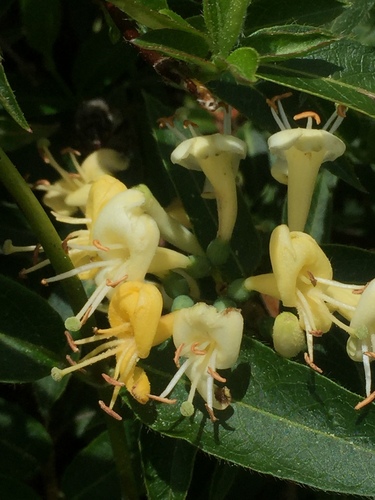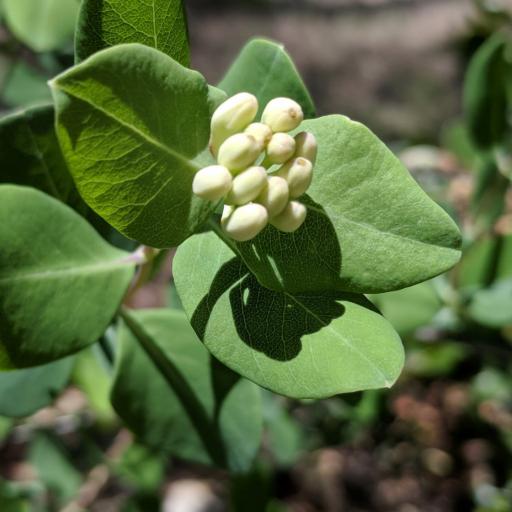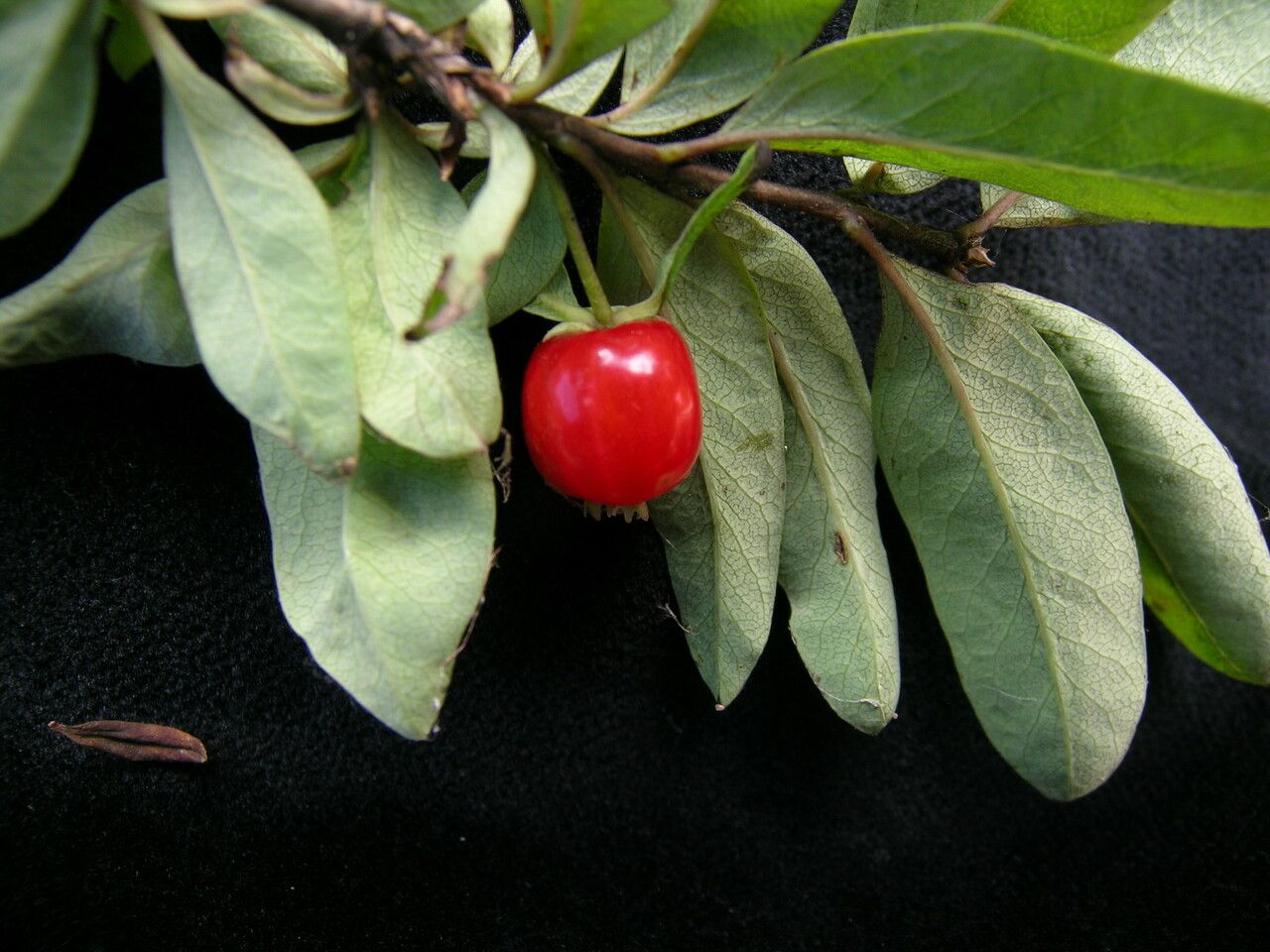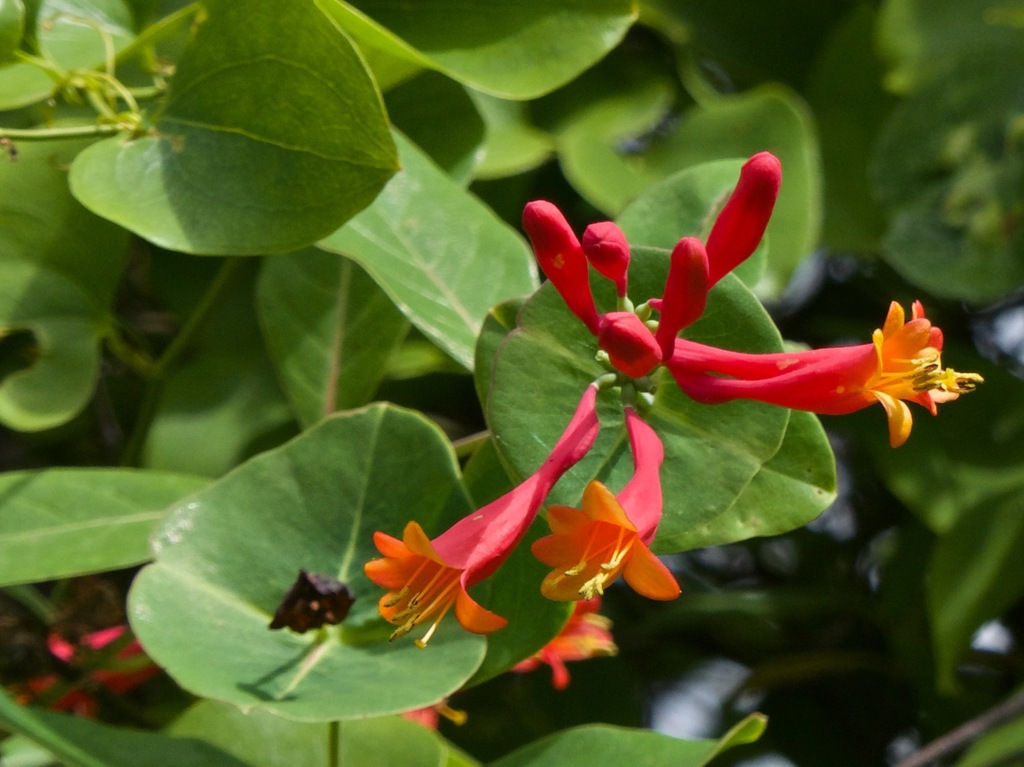
Lonicera sempervirens, commonly known as Trumpet Honeysuckle, is a deciduous vine native to the eastern United States. This fast-growing plant can reach lengths of up to 20 feet and produces clusters of bright red or orange tubular flowers from late spring through summer. The flowers are highly attractive to hummingbirds and butterflies, making it a popular choice for gardeners who want to attract wildlife.
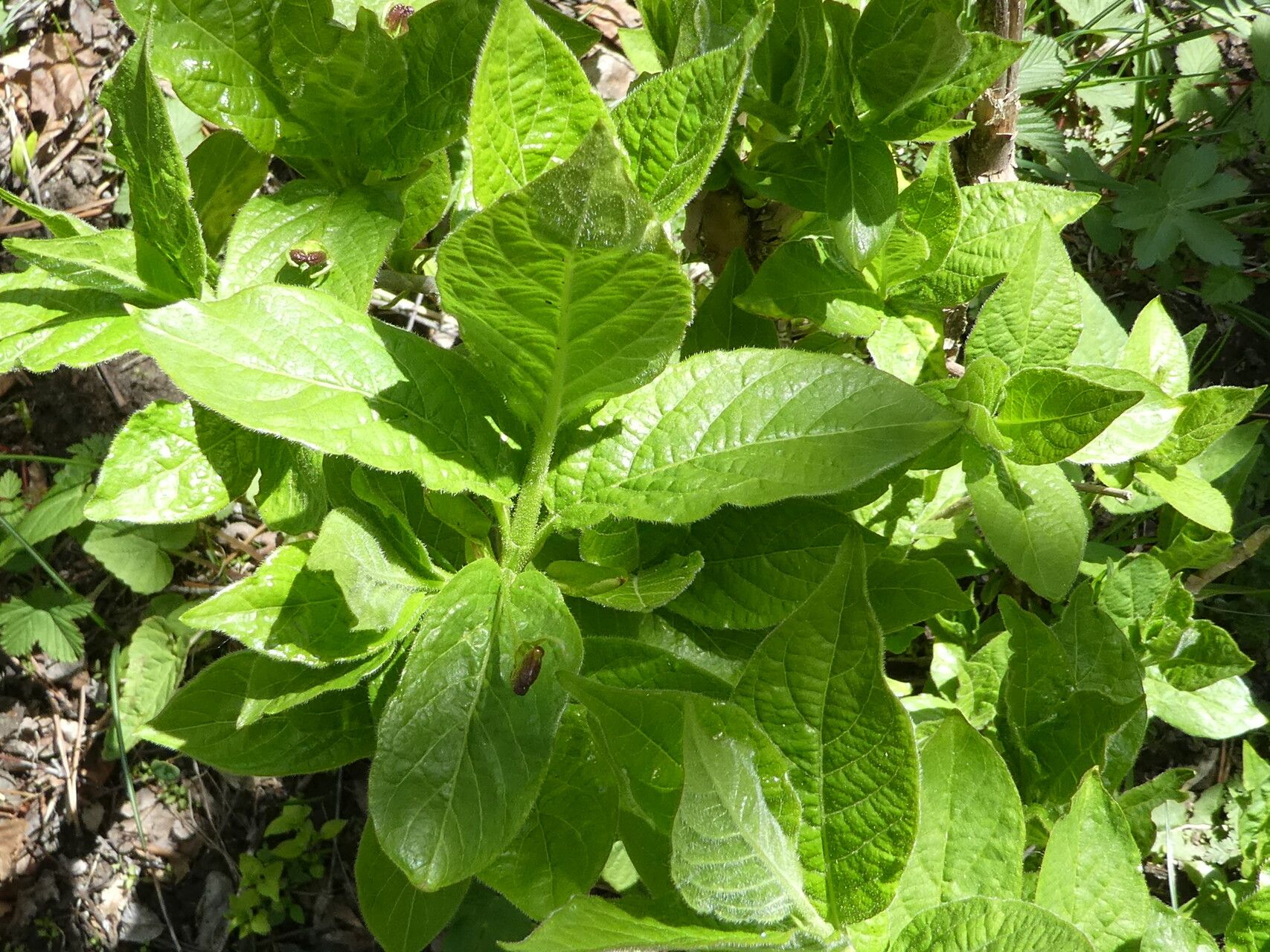
The leaves of Lonicera sempervirens are dark green and remain on the plant throughout the year, providing continuous visual interest in gardens or landscapes. While the vine prefers full sun, it can tolerate partial shade and thrives in well-drained soil conditions. Once established, it is relatively low maintenance but may require occasional pruning to control its growth or shape it as desired.
Overall, Lonicera sempervirens is an excellent choice for gardeners seeking an attractive vine that offers both beauty and ecological benefits in their landscapes or gardens.
The trumpet honeysuckle plant features trumpet-shaped flowers that hang from its branches, sharing the same name as the plant. These red to pinkish-red blossoms are pollinated by hummingbirds and insects from mid-spring through fall. In addition to their ecological role, trumpet honeysuckles are popular as ornamental plants due to their appealing flowers. They are particularly valued as a native alternative to the invasive Japanese honeysuckle. Hence, the plant is called trumpet honeysuckle.
Botanical profile.
- Plant Type
- Vine
- Life Cycle
- Perennial
- Genus
- Lonicera
- Family
- Caprifoliaceae
- Hardiness Zone
- 4-9
- Mature Height
- 6.1 m
- Mature Spread
- 0.91 m to 1.83 m
- Leaf Color
- Green, Blue
- Leaf Type
- Semi-evergreen
- Flower Color
- Red, Yellow
- Flower Size
- 2.54 cm to 5.08 cm
- Bloom Time
- Late spring, Early summer, Mid summer
- Planting Time
- Spring, Autumn
- Harvest Time
- Mid summer
- Native Area
- North America