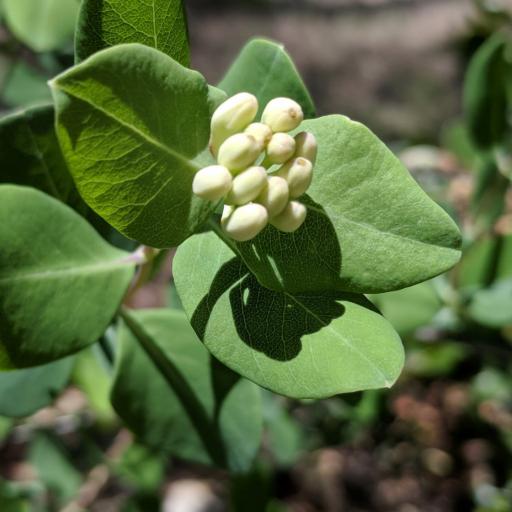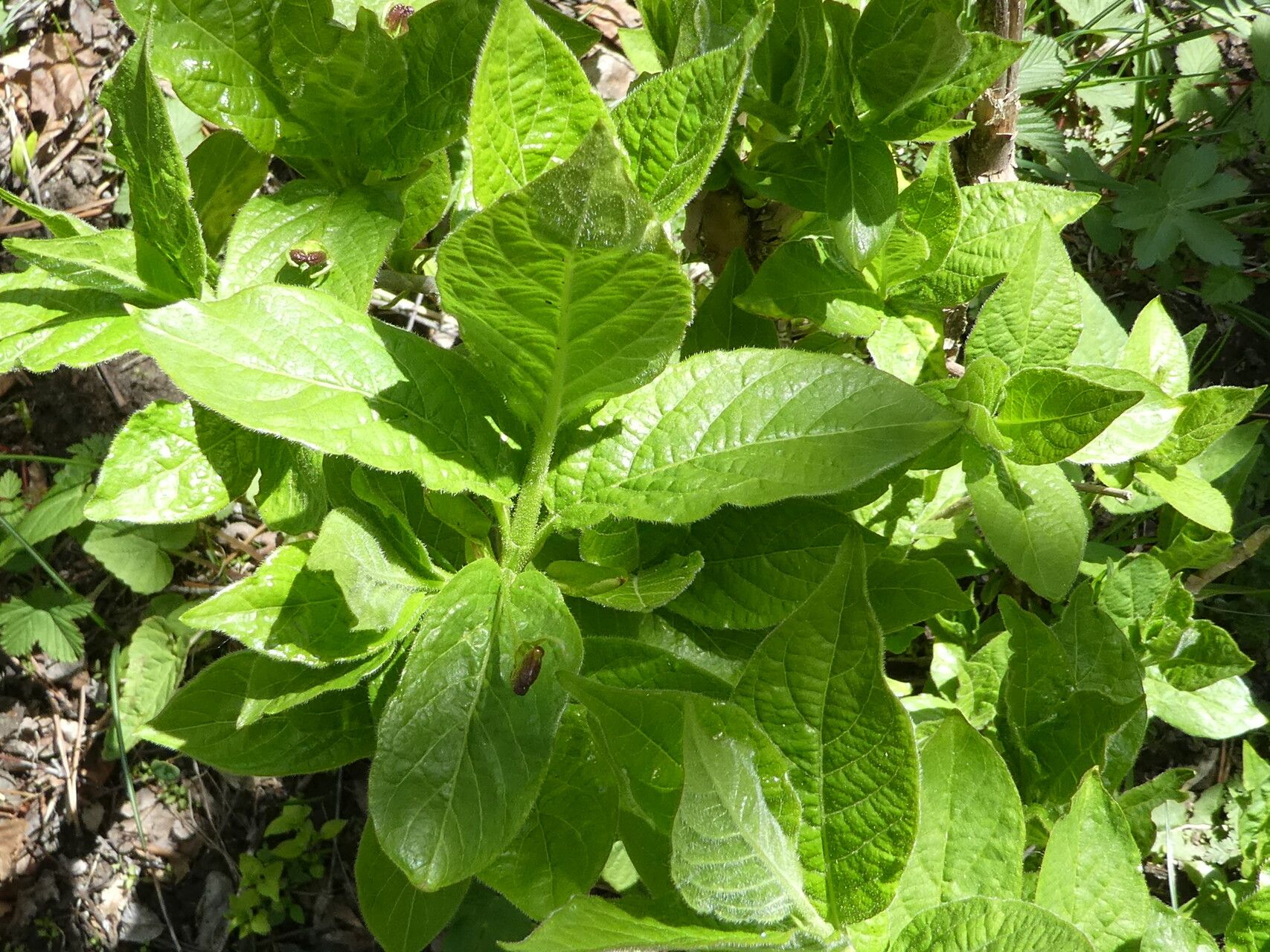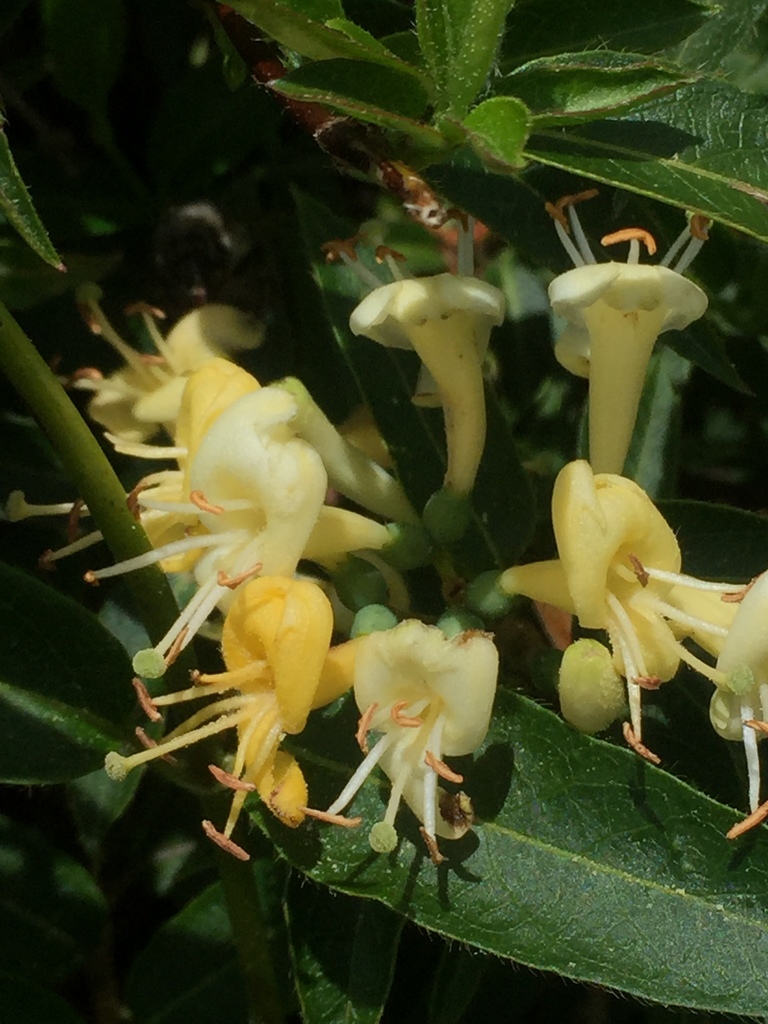
Lonicera acuminata, commonly known as swamp fly honeysuckle, is a deciduous shrub that belongs to the Caprifoliaceae family. Native to North America, this plant thrives in wetlands, swamps, and along stream banks. It can grow up to 3 meters in height and features a spreading habit with arching branches.
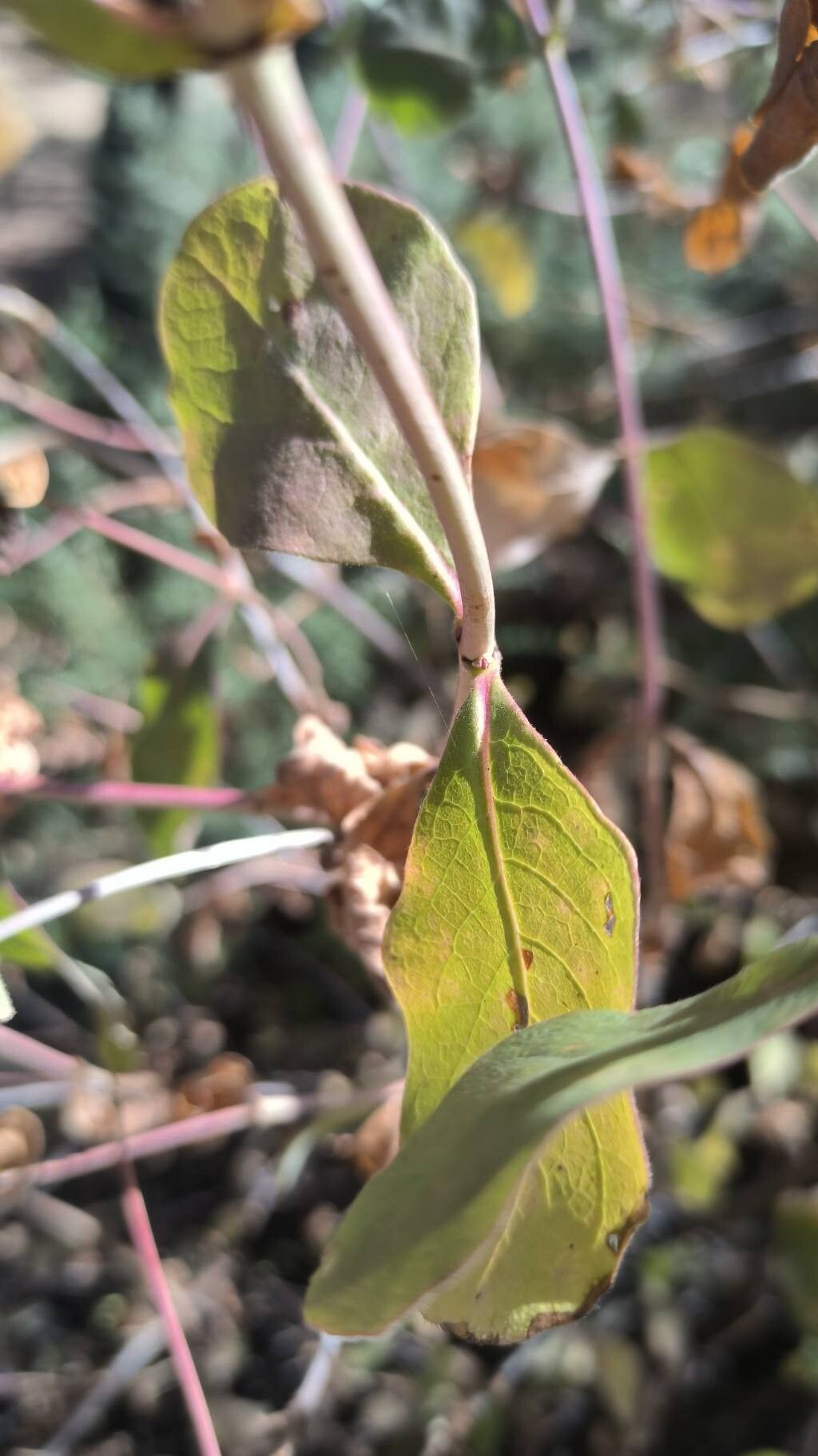
The leaves of Lonicera acuminata are opposite, ovate, and have pointed tips. They are dark green on the top side and lighter underneath. The plant produces tubular-shaped flowers with yellow-green petals that bloom from May to June.
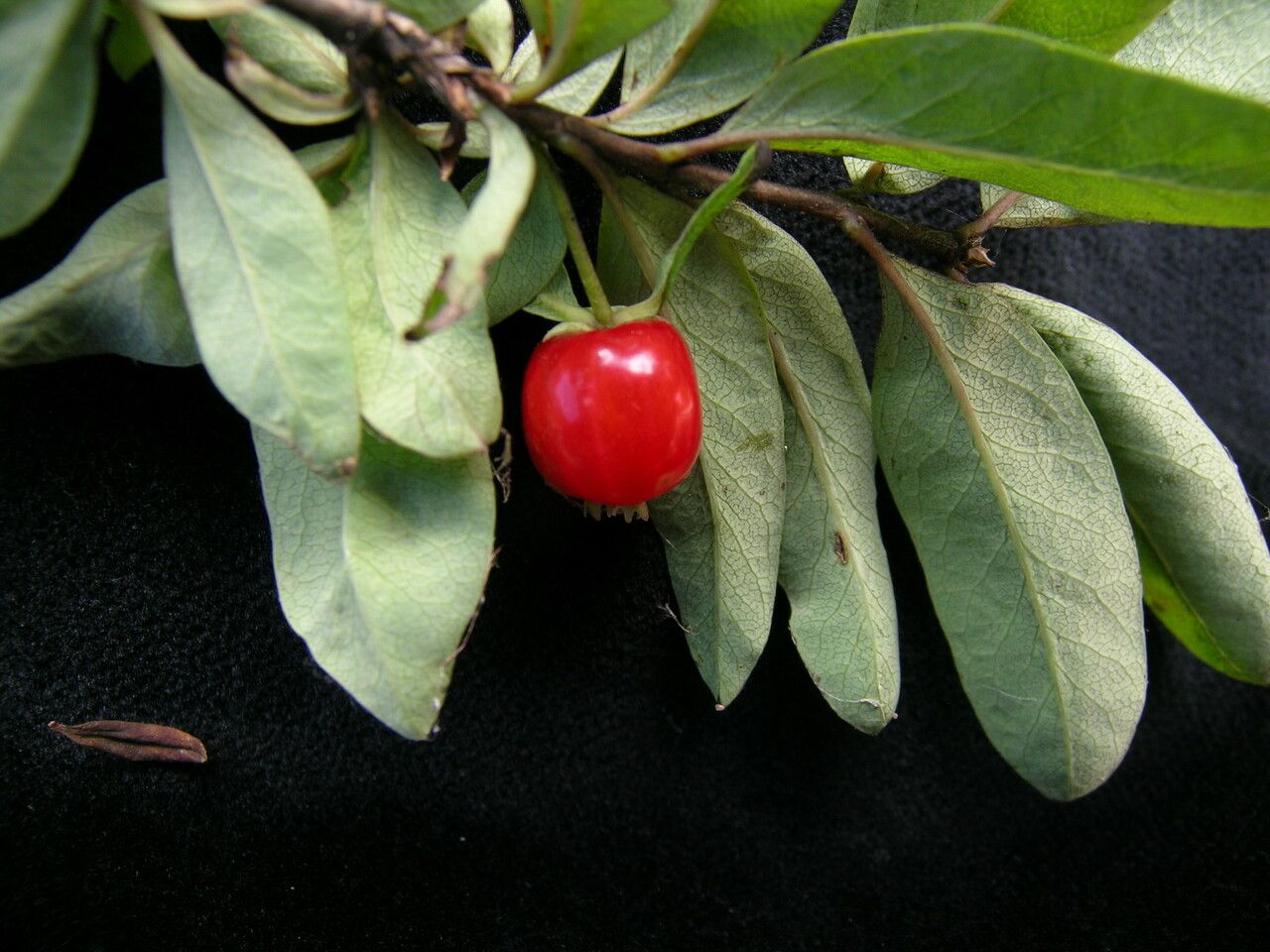
The fruit of Lonicera acuminata is a red berry that ripens in late summer or early fall. While the berries are edible, they are not commonly consumed by humans due to their sour taste.
Native Americans have used Lonicera acuminata for its anti-inflammatory properties. Furthermore, the plant provides food for wildlife, such as birds that feed on its berries.
Overall, Lonicera acuminata is an attractive shrub that adds beauty to wetland areas while also offering ecological benefits, such as providing food for various wildlife species.
Henry's honeysuckle is disease-resistant and generally not susceptible to illnesses. As for maintenance, this plant is fairly low-maintenance. Planted outdoors it needs only light watering, and larger specimens usually do not require pruning. Smaller plants, however, should be pruned after their flowering period. Henry's honeysucklet is well suited to anyone with an outdoor area, such as a garden or deck, and does not call for extensive care experience.
How to keep Lonicera Acuminata.
Light
Henry's honeysuckle does best in locations where it receives the maximum daylight. However, it can tolerate reduced light levels, for example under mature trees. Insufficient sun can negatively affect its health, causing stunted growth or discoloration, while too much exposure may lead to leaf burn.
Water
Henry's honeysuckle thrives in moderate moisture conditions and needs consistent watering every one to two weeks, allowing the soil to dry slightly between sessions. Once it becomes established, this plant is drought-tolerant and adapts well to different rainfall levels, making it a versatile outdoor choice capable of withstanding temporary dry spells.
Temperature
Henry's honeysuckle is indigenous to regions where temperatures range from 32 to 90 °F (0 to 32 ℃), demonstrating its preference for cooler climates. It adjusts to seasonal temperature fluctuations, but care must be taken to avoid exposure to extreme cold or heat.
Fertilizer
Timing is important for fertilizing Henry's honeysuckle. Apply fertilizer in early spring and continue once a month until early summer. The fertilizer encourages attractive blooms and provides energy during both dormant and active growth phases.
Pruning
To help Henry's honeysuckle flourish, prune it early in the spring to improve its shape and encourage blooming. Begin by removing any dead or damaged wood, and thin out crowded stems to improve air circulation. Regular trimming of longer shoots will maintain a tidy appearance, encouraging abundant flowers and healthier overall growth.
Pot & Repot
Repot Henry's honeysuckle every 2 to 3 years in the spring, using a large container to support its growth. After repotting, make sure the plant receives plenty of light and keep the soil consistently moist, while limiting fertilization to encourage adaptation. These practices will help Henry's honeysuckle thrive following repotting.
Botanical profile.
- Plant Type
- Vine
- Life Cycle
- Perennial
- Genus
- Lonicera
- Family
- Caprifoliaceae
- Hardiness Zone
- 3-7
- Mature Height
- 3.05 m to 4.57 m
- Mature Spread
- 1.22 m to 2.44 m
- Leaf Color
- Green
- Leaf Type
- Evergreen, Deciduous
- Flower Color
- White, Yellow
- Flower Size
- 2.54 cm
- Bloom Time
- Late spring, Early summer, Mid summer
- Planting Time
- Spring, Summer, Autumn
- Harvest Time
- Mid summer
- Native Area
- Nepal, India, Malaysia, Indonesia, Vietnam, Myanmar, Philippines, Bhutan, China
Other names.
Reader questions.
What's the best way to water my Henry's honeysuckle plant?
To promote excellent root development, consider placing a garden hose at the base of the plant. Avoid spraying the leaves directly, as this can lead to overwatering. If your plants are outdoors and exposed to direct sunlight, the leaves may require more frequent watering. Using bubblers or soaker hoses can help moisten the roots effectively. When adding or removing plants, using soaker hoses that cover the whole garden or bed can ensure deep root growth. After watering, make sure to drain any excess water and allow the soil to dry before watering again. It is advisable to water at ground level to prevent the spread of diseases. On sunny days, you can spray the entire bush with water. Remember, regardless of whether they are potted or in-ground, Henry's honeysuckle prefers deep watering rather than light sprinkling.
When should I fertilize my Henry's honeysuckle for the best results?
To ensure effective fertilization for Henry's honeysuckle, timing is crucial. Applying fertilizer too early, while the honeysuckle is still dormant, would be futile as it would simply be washed away by rainwater, resulting in wastage and pollution. It is recommended to apply the first round of fertilizer in early spring, followed by monthly applications until early summer.
What are the sun requirements for Henry's honeysuckle?
Henry's honeysuckle, with its botanic name Lonicera acuminata, thrives best in full sun, requiring above 6 hours of sunlight daily for optimal health and growth. It can also tolerate partial sun conditions, which amounts to about 3-6 hours of sunlight. It's important to observe how sunlight moves through your garden to find a spot that offers a good balance of light and shade, ensuring the plant's health and happiness.
What is the ideal temperature range for growing Henry's honeysuckle?
Henry's honeysuckle, or Lonicera acuminata, thrives in areas with temperature ranges from 32 to 90 °F (0 to 32 °C), indicating a preference for cooler climates. It is capable of adapting to seasonal temperature fluctuations, but care should be taken to protect it from extreme cold or heat conditions.
What should I do if I give too much/ too little water to Henry's honeysuckle plant?
Henry's honeysuckle can show signs of overwatering, such as yellowing, wilting, and dropping leaves. The plant may also appear dull and unhealthy, with mushy stems. To address these issues, adjust your watering schedule and avoid overwatering. On the other hand, if the leaves become crisp and dry, it can indicate under watering. In this case, check the soil moisture and provide a thorough watering when it's dry. However, even with proper watering, the plant may still have yellow leaves due to a damaged root system. Once the plant returns to normal, the yellowing will stop. When growing Henry's honeysuckle indoors, always check the moisture levels and avoid overwatering to prevent black spots. If you notice signs of root rot, such as discolored and slimy roots, consider transferring the plant to a different pot. It's important to prevent root rot by not letting the soil become too soggy. When planting outdoors, ensure the soil is adequately moist, and water the plant to aid in its recovery if the soil feels too dry.
Why should I put fertilizer on my Henry's honeysuckle?
To ensure your Henry's honeysuckle produces beautiful blooms, it is important to fertilize it. Fertilizing in early spring is particularly effective for promoting excellent flowers during that season. Additionally, fertilizer provides the honeysuckle with ample energy to store in the ground during its dormant growth phases. Applying extra nutrients during fall planting or late spring assists in increasing the honeysuckle's energy reserves for when active growth resumes.
What are the essentials for growing Henry's honeysuckle successfully?
To ensure successful growth, Henry's honeysuckle needs to bask in the maximum light of the day, though it can withstand lower light conditions such as beneath mature trees. Inadequate sun exposure may lead to stunted growth or discoloration, while too much direct sunlight might cause leaf burn. When natural sunlight is insufficient, particularly for indoor plants or during less sunny seasons, artificial lighting becomes essential. It's recommended to use LED lights which can provide specific light wavelengths necessary for the plant. Depending on the plant's sunlight needs, the wattage per square feet varies from 10-50W, with the distance between the plant and light source adjusted to mimic natural sunlight for 8-12 hours per day.
How does Henry's honeysuckle react to cold temperatures?
Henry's honeysuckle is exceptionally cold-tolerant and doesn't need extra frost protection during winter. However, to ensure its survival through cold seasons, it's recommended to water the plant generously before the first freeze of autumn. This practice helps keep the soil moist, preventing drought and water scarcity during winter and early spring.
How frequently do I need to water my Henry's honeysuckle plant?
The Henry's honeysuckle plant prefers deep watering but doesn't need it very often. When watering, use about a gallon of water, especially if the plant is in a pot. Potted plants have limited water storage, so the soil can dry out quickly. In colder regions, water every 3 to 5 days. Water in the morning when the soil is dry, both indoors and outdoors. Check the soil moisture by feeling it or noting if the top 2-3 inches are dry. Water when needed, as hot weather can dry out potted soil fast. If you have a garden, consider irrigating the soil. In hot climates, water once a week when about 2 to 3 inches of soil is dry. Be mindful of rainfall to avoid overwatering and root rot. Henry's honeysuckle mostly grows in spring and fall, so add mulch outdoors to preserve water. Sandy soil drains faster, so water more frequently. Clay soil retains water, so less frequent watering is needed. Mark the watering dates on a calendar and keep an eye on drooping leaves as a sign that watering may be needed.
When is the best time to not fertilize my Henry's honeysuckle plant?
To promote optimal blooming, it is important to use a fertilizer for Henry's honeysuckle that has a lower level of nitrogen compared to other nutrients. This avoids excessive leaf growth at the expense of blooms. Additionally, it is best to avoid fertilizing the plant after early autumn, as this can cause excessive growth right before winter. Likewise, it is not recommended to fertilize during hot and dry periods, as dry soil is not as effective at delivering nutrients and the stimulation of growth may require more water than available. It is advisable to apply fertilizer earlier in the season when temperatures are cooler. Lastly, be mindful that Henry's honeysuckle can absorb fertilizer from nearby plants or lawns, so be cautious about inadvertently over-fertilizing the shrub.
What symptoms indicate Henry's honeysuckle is not receiving adequate light?
Henry's honeysuckle may exhibit several symptoms when suffering from light deficiency, even though it thrives in full sunlight. These symptoms include smaller new leaves, leggy or sparse growth, early leaf drop to conserve resources, slower or ceased new growth, paler or irregularly colored new leaves, and various forms of stress such as chlorosis, sunscald, leaf curling, wilting, and leaf scorching. These symptoms highlight the plant's struggle in suboptimal lighting conditions and emphasize the need for adequate sunlight.
What should be done if Henry's honeysuckle experiences extremely low temperatures?
Although Henry's honeysuckle is very cold-tolerant, maintaining winter temperatures above -35°C is critical. If temperatures fall below this threshold, you might not notice immediate damage, but by spring, branches may become brittle and dry, and no new shoots will emerge. To mitigate this, prune away any dead branches in the spring that haven't produced new leaves.