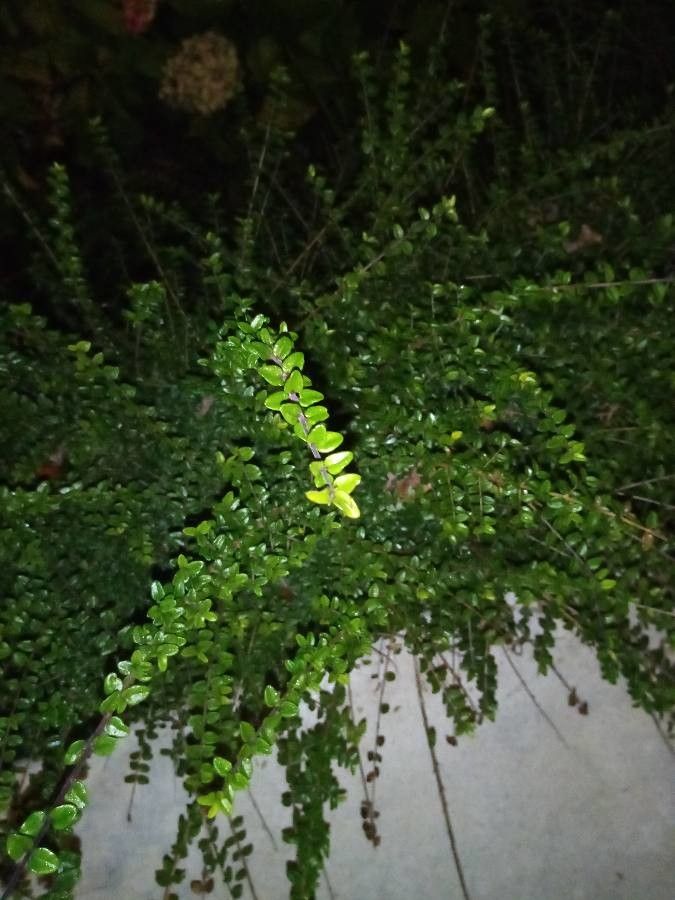
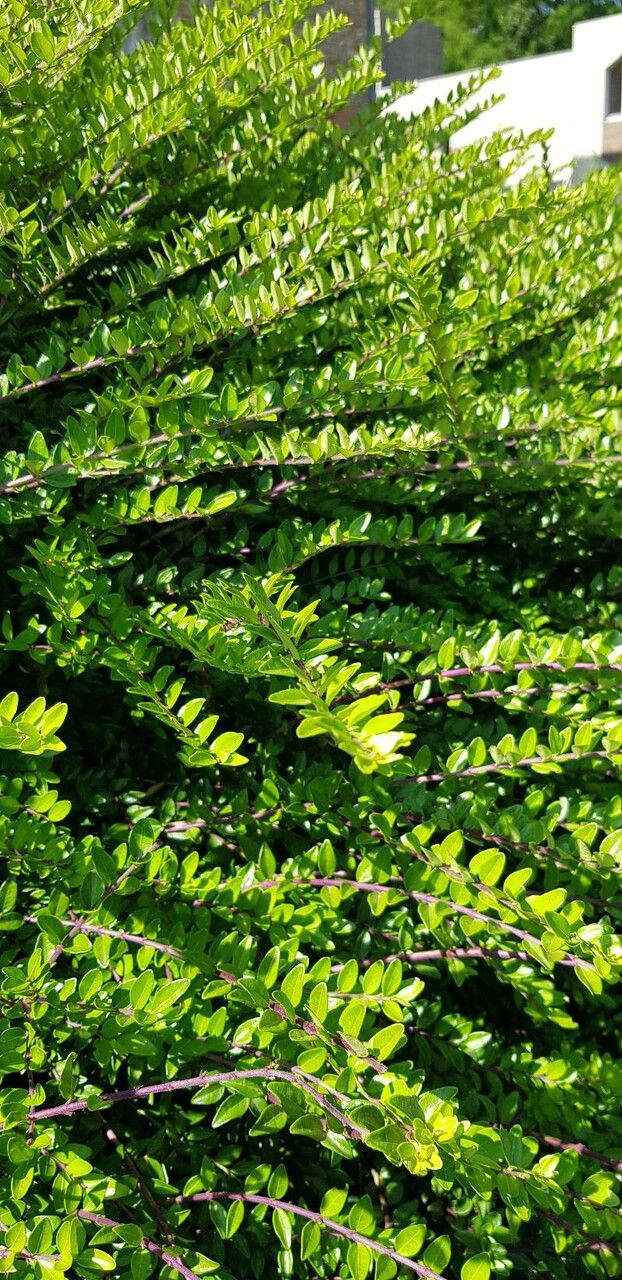
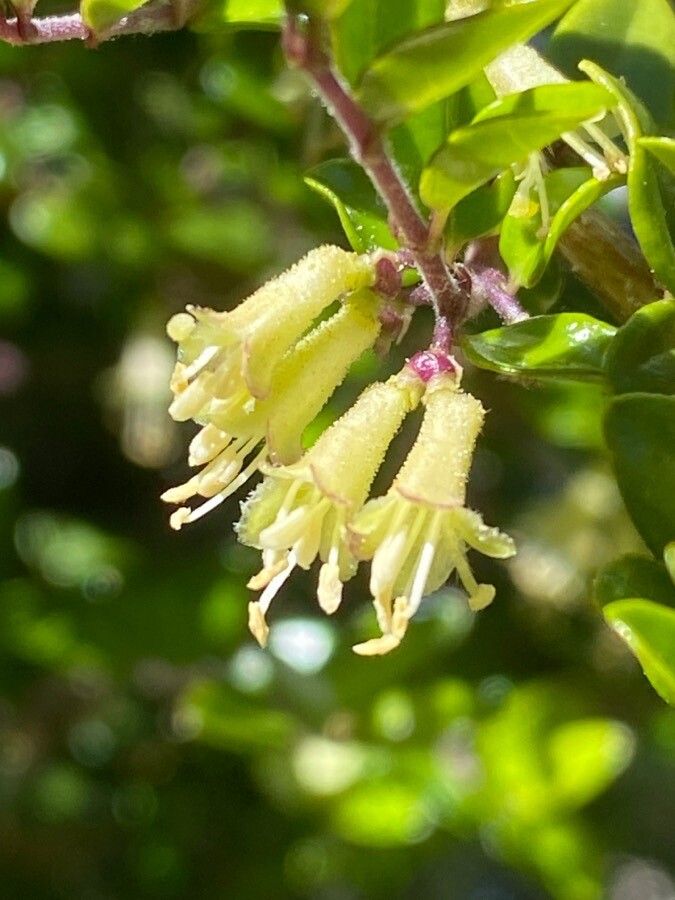
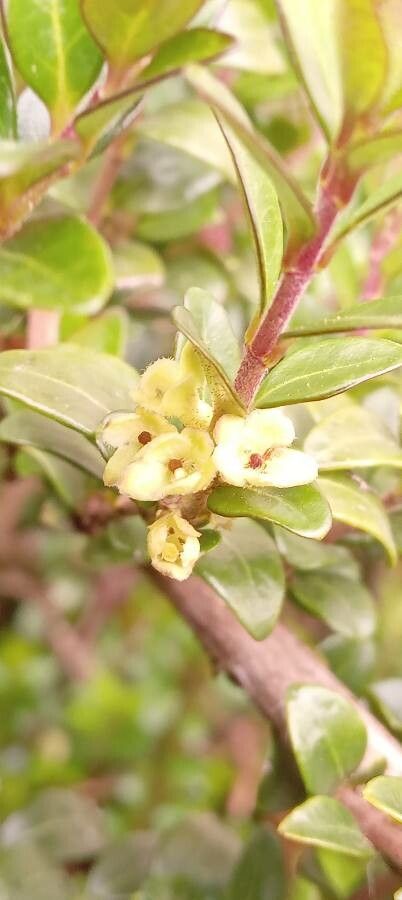
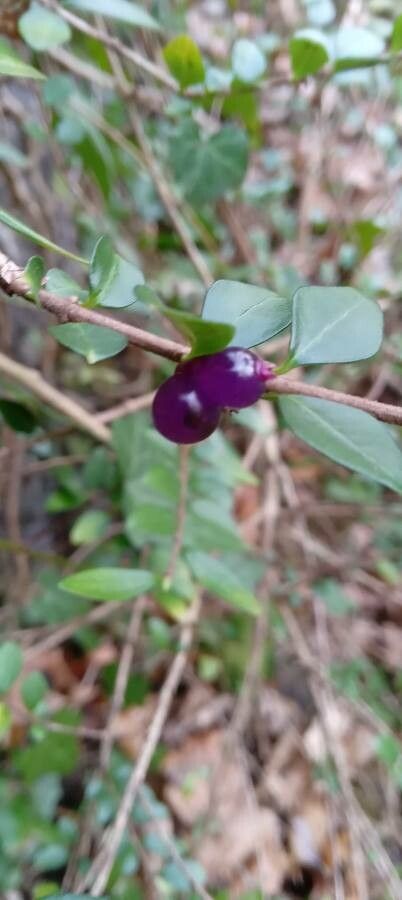
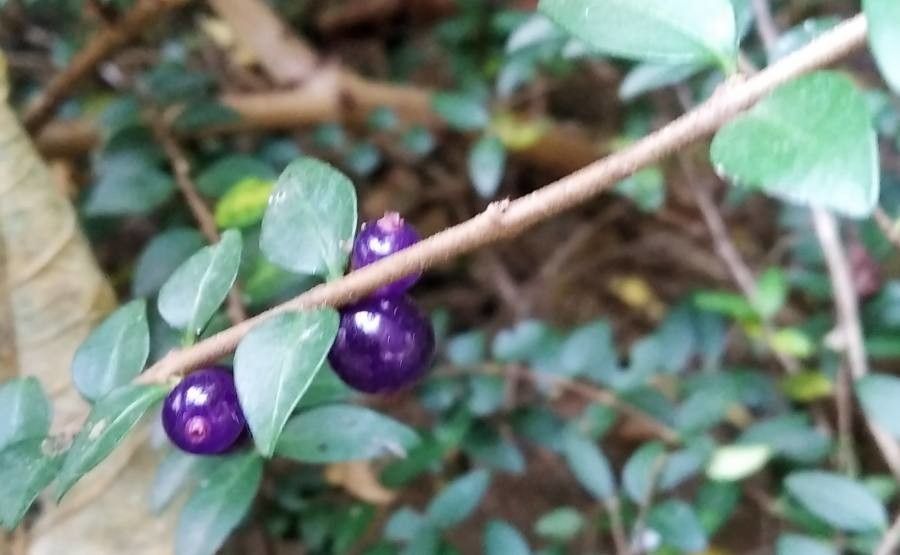
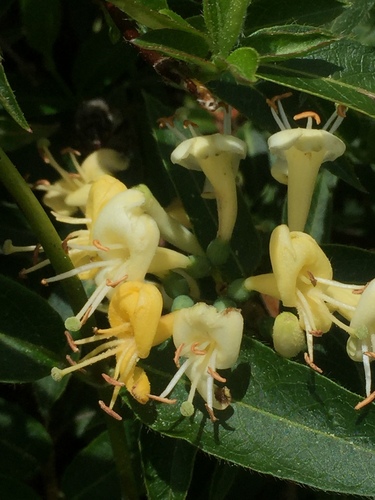
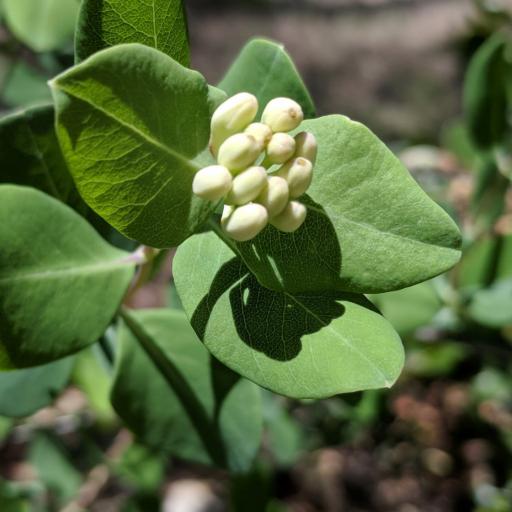
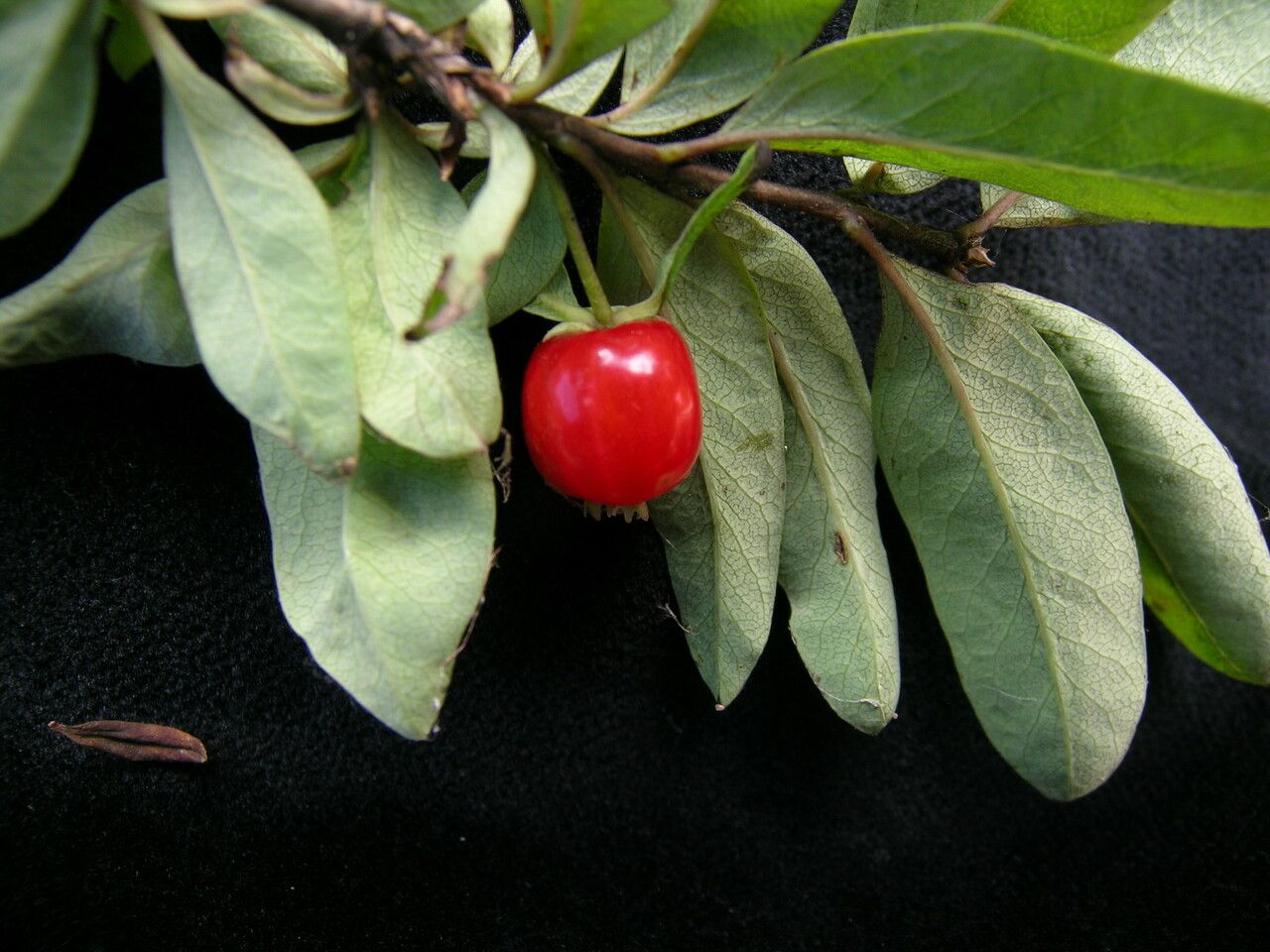
Lonicera nitida, commonly known as box honeysuckle or Wilson's honeysuckle, is a species of flowering plant in the Caprifoliaceae family. This small evergreen shrub typically grows up to 2 meters tall and wide. The leaves are small, glossy, and dark green, turning bronze in winter. The flowers, which are white or yellowish-white, bloom from late spring to early summer.
Native to China, Lonicera nitida has been widely cultivated around the world as an ornamental plant due to its attractive appearance and easy maintenance. It is often used as a hedge or border plant because of its dense growth habit.
Lonicera nitida prefers well-drained soil and full sun exposure but can tolerate partial shade. It requires regular watering during the growing season but can withstand drought once established.
Although this species of honeysuckle does not produce edible fruit, it attracts pollinators such as bees and butterflies with its fragrant flowers.
Overall, Lonicera nitida is an excellent choice for gardeners seeking an attractive evergreen shrub that requires minimal care while providing year-round interest in landscape design.
Wilson's honeysuckle demonstrates strong resistance to disease and is typically not susceptible to illnesses. With respect to care, this plant is fairly low-maintenance. When grown outdoors it needs only minimal watering, and larger plants usually do not require pruning. Smaller plants, however, should be pruned after they finish blooming. Wilson's honeysuckle is appropriate for anyone with outdoor space, like a garden or deck, and does not call for extensive plant-care experience.
How to keep Lonicera Nitida.
Light
Wilson's honeysuckle is native to habitats like forest understories and rocky areas, where it occurs in natural shade. It prefers partial sun but can tolerate full sun or full shade, showing its versatile and hardy nature.
Temperature
Wilson's honeysuckle shows strong adaptability to a range of climate conditions, whether facing scorching summers or chilly winters. That said, it does have an optimal temperature range for healthy growth. If temperatures rise too high, the plant can suffer heat and humidity stress, which may lead to its death. In areas where temperatures approach the lower limit of its cold tolerance, taking insulating measures to protect the plant is important.
Fertilizer
Timing is important when fertilizing Wilson's honeysuckle. Apply fertilizer in early spring and repeat monthly through early summer. Fertilizer encourages attractive blooms and supplies energy during both dormant and active growth phases.
Botanical profile.
- Plant Type
- Shrub
- Life Cycle
- Perennial
- Genus
- Lonicera
- Family
- Caprifoliaceae
- Hardiness Zone
- 5-9
- Mature Height
- 1.52 m to 2.44 m
- Mature Spread
- 1.22 m to 2.13 m
- Leaf Color
- Yellow, Green, Gold
- Leaf Type
- Evergreen
- Flower Color
- White
- Flower Size
- 2.54 cm
- Bloom Time
- Mid spring, Late spring
- Planting Time
- Spring, Summer, Autumn, Winter
- Harvest Time
- Mid summer, Late summer
- Native Area
- China
Other names.