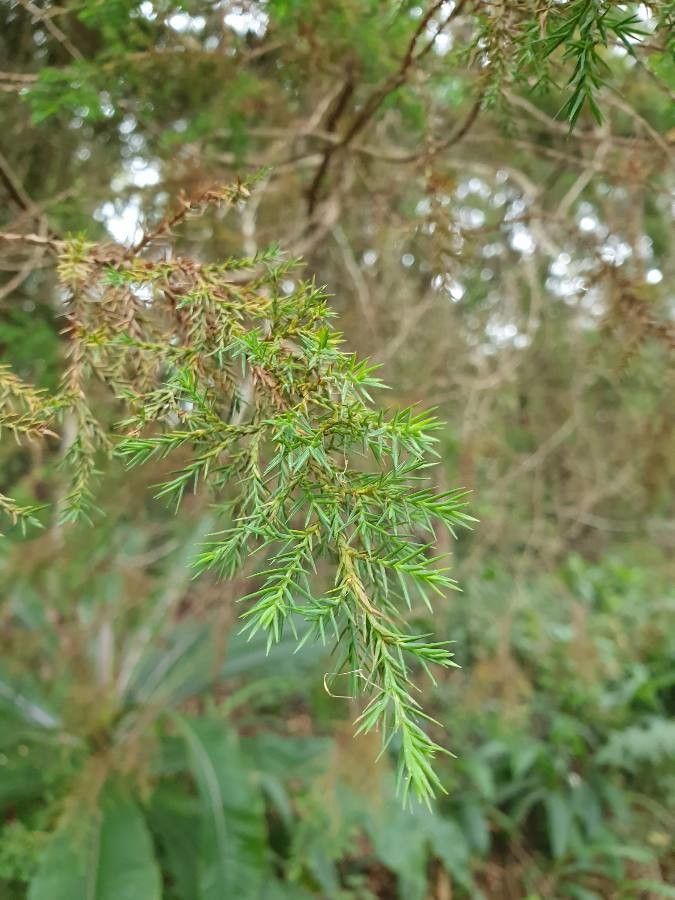
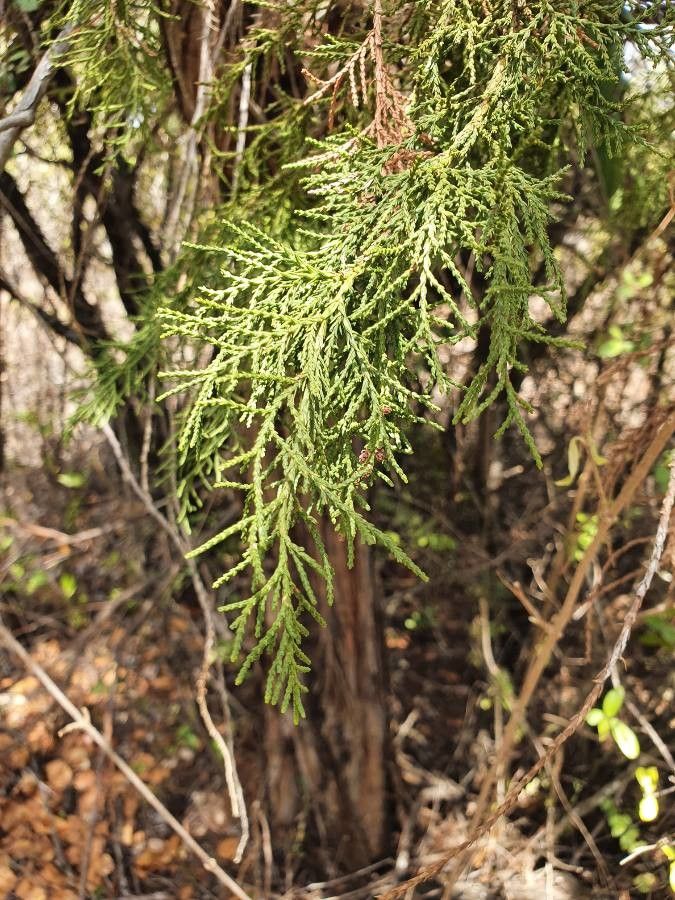
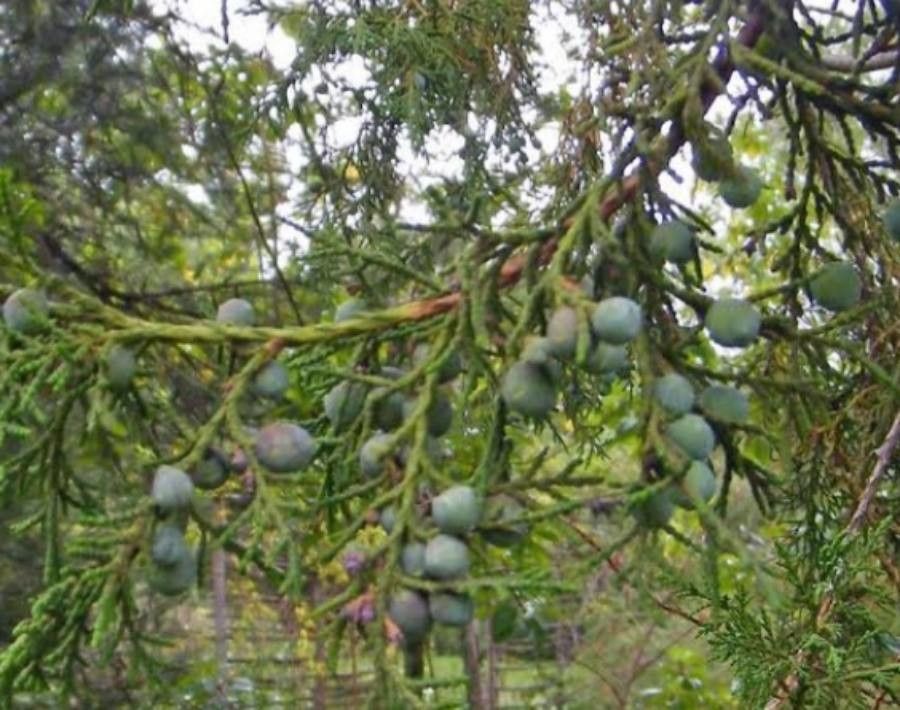
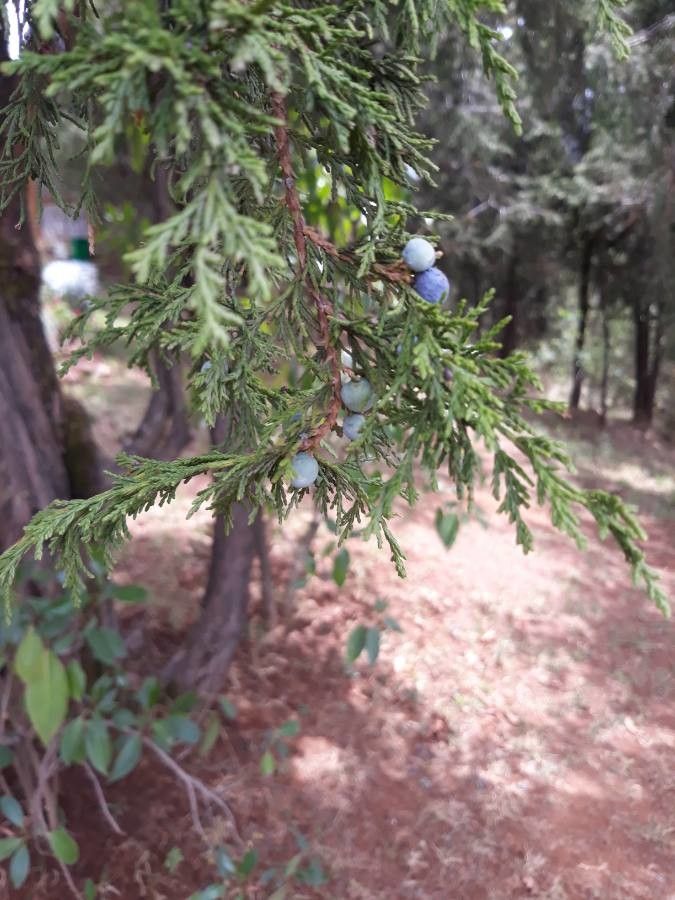
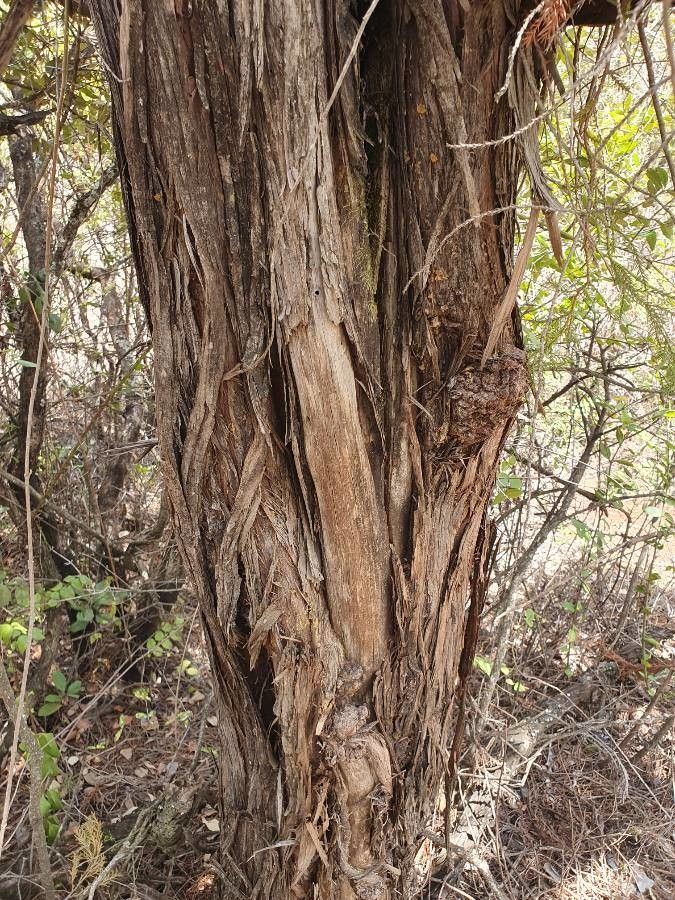
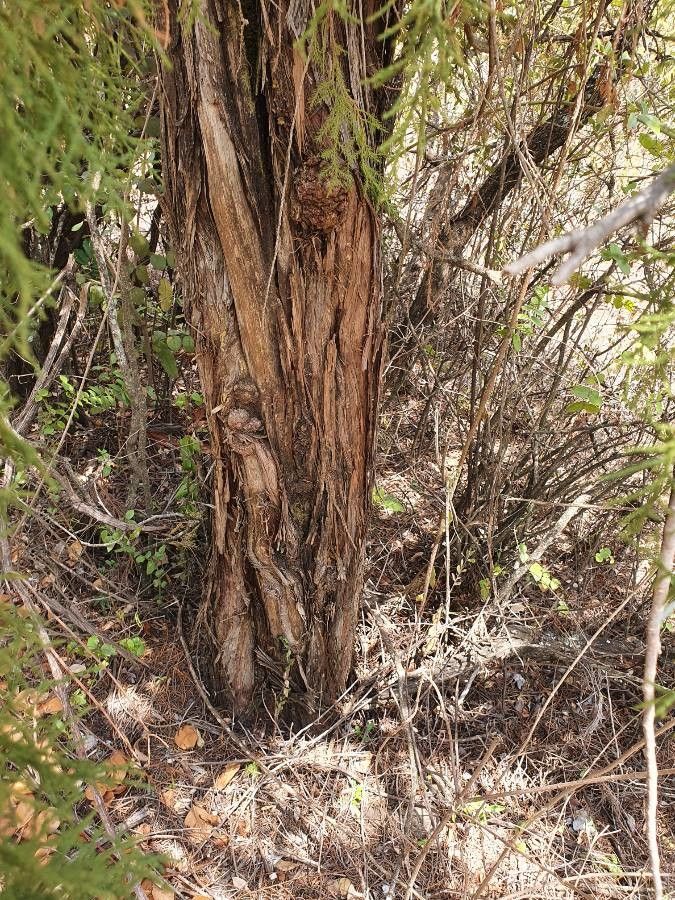
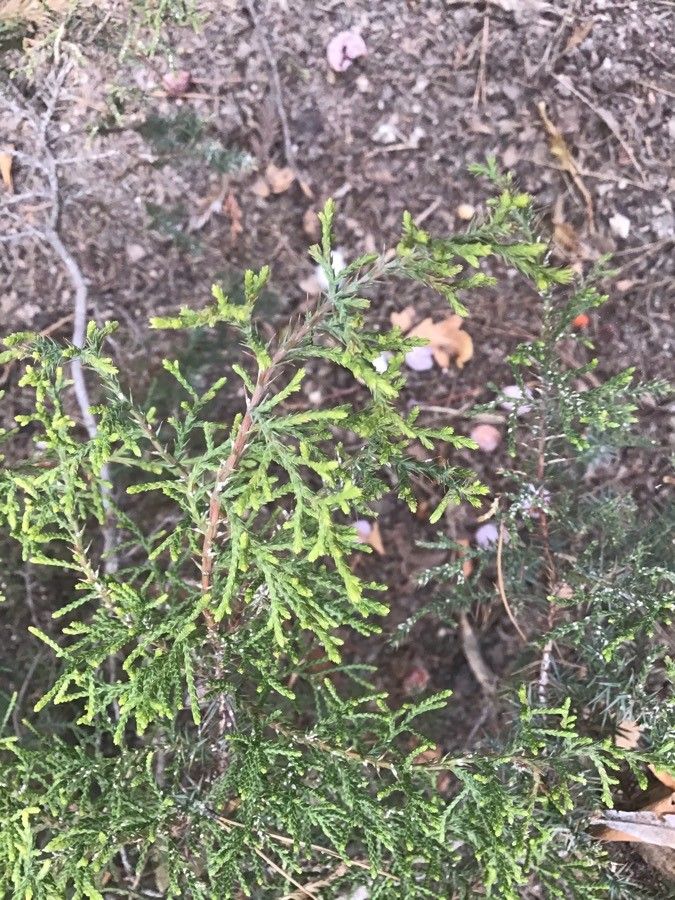
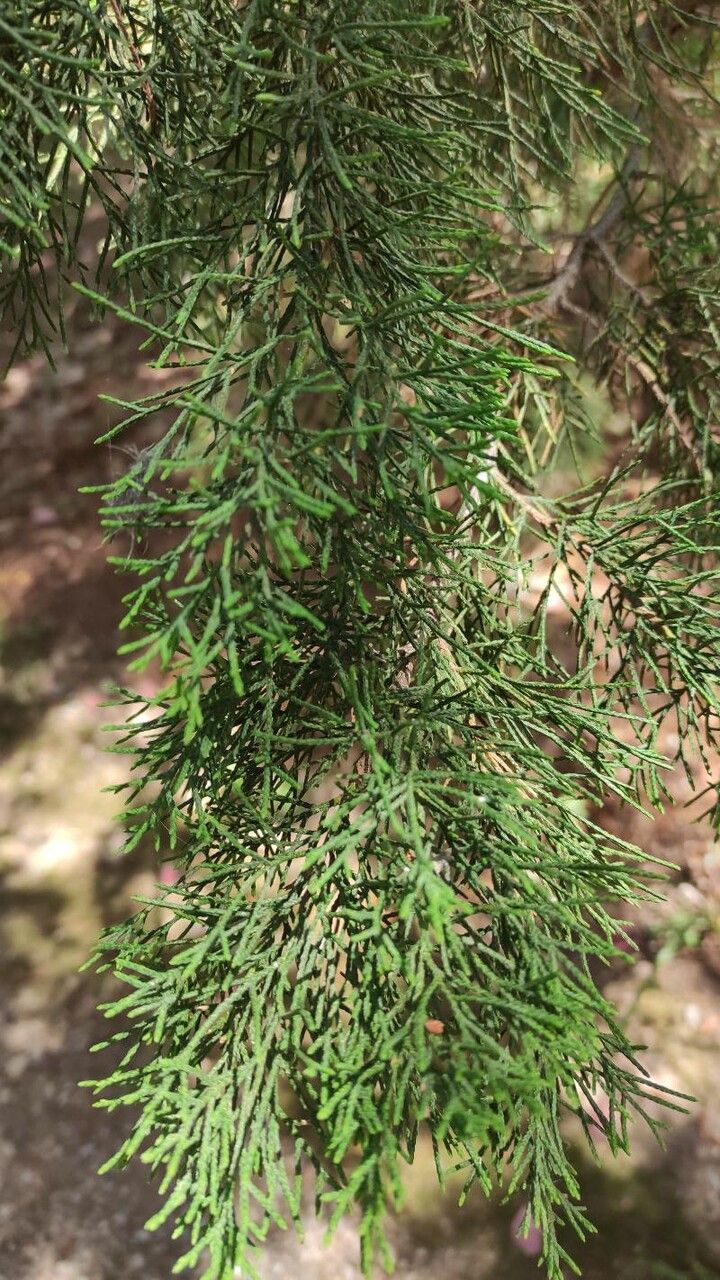
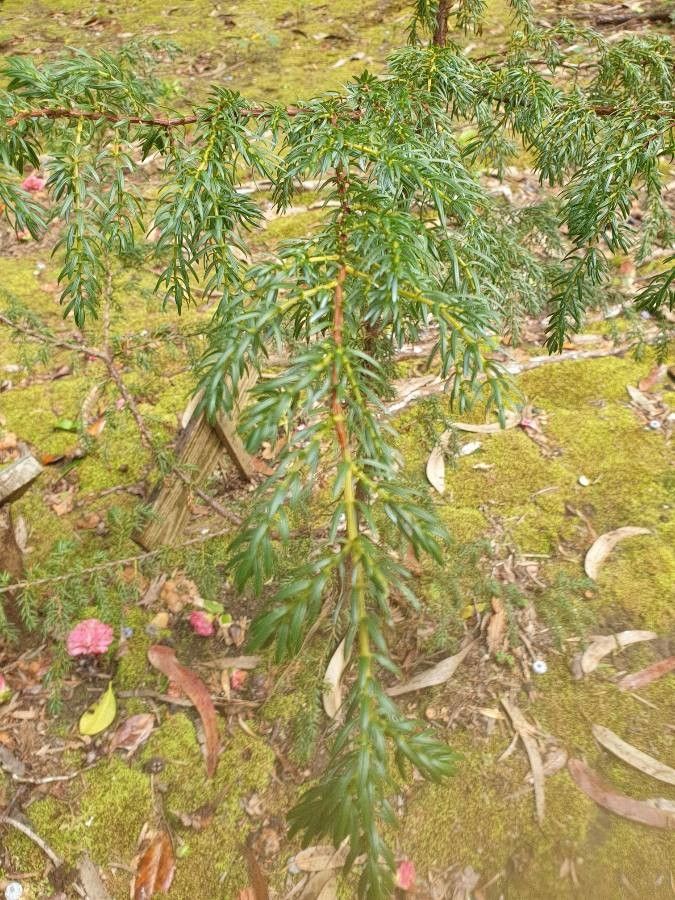
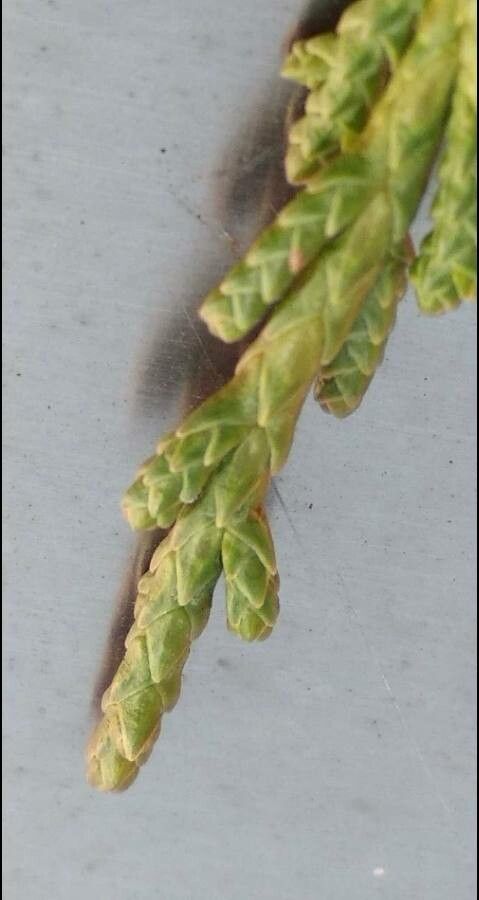
Juniperus procera, commonly known as the African juniper or the East African pencil cedar, is a coniferous tree species in the Cupressaceae family. Native to East Africa, it is found in countries such as Ethiopia, Kenya, Tanzania, and Uganda. The tree can grow to a height of 20 to 25 meters with a trunk diameter of up to 2 meters. It has a narrow, conical shape with dense, blue-green foliage and needle-like leaves arranged in whorls of three. For centuries, local communities have used Juniperus procera for various purposes. The wood is highly valued for its durability and resistance to decay, making it ideal for construction purposes such as roofing poles, fence posts, and furniture making. The plant also has medicinal properties and has been used by traditional healers to treat various ailments such as stomach problems and respiratory infections. In addition to its practical uses, Juniperus procera plays an important ecological role by providing habitat for wildlife species, including birds and small mammals. Unfortunately, deforestation has significantly reduced the populations of Juniperus procera, making it an endangered species. Conservation efforts, such as reforestation programs and measures aimed at promoting sustainable use of natural resources, are being implemented to protect this valuable plant from extinction.
Botanical profile.
- Genus
- Juniperus
- Family
- Cupressaceae
Other names.