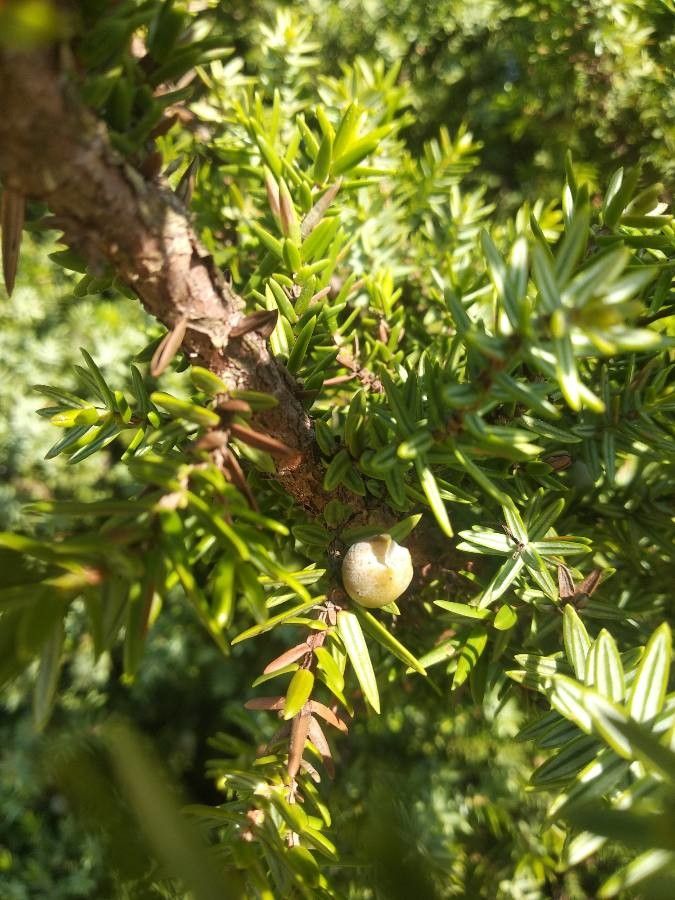
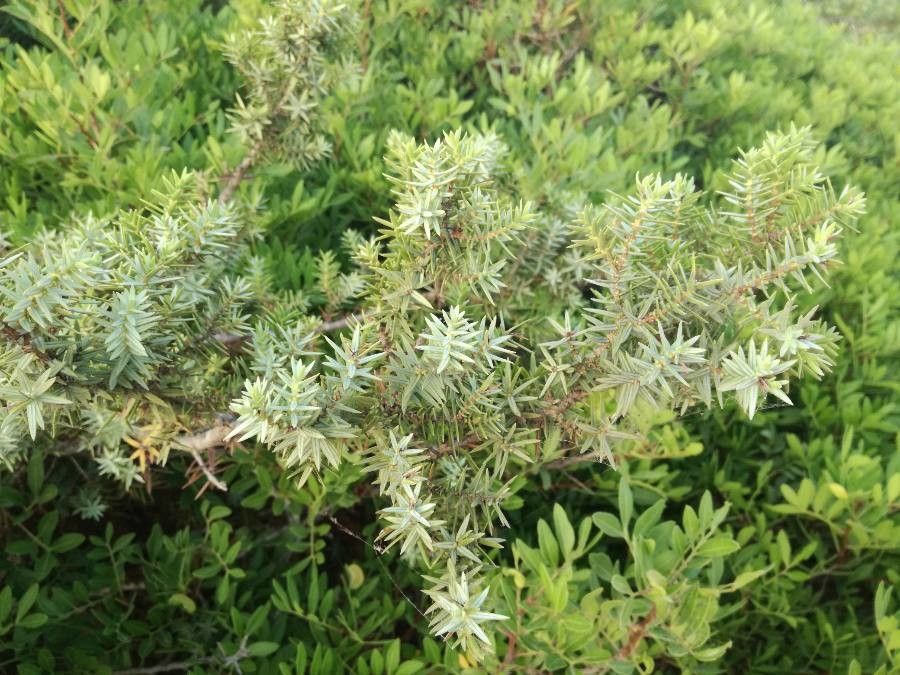
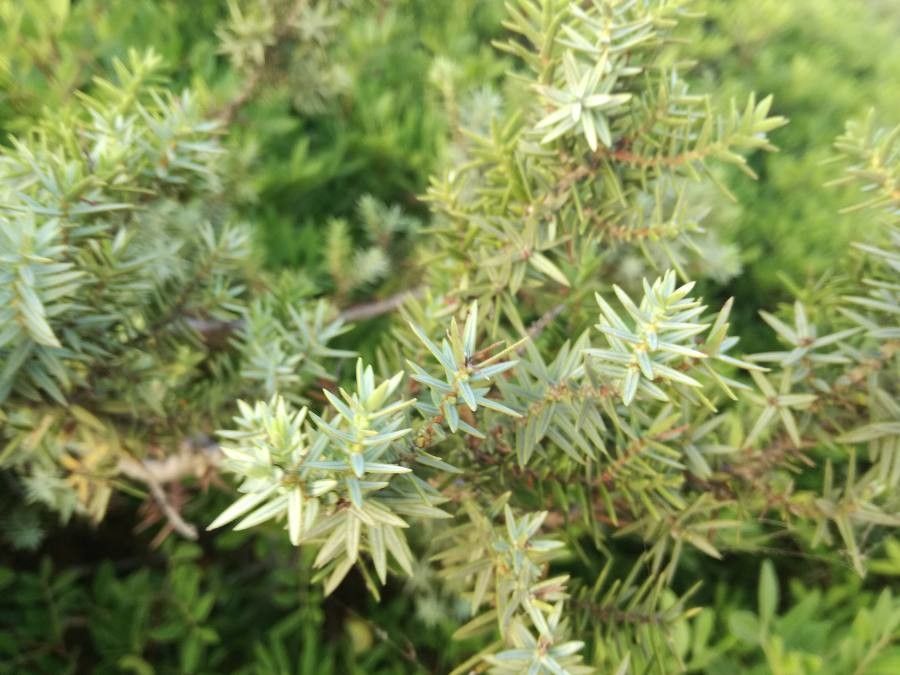
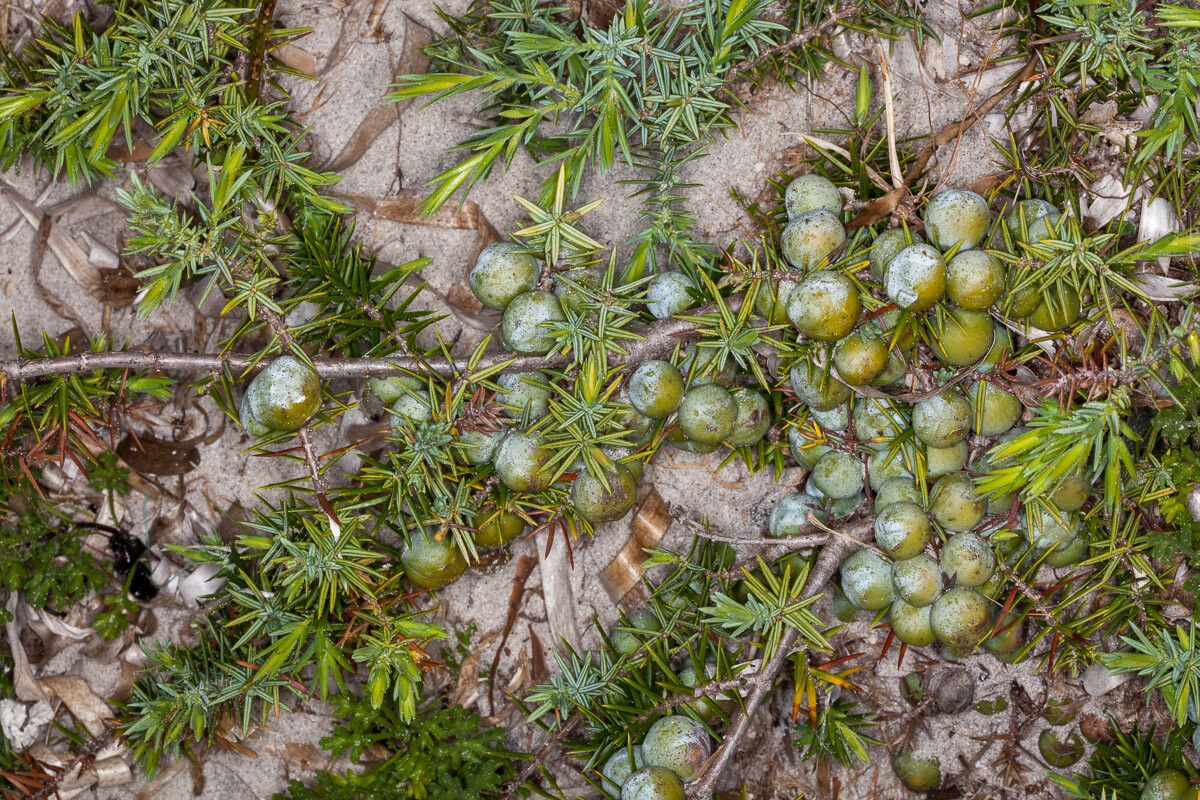
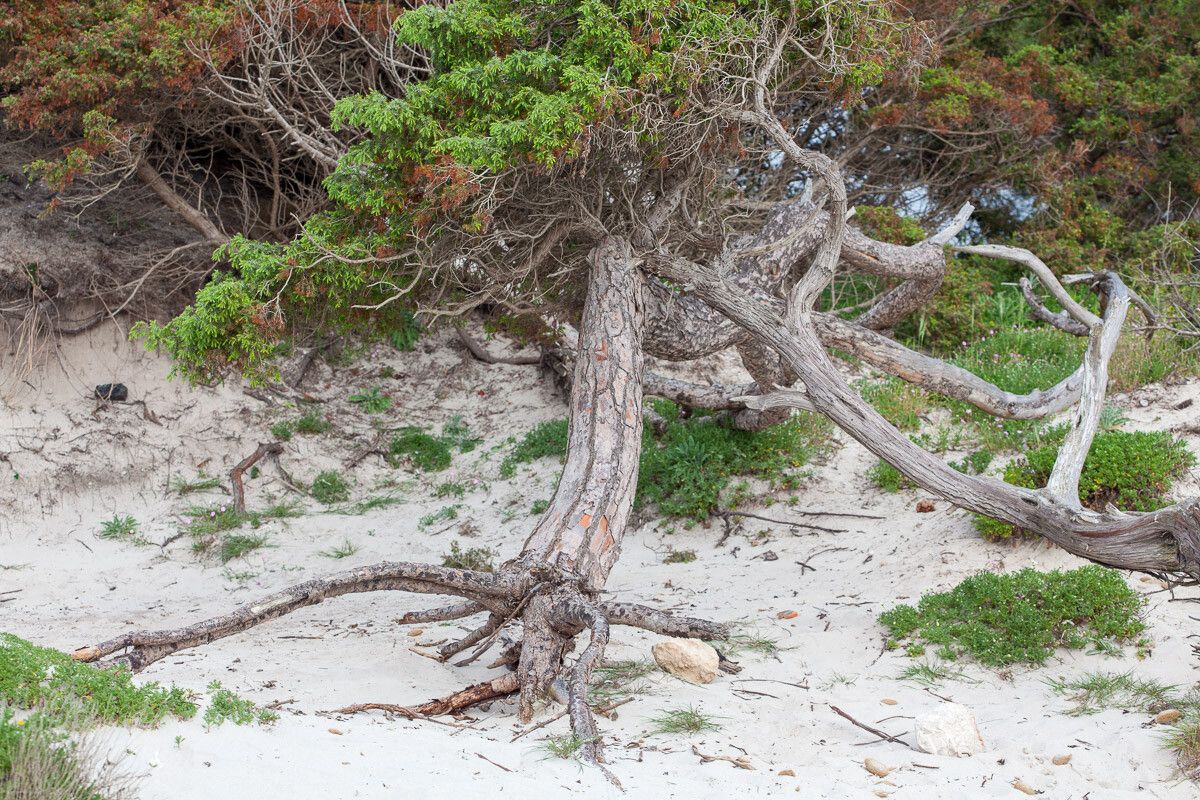
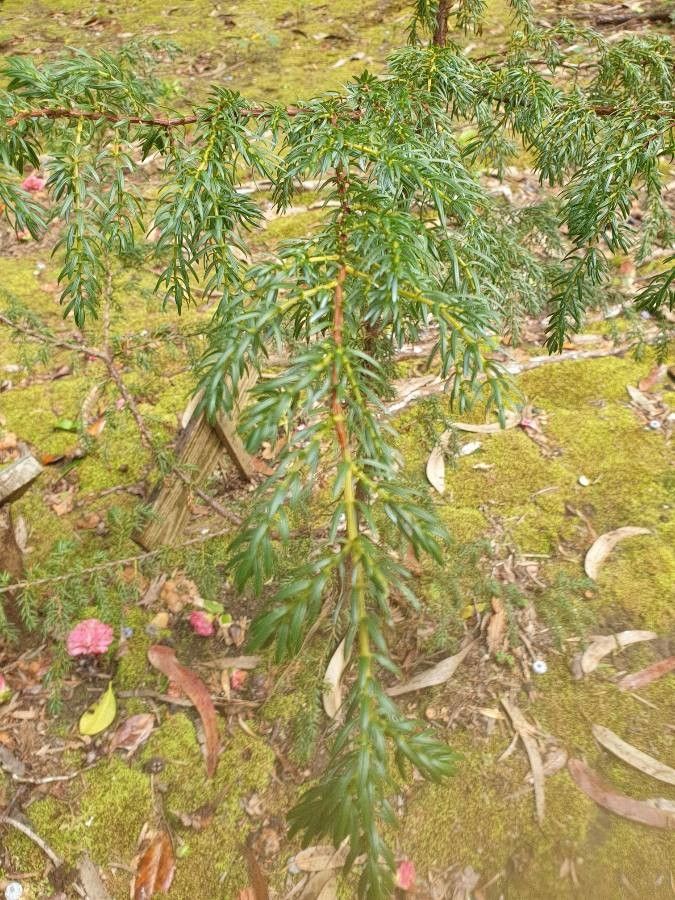
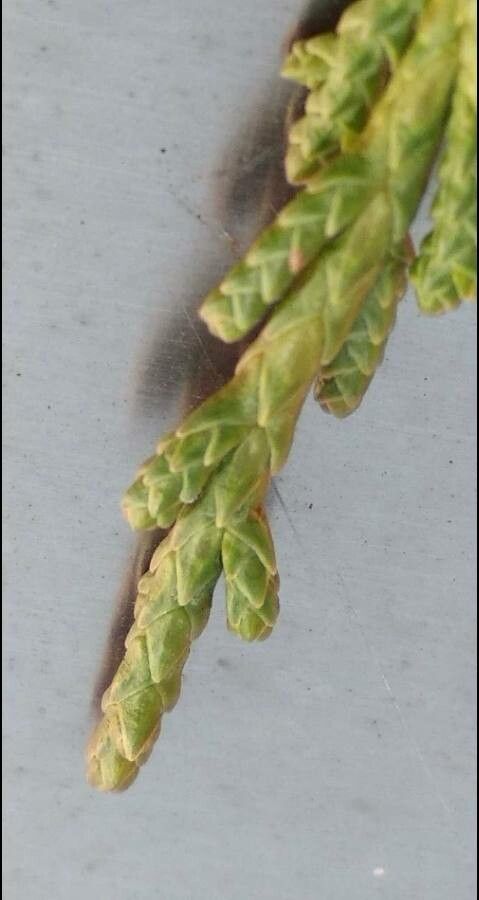
Juniperus macrocarpa (large-fruited juniper, syn. J. oxycedrus subsp. macrocarpa (Sibth. & Sm.) Ball) is a species of juniper, native across the northern Mediterranean region from southwestern Spain east to western Turkey and Cyprus, growing on coastal sand dunes from sea level up to 75 metres (246 feet) in altitude.
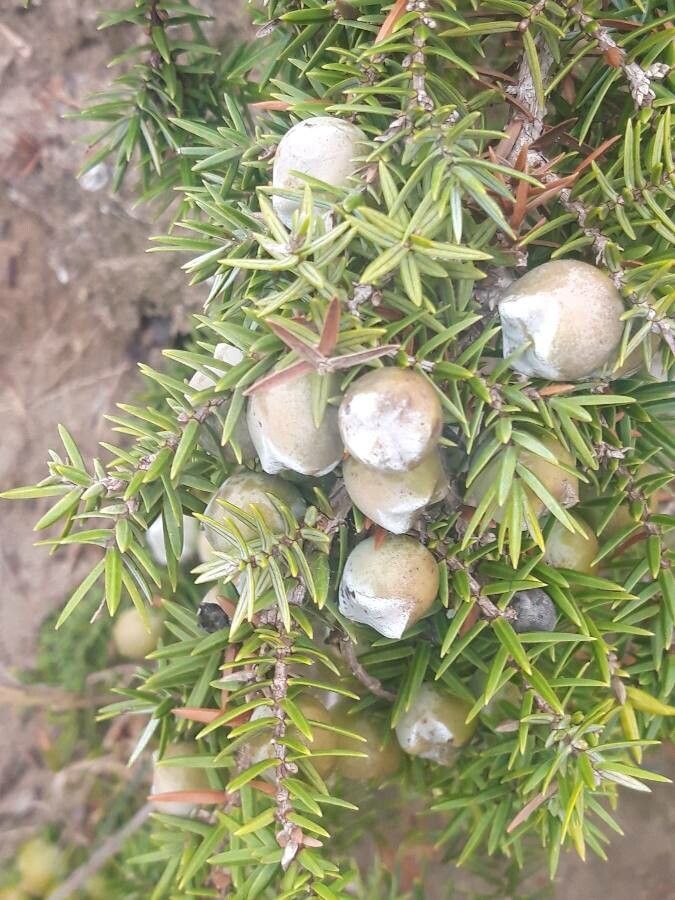
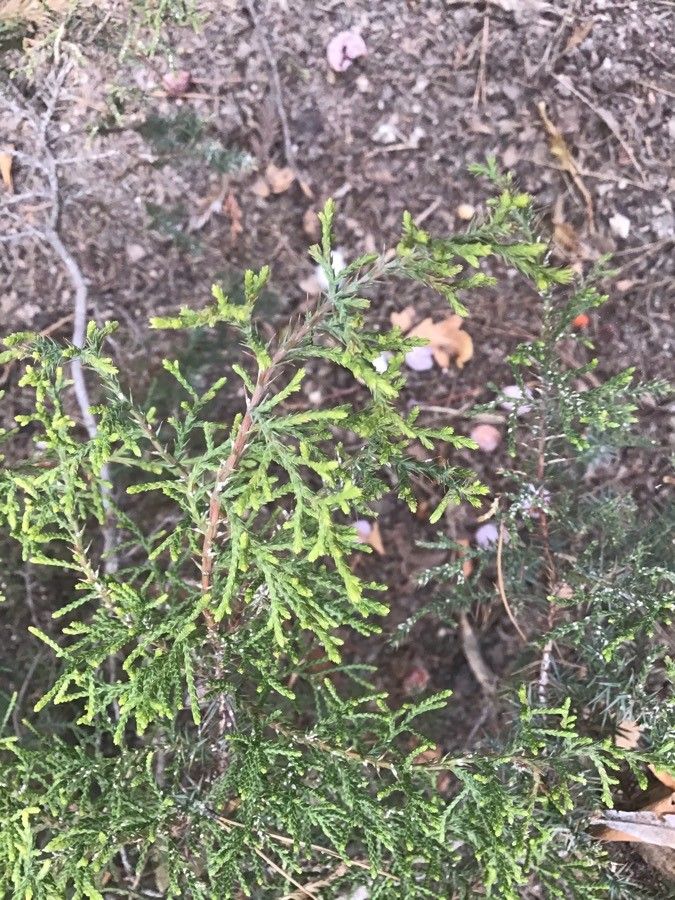
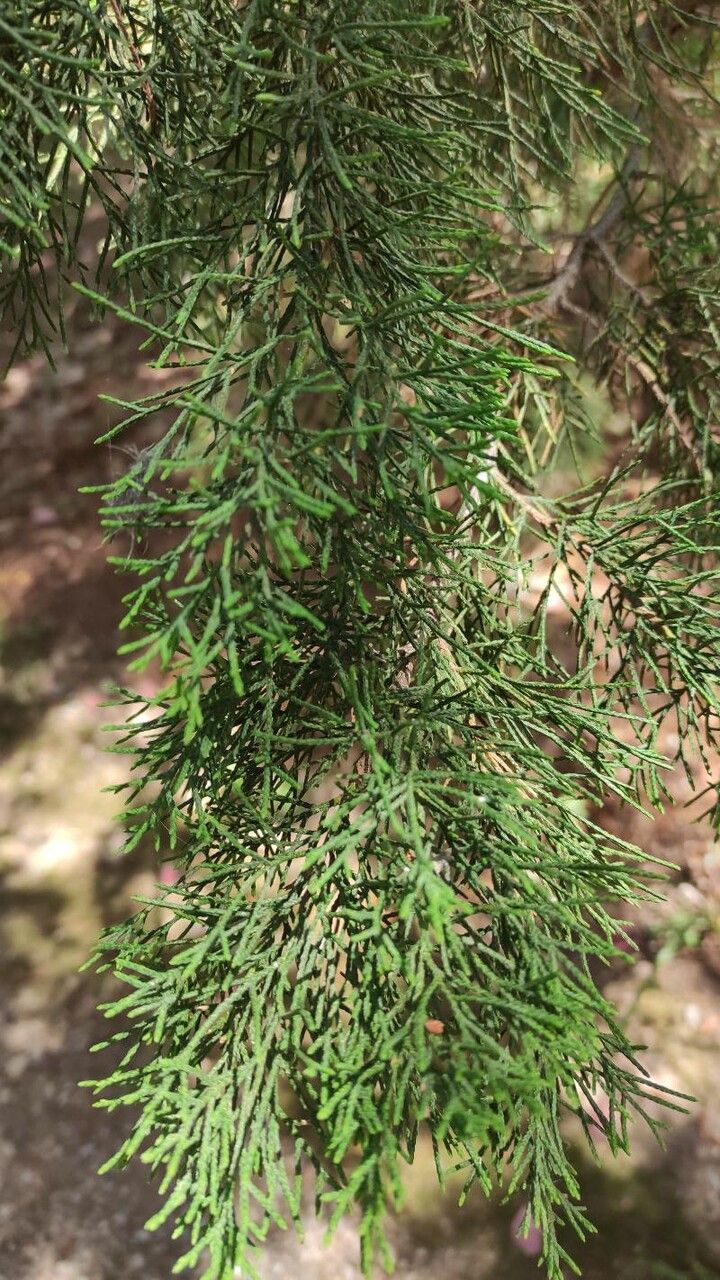
It is a spreading shrub 2–5 m (6+1⁄2–16+1⁄2 ft) tall, rarely a small tree up to 14 m (46 ft) tall. The leaves are broad lanceolate, produced in whorls of three, green, 12–20 millimetres (1⁄2–3⁄4 in) long and 2–3 mm broad, with a double white stomatal band split by a green midrib on the inner surface. It is dioecious, with separate male and female plants. The seed cones are berry-like, green ripening in 18 months to orange-red with a variable pink waxy coating; they are spherical, 12–18 mm diameter, and have six fused scales in two whorls, three of the scales with a single seed. The seeds are dispersed when birds eat the cones, digesting the fleshy scales and passing the hard seeds in their droppings. The pollen cones are yellow, 2–3 mm long, and fall soon after shedding their pollen in late winter.Despite its distinct morphology with large cones and broad leaves more like those of Juniperus drupacea, it has often been treated as a subspecies of Juniperus oxycedrus, though recent genetic studies have shown its DNA is distinct from that of J. oxycedrus.
Plum juniper is fairly disease-resistant and generally not prone to disease. As for care, this plant is relatively low-maintenance. When grown outdoors it needs little watering, and larger specimens typically do not require pruning. Smaller plants, however, should be trimmed after they finish blooming. Plum junipert is well suited to anyone with an outdoor area, like a garden or deck, and does not demand much experience in plant care.
How to keep Juniperus Macrocarpa.
Light
Plum juniper comes from open habitats, like sunny meadows and forest margins, where there is plenty of light. It performs best in Full Sun but can also withstand Partial Sun, showing good adaptability to different light conditions.
Temperature
Plum juniper is highly adaptable to a variety of climates, from blazing summers to frosty winters. Nevertheless, it has an ideal temperature range for growth. When temperatures get excessively high, the plant can undergo heat and humidity stress that may lead to its death. In areas where temperatures approach the lower limit of its cold tolerance, providing insulation is important to protect the plant.
Fertilizer
Plum juniper has specific nutrient needs and does not require heavy fertilization. Spring is the best time to fertilize for optimal growth. Providing nutrients enhances its health, increases resistance to pests and diseases, and helps sustain a long lifespan.
Botanical profile.
- Plant Type
- Shrub
- Life Cycle
- Perennial
- Genus
- Juniperus
- Family
- Cupressaceae
- Hardiness Zone
- 7-10
- Mature Height
- 3.05 m to 10.06 m
- Mature Spread
- 2.13 m to 6.1 m
- Leaf Color
- Dark Green
- Leaf Type
- Evergreen
- Bloom Time
- Early spring, Mid spring
- Planting Time
- Spring, Summer, Autumn
- Harvest Time
- Late summer, Early fall, Mid fall
Other names.