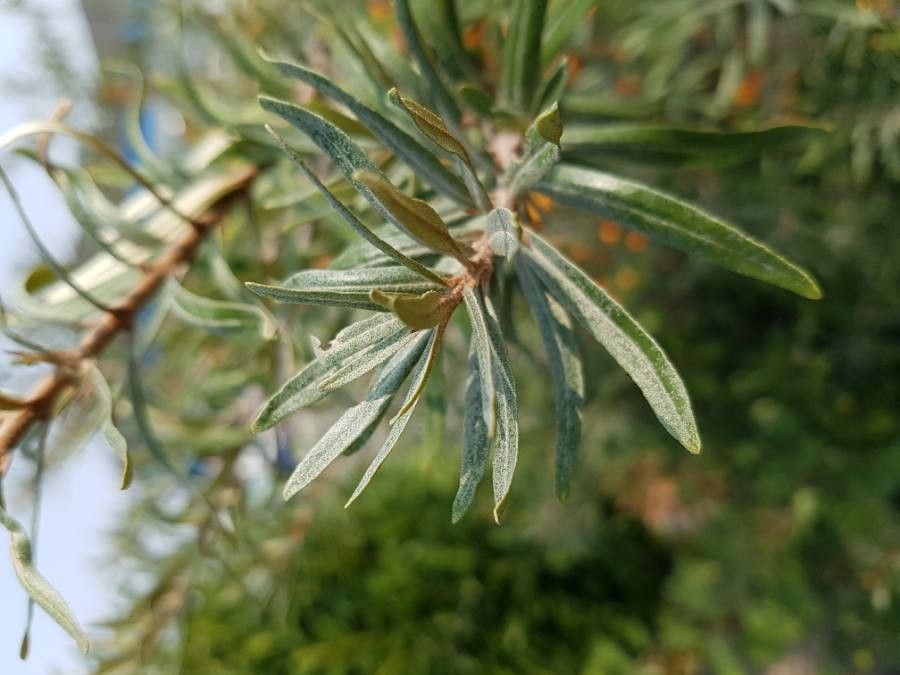
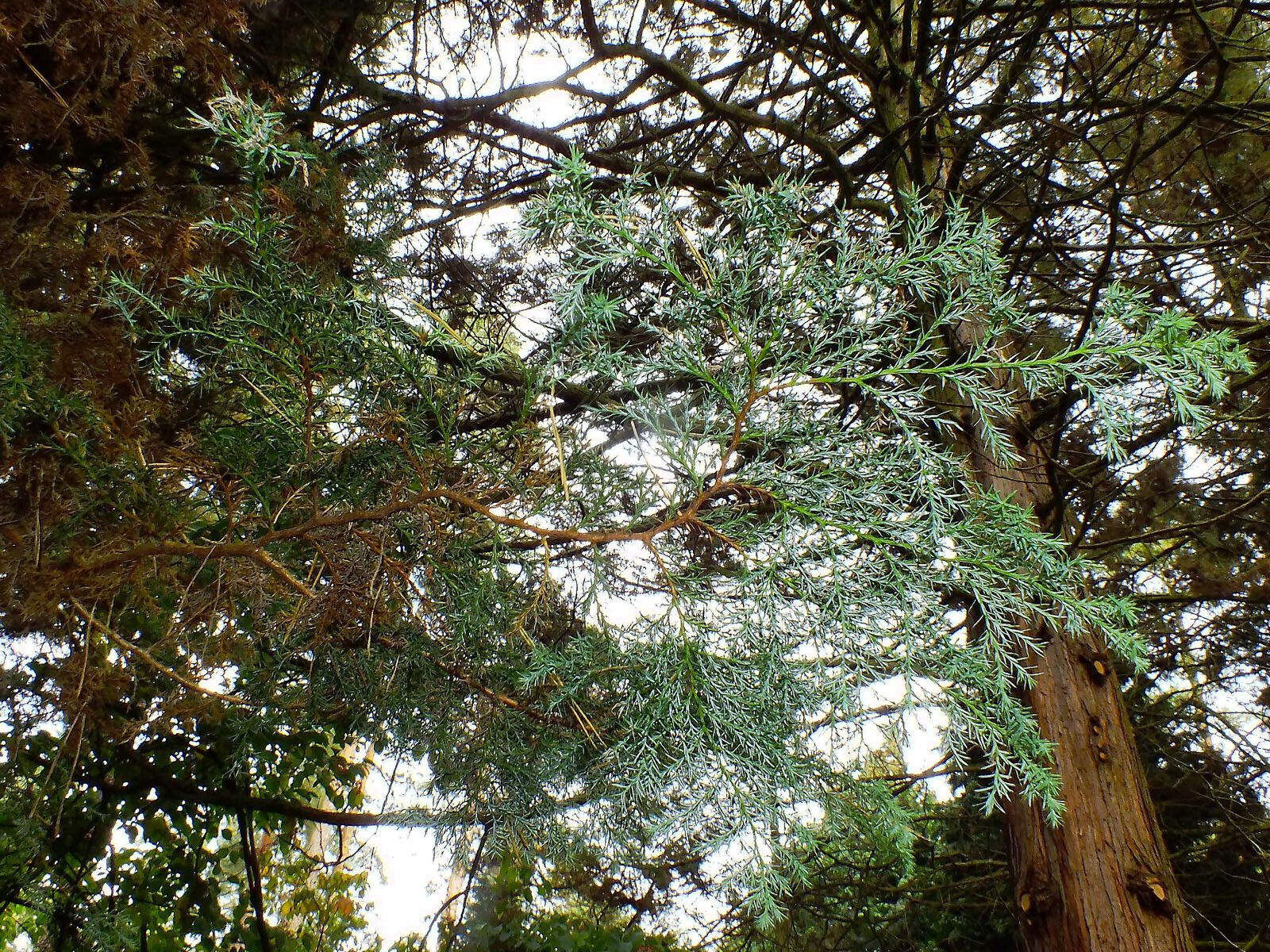
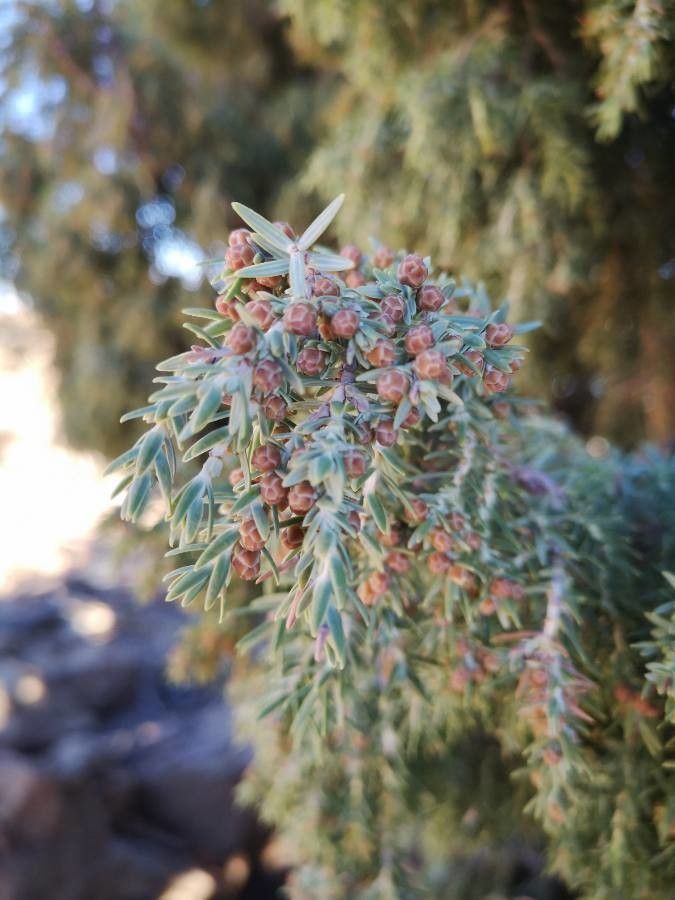
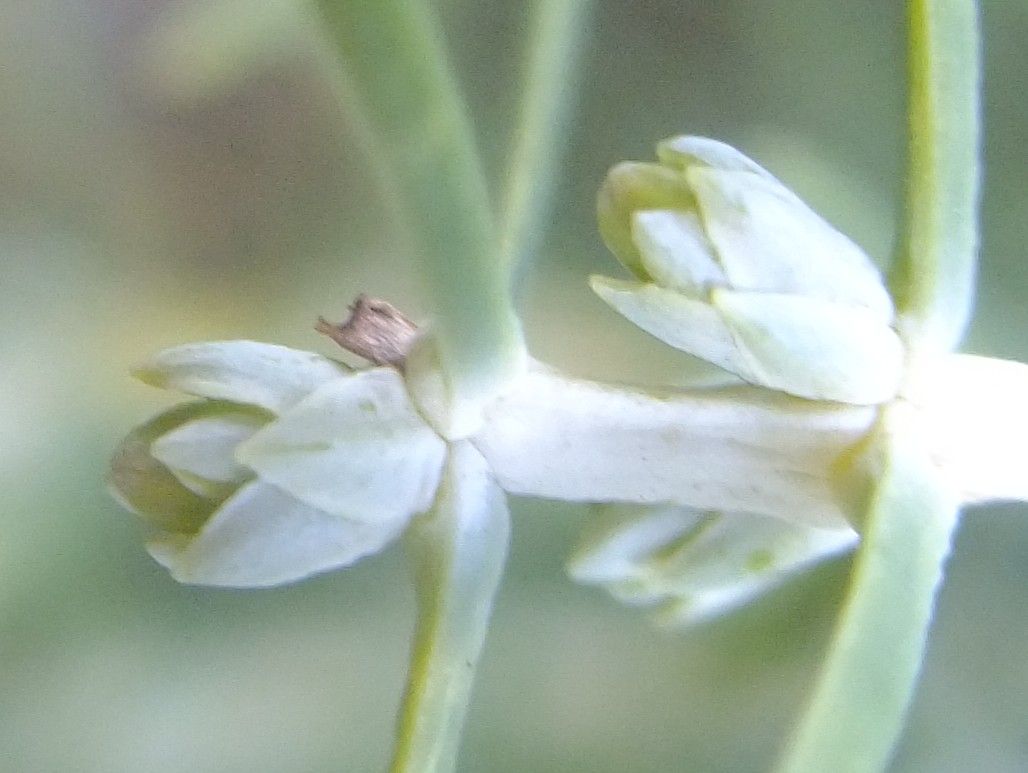
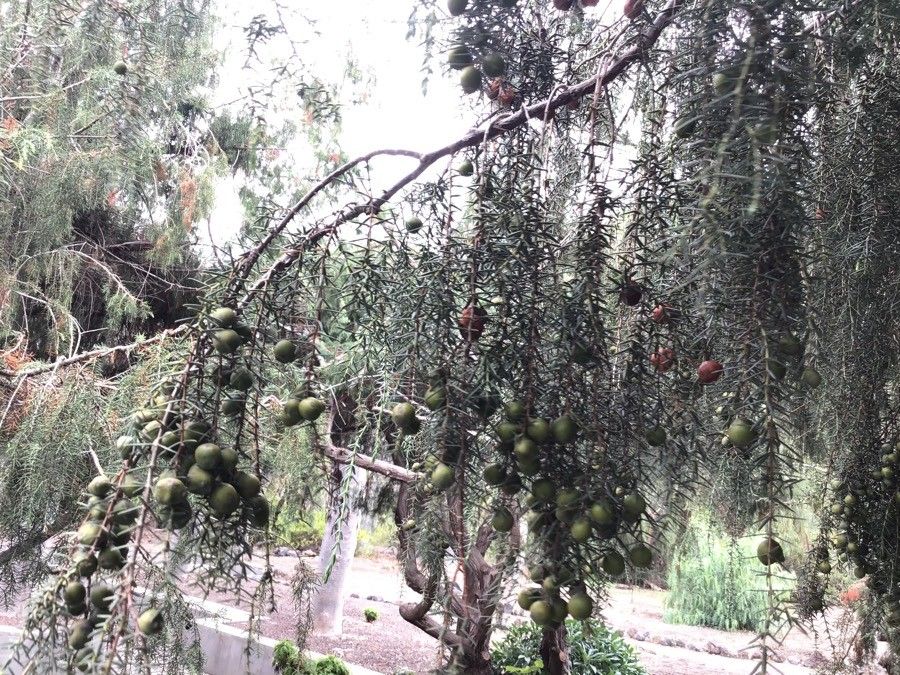
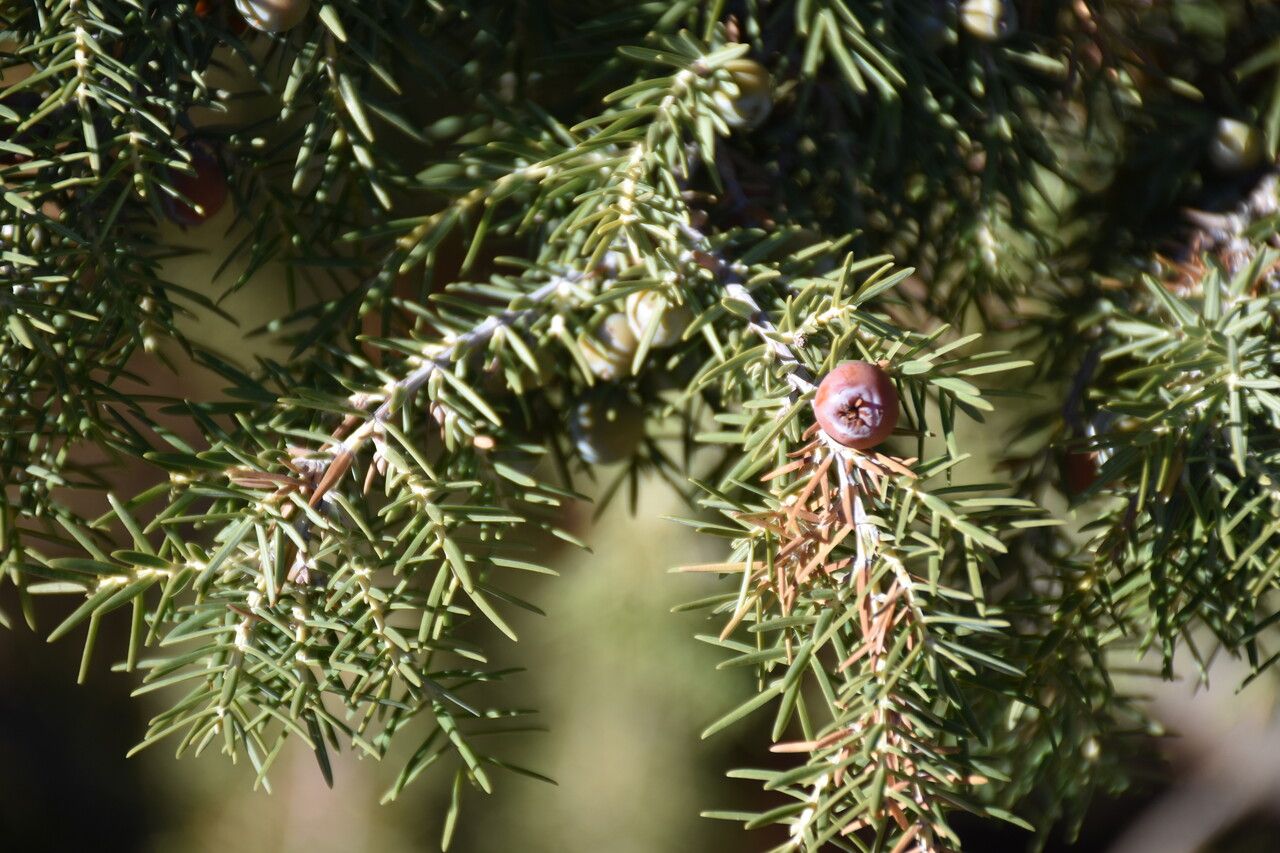
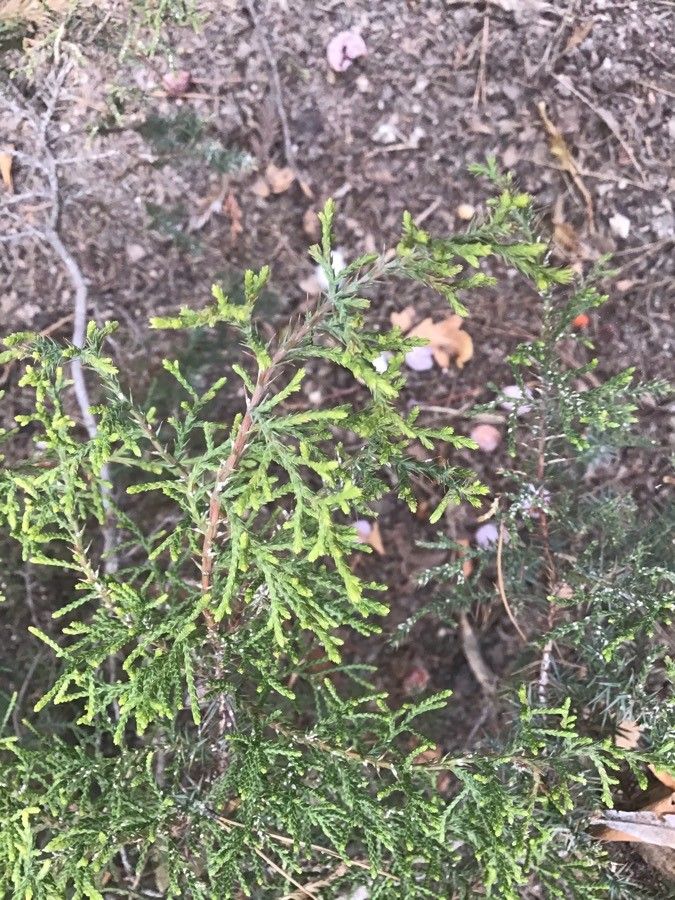
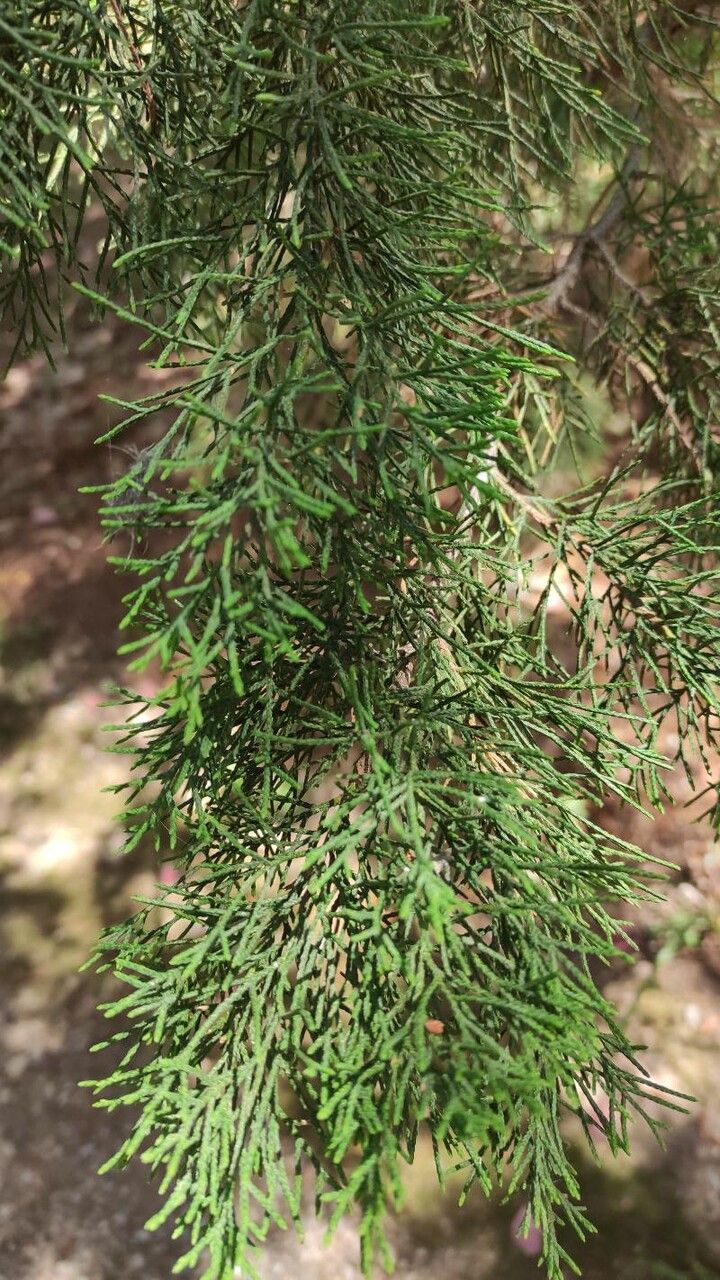
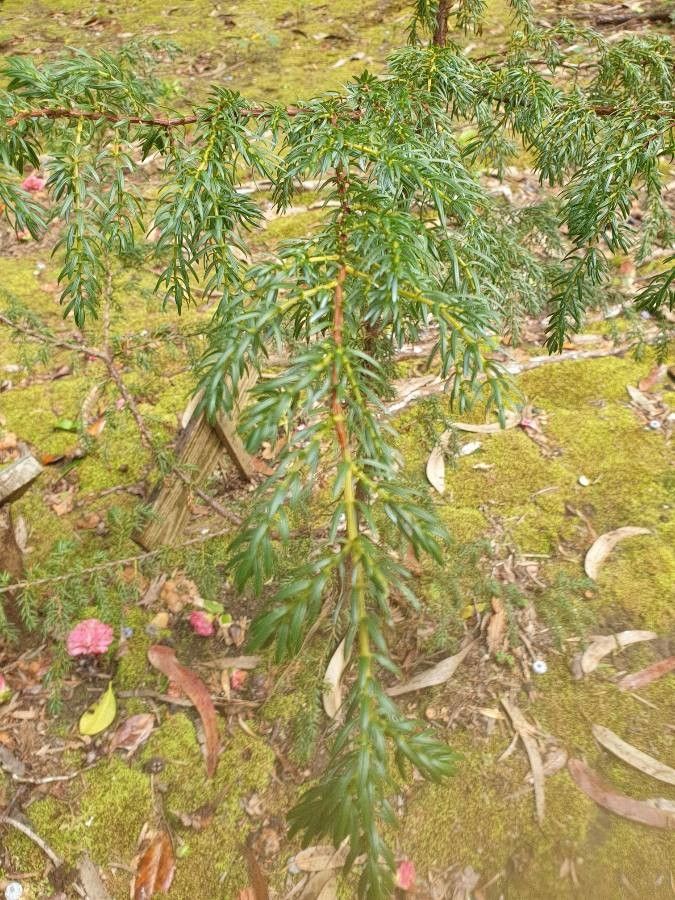
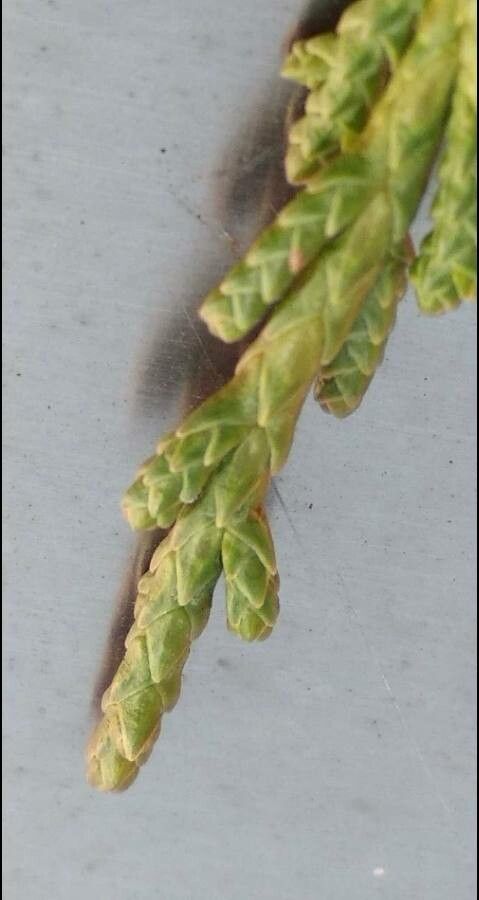
Juniperus cedrus, commonly known as the Cedar Juniper, is a species of evergreen coniferous tree belonging to the Cupressaceae family. Native to the Mediterranean region, it can be found in countries such as Spain, Portugal, Morocco, and Algeria. This tree can grow up to 20 meters tall and have a trunk diameter of up to 2 meters. The Cedar Juniper has a distinctive conical shape with dense foliage that ranges from blue-green to gray-green in color. The needle-like leaves are arranged in whorls of three on short shoots or singly on long shoots. The tree produces small cones that start green but turn brown upon maturity. These cones contain seeds that are dispersed by birds or small mammals. Juniperus cedrus is often used for ornamental purposes due to its attractive appearance and ability to tolerate drought conditions. Additionally, it has medicinal properties, as its essential oil has traditionally been used to treat respiratory problems such as bronchitis and asthma. However, the species is threatened by habitat loss due to human activities such as logging for timber production and land conversion for agriculture. While some countries where it naturally occurs have implemented conservation efforts, more needs to be done to protect this valuable plant species from extinction.
Canary islands juniper has strong resistance to disease and is typically not prone to illnesses. Regarding care, this plant is fairly low-maintenance. When grown outdoors it needs little watering, and larger specimens usually do not require pruning. Smaller plants, however, should be pruned after they finish blooming. Canary islands juniper is suitable for anyone with an outdoor space, such as a garden or deck, and does not demand much prior care experience.
How to keep Juniperus Cedrus.
Light
Canary Islands juniper is native to open habitats, such as sunny meadows and forest edges, which supply abundant light. It thrives in full sun but can also tolerate partial sun, adapting well to a range of sunlight conditions.
Water
The Canary Islands juniper is well-suited to the conditions of the Canary Islands, needing very little water to thrive. Ideally, it benefits from occasional watering, about once a week. As an evergreen, it retains moisture in its needles, which helps to minimize water loss. This characteristic makes it resilient across a variety of climates.
Humidity
This plant will thrive in moderate humidity, which is probably the level in your home. However, misting it a few times a week can be very beneficial. Make sure the room has good ventilation.
Temperature
Canary islands juniper displays strong temperature adaptability, tolerating higher heat and wide temperature fluctuations. In hot conditions, attention to watering and provision of suitable shade are necessary to avoid sunburn. On the other hand, Canary islands juniper is fairly sensitive to low temperatures; although it can endure some cold, extremely cold conditions can result in frost damage.
Fertilizer
The Canary Islands juniper has particular nutrient needs and does not require heavy fertilization. Fertilizing in spring is best for promoting optimal growth. Providing nutrients improves its health, increases its resistance to pests and diseases, and helps sustain its long lifespan.
Pruning
Canary Islands juniper has lush foliage and benefits from pruning between early and late winter. Focus on removing dead branches, thinning overcrowded areas, and shaping the plant to maintain its natural form. It is important to use clean, sharp tools, and avoid heavy pruning to minimize plant stress and encourage healthier growth and better air circulation.
Botanical profile.
- Plant Type
- Shrub
- Life Cycle
- Perennial
- Genus
- Juniperus
- Family
- Cupressaceae
- Hardiness Zone
- 8-10
- Mature Height
- 10.06 m to 20.12 m
- Mature Spread
- 4.88 m to 7.92 m
- Leaf Color
- Dark Green
- Leaf Type
- Evergreen
- Bloom Time
- Early spring, Mid spring
- Planting Time
- Spring, Summer, Autumn
- Harvest Time
- Late summer, Early fall, Mid fall
Other names.
Reader questions.
What are the sunlight requirements for Canary Islands Juniper?
The Canary Islands Juniper (Juniperus cedrus) thrives in different sunlight conditions depending on the plant's specific needs. For those plants requiring 'Full sun', they should receive above 6 hours of sunlight daily. Conversely, plants that do well in 'Partial sun' need about 3-6 hours of sunlight daily. It's important to observe how sunlight moves through your garden, selecting locations that offer an ideal mix of light and shade to ensure your plants' wellbeing.
What is the Canary Islands Juniper?
The Canary Islands Juniper, known botanically as Juniperus cedrus, is a species of juniper native to the Canary Islands. This plant is notable for its distinctive appearance and adaptation to its unique environment, serving as an important part of the local ecosystem.