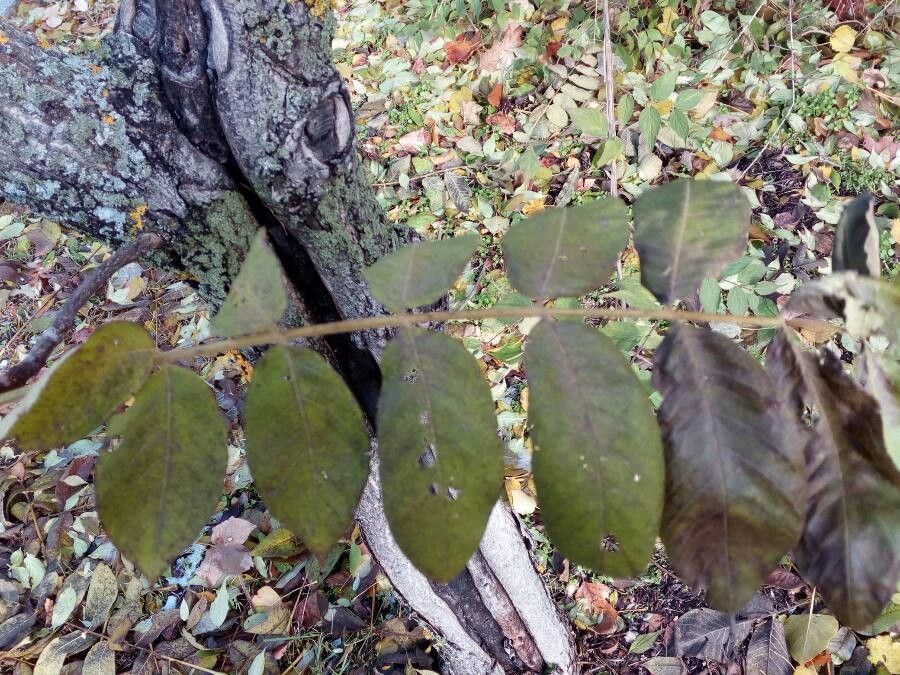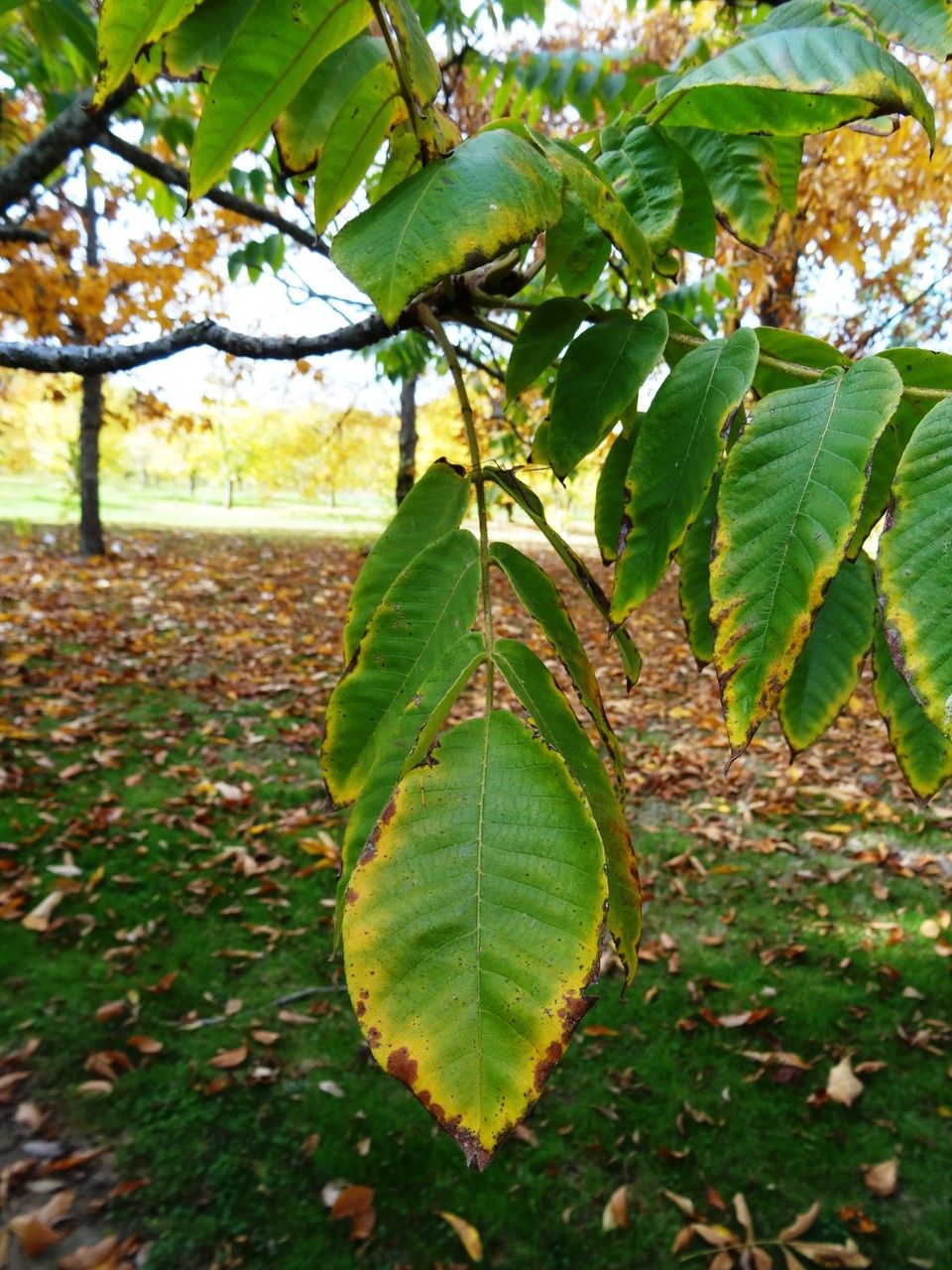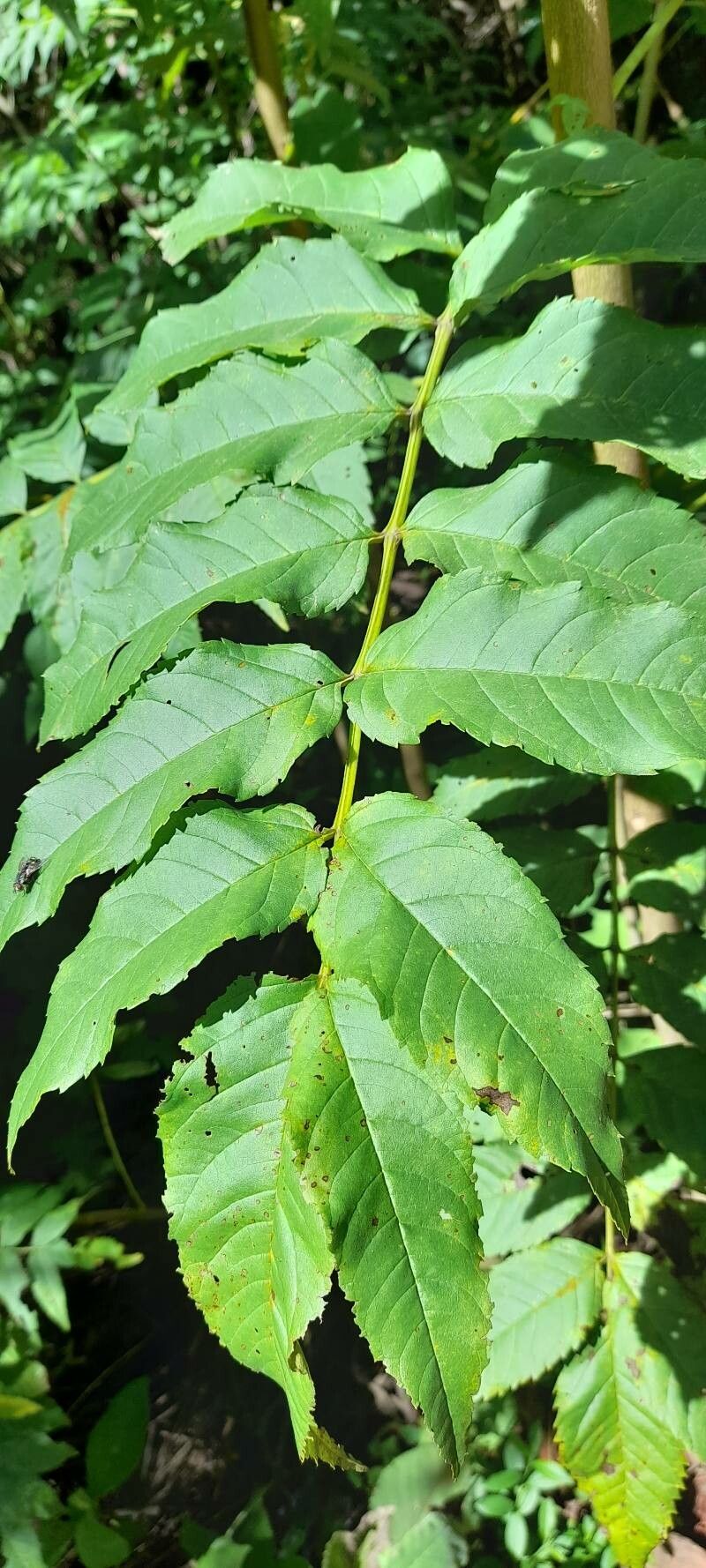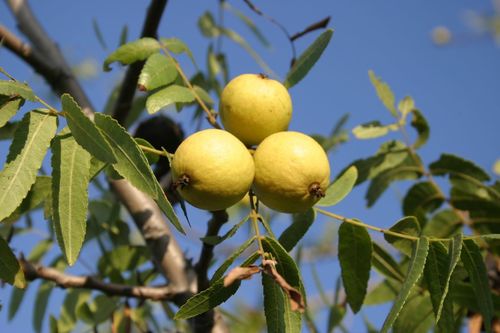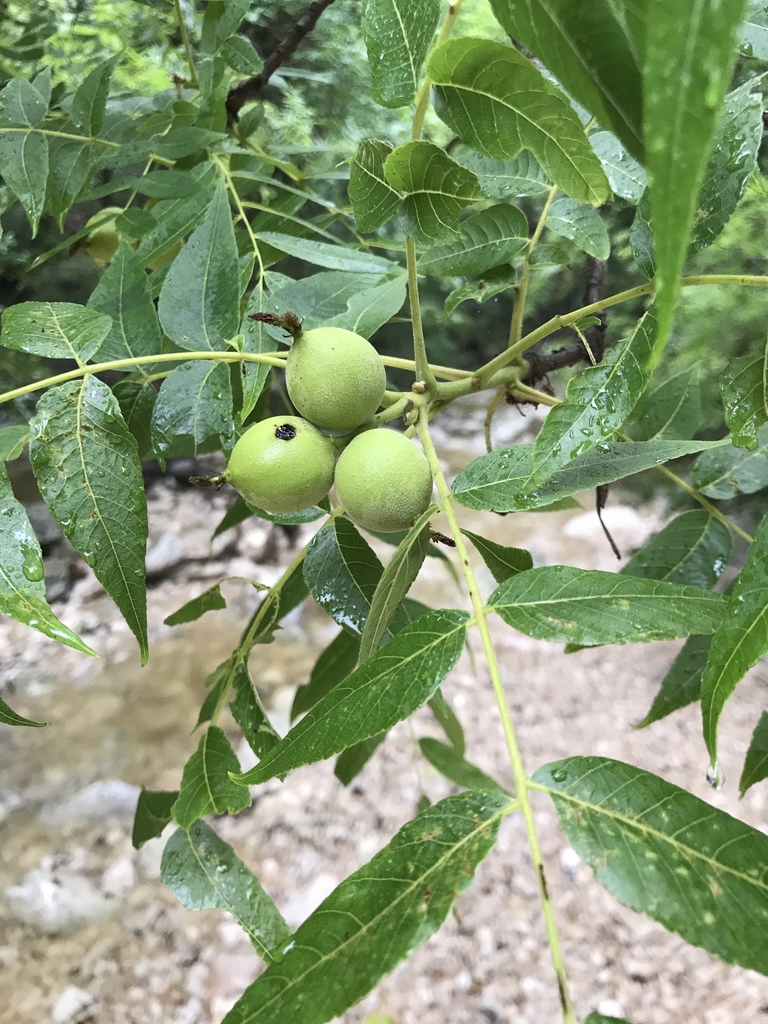
Juglans nigra, commonly known as the black walnut, is a deciduous tree native to North America. It can grow up to 100 feet tall, featuring a broad, spreading crown. The bark is dark and deeply furrowed, and the leaves are pinnately compound, consisting of 15-23 lance-shaped, serrated leaflets.
The black walnut tree produces edible nuts with a hard shell encasing the kernel. These nuts are highly prized for their rich flavor and nutritional value.
Black walnut wood is also highly valued for its strength, durability, and attractive grain patterns. It is commonly used in furniture making, as well as for flooring and paneling.
While the black walnut tree offers many benefits, it also produces juglone, a chemical compound that can be toxic to some nearby plants. Therefore, it is important to be mindful of planting other species around this tree.
Overall, the Juglans nigra provides numerous benefits, including serving as a food source (nuts), providing high-quality wood (furniture), and offering shade with its large spreading crown. However, careful consideration is necessary when planting other species nearby due to the juglone it produces, which can be harmful to certain plants.
Black walnut has strong disease resistance and is generally not susceptible to illnesses. Regarding care, this species is fairly low-maintenance. When grown outdoors it needs little watering, and larger specimens typically do not require pruning. Smaller plants, however, should be pruned after they finish blooming. Black walnut is appropriate for anyone with outdoor space, like a garden or a deck, and does not demand extensive care experience.
How to keep Juglans Nigra.
Light
Black walnut strongly favors constant exposure to sunlight, though it can cope with somewhat reduced light. It prospers in low-light conditions, reflecting the environment of its early growth. Both too much and too little sun can upset the plant's growth and vigor.
Water
Black walnut trees thrive in hardwood forests and prefer well-drained soils with moderate moisture. While they can withstand short dry periods, they do best in environments with consistent humidity. To care for a black walnut, water it every 1-2 weeks, making sure the soil stays moist without becoming waterlogged. Proper soil moisture is essential, especially during the tree’s active growing season.
Humidity
This plant will thrive in moderate humidity, which is probably the level in your home. However, misting it a few times a week can be very beneficial. Make sure the room has good ventilation.
Temperature
In its natural habitat, black walnut favors a temperate climate with temperatures between 5 and 35 ℃ (41 and 95 ℉). During the growing season it does best with warm conditions and plenty of moisture. For optimal growth it should be planted in well-drained soil where it receives full sun. In colder months it can tolerate temperatures as low as -20 ℃ (-4 ℉).
Fertilizer
To encourage healthy growth, apply fertilizer to your Black walnut in early spring. Consistent fertilizing boosts overall health, producing robust growth, greater tolerance of harsh conditions, and heightened resistance to pests and diseases. Keep to a defined fertilization routine for your Black walnut to preserve lively foliage with rich color and a full, luxuriant look.
Pruning
Black walnut trees, prized for their timber, benefit greatly from pruning in early spring. Start by removing any dead or diseased branches, and thin out crowded limbs to improve airflow. Be sure to make cuts outside the branch collar to encourage speedy healing. Regular pruning promotes the tree's health, increases productivity, and helps control its size. This ensures the vitality of the black walnut and maximizes its yield.
Botanical profile.
- Plant Type
- Tree
- Life Cycle
- Perennial
- Genus
- Juglans
- Family
- Juglandaceae
- Hardiness Zone
- 4-10
- Mature Height
- 20.12 m to 45.11 m
- Mature Spread
- 20.12 m
- Leaf Color
- Green
- Leaf Type
- Deciduous
- Flower Color
- Green, Yellow
- Flower Size
- 1.02 cm to 3.05 cm
- Bloom Time
- Late spring, Early summer
- Planting Time
- Spring, Autumn
- Harvest Time
- Mid summer
- Native Area
- Eastern America
Other names.
Reader questions.
When should I water my Black Walnut?
Determining when to water your Black Walnut involves observing several key indicators due to its sensitivity to both overwatering and underwatering. It's essential to water when the top 1-2 inches of soil become dry. Signs that your Black Walnut needs watering include leaf wilting, slow growth, and browning of leaf edges. Overwatering can lead to root rot, while underwatering may cause the plant to wilt or die from dehydration. Regularly checking these signs helps maintain the ideal moisture level for a healthy Black Walnut.
Why should I put fertilizer on my Black walnut tree?
No matter what type of Black walnut you have, regular fertilization can greatly improve its overall health. Providing the right nutrients promotes stronger growth and helps your Black walnut withstand challenging growing conditions. It also enhances its ability to fend off diseases and pests. The foliage of your Black walnut is particularly appealing, so it's important to maintain it. This involves following a consistent fertilization schedule that is tailored to your specific Black walnut. By doing so, you can expect vibrant leaves with a rich color and an overall lush appearance.
What are the sunlight requirements for growing Black Walnut?
Black walnut (Juglans nigra) requires full sun, meaning it should receive above 6 hours of sunlight daily, but it can also manage in partial sun conditions, with about 3-6 hours of sunlight. It's important to observe how sunlight moves through your garden to ensure plants receive the ideal balance of light and shade, fostering their growth and health. The black walnut shows a profound affinity for continual sun exposure, reminiscent of its natural growth setting, yet it's adaptable to less sunny conditions.
What is the ideal climate for growing Black Walnut?
Black Walnut (Juglans nigra) thrives in its native growth environment under a mild climate, with optimal temperatures ranging from 5 to 35 °C (41 to 95 °F). It enjoys warm temperatures and ample moisture during its growing season, requiring well-draining soil and full sun exposure for optimal growth. In the cooler months, Black Walnut shows strong cold resistance, tolerating temperatures as low as -20 °C (-4 °F). Special frost protection measures are not typically necessary, but if winter temperatures are anticipated to drop below the critical limit, it's important to wrap the trunk and branches with insulating materials like non-woven fabric or cloth. Abundant watering before the first freeze in autumn is advised to maintain soil moisture, helping the plant avoid drought and water scarcity during winter and early spring.
How should I water my Black Walnut?
Watering Black Walnut requires a careful approach to ensure its deep root system receives adequate moisture without being oversaturated. Deep watering techniques are recommended, using a watering can with a long spout to target water directly to the root zone and avoid waste. A moisture meter can be particularly helpful for determining when the deep soil layers have received enough water. It's crucial to concentrate on watering the root zone and to avoid pooling water around the base of the plant to prevent overwatering and potential diseases.
When should I fertilize my Black walnut tree?
To help your Black walnut grow healthily, it's best to fertilize it in late winter or early spring. This provides the necessary nutrients for growth when the weather warms up. If you live in a warm climate, it's also advisable to fertilize your Black walnut again in early fall. This not only adds nutrients for the upcoming growing season but also helps the tree better withstand the cold winter and avoid foliage damage. Fertilizing earlier will allow enough time for new branches to grow and become more resistant to the winter cold.
How does insufficient or excessive sunlight affect the growth of Black Walnut?
When Black Walnut does not receive adequate sunlight, it may exhibit signs such as smaller leaves, leggy or sparse growth, early leaf drop, slower or halted growth, lighter-colored new leaves, chlorosis, sunscald, leaf curling, wilting, and leaf scorching. These symptoms indicate a disruption in the plant's photosynthesis process and overall vitality, caused by insufficient or excessive sunlight exposure.
How does Black Walnut respond to low temperatures, and what are the recommended care steps?
Black Walnut is quite cold-tolerant and performs best when temperatures remain above the specified minimum suitable growth temperature. During winter, it's important to ensure that the temperature does not fall below the minimum tolerable growth temperature. If temperatures drop below a certain limit, there may not be noticeable changes during winter; however, come spring, the branches might turn brittle and dry, with a lack of new shoots emerging. To address this, it is advisable to prune away any dead branches that have failed to rejuvenate in the spring.
How much water does Black Walnut really need?
The amount of water needed by a Black Walnut tree depends on several factors including pot size, root depth, and plant size, with a mature tree in a large pot might require about 3 to 5 liters per watering session. The plant showcases optimal hydration by displaying vibrant leaves and steady growth. Overwatering can lead to root rot and disease susceptibility, while underwatering might cause wilting or a droopy appearance. To strike a balance, allow the soil to dry out partially between watering sessions.
When is it not a good idea to add fertilizer to my Black walnut?
There are specific times of the year when it's best to avoid fertilizing your Black walnut tree. The first is during the winter months when the tree is dormant and doesn't require any feeding. Additionally, it's not recommended to fertilize in late spring and throughout the summer because the weather tends to be hotter and drier. Fertilizing during this time can have a negative impact on your Black walnut. To prevent any issues, it's best to stick to a fertilization schedule that focuses on feeding in early spring and early fall.
What are some solutions for managing light exposure for Black Walnut?
To optimize Black Walnut's growth, gradually introduce the plant to sunnier locations, achieving at least 6 hours of direct sunlight daily, particularly through a south-facing window or using artificial lights such as LEDs for indoor plants. For outdoor plants, avoid sudden light intensity changes to prevent sunburn. If sunlight is blocked by obstructions like trees, consider pruning or transplanting smaller plants during their dormant period to a spot with better light and drainage. Note that damaged parts of the plant may not recover, but new growth should be healthy with improved light conditions.
What should I do if my Black Walnut experiences high temperatures?
During the summer, it's crucial to keep the Black Walnut tree's environment below the maximum suitable growth temperature. Exceeding the maximum tolerable growth temperature can lead to lighter leaf coloration, with the tips turning dry and withered, increasing susceptibility to sunburn. The recommended course of action includes trimming away sunburned and dried parts, relocating the plant to a shadier spot or use shade cloth for protection against midday and afternoon sun, and ensuring the soil stays moist by watering in the morning and evening.