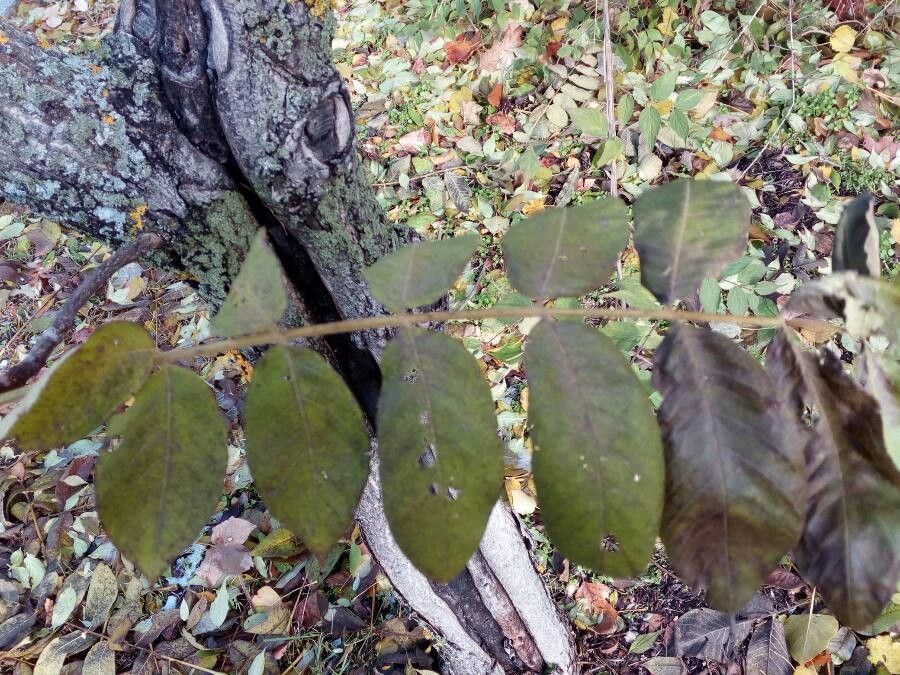
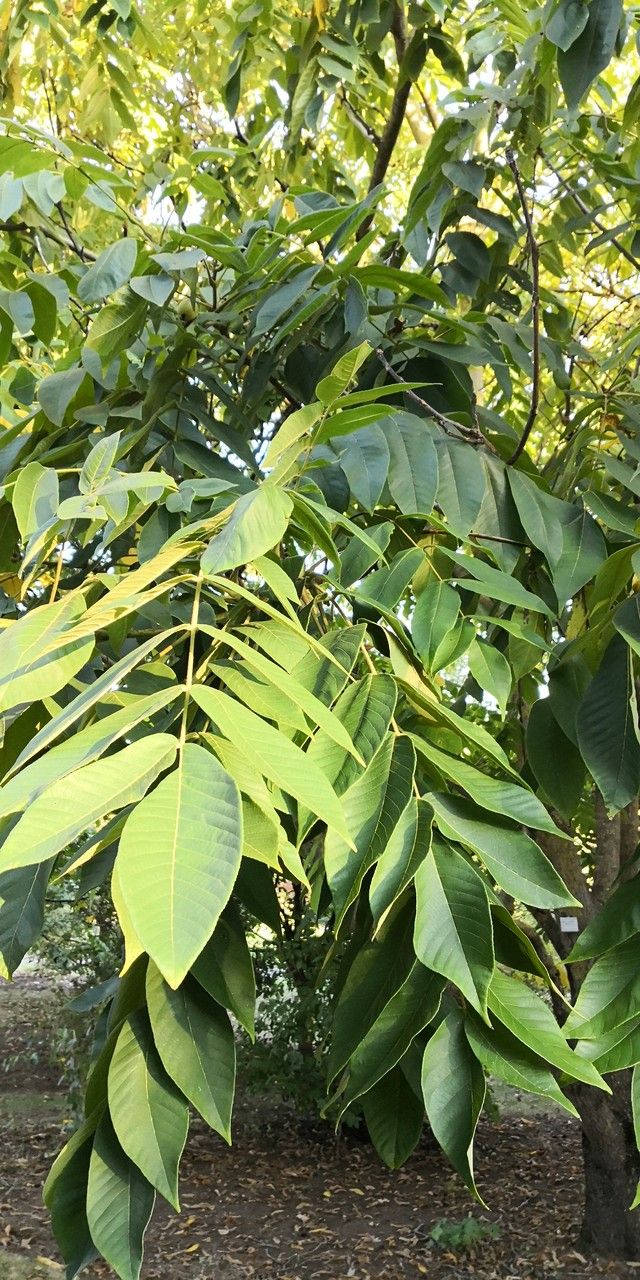
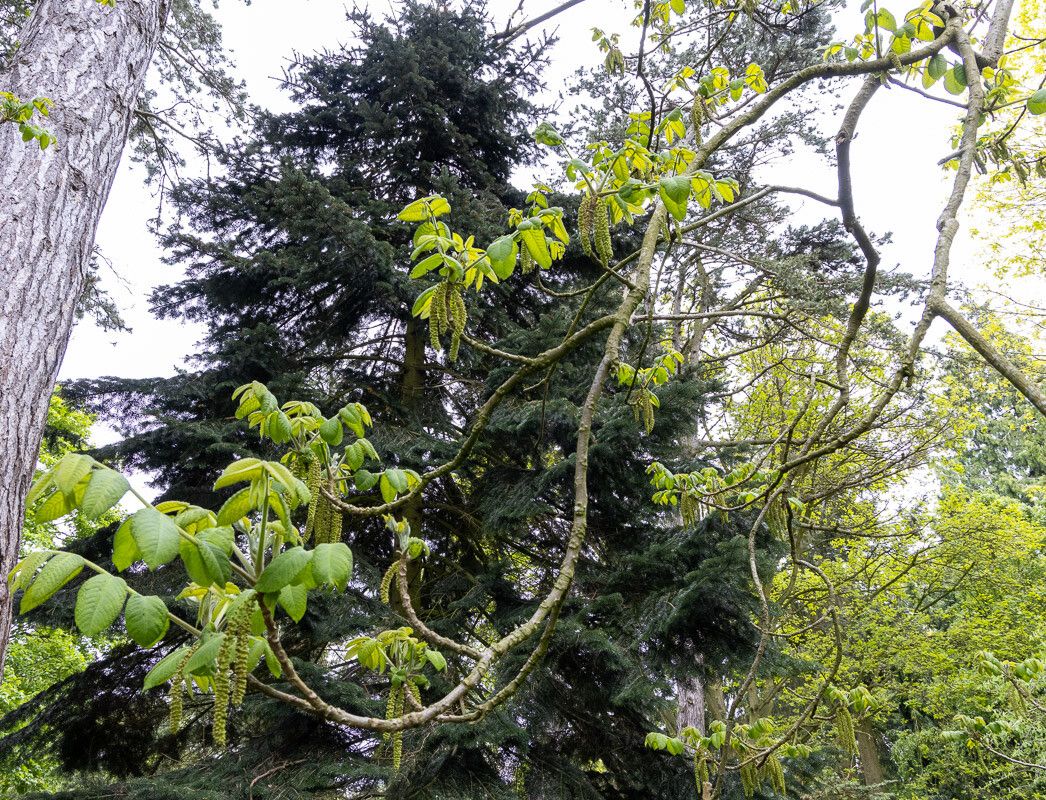
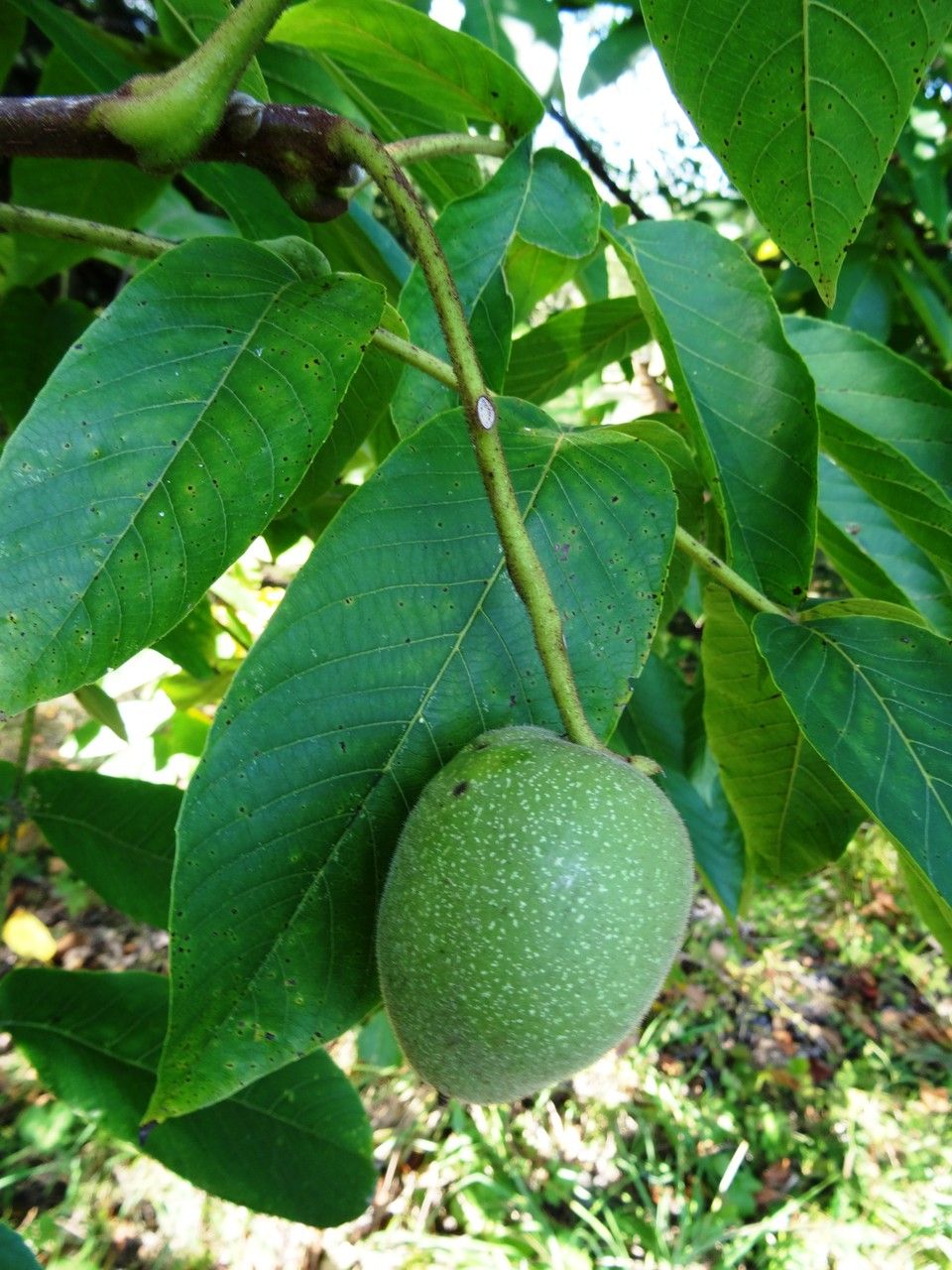
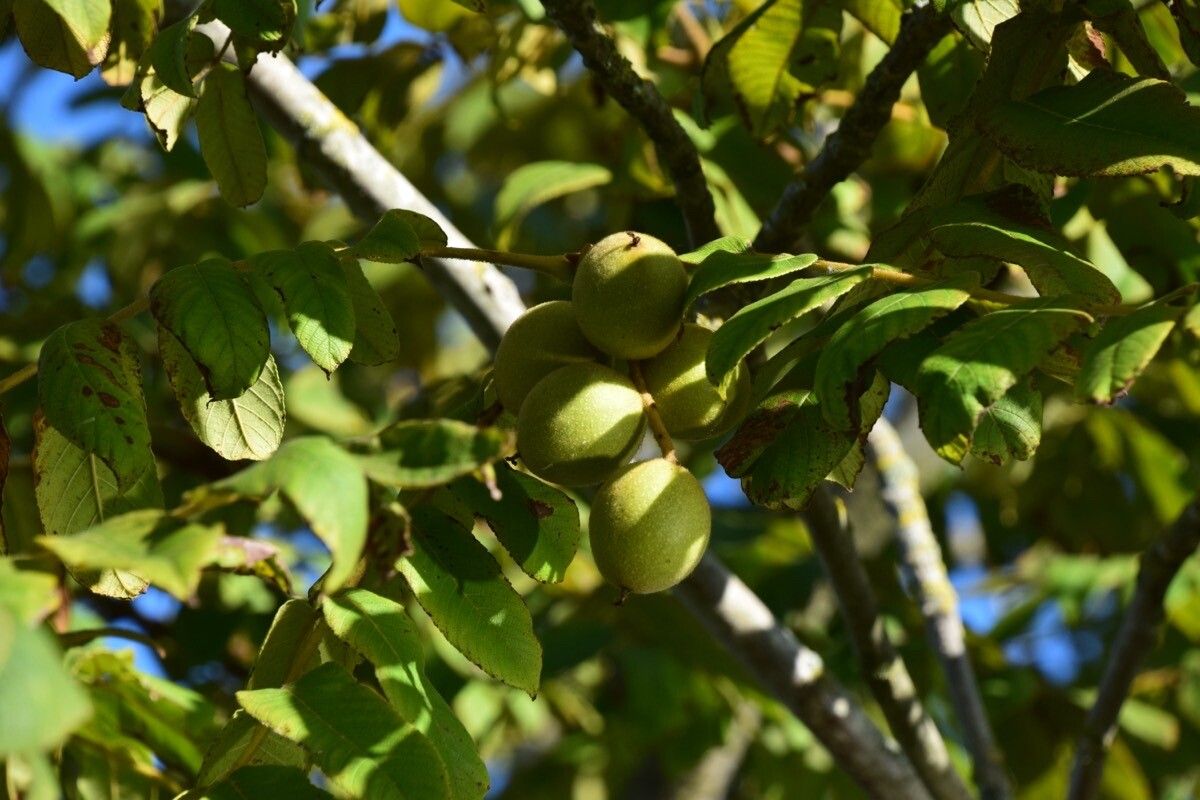
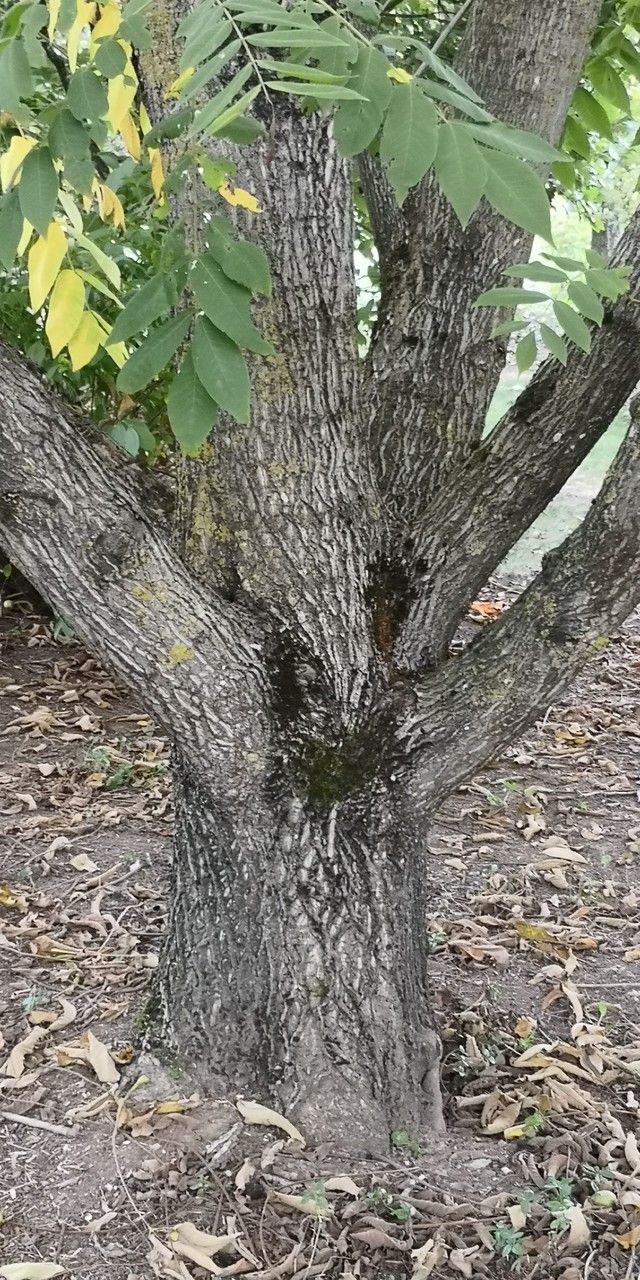
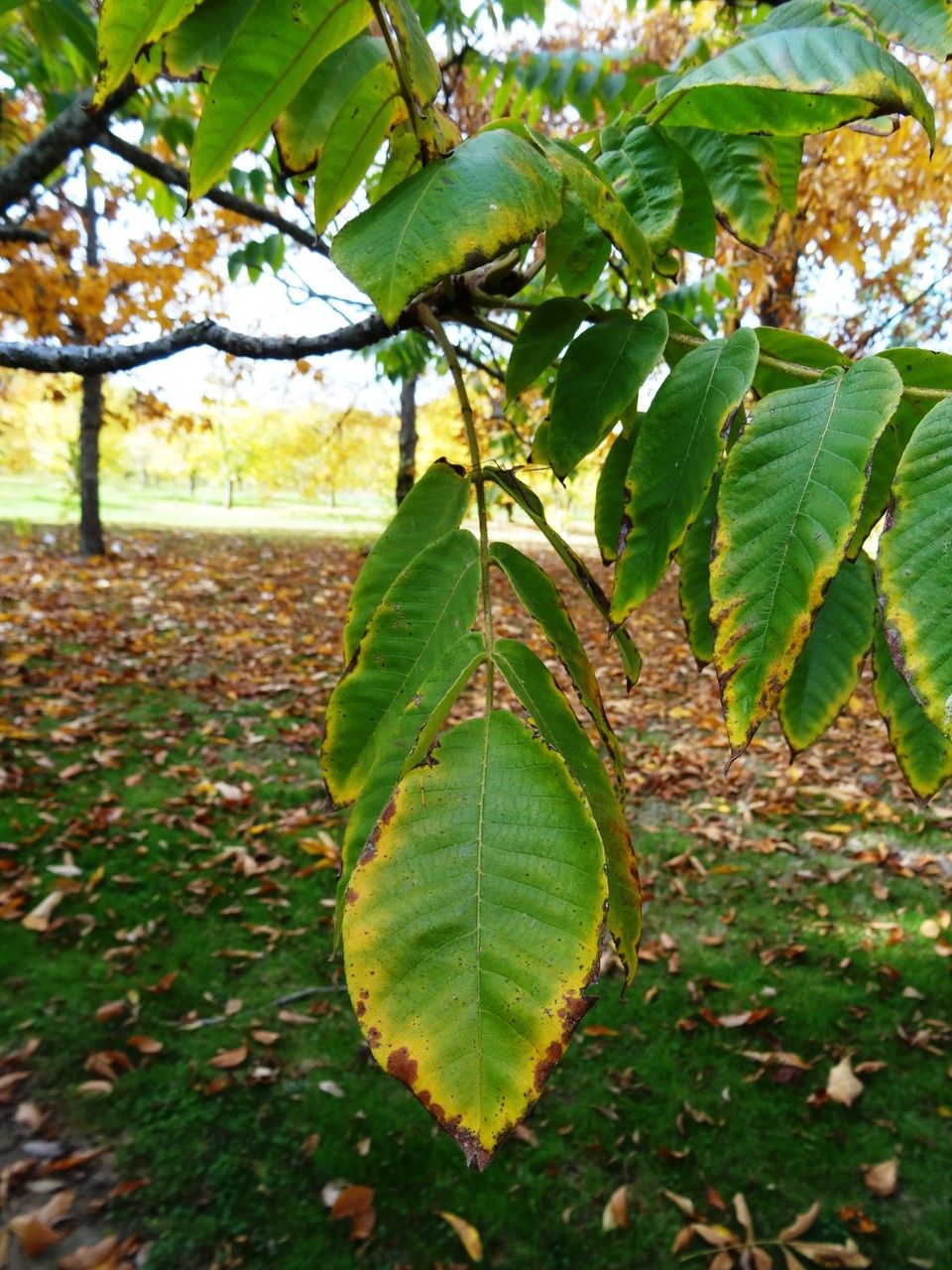
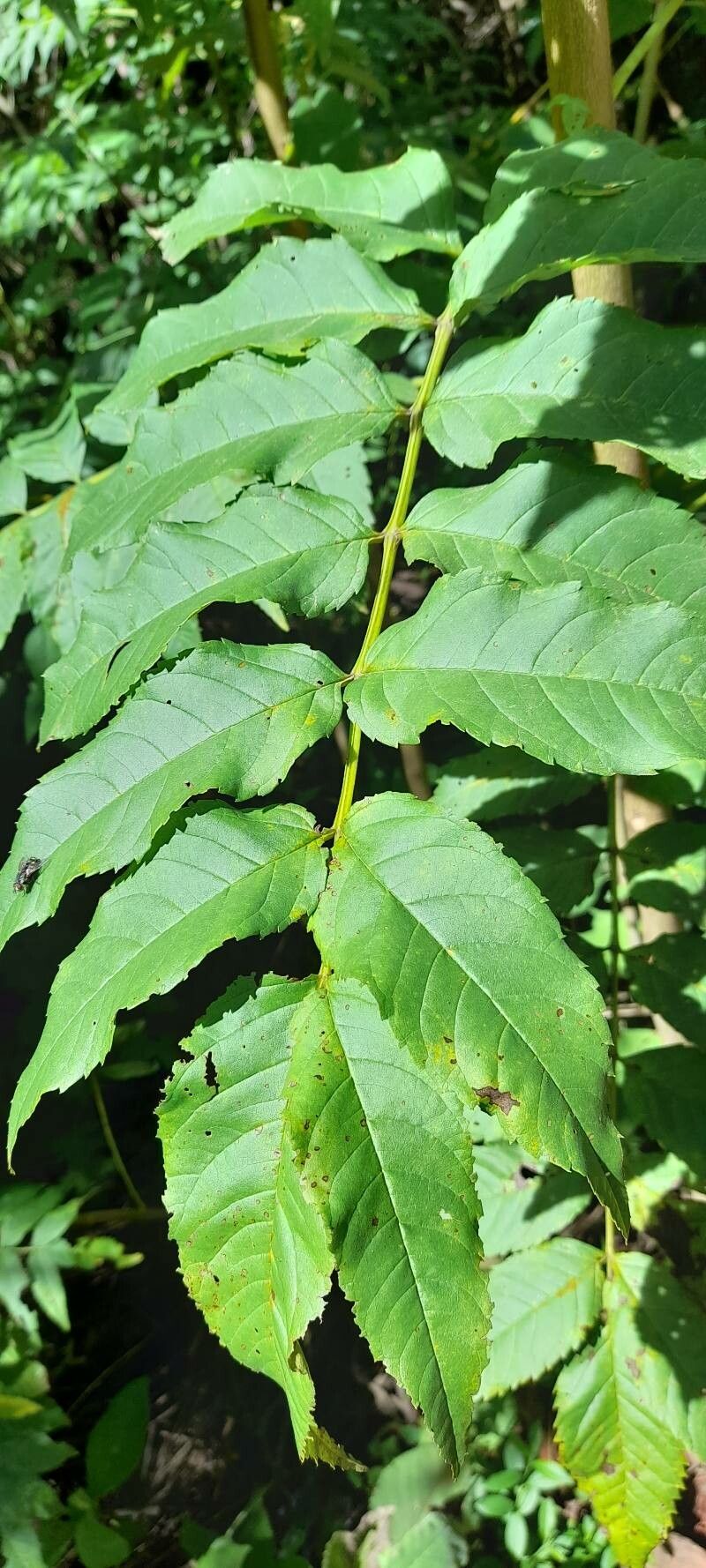
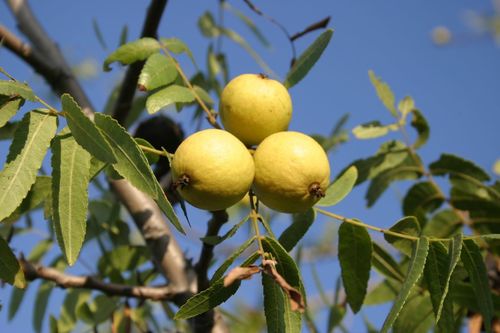
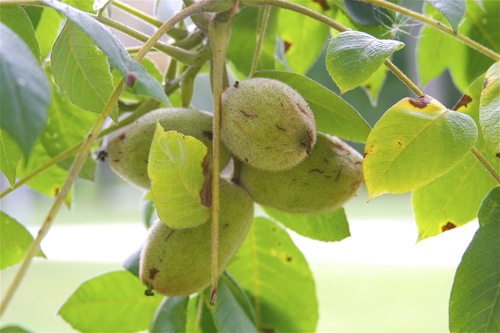
Juglans ailantifolia (synonyms J. cordiformis and J. sieboldiana and J. mandshurica var. sachalinensis), the Japanese walnut (Japanese: 鬼胡桃 oni-gurumi), is a species of walnut native to Japan and Sakhalin. It is a deciduous tree growing to 20 m (66 ft) tall, rarely 30 m (98 ft), and 40–80 cm stem diameter, with light grey bark. The leaves are pinnate, 50–90 cm long, with 11-17 leaflets, each leaflet 7–16 cm long and 3–5 cm broad. The whole leaf is downy-pubescent, and a somewhat brighter, yellower green than many other tree leaves. The male flowers are inconspicuous yellow-green catkins produced in spring at the same time as the new leaves appear. The female flowers have pink/ red pistils. The fruit is a nut, produced in bunches of 4-10 together; the nut is spherical, 3–5 cm long and broad, surrounded by a green husk before maturity in mid autumn.
Japanese walnut shows good disease resistance and is generally not susceptible to diseases. Regarding care, this plant is fairly low-maintenance. When grown outdoors it needs minimal watering, and larger plants typically do not require pruning. Smaller plants, however, should be pruned after they have bloomed. Japanese walnut is suitable for anyone with an outdoor area, such as a garden or deck, and does not demand much care experience.
How to keep Juglans Ailanthifolia.
Light
Japanese walnut is native to open habitats, such as sunny meadows and forest margins, which offer abundant light. It does best in Full Sun but will also tolerate Partial Sun, adapting well to a range of sunlight conditions.
Water
The Japanese walnut thrives in moist conditions and requires consistent soil moisture for optimal growth. It should be watered twice a week and benefits from natural rainfall, especially when grown outdoors. This promotes vigorous growth during its active growing season.
Temperature
Japanese walnut adapts well to a range of climatic conditions, from scorching summers to cold winters. That said, it does have an optimal temperature range in which it grows best. If temperatures get too high, the plant is vulnerable to heat and humidity stress, which can lead to its death. In areas where temperatures approach the lower end of its cold tolerance, taking insulating measures to protect the plant is important.
Fertilizer
Fertilize your Japanese walnut in early spring to encourage healthy growth. Regular fertilization improves overall health, leading to vigorous growth, greater tolerance of adverse conditions, and enhanced resistance to pests and diseases. Keep a consistent fertilization schedule for your Japanese walnut to maintain lush foliage with deep, vibrant color.
Pruning
The Japanese walnut, known for its compound leaves and edible nuts, thrives with yearly pruning in early spring. Key practices involve removing dead or overcrowded branches to improve airflow and sunlight exposure. It's important to avoid excessive cuts to prevent sap loss. Following these horticultural guidelines promotes healthier trees and increases nut yields.
Botanical profile.
- Plant Type
- Tree
- Life Cycle
- Perennial
- Genus
- Juglans
- Family
- Juglandaceae
- Hardiness Zone
- 4-8
- Mature Height
- 14.94 m to 20.12 m
- Mature Spread
- 10.06 m to 14.94 m
- Leaf Color
- Green, Dark Green
- Leaf Type
- Deciduous
- Flower Size
- 3.05 cm to 5.08 cm
- Bloom Time
- Early spring, Mid spring
- Planting Time
- Spring
- Harvest Time
- Late summer, Early fall, Mid fall
- Native Area
- Russia, Japan
Other names.
Reader questions.
What are the sunlight requirements for a Japanese walnut?
The Japanese walnut, or Juglans ailanthifolia, thrives in different sunlight conditions. For 'Full sun,' it requires more than 6 hours of sunlight per day. When placed in 'Partial sun,' it still grows well with about 3-6 hours of sunlight. It's important to observe the way sunlight moves through your garden throughout the day. Selecting the right spots that offer a balanced exposure to light and shade can significantly influence the health and happiness of your plants.
What is the botanic name of the Japanese walnut?
The botanic name of the Japanese walnut is Juglans ailanthifolia. This name helps in accurately identifying the plant, distinguishing it from other species in the walnut family.