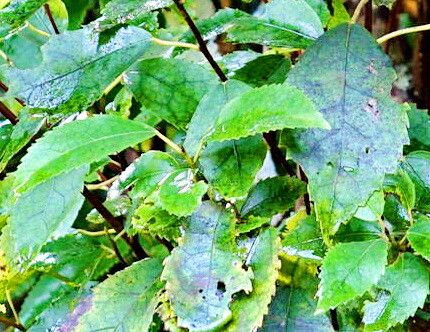
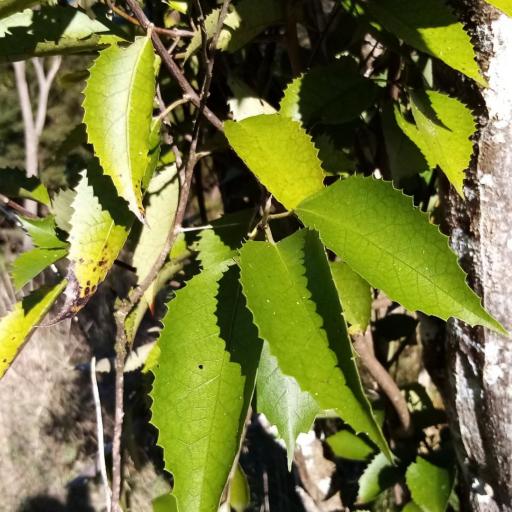
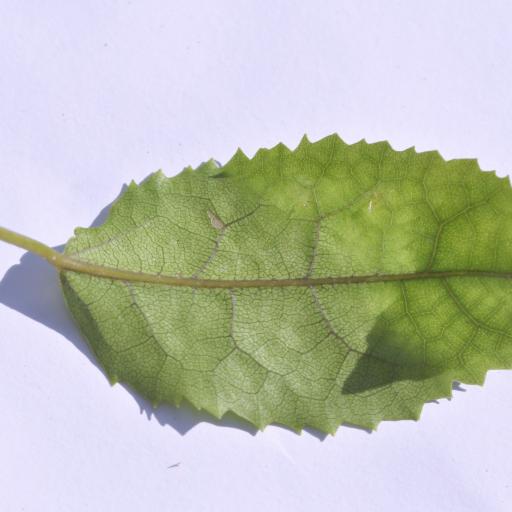
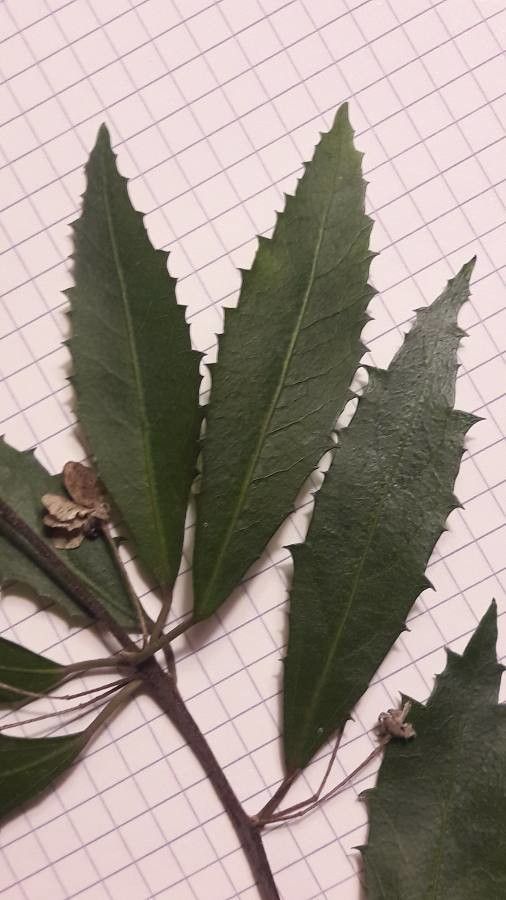
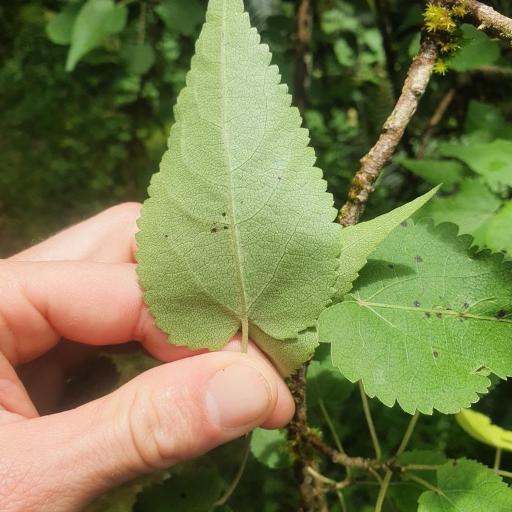
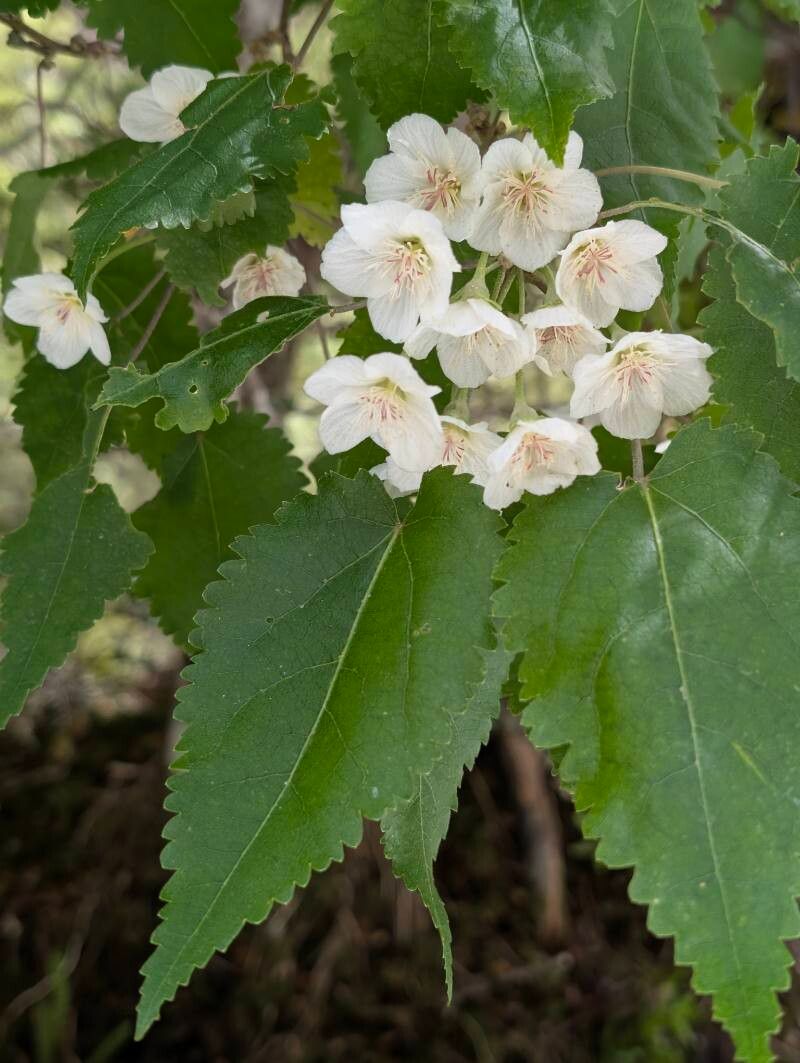
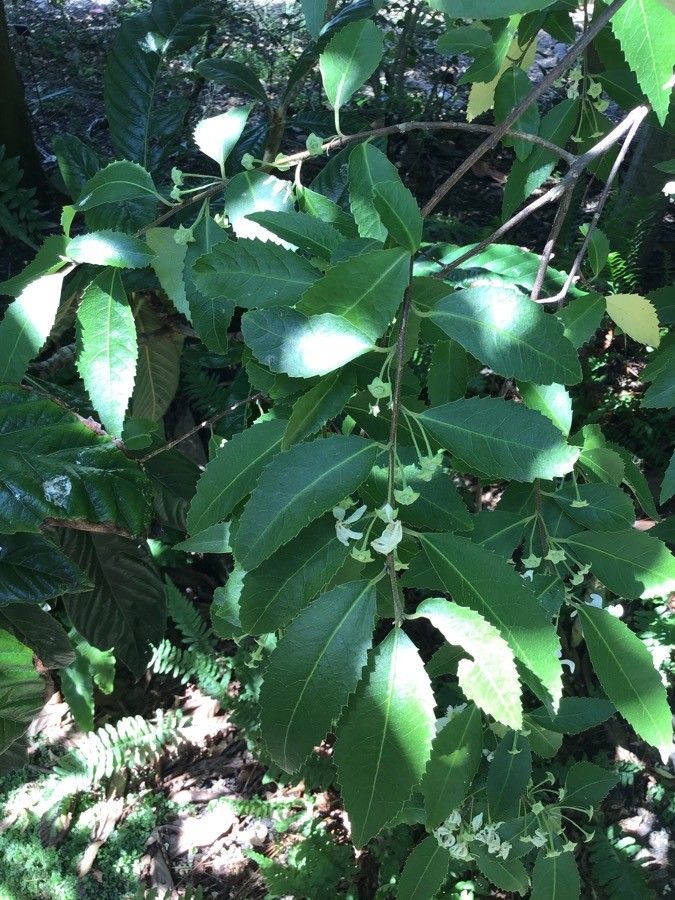
Hoheria populnea, commonly known as New Zealand mallow, lacebark or houhere, is a species of flowering plant in the family Malvaceae, endemic to New Zealand. Hoheria populnea is found from the coast to lowland forests, and has a natural distribution from the North Cape of the North Island, to the Bay of Plenty. It can grow into a tree 12 metres tall and has broad, oval leaves, with serrated margins. The leaves are dark green, 5–12 cm long and 6 cm wide. Lacebark produces white flowers in clusters from January to March. The bark of the plant was used in Māori traditional textiles to create ropes, hats, kits and headbands. Oral histories tell of early experiments to create felted material from the plant, similar to aute (the paper mulberry used in Polynesian textiles), however attempts were unsuccessful.
New zealand mallow has strong resistance to disease and is generally not susceptible to illnesses. Regarding care, this plant is fairly low-maintenance. When grown outdoors it needs little watering, and larger specimens typically do not require pruning. Smaller plants, however, should be trimmed after they finish blooming. New zealand mallowt is suitable for anyone with an outdoor area, like a garden or deck, and does not demand much gardening experience.
How to keep Hoheria Populnea.
Light
Native to environments with plentiful sunlight, new zealand mallow does best when exposed to bright light for much of the day. It can tolerate locations that receive sun only intermittently, although steady light encourages the most vigorous growth. Excessive exposure can harm it, while too little light may impede its growth cycle.
Water
New Zealand mallow thrives in mild and moist conditions but can tolerate slight dryness. It needs watering every 1-2 weeks and benefits especially from rainwater. Imitating its natural habitat in temperate regions helps ensure optimal growth.
Temperature
New Zealand mallow originates from habitats with mild to warm climates and prefers temperatures between 59 and 95 °F (15 and 35 ℃). In cooler seasons, it's advisable to reduce temperatures gradually to avoid shocking the plant.
Fertilizer
Timing of fertilization is important for New zealand mallow. Apply fertilizer in early spring and continue once a month through early summer. Fertilizer promotes attractive blooms and supplies energy during both dormant periods and active growth.
Pruning
The New Zealand mallow is a fast-growing plant known for its attractive white flowers. Pruning from early to late winter can help reduce stress during the plant's dormancy and promote growth in the spring. To improve the plant's health and flower density, make sure to remove any dead branches. Always use clean tools and consult reliable sources for additional guidance.
Botanical profile.
- Plant Type
- Tree
- Life Cycle
- Perennial
- Genus
- Hoheria
- Family
- Malvaceae
- Hardiness Zone
- 7-10
- Mature Height
- 11.89 m
- Mature Spread
- 15.54 m
- Leaf Color
- Dark Green, Forest Green
- Leaf Type
- Evergreen
- Flower Color
- White
- Flower Size
- 2.54 cm to 3.05 cm
- Bloom Time
- Mid summer, Late summer, Early fall
- Planting Time
- Spring, Summer, Autumn
- Harvest Time
- Mid fall, Late fall, Early winter
- Native Area
- New Zealand
Other names.