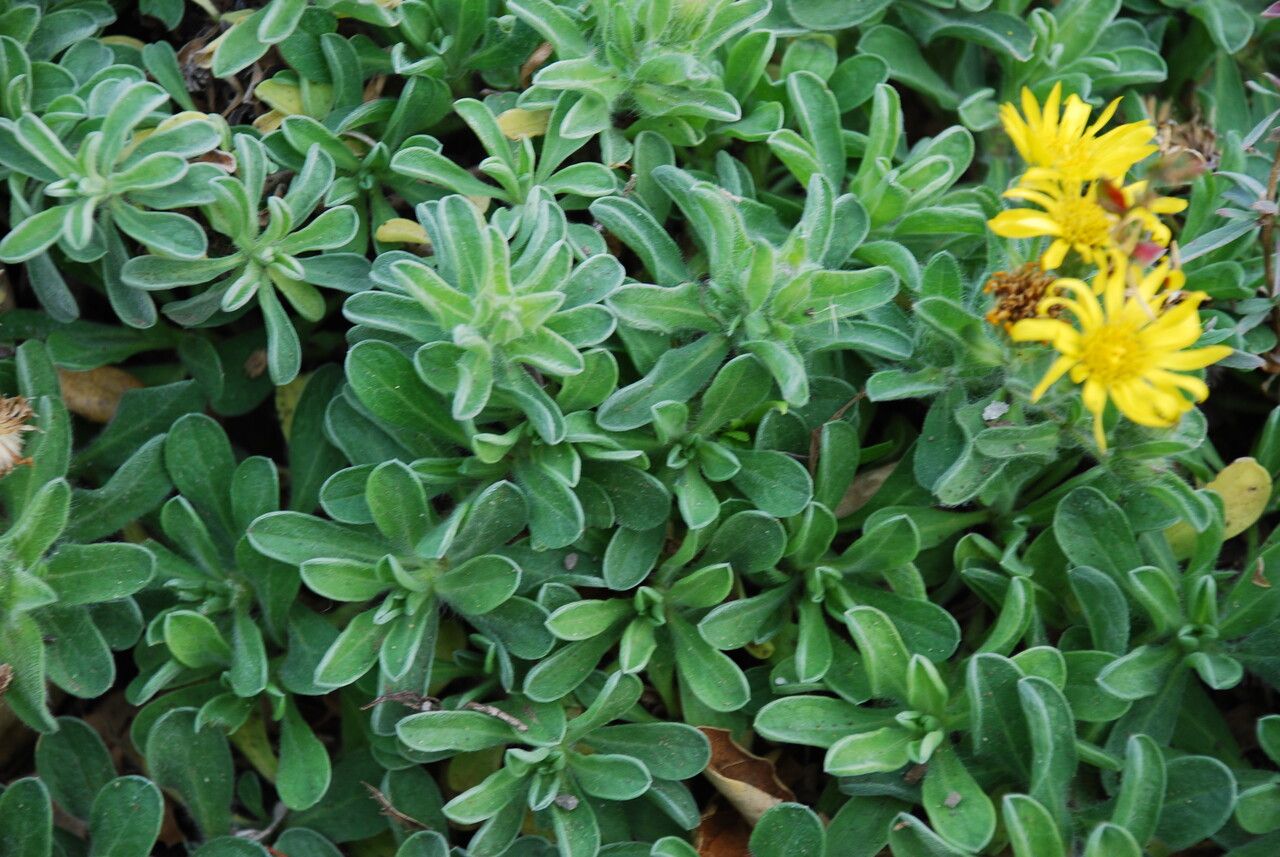
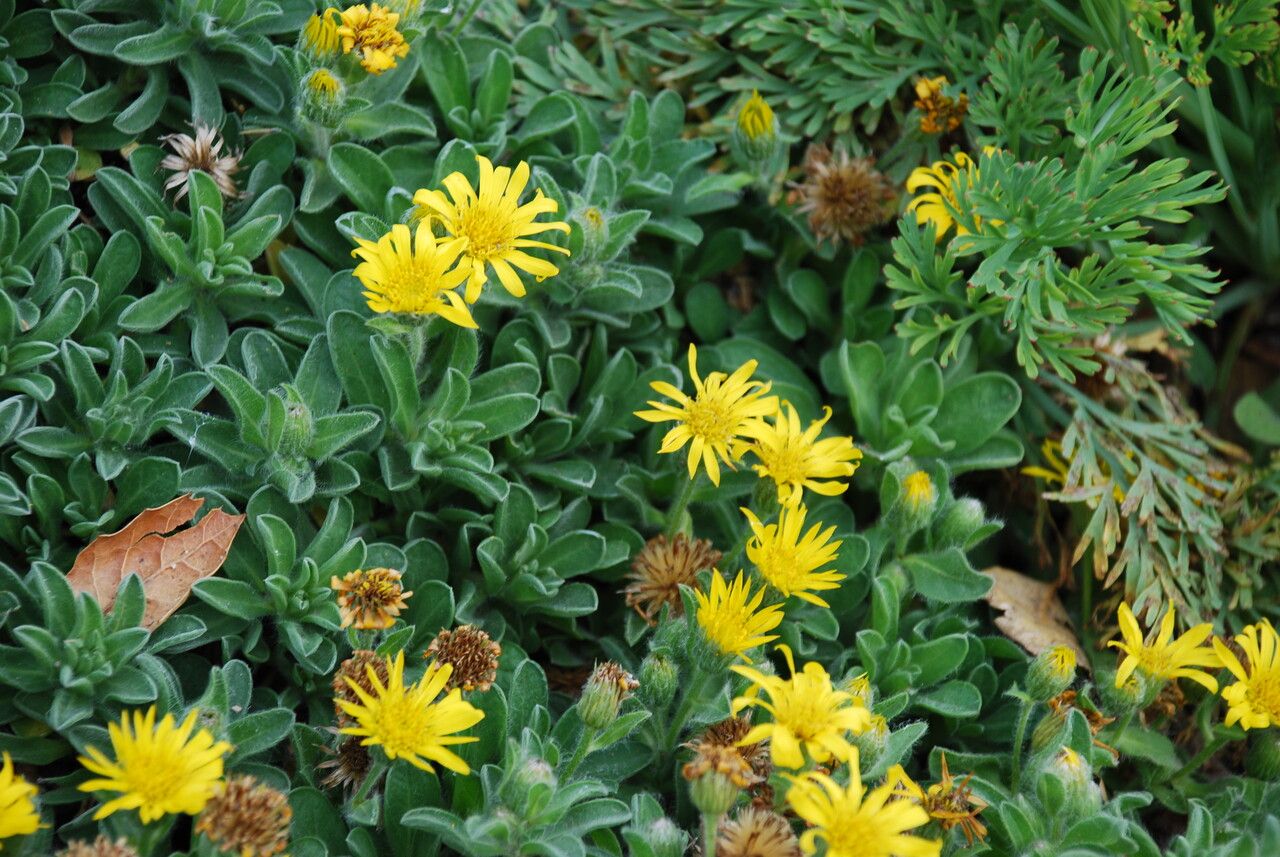
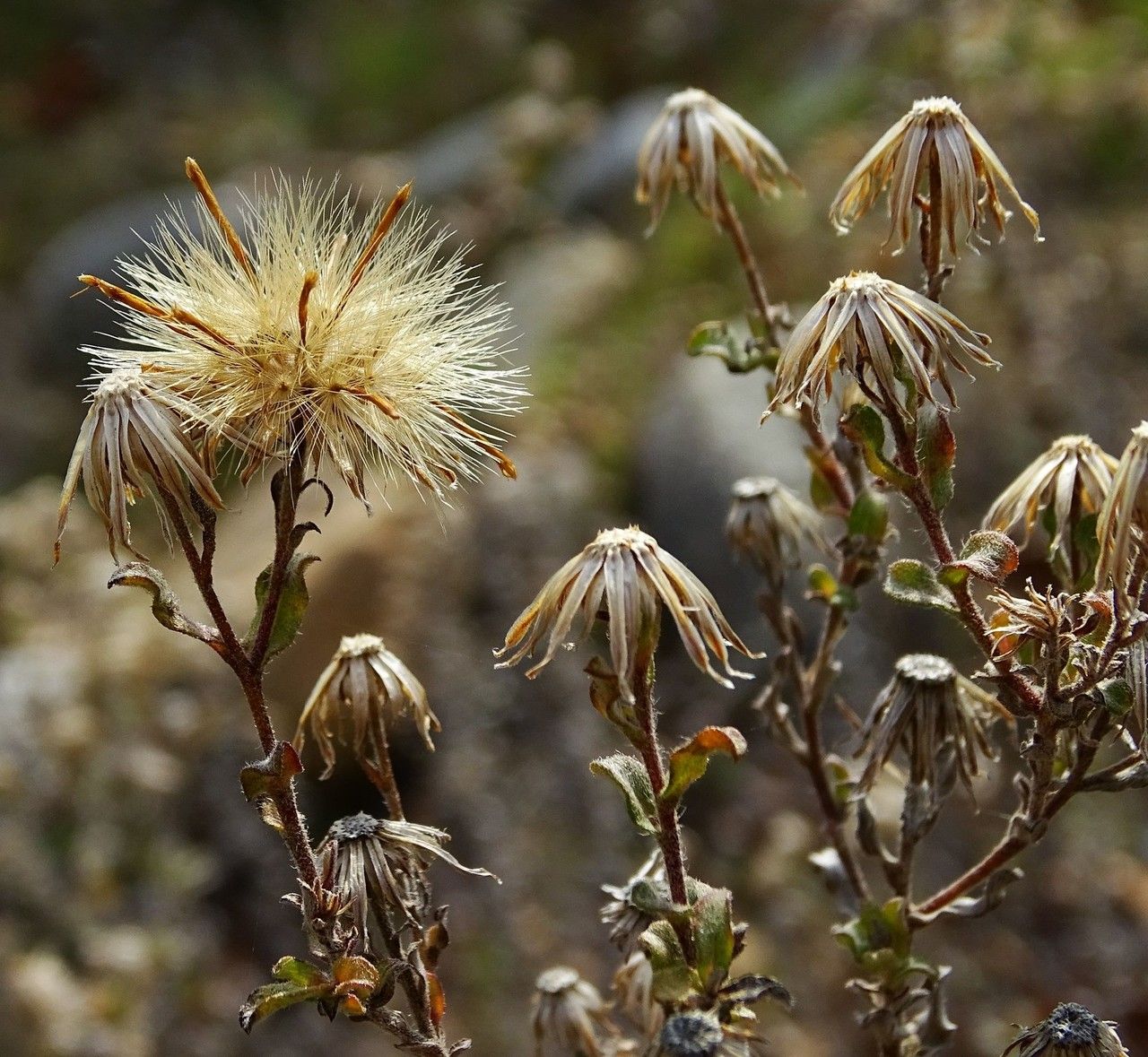
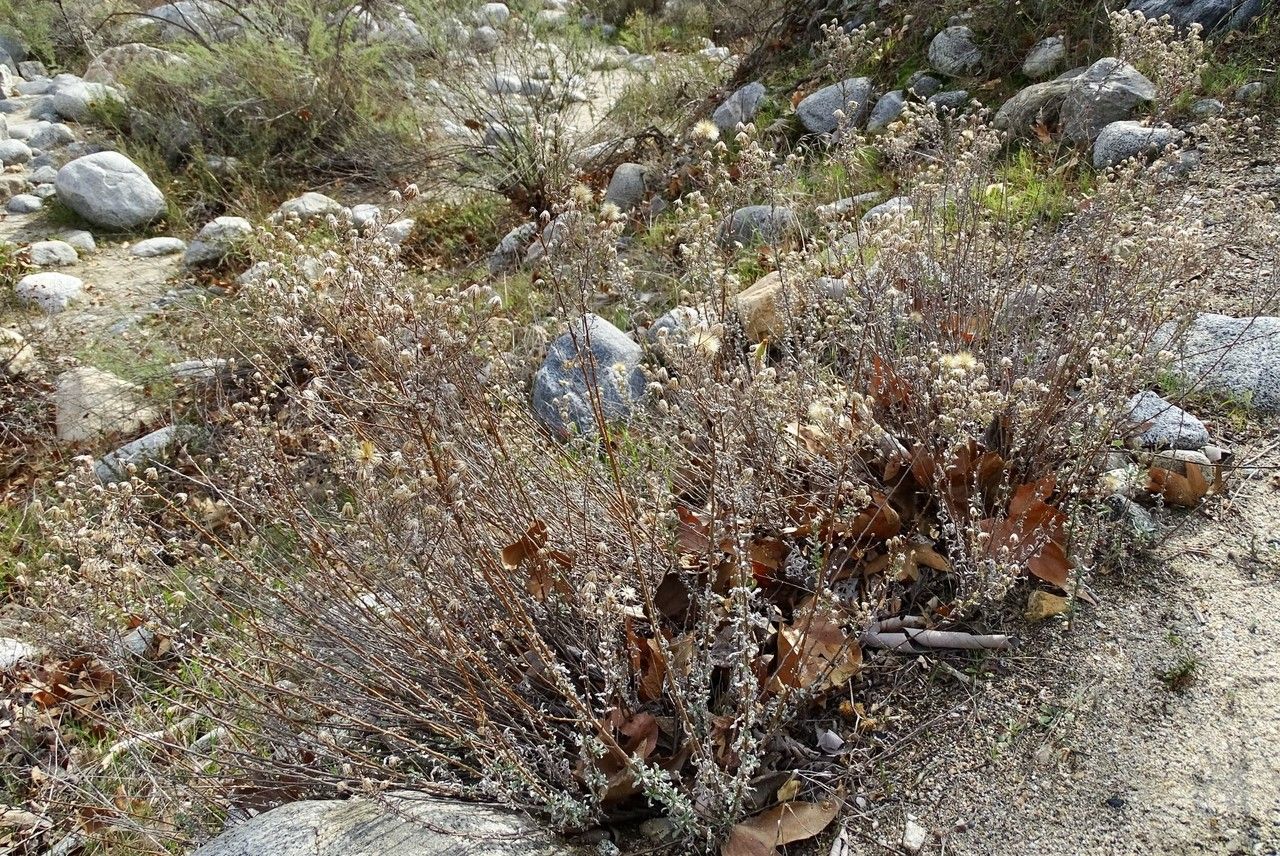
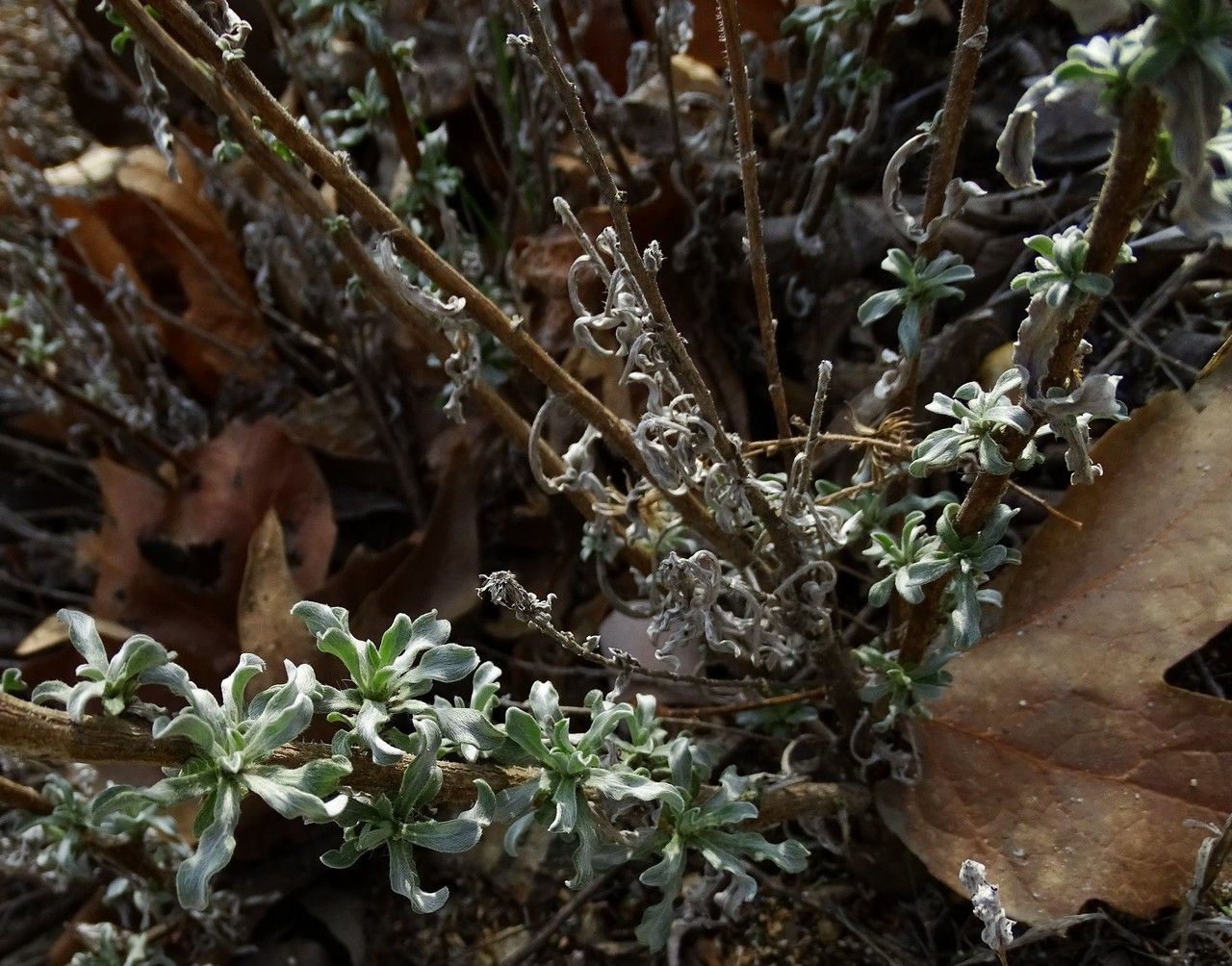
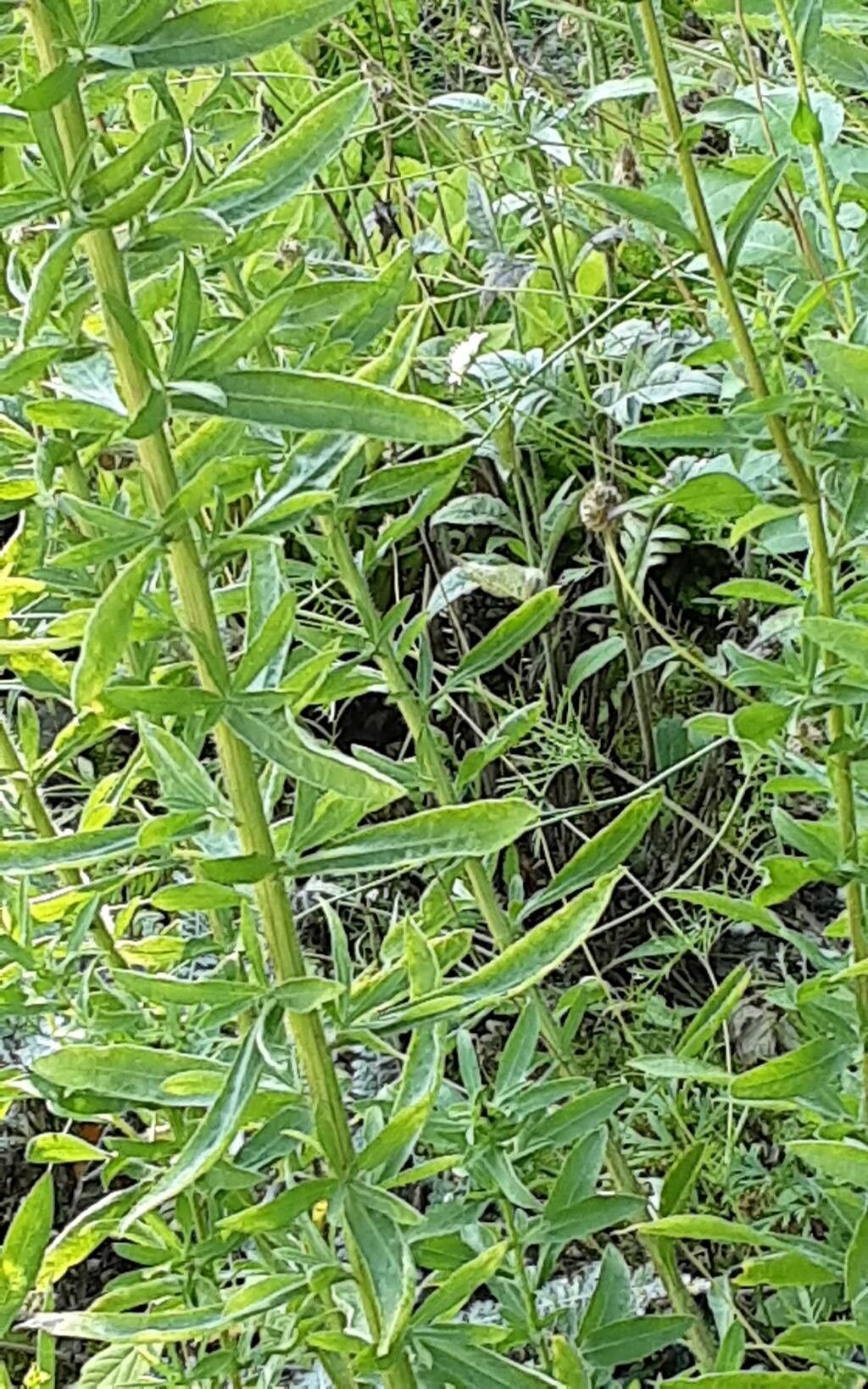
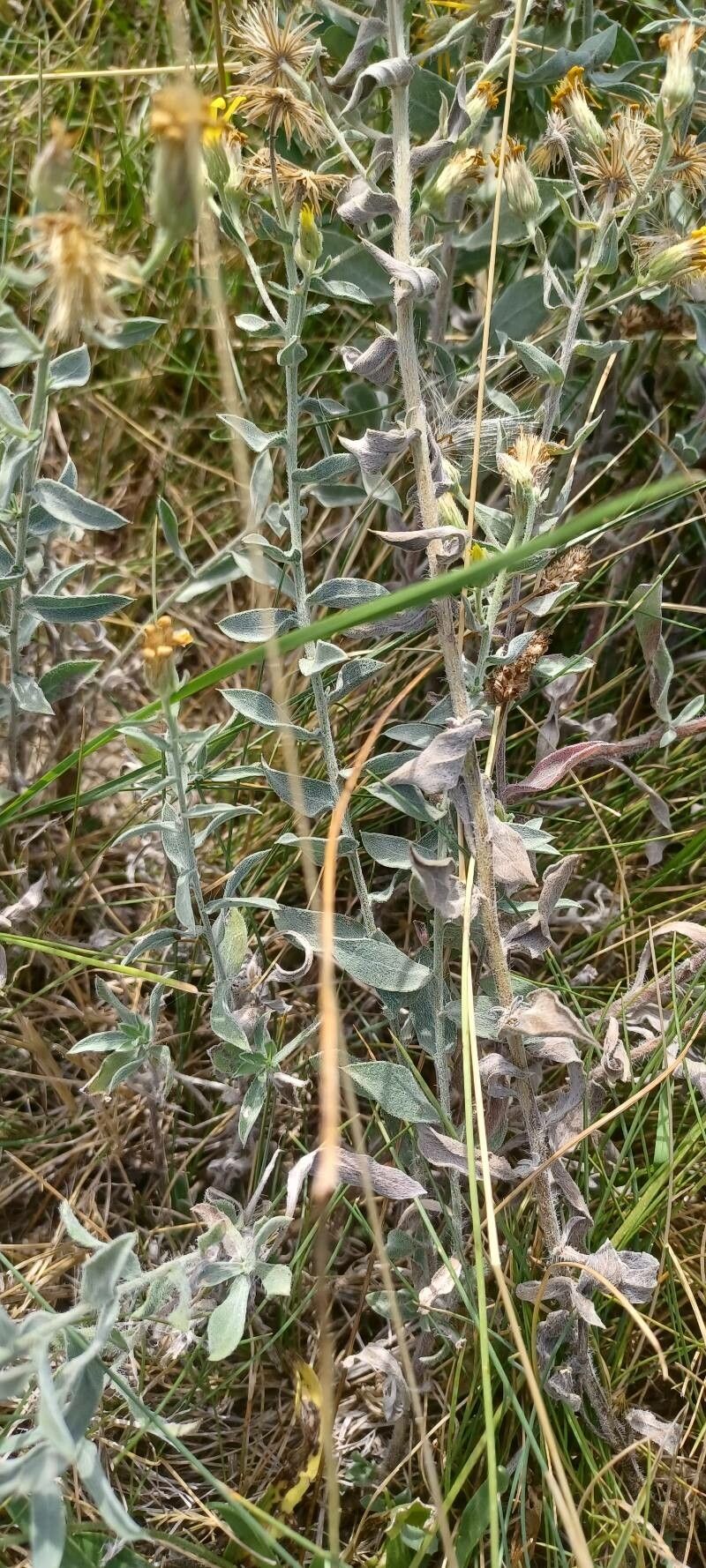
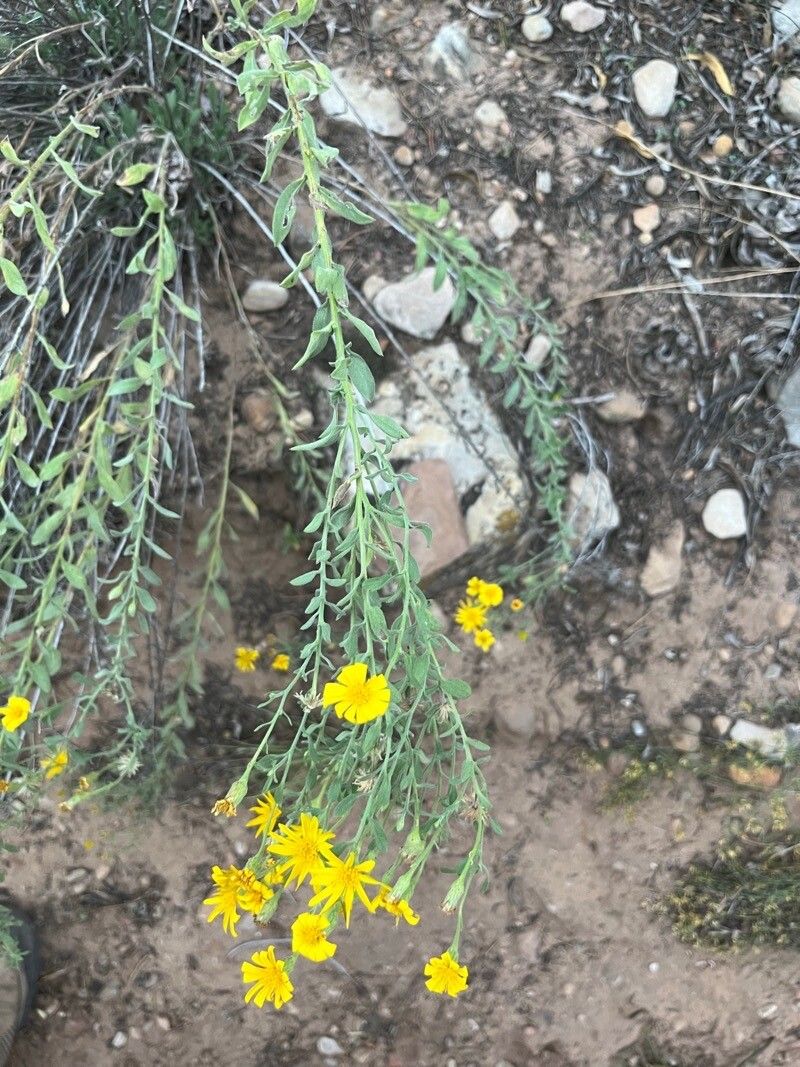
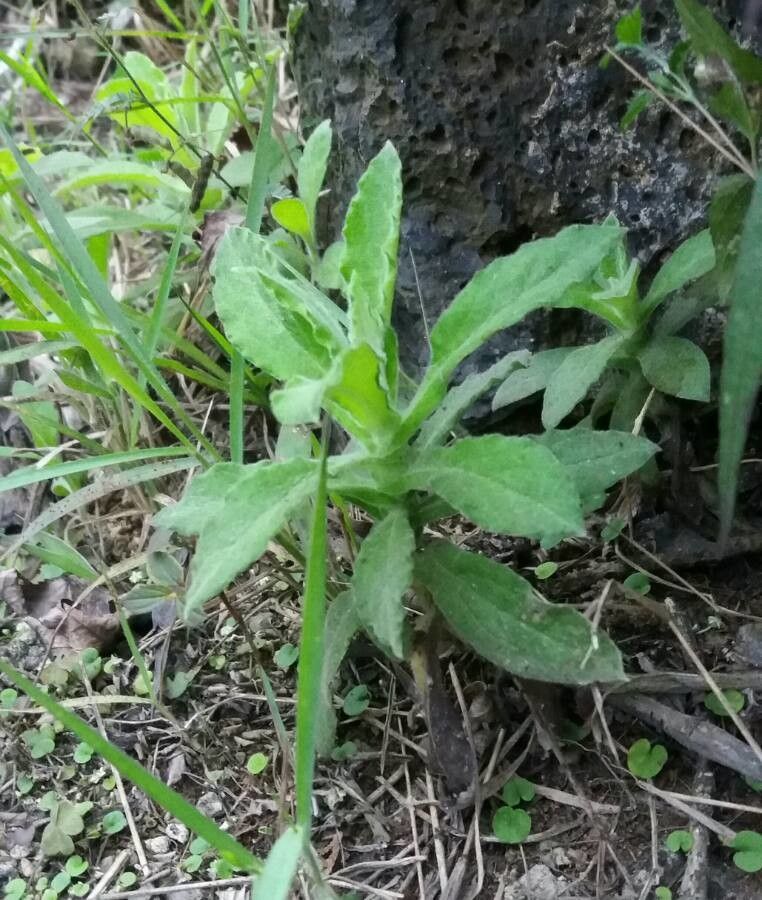
Heterotheca sessiliflora is a species of flowering plant in the family Asteraceae known by the common name sessileflower false goldenaster. It is native to California, Sonora, and Baja California.Heterotheca sessiliflora grows in many types of habitats. It is a perennial herb which is quite variable in appearance, particularly across its four subspecies. It may be a small clumping or mat-forming plant or grow tall stems to heights exceeding a meter. It is coated in small bristles or long woolly hairs and it is glandular, particularly around the inflorescence. The flower head contains long yellowish disc florets and the edge is fringed with yellow ray florets. Subspecies + varietiesHeterotheca sessiliflora subsp. bolanderi (A.Gray) Semple San Francisco Bay area + coast of Redwood Country Heterotheca sessiliflora subsp. echioides (Benth.) Semple - from San Diego County to Sonoma County Heterotheca sessiliflora subsp. fastigiata (Greene) Semple - mountains of southern California Heterotheca sessiliflora var. sessiliflora Heterotheca sessiliflora subsp. sessiliflora - from Baja California north as far as Santa Clara County Heterotheca sessiliflora var. thiniicola (Rzed. & C.Ezcurra) G.L.Nesom - Gran Desierto de Alta northwestern Sonora
Sessileflower false goldenaster has strong disease resistance and is generally unlikely to suffer from illnesses. However, it can be vulnerable to pests and diseases present in its environment. When such infections occur, they are usually mild. Regarding care, the plant requires moderate maintenance. It should be pruned regularly to maintain a neat appearance and healthy growth. Fertilizing can also help encourage flowering. Sessileflower false goldenaster is well suited for anyone with an outdoor area, such as a garden or patio, and does not demand extensive care experience. It may need more attention when grown indoors.
How to keep Heterotheca Sessiliflora.
Light
Sessileflower false goldenaster is a perennial herbaceous plant that prefers sunny sites and comes from open habitats, frequently flourishing in meadows and grasslands. It favors full sun but can also tolerate partial sun.
Water
The sessileflower false goldenaster is well-suited to dry, open areas and is highly drought-resistant. While it thrives with minimal moisture, this plant requires weekly watering when cultivated. To prevent waterlogging and mimic its native arid habitat, it benefits from well-draining soil.
Fertilizer
Generally, one fertilizer application in spring is adequate for Sessileflower false goldenaster, though repeated feedings can help maximize growth. Apply fertilizer every one to one-and-a-half months. Fertilization improves leaf appearance and function, helping maintain even color and a healthy texture. It also encourages root development and enhances nutrient uptake for long-term plant health.
Pruning
The Sessileflower false goldenaster boasts vibrant yellow blooms and a bushy growth habit. To keep the plant healthy and encourage flowering, prune it from early to late spring. This will help shape the plant and remove any dead stems, improving airflow. Be careful not to prune too heavily; instead, focus on tidying up the plant to maintain its health and vigor.
Botanical profile.
- Plant Type
- Herb
- Life Cycle
- Perennial
- Genus
- Heterotheca
- Family
- Asteraceae
- Hardiness Zone
- 4-8
- Leaf Type
- Deciduous
- Native Area
- Mexico
Other names.