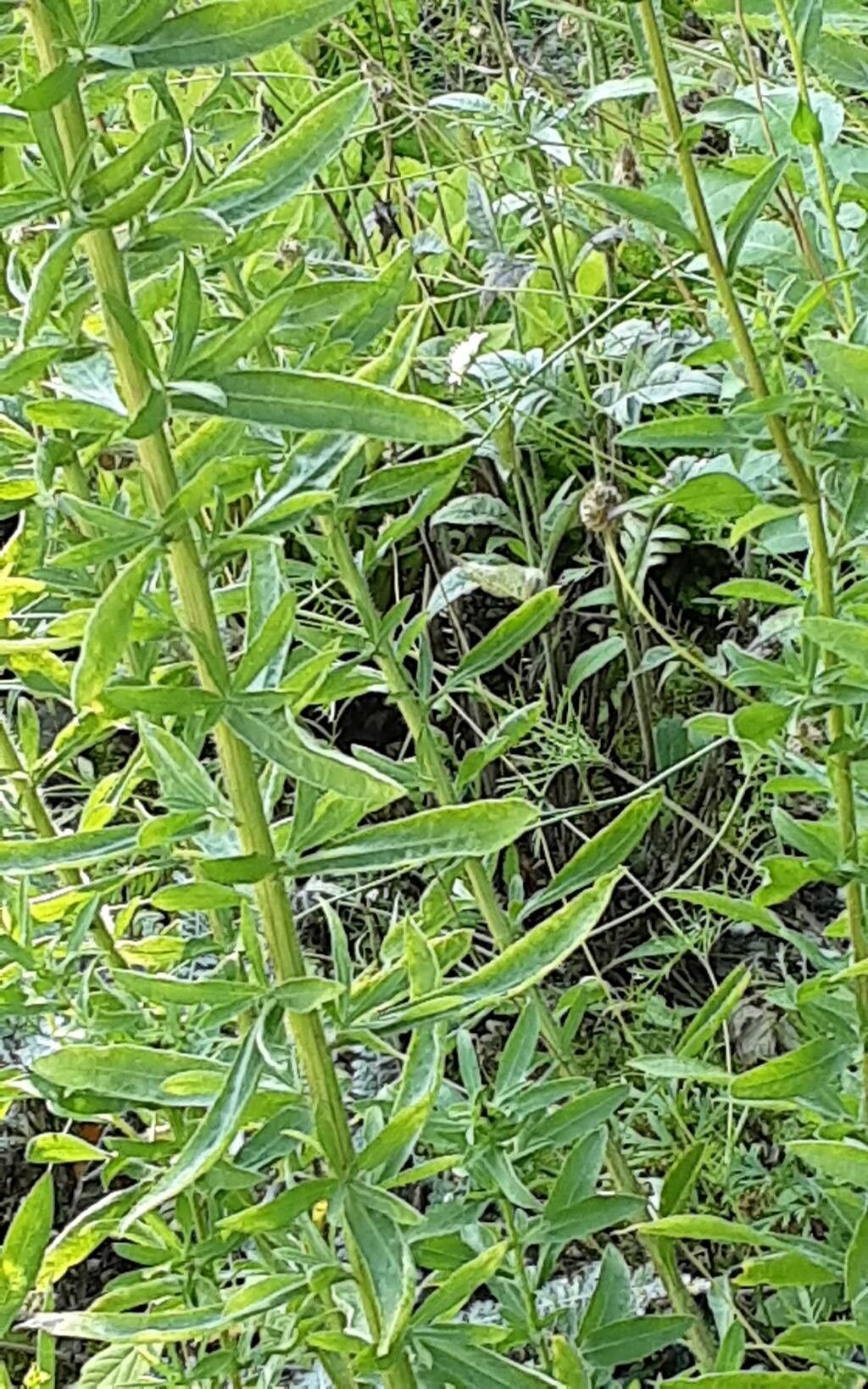
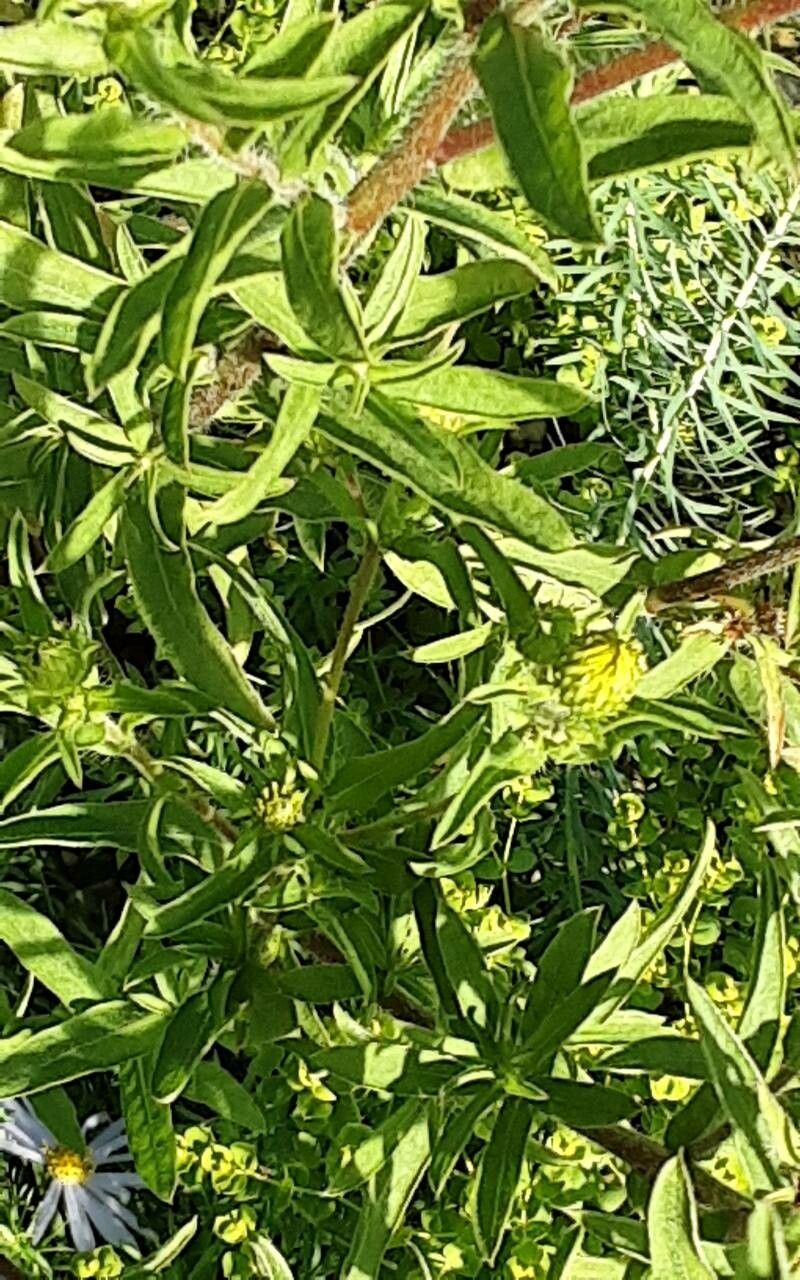
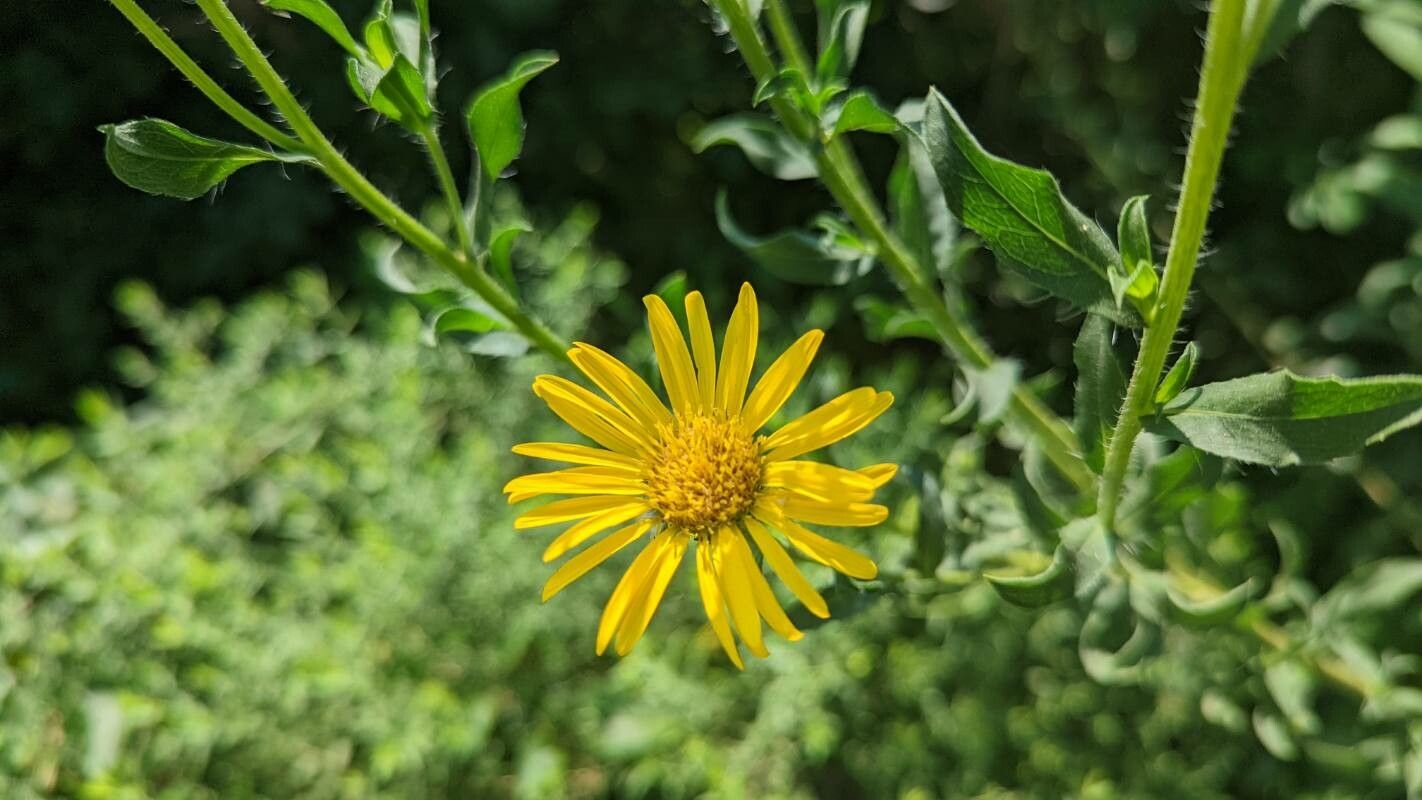
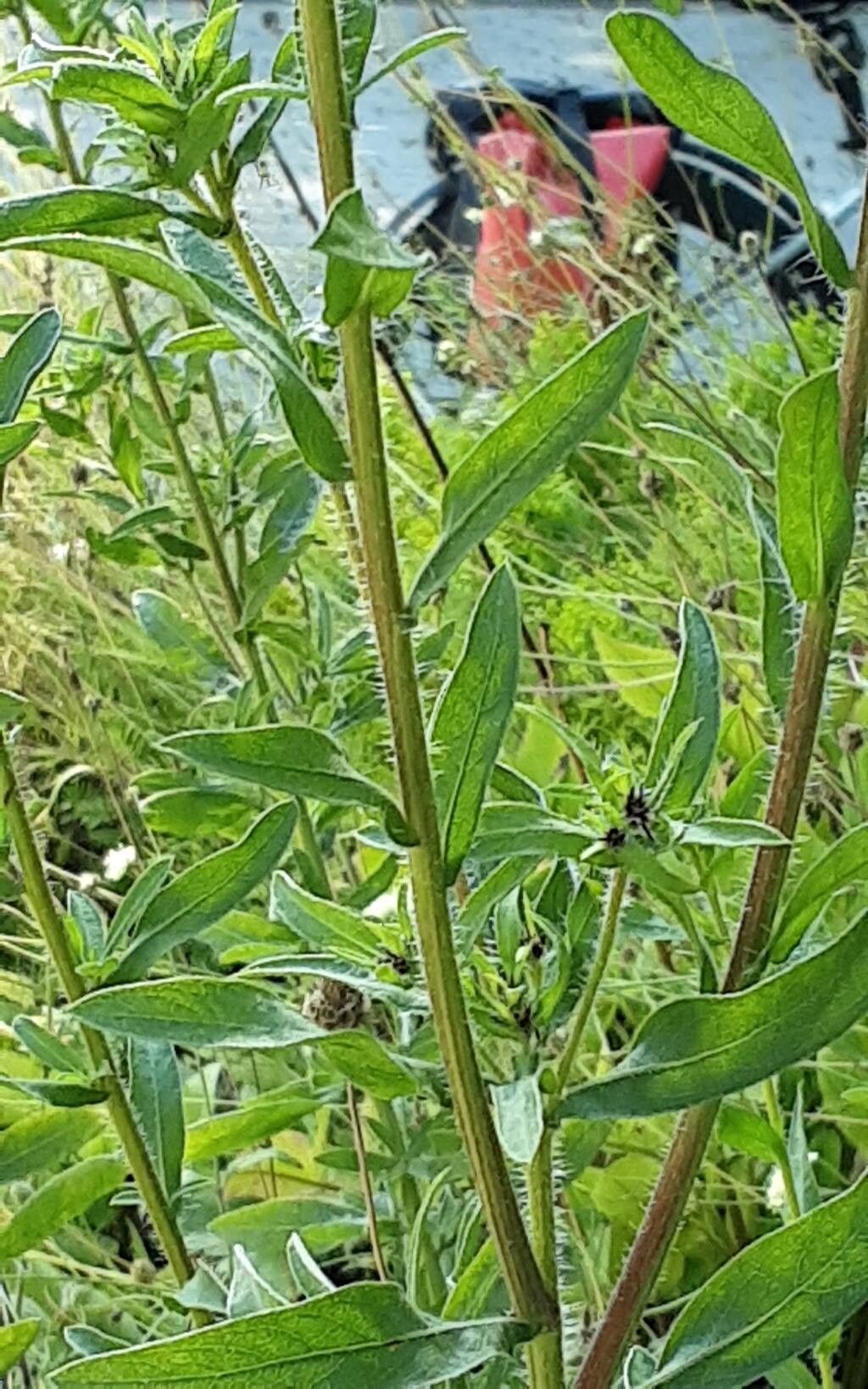
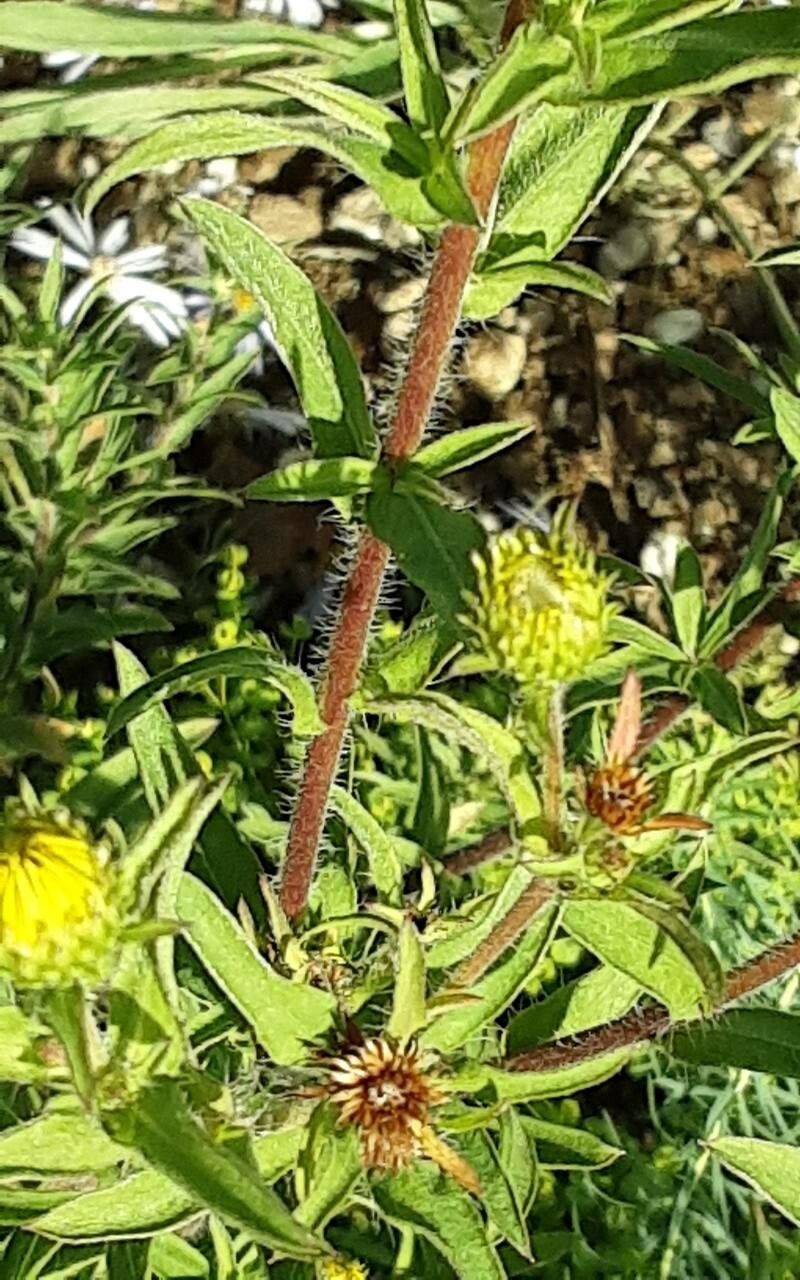
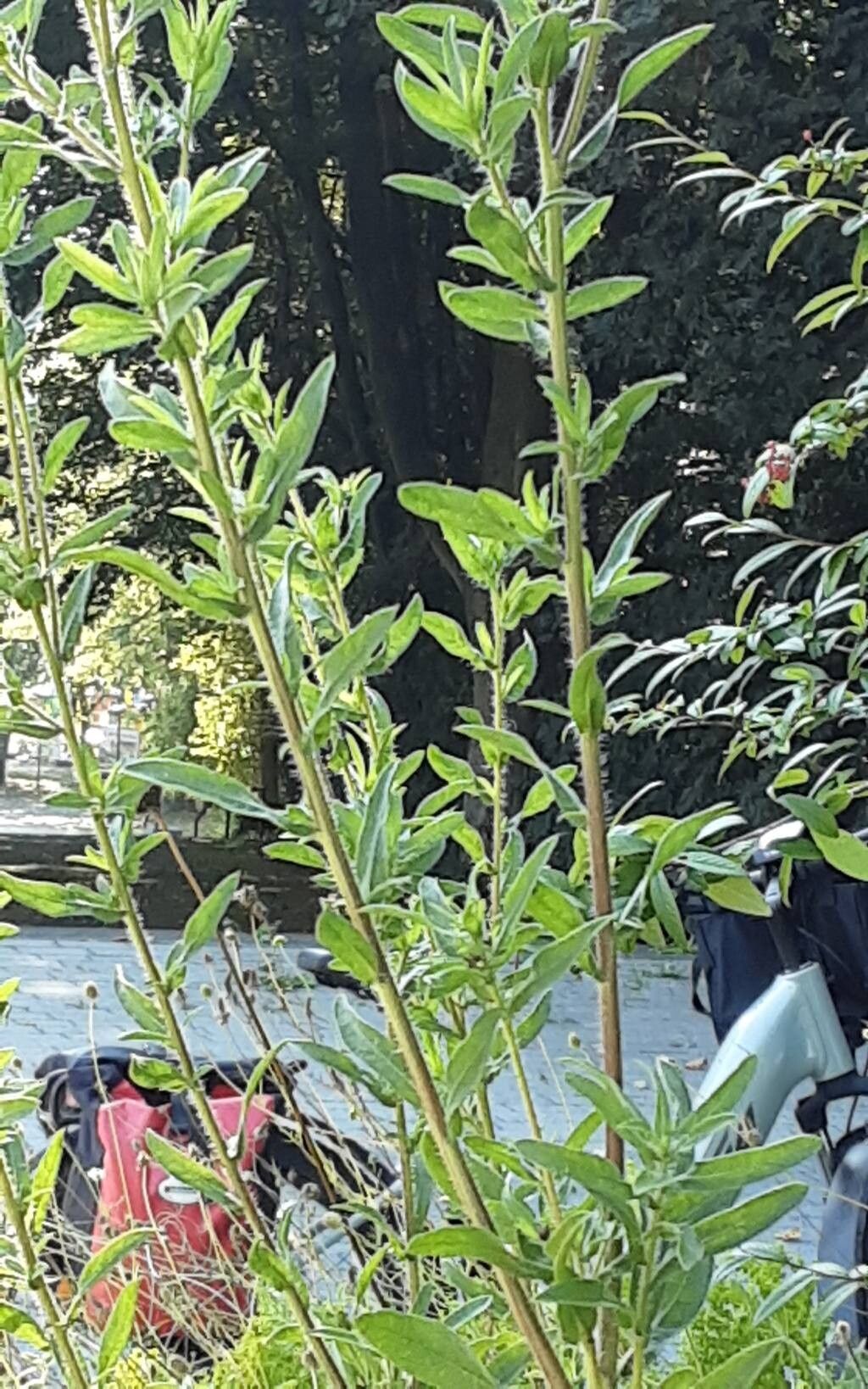
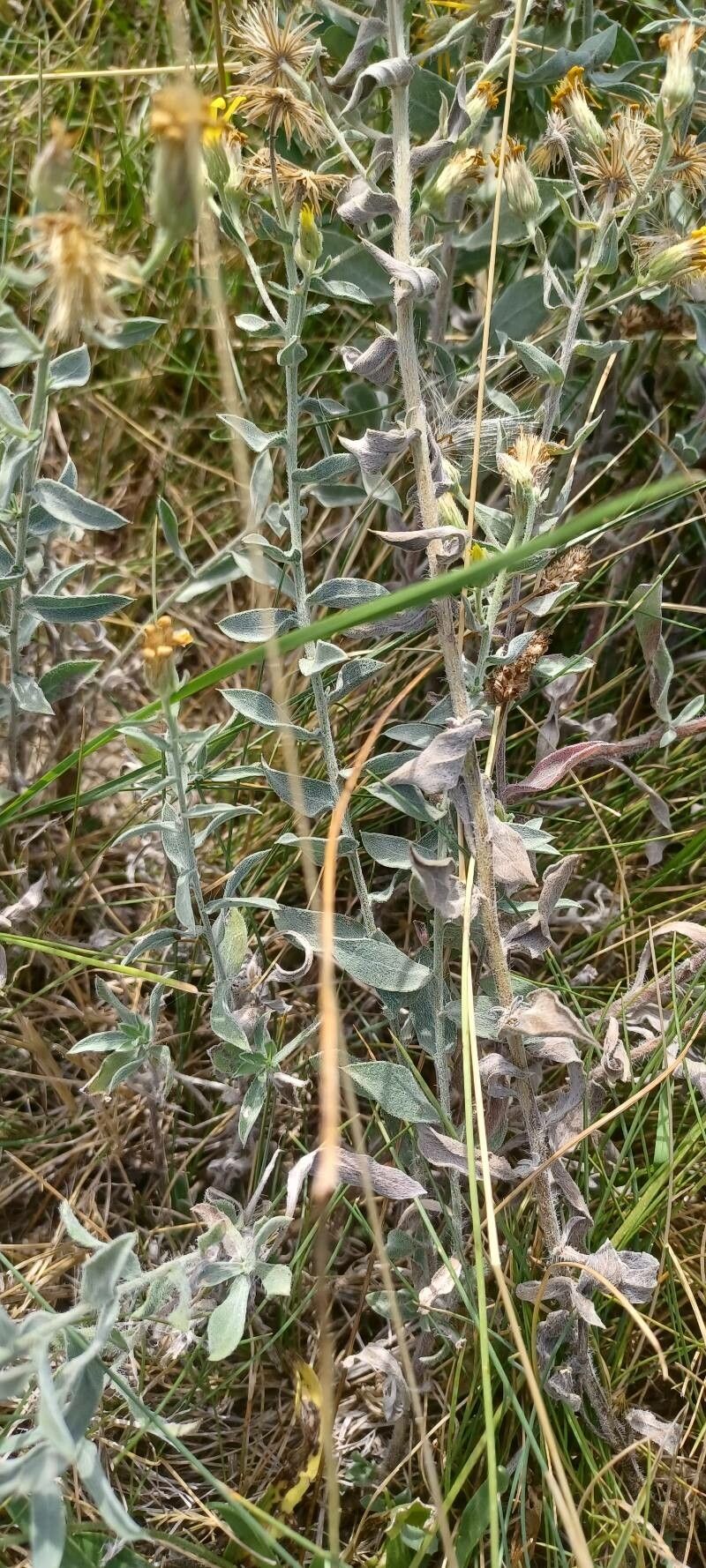
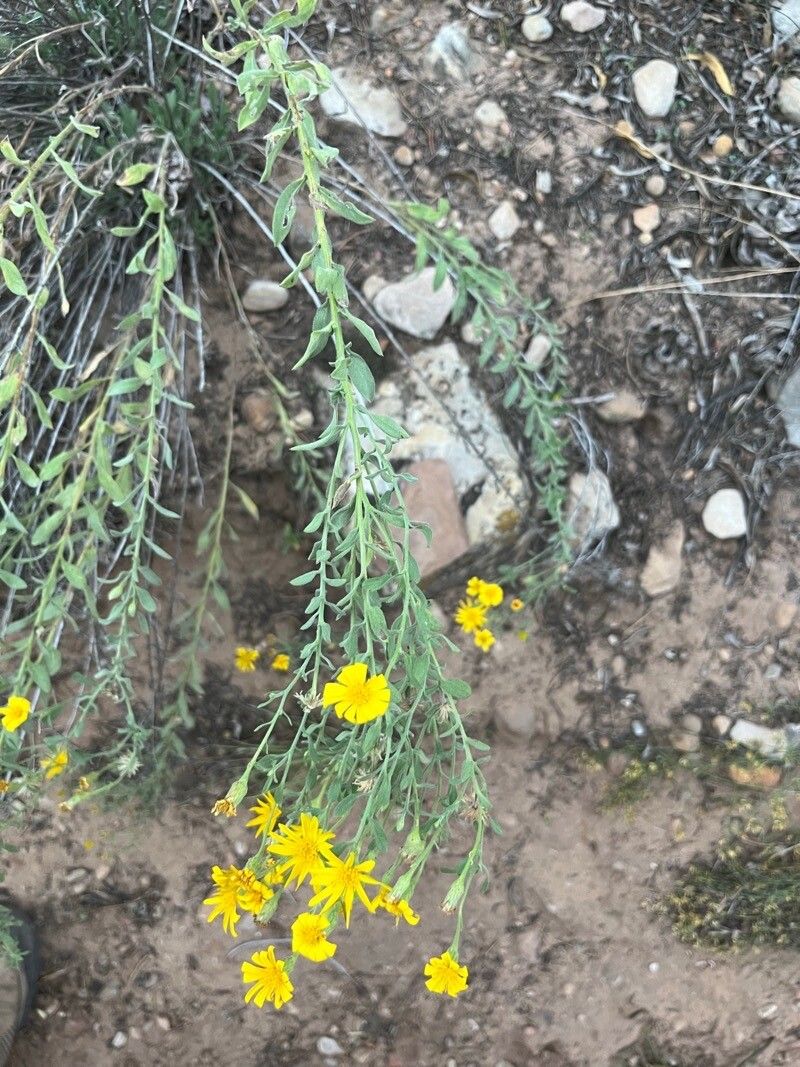
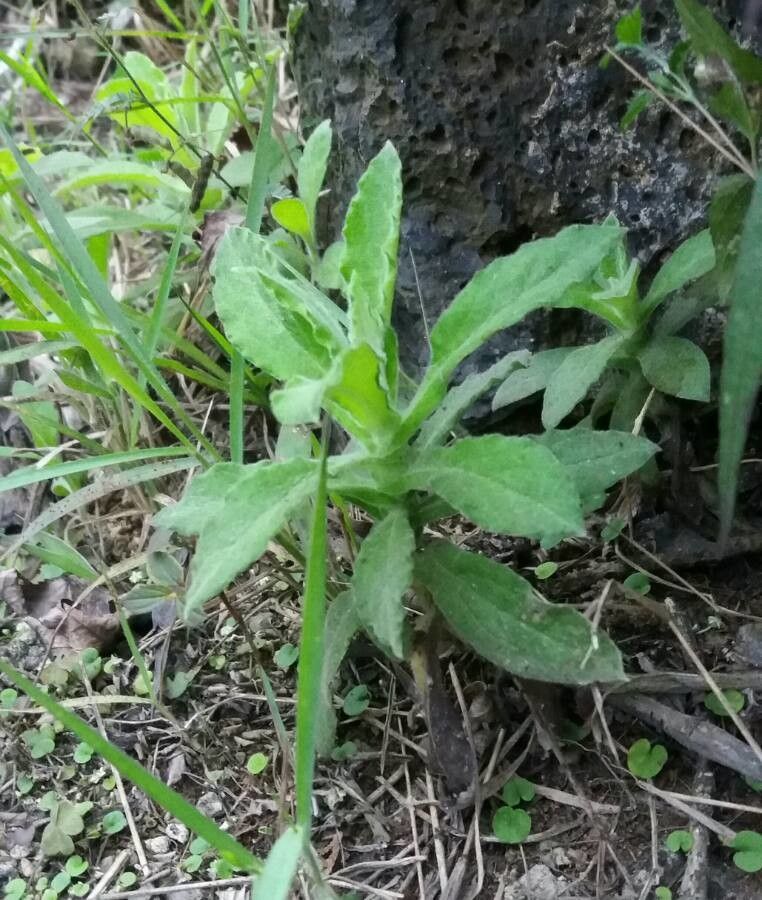
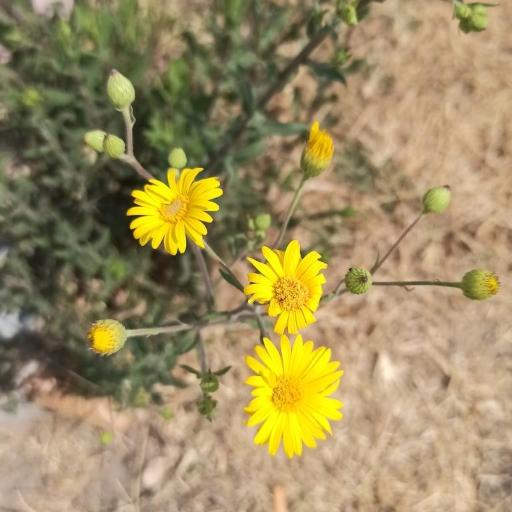
Heterotheca camporum, known by the common name lemonyellow false goldenaster, is a North American species of flowering plant in the family Asteraceae. It is found only in the central United States, primarily the Ozarks, the Cumberland Plateau, and the middle Mississippi Valley. There are reports of additional populations in the Northeast, the Southeast, and in the Great Lakes region, but these appear to be waifs or naturalizations.Heterotheca camporum is a perennial herb growing 150 centimeters (5 feet) in height, spreading by means of underground rhizomes. There can be as many as 100 stems from one clone. Each stem can produce 1-24 flower heads in flat-topped arrays Each head contains 16–38 ray florets surrounding 23–66 tiny disc florets at the center.
Lemonyellow false goldenaster exhibits good disease resistance and is generally not prone to diseases. However, it can be susceptible to pests and diseases present in its surroundings. These infections are usually not severe. In terms of care, this plant requires moderate maintenance. It should be pruned regularly to maintain an attractive appearance and healthy growth. Fertilizing can also help promote flowering. Lemonyellow false goldenaster is suitable for anyone with an outdoor space, such as a garden or patio, and does not require a lot of care experience. It may require more attention when grown indoors.
How to keep Heterotheca Camporum.
Light
Lemonyellow false goldenaster is a perennial herbaceous plant that favors sunny sites and originates from open habitats, frequently thriving in meadows and grasslands. It prefers full sun but can also tolerate partial sun.
Temperature
Lemonyellow false goldenaster can tolerate a wide range of temperatures, but its distribution may still be restricted by different combinations of moisture and heat. It performs best in warm summer climates with sufficient rainfall or irrigation. Extended periods of cloudy, rainy weather, as well as prolonged high temperatures, can increase the risk of the plant dying. In winter, proper protection from cold can enhance its survival rate.
Fertilizer
The best time to fertilize a Lemonyellow false goldenaster is in early spring, when it is coming out of dormancy and starting active growth. Fertilization supplies the essential nutrients needed for healthy development. Although Lemonyellow false goldenaster has fairly low fertilizer requirements, giving it fertilizer once a year can improve its survival and encourage better, longer-lasting flowers.
Pruning
The lemon-yellow false goldenaster showcases vibrant lemon-yellow flowers. For best results, prune it in early spring to remove any dead stems, which will promote healthier growth and more vibrant blooms. Use clean, sharp tools to make precise cuts just above the leaf nodes. This encourages bushier growth and improves air circulation, thereby reducing the risk of disease.
Botanical profile.
- Plant Type
- Herb
- Life Cycle
- Perennial
- Genus
- Heterotheca
- Family
- Asteraceae
- Hardiness Zone
- 4-9
- Mature Height
- 30 cm to 91 cm
- Mature Spread
- 20 cm to 40 cm
- Leaf Color
- Green, Gray
- Leaf Type
- Deciduous
- Flower Color
- Yellow
- Flower Size
- 2.03 cm to 3.05 cm
- Bloom Time
- Summer
- Planting Time
- Spring, Summer, Autumn
- Harvest Time
- Late summer, Early fall, Mid fall
Other names.