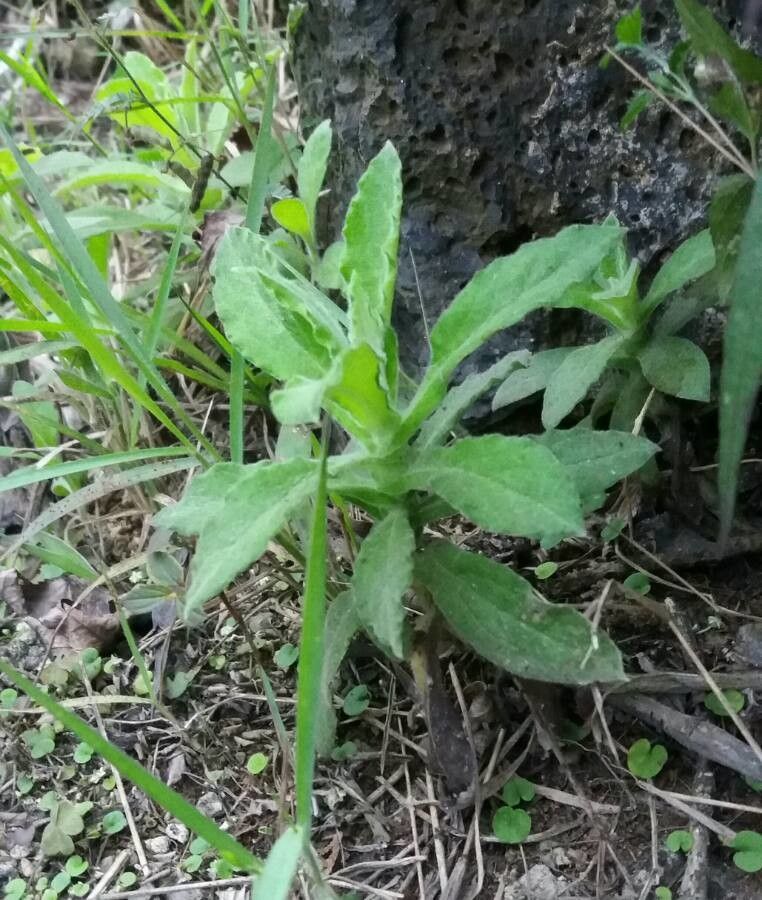
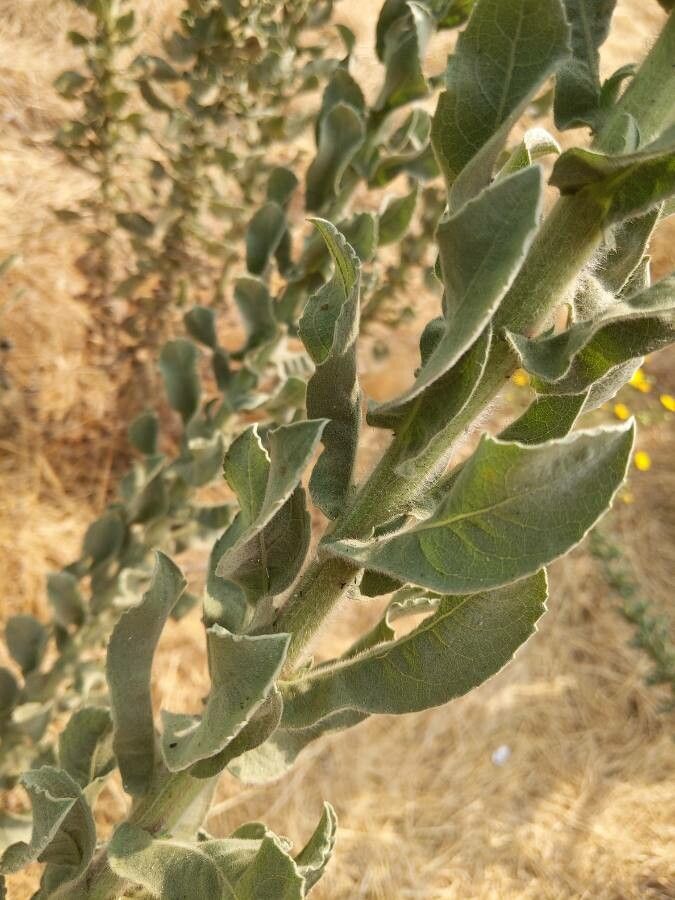
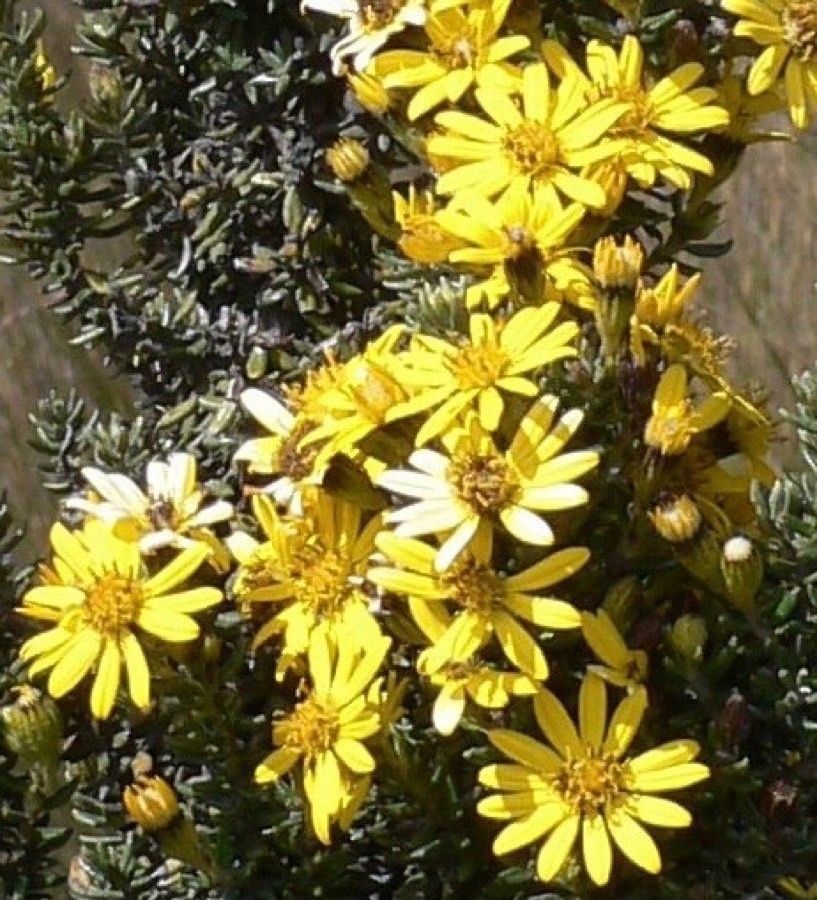
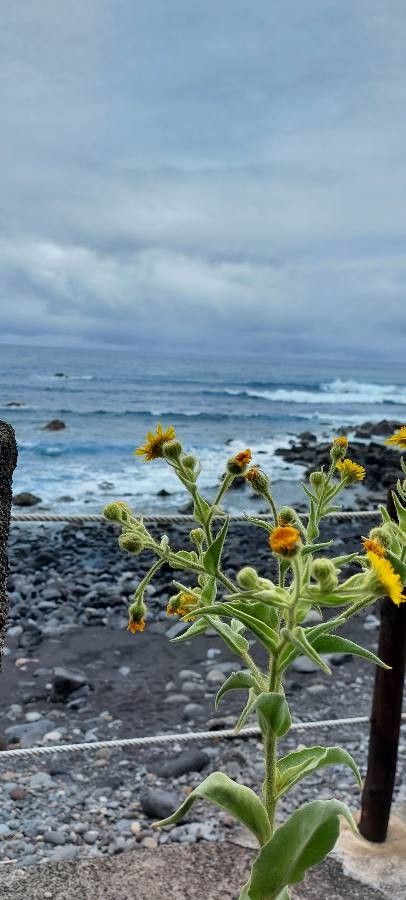
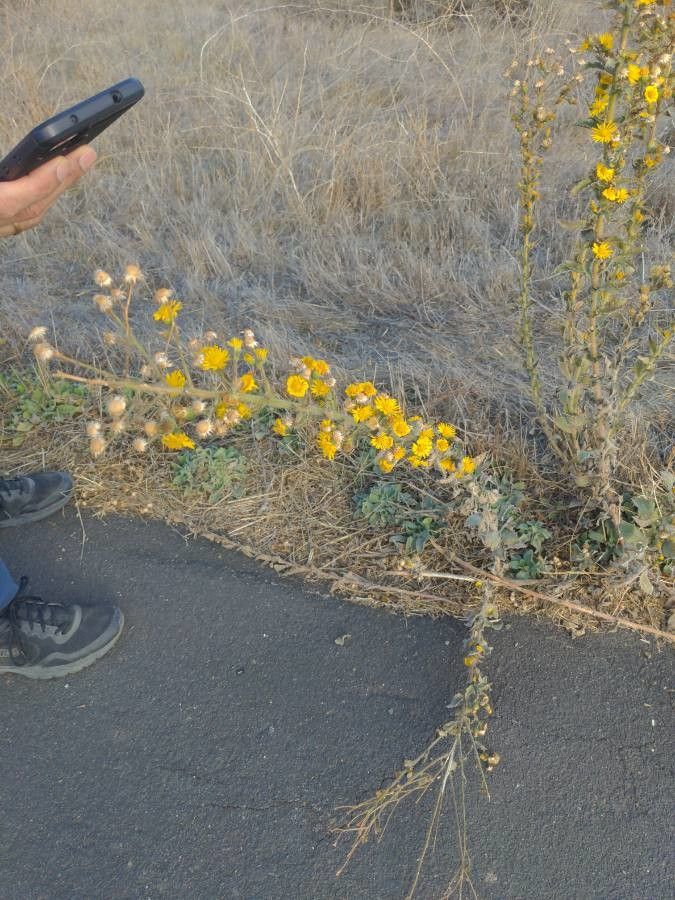
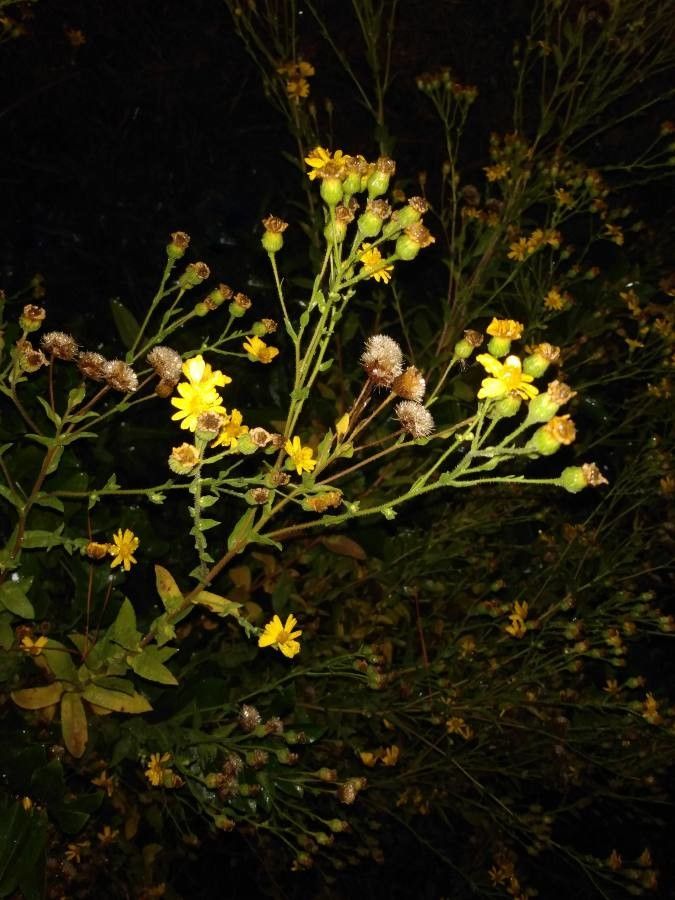
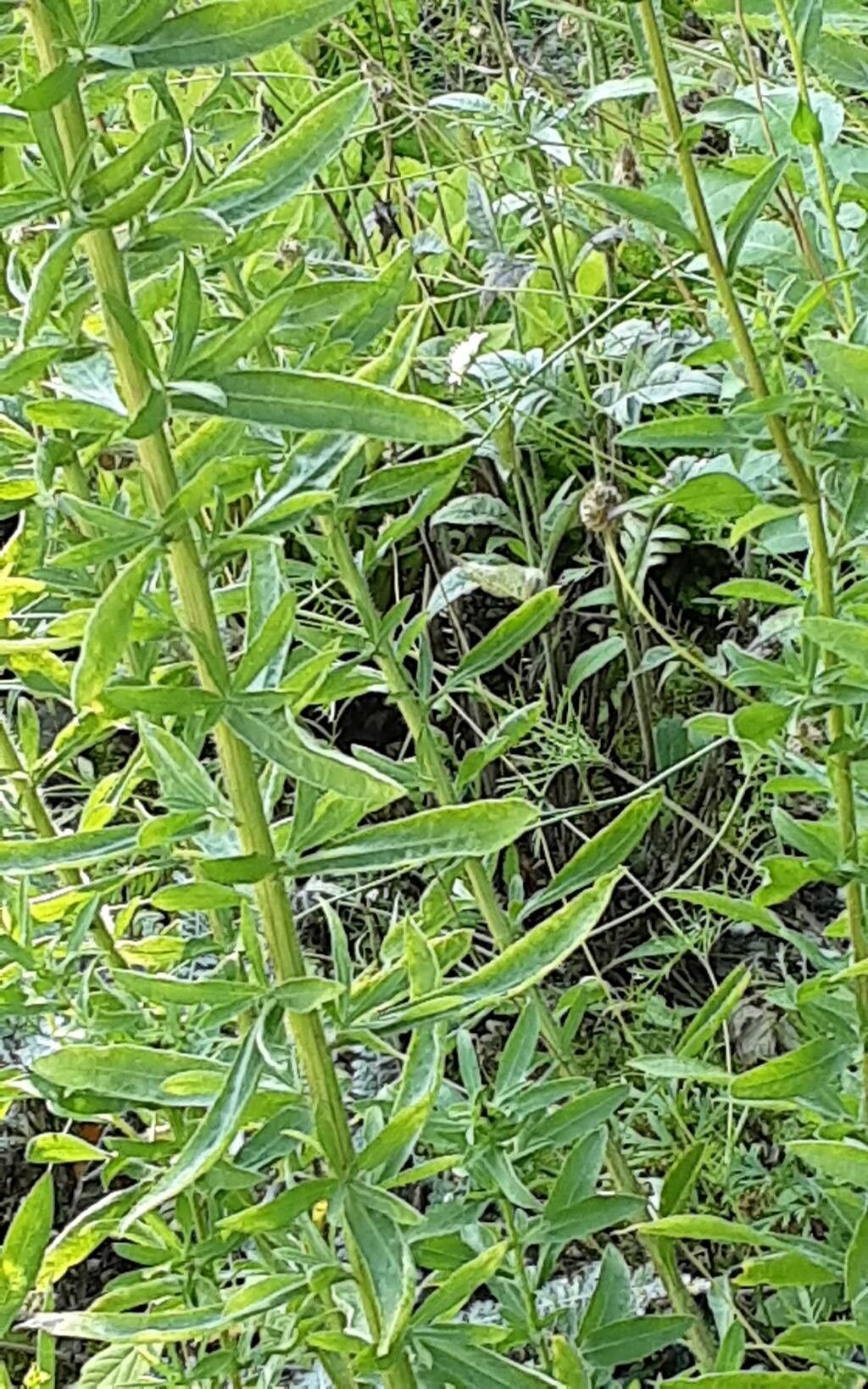
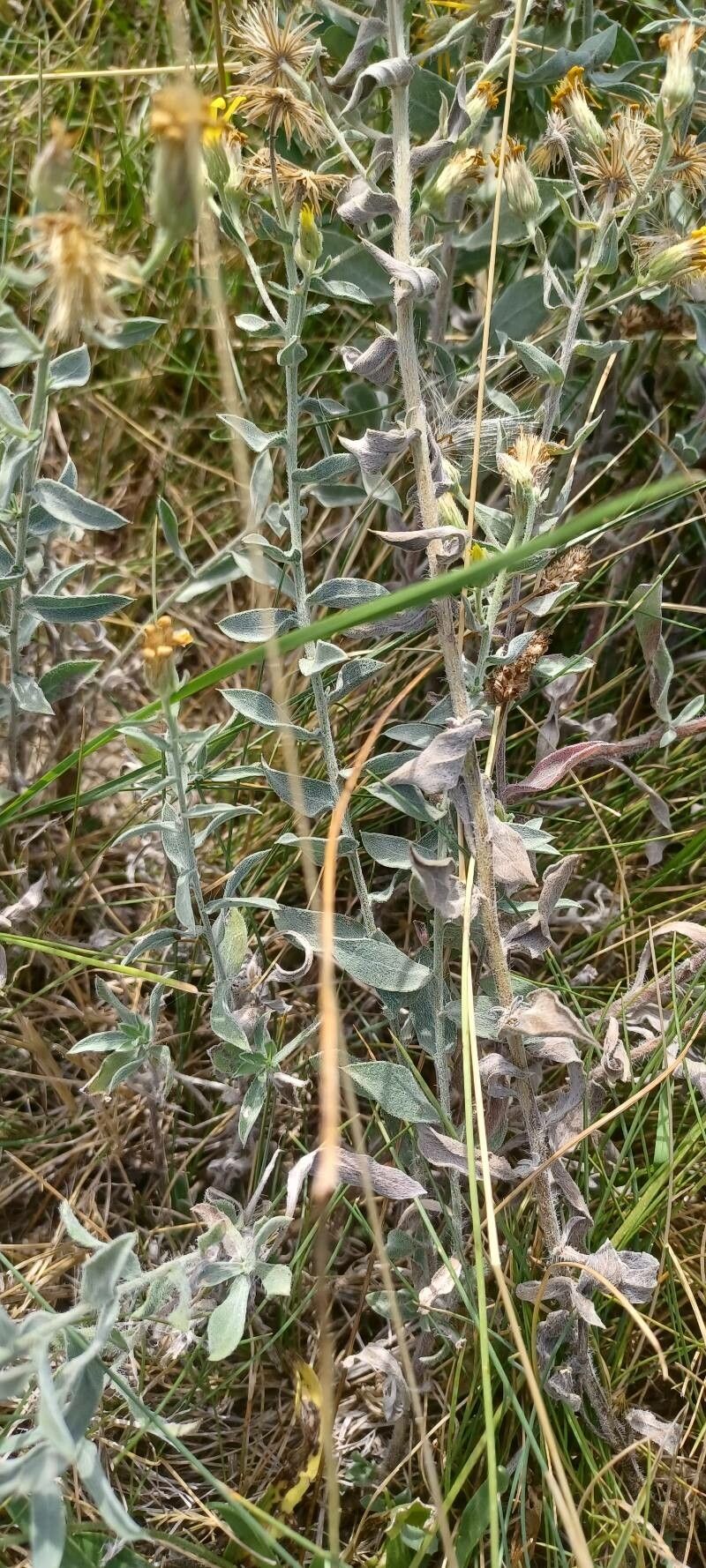
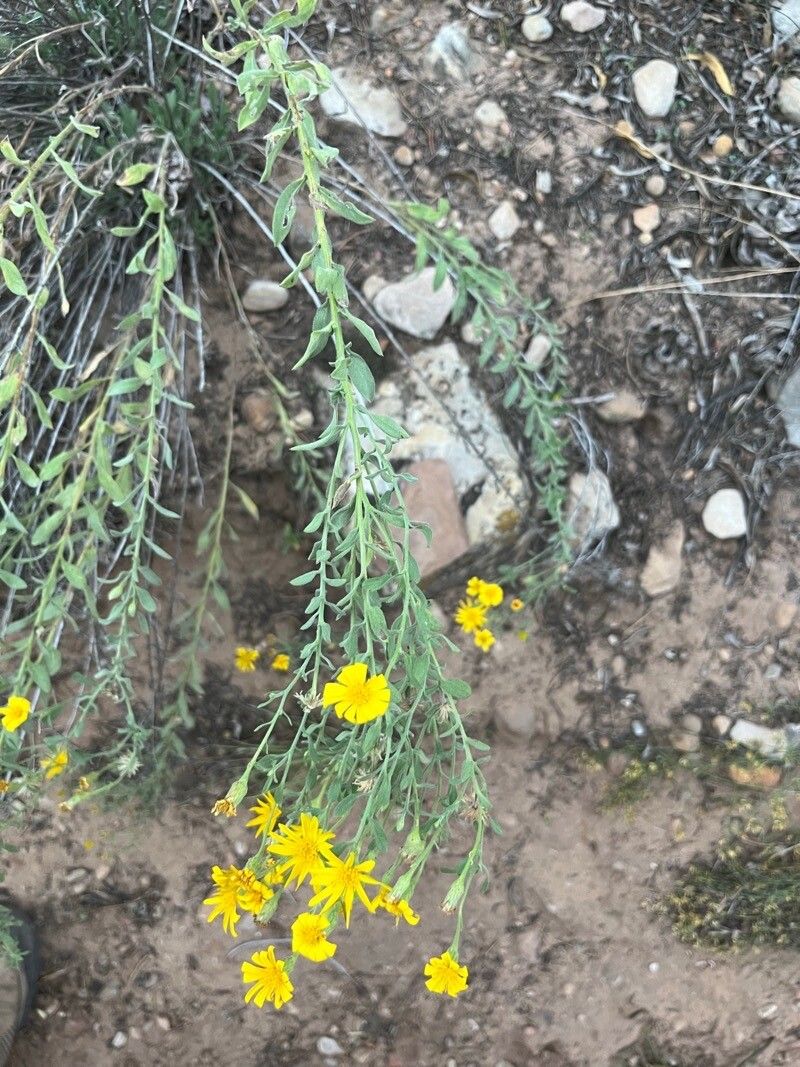
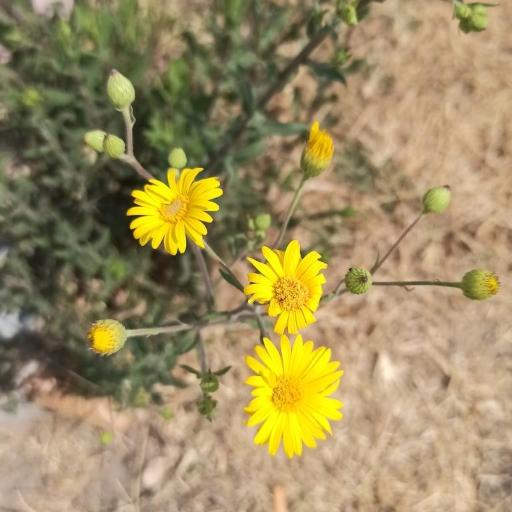
Heterotheca grandiflora is a species of flowering plant in the family Asteraceae known by the common name silk-grass goldenaster or telegraphweed. It is native to the southwestern United States (California, Nevada, Utah, Arizona) and northwestern Mexico (Baja California), but it can be found in other areas as an introduced species, such as Hawaii. It is often a roadside weed even where it is native. Heterotheca grandiflora is a tall, bristly, glandular plant exceeding a meter (40 inches) in height and densely foliated in hairy to spiny toothed or lobed leaves. Leaves are smaller and more widely spaced toward the top of the stem, which is occupied by an inflorescence of bright yellow daisy-like flower heads. The disc and ray florets drop away to leave a spherical head of achenes, each with a long white pappus.
Telegraphweed has good resistance to diseases and is typically not prone to them. However, it can be affected by pests and diseases present in its environment. These infections are usually not serious. For care, this plant requires a moderate level of maintenance. It should be pruned regularly to maintain an attractive appearance and healthy growth. Fertilizing can also help encourage flowering. Telegraphweed is suitable for anyone with outdoor space, such as a garden or patio, and does not need extensive care experience. It may need more attention when grown indoors.
How to keep Heterotheca Grandiflora.
Light
The telegraphweed thrives with ample sunlight. Light is essential for its healthy development, especially during its early growth stages. It naturally occurs in areas that get uninterrupted sun all day. However, extended periods of low light can weaken the plant, while excessive sun can scorch its leaves.
Water
Telegraphweed thrives in dry environments by efficiently conserving water and preferring arid conditions. While it can tolerate occasional droughts, it should still be watered weekly. If grown outdoors, it benefits from natural rainfall but can also endure low precipitation because of its effective water management capabilities.
Temperature
Telegraphweed is naturally suited to temperate environments and prefers temperatures between 68 and 95 °F (20 to 35 ℃). If temperatures move outside this optimal range, seasonal adjustments may be required. Acclimate gradually.
Fertilizer
The best time to fertilize a Telegraphweed is in early spring, as it comes out of dormancy and begins active growth. Applying fertilizer supplies essential nutrients for healthy development. Although Telegraphweed has relatively low fertilizer requirements, an annual application can improve its survival and encourage better, longer-lasting flowers.
Pruning
To help telegraphweed thrive, regularly prune it, preferably in early to late spring. Pruning involves removing dead or overcrowded stems to improve air circulation and light penetration, which encourages blooming and vitality. Follow modern horticultural practices for the best health and appearance of your plant.
Botanical profile.
- Plant Type
- Herb
- Life Cycle
- Perennial, Annual, Biennial
- Genus
- Heterotheca
- Family
- Asteraceae
- Hardiness Zone
- 8
- Mature Height
- 0.61 m to 1.22 m
- Mature Spread
- 30 cm to 61 cm
- Leaf Color
- Green, Dark Green
- Leaf Type
- Semi-evergreen
- Flower Color
- Yellow
- Flower Size
- 2.54 cm
- Bloom Time
- Summer, Fall
- Planting Time
- Spring, Autumn
- Harvest Time
- Late summer, Fall, Early winter
- Native Area
- Mexico
Other names.
Reader questions.
How should I water my Telegraphweed?
To water the Telegraphweed effectively, make sure to use filtered water at room temperature. Tap water may contain harmful particles, so filtered water is recommended. The Telegraphweed is accustomed to warm environments, so avoid using cold water as it can be a shock to its system. Additionally, do not water from above as it can cause issues with the foliage. Instead, gently pour your filtered room temperature water onto the soil until it is fully soaked. This helps moisten the roots and supports their spread through the soil for nutrient collection.
What are the sunlight requirements for Telegraphweed (Heterotheca grandiflora)?
Telegraphweed requires full sun, which means it needs above 6 hours of sunlight daily to thrive optimally. Its growth is significantly influenced by the amount of sunlight it receives, as it is native to areas that are exposed to uninterrupted sunlight throughout the day. However, it's important to note that both insufficient and excessive exposure can negatively affect the plant. Insufficient light weakens the plant, while excessive sunlight can burn its leaves. Therefore, it's essential to monitor the sunlight exposure in your garden and adjust the plant's location accordingly to ensure it receives the right balance of light and shade.
What is the ideal temperature range for growing Telegraphweed?
Telegraphweed thrives in temperate environments, with an ideal growing temperature range between 68 to 95°F (20 to 35°C). It's necessary to make seasonal adjustments if the temperature falls outside this optimal range, ensuring the plant is acclimated gradually to new conditions.
What should I do if I give my Telegraphweed too much or too little water?
Overwatering is a common issue that can harm your Telegraphweed. It causes wilting, yellowing of stems and leaves, and can lead to diseases like root rot, mold, and mildew. Underwatering is less common, but it can still happen. When it does, the leaves become brittle and brown. It's important to notice signs of overwatering early, as some diseases may not be fixed if you wait too long. Reduce watering if you see early signs, and check the soil's drainage. Replace poorly draining soil with a loose, well-draining potting mix. If signs of underwatering appear, simply water more regularly until they go away.
How does artificial lighting support the growth of indoor Telegraphweed plants?
When natural sunlight is insufficient, especially during winter or in less sunny spaces, artificial lighting can be a crucial solution for the growth of indoor Telegraphweed plants. Adequate lighting is essential for their optimal growth. LEDs are a popular choice because they can provide specific wavelengths of light that plants need. Full sun plants require 30-50W/sq ft of artificial light, partial sun plants 20-30W/sq ft, and full shade plants 10-20W/sq ft. The light source should be placed 12-36 inches above the plant to mimic natural sunlight and most plants need 8-12 hours of light per day. Choosing the right type of artificial light, determining the appropriate distance, and mimicking natural daylight hours are key factors to promote faster, healthier growth.
Does Telegraphweed require frost protection measures during winter?
Telegraphweed has a strong cold resistance, so special frost protection measures are usually not necessary during winter. However, if temperatures are expected to drop below -10°C, it's important to provide cold protection. This can be done by covering the plant with soil or straw and watering it abundantly before the first freeze in autumn to keep the soil moist. This preparation helps prevent drought and water scarcity for the plant during winter and early spring.
How frequently do I need to water my Telegraphweed?
If your Telegraphweed is potted, you can check if it needs water by sticking your finger into the soil. If the top two to three inches are dry, it's time to water it. If your Telegraphweed is planted outdoors, you can use the same method to test the soil. When the first few inches are dry, it's time to water it. In spring and early fall, you'll usually need to water this plant about once a week. In hot weather, you may need to water it twice a week or more. However, mature Telegraphweeds can handle drought well.
What symptoms indicate that a Telegraphweed plant is not receiving enough sunlight?
Symptoms of insufficient sunlight in Telegraphweed include smaller than usual new leaves, leggy or sparse growth, faster leaf drop, slower or stopped new growth, and lighter-colored or chlorotic new leaves. These signs indicate that the plant is struggling with light deficiency and is trying to adapt by conserving resources or enhancing its capacity to capture light. Sufficient sunlight is crucial for the plant's health, and without it, Telegraphweed cannot perform photosynthesis efficiently, leading to poor growth and low vigour.
How does Telegraphweed react to low temperatures?
Telegraphweed is cold-tolerant, performing best when the temperature remains above 20°C and should ideally be kept above 0°C during winter. When temperatures fall below -10°C, you might not notice changes during winter, but there could be a decrease or absence of sprouting in spring. In such cases, remove any parts of the plant that have failed to sprout come spring.
How much water does my Telegraphweed require?
To ensure proper watering for your Telegraphweed, don't hesitate to give it a generous amount of water. Wait until the first two to three inches of soil are dry before proceeding with watering. Make sure to thoroughly soak the soil, allowing the water to flow through the drainage holes at the bottom of the pot. If you don't see excess water draining, you may have underwatered the plant. However, be cautious not to let water accumulate inside the soil, as this can harm the plant. Additionally, if water does not drain properly, it may indicate poorly draining soil, which is harmful and should be avoided. If the plant is outdoors, around 1 inch of rain per week should be enough.
How do you address insufficient sunlight for Telegraphweed plants both indoors and outdoors?
To counter insufficient sunlight for Telegraphweed plants, a gradual approach is recommended. For indoor plants, gradually move them to sunnier locations each week until they receive at least 6 hours of direct sunlight daily. Utilize south-facing windows and consider artificial lighting solutions, like desk lamps or professional grow lights, for plants that are large or difficult to move. Outdoors, transition the plants to sunnier spots gradually to prevent sunburn. If transplantation is necessary, particularly for smaller plants, choose the plant's dormant period and ensure the new location has ample sunlight and good drainage. Remember, while affected parts of the plant may not recover, new growth will be healthy with proper light exposure.
What are the effects of high temperatures on Telegraphweed and how can they be mitigated?
During summer, it is crucial to keep Telegraphweed's temperature below 35°C. Exceeding 38°C can cause the leaves to become lighter in color, prone to curling, susceptible to sunburn, and in severe cases, lead to the entire plant wilting and drying out. To mitigate these effects, trim away sunburned and dried-up parts, move the plant to a shaded area during midday and afternoon sun, or use a shade cloth. Additionally, watering the plant in the morning and evening helps keep the soil moist and support plant health.