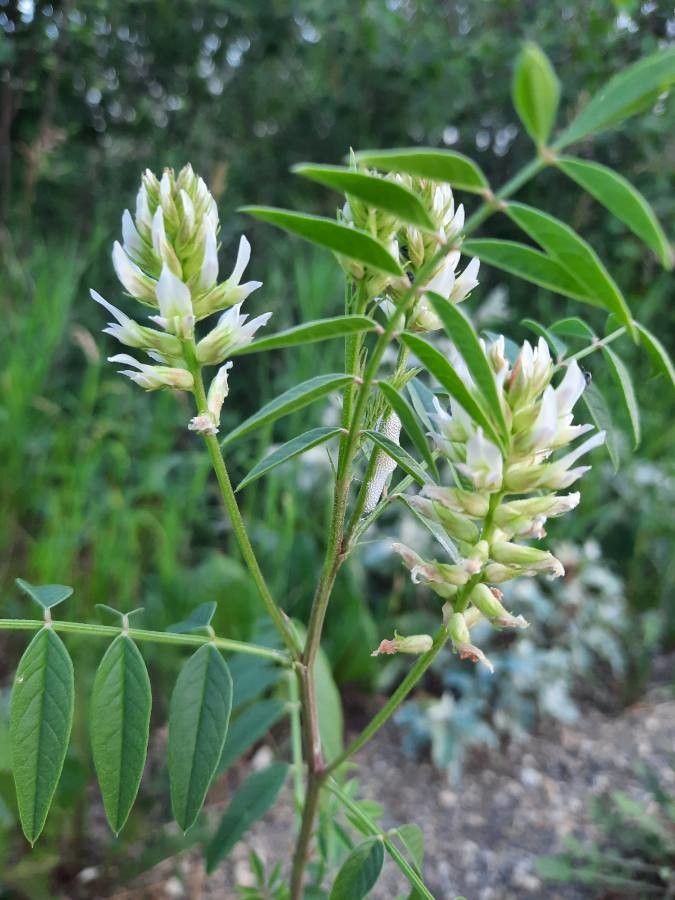
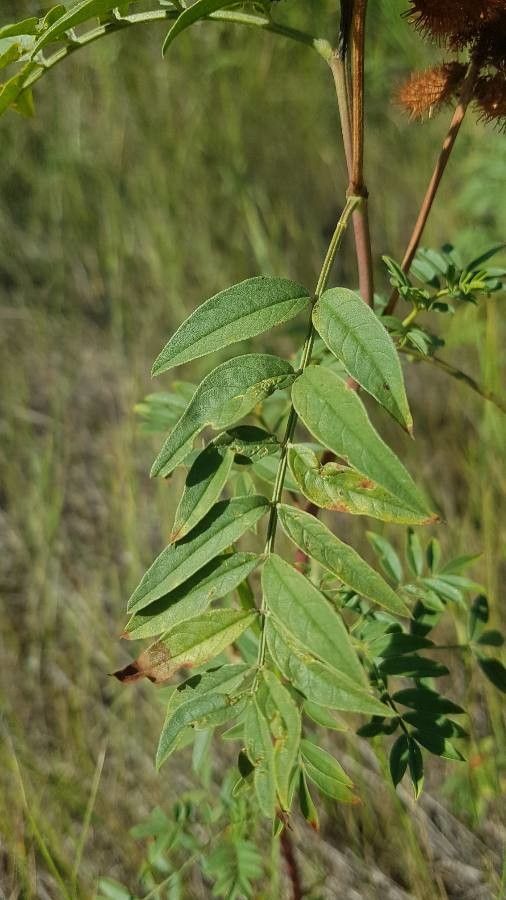
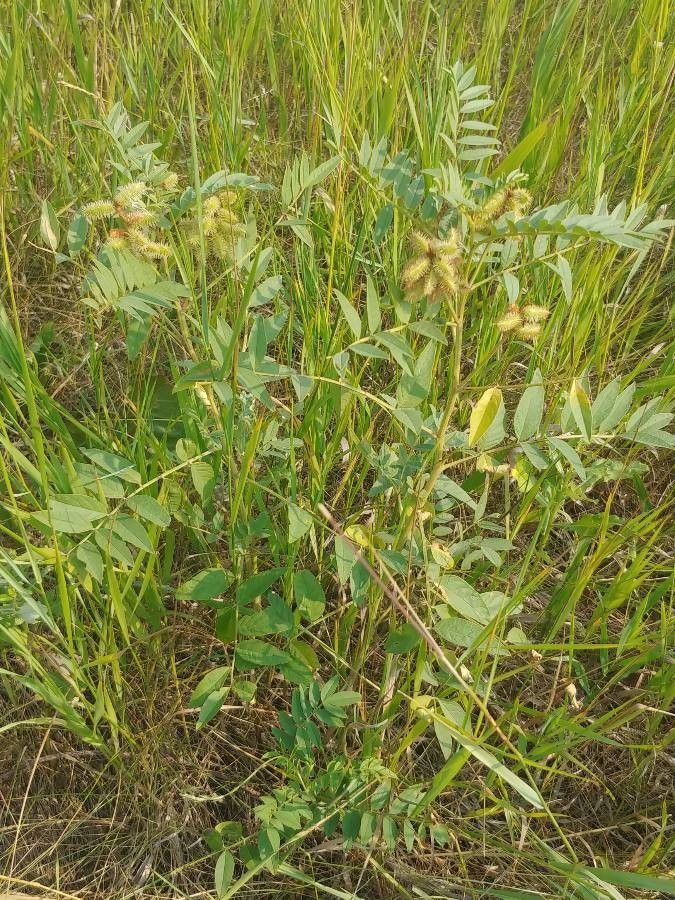
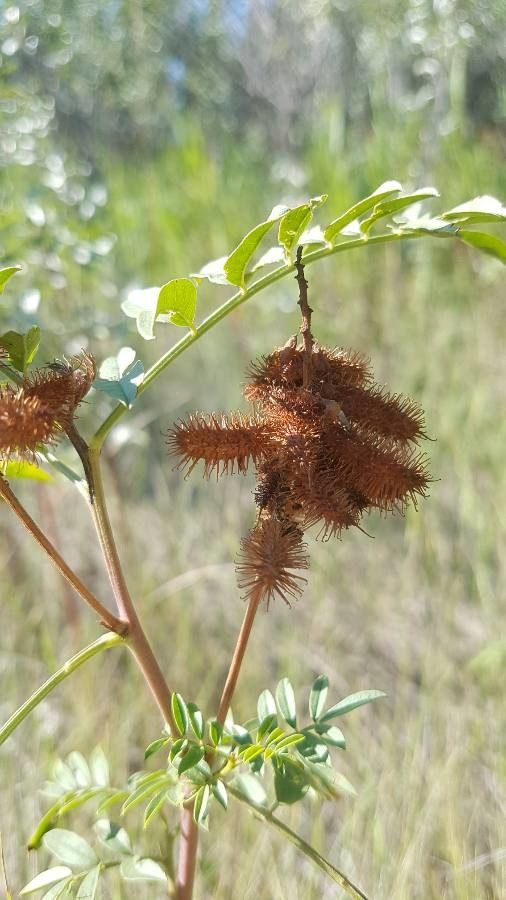
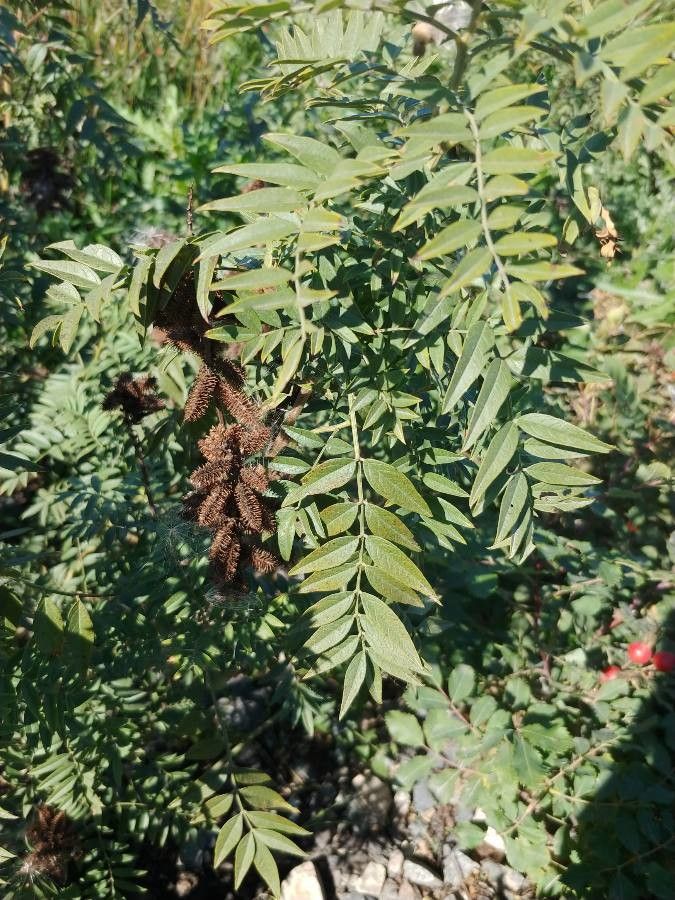
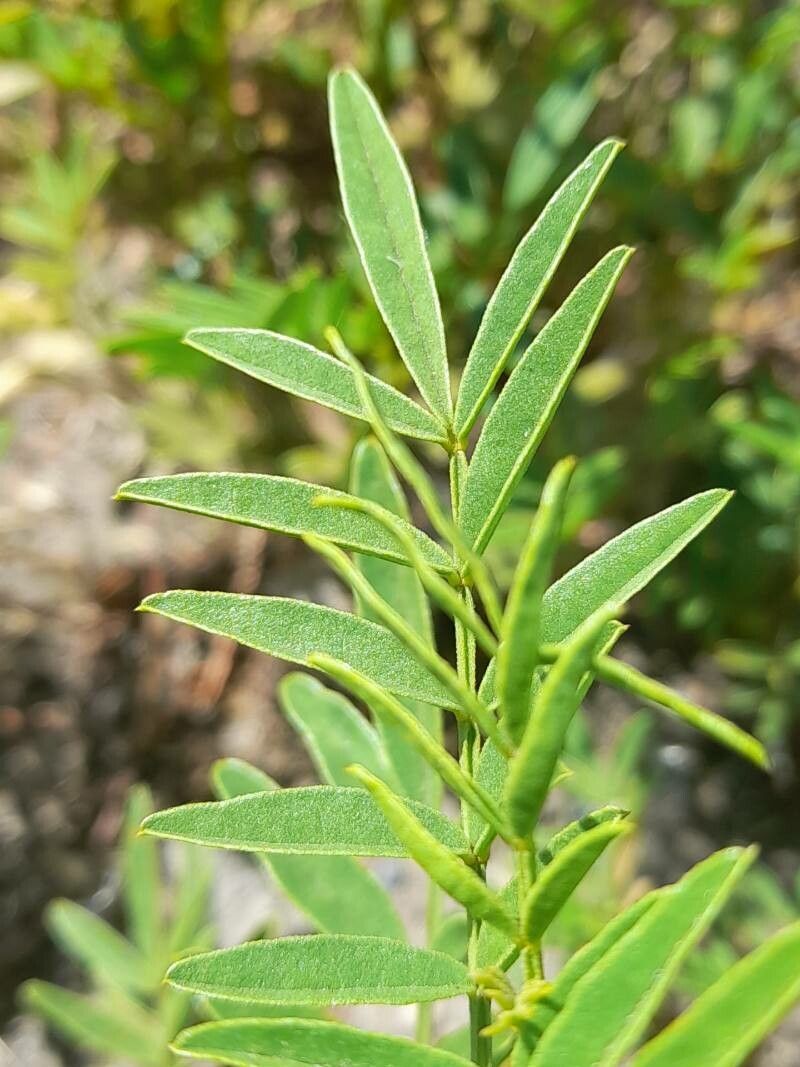
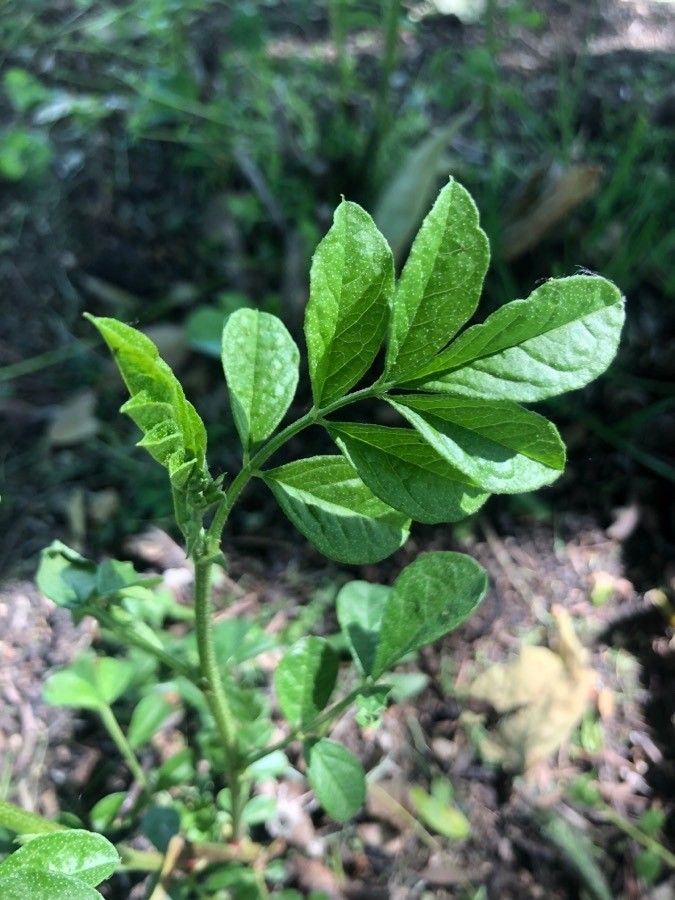
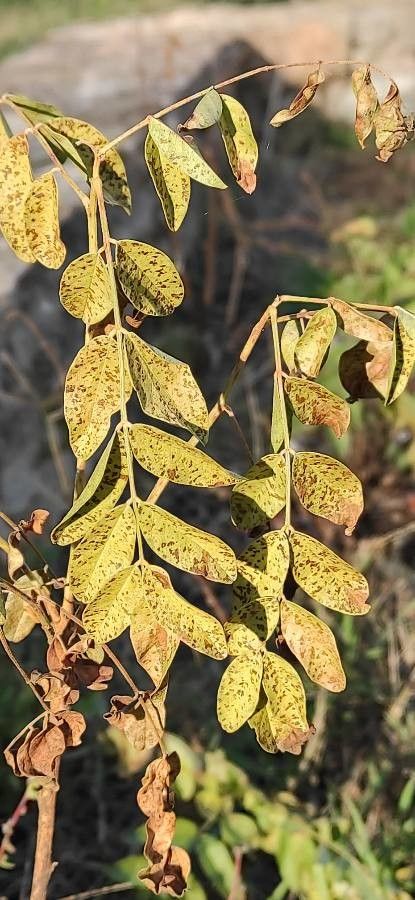
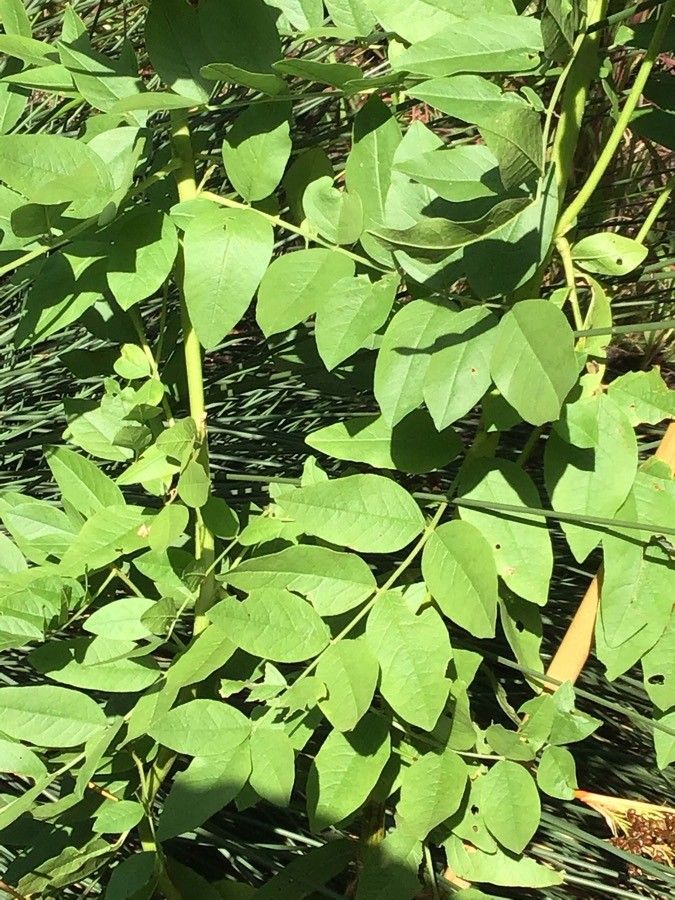
Glycyrrhiza lepidota (American licorice) is a species of Glycyrrhiza (a genus in the pea/bean family, Fabaceae) native to most of North America, from central Canada south through the United States to California, Texas and Virginia, but absent from the southeastern states. It is also sometimes known in the United States as "wild licorice", to distinguish it from the related European licorice (Glycyrrhiza glabra) which is occasionally cultivated.The plant grows in moist soils; although it will grow in heavy soil it prefers sandy soil. It grows to 40–100 cm (16–39 in) tall, and has long tough brown roots which are said to be sweet and were used as food and for medicinal purposes by Native Americans. After eating a roasted root in 1806, Meriwether Lewis described an "agreeable flavor not unlike the sweet pittaitoe (sweet potato)."
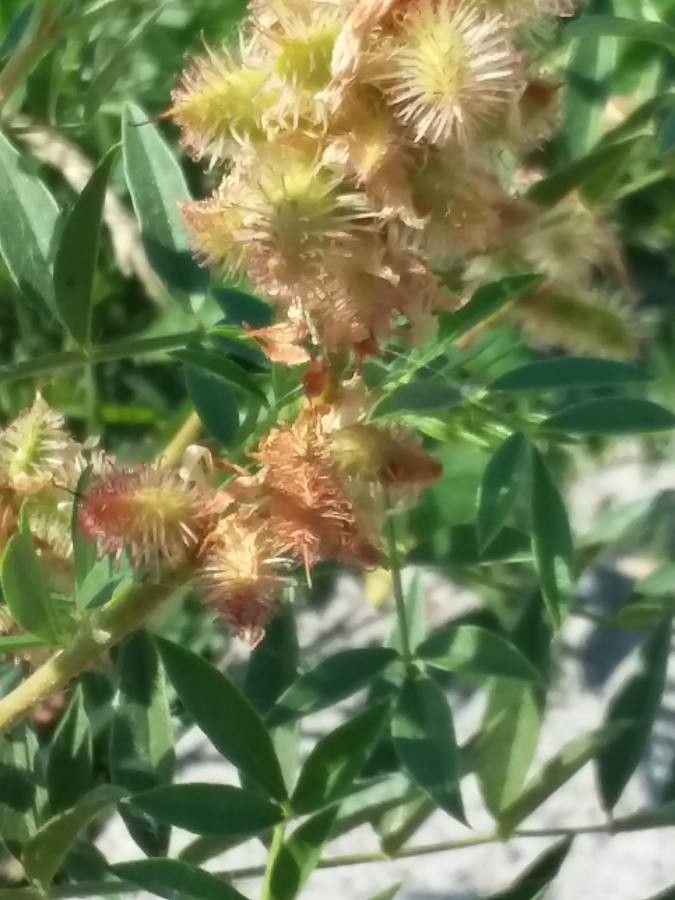
American licorice is not sweet from sugar but from glycyrrhizin. Glycyrrhizin may increase blood pressure (aka hypertension) by interfering with cortisol conversion. The Zuni people chew the root to keep the mouth sweet and moist.American licorice is grazed by cattle, but not preferred and will increase under grazing as competing plants are grazed off. The new growth can be toxic. It has light green to white flowers in the spring which ripen in the fall to clusters of burs which contain pods of small bean-like seeds. It can be used as a pioneer species to revegetate bare or disturbed ground and is often the first species to invade a receding alkali flat. There is a market for American licorice root both for medicinal uses and flavoring; also the sweetening of tobacco products.
American licorice has good resistance to disease and is generally unlikely to develop illnesses. However, it can be affected by pests and diseases found in its environment. These infections are usually mild. From a care perspective, the plant requires moderate maintenance. It needs regular pruning to keep a neat appearance and support healthy growth. Fertilizing can also help encourage flowering. American licorice is suitable for anyone with outdoor space, such as a garden or patio, and does not demand extensive gardening experience. It may need more attention when grown indoors.
How to keep Glycyrrhiza Lepidota.
Light
American licorice prefers abundant sunlight for healthy growth, reflecting its native sun-drenched habitat. Sun exposure should be plentiful but can be reduced slightly without causing serious harm. However, both excessive and insufficient light can adversely affect its growth.
Water
American licorice flourishes in the moist grassland soils of North America, thriving best with consistent moisture while avoiding waterlogging. To keep the plant healthy, water it weekly, particularly during its active growing season. Growing it outdoors is advantageous, as natural rainfall effectively meets its water requirements.
Temperature
American licorice is commonly found in settings where temperatures range from 32 to 90°F (0 to 32°C). The plant favors cooler climates. During transitional seasons like spring and fall, make sure to monitor temperatures to avoid heat stress.
Fertilizer
For American licorice, the primary time to apply fertilizer is in early spring when the flowers are beginning to form. The appropriate fertilizer promotes better blooms and helps American licorice produce attractive flowers. Fertilizing in early spring ensures strong flowers throughout the season and supplies energy for dormant growth phases.
Pruning
American licorice is a perennial herb known for its sweet roots. To encourage growth, increase bushiness, and improve air circulation, it should be pruned from early to late spring. Regular maintenance using clean, sharp tools is essential for maintaining plant health and maximizing root yield.
Botanical profile.
- Plant Type
- Herb
- Life Cycle
- Perennial
- Genus
- Glycyrrhiza
- Family
- Fabaceae
- Hardiness Zone
- 3-8
- Mature Height
- 40 cm to 91 cm
- Mature Spread
- 15 cm to 30 cm
- Leaf Color
- Green, Dark Green
- Leaf Type
- Deciduous
- Flower Color
- White, Yellow, Green
- Flower Size
- 2.54 cm
- Bloom Time
- Early summer, Mid summer
- Planting Time
- Spring, Summer
- Harvest Time
- Late summer, Early fall
- Native Area
- Mexico
Other names.
Reader questions.
How should I water my American licorice plant?
To care for American licorice, it is important to use filtered, room temperature water when watering the plant. Tap water can contain harmful particles, so filtered water is preferred. Since the plant is accustomed to warm environments, using cold water can shock it. It is also best to avoid overhead watering as it can cause problems with the foliage. Instead, water the plant by applying filtered room temperature water directly to the soil until it is fully soaked. This helps moisten the roots and support their spread throughout the soil to collect the necessary nutrients.
What are the sunlight requirements for American licorice?
American licorice thrives best in full sun, requiring more than 6 hours of sunlight daily. However, it can also adapt to partial sun, with about 3-6 hours of sunlight. Ensuring the right amount of sunlight is crucial for the plant’s growth, as it mirrors its natural habitat that is abundant in sunlight. However, moderation is important; both insufficient and excessive sun exposure can adversely affect the plant's health.
What are the ideal temperature conditions for American licorice?
American licorice thrives in temperatures ranging from 32 to 90°F (0 to 32°C), favoring cooler climates. The plant possesses strong resistance to cold, typically not requiring special frost protection measures in winter. However, in extremely cold conditions where temperatures are expected to drop below -35°C, cold protection should be provided by covering the plant with materials like soil or straw. It is also recommended to water the plant abundantly before the first freeze in autumn to ensure the soil remains moist, helping to prevent drought and water scarcity during winter and early spring.
What should I do if I give my American licorice plant too much water or too little?
Overwatering is a more common issue for American licorice than underwatering. When the plant receives too much water, its stems and leaves may wilt and turn yellow. Prolonged overwatering can lead to diseases like root rot, mold, and mildew, which can be fatal. American licorice has decent drought tolerance, so underwatering is less common. However, when it happens, the leaves may become brittle and brown. It is important to recognize the signs of overwatering early and reduce the watering schedule immediately. If the soil drains poorly, replace it with a well-draining potting mix. If the plant is not receiving enough water, increase watering until the symptoms improve.
What warning should be considered regarding sunlight for gardening?
When gardening, it's important to observe how sunlight moves through your garden throughout the day. Choosing locations that provide a healthy balance of light and shade is essential for plant happiness and growth. This balance ensures that plants receive the sunlight they need without being exposed to excessive light, which can be harmful.
How does American licorice respond to low temperatures?
American licorice is cold-tolerant and generally thrives best in temperatures above 0°C, withstanding winters well. When temperatures fall below -35°C, there might not be noticeable changes during the winter, but these conditions can lead to a decrease in or even lack of sprouting during the spring. To address this issue, in spring, remove any parts of the plant that have failed to sprout.
How often do I need to water my American licorice plant?
If your American licorice plant is in a pot, you can check if it needs water by putting your finger in the soil. If the top two to three inches of soil feel dry, it's time to water it. If you have your American licorice plant in the ground, you can use the same method to check the soil. When the top few inches of soil have dried out, it's time to water it. Usually, during spring and early fall, you'll need to water this plant about once a week using this method. But when it gets really hot, you may need to water it twice a week or even more. However, it's worth noting that mature American licorice plants are quite resilient to drought.
How does artificial lighting support plant growth indoors?
Indoor plants benefit significantly from adequate lighting, especially when natural sunlight is insufficient, such as in winter or less sunny spaces. Artificial lighting, like LED lights, can be tailored to provide the specific wavelengths needed by plants. The right quantity (30-50W/sq ft for full sun plants, 20-30W/sq ft for partial sun, and 10-20W/sq ft for full shade), distance (12-36 inches above the plant), and duration (8-12 hours per day) of artificial light can mimic natural sunlight conditions, promoting healthier and faster growth.
What should be done if American licorice is exposed to high temperatures?
During the summer months, American licorice should ideally be kept below 32°C. When temperatures exceed 35°C, the plant's leaves may become lighter in color, prone to curling, susceptible to sunburn, and the entire plant may wilt and become dry in severe cases. To mitigate these effects, trim away the sunburned and dried-up parts of the plant. Relocating the plant to a shaded area during the midday and afternoon sun or using a shade cloth can help, as well as watering the plant in the morning and evening to maintain soil moisture.
How much water does my American licorice plant need?
To properly water your American licorice, don't hesitate to give it a generous amount of water. Make sure the first few inches of soil are dry before watering. It's important to thoroughly saturate the soil, allowing excess water to flow through the drainage holes at the bottom of the pot. If no excess water flows out, you may be watering insufficiently. However, be cautious not to let water accumulate in the soil, as this can harm the plant. On the other hand, if water is not draining properly, it may indicate a problem with the soil's drainage. For outdoor plants, receiving 1 inch of rain per week is enough to keep them properly hydrated.
What are common symptoms of incorrect lighting for American licorice?
Incorrect lighting can lead to several symptoms in American licorice, including small or lighter colored new leaves, leggy or sparse growth, faster leaf drop, slower or no growth, and various forms of leaf damage such as chlorosis, sunscald, leaf curling, wilting, and leaf scorching. These symptoms can indicate either too much or too little light exposure, both of which can negatively impact the plant's health and growth.
How do I water my American licorice plant as it grows?
The water requirements of American licorice can vary based on its growth stages. During the initial few years or when it is newly transplanted, more water is needed. This is because the plant focuses on developing new roots to support future growth, which requires extra moisture. As the plant matures, it requires less water. Additionally, during the bloom period, when the flowers are developing, American licorice may need additional water to meet the increased moisture demands.