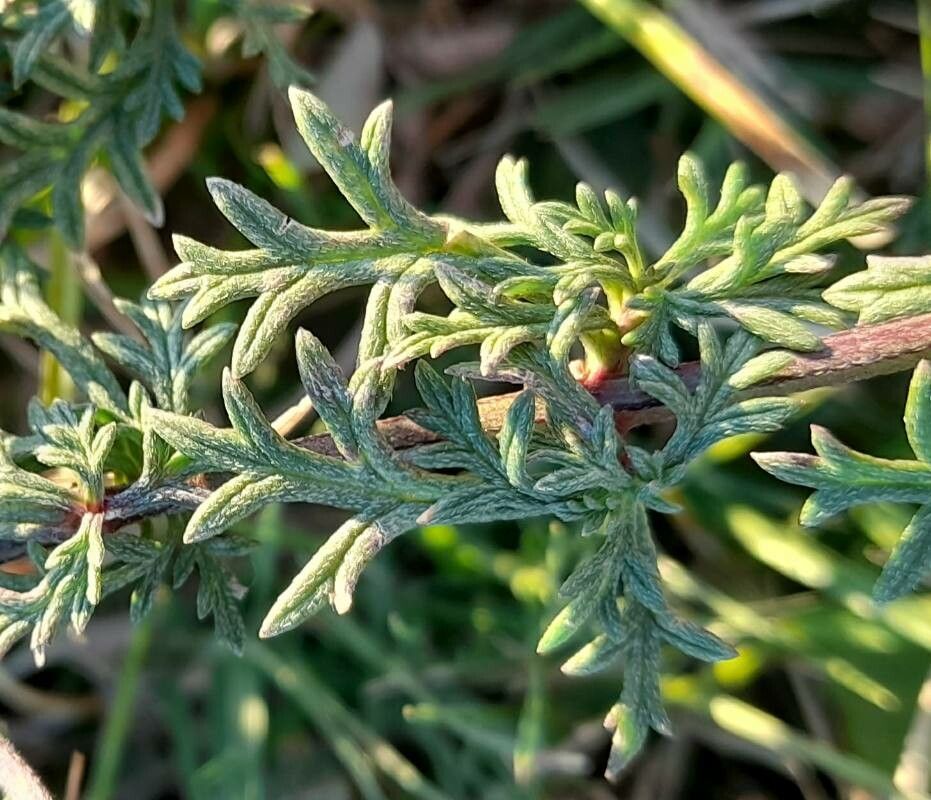
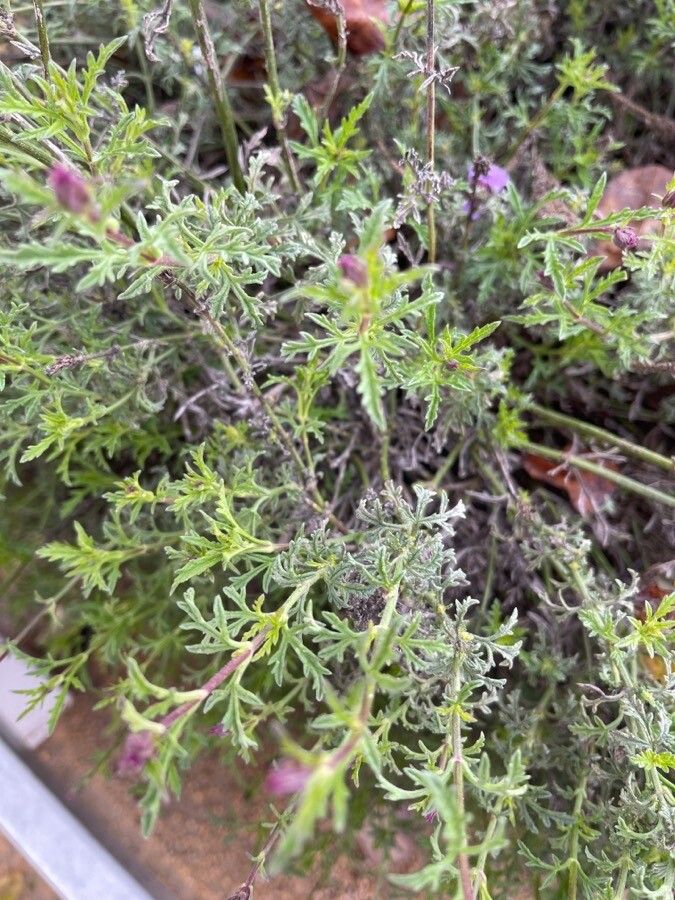
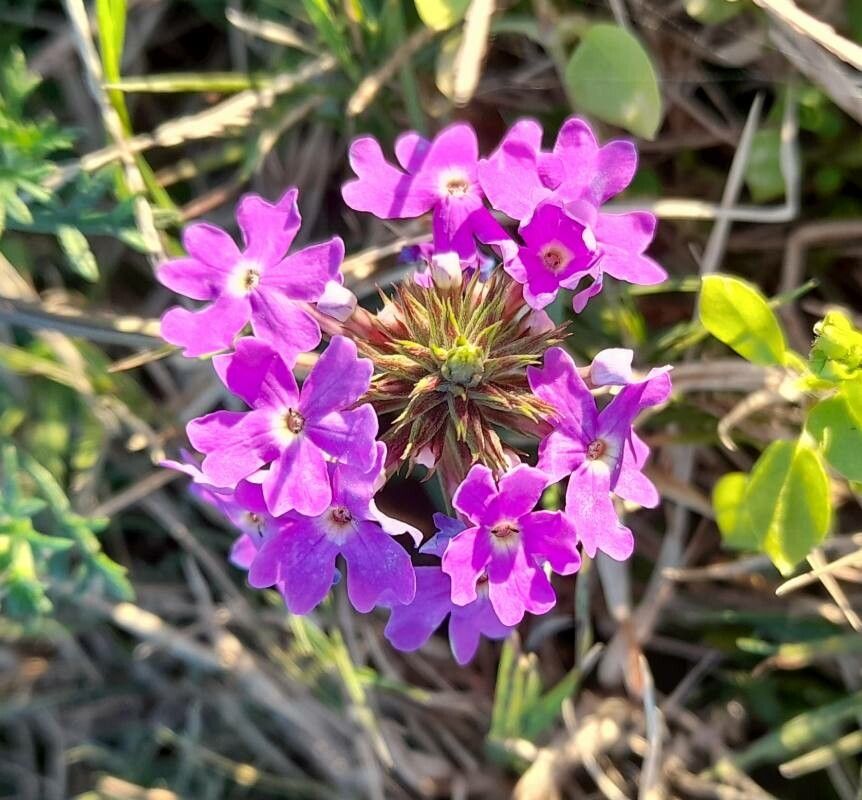
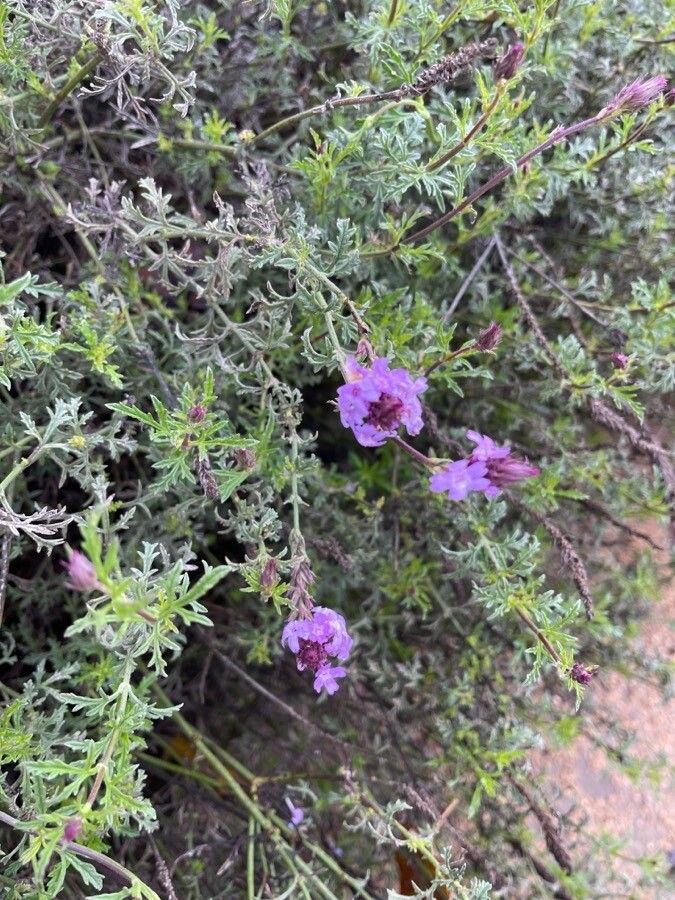
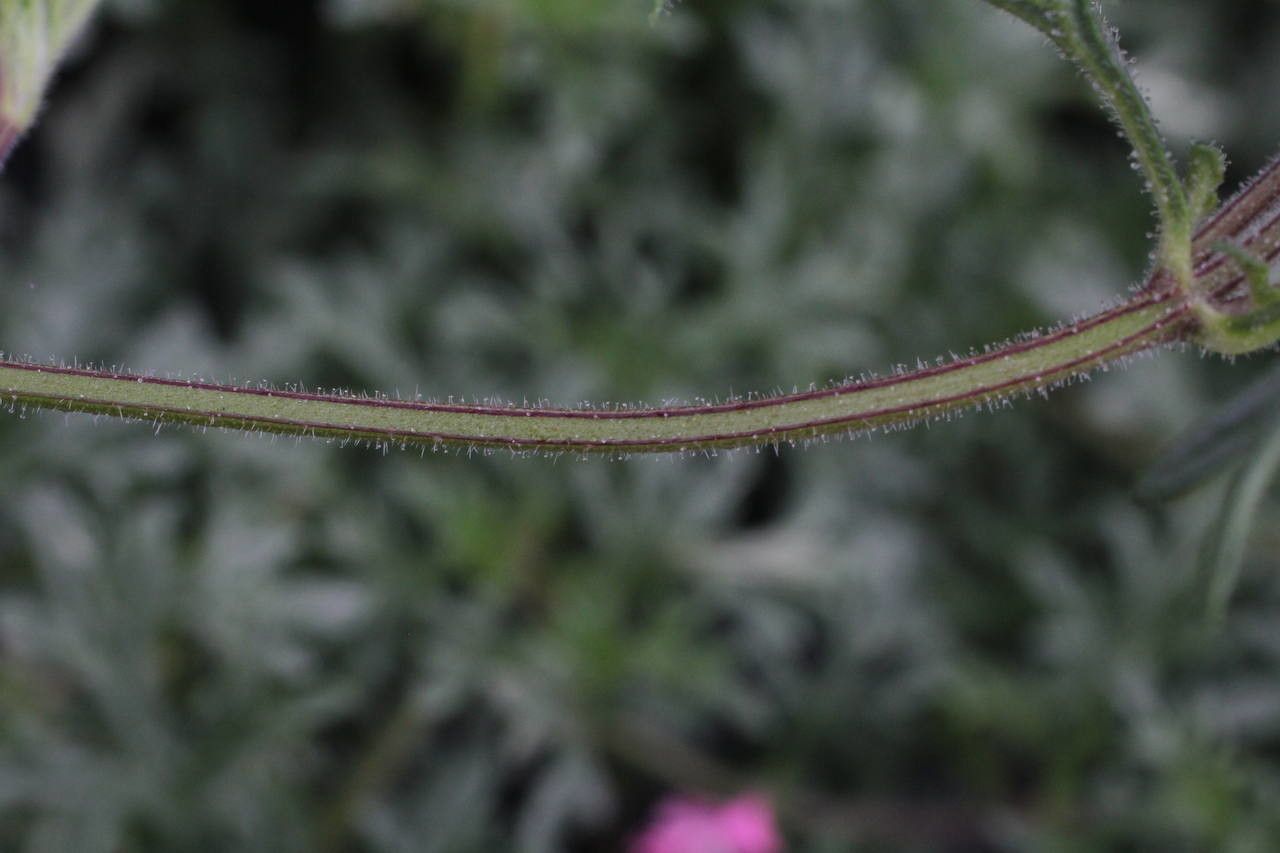
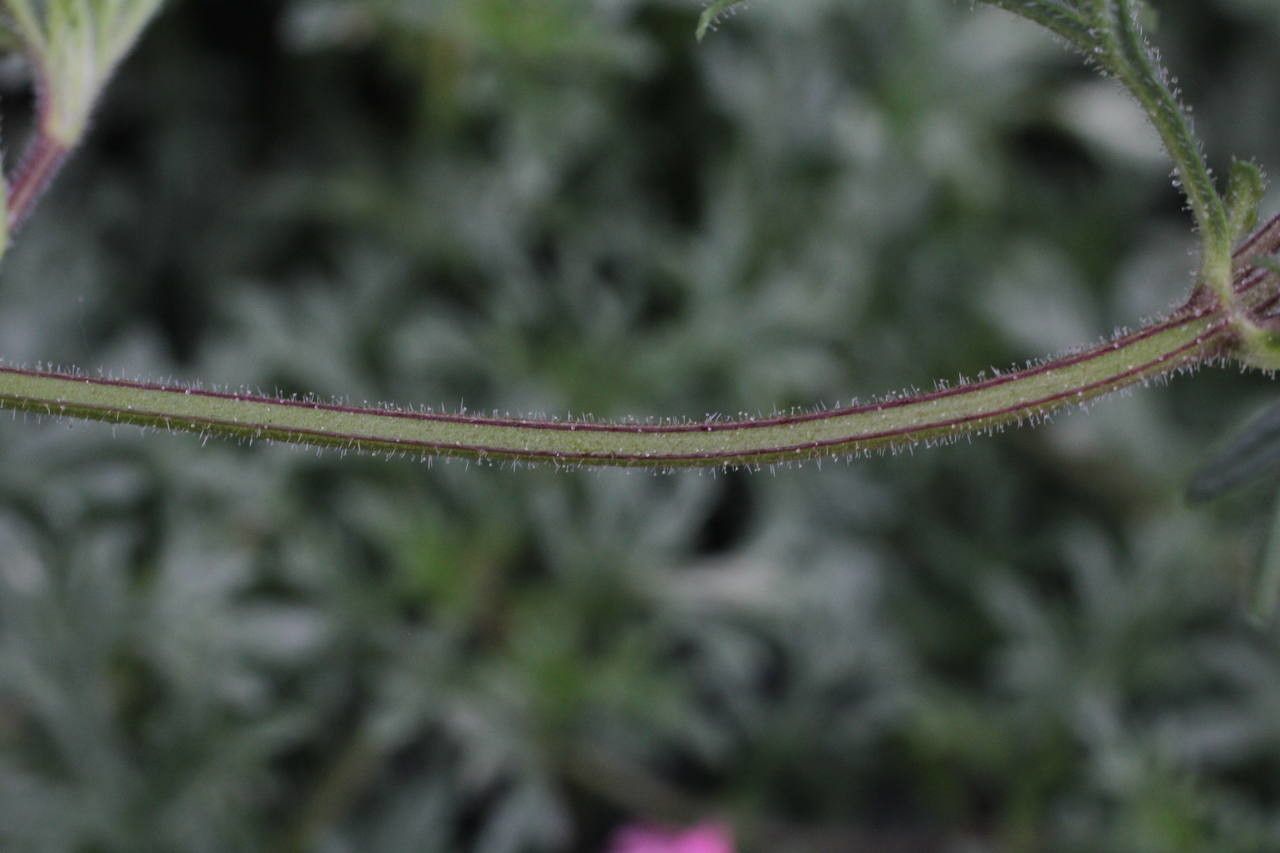
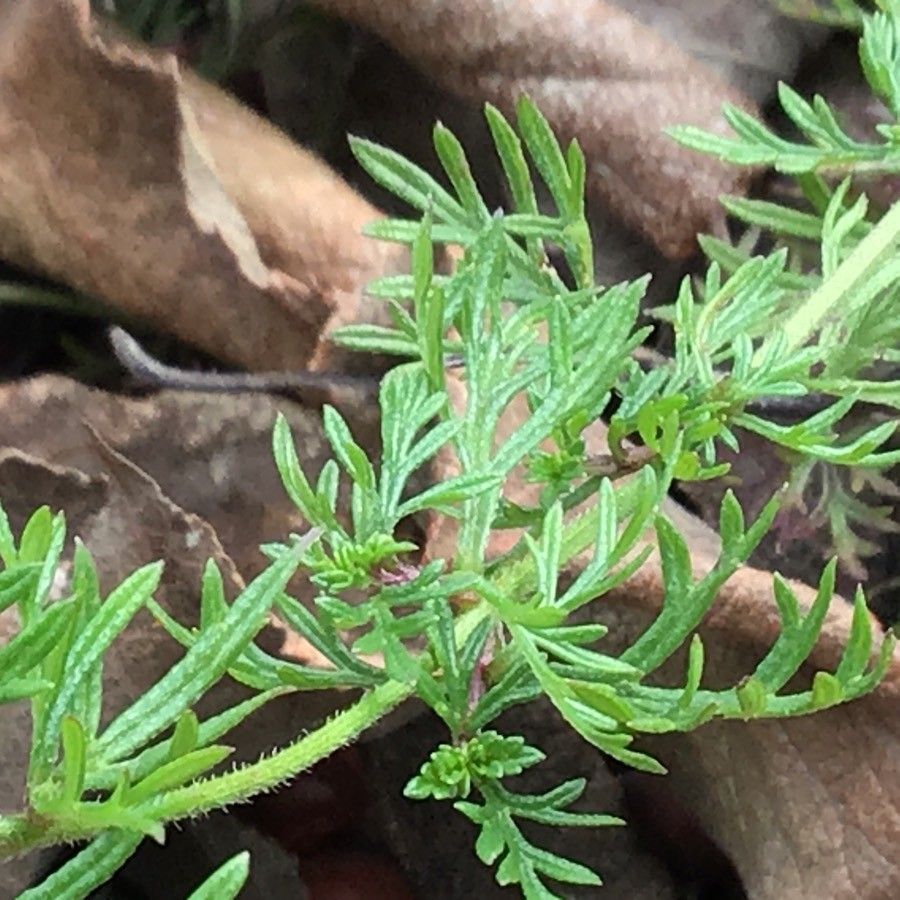
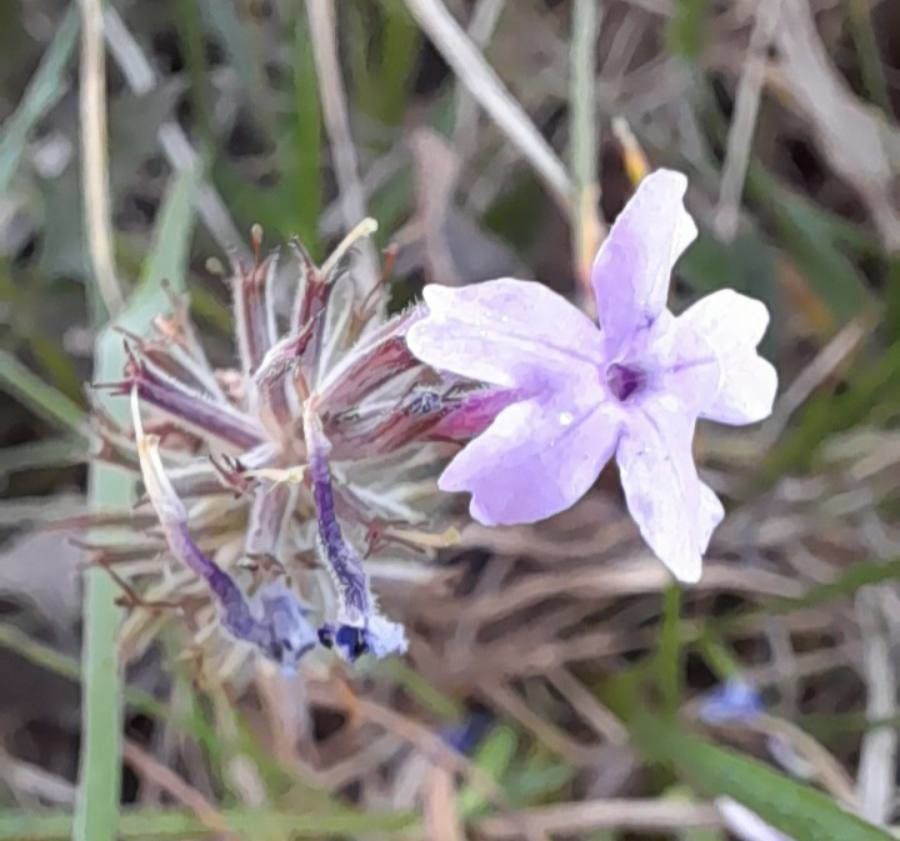
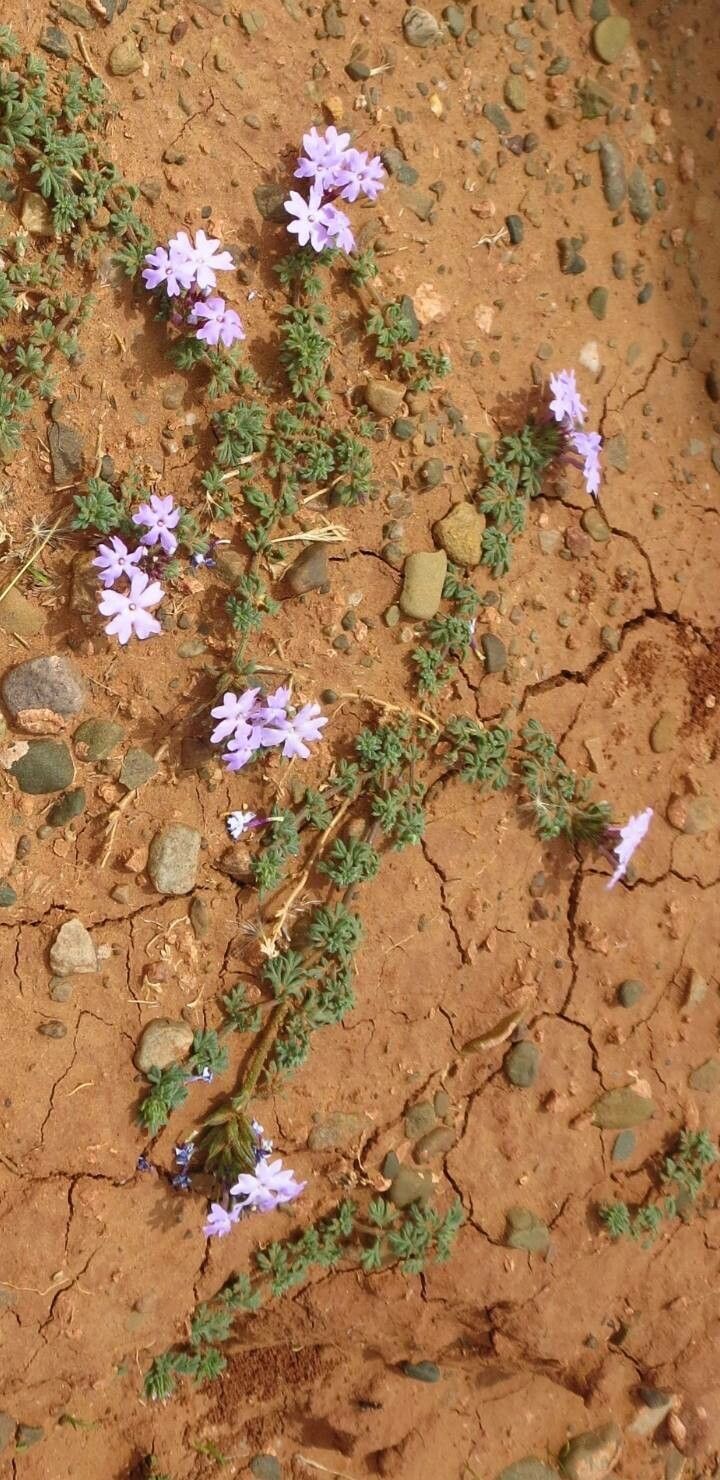
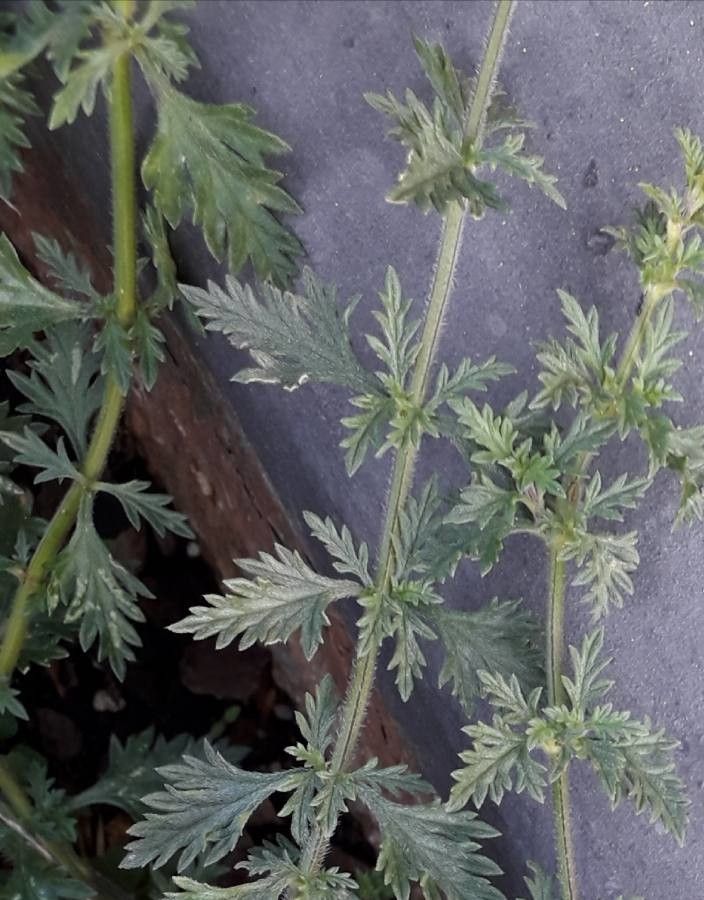
Verbena tenera, commonly known as South American mock vervain, is a species of flowering plant in the verbena family. It is native to Brazil, Argentina, and Uruguay, and it is present elsewhere as an introduced species and roadside weed. It is an annual or perennial herb producing one or more stems growing decumbent to erect in form and hairy to hairless in texture. The rough-haired leaves are divided deeply into lobes. The inflorescence is a dense, headlike spike of many flowers up to 1.5 centimeters wide. Each flower corolla is up to 1.4 centimeters wide and white to purple in color.
Latin American mock vervain has strong resistance to disease and is generally not vulnerable to illnesses. Still, it can be affected by pests and diseases present in its environment. Such infections tend to be mild. Regarding care, this plant needs moderate maintenance. Regular pruning is required to keep it looking good and to support healthy growth. Applying fertilizer can also encourage flowering. Latin American mock vervain is appropriate for anyone with outdoor space, like a garden or patio, and does not demand extensive care experience. It may need extra attention if grown indoors.
How to keep Glandularia Tenera.
Light
Latin american mock vervain does best in locations with plentiful, uninterrupted sunlight all day. Its native habitat is marked by strong solar conditions. During its various growth stages it continues to prefer sites with abundant sunshine. Excessive light exposure is unlikely to harm it significantly. Insufficient sunlight hinders its healthy development.
Water
Native to tropical regions, the Latin American mock vervain thrives in consistently moist environments and requires weekly watering. While it can withstand brief dry spells, it benefits from rainwater when grown outdoors. During its vigorous growing season, it needs regular watering, but during dormancy, less frequent watering is adequate.
Temperature
Latin American mock vervain naturally grows in environments with temperatures between 68 and 100°F (20 and 38℃). It favors a moderate to warm climate. On cool days or in colder seasons, small amounts of supplemental heat should be used to maintain its condition.
Fertilizer
The best time to fertilize a Latin American mock vervain is in early spring, when it is coming out of dormancy and beginning active growth. Fertilizing supplies essential nutrients for healthy growth. Although Latin American mock vervain has relatively low fertilizer needs, applying fertilizer once a year can improve its survival and encourage better, longer-lasting flowers.
Pruning
Latin American mock vervain benefits from pruning between early and late spring. Trim back old growth and remove spent blooms to encourage new growth and extend the flowering period, all while maintaining the plant's shape. Use sharp tools to make clean cuts, and avoid pruning during extreme weather conditions to improve the plant's overall health and appearance.
Pot & Repot
Latin American mock vervain is an excellent choice for ground cover and benefits from being repotted every 2-3 years in early spring. When repotting, use a larger pot to accommodate growth. Water the plant moderately and place it in bright, indirect light to aid in its recovery. With proper care, Latin American mock vervain will thrive and produce vibrant blooms.
Botanical profile.
- Plant Type
- Herb
- Life Cycle
- Perennial, Annual
- Genus
- Glandularia
- Family
- Verbenaceae
- Hardiness Zone
- 7-11
- Mature Height
- 15 cm to 25 cm
- Mature Spread
- 61 cm to 91 cm
- Leaf Color
- Green
- Leaf Type
- Deciduous
- Flower Color
- Purple, Lavender, Pink
- Flower Size
- 2.54 cm
- Bloom Time
- Late spring, Summer
- Planting Time
- Spring
- Harvest Time
- Summer, Early fall
- Native Area
- Bolivia
Other names.
Reader questions.
How should I water my Latin American mock vervain for best results?
To properly care for the Latin American mock vervain, use filtered water at room temperature. Tap water may contain harmful particles, so filtering it is recommended. The plant prefers warm environments, so avoid using cold water to prevent shocking its system. Additionally, refrain from overhead watering as it can lead to foliage issues. Instead, thoroughly water the soil with filtered room temperature water until it is completely soaked. This helps moisten the roots and promotes their spread through the soil, maximizing nutrient absorption.
Why should I put fertilizer on my Latin american mock vervain plant?
Fertilization is important for the Latin American mock vervain for various reasons. One primary benefit is that it provides essential nutrients for the plant's overall growth, both above and below the ground. Although the fertilization needs of the Latin American mock vervain are relatively low, regular fertilization can be highly beneficial. While the plant may survive without fertilization, annual fertilization can help keep it alive and promote the development of longer-lasting, better-quality flowers. Therefore, those wishing to enhance the appearance of their Latin American mock vervain should ensure annual fertilization.
What are the sunlight requirements for Latin American Mock Vervain?
Latin American Mock Vervain requires full sun exposure, thriving best in conditions where it receives over 6 hours of direct sunlight daily. It can also tolerate partial sun, defined as about 3-6 hours of sunlight. It's essential to observe sunlight patterns in your garden to ensure you're providing your plants with the ideal balance of light and shade, as doing so significantly contributes to their health and happiness.
What are the ideal growing conditions for Latin American mock vervain?
Latin American mock vervain thrives in environments with temperatures ranging from 68 to 100°F (20 to 38°C), favoring a moderate to warm climate. Although it has strong cold resistance, it usually does not require special frost protection measures. However, if winter temperatures are expected to drop below -15°C, providing cold protection by covering the plant with materials like soil or straw is important. To help prevent drought and water scarcity during winter and early spring, it's recommended to water the plant abundantly before the first freeze in autumn, ensuring the soil remains moist.
What should I do if I give my Latin American mock vervain too much or too little water?
Overwatering is a common problem for the Latin American mock vervain. When this happens, the stems and leaves wilt and turn yellow. Overwatering can also lead to diseases like root rot, mold, and mildew, which can be fatal. Underwatering is less of an issue as the plant can tolerate drought, but it can still happen. In this case, the leaves become brittle and brown. It's important to recognize the signs of overwatering early on. Some diseases caused by overwatering, like root rot, are not fixable if you take too long to address them. If you see early signs of overwatering, reduce your watering schedule and check the soil drainage. If the soil doesn't drain well, replace it with a loose, well-draining potting mix. If you notice signs of underwatering, simply water more regularly until the signs go away.
When should I fertilize my Latin American mock vervain for the best results?
To ensure healthy growth, it is best to fertilize a Latin American mock vervain in late winter to early spring, when it is transitioning from dormancy to active growth. This timing gives the plant a strong start for the season. Alternatively, you can also fertilize in the fall, but it is not recommended to feed the plant during summer or winter.
How does sunlight affect the growth of Latin American Mock Vervain?
The growth and health of Latin American Mock Vervain are profoundly influenced by sunlight exposure. Originating from environments with vigorous solar conditions, it prefers areas with ample, unobstructed sunshine throughout its various growth stages. While overexposure might not severely harm it, a lack of sufficient sunlight impedes its ability to grow healthily. Insufficient light can lead to symptoms such as smaller leaves and sparse growth.
How does Latin American mock vervain react to low temperatures?
Latin American mock vervain is cold-tolerant and performs best when the temperature is above 20°C, but should be kept above 0°C during winter. When temperatures fall below -15°C, there might not be noticeable changes during winter, but there could be a decrease in sprouting or no sprouting at all come spring. In spring, it's advisable to remove any parts of the plant that have failed to sprout to encourage new growth.
How often do I need to water my Latin american mock vervain?
If your Latin American mock vervain is in a pot, you can determine if it needs water by checking the soil. Stick your finger into the soil and if the top two to three inches are dry, then it's time to water it. If you have your Latin American mock vervain planted outdoors, you can use a similar method to test the soil. Once again, if the top few inches of soil have dried out, it's time to water the plant. Typically, during the spring and early fall, you would water this plant about once a week using this method. However, during extremely hot weather, you might need to water it twice or even more times a week. That being said, mature and well-established Latin American mock vervain plants have a remarkable ability to withstand drought.
When is it not good to add fertilizer to my Latin American mock vervain?
To properly care for your Latin American mock vervain, remember to only fertilize it during late winter and early spring. This plant has low fertilization needs, so a single feeding per year is sufficient. Avoid fertilizing during spring, summer, and fall, as this can cause overfertilization and associated complications. However, if you missed fertilizing in spring, it is acceptable to feed the plant in fall. Additionally, there is no need to fertilize during the winter when the plant is in a dormant growth phase and not producing new growth.
Can artificial lighting support the growth of Latin American Mock Vervain indoors?
Yes, artificial lighting can significantly support the growth of Latin American Mock Vervain indoors, especially when natural sunlight is insufficient, like during winter or in less sunny spaces. Optimal growth under artificial lighting can be achieved by selecting the right type of lights, such as LEDs, setting up the proper wattage based on the plant's sun exposure needs, and adjusting the distance and duration of lighting to mimic natural sunlight conditions closely.
What should be done if Latin American mock vervain experiences high temperatures?
During summer, it's crucial to keep Latin American mock vervain below 38°C. Should the temperature exceed 43°C, the plant's leaves may lighten, curl, become susceptible to sunburn, or in severe cases, wilt and dry out completely. To combat this, trim away the sunburned and dry parts, move the plant to a shaded location or use a shade cloth to protect it from the midday and afternoon sun. Additionally, watering the plant in the morning and evening to maintain soil moisture is beneficial.