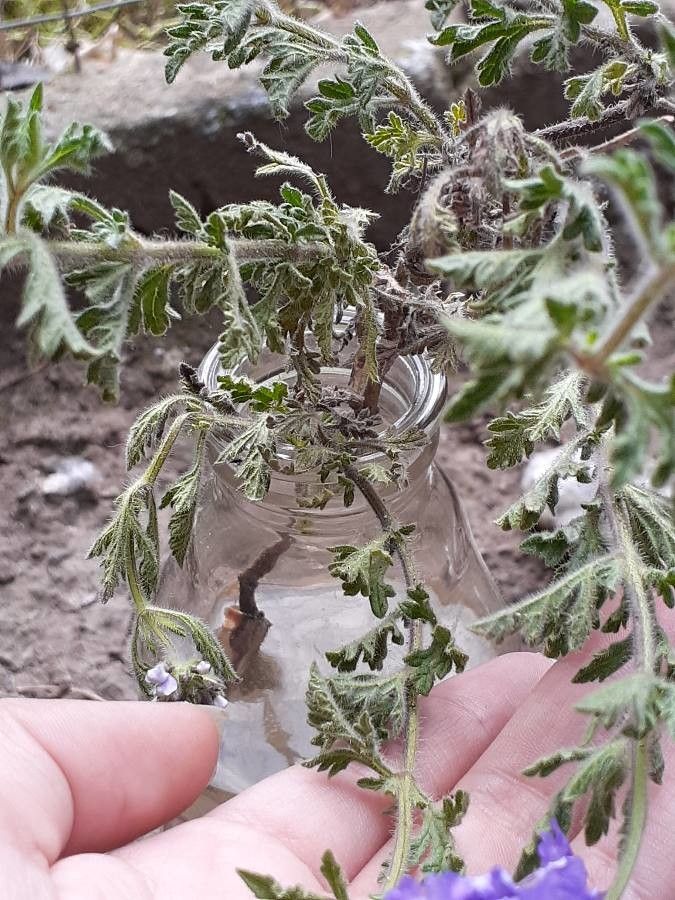
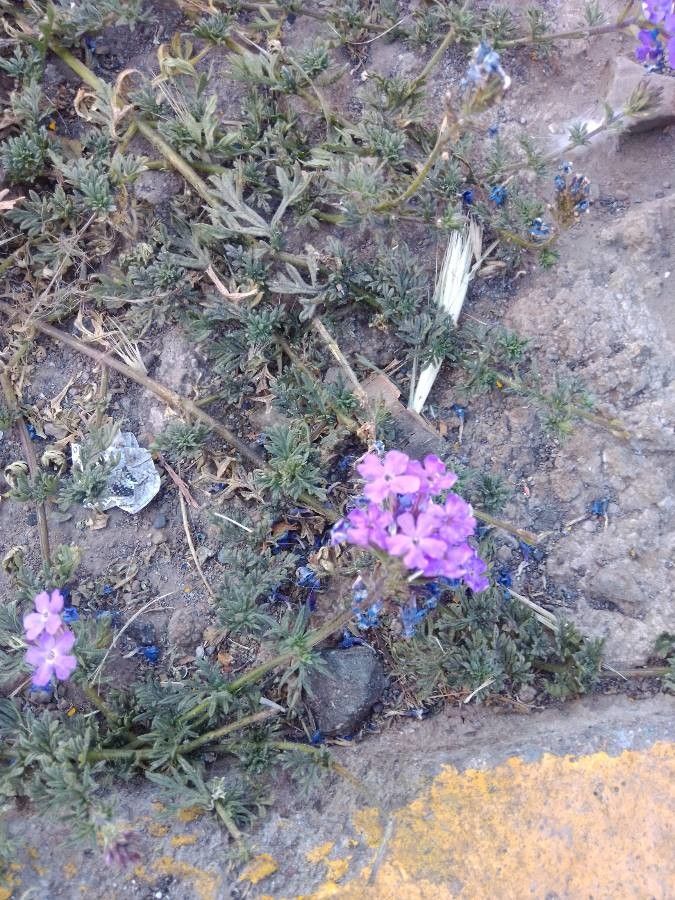
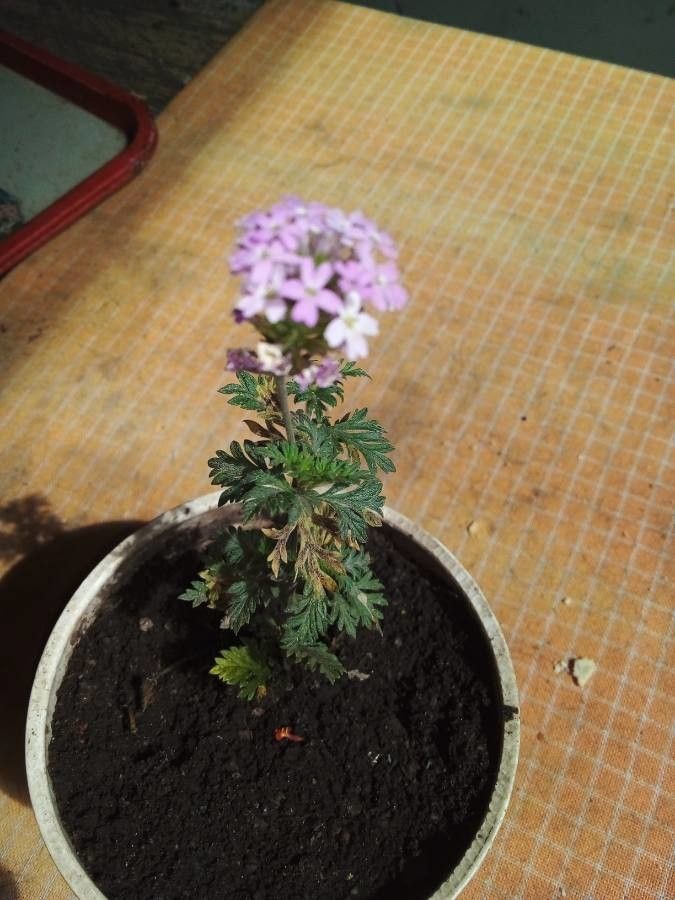
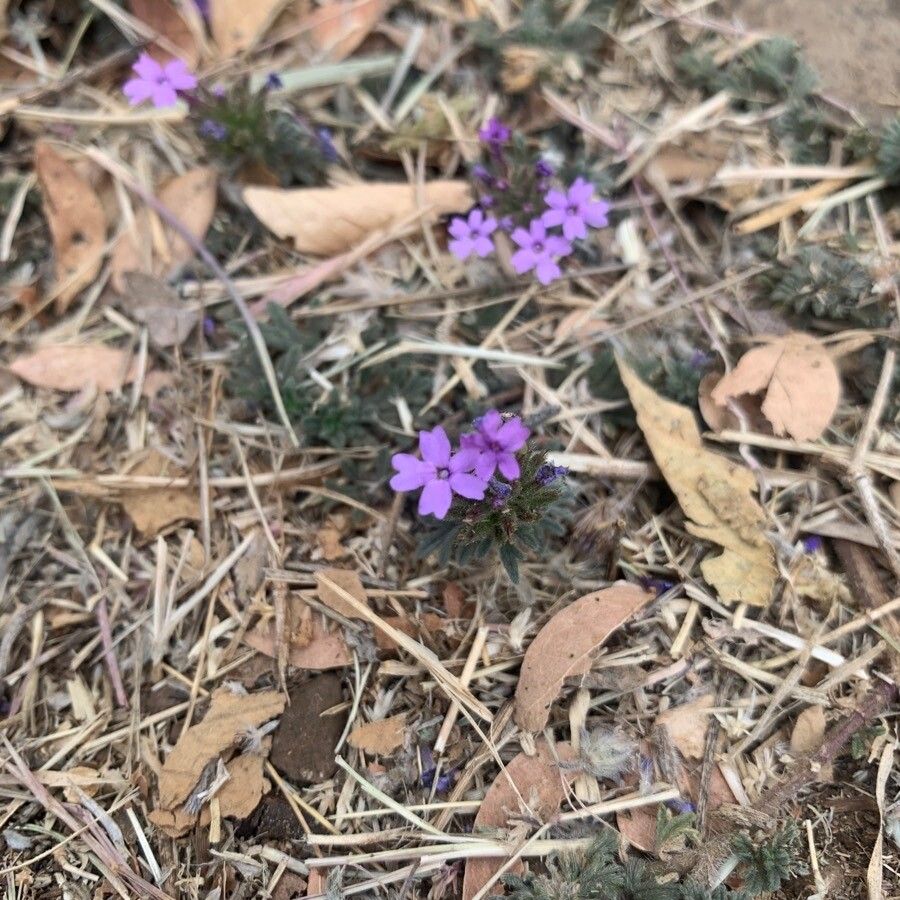
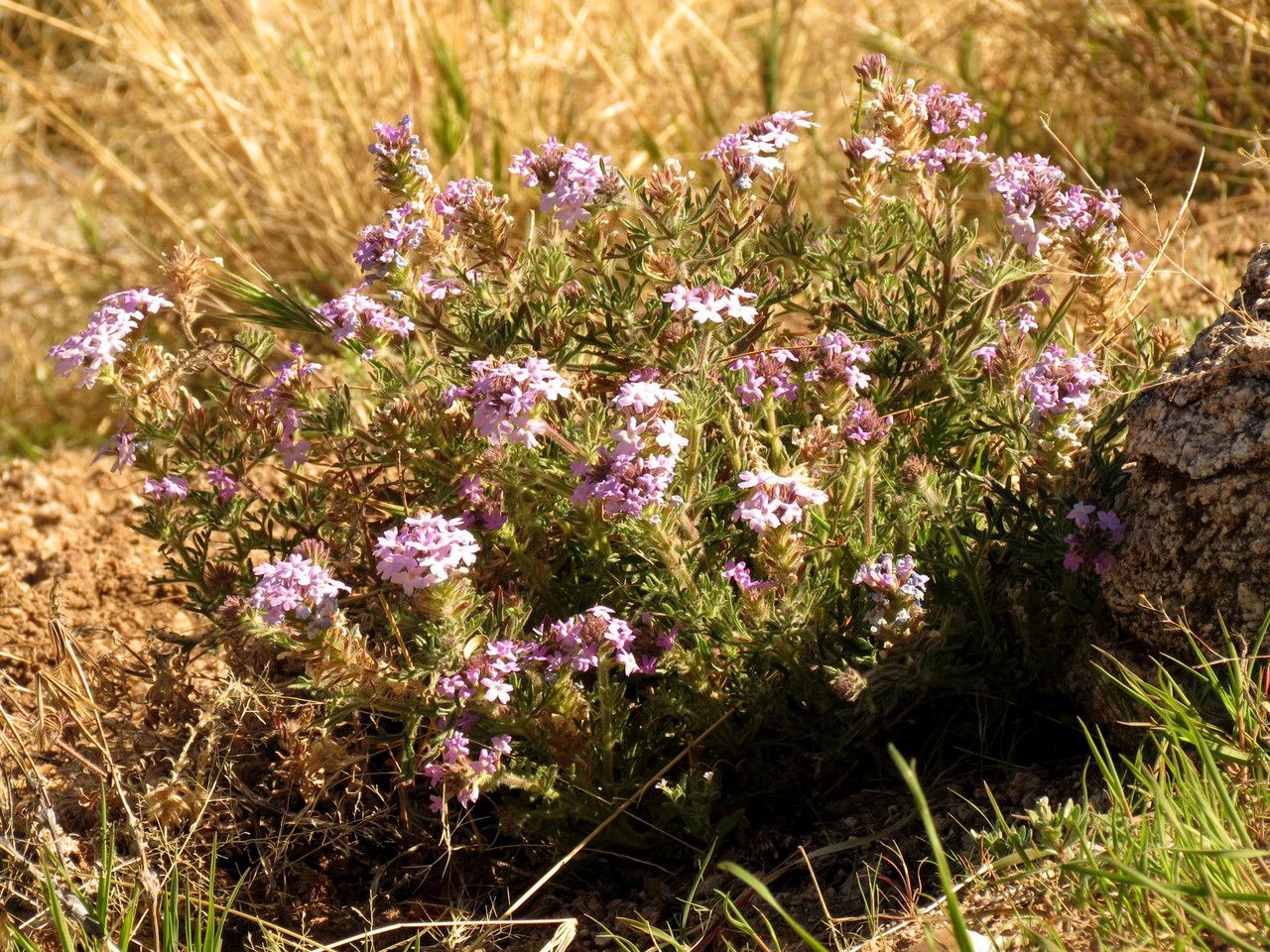
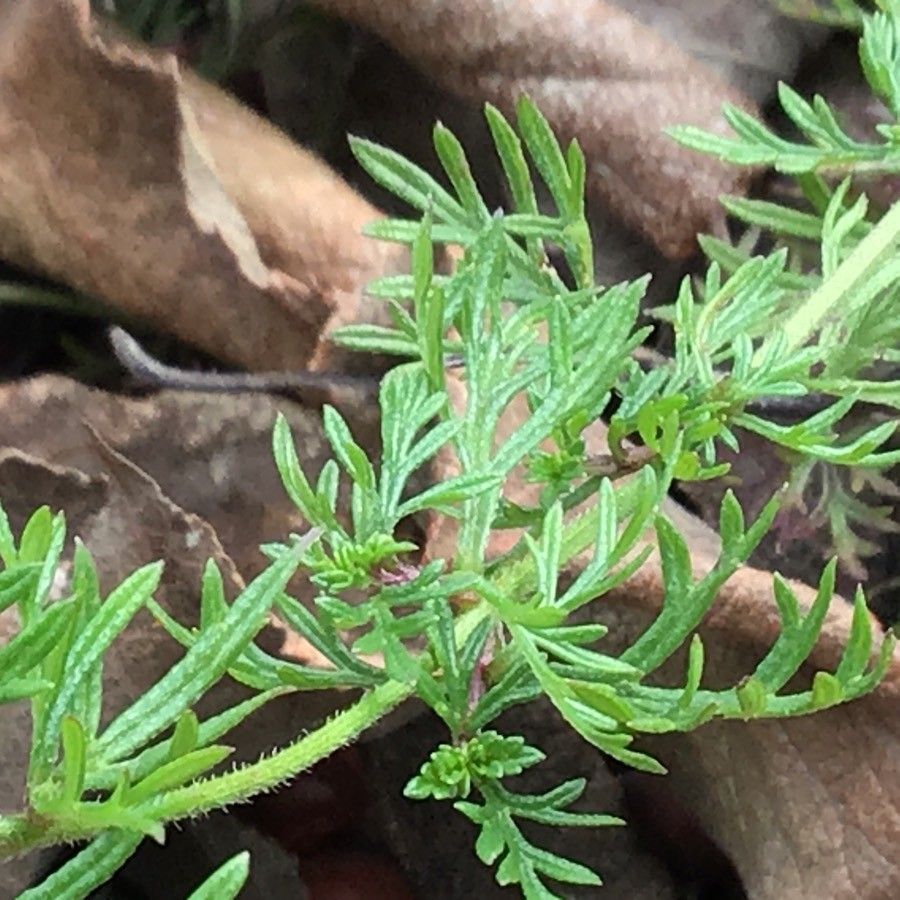
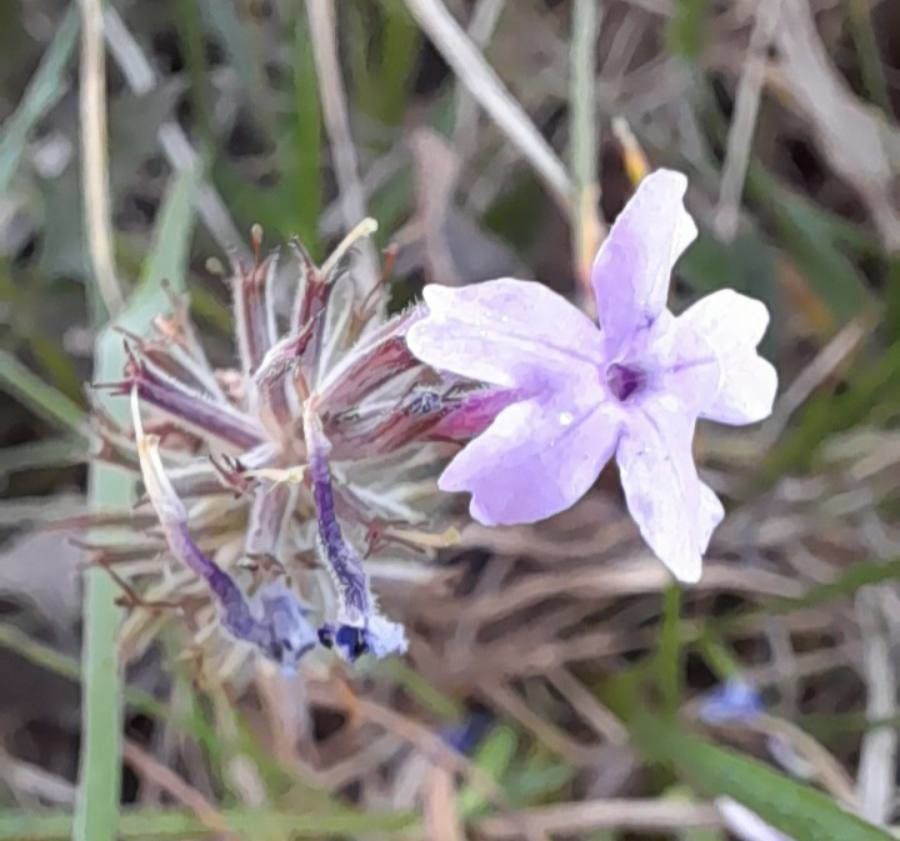
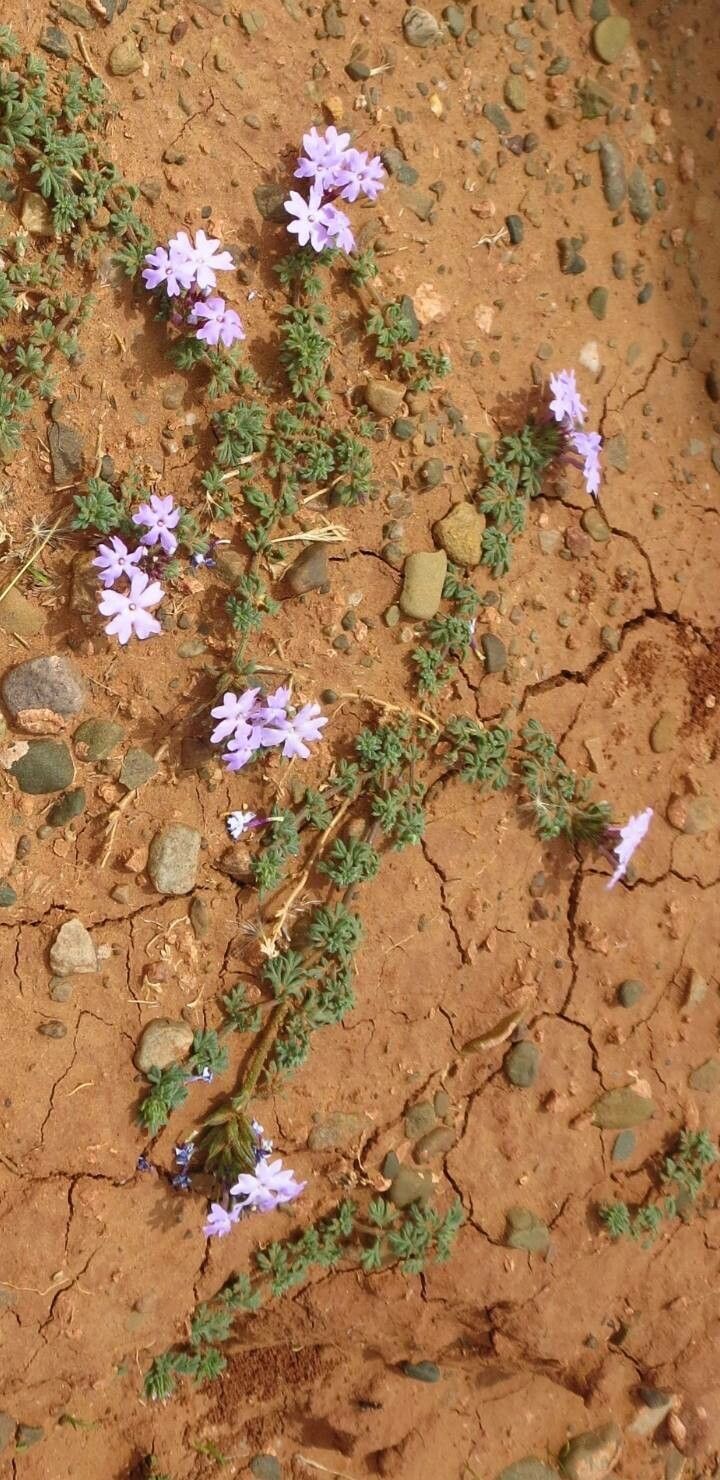
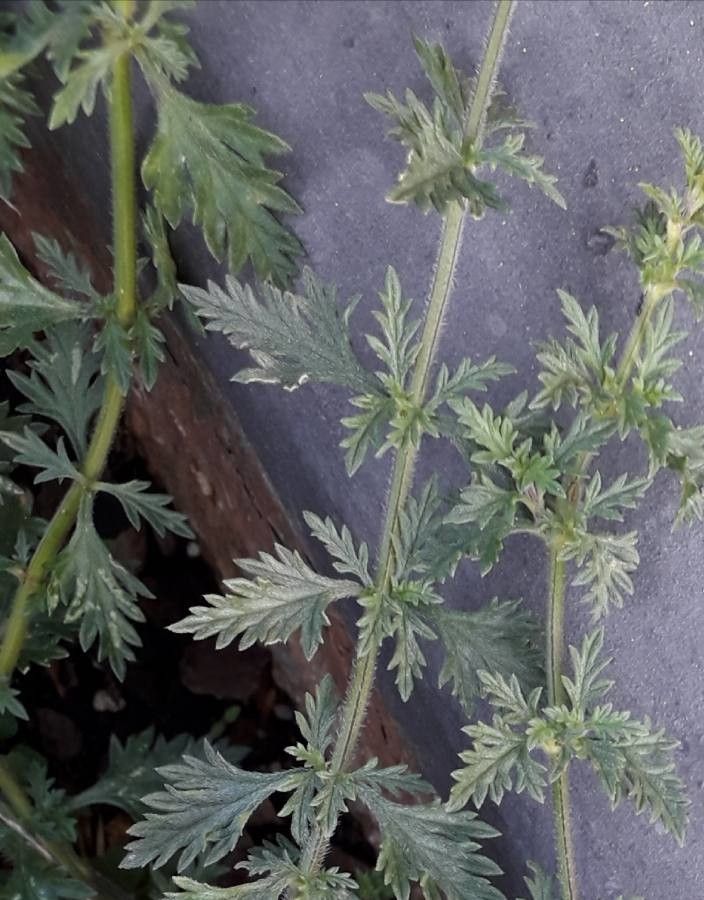
Glandularia gooddingii is a species of flowering plant in the verbena family known by the common name southwestern mock vervain. It is native to the southwestern United States and northern Mexico, where it occurs in sandy and rocky desert habitat. It is a perennial herb producing several hairy, decumbent to erect stems up to 45 centimeters long. The hairy leaves are generally divided at the base into a few lobes, which are edged with large teeth or small lobes. The plant blooms in large, dense, head-like spikes of many flowers. Each flower has a calyx of hairy sepals and a pale purple-blue corolla up to 1.4 centimeters long.
Southwestern mock vervain is fairly resistant to disease and typically does not suffer from illnesses. Still, it can be affected by pests and diseases present in its surroundings. These problems are usually not serious. In terms of care, the plant needs moderate maintenance. It should be pruned regularly to maintain a tidy appearance and healthy growth. Fertilizing can also help encourage flowering. Southwestern mock vervain is suitable for anyone with outdoor space, such as a garden or patio, and does not require extensive care experience. It may need more attention when grown indoors.
How to keep Glandularia Gooddingii.
Light
Southwestern mock vervain is a sun-loving perennial herbaceous plant native to open habitats, frequently found in meadows and grasslands. It prefers full sun but can also tolerate partial sun.
Water
The Southwestern mock vervain is native to arid regions and is highly drought-tolerant. To keep it thriving, it should be watered every 1-2 weeks. As an evergreen herb, this plant flourishes outdoors, making good use of rainfall during its active growing season.
Temperature
Southwestern mock vervain comes from tropical areas, where the climate is generally warm and humid. Consequently, it is adapted to high heat and humidity. It does not tolerate abrupt temperature shifts and prefers a consistent temperature environment, so it's important to prevent temperature swings indoors. It typically cannot withstand cold conditions and needs warmer temperatures for growth. If the ambient temperature falls too low, the plant may stop growing or even die.
Fertilizer
Proper fertilization is essential for the health and appearance of Southwestern mock vervain. Fertilize Southwestern mock vervain during summer, repeating the treatment monthly throughout the season. Nutrients power growth and help maintain the plant’s parts. Fertilization improves Southwestern mock vervain’s flowering display, ensuring the best blooms.
Pruning
Southwestern mock vervain is a vibrant perennial with striking purple flowers, ideal for use as ground cover. To encourage growth and branching, prune the plant by one-third in early spring. Regularly pinch off spent blooms to prolong the flowering period. It's important to sterilize your tools to prevent the spread of disease, ensuring the plant remains healthy with dense foliage.
Botanical profile.
- Plant Type
- Herb
- Life Cycle
- Perennial
- Genus
- Glandularia
- Family
- Verbenaceae
- Hardiness Zone
- 7-10
- Mature Height
- 0 cm to 30 cm
- Mature Spread
- 30 cm to 61 cm
- Leaf Color
- Green
- Leaf Type
- Deciduous
- Flower Color
- Purple, Lavender
- Flower Size
- 1.02 cm to 2.03 cm
- Bloom Time
- All year round
- Planting Time
- Spring, Summer, Autumn
- Harvest Time
- All year round
- Native Area
- Mexico
Other names.
Reader questions.
What are the sun requirements for Southwestern mock vervain (Glandularia gooddingii)?
Southwestern mock vervain (Glandularia gooddingii) thrives best when it receives full sun, which means the plant should be exposed to above 6 hours of sunlight daily. It can also grow in partial sun conditions, which amounts to about 3-6 hours of sunlight a day. It's important to observe how sunlight moves through your garden throughout the day. Identifying spots that offer a mix of light and shade will help ensure that your Southwestern mock vervain plants grow happy and healthy.
What is the Southwestern mock vervain?
The Southwestern mock vervain, known botanically as Glandularia gooddingii, is a plant species with distinctive features and characteristics. Unfortunately, details on its essentials and symptoms, such as its general appearance, habitat, or any specific care it might require, are not provided here.