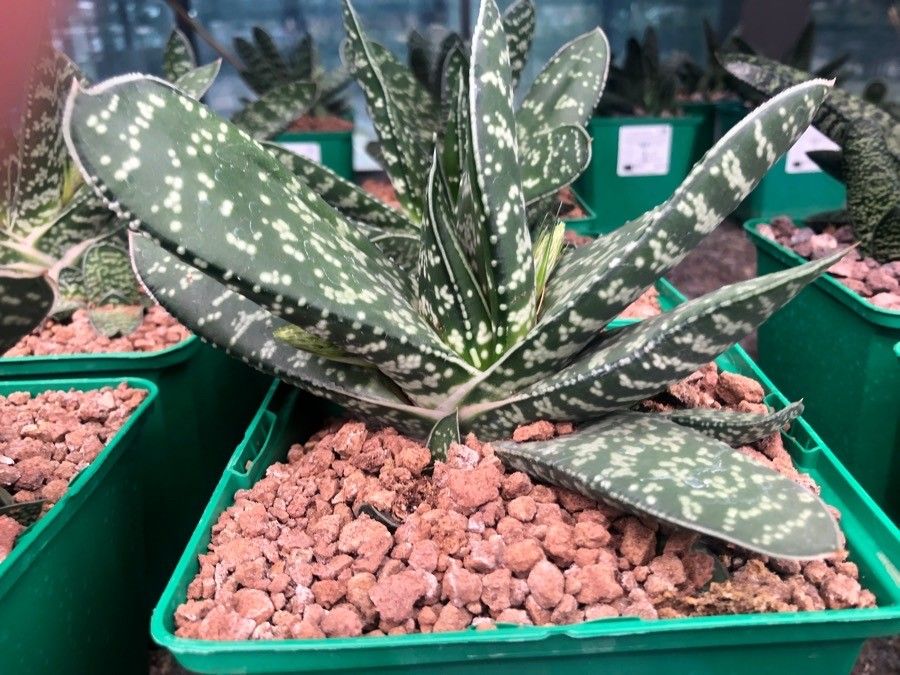
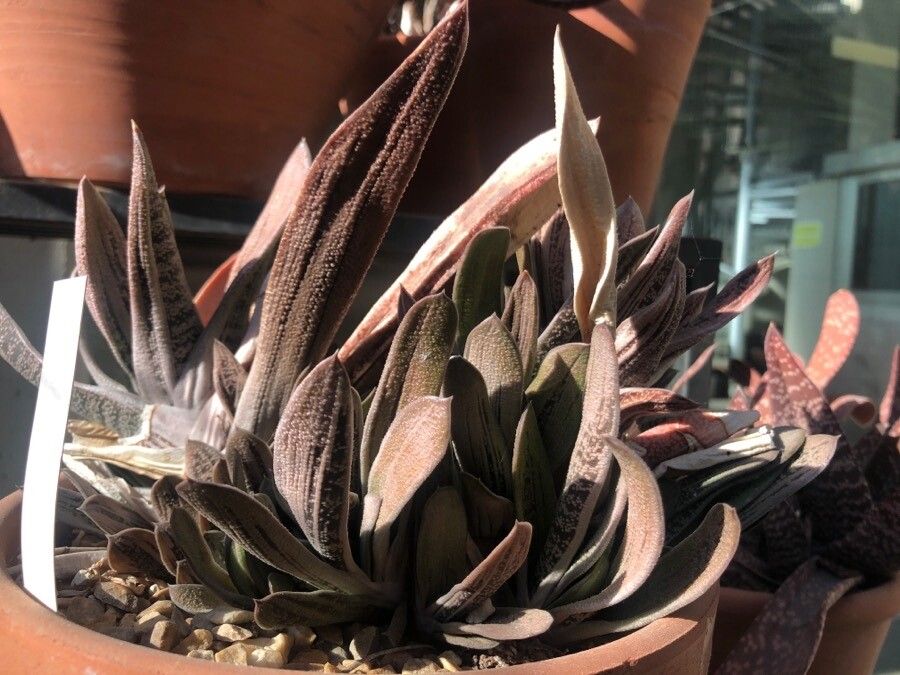
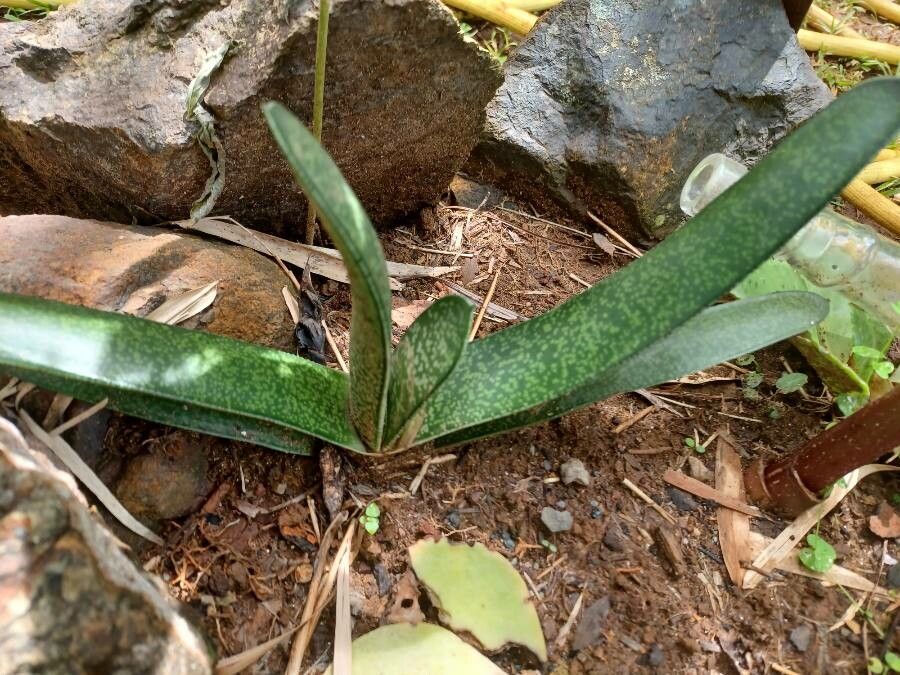
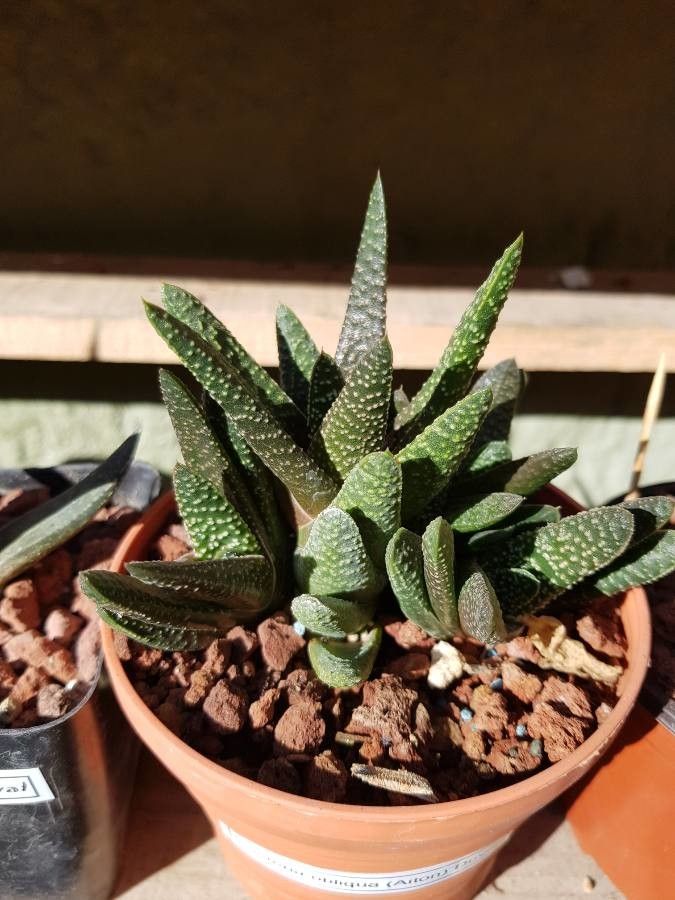
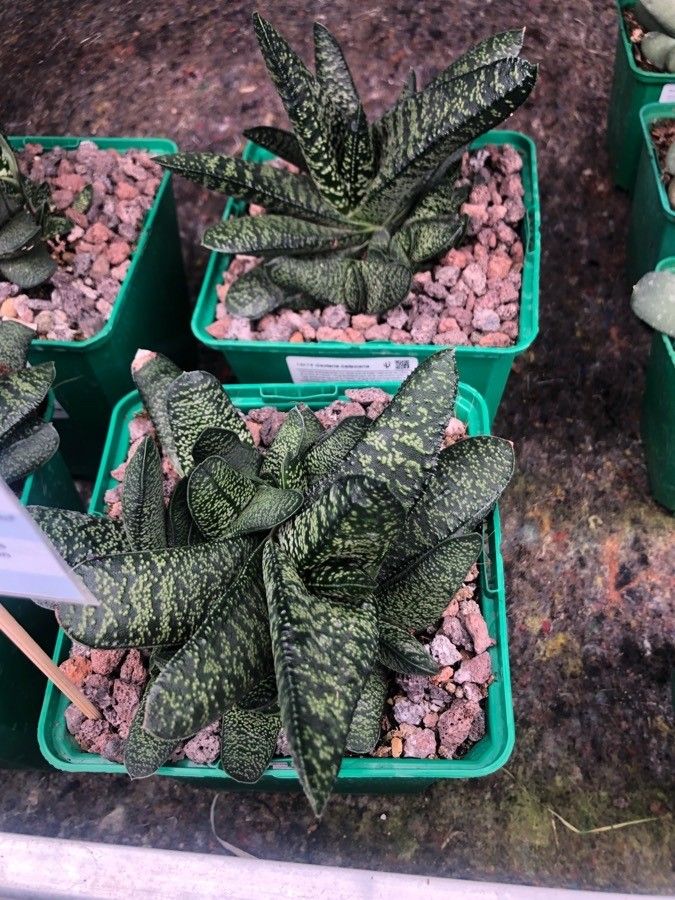
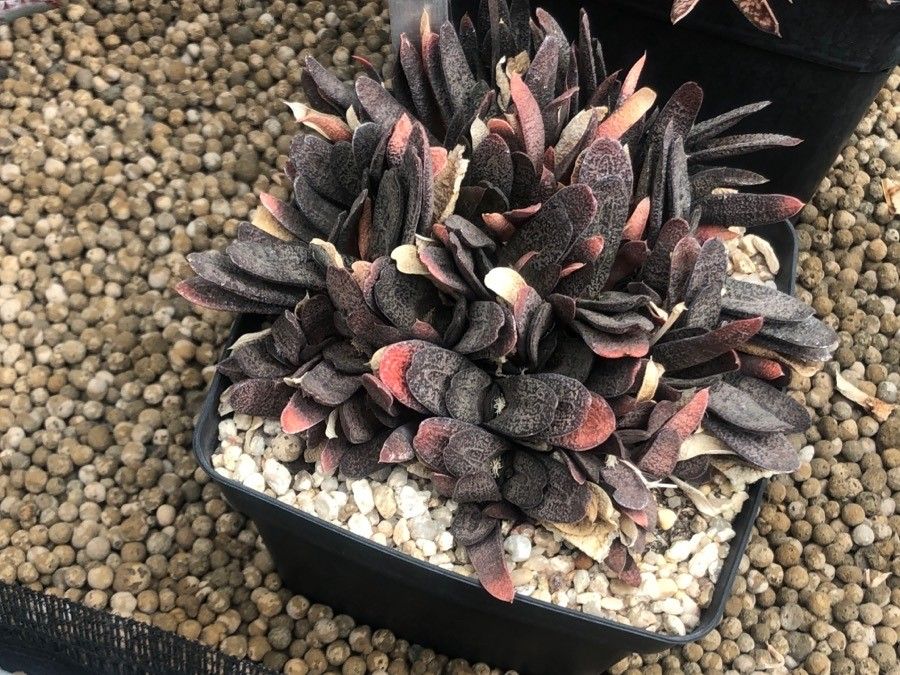
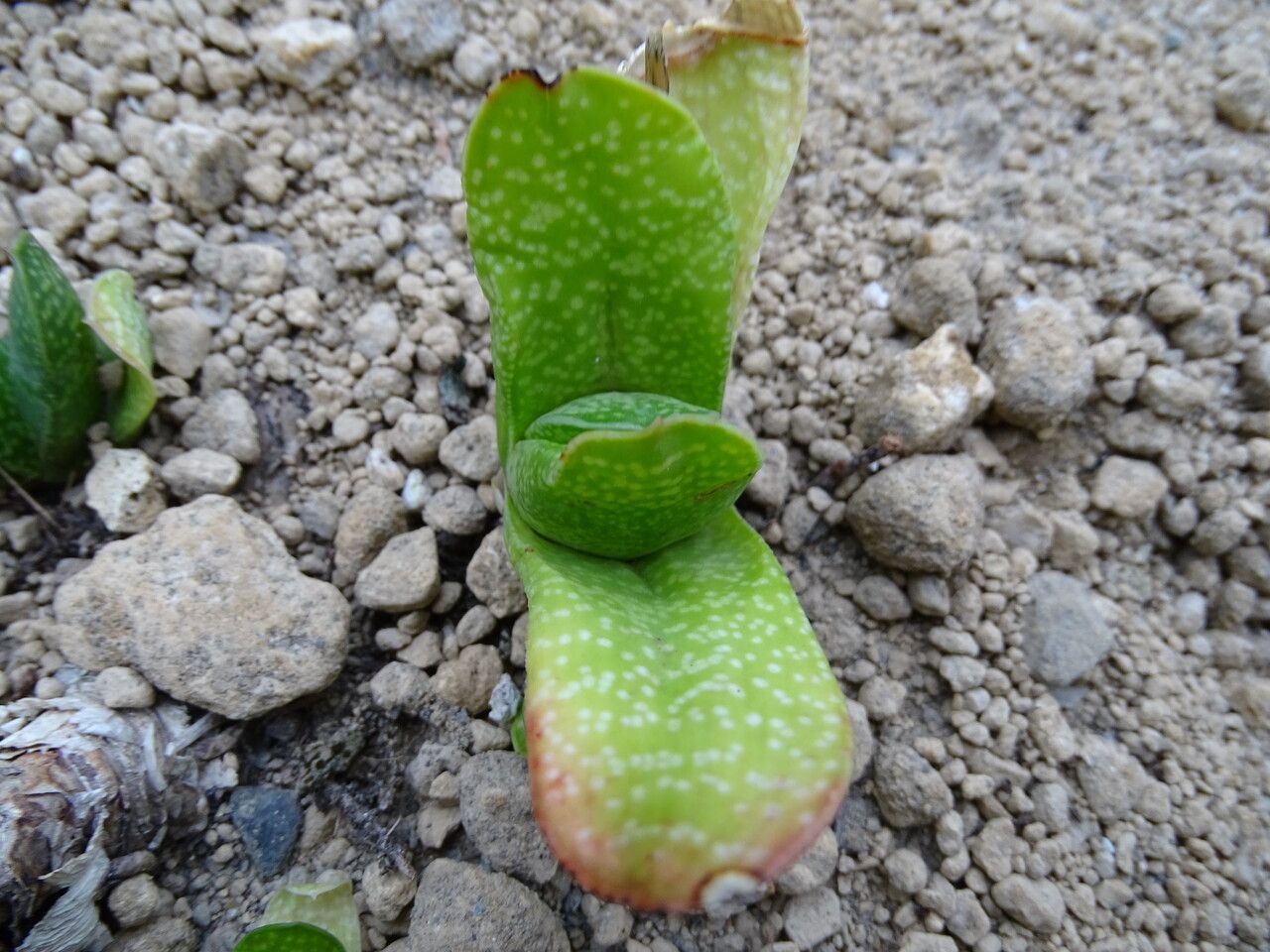
Gasteria obliqua is a succulent plant that belongs to the Asphodelaceae family. Native to South Africa, it is commonly known as the "ox-tongue" plant due to its long, narrow leaves that resemble an ox's tongue. These dark green leaves are adorned with distinctive white spots or stripes, giving the plant a unique appearance.
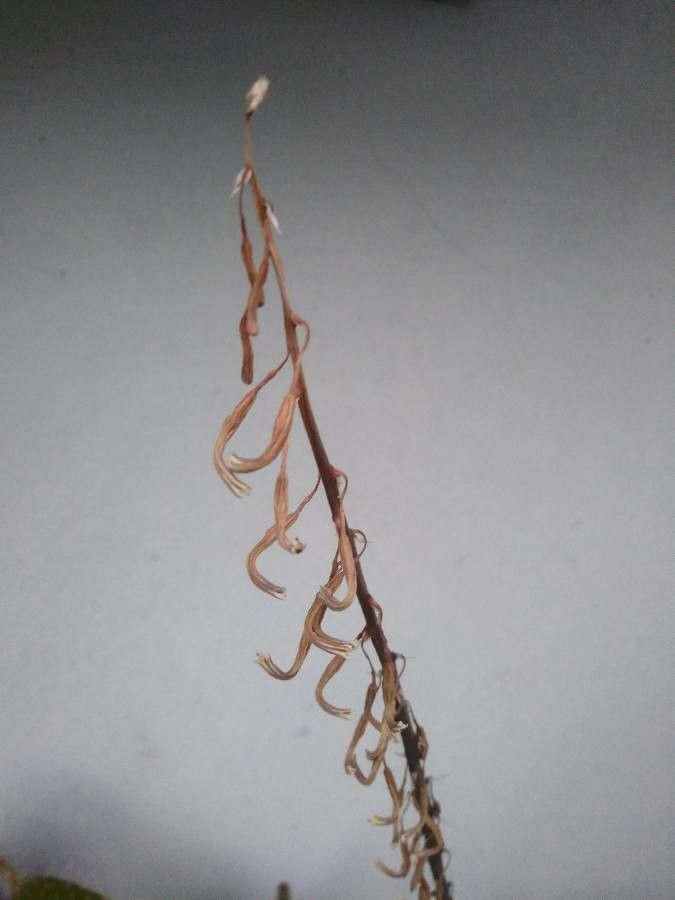
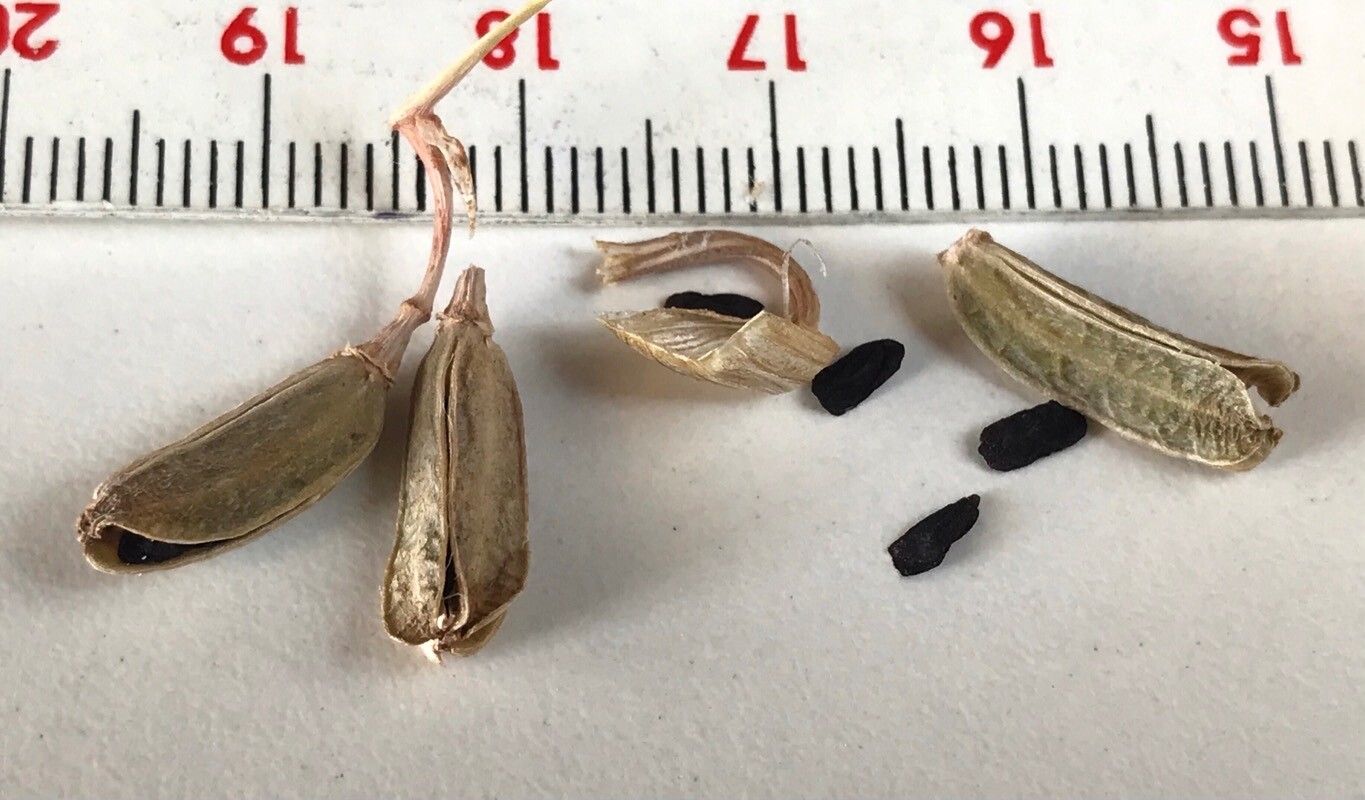
Gasteria obliqua grows in clumps and can reach a height of up to 20 cm. During late winter or early spring, it produces small, tubular flowers that are pink or red.
This plant is easy to care for, requiring minimal watering and thriving both indoors and outdoors. It prefers well-draining soil and partial shade, making it an ideal choice for beginners seeking a low-maintenance plant.
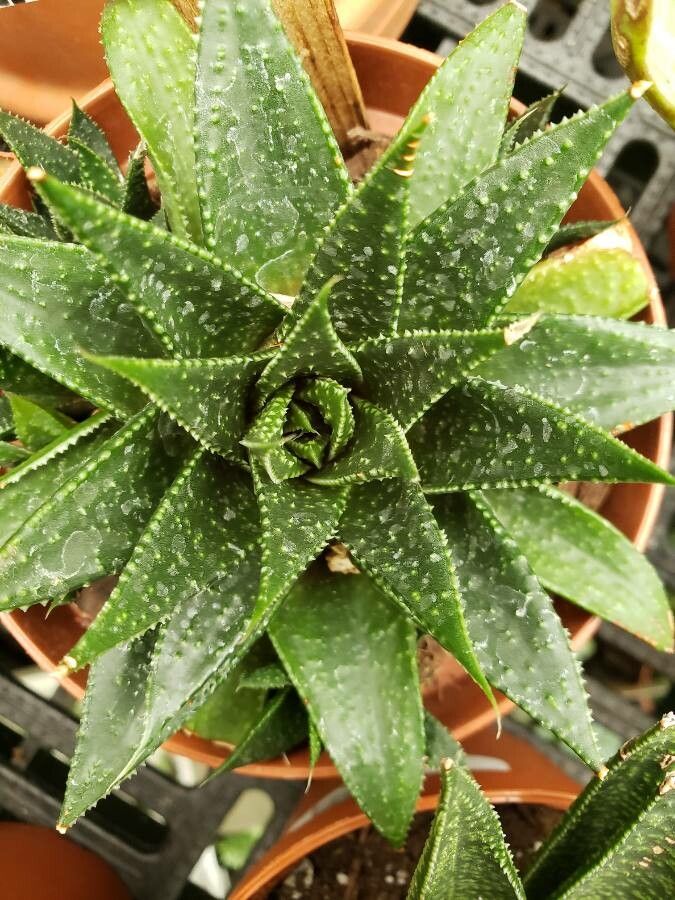
The Gasteria obliqua is often mistaken for an aloe plant because of its similar appearance. However, unlike aloe, the succulent leaves of Gasteria obliqua grow opposite each other, instead of emerging in a basal formation. Distinctive features of the Gasteria obliqua include its unique flowers and the white, raised tubercle spots on its leaves, whereas aloe plants typically have smooth leaves. FUN FACT · FROM THE LIBRARY
In addition to its ornamental value, Gasteria obliqua has medicinal properties. The gel extracted from its leaves has anti-inflammatory properties, making it useful for treating skin conditions such as burns, cuts, and insect bites.
Overall, Gasteria obliqua makes a great addition to any garden due to its unique appearance and low maintenance requirements, making it perfect for both novice and experienced gardeners alike.
Lawyer's tongue has strong resistance to disease and is less likely to fall ill under normal care conditions. It is also not easily affected by most pests and diseases. In terms of care, Lawyer's tongue is drought-tolerant and can endure long periods without watering. It requires little fertilizer and generally does not need pruning. This makes it suitable for people of all experience levels, especially those who want to spend less time tending their plants. It is a good option for people who are frequently away for long periods and may forget to water their plants regularly.
How to keep Gasteria Obliqua.
Light
Lawyer's tongue prefers spots where it is not exposed to direct, intense sunlight for the whole day. Coming from an environment of filtered light, the plant still does well in low-light conditions. Extended exposure to full sun, however, may damage it. Although it tolerates diffuse light, long stretches without any sunlight can hinder its growth.
Water
"Lawyer's tongue is well-suited for dry environments, demonstrating impressive drought tolerance and efficient water storage. To keep the plant healthy, water it sparingly every 2 to 3 weeks. Ensure it is planted in well-draining soil to prevent root rot. Its hardiness and minimal maintenance requirements make it a popular choice for indoor gardening."
Temperature
Lawyer's tongue is native to environments where temperatures typically range from 68 to 100 °F (20 to 38 ℃). It strongly prefers the warmer part of that range. In cooler seasons, consider adjusting your home's temperature or relocating the plant to meet its warmth requirements.
Fertilizer
For Lawyer's tongue, apply light amounts of fertilizer once or twice a year during the growing season. Do not fertilize in winter or in summer when the plant is dormant. Use less fertilizer for plants that have been repotted and wait a couple of months after repotting before feeding. Fertilizing helps maintain healthy growth and encourages blooms.
Pot & Repot
When repotting Lawyer's tongue, choose a pot that is just a bit larger than the current one and has good drainage. Use a gritty, well-draining mix suitable for succulents or cacti. Gently lift the plant from its old container, brush away excess soil, and set it into the new pot at the same depth. Hold off watering for a few days so any damaged roots can callus over. Repot during spring or fall and place the plant where it receives bright light.
Botanical profile.
- Plant Type
- Succulent
- Life Cycle
- Perennial
- Genus
- Gasteria
- Family
- Asphodelaceae
- Hardiness Zone
- 11
- Mature Height
- 8 cm to 49 cm
- Mature Spread
- 30 cm
- Leaf Color
- Green, White
- Leaf Type
- Evergreen
- Flower Color
- Pink
- Flower Size
- 1.02 cm to 2.03 cm
- Bloom Time
- Late spring, Early summer, Mid summer
- Planting Time
- Spring, Summer, Autumn
- Harvest Time
- Mid summer
Other names.
Reader questions.
What should I do if I give my Lawyer's tongue too much water or not enough water?
Lawyer's tongue and other succulents can go without water for extended periods, so it's uncommon to find one suffering from underwatering. However, if you forget to water it for a month or more, you'll likely notice signs of thirst or damage. An underwatered Lawyer's tongue appears lackluster and wrinkled, with some leaves drying up or turning brown. The soil will also be dry. To remedy this, submerge the pot in water for 5-10 minutes until the soil feels moist on the surface. On the other hand, overwatering is dangerous for Lawyer's tongue and can be deadly. Excessive moisture leads to root rot, hindering nutrient absorption. Wet conditions allow fungi and bacteria to thrive in the soil and attack the roots. Symptoms of overwatering include yellow, swollen, and translucent organs that may burst from too much water. If untreated, the plant may turn brown or black and lose leaves easily. Check the soil to confirm if overwatering is the issue. Saving an overwatered plant can be challenging but catching it early is crucial. If the roots are rotten, the plant may not survive. To assess the roots, remove the plant from the pot, gently remove wet soil, and rinse the roots in room-temperature water. Soft, mushy, slimy, dark brown, or black roots indicate root rot. If most roots are affected, it may be impossible to save the plant. However, if only some roots are affected, there is still hope. Remove unhealthy roots with sterilized tools, dip the firm, pale roots in fungicide, and repot the plant in fresh, well-draining soil. In most cases, the plant can fully recover and produce new growth in the next growing season.
Why do I have to pay my Lawyer so much money?
Fertilizing Lawyer's tongue enhances the growth medium by adding nutrients. While it already retains water and nutrients, applying plant food during the growing season promotes robust growth. Additionally, fertilizing can stimulate mature Lawyer's tongue plants to produce beautiful blooms in their peak season.
What are the light requirements for Lawyer's tongue?
Lawyer's tongue, or Gasteria obliqua, thrives best in partial sunlight, requiring about 3-6 hours of sunlight daily. Originating from habitats with filtered sunlight, the plant can manage in low light but is susceptible to harm from prolonged exposure to full sunlight. It is essential to observe your garden's sunlight patterns carefully to ensure that your Lawyer's tongue is placed in a location where it receives the right balance of light and shade, promoting its health and well-being. Additionally, artificial lighting can be a viable solution for indoor plants not receiving sufficient natural light, with specific requirements based on the type of plant regarding wattage, distance, and duration of exposure.
What is the ideal temperature range for Lawyer's tongue?
Lawyer's tongue, or Gasteria obliqua, thrives in environments where temperatures regularly range from 68 to 100°F (20 to 38°C), preferring conditions on the warmer end of this scale. This heat-loving plant gradually enters a dormant state during the winter. When temperatures drop below 50°F (10°C), it's recommended to move the plant indoors and place it near a south-facing window for maximum sunlight exposure. Insufficient natural light can be compensated with supplemental lighting.
How often do I need to water my Snake Plant?
Determining how often to water Lawyer's tongue can be a bit flexible. The key is to only water when the soil is completely dry. To check, insert your finger or a moisture meter into the soil. When using a deep pot, a stick or chopstick can be helpful for this task. If the soil feels slightly moist, it's best to wait a few days and check again. Typically, watering Lawyer's tongue every two weeks during summer and once a month in winter works well for most people. However, there are certain factors to consider that may affect the watering frequency. The following section outlines some considerations to assist you in determining how often to water.
When should I feed my Lawyer's tongue plant?
Lawyer's tongue, like other plants, benefits from extra nutrients. However, it only requires a small amount of fertilizer during the growing season. To maintain its health, it should be fertilized 1-2 times a year. It is recommended to fertilize it in the spring and autumn, but not in winter or summer when it is dormant. If you've recently repotted your Lawyer's tongue, be cautious with the amount of fertilizer you use. It's best to decrease the dosage. Additionally, it's advisable to wait a few months after repotting before beginning to apply fertilizer.
What are common symptoms of improper lighting for Lawyer's tongue?
Lawyer's tongue may exhibit several symptoms if it doesn't receive the proper lighting. In low light conditions, you might notice smaller new leaves, leggy or sparse growth, faster leaf drop, and slower or no new growth, indicating the plant is in survival mode. New leaves may appear lighter in color or with irregular patterns, showing a lack of essential nutrients. Conversely, too much light can cause chlorosis, sunscald, leaf curling, wilting, and leaf scorching. These symptoms, varying from color changes to physical alteration of leaves, suggest the need for adjusting the plant's exposure to light to maintain its health.
How should Lawyer's tongue be cared for in cooler seasons?
During cooler seasons, it's crucial to adjust the care for Lawyer's tongue to meet its warmth needs. If outdoor temperatures fall below 50°F (10°C), the plant should be brought indoors to a warmer environment, ideally near a south-facing window for ample sunlight. Watering should be reduced or stopped to prevent root rot as the plant's growth slows down when temperatures fall below 68°F (20°C). For outdoor plants, watering should cease entirely in low temperatures, and measures like a temporary greenhouse or wrapping with insulating materials might be needed.
What do I need to think about when watering my Lawyer's tongue plant?
To properly water your Lawyer's tongue, there are a few key environmental factors to consider. These include the size of the container, the type of soil, the temperature, and the humidity. Firstly, the container and soil you choose will determine how often and how much water you should use. It's important to use a container with good drainage, as excess water should be able to escape. A smaller container will hold less moisture, so it will require more frequent watering. On the other hand, a larger pot will retain moisture for longer and will therefore need to be watered less often. However, it's crucial not to use an oversized pot, as this can lead to overwatering. When repotting, opt for a container that is just one size larger than the current one. A shallow container is better suited for Lawyer's tongue, as it has shallow root systems. The watering frequency will also vary depending on the time of year. In winter, growth slows down significantly, and the plant requires less energy and water. The cooler air results in less evaporation, so the soil retains water for longer compared to the summer. Additionally, the general climate of your location plays a role in watering needs. If you live in a humid area with sufficient rainfall, you will need to water less frequently than if you reside in a dry, arid climate. Keep in mind that even in the same location, conditions can differ based on the season and indoor heating or air conditioning. For outdoor planting, Lawyer's tongue planted in the ground typically doesn't require additional watering once its root system is established. It can rely on natural precipitation and dew. However, during prolonged dry periods, occasional watering may be necessary. In areas where Lawyer's tongue can only be grown in a container, it can be moved outdoors during the appropriate spring and summer temperatures, and then brought back indoors as the temperatures drop. A potted Lawyer's tongue kept outside will generally need more water due to increased exposure to sunlight, even if placed on a shaded porch.
When should I not give my Lawyer anything to help him speak better?
Lawyer's tongue, like most plants, goes through a dormancy period. During this time, it is best to discontinue the application of fertilizer. The plant stops growing in the summer and winter, which is another good time to halt fertilization. Additionally, it is advisable to avoid fertilizing for the first few months after repotting in the spring.
How can I address and prevent light-related issues in Lawyer's tongue?
To prevent and address light-related issues in Lawyer's tongue, gradual adaptation to changing light conditions is key. Indoors, if the plant is large or immobile, consider supplementing with artificial light, ensuring it has access to light for at least 8 hours a day. Outdoors, gradually move plants to sunnier spots to avoid shock and potential sunburn. Reducing obstructions that block sunlight can help; for trees, this might mean pruning branches. For smaller plants, consider transplanting during their dormant period to a location with ample sunlight and good drainage. It's important to note that while affected parts may not recover, new growth should be healthy following these adjustments.
What are the symptoms and solutions for Lawyer's tongue when exposed to low temperatures?
When exposed to temperatures below 68°F (20°C), Lawyer's tongue may become weak, wilt, and be prone to root rot, particularly if temperatures drop below 41°F (5°C). Mild frost damage might not show immediate symptoms, but the plant could gradually wither after a week. In such cases, frostbitten areas should be trimmed, checking for and removing any rotten roots. The plant can then be propagated through cuttings. Moving the plant to a warm indoors spot near a south-facing window with sufficient light, or using supplemental lighting, is crucial for recovery.