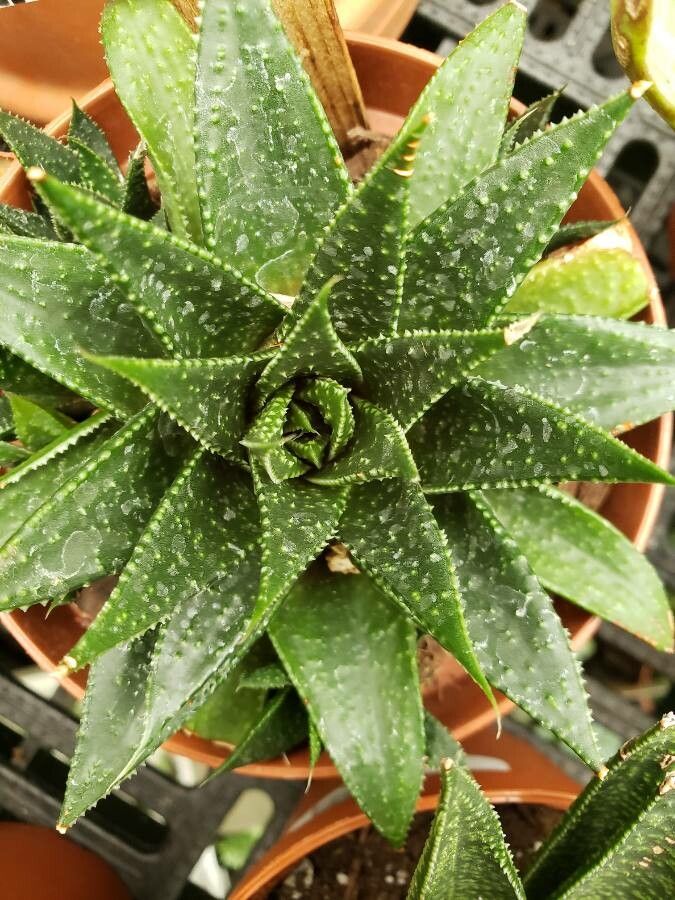
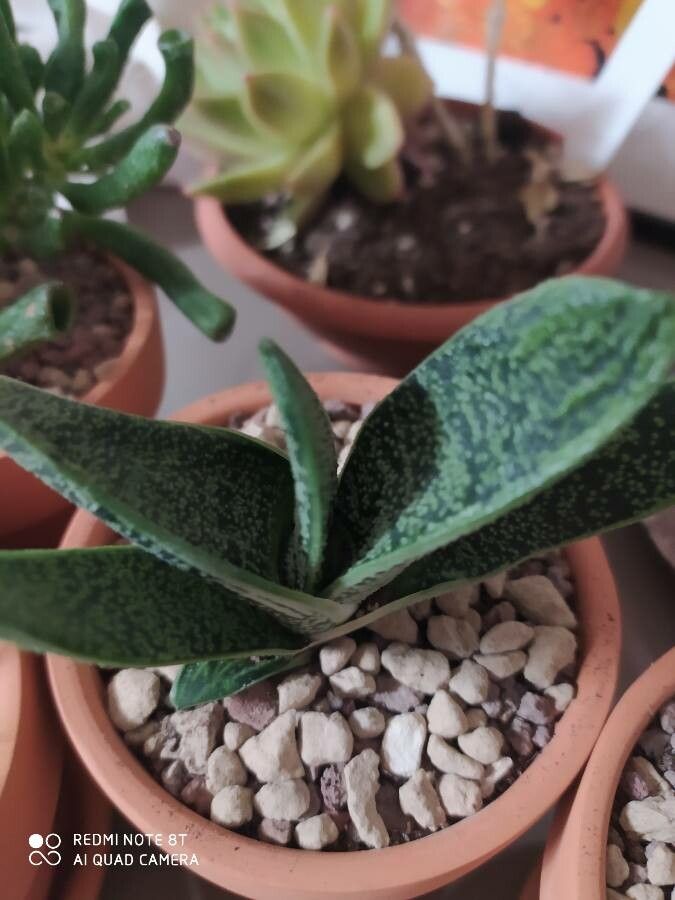
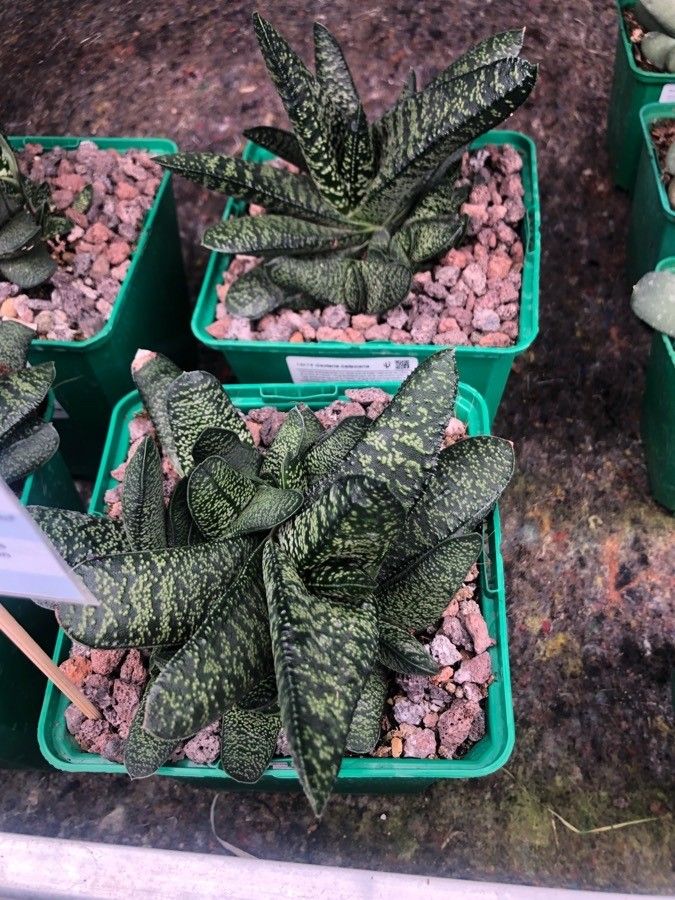
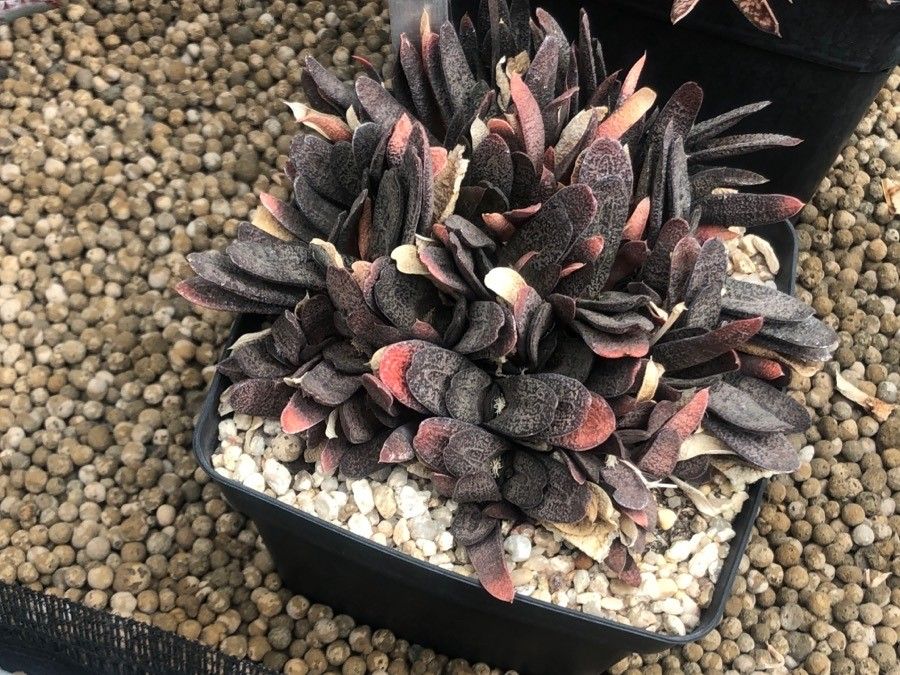
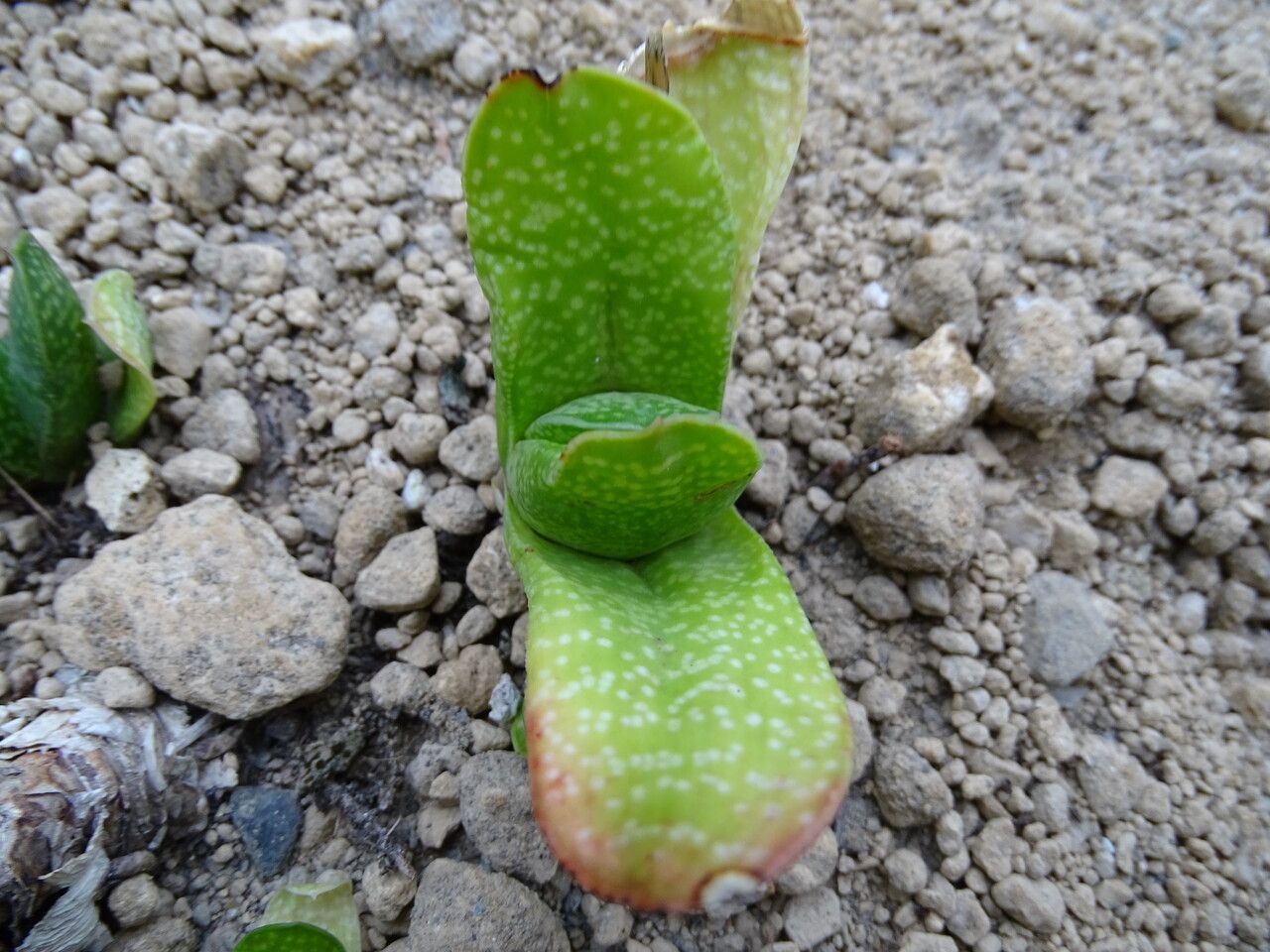
Gasteria acinacifolia ("Dune Gasteria") is succulent plant native to the Eastern Cape Province, South Africa.
Coast Oxtongue is fairly disease-resistant and is unlikely to become ill with normal care. It is also not easily affected by most pests and diseases. In terms of maintenance, Coast Oxtongue is drought-tolerant and can withstand long stretches without watering. It needs little fertilizer and generally does not require pruning. This makes it suitable for people at any experience level, especially those who prefer to spend less time caring for their plants. It is a good option for people who are often away for long periods and may forget to water their plants regularly.
How to keep Gasteria Acinacifolia.
Light
The coast Oxtongue prefers sites with moderate sunlight, similar to its native habitat that isn't exposed to intense light. It also tolerates areas with limited sun. Excessive exposure can lead to faded color, while too little light may slow its growth.
Water
Coast Oxtongue is well-suited to arid conditions, showcasing excellent drought tolerance. It requires watering only every 2-3 weeks. This plant is perfect for indoor settings, where it prefers well-draining soil to mimic its natural habitat. It thrives in controlled humidity environments and remains healthy with minimal maintenance.
Temperature
Coast Oxtongue is native to climates where temperatures commonly vary between 68 to 100 °F (20 to 38 ℃). This plant prefers a temperature range that closely replicates those conditions. Seasonal temperature adjustments can be made as needed.
Fertilizer
For Coast Oxtongue, apply small amounts of fertilizer once or twice a year during the active growing season. Do not fertilize in winter or summer while the plant is dormant. Cut back on feeding for repotted plants and wait a few months after repotting before applying fertilizer. Fertilization helps maintain healthy growth and promotes flowering.
Pot & Repot
When repotting Coast Oxtongue, choose a pot slightly larger than the current one that has good drainage. Use a gritty, well-draining cactus or succulent mix. Gently remove the plant from its old pot, brush off excess soil, and plant it at the same depth. Wait a few days before watering so any root damage can heal. Repot in spring or fall and place it in a brightly lit spot.
Botanical profile.
- Plant Type
- Succulent
- Life Cycle
- Perennial
- Genus
- Gasteria
- Family
- Asphodelaceae
- Hardiness Zone
- 10-11
- Mature Height
- 76 cm
- Mature Spread
- 61 cm
- Leaf Color
- Green
- Leaf Type
- Evergreen
- Flower Color
- Pink, Red
- Flower Size
- 3.56 cm to 5.08 cm
- Bloom Time
- Late spring, Early summer, Mid summer
- Planting Time
- Spring, Summer
- Harvest Time
- Mid summer
- Native Area
- South Africa
Other names.
Reader questions.
What are the sunlight requirements for Coast Oxtongue?
Coast Oxtongue thrives in partial sun, requiring about 3-6 hours of sunlight daily to maintain optimal health and growth. It’s important to observe the movement of sunlight through your garden to find spots that offer a balance of light and shade suitable for the plant's needs. In its natural habitat, Coast Oxtongue is accustomed to moderate sunlight exposure and can tolerate lower light conditions, although too much sun can fade its color, and too little can slow growth.
What is the ideal climate for Coast Oxtongue?
Coast Oxtongue thrives in climates where temperatures routinely fluctuate between 68 to 100 °F (20 to 38 °C). It prefers conditions that closely mimic this temperature range and requires adjustments for seasonal temperature changes. Being a heat-loving plant, it gradually stops growing and enters a dormant state during winter. When temperatures fall below 5°C, the plant should be moved indoors for cultivation, preferably near a south-facing window to maximize sunlight exposure. If necessary, supplemental lighting can be used to compensate for insufficient natural light.
How can artificial lighting benefit indoor Coast Oxtongue plants?
Indoor Coast Oxtongue plants benefit from artificial lighting, especially when natural sunlight is insufficient. This is often necessary during winter or in less sunny indoor spaces. Artificial lights, such as LED lights, can be tailored to provide the specific wavelengths of light that plants require for optimal growth. Recommended artificial light intensity varies with the plant's natural light requirements: full sun plants need 30-50W/sq ft, partial sun plants need 20-30W/sq ft, and full shade plants require 10-20W/sq ft. Placement should be 12-36 inches above the plant, mimicking natural sunlight, with duration matching natural daylight hours, typically 8-12 hours per day.
How should Coast Oxtongue be cared for during low temperatures?
During low temperatures, it's crucial to care for Coast Oxtongue appropriately as it thrives best above 20°C and must be kept above 5°C during winter to avoid damage. If temperatures fall below 1°C, the plant may become weak, wilt, and be prone to root rot. In case of mild frost damage, it is advised to trim off the frostbitten areas and check for root rot — if present, affected roots should be removed and the plant can be propagated through cuttings. The plant should then be moved to a warm environment indoors, near a south-facing window for sufficient sunlight, or use supplemental lighting if natural light is insufficient.
What are common symptoms of inadequate light for Coast Oxtongue?
Coast Oxtongue may exhibit several symptoms in response to inadequate light, including small and pale new leaves, leggy or sparse growth, faster leaf drop, slower or no new growth, and symptoms of chlorosis and sunscald. Excessive light can cause leaf curling, wilting, leaf scorching, and loss of the plant's vibrant green color, indicating an imbalance in light exposure. Monitoring for these symptoms can help adjust care for healthier plant growth.
How to manage Coast Oxtongue in high temperatures?
During summer, Keep Coast Oxtongue below 38°C to ensure its health. If temperatures exceed 43°C, its growth will halt, leading to water loss, wilting, and increased susceptibility to sunburn. In such situations, remove the sunburned and rotten parts and protect the plant from afternoon sunlight until it recovers. For plants experiencing root rot, cease watering completely until new roots begin to grow, to aid in their recovery.
What solutions are recommended for light-related issues in Coast Oxtongue?
For light-related issues, gradually adapting your Coast Oxtongue to suitable light conditions is crucial. Indoors, if moving the plant isn't feasible, supplement with artificial lighting, keeping a lamp on for at least 8 hours a day or using professional grow lights. Outdoors, transition the plant to sunnier spots weekly to avoid shock. Minimize obstructions like overhanging branches to increase sunlight exposure. For smaller plants, consider transplanting during the dormant period to a location with better light and drainage. Remember, parts of the plant damaged by insufficient sunlight might not recover, but new growth will be healthy with improved lighting.
What are the basic essentials for growing Coast Oxtongue successfully?
Coast Oxtongue is native to climates with temperatures that fluctuate between 68 to 100 °F (20 to 38 °C) and enters a dormant state in winter. For successful cultivation, it should be moved indoors when outdoor temperatures drop below 5°C, placed near a south-facing window for maximum sunlight, or supplemented with artificial lighting if necessary. Watering should be reduced or stopped below 20°C to prevent root rot, and complete cessation of watering is recommended for outdoor plants in cold temperatures. If possible, set up a temporary greenhouse for insulation, or use materials like plastic film or fabric to protect the plant during cold spells.