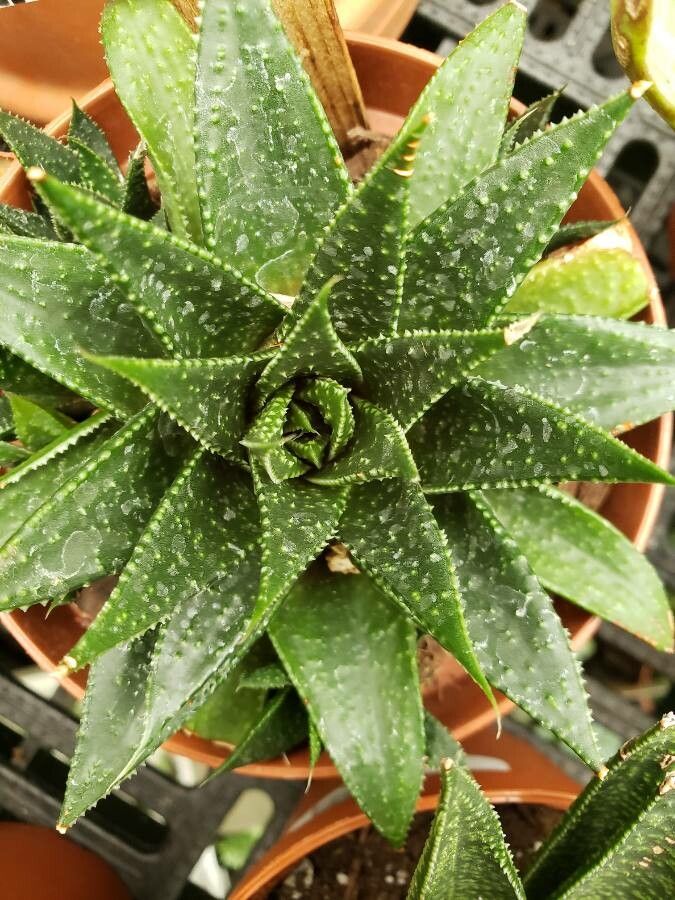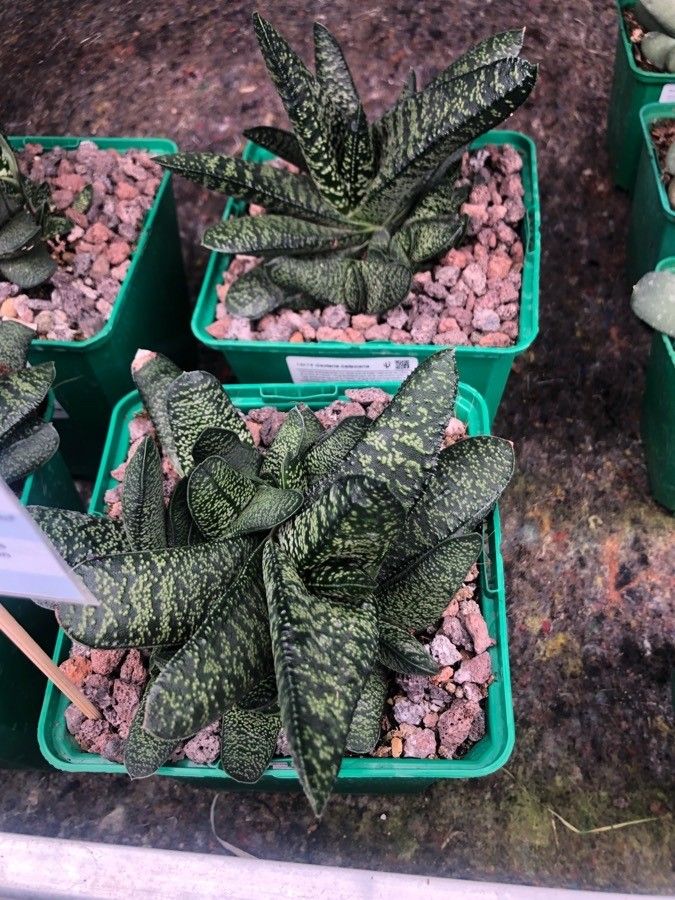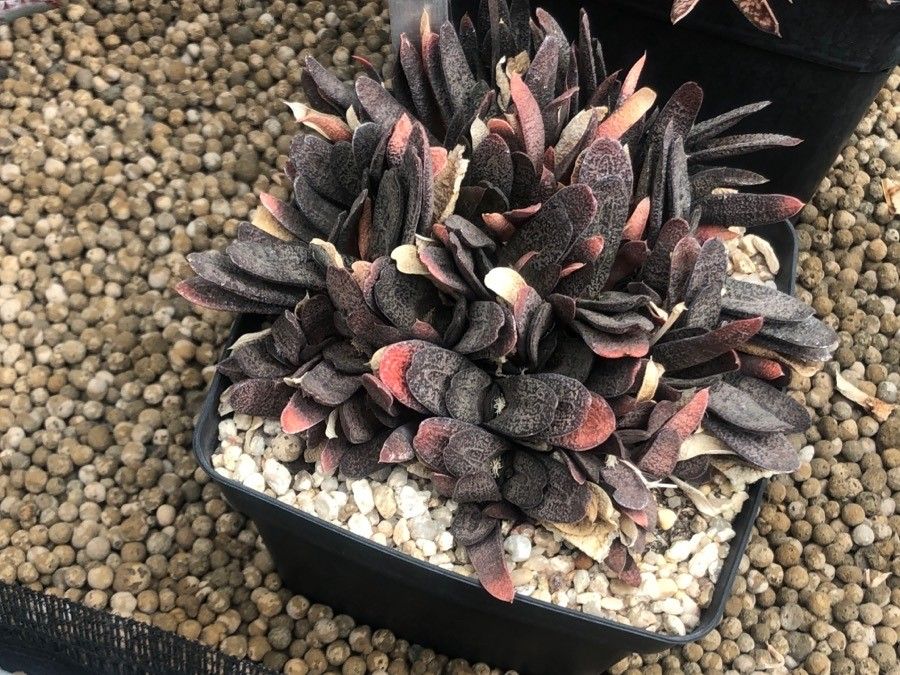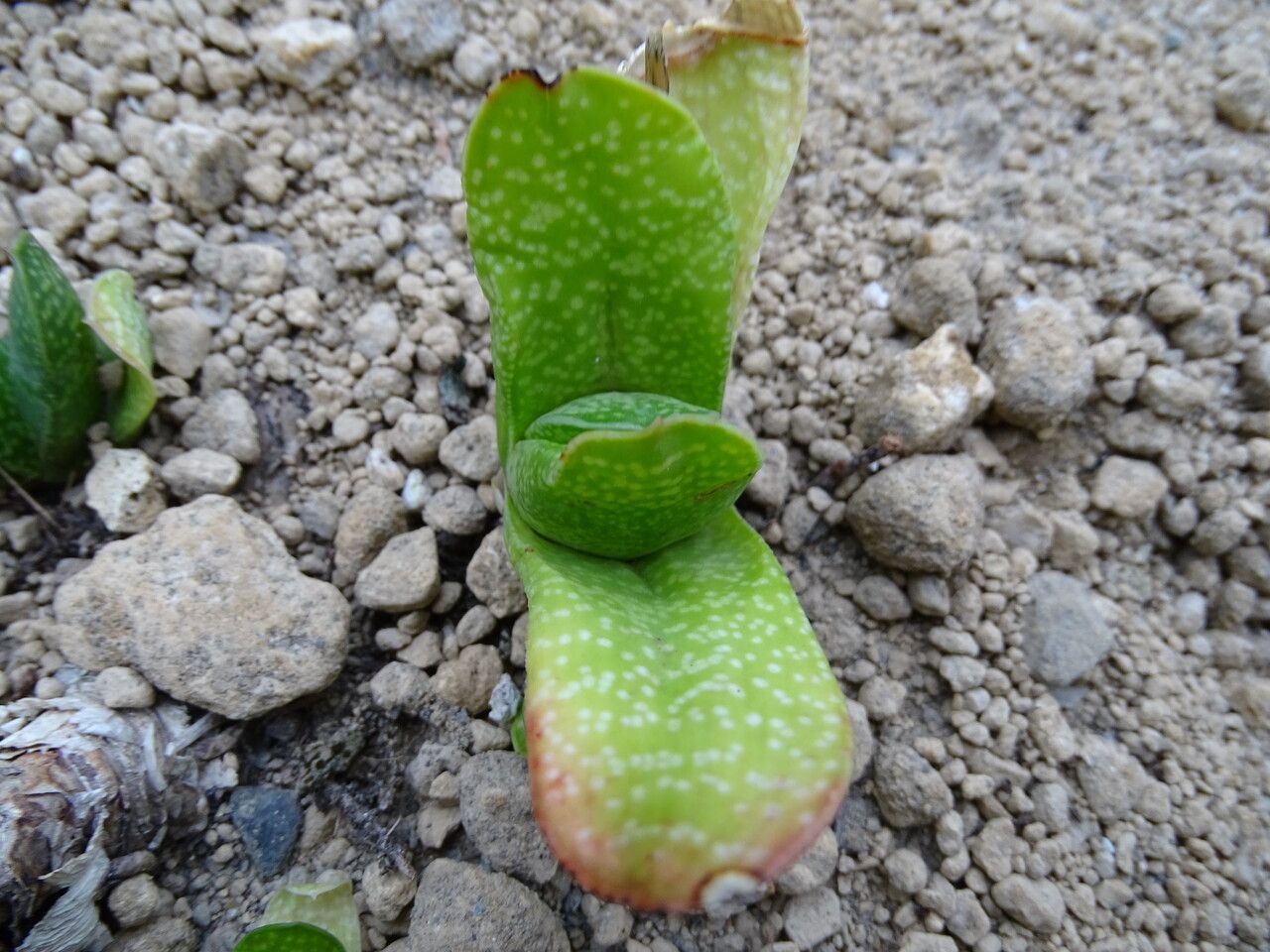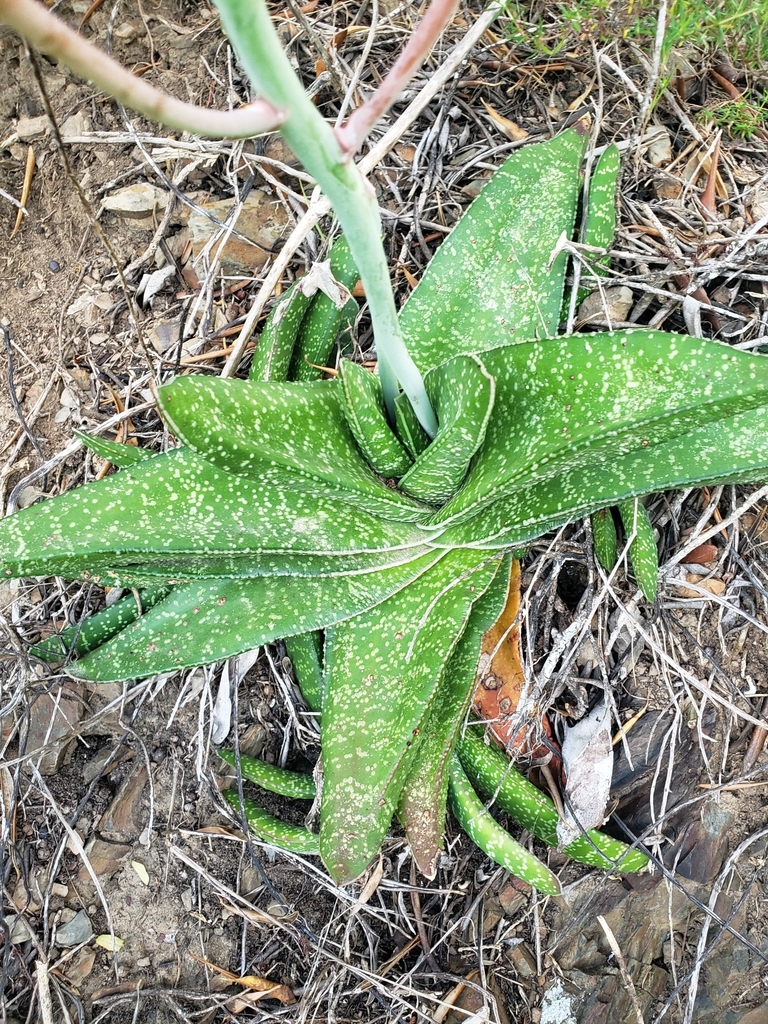
Gasteria carinata is a succulent plant belonging to the Asphodelaceae family. Native to South Africa, it is commonly referred to as the "ox-tongue" plant due to its long, narrow leaves that resemble an ox's tongue. These dark green leaves are adorned with prominent white spots, giving the plant a distinctive appearance.
Gasteria carinata typically grows in clumps, reaching heights of up to 30 cm. During late winter or early spring, it produces small tubular flowers that are pink or red in color.
This plant is remarkably easy to care for, requiring minimal watering. It thrives both indoors and outdoors, preferring well-draining soil and partial shade or filtered sunlight.
Gasteria minima has smooth, thick leaves that are both bright and beautiful. Interestingly, it also blooms, producing flowers that are lantern-shaped with a bulge in the middle and tapering at both ends. The front of the flower is light green, transitioning to a pinkish-red, creating a color combination reminiscent of bicolored ice cream. FUN FACT · FROM THE LIBRARY
In addition to its ornamental appeal, Gasteria carinata possesses several medicinal properties. Its anti-inflammatory attributes make it effective in treating burns, wounds, insect bites, and skin irritations.
Overall, Gasteria carinata is a beautiful addition to any garden, especially for enthusiasts seeking an easy-to-care-for succulent with unique features.
Bredasdorp gasteria has moderate resistance to disease and is relatively more sensitive to humidity. It is vulnerable to disease when humidity is high and can develop root rot during dormancy. Regarding care, Bredasdorp gasteria tolerates drought but requires increased watering in the growing season. Watering should be sharply reduced or stopped entirely during the dormant period. Bredasdorp gasteria is appropriate for people with some growing experience, though it can be challenging to care for, particularly during dormancy. It is especially suited to those who can devote time to its care in the winter months.
How to keep Gasteria Carinata.
Light
Bredasdorp gasteria does well in spots with partial sun exposure and can tolerate both full sun and deep shade. Coming from its native habitat, it has adapted to grow robustly under a variety of light conditions. Too little or too much sunlight can negatively affect its growth and result in poor plant health.
Water
Bredasdorp Gasteria, a plant native to arid regions, is highly drought-tolerant and only needs watering every 2-3 weeks. As a low-maintenance indoor plant, it thrives in well-draining soil, which helps prevent root rot since it is sensitive to overwatering.
Temperature
The Bredasdorp gasteria, also called bredasdorp gasteria, comes from areas with a temperate climate and needs temperatures between 68 to 100 ℉ (20 to 38 ℃) for optimal growth. In the summer months, it is advisable to move the temperature toward the lower end of that range to encourage healthy growth. In winter, you may need to supply extra warmth to keep the temperature steady and avoid damage.
Fertilizer
For Bredasdorp gasteria, light doses of fertilizer 1-2 times a year during the growing season are adequate. Do not fertilize in winter or in summer when it is dormant. Cut back on fertilizer for repotted plants and wait a couple of months after repotting before applying fertilizer. Fertilizing helps maintain healthy growth and promotes blooms.
Pruning
Though they can usually be left unpruned, the plant can benefit from light trimming for maintenance. Pruning should be done in spring and early summer to encourage new shoots to grow from the base of your plant.
Pot & Repot
When repotting Bredasdorp gasteria, choose a pot slightly larger than the current one that offers good drainage. Use a gritty, well-draining cactus or succulent potting mix. Gently remove the plant from its previous pot, brush off excess soil, and plant it at the same depth. Delay watering for a few days to let any root damage recover. Repot in spring or fall and place it in a brightly lit location.
Toxicity
Most succulent plants are non-toxic and Gasteria plants are safe to have around your pets
Further reading →
The toxicity and danger assessments provided are for reference only. We do not assure their accuracy, so it's crucial not to depend on them. Seek professional advice when necessary for accurate guidance.
Botanical profile.
- Plant Type
- Succulent, Herb
- Life Cycle
- Perennial
- Genus
- Gasteria
- Family
- Asphodelaceae
- Hardiness Zone
- 9-11
- Mature Height
- 15 cm
- Mature Spread
- 5 cm
- Leaf Color
- Green, White
- Leaf Type
- Evergreen
- Flower Color
- Pink, Red
- Flower Size
- 2.03 cm to 3.05 cm
- Bloom Time
- Late spring, Early summer
- Planting Time
- Spring, Summer, Autumn, Winter
- Harvest Time
- Early summer, Mid summer
- Native Area
- South Africa
Other names.
Reader questions.
How should I water my Bredasdorp gasteria plant to keep it healthy?
To properly water your Bredasdorp gasteria, wait until spring when new leaves are growing. Only water the plant when the soil inside the pot is completely dry. You can use tap or distilled water, but avoid watering from above. Instead, water at the base of the plant by applying water slowly and evenly across the soil. This will moisten the soil without wetting the above-ground parts of the plant. Continue watering until you see excess water draining from the pot's hole.
Why should I put fertilizer on my Bredasdorp gasteria plant?
When you fertilize Bredasdorp gasteria, it adds nutrients to the soil and supports healthy growth. Even though this plant stores water and nutrients, applying plant food during the growing season can still be beneficial. Additionally, fertilizing can encourage mature specimens to produce blooms.
What are the sunlight requirements for Bredasdorp gasteria?
Bredasdorp gasteria requires partial sun, meaning it thrives in about 3-6 hours of sunlight a day, but it can also grow in full sun or full shade conditions, which is above 6 hours of sunlight. It's important to watch how sunlight moves through your garden and choose spots that offer a balance of light and shade, as too little or too much sun can negatively affect the plant's health.
What is the native climate for the Bredasdorp gasteria?
The Bredasdorp gasteria, also known by its botanical name Gasteria carinata, is native to regions with a temperate climate. It requires a temperature range between 68°F to 100°F (20°C to 38°C) for optimal growth. During the summer months, adjusting the temperature to the lower end of this range promotes healthy growth. In winter, which is its growing season, temperatures should be maintained above 20°C to support optimal development. If the outdoor temperature falls below 0°C, it's advisable to move the plant indoors to a well-lit area, increase watering when the temperature is higher, and reduce it as it approaches freezing. For those overwintering the plant outdoors, a sheltered area with ample sunlight is recommended, and in consistently low temperatures, setting up a temporary greenhouse while keeping the plant sufficiently moist could be beneficial.
What should I do if I give my Bredasdorp gasteria plant too much or too little water?
Overwatering is a common problem for Bredasdorp gasteria plants, and it can be very harmful. To avoid overwatering, it's important to let the soil dry out completely before watering. Many people mistakenly continue to water the plant when it goes into dormancy. In this situation, we'll focus on how to fix the problem of overwatering. If your Bredasdorp gasteria shows signs of overwatering, it's best to remove it from its pot. Once removed, you can examine the roots and remove any that are rotted or affected by moisture-related diseases. Some roots can be salvaged by cleaning them. After this step, repot the plant in well-draining soil to prevent future overwatering. While less common, underwatering can also occur. If this happens, simply water the plant slightly more frequently, being cautious not to overcorrect and overwater it.
When should I fertilize my Bredasdorp gasteria plant for the best results?
Bredasdorp gasteria, like all plants, benefits from extra nutrients, but it only requires a small amount of fertilizer during the growing season. It's recommended to fertilize the plant 1-2 times a year, specifically in spring and autumn, while avoiding fertilizing during its dormant periods in winter and summer. When repotting the plant, be cautious and reduce the amount of fertilizer used. Additionally, wait a few months after repotting before applying any fertilizer.
How can artificial lighting benefit indoor Bredasdorp gasteria plants?
For indoor Bredasdorp gasteria plants, artificial lighting can be crucial for optimal growth, especially when natural sunlight is insufficient. LED lights are recommended because they can provide specific wavelengths needed by plants. Full sun plants require 30-50W/sq ft of artificial light, partial sun plants 20-30W/sq ft, and full shade plants 10-20W/sq ft. The light source should be placed 12-36 inches above the plant to mimic natural sunlight, and most plants benefit from 8-12 hours of light per day.
How should I care for my Bredasdorp gasteria in low temperatures?
Bredasdorp gasteria is not tolerant to extremely cold temperatures, thriving best between 20°C and 38°C. During winter, it is crucial to keep it above 0°C to prevent damage. Exposure to temperatures below -5°C could cause the leaves to suffer from water-soaked necrosis and wilting. If you notice mild frost damage—which may not show immediate symptoms but results in significant wilting and leaf drop after a week—trim off the frostbitten areas and move the plant to a warmer indoor setting. Placing it near a south-facing window can ensure it gets enough sunlight, and if using a makeshift greenhouse, ensure there is adequate ventilation to prevent decay due to poor airflow.
How often do I need to water my Bredasdorp gasteria?
The Bredasdorp gasteria, being a succulent plant, has low water needs due to its origin in a hot and dry region. To properly care for this plant, it is important to let the soil dry completely before watering again. Normally, it takes approximately two weeks to a month for the soil to dry out completely. The frequency of watering depends on the season. During spring and summer, when the plant is in a growing state, it may take 2-3 weeks for the soil to dry. You can follow this watering frequency. In summer, the soil may dry out more quickly. However, when the temperature drops below 60 degrees or rises above 85 degrees Fahrenheit, the plant enters a dormant or semi-dormant state and does not require additional watering. Instead, it is best to reduce or stop watering until the temperature is suitable for growth, and then resume watering.
When is the best time to not apply fertilizer to my Bredasdorp gasteria?
Bredasdorp gasteria, just like other plants, has a dormancy period. During this time, it is best to avoid using fertilizer. This happens in both summer and winter, when the plant stops growing. Additionally, it is advisable to hold off on fertilizing for a few months after repotting in the spring.
What are the symptoms of incorrect lighting in Bredasdorp gasteria?
Symptoms of incorrect lighting in Bredasdorp gasteria include lighter-colored new leaves indicating insufficient sunlight, leggy or sparse growth, chlorosis or yellowing of leaves due to excessive sunlight, sunscald which shows as pale or necrotic areas on the plant, leaf curling as a defense against extreme sunlight, wilting from overexposure to sunlight leading to water loss, and leaf scorching characterized by brown, dry edges on leaves from too much sunlight.
What should I do if my Bredasdorp gasteria is exposed to high temperatures?
During summer, it's essential to keep Bredasdorp gasteria's temperature below 38°C to prevent it from entering a dormant state, which can become more prone to rot in high humidity conditions if the temperature exceeds 43°C. In such cases, remove any dry and rotten parts and move the plant to a partially shaded area to shield it from direct midday and afternoon sunlight. It's also advisable to stop watering the plant until the weather cools down, to minimize the risk of root rot and other heat-related stresses.