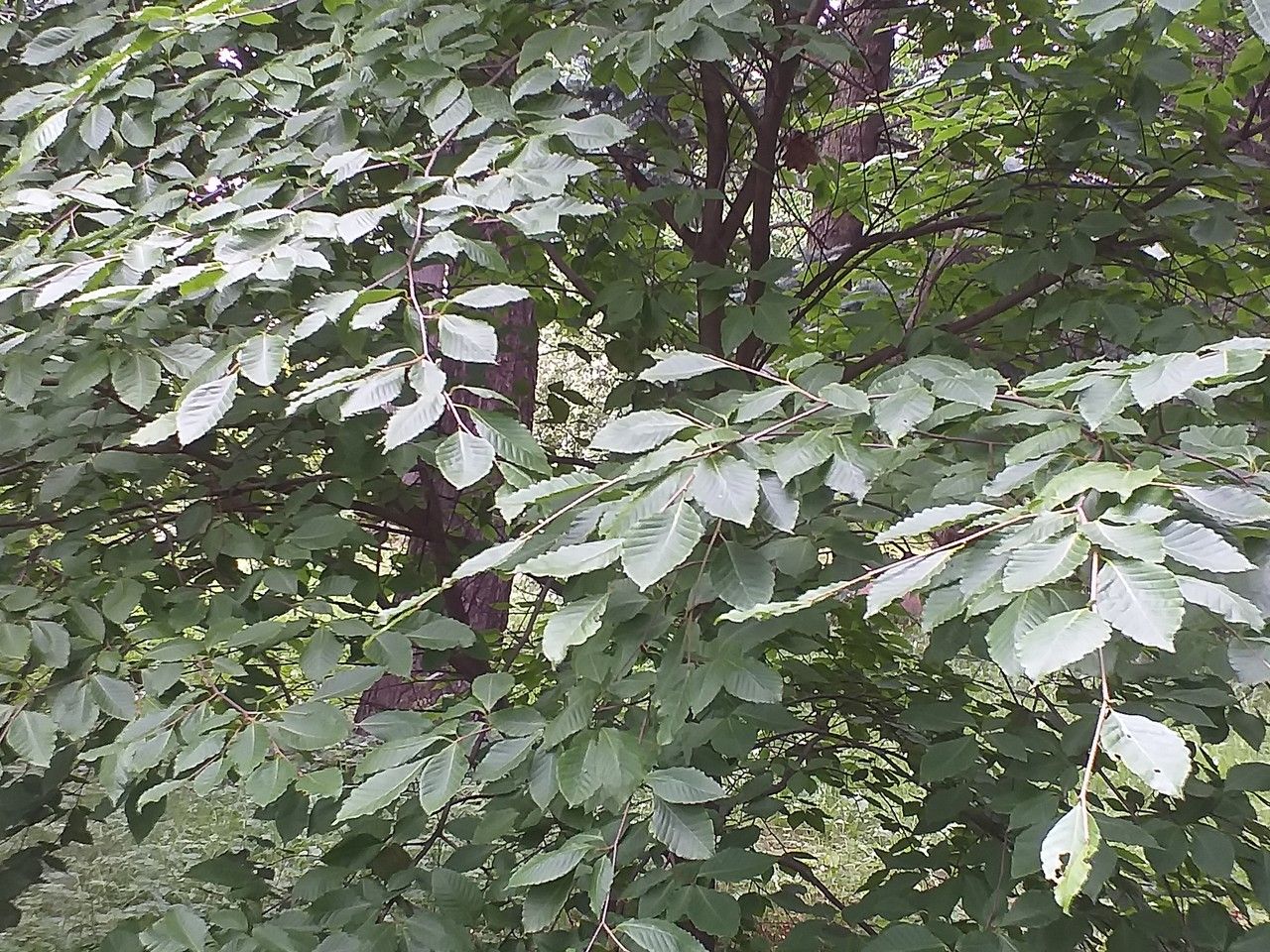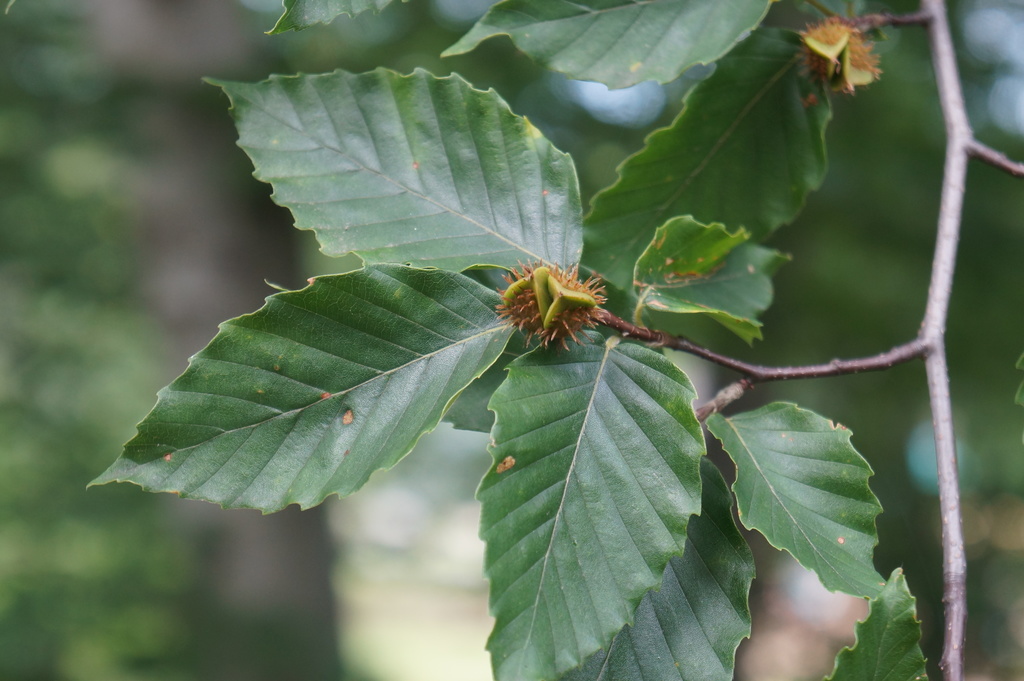
Fagus grandifolia, commonly known as the American beech, is a deciduous tree native to eastern North America. This slow-growing tree can reach heights of up to 100 feet and boasts a broad, spreading crown. The bark of the American beech is smooth and gray, adorned with distinctive horizontal lines that give it a unique appearance.
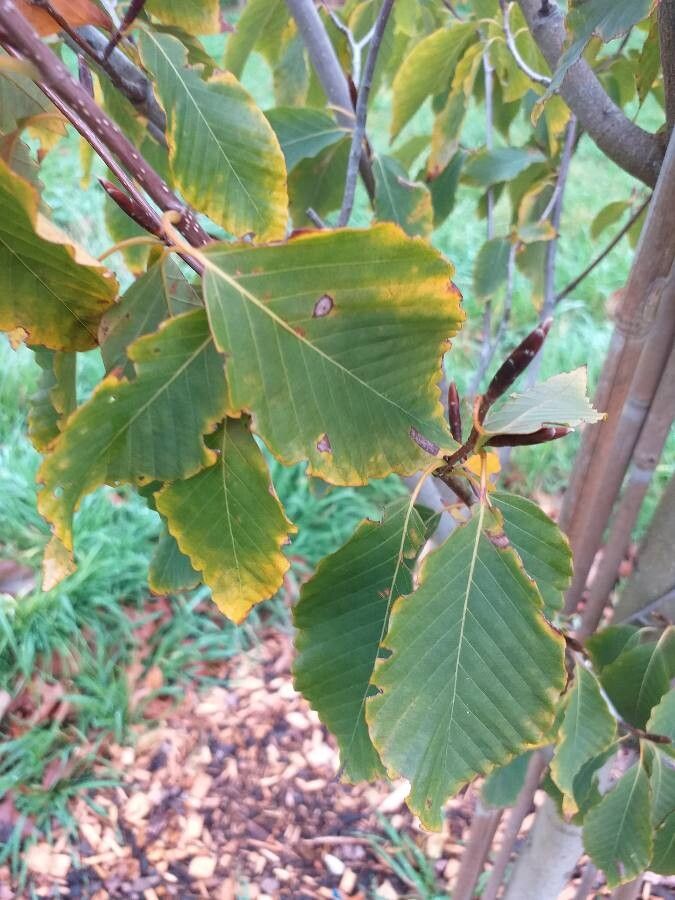
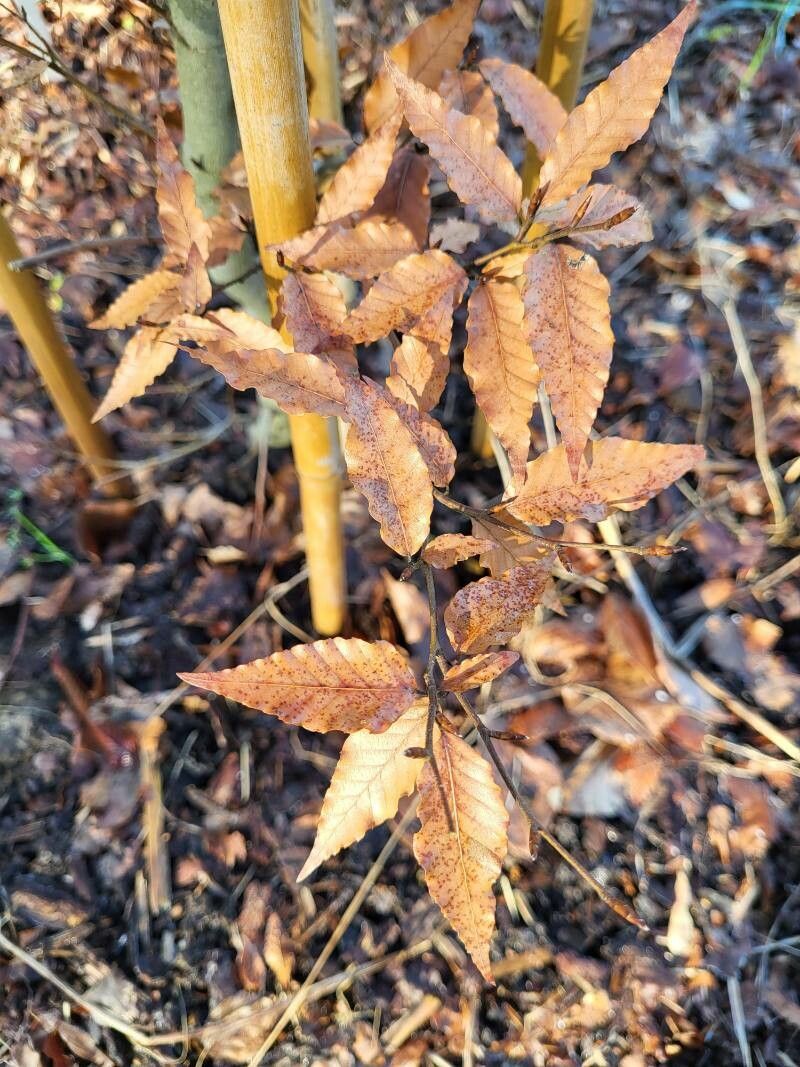
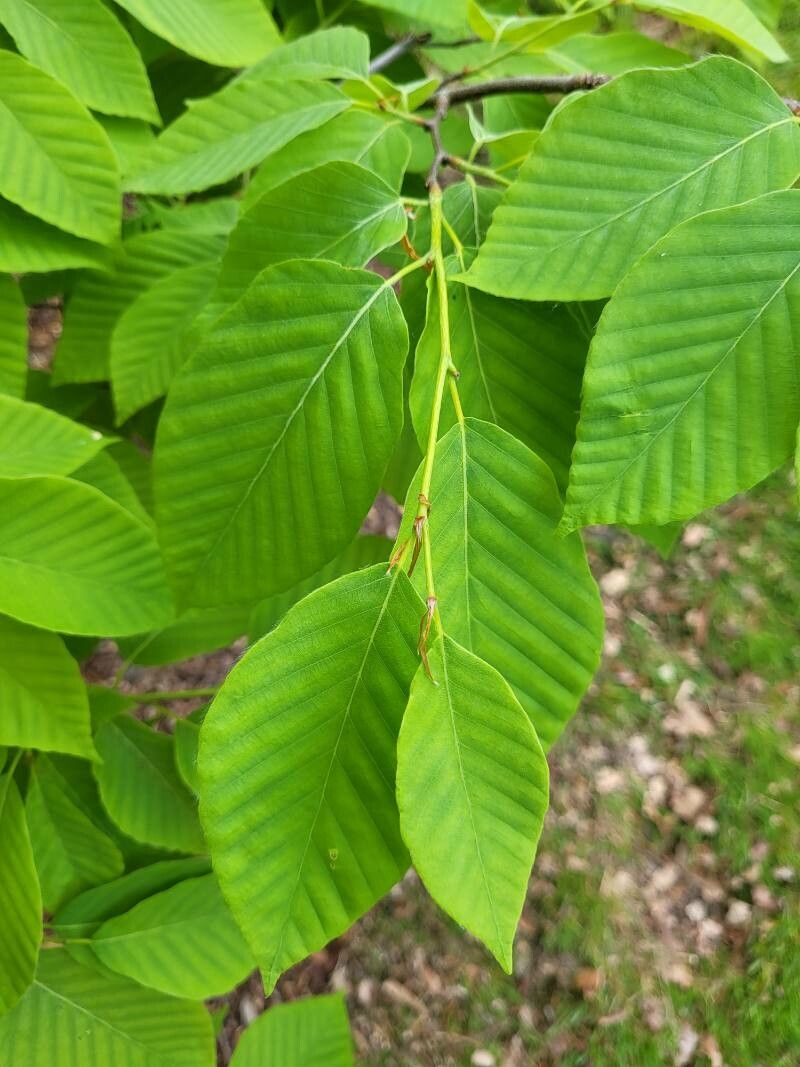
The leaves of Fagus grandifolia are simple, alternate, and have serrated edges. They are dark green during the summer but turn yellow or brown in the fall before dropping off for winter dormancy.
In early spring, the American beech produces small, inconspicuous flowers that serve as a crucial nectar source for early pollinators such as bees and butterflies. The tree also yields edible nuts known as beechnuts, which are important food sources for wildlife like squirrels, chipmunks, deer, and birds.
Fagus grandifolia thrives in moist soils but can tolerate dry conditions once established. It grows best in full sun to partial shade and is commonly found along forest edges or near streams and wetlands.
Overall, Fagus grandifolia is ecologically important due to its role in providing food sources for wildlife and offering shade that helps maintain soil moisture levels. It grows naturally throughout eastern North America, from Nova Scotia southward into Florida's panhandle region, and westward into Texas's Big Thicket region. In these areas, it forms part of mixed deciduous forests, alongside other hardwoods such as oak (Quercus spp.), hickory (Carya spp.), and maple (Acer spp.).
American beech is resistant to disease and is usually not prone to illnesses. In terms of care, this plant is fairly low-maintenance. When grown outdoors it needs little water, and larger plants typically do not need pruning. Smaller plants, however, should be pruned after they have bloomed. American beech is suitable for anyone with outdoor space, such as a garden or deck, and does not require much care experience.
How to keep Fagus Grandifolia.
Light
American beech performs best when it receives abundant sunlight for most of the day, though it can tolerate sites where direct rays are diffused or blocked for part of the day. Photosynthesis driven by sunlight improves the American beech's health and growth. A habitat with plentiful sun exposure is essential for this plant. Too much or too little light can cause growth problems, such as muted leaf color or slower growth.
Water
The American beech tree flourishes in moist, well-drained soil, preferring consistent moisture without becoming waterlogged. It needs to be watered every 1 to 2 weeks, especially during its active growing season, to stay healthy and promote leaf development. Generally, the American beech is cultivated outdoors as a deciduous tree.
Temperature
The ideal temperature range for american beech growth is 41 to 100 ℉ (5 to 38 ℃). This deciduous tree favors a temperate climate with warm summers and cold winters. In winter, temperatures can drop to 14 ℉ (-10 ℃), while in summer they can climb to 86 ℉ (30 ℃). It is important to keep american beech cool and well watered during the hot summer months.
Fertilizer
Fertilize your American beech in early spring to encourage healthy growth. Regular feeding boosts overall health, leading to robust growth, better tolerance of harsh conditions, and increased resistance to pests and diseases. Maintain a consistent fertilization schedule for your American beech to preserve vibrant foliage with rich color and a lush appearance.
Pruning
Pruning American beech trees in early spring can significantly enhance air circulation and increase light access. Start by removing dead branches and thinning out crowded areas to improve the tree's structure. Careful pruning not only prevents fungal infections but also encourages growth. Additionally, it is important to protect the bark to maintain the plant's health and appearance.
Toxicity
Though ripe nuts are deliciously edible, the unripe nuts of this tree contain small amounts of a mild toxin known as fagin, confined mostly in the skin of the nuts. Large quantities of unripe nuts need to be consumed before ill effects occur, but this does occasionally happen with dogs and grazing animals. The American beech is less toxic than the European beech, but there are instances of poisoning, usually in the fall, when dogs or other animals eat the fallen nuts.
Further reading →
The toxicity and danger assessments provided are for reference only. We do not assure their accuracy, so it's crucial not to depend on them. Seek professional advice when necessary for accurate guidance.
Botanical profile.
- Plant Type
- Tree
- Life Cycle
- Perennial
- Genus
- Fagus
- Family
- Fagaceae
- Hardiness Zone
- 5-11
- Mature Height
- 20.12 m to 29.87 m
- Mature Spread
- 11.89 m to 24.08 m
- Leaf Color
- Green, Yellow
- Leaf Type
- Deciduous
- Flower Color
- Yellow, Green, White
- Flower Size
- 0.51 cm to 0.76 cm
- Bloom Time
- Mid spring, Late spring
- Planting Time
- Spring, Summer, Autumn, Winter
- Harvest Time
- Mid summer
- Native Area
- Eastern North America
Other names.
Reader questions.
When Should I Water My American Beech?
Watering your American beech correctly is vital for its health and growth. Check the soil moisture around your plant; if the top 1 to 2 inches of soil are dry, it's time to water. Watch out for wilting, droopy, or lackluster leaves, which indicate the plant needs water. Also, be aware of changes in leaf color such as yellowing, browning, or a loss of vibrant green, as these too signal a need for water. During dry spells, premature leaf drop can occur, indicating the plant's need for hydration. Pay attention to the weather, as hot and dry conditions may necessitate more frequent watering. In contrast, during the dormancy period in fall and winter, the American beech requires less water, but the soil should not be allowed to completely dry out. Avoid watering when the soil is moist to prevent root rot and fungal diseases, but also be wary of watering too late, as prolonged dryness can cause stress or even plant death.
Why should I put fertilizer on my American beech tree?
No matter what type of American beech you own, regular fertilization will promote overall plant health. By providing the proper nutrients, your American beech will experience stronger growth and increased resilience to tough growing conditions. This will also help it defend against diseases and pests. The foliage of your American beech is a standout feature, so it is important to ensure its preservation. To achieve this, establish and stick to a regular fertilization schedule tailored to your specific American beech. This will encourage the development of deep-colored leaves and a lush appearance.
What are the sunlight requirements for an American beech?
The American beech thrives in locations where it can be exposed to substantial sunlight throughout the day. It requires full sun, defined as above 6 hours of sunlight daily, to foster optimal health and growth. However, it can also survive in partial sun, which means about 3-6 hours of sunlight. Ensuring it receives the right amount of sunlight, whether in its original habitat or when planted in a new location, is crucial for preventing growth issues such as subdued leaf colors or slowed growth.
What is the optimal temperature range for American Beech growth?
The optimal temperature range for the growth of American Beech, botanically known as Fagus grandifolia, is between 41°F (5°C) and 100°F (38°C). This deciduous tree flourishes in a temperate climate characterized by warm summers and cold winters. It can withstand winter lows down to 14°F (-10°C) and summer highs up to 86°F (30°C). During the hot summer months, it is crucial to ensure the American Beech remains cool and well-watered.
How Should I Water My American Beech?
For optimal health of your American beech, water young trees deeply once a week to promote a strong root system. This can be achieved using a soaker hose for a slow release of water deep into the soil. Mature trees are generally satisfied with occasional deep watering during dry periods. Direct water towards the base of the tree and within the drip line, avoiding wetting the foliage to prevent fungal diseases. Over-watering or excessive watering frequency should be avoided to prevent soil waterlogging and root rot. Equip yourself with a moisture meter to monitor soil water levels effectively and ensure consistent but not oversaturated soil moisture.
When should I fertilize my American beech tree?
To ensure healthy growth for your American beech, the first time to fertilize is late winter or early spring. This provides the necessary nutrients for its growth when the weather warms up. If you live in a warm climate region, it is also beneficial to give an additional fertilizer feeding in early fall. This not only adds nutrients for the following growing season but also strengthens the tree to withstand winter cold without foliage damage. Early fertilization allows new branches enough time to grow and endure the cold winter.
How can artificial lighting assist in the growth of American beech indoors?
When natural sunlight is insufficient for indoor American beech plants, especially during winter or in spaces that receive less natural light, artificial lighting can be a beneficial solution. It promotes faster, healthier growth by mimicking natural sunlight conditions. Using LED lights is advisable as they can be customized to provide specific wavelengths necessary for plant growth. For full sun plants, 30-50W per square foot is recommended; for partial sun plants, 20-30W per square foot; and for full shade plants, 10-20W per square foot. Ensure the light source is placed 12-36 inches above the plant and is on for 8-12 hours per day to mimic the length of natural daylight.
How can American Beech trees be protected during very cold winters?
American Beech trees exhibit a strong resistance to cold and often do not require special frost protection measures during winter. However, when winter temperatures are anticipated to drop below -25°C, it is important to safeguard them against the cold. Protection can be provided by wrapping the trunk and branches with non-woven fabric or cloth. Additionally, abundantly watering the plant before the first autumn freeze to keep the soil moist and frozen can help avoid drought and water scarcity during the winter and early spring.
How Much Water Does American Beech Really Need?
The American beech, with its shallow and spreading root system, thrives on regular, moderate watering. Aim for approximately 1-2 inches of water per week, through rainfall and supplemental watering as needed. Signs of appropriate hydration include lush, green, and glossy leaves, indicating vibrant and vigorous growth, and evenly moist soil. Avoid over-watering to prevent yellowing leaves, root rot, and fungal diseases, and ensure that the soil doesn't dry out completely to avoid wilting, leaf dropping, and stunted growth. Regularly check the soil moisture and make adjustments based on the plant size, pot size, root depth, and environmental conditions like temperature and humidity.
When is it not a good idea to add fertilizer to my American beech plant?
There are specific periods in the year when it is best not to fertilize your American beech. The first is during the winter months when the plant is dormant and does not require any feeding. It is also not recommended to fertilize in late spring and throughout the summer. During this time, the weather is typically hotter and drier, which can lead to negative effects from fertilization. To prevent these issues, it is recommended to stick to a fertilization schedule that only includes feeding in early spring and early fall.
What are the symptoms of insufficient sunlight in an American beech?
When an American beech does not receive adequate sunlight, it may exhibit several symptoms indicating light deficiency. New leaves might grow smaller, and the plant may develop a leggy or sparse appearance due to longer spaces between leaves or stems. Early leaf drop can occur as the plant tries to conserve resources, leading to slower or halted growth. Leaves may appear lighter in color or demonstrate signs of chlorosis, turning yellow due to a lack of chlorophyll. Other symptoms include sunscald, leaf curling, wilting, and leaf scorching, which are responses to excessive sunlight or sudden changes in light exposure.
What are the signs of low temperature stress in American Beech trees and how can they be managed?
American Beech trees are cold-tolerant and perform best when temperatures remain above 5°C, yet must stay above -20°C during winter. Temperatures below -25°C may not show immediate effects during winter, but by spring, the branches might become brittle and dry with no new shoots emerging. To manage this, it's advised to prune any dead branches in spring that have failed to produce new leaves, as a solution to the cold-induced stress.