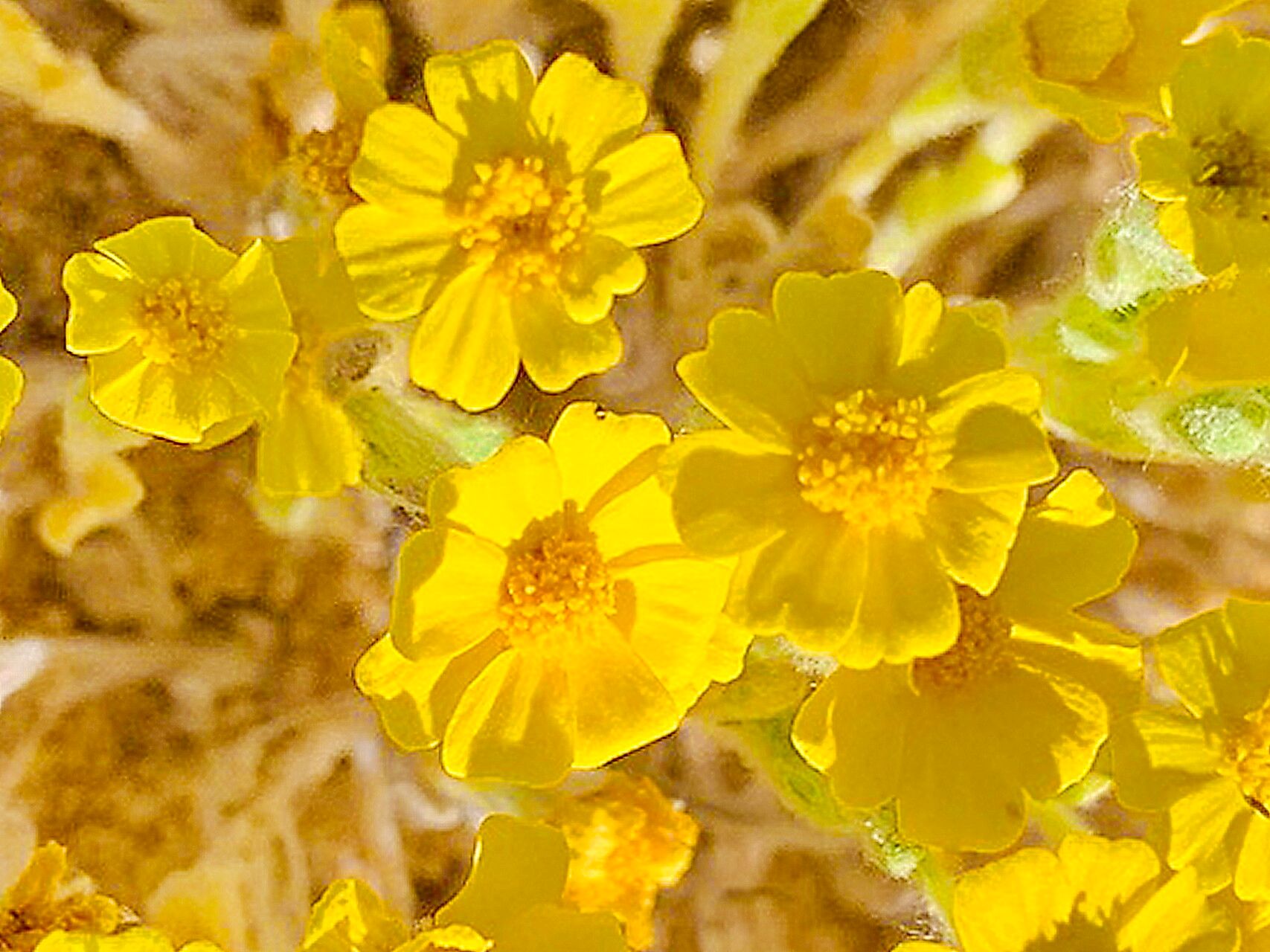
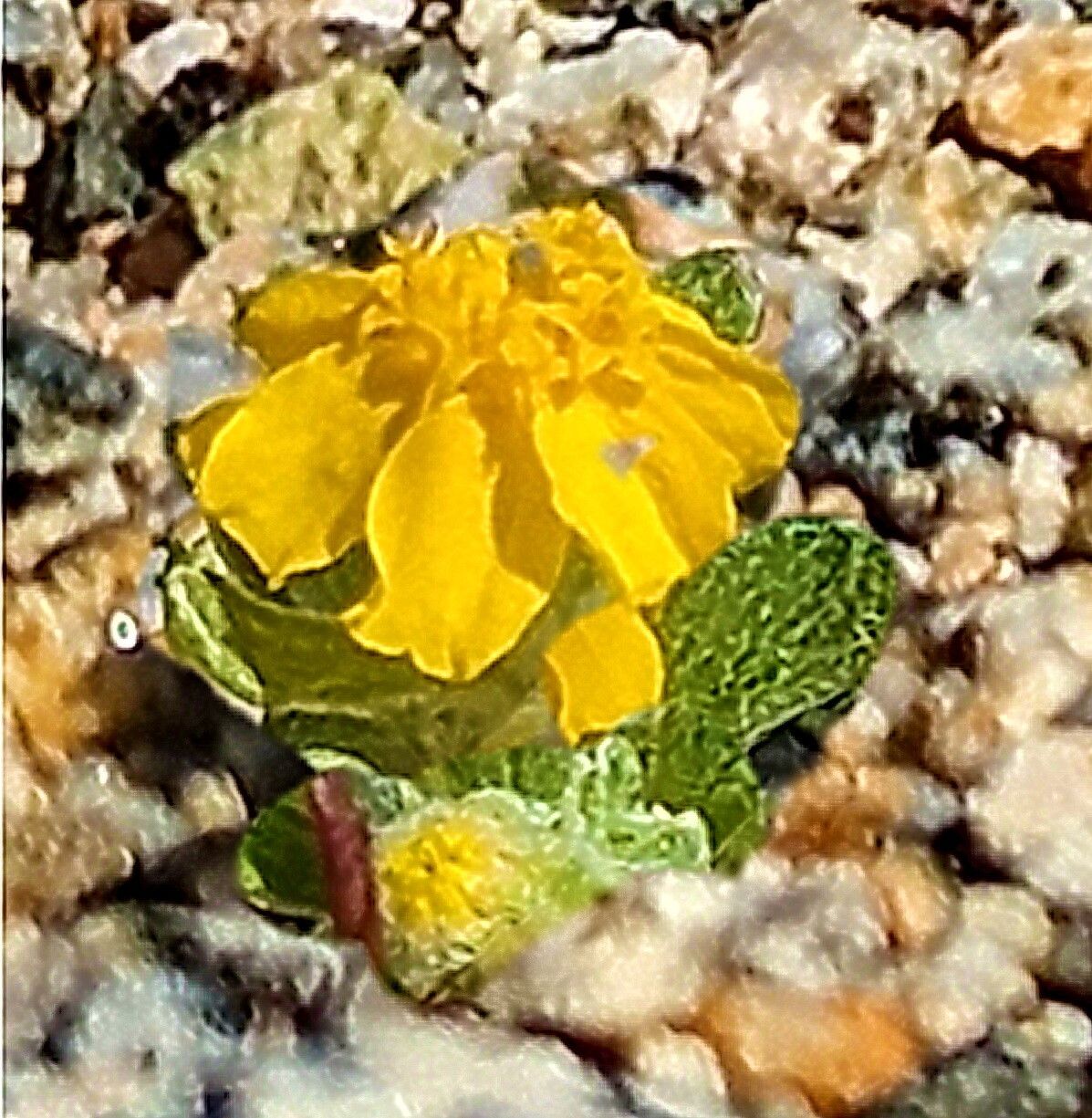
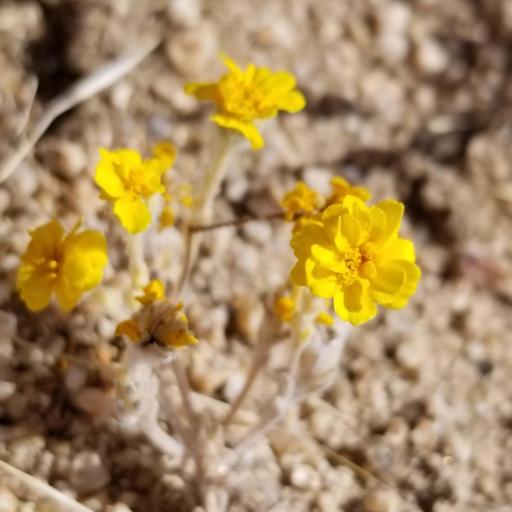
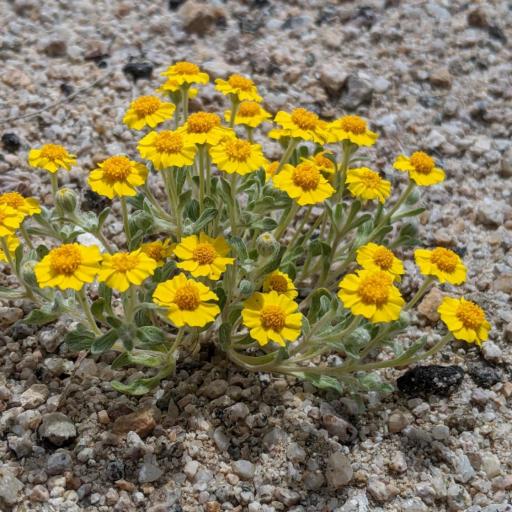
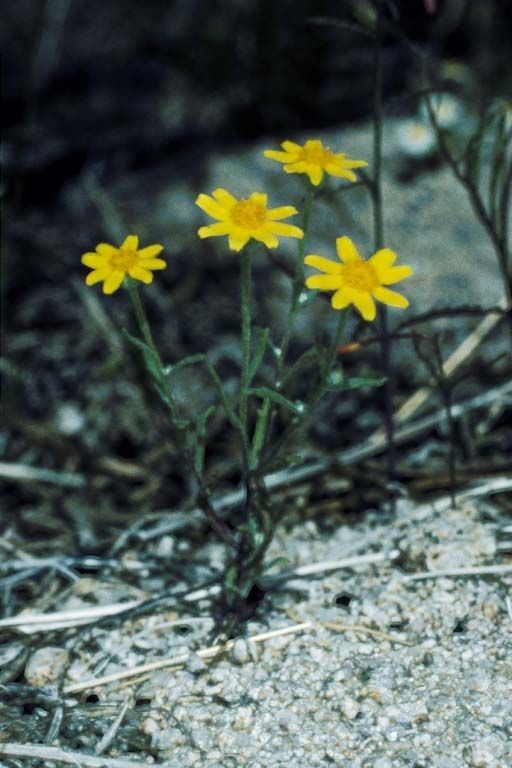
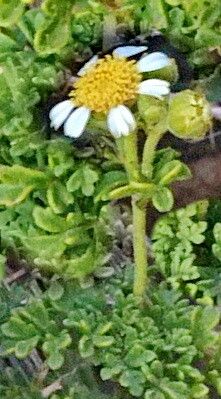
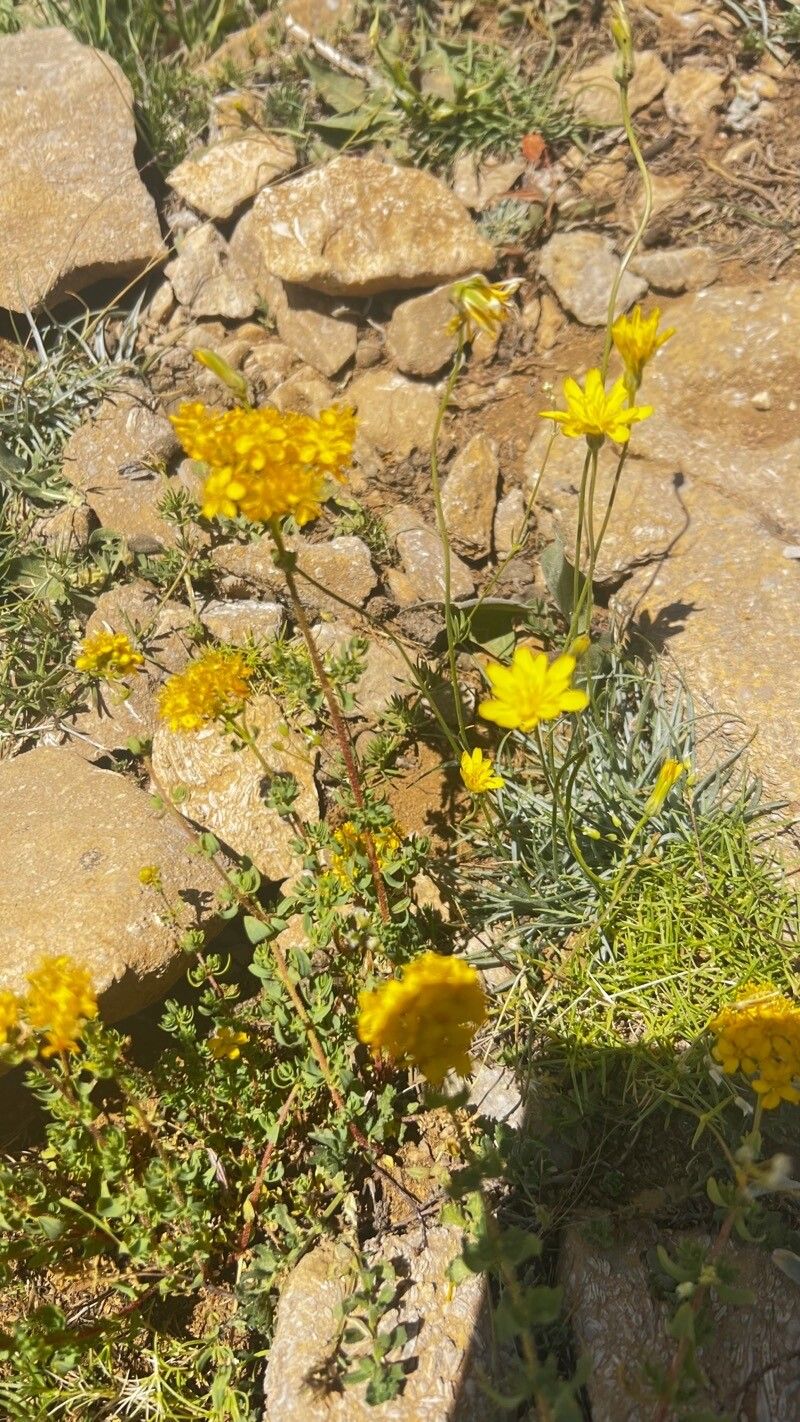
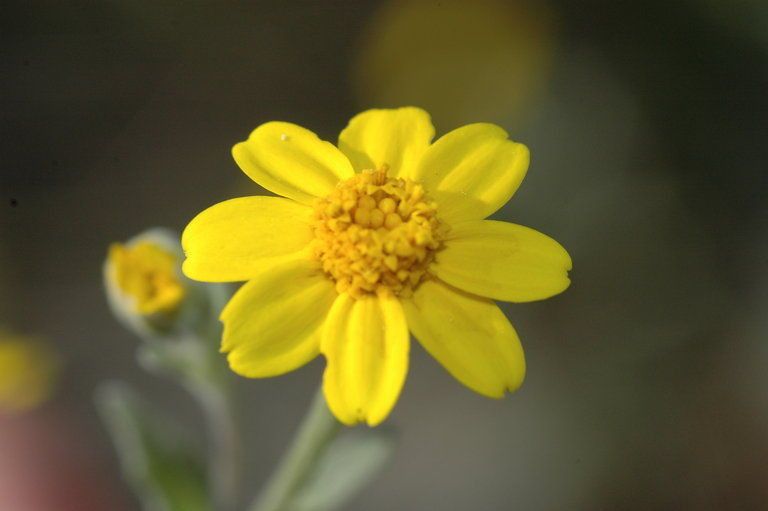
Eriophyllum wallacei is a North American flowering plant in the daisy family known by the common names woolly daisy and woolly easterbonnets. It grows in the southwestern United States (Arizona, Utah, Nevada, and California, with an isolated population in Wyoming) and northwestern Mexico (northern Baja California). Eriophyllum wallacei is a small, squat annual herb rarely more than 15 cm (6 in) tall. It may grow in clumps or on short erect stems in sand, rocks, and gravel. The plant is covered in masses of white cotton-candy-like wool. It has small oval leaves less than 2 cm (1 in) long. It produces flower heads one per stem, each head with florets 5–10 yellow or cream-colored ray florets, sometimes with red veins. These surround 20–30 yellow disc florets.
Woolly daisy is fairly resistant to disease and generally does not suffer from many illnesses. However, it can be vulnerable to pests and diseases present in its environment. These problems are typically not serious. For care, the plant needs moderate maintenance. It should be pruned regularly to preserve a neat appearance and healthy growth. Fertilizing can also encourage blooming. Woolly daisy is appropriate for anyone with outdoor space, like a garden or patio, and does not demand extensive care experience. It may need more attention if grown indoors.
How to keep Eriophyllum Wallacei.
Light
Woolly daisy comes from bright, open habitats and performs best in full sun. While it can handle some partial shade, it favors direct sunlight for optimal growth. This plant, which may be annual or biennial, is noted for its sun-loving habit.
Temperature
Woolly daisy is native to habitats where temperatures range from 68 to 100 °F (20 to 38 °C). It grows best within that span, and adjustments for normal seasonal changes are generally not necessary unless temperatures deviate significantly.
Fertilizer
When most of a Woolly daisy's blooms are fully open, resume fertilizing. At peak bloom, feed it again every three to four weeks, as the weather allows. Then, once the plant begins producing fewer new blooms, stop fertilizing; there's no reason to apply fertilizer when it can no longer make additional flowers.
Botanical profile.
- Plant Type
- Herb
- Life Cycle
- Annual
- Genus
- Eriophyllum
- Family
- Asteraceae
- Hardiness Zone
- 1-12
- Mature Height
- 15 cm
- Mature Spread
- 15 cm
- Leaf Color
- Green Yellow, Yellow Green
- Leaf Type
- Evergreen
- Flower Color
- Yellow
- Flower Size
- 0.76 cm to 1.02 cm
- Bloom Time
- Early spring, Mid spring
- Planting Time
- Spring, Summer
- Harvest Time
- Late spring, Early summer
- Native Area
- Mexico
Other names.