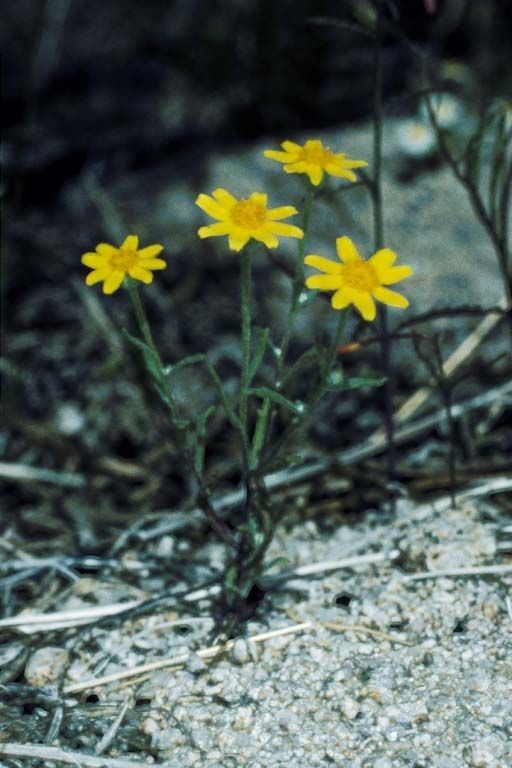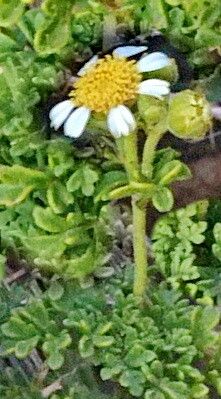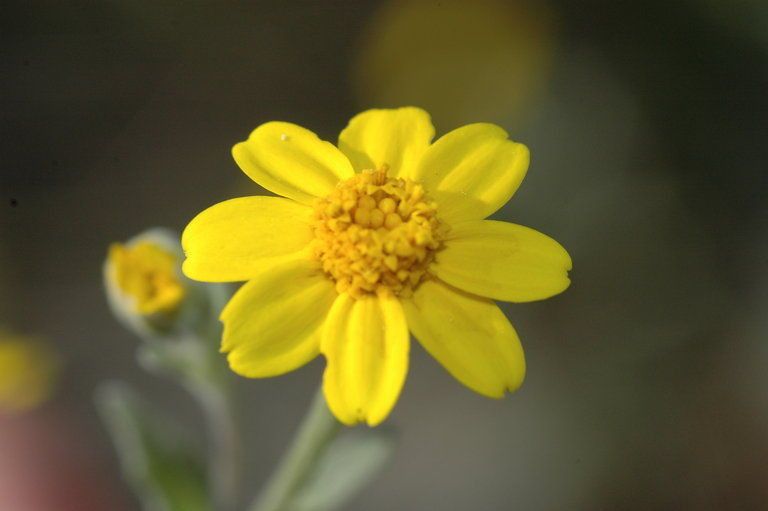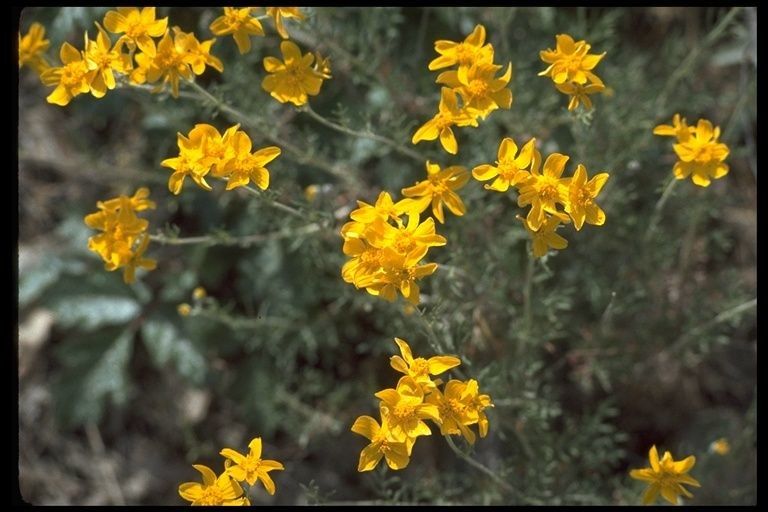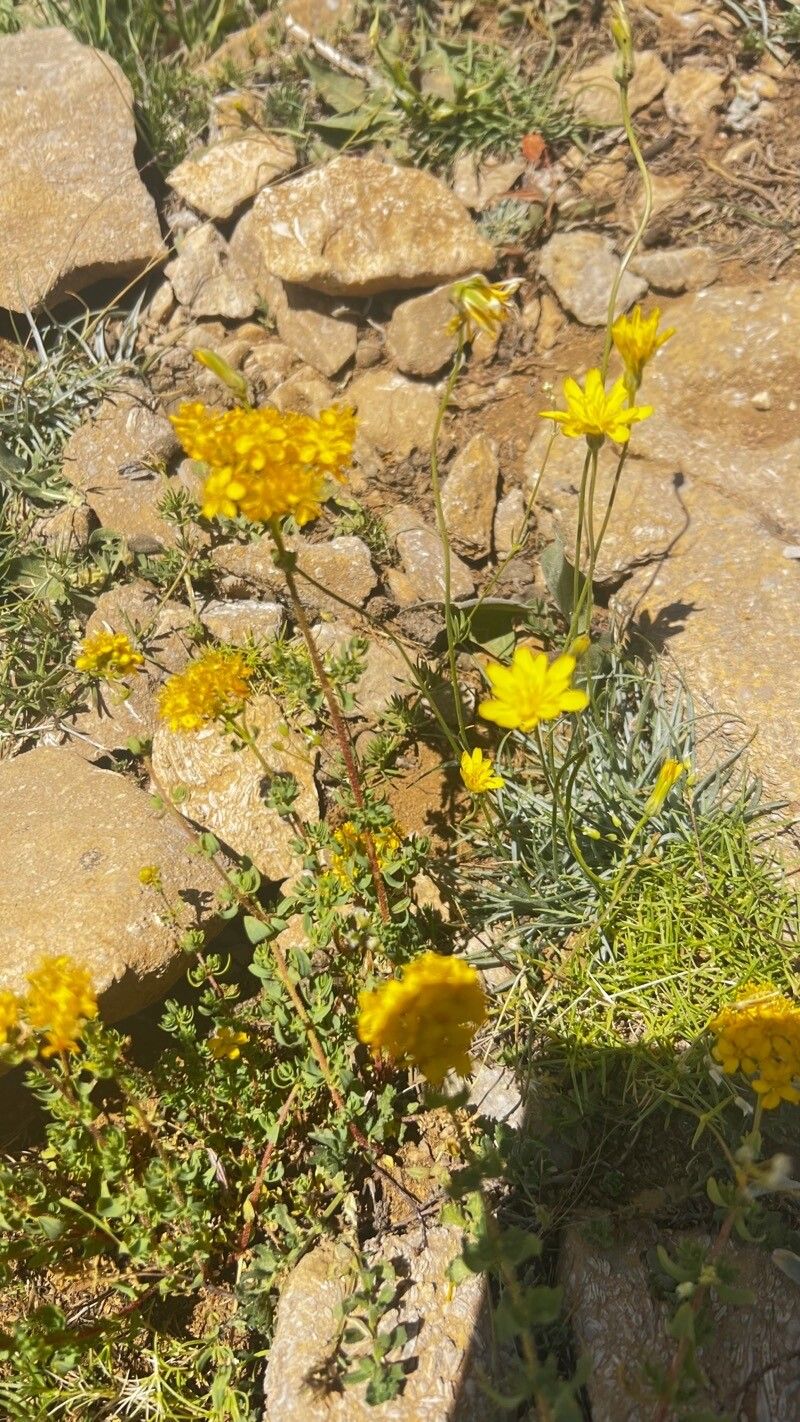
Eriophyllum confertiflorum, commonly called golden yarrow or yellow yarrow, is a North American species of plant in the family Asteraceae, native to California and Baja California. It has wooly leaves when young, and yellow flower heads. "Eriophyllum" means "wooly leaved."Eriophyllum confertiflorum gets its common name from the similar appearance of its inflorescence to the true yarrow, which has white flowers.
Golden Yarrow is resistant to disease and is generally unlikely to develop health problems. In terms of care, the plant is fairly low-maintenance. When grown outdoors it needs only minimal watering, and larger plants typically do not require pruning. Smaller plants, however, should be trimmed after they have finished blooming. Golden Yarrowt is appropriate for anyone with an outdoor area, such as a garden or deck, and does not demand much gardening experience.
How to keep Eriophyllum Confertiflorum.
Light
Golden Yarrow prefers a spot where it gets plenty of sunlight each day, encouraging vigorous growth. In its native habitat it did well with strong sun, producing compact, dense foliage. It can tolerate areas with less sun, though growth will be slower. Too little or too much light can result in stunted growth, lacklustre bloom, or scorched leaves.
Water
Golden Yarrow, native to arid regions, is remarkably drought-tolerant and needs watering only once every one to two weeks. It thrives in dry climates and prefers well-draining soil, which supports its minimal water needs and helps prevent root rot.
Temperature
Golden Yarrow is native to areas with temperatures ranging from 59 to 100.4 °F (15 to 38 °C). It favors milder climates. Because of seasonal and local temperature variations, careful monitoring and adjustments to its environment can be helpful.
Fertilizer
Timing is essential when fertilizing Golden Yarrow. Apply fertilizer in early spring and repeat monthly through early summer. Fertilizer encourages attractive blooms and supplies energy during both dormancy and active growth.
Pruning
Golden Yarrow is a vibrant perennial plant known for its clusters of yellow flowers. It requires regular maintenance to thrive. To ensure the plant stays healthy and continues to flower, it's important to prune it in early spring. This involves removing any dead stems and spent blooms to improve air circulation and encourage continuous blooming. With proper care, Golden Yarrow will produce lush displays throughout the growing season, making it a standout feature in your garden.
Botanical profile.
- Plant Type
- Shrub
- Life Cycle
- Perennial
- Genus
- Eriophyllum
- Family
- Asteraceae
- Hardiness Zone
- 7-11
- Mature Height
- 30 cm to 91 cm
- Mature Spread
- 0.3 m to 1.52 m
- Leaf Color
- Bronze
- Leaf Type
- Semi-evergreen
- Flower Color
- Yellow
- Flower Size
- 1.02 cm
- Bloom Time
- Late spring, Early summer, Mid summer
- Planting Time
- Spring, Summer, Autumn
- Harvest Time
- Mid summer
- Native Area
- Mexico
Other names.
Reader questions.
What are the sunlight requirements for Golden Yarrow?
Golden Yarrow thrives in conditions where it can receive full sun, which is defined as above 6 hours of sunlight daily. It can also grow in partial sun, about 3-6 hours of sunlight daily. Observing how sunlight moves through your garden will help in choosing spots that offer the right balance for your plants. Golden Yarrow's original habitat was under a dominant sun, leading to compact and rich foliage. However, less sun exposure results in slower growth. Extreme conditions of too little or too much light may cause stunted growth, poor bloom, or leaf burn.
What is the ideal temperature range for Golden Yarrow?
Golden Yarrow thrives in regions that experience temperatures ranging from 59 to 100.4 °F (15 to 38 °C), exhibiting a preference for milder climates. Although it possesses strong resistance to cold, it is vital to monitor and adjust its environment carefully depending on seasonal and local temperature fluctuations to ensure its well-being.
Can artificial lighting support the growth of indoor Golden Yarrow plants?
Yes, artificial lighting can be a vital solution for indoor Golden Yarrow plants, especially when natural sunlight is insufficient. LED lights are popular for providing specific wavelengths needed for plant growth. Full sun plants require 30-50W/sq ft of artificial light, partial sun plants need 20-30W/sq ft, and full shade plants require 10-20W/sq ft. The light source should be placed 12-36 inches above the plant to mimic natural sunlight, and plants typically need 8-12 hours of light per day.
How should Golden Yarrow be cared for during winter?
During winter, it is generally not necessary to take special frost protection measures for Golden Yarrow due to its strong cold resistance. However, if temperatures are expected to drop below -15°C, it is important to provide cold protection by wrapping the trunk and branches with materials such as non-woven fabric or cloth. Additionally, prior to the first freeze in autumn, the plant should be watered abundantly to ensure the soil remains moist and enters a frozen state, preventing drought and water scarcity for the plant during winter and early spring.
What are the signs of inadequate light exposure in Golden Yarrow?
Symptoms of light deficiency in Golden Yarrow include smaller new leaves compared to older ones, leggy or sparse growth, faster leaf drop, slower or no growth, lighter-colored new leaves, chlorosis (leaves turning yellow), sunscald (damaged areas on the plant tissue), leaf curling, wilting, and leaf scorching. Such symptoms suggest the plant is not receiving optimal light conditions for its health and growth.
What are the symptoms of Golden Yarrow being affected by low temperatures, and what are the solutions?
Golden Yarrow is cold-tolerant, best kept above 15°C during winter and should remain above -10°C. If the temperature falls below -15°C, the branches may become brittle and dry by spring, and no new shoots will emerge, though there may not be noticeable changes during winter. In such cases, it is recommended to prune away any dead branches that have failed to produce new leaves in spring as a solution.
How can I remedy the light conditions for Golden Yarrow plants?
To optimize growth for indoor Golden Yarrow, gradually move the plants to a sunnier location each week until they receive at least 6 hours of direct sunlight daily. Utilize south-facing windows and consider artificial lighting if moving the plant is not feasible. For outdoor plants, also move them gradually to prevent shock from sudden light intensity changes. If plants are blocked by obstructions like trees, pruning can help improve sunlight access. For smaller plants, transplantation during the dormant period to a location with ample sunlight and good drainage can be beneficial. It's important to note that parts of the plant damaged by insufficient sunlight may not recover, but new growth should be healthy.
How does Golden Yarrow respond to high temperatures, and what measures should be taken?
In summer, Golden Yarrow should be kept below 38°C. Exposure to temperatures exceeding 43°C may result in the leaves becoming lighter in color, tips drying and withering, and increased susceptibility to sunburn. To mitigate these effects, trim away the sunburned and dried-up parts. Move the plant to a location with shade from the midday and afternoon sun or use a shade cloth to create shade. Additionally, water the plant in the morning and evening to keep the soil moist.