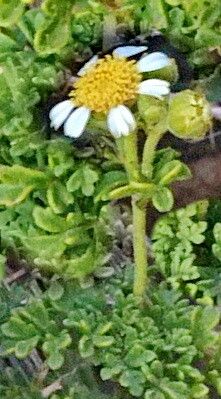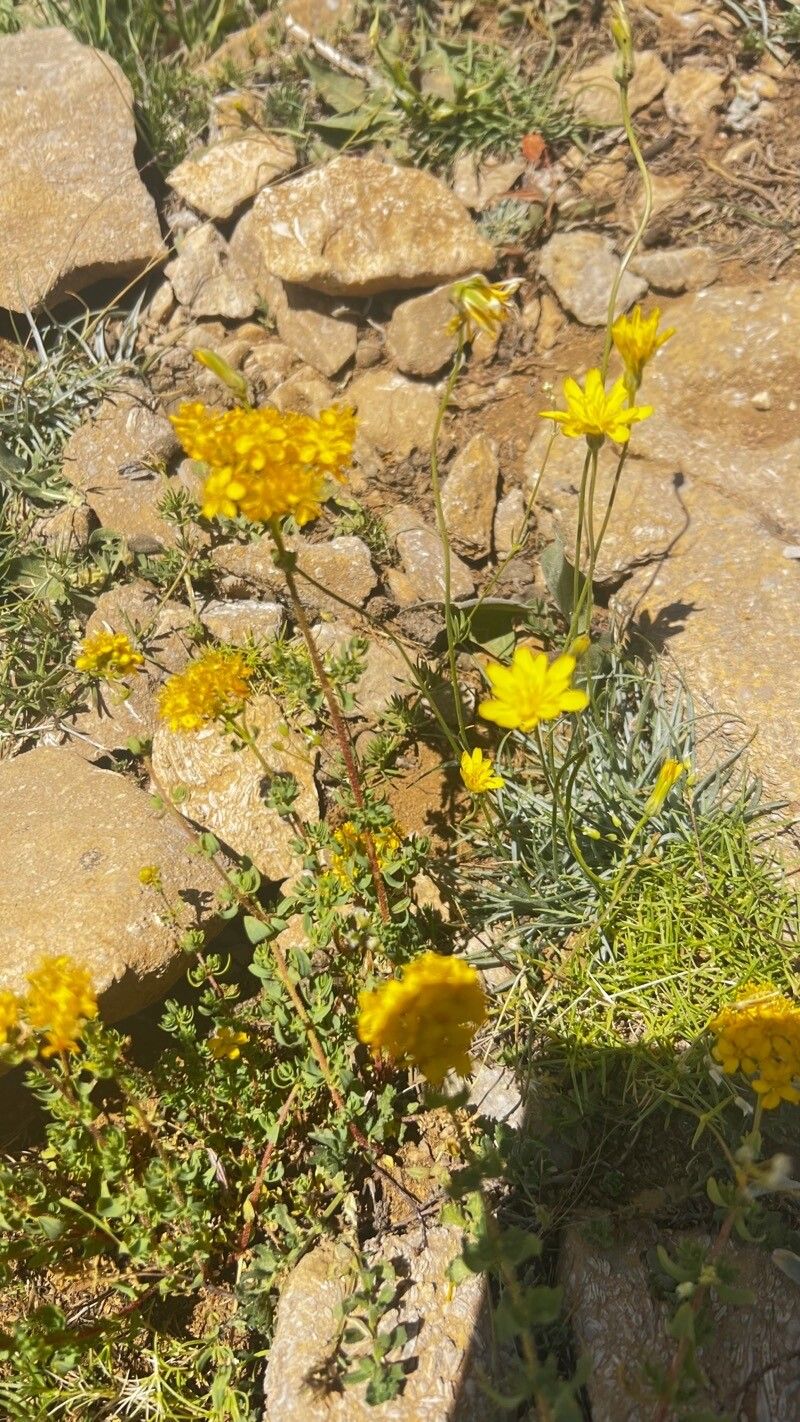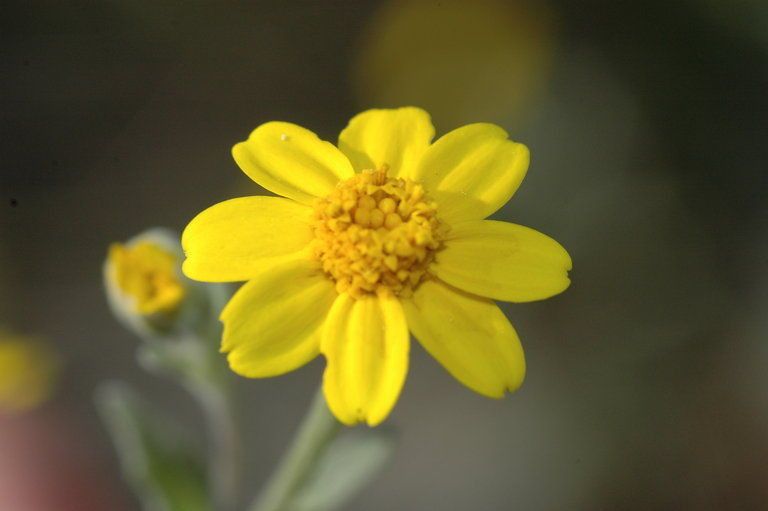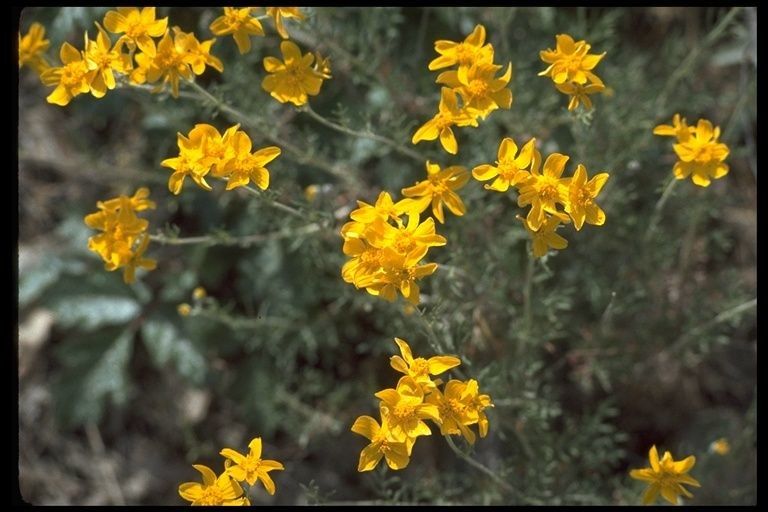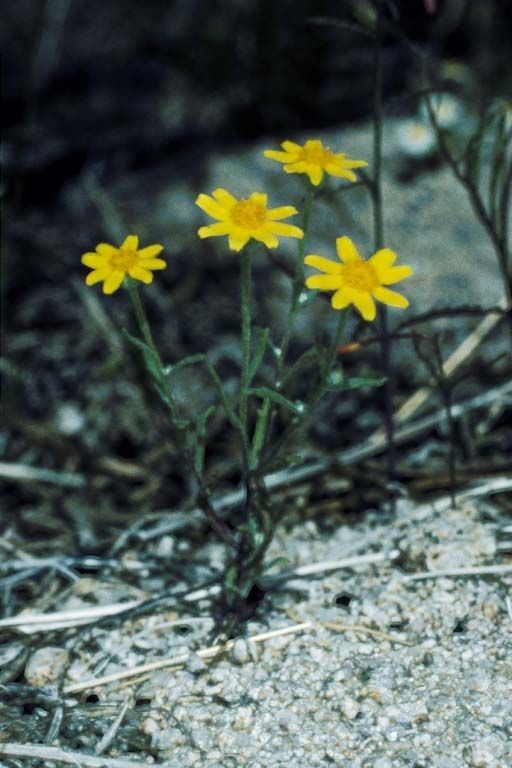
Eriophyllum ambiguum is a species of flowering plant in the family Asteraceae known by the common name beautiful woolly sunflower. It is native to the deserts and adjacent hills of southern and eastern California, northwestern Arizona, and southern Nevada.Eriophyllum ambiguum grows in chaparral, woodlands, and desert habitat. It is an annual herb growing decumbent or upright with stems up to 30 centimeters (1 foot) long. The leaves are widely lance-shaped or oblong and sometimes have lobes, with woolly hairs on both sides. The inflorescence produces one flower head containing many yellow disc florets and 6 to 10 yellow, white, or bicolored ray florets which are each 2 millimeters to one centimeter (0.08-0.40 inches) long. The fruit is a rough-haired achene which may have a very small pappus. VarietiesEriophyllum ambiguum var. ambiguum - California, mostly in Kern County Eriophyllum ambiguum var. paleaceum (Brandegee) Ferris - California, Nevada, Arizona
Beautiful woolly sunflower has strong disease resistance and is generally not prone to illnesses. However, it can be affected by pests and diseases present in its environment. These problems are typically mild. Regarding care, this plant requires moderate maintenance. It should be pruned on a regular basis to preserve a neat appearance and healthy growth. Applying fertilizer can also encourage more blooms. Beautiful woolly sunflower is well suited for anyone with outdoor space, such as a garden or patio, and does not demand extensive gardening experience. It may need extra attention if cultivated indoors.
How to keep Eriophyllum Ambiguum.
Fertilizer
Beautiful woolly sunflower benefits from regular, weak applications of fertilizer to encourage healthy leaf growth. You should fertilize Beautiful woolly sunflower about once a month during the summer months. Nitrogen is essential for foliage, and providing nitrogen-rich sources helps Beautiful woolly sunflower thrive.
Pruning
The beautiful woolly sunflower is known for its vibrant yellow blooms and its ability to withstand drought. To encourage growth, improve air circulation, and boost flowering, it is best to prune the plant from early to late spring. Light pruning helps maintain its shape and vitality, while heavy pruning can stress the plant and affect its health and appearance.
Botanical profile.
- Plant Type
- Herb
- Life Cycle
- Annual
- Genus
- Eriophyllum
- Family
- Asteraceae
- Hardiness Zone
- 7-11
- Leaf Type
- Evergreen