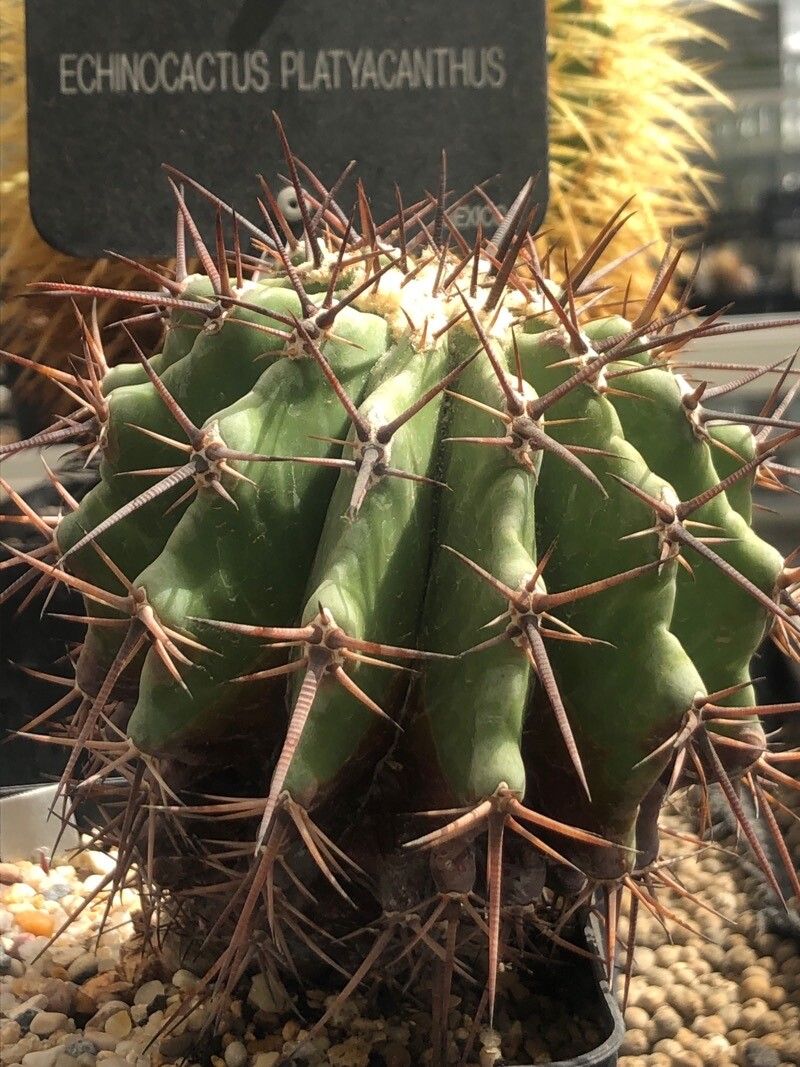
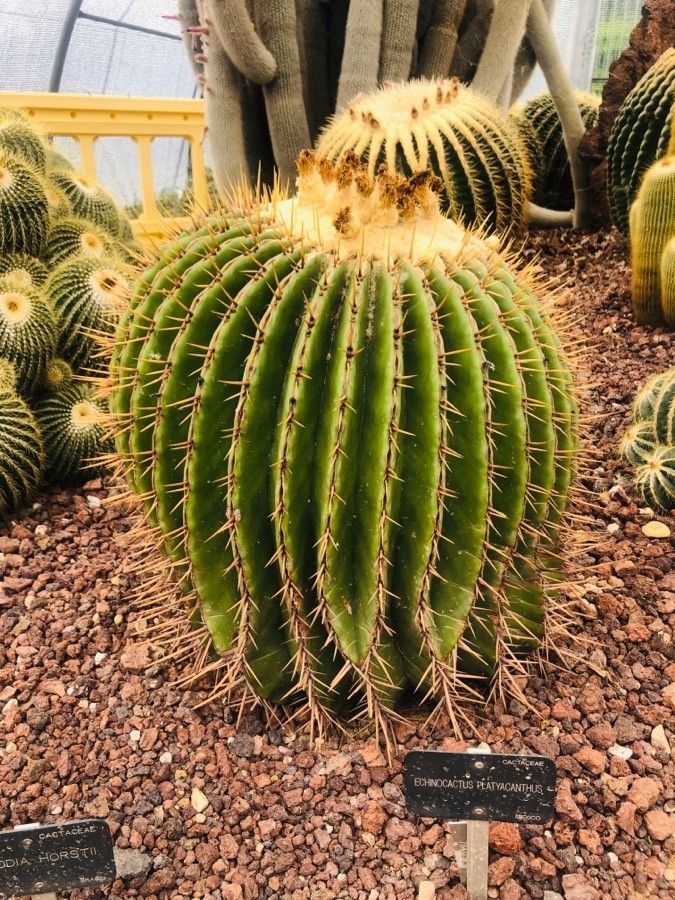
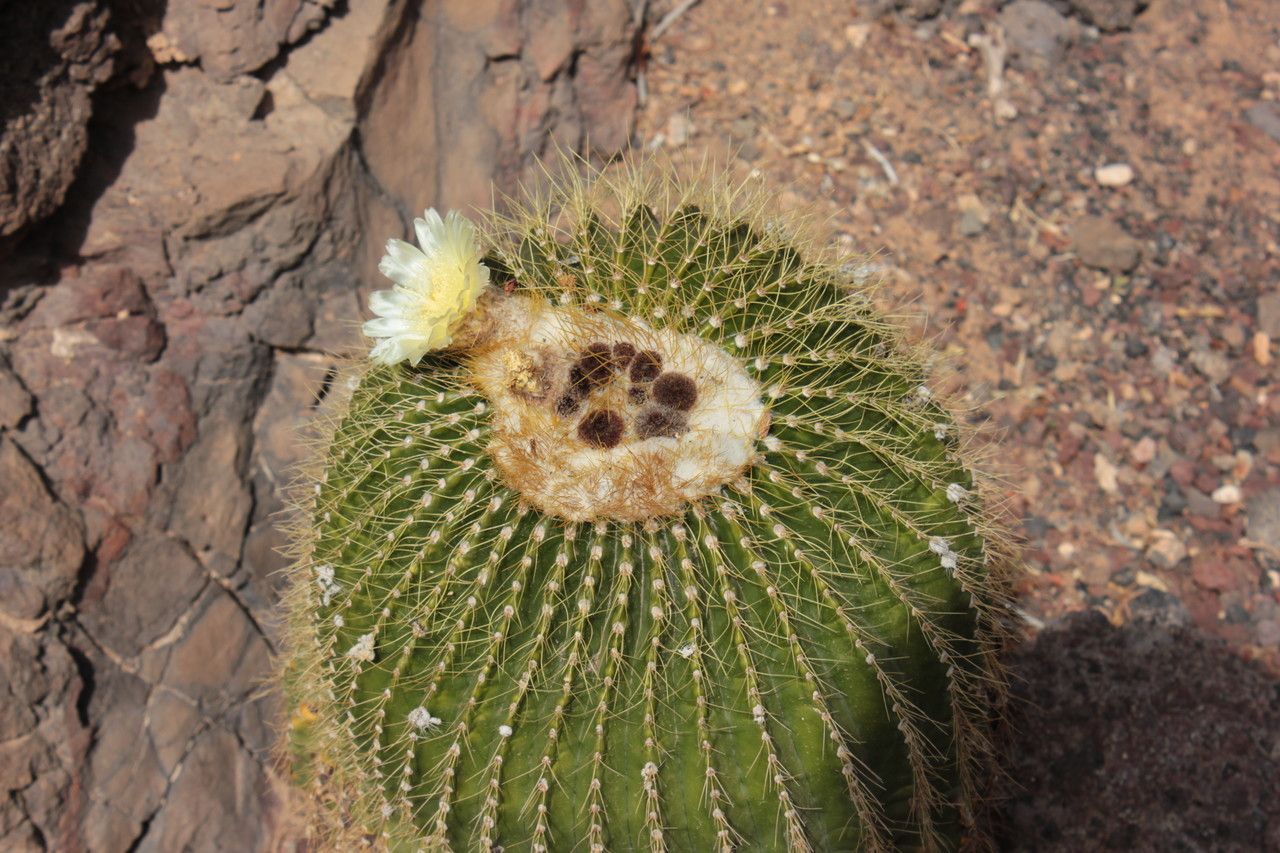
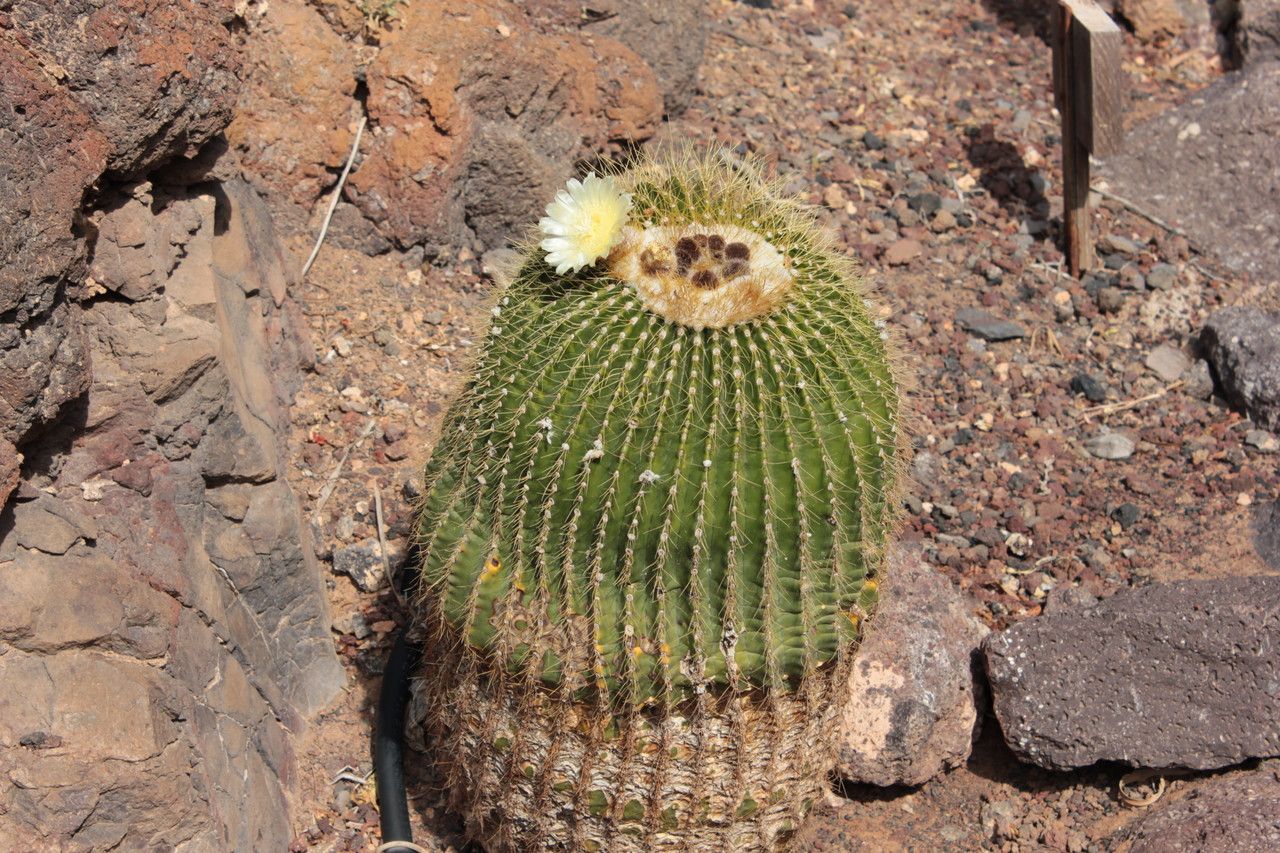
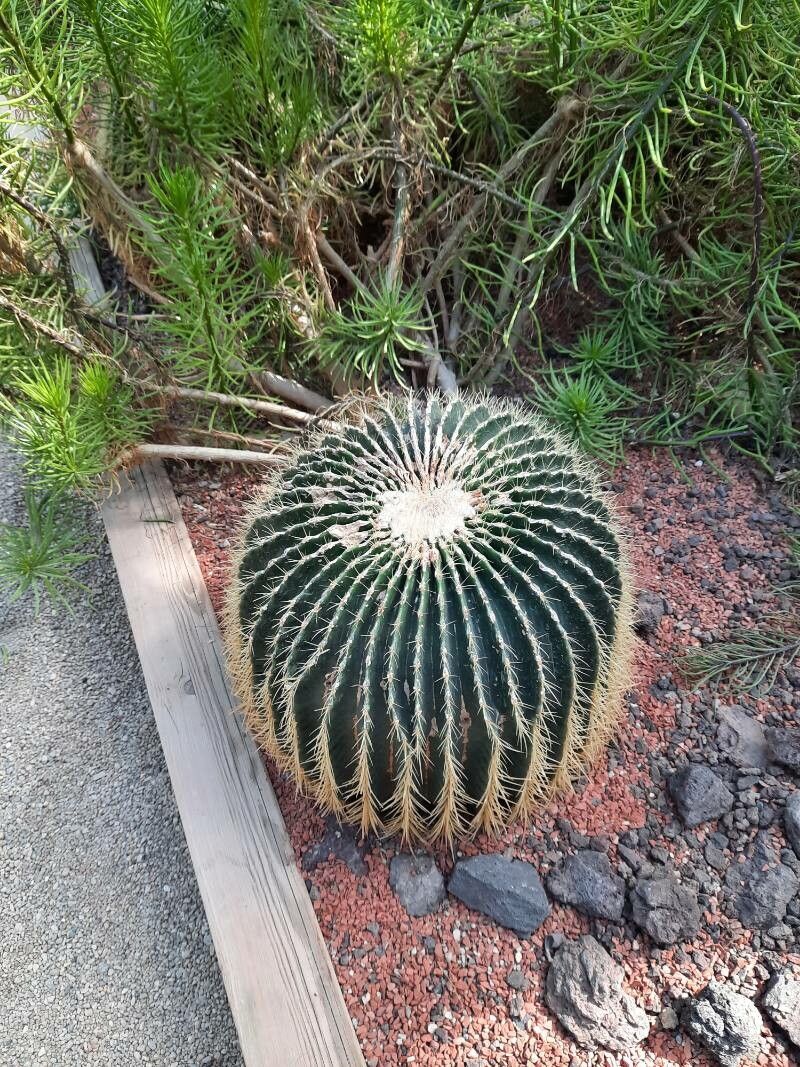
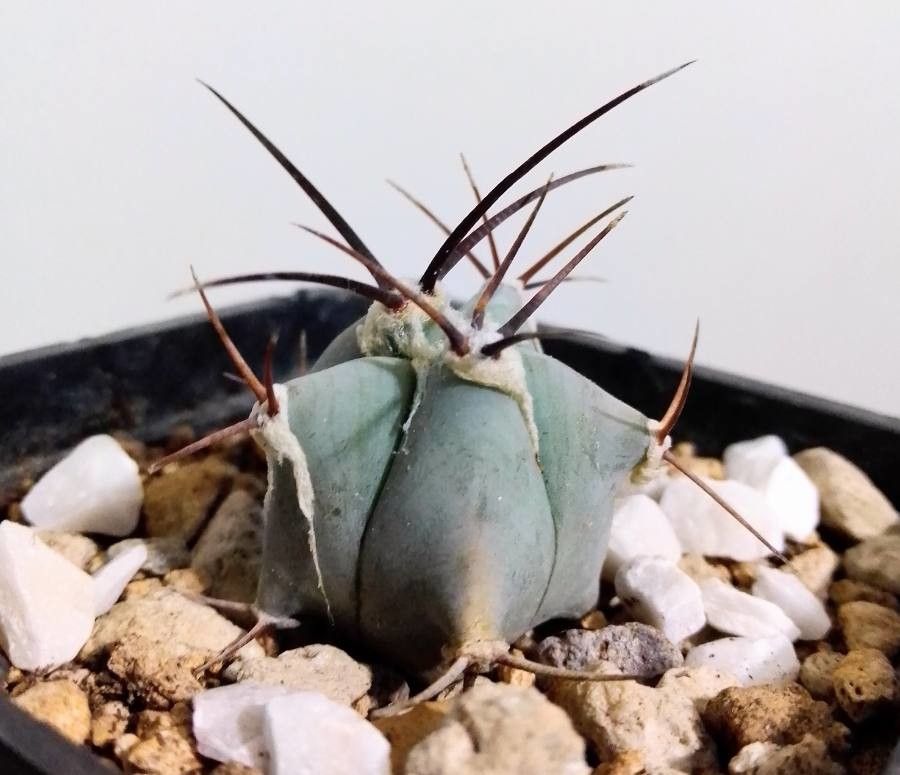
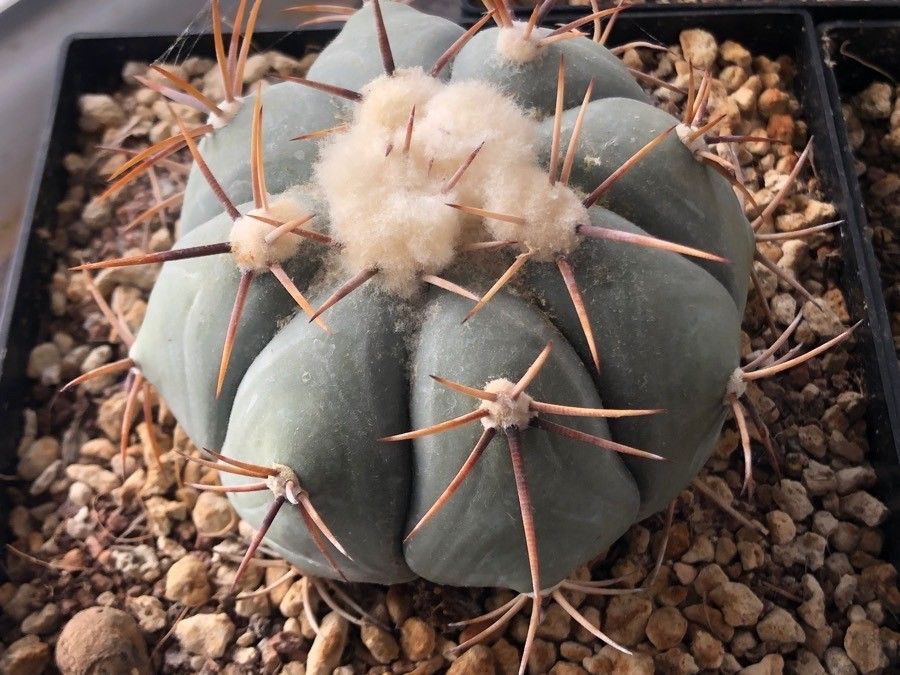
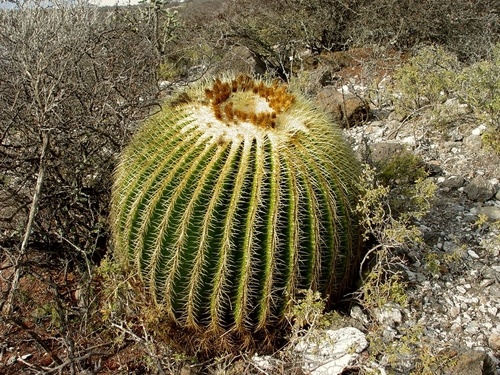
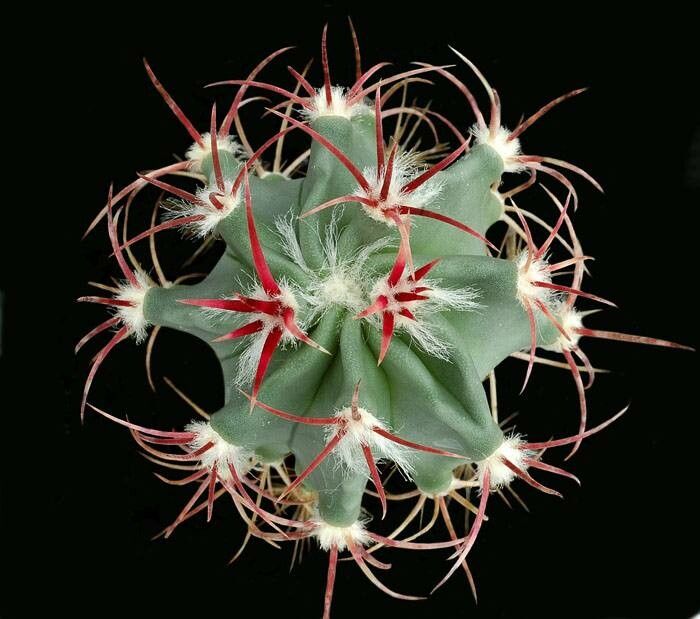
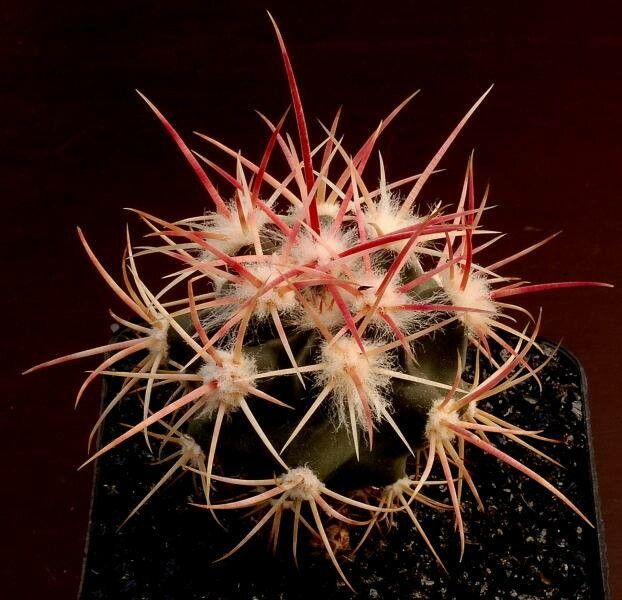
Echinocactus platyacanthus, commonly known as the giant barrel cactus, is a species native to Mexico. This slow-growing cactus can reach up to 3 meters (nearly 10 feet) in height and 1.5 meters (about 5 feet) in diameter. It has a cylindrical shape characterized by pronounced ribs and large spines that can grow up to 10 centimeters (around 4 inches) long.
In the summer months, the giant barrel cactus blooms with large yellow flowers, followed by edible fruit often utilized by local communities for both food and medicinal purposes.
This cactus species thrives in well-drained soil and full sun, making it ideal for arid regions with hot climates. It is drought-tolerant and can endure long periods without water.
The giant barrel cactus's unique appearance has made it popular among succulent plant collectors worldwide. However, it is important to note that this species is protected under Mexican law due to its endangered status, driven by habitat loss from human activities such as agriculture and urbanization.
Overall, Echinocactus platyacanthus plays a crucial ecological role in its native habitat and offers aesthetic value to those who appreciate its beauty as a decorative plant.
Giant barrel cactus has strong resistance to disease and typically endures regular care without becoming ill easily. That said, it can be vulnerable to mealybugs; these pests may inflict some harm but are usually not a major danger. Regarding care, Giant barrel cactus is drought-tolerant and does not require frequent watering. It tolerates extended intervals without water and needs little fertilizer. However, if kept in poor light and given too much water, it is very prone to root rot. In general, Giant barrel cactus is a good choice for people who prefer low-maintenance plants, though it remains important to know and satisfy its basic needs. It is especially appropriate for those who are away for long stretches and might forget to water regularly.
How to keep Echinocactus Platyacanthus.
Light
Native to arid regions, the Giant barrel cactus does best in full sun, since its native habitat features intense sunlight and scant shade. It also tolerates partial sun, giving it some flexibility in how it grows.
Water
The giant barrel cactus is drought-tolerant and only requires watering when the soil is completely dry. From spring to fall, water weekly to keep the soil slightly moist, but reduce this to once a month during the winter. Use rainwater or distilled water to avoid soil compaction, and ensure that water doesn't touch the stem to prevent rot.
Temperature
The giant barrel cactus does best in warm settings and needs warmer temperatures during the growing season to support its growth and metabolism. It prefers abundant sunlight, suitable moisture levels, and good air circulation. However, it can be damaged by very low temperatures and by overwatering. Maintaining a balance is important, and extreme heat or excessively dry conditions should also be avoided.
Fertilizer
Light doses of fertilizer once or twice a year during the growing season are sufficient for Giant barrel cactus. Avoid fertilizing in winter and summer when it is dormant. Reduce the amount of fertilizer for repotted plants and wait a couple of months after repotting before applying fertilizer. Fertilizing promotes healthy growth and encourages blooms.
Pruning
The giant barrel cactus is known for its distinctive spherical shape and ribbed surface. To promote healthy growth, prune it in early spring by removing damaged segments at the base. Be sure to use sterilized tools to prevent infections, and wear gloves for protection. Regular pruning not only enhances the cactus's appearance and health, but also improves sunlight exposure and air circulation.
Botanical profile.
- Plant Type
- Succulent
- Life Cycle
- Perennial
- Genus
- Echinocactus
- Family
- Cactaceae
- Hardiness Zone
- 9-11
- Mature Height
- 0 cm to 7 cm
- Mature Spread
- 49 cm
- Leaf Color
- Green, Dark Green
- Leaf Type
- Evergreen
- Flower Color
- Yellow, Pink
- Flower Size
- 5.08 cm to 6.35 cm
- Bloom Time
- Summer
- Planting Time
- Spring, Summer
- Harvest Time
- Late summer, Early fall, Mid fall
- Native Area
- Mexico
Other names.
Reader questions.
What is the scientific name of the Giant barrel cactus?
The scientific name of the Giant barrel cactus is Echinocactus platyacanthus. This species belongs to the genus Echinocactus, which encompasses a variety of cactus plants known for their impressive sizes and distinctive shapes.