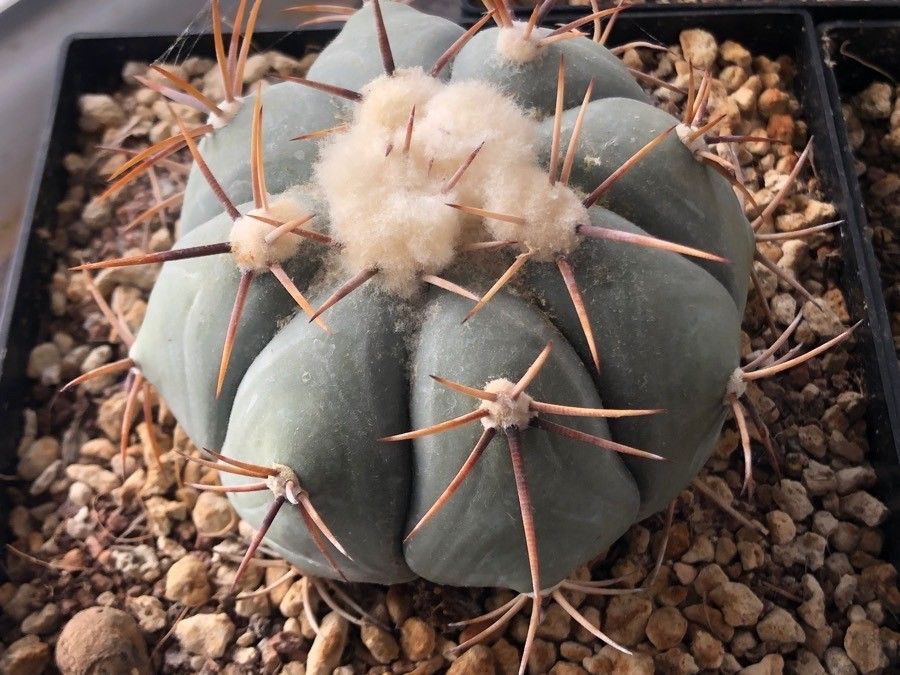
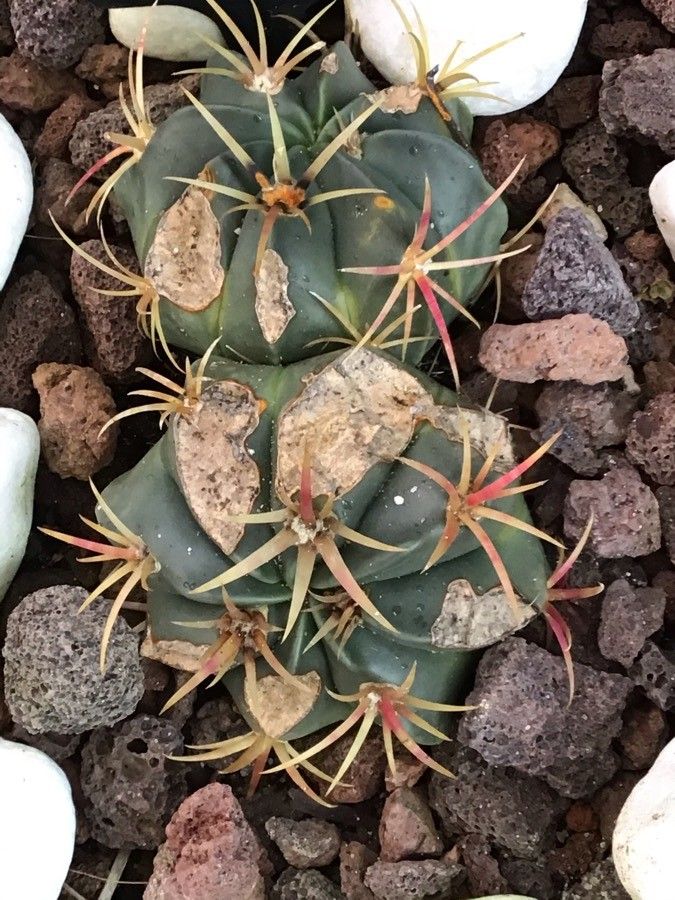
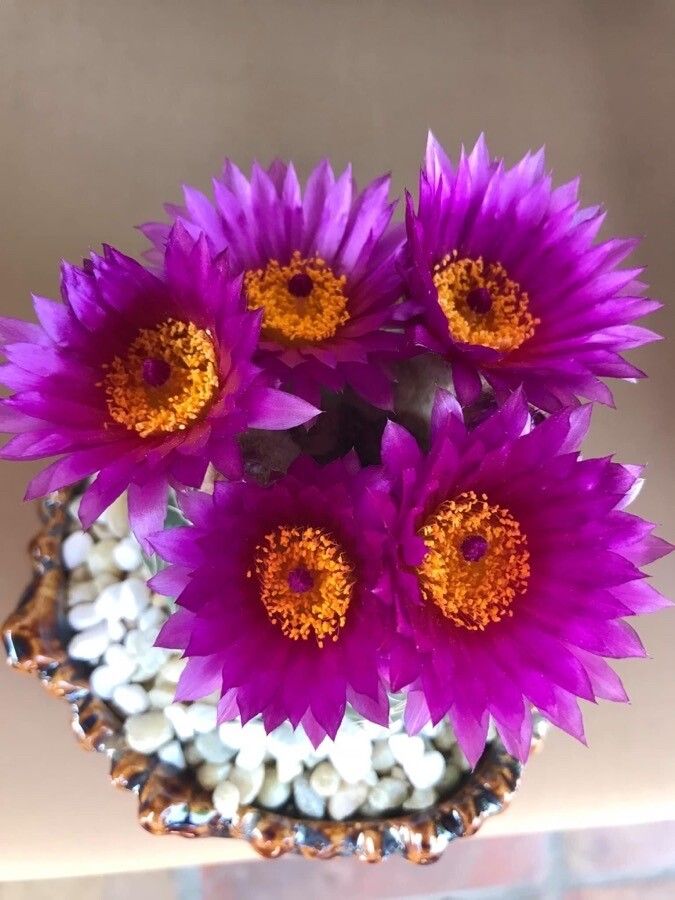
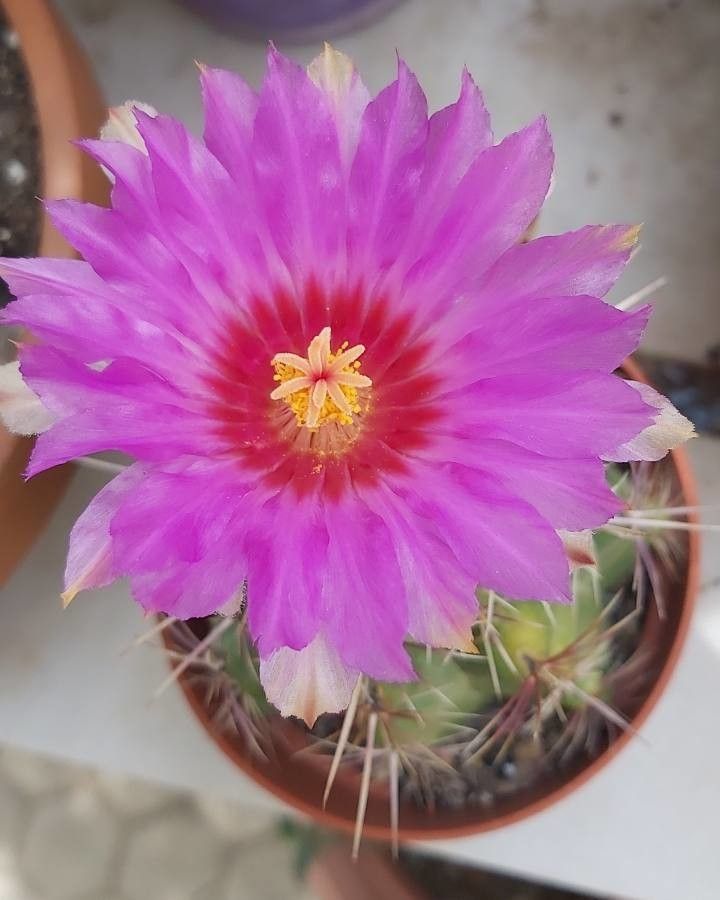
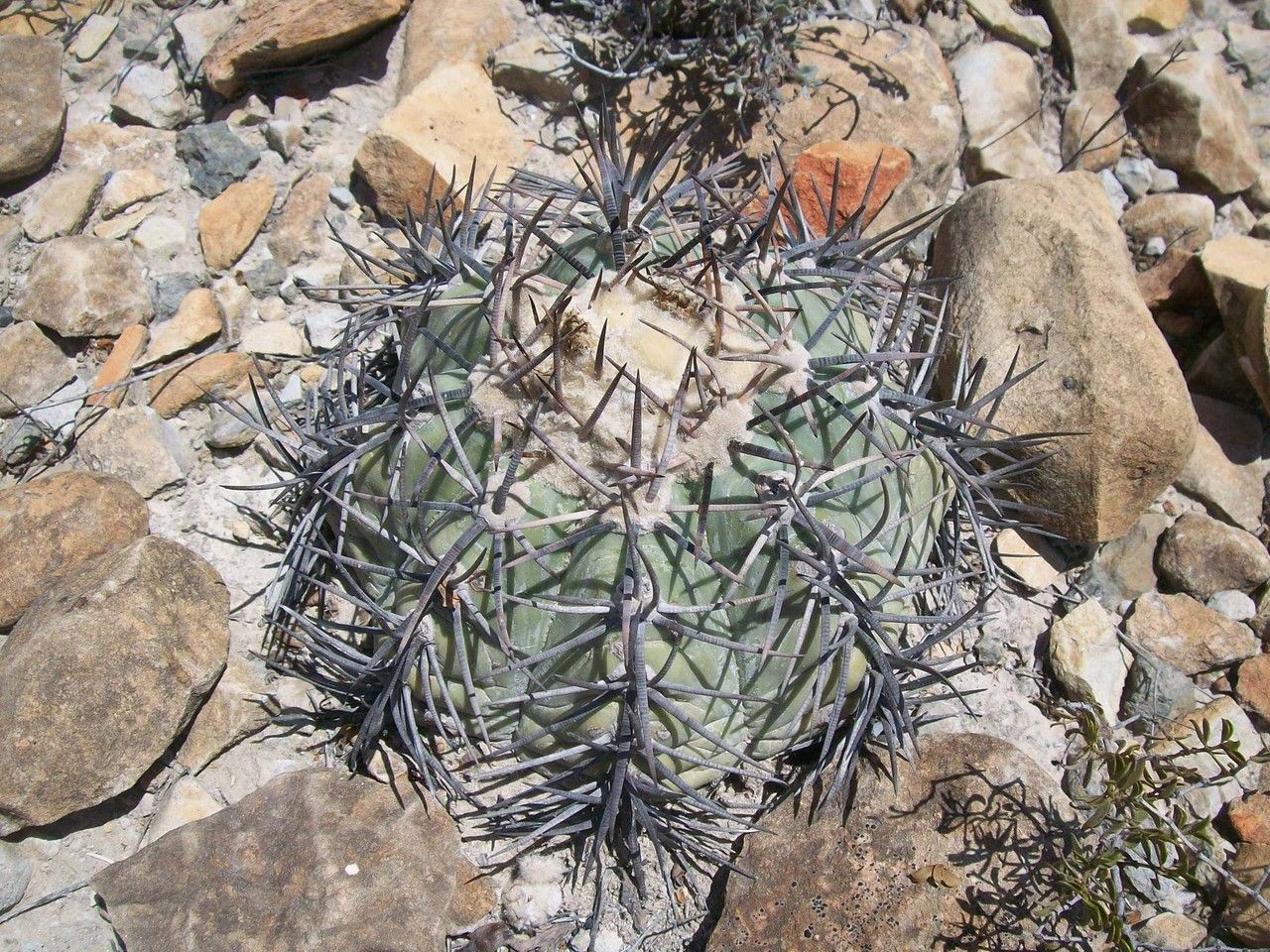
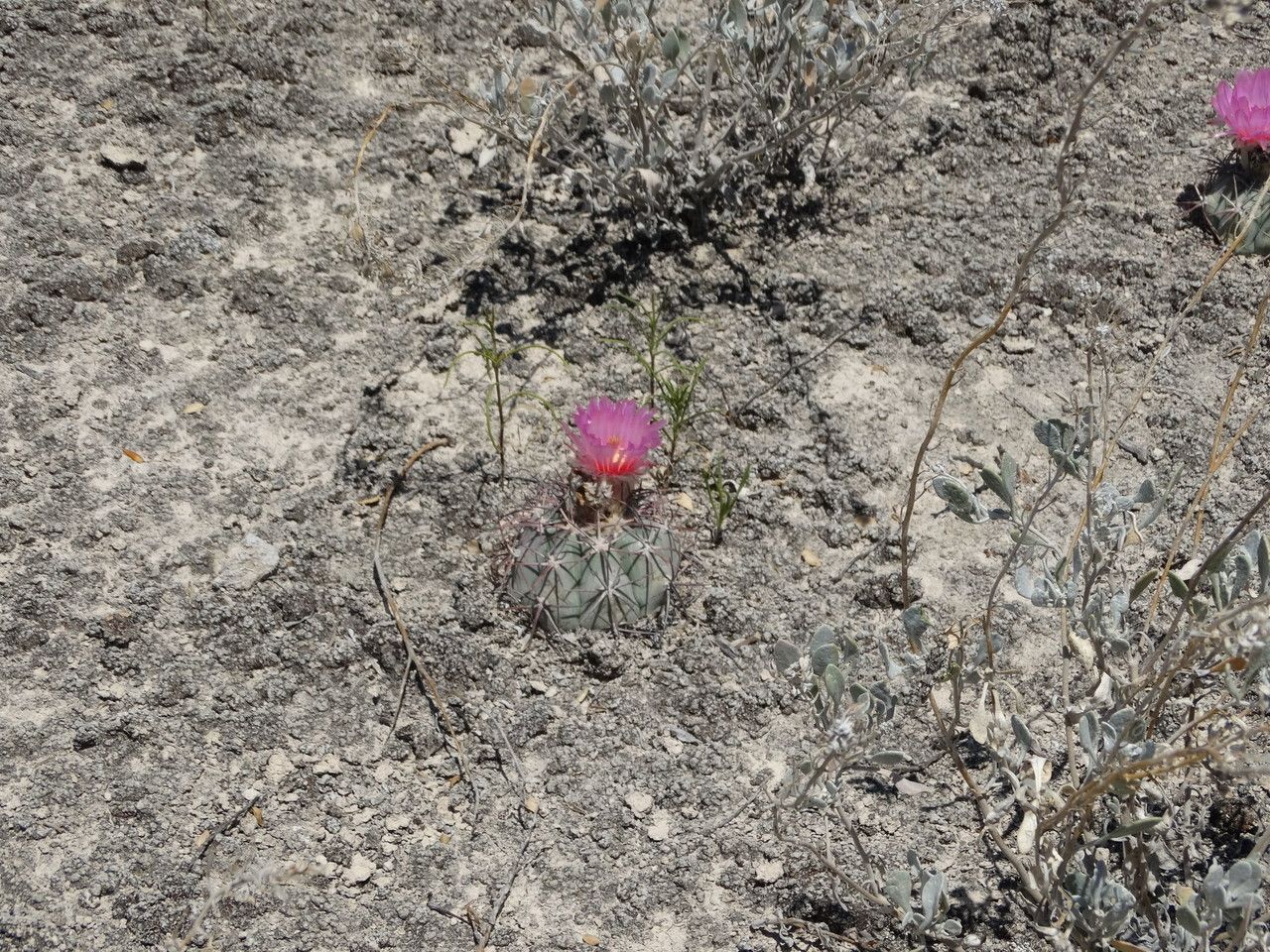
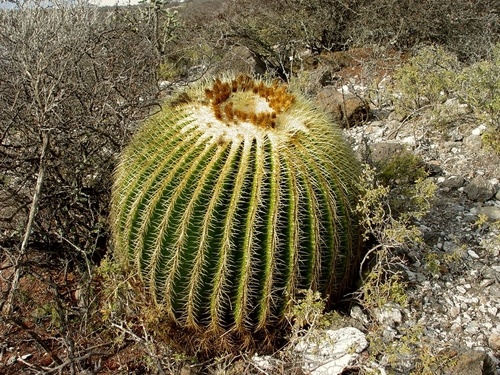
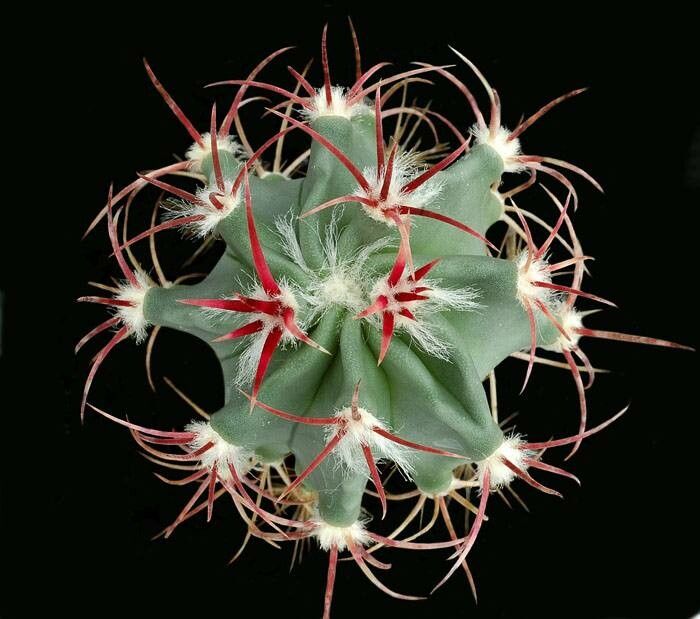
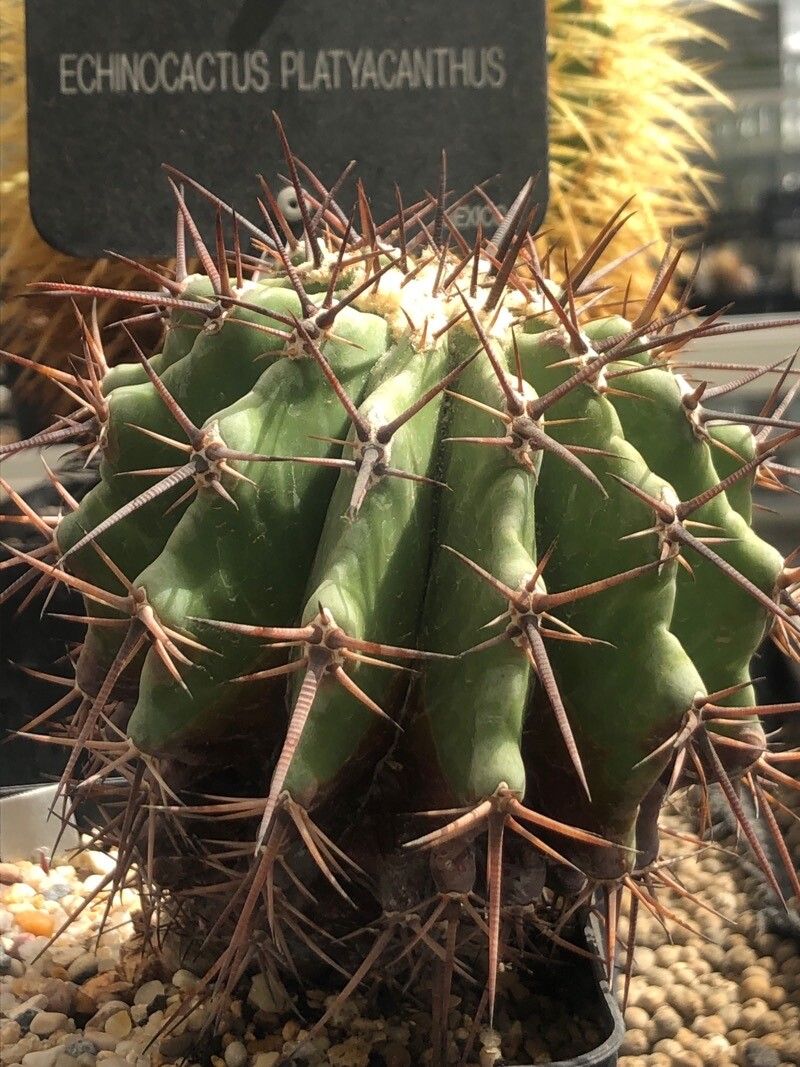
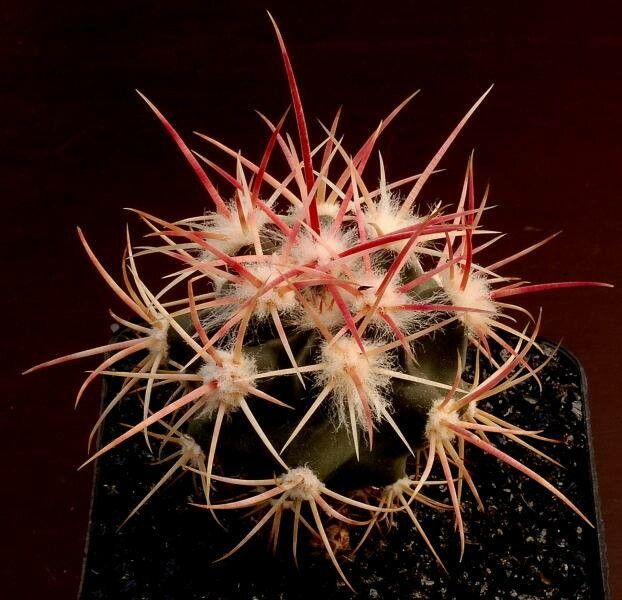
Echinocactus horizonthalonius is a species of cactus known by several common names, including devilshead, turk's head cactus, blue barrel cactus, eagle's claw, horse maimer, horse crippler, and visnaga meloncillo. It is native to the southwestern United States and northern Mexico, where it occurs in Chihuahuan Desert and Sonoran Desert habitats, particularly on limestone substrates. One of its varieties is a federally listed endangered species of the United States.
Devilshead shows strong resistance to disease and typically tolerates routine care without falling ill easily. It can, however, be prone to mealybugs; these pests may cause some harm but are usually not a major danger. Regarding care, Devilshead is drought-tolerant and does not require frequent watering. It can endure extended intervals without water and needs little fertilizer. That said, it is very vulnerable to root rot when lighting is inadequate and it is overwatered. In general, Devilshead is a good choice for people who prefer low-maintenance plants, though it's important to know and fulfill its basic needs. It is especially appropriate for those who are away for long stretches and might forget to water their plants regularly.
How to keep Echinocactus Horizonthalonius.
Light
Devilshead prefers locations with ample daylight, which is necessary for proper development. Too much or too little light can hinder growth. Originally, devilshead grew best in environments with significant sun exposure. Although needs vary somewhat at different growth stages, abundant sunlight remains essential.
Water
The Devilshead is a drought-tolerant evergreen plant that thrives in arid conditions and low humidity. It typically requires watering only once every four weeks, with even less needed during its winter dormancy. This plant is best grown outdoors in an environment that replicates its natural desert habitat.
Humidity
This plant needs special care because it loves high humidity levels of 60-80% or more. The best way to achieve this is by placing a humidifier near the plant. Daily misting is also essential! Make sure the room has good ventilation.
Temperature
Devilshead is native to areas where temperatures usually fall between 68 and 106°F (20 to 41℃). Favoring warm conditions, it tolerates moderate swings in temperature. In colder periods, provide a warm environment. Avoid exposing it to extreme conditions, since devilshead can be sensitive to frost.
Fertilizer
Devilshead only needs light applications of fertilizer once or twice a year during the growing season. Do not fertilize in winter or summer when it is dormant. Use less fertilizer for repotted plants and wait a couple of months after repotting before you start fertilizing. Fertilizing helps maintain healthy growth and promotes blooms.
Pruning
Devilshead requires minimal pruning. To promote overall vitality and healthy growth, regularly remove any withered flowers and branches. This ensures the plant can focus its nutrients on thriving parts.
Botanical profile.
- Plant Type
- Succulent
- Life Cycle
- Perennial
- Hardiness Zone
- 10-13
- Mature Height
- 10 cm to 52 cm
- Mature Spread
- 10 cm to 15 cm
- Leaf Color
- Dark Green, Gray
- Leaf Type
- Evergreen
- Flower Color
- Pink
- Flower Size
- 5.08 cm to 7.62 cm
- Bloom Time
- Late spring, Early summer, Mid summer
- Planting Time
- Spring, Summer, Autumn
- Harvest Time
- Mid summer, Late summer, Early fall
Other names.
Reader questions.
What should I do if I give too much or too little water to my Devilshead plant?
Devilshead succulents can go without water for long periods, so it's rare to find them suffering from underwatering. However, if you have neglected to water your plant for a month or more, you will likely see signs of thirst or damage from lack of watering. Signs of underwatering include a lackluster and wrinkled appearance, dried-up and brown leaves, and completely dried-out soil. To hydrate an underwatered Devilshead, submerge the pot in water for 5-10 minutes until the soil feels moist on the surface. Overwatering is dangerous for Devilshead plants and can lead to root rot, inhibiting the absorption of nutrients and water. Signs of overwatering include yellow, swollen, and translucent organs, and the plant may become brown or black and fall off easily. Check the soil to confirm if overwatering is the issue. To address overwatering, adjust growing conditions by providing better airflow and adjusting watering frequency. It's crucial to catch overwatering early to prevent extensive damage. If the roots are rotten, the plant may not survive. Remove the plant from its pot, remove wet soil, and rinse the roots in room-temperature water to remove any fungus. If significant root rot is present, it may be necessary to propagate a new Devilshead using healthy stems. If only a portion of the roots are affected, use sterilized cutting tools to remove unhealthy roots, dip the remaining healthy roots in fungicide, and repot in fresh, well-draining soil. Although this method does not always guarantee success, in most cases, the plant can make a full recovery and produce new growth in the following growing season.
Why do I have to add fertilizer to my Devilshead plant?
Fertilizing Devilshead is important for adding nutrients to the growing medium. While it already retains water and nutrients, applying plant food throughout the growing season is beneficial for promoting healthy growth. Additionally, fertilizing can stimulate mature Devilshead plants to produce blooms during the growing season.
What are the sunlight requirements for Devilshead plants?
Devilshead plants require settings with substantial daylight exposure for optimal development, necessitating more than 6 hours of sunlight daily. The right balance of light and shade is crucial for their happiness. Inadequate or excessive light exposure can hinder their growth. Initially thriving in environments with significant solar exposure, plentiful sunlight remains vital through various growth stages. Indoor plants may need artificial lighting to supplement natural sunlight, especially in winter or less sunny spaces, with options such as LED lights that provide specific wavelengths needed for growth. Full sun plants require 30-50W/sq ft of artificial light, partial sun plants 20-30W/sq ft, and full shade plants 10-20W/sq ft.
What is the ideal temperature range for Devilshead?
Devilshead thrives in areas where the temperature typically ranges from 68 to 106°F (20 to 41°C). It prefers warm climates and can handle moderate temperature fluctuations. However, it's important to provide a warm environment during the colder seasons and avoid exposing it to extreme cold, as Devilshead is sensitive to frost.
How many times should I give water to my Devilshead plant?
Determining how often to water Devilshead does not have a fixed rule. The simplest way to determine this is by checking the dryness of the soil and watering only when it is completely dry. You can perform this check by either inserting your finger or using a moisture meter to assess the soil beneath the surface. If you have planted it in a deep pot, you can use a stick or chopstick for the same purpose. If the soil feels even slightly moist, it is recommended to wait a few days before rechecking. The general guideline for watering Devilshead is around every two weeks in summer and once a month in winter. However, various factors can affect the watering frequency. The section below provides some considerations to help determine how often to water.
When should I fertilize my Devilshead plant to make it grow best?
Devilshead plants thrive with some extra nutrients, but they only require a small amount of fertilizer during the growing season. To maintain their health, it is recommended to fertilize them 1-2 times a year. The ideal times to do this are in the spring and autumn, while avoiding fertilization in the dormant winter and summer seasons. When dealing with repotted plants, it is important to use less fertilizer. It is also advisable to wait a few months after repotting before beginning to apply fertilizer.
What symptoms indicate insufficient or excessive sunlight exposure in Devilshead plants?
Symptoms of insufficient light in Devilshead plants include smaller new leaves, leggy or sparse growth, faster leaf drop, slower or no new growth, and lighter-colored or irregularly patterned new leaves. Indications of excessive sunlight exposure are chlorosis (leaves turning yellow), sunscald (pale, bleached, or necrotic areas on leaves or stems), leaf curling, wilting from loss of water through transpiration, and leaf scorching (brown, dry edges or patches on leaves). These symptoms highlight the plant's struggle with light conditions and the need for adjustments in their environment.
How should Devilshead be cared for during winter?
In winter, when the outdoor temperature drops below 41°F (5°C), Devilshead should be moved indoors to continue its cultivation near a south-facing window for maximum sunlight exposure. If natural light is insufficient, supplemental lighting can be utilized. Additionally, as the plant's growth slows down when temperatures fall below 68°F (20°C), watering should be reduced or even stopped to prevent root rot. For outdoor plants, cease watering altogether in low temperatures, and consider using a temporary greenhouse or wrapping the plant with plastic film or fabric for insulation.
What do I need to think about when watering my Devilshead?
To properly water your Devilshead, you need to consider a few environmental factors. These factors include the size of the container, the type of soil, the temperature, and the humidity levels. The size of the container and the type of soil will determine how often and how much water you need to use. Make sure the container has drainage holes so that any excess water can escape. A smaller container will hold less moisture, so it will need to be watered more frequently. On the other hand, a larger pot will retain moisture for longer, so it will require less frequent watering. Avoid using an oversized pot, as this can lead to overwatering. When repotting, move to a container that is just one size larger than the current one. Devilshead has shallow root systems, so a shallow container works better than a deep one. In the winter, Devilshead requires less water because its growth slows down and it doesn't use as much energy or water. Cooler winter air reduces evaporation, so the soil remains wet for longer compared to the summer. Also, consider the climate around your home. If you live in a humid and rainy location, you will need to water less frequently compared to a dry and arid climate. Keep in mind that even within the same geographic location, the conditions can vary with the season and the use of indoor heating and air conditioning. If you have planted Devilshead in the ground, it generally doesn't require additional watering once its root system is established. It can rely on natural precipitation and dew. However, during extended dry periods, you may need to water it occasionally. For areas where Devilshead can only be grown in containers, you can move the plant outside during the spring and summer when the temperature is suitable and bring it indoors when temperatures start to decrease. Keep in mind that a potted Devilshead kept outside will usually require more water than one kept indoors, as it receives more sun exposure even on a shaded porch.
When is the wrong time to fertilize my Devilshead plant?
Devilshead, like other plants, goes through a period of dormancy, during which it is best to avoid using fertilizer. This occurs in both summer and winter when the plant stops growing. It is also advisable to refrain from fertilizing for a few months after repotting in the spring.
How can you address lighting issues for Devilshead plants?
To address insufficient sunlight for indoor Devilshead plants, gradually moving them to sunnier locations until they receive at least 6 hours of direct sunlight daily is recommended. Utilizing south-facing windows and keeping curtains open maximizes sunlight exposure. Additionally, using artificial lights, such as desk or ceiling lamps for at least 8 hours daily or investing in professional plant grow lights, can provide ample light. For outdoor plants, moving them gradually to better-lit spots while avoiding drastic changes helps prevent sunburn. Reducing obstructions like trees through pruning or relocating smaller plants during their dormant period to areas with ample sunlight and good drainage can improve growth. It's important to note that parts of the plant affected by insufficient sunlight may not recover, but new growth should be healthy after adjusting the light exposure.
What are the symptoms of Devilshead experiencing low temperatures?
Devilshead does not tolerate low temperatures well and grows best above 68°F (20°C). It should be kept above 41°F (5°C) during winter. Exposure to temperatures below 33.8°F (1°C) may cause the plant to become weak, wilt, and be prone to root rot. Symptoms of mild frost damage might not be immediately apparent but can lead to gradual wilting after a week.