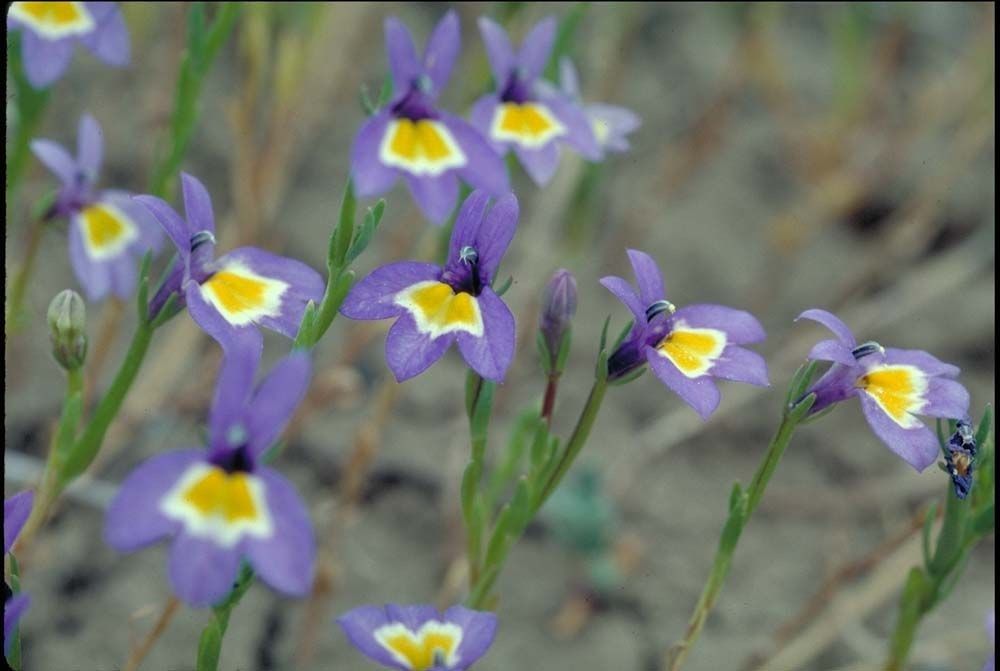
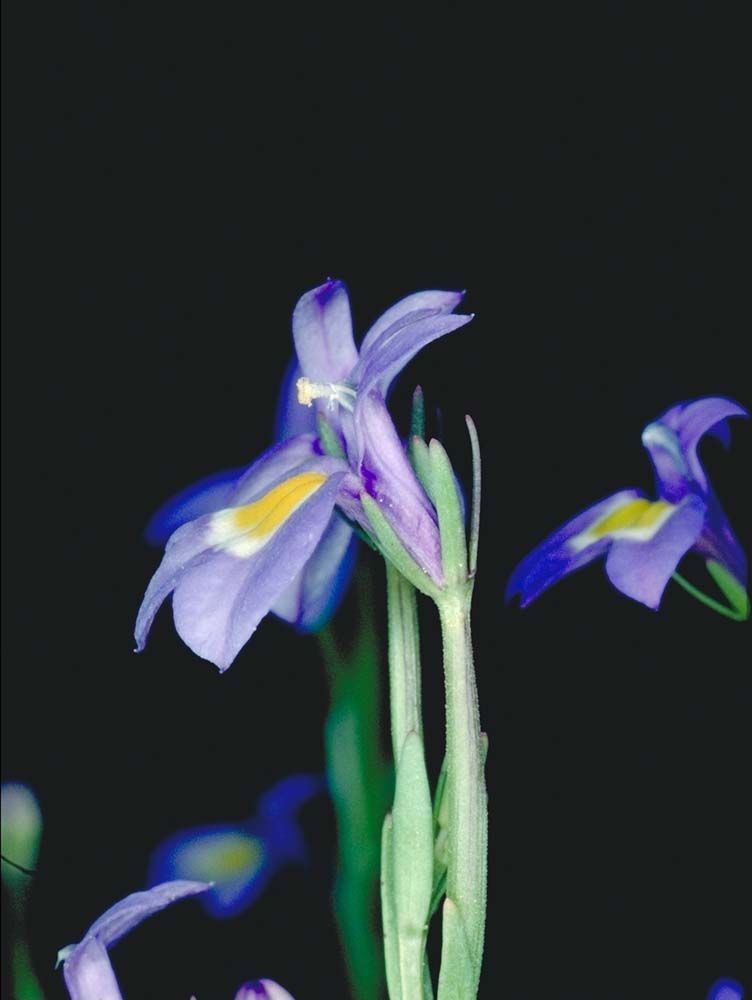
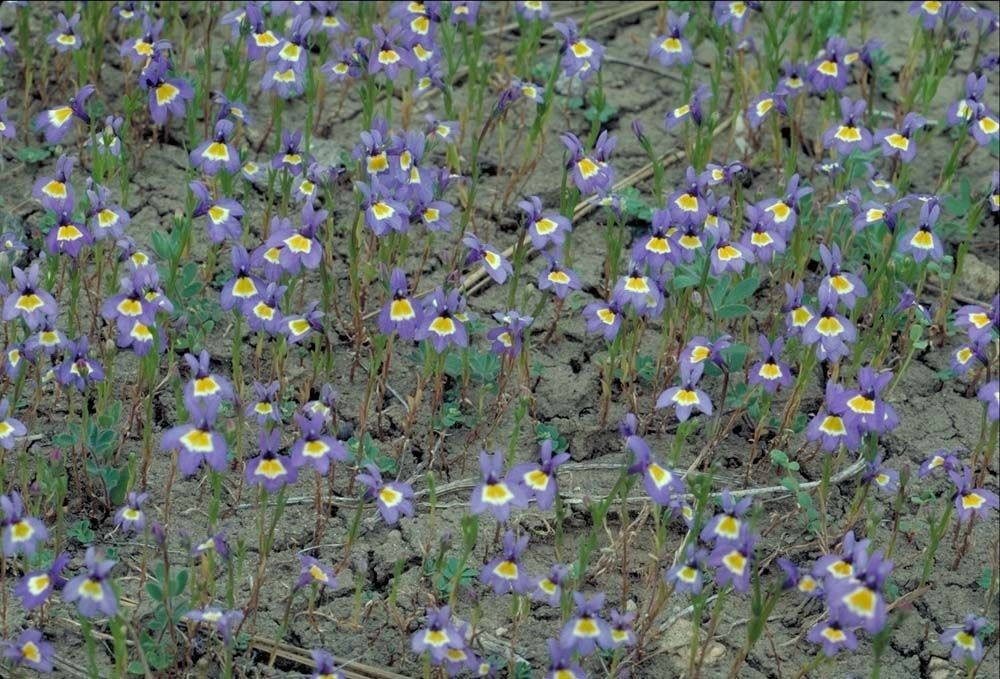
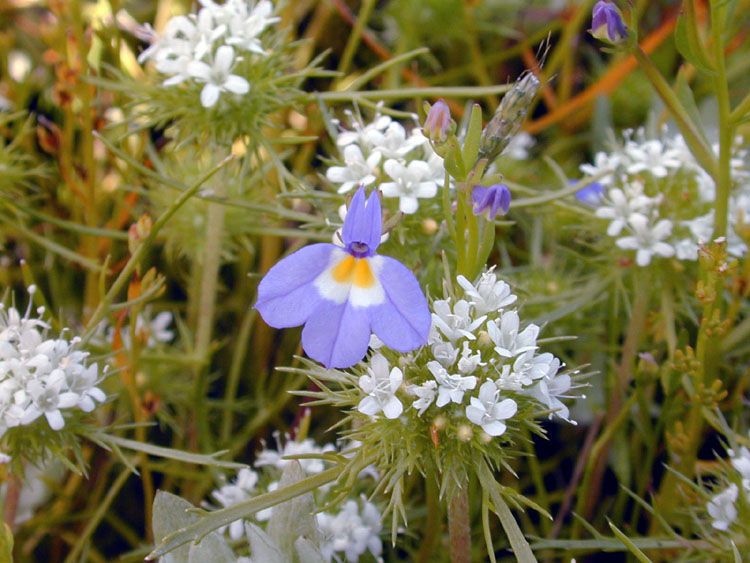
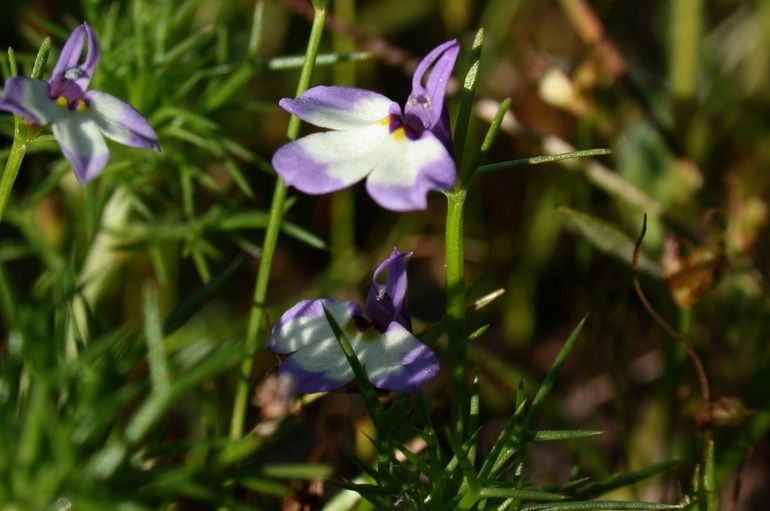
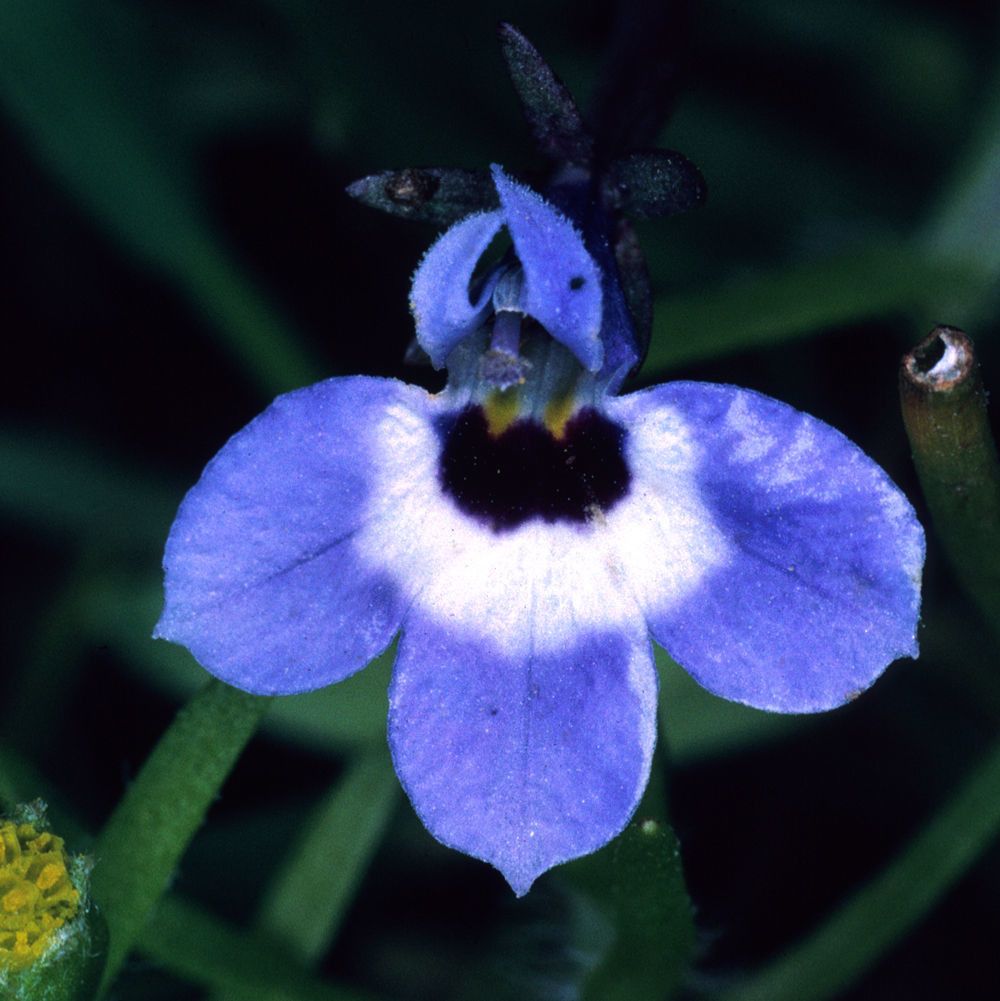
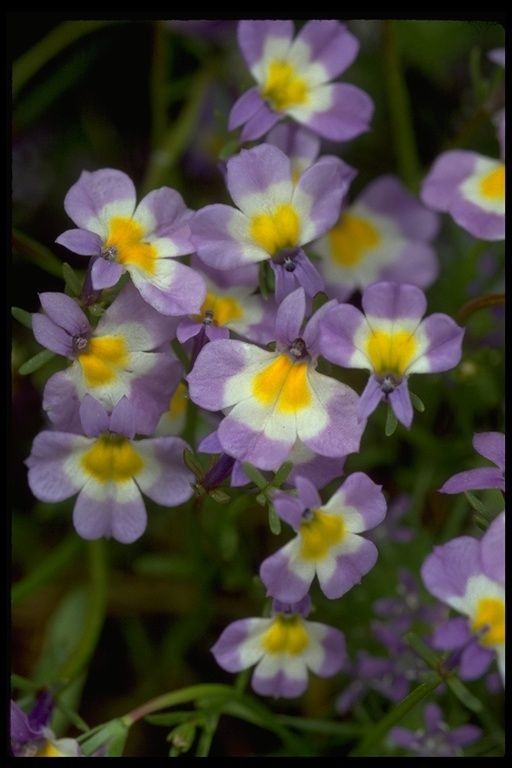
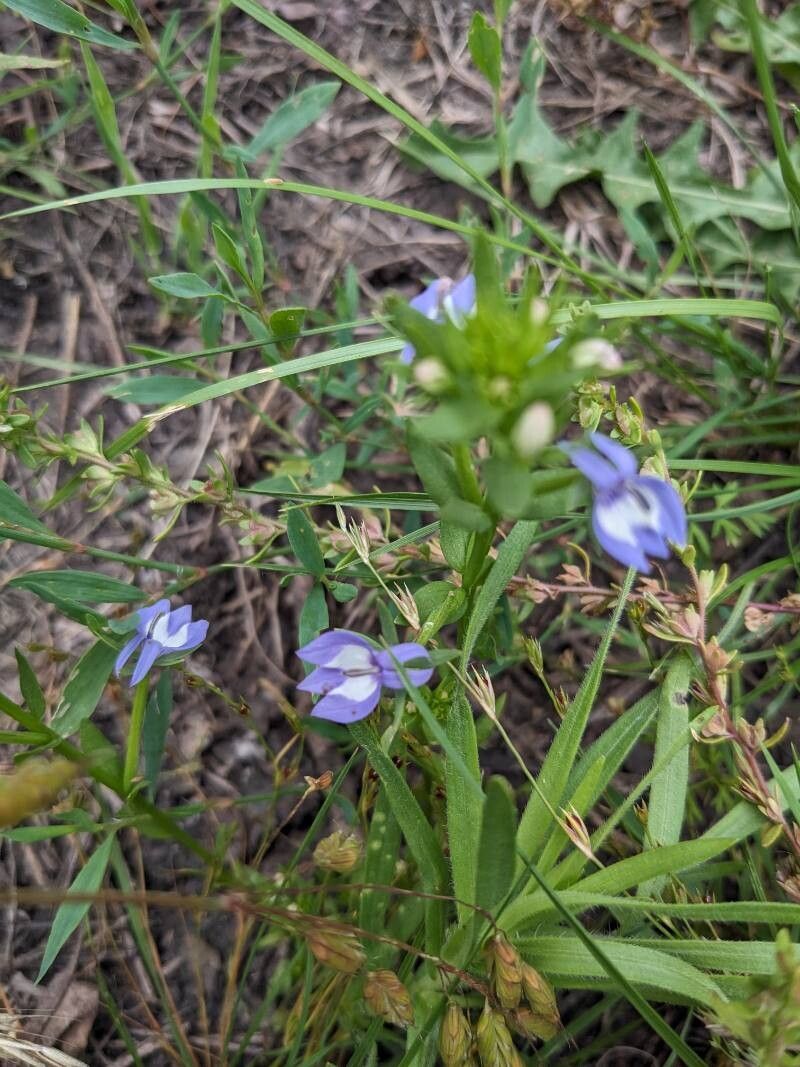
Downingia yina is a distinctive, colorful wildflower known by the common name Cascade calico-flower. It bears small, easily recognizable flowers up to 1 centimeter in width. Each flower has three fused lower petals which are blue or violet with a central spot which is white with a yellow center. This pattern is attractive to pollinating insects and helps them navigate to the flower's center. The two upper blue petals may fold together to face each other, or stick straight out. This flower grows in moist habitats including vernal pools, wet meadows, and edges of lakes. It can be found in the Pacific Northwest from Washington to northern California.
Cascade calicoflower is fairly disease-resistant and is generally not susceptible to disease. However, it can be affected by pests and diseases present in its surroundings. These infections are typically not severe. As for care, this plant requires moderate maintenance. It should be pruned regularly to maintain an attractive appearance and healthy growth. Fertilizing can also aid in encouraging flowering. Cascade calicoflower is suitable for anyone with outdoor space, such as a garden or patio, and does not require much care experience. It may need more attention when grown indoors.
How to keep Downingia Yina.
Light
Cascade calicoflower is native to bright, open areas and flourishes in full sun. It can withstand partial sun but prefers direct sunlight for best growth. This plant, which may be annual or biennial, is known for its sun-loving habit.
Temperature
Cascade calicoflower can tolerate a broad range of temperatures, yet its distribution may still be constrained by different combinations of water and heat. It performs best in warm summer climates with sufficient rainfall or watering. Extended periods of cloudy, rainy weather and prolonged high temperatures can increase the chance of Cascade calicoflower dying. In winter, adequate protection from cold can improve the plant's survival.
Fertilizer
When most of the Cascade calicoflower's blooms have fully opened, resume fertilizing. At the peak of bloom production, fertilize once every three to four weeks, as weather allows. Then, when the Cascade calicoflower begins to produce fewer new blooms, stop fertilizing; there's no need to feed the plant once it can no longer produce additional blooms.
Botanical profile.
- Plant Type
- Herb
- Life Cycle
- Annual
- Genus
- Downingia
- Family
- Campanulaceae
- Hardiness Zone
- 7-10
- Mature Height
- 3 cm to 10 cm
- Mature Spread
- 5 cm to 15 cm
- Leaf Color
- Green
- Leaf Type
- Deciduous
- Flower Color
- Blue, Violet
- Flower Size
- 0.51 cm to 1.02 cm
- Bloom Time
- Mid spring, Late spring
- Planting Time
- Spring
- Harvest Time
- Early summer, Mid summer
Other names.