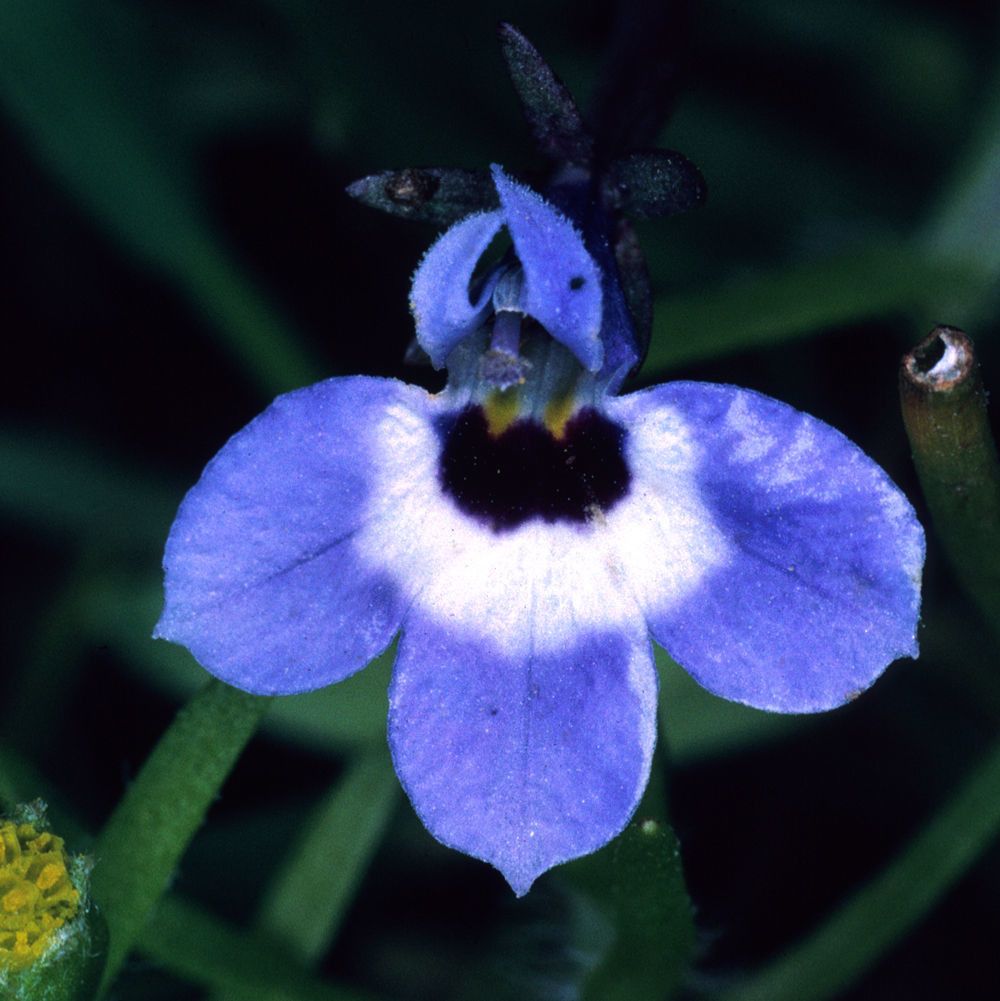
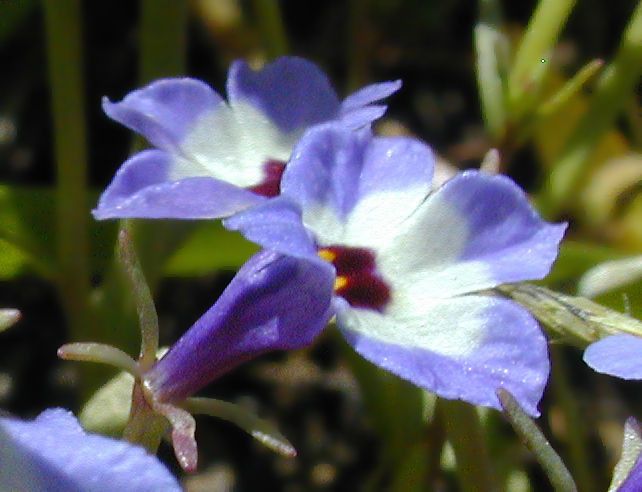
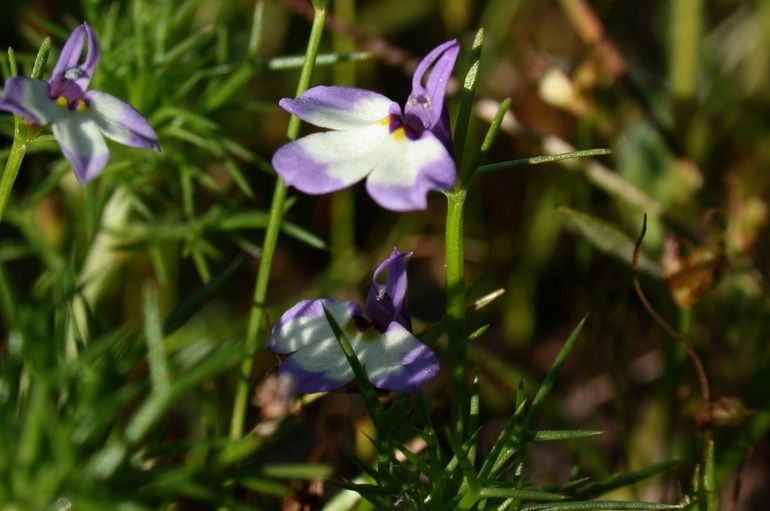
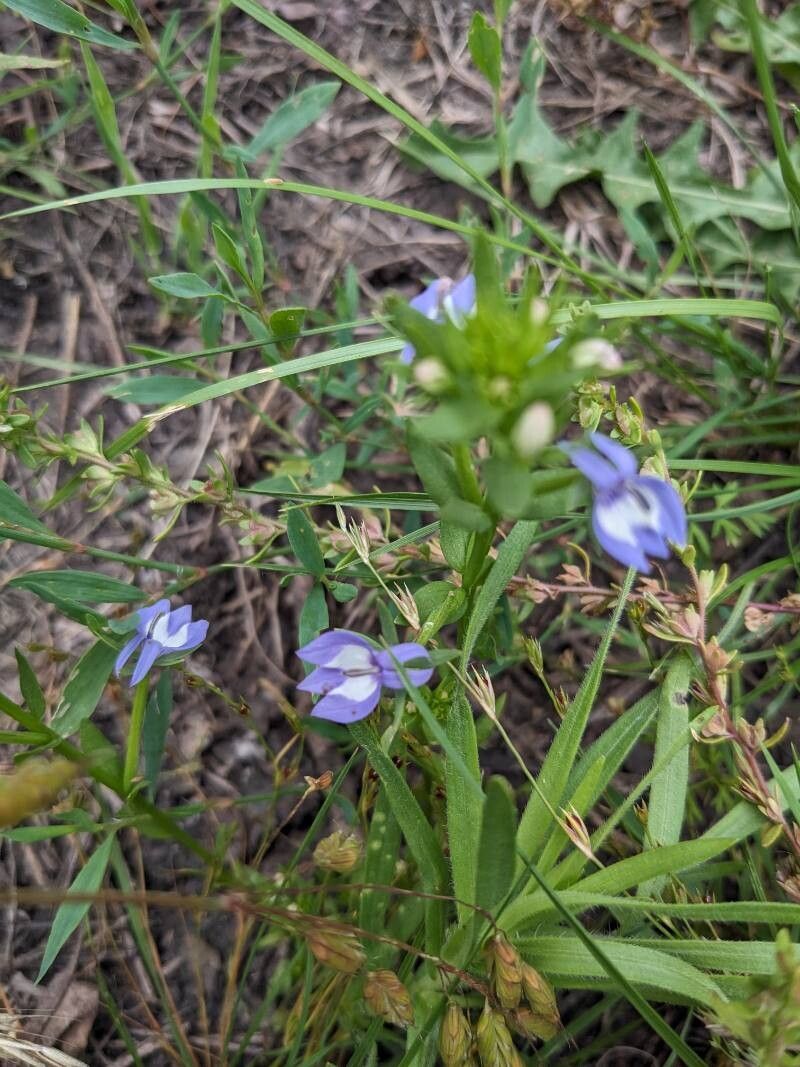
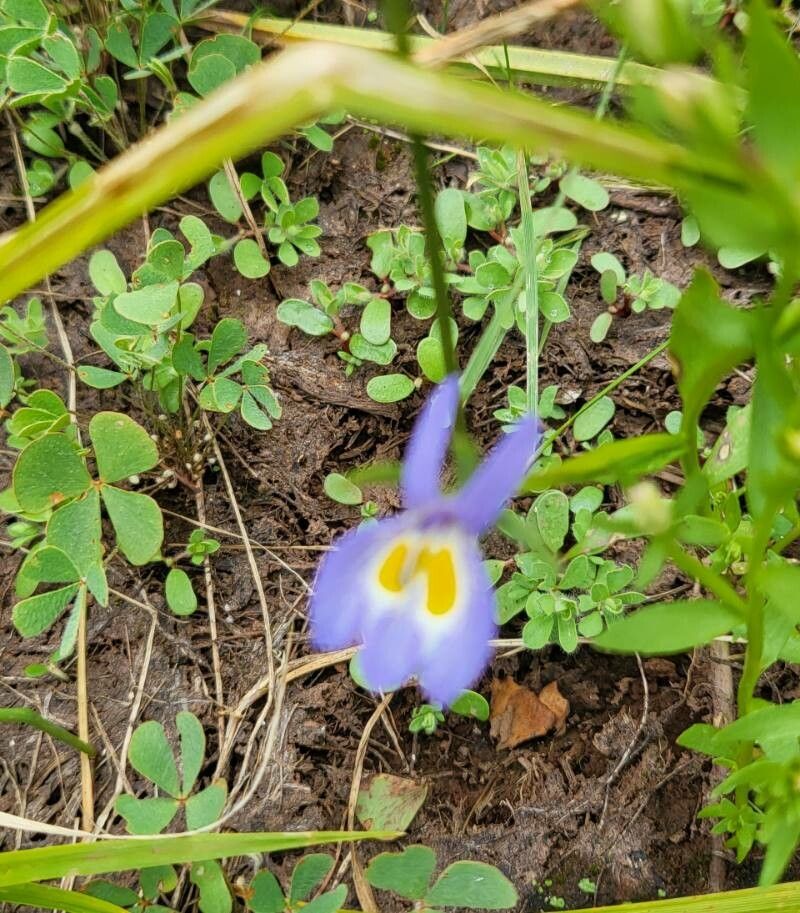
Downingia concolor is a species of flowering plant in the bellflower family known by the common names maroonspot calicoflower and fringed downingia. This showy wildflower is endemic to California, where it is a resident of ponds and vernal pool ecosystems in the northern part of the state.
Maroon-spot calico-flower is fairly disease-resistant and typically not prone to illnesses. However, it can be affected by pests and diseases present in its surroundings. Such infections are usually mild. In terms of care, this plant requires moderate maintenance. It should be pruned regularly to preserve a good appearance and support healthy growth. Fertilizing can also help encourage flowering. Maroon-spot calico-flower is suitable for anyone with outdoor space, such as a garden or patio, and does not demand extensive care experience. It may need more attention when grown indoors.
How to keep Downingia Concolor.
Light
Maroon-spot calico-flower is native to bright, open habitats and flourishes in full sun. It can endure partial shade but prefers direct sunlight for the best growth. This plant, which can be annual or biennial, is noted for its sun-loving behavior.
Water
The maroon-spot calico-flower thrives in moist environments similar to its native habitat, needing consistent moisture without becoming waterlogged. Weekly watering works well with its natural cycle, but you should adjust irrigation during the growing season to account for temperature changes.
Temperature
Maroon-spot calico-flower can tolerate a wide range of temperatures, though its distribution may still be restricted by various combinations of water and heat. It does best in warm summer conditions with sufficient rainfall or watering. Long periods of cloudy, rainy weather, as well as extended high temperatures, can raise the chance of the plant dying. In winter, adequate protection from cold can enhance the plant's survival rate.
Fertilizer
After most of the Maroon-spot calico-flower's blooms have fully opened, you should resume fertilizing. When blooms are being produced at their peak, start applying fertilizer every three to four weeks, as the weather allows. Once the plant begins to produce fewer new flowers, stop fertilizing, since there's no reason to feed it when it can no longer produce more blooms.
Pruning
This annual plant has bright blue petals with maroon spots. To encourage growth and flowering, prune the maroon-spot calico flower from early to late spring. Remove dead stems, pinch back spent flowers, and maintain the plant's shape to improve vigor and air circulation, enhancing its overall appearance.
Botanical profile.
- Plant Type
- Herb
- Life Cycle
- Annual
- Genus
- Downingia
- Family
- Campanulaceae
- Hardiness Zone
- 7-10
- Mature Height
- 10 cm to 30 cm
- Mature Spread
- 5 cm to 15 cm
- Leaf Color
- Green
- Leaf Type
- Semi-evergreen
- Flower Color
- Blue, Purple
- Flower Size
- 1.02 cm to 2.03 cm
- Bloom Time
- Mid spring, Late spring
- Planting Time
- Spring
- Harvest Time
- Early summer, Mid summer
Other names.
Reader questions.
How should I water my Maroon-spot calico-flower the best way?
To water Maroon-spot calico-flower, you have multiple options for watering tools, such as a garden hose with a spray nozzle or a watering can. This plant is not too particular about the type of water it receives, as rainwater, tap water, or filtered water will suffice. However, it is generally best to avoid watering from overhead to prevent damage to the leaves and flowers and reduce the risk of disease. For optimal watering, setting up a drip irrigation system is often recommended as it ensures even and direct application of water to the soil. When it comes to watering a container-grown Maroon-spot calico-flower, you can use a cup, watering can, or tap water to water the plant directly at the soil level.
How many hours of sunlight does the Maroon-spot calico-flower need each day to grow well?
To ensure the best growth and survival of Maroon-spot calico-flowers, it's important to expose them to sufficient sunlight. This species thrives on at least 6 to 8 hours of sunlight daily, with a preference for morning light, especially during the summer. Providing them with full sun and maximizing their exposure to sunlight allows these plants to produce ample food, showcase stunning blooms, and increase their overall chances of survival.
What should I do if I give too much or too little water to my Maroon-spot calico-flower?
To remedy underwatering for Maroon-spot calico-flower, it's simple: water it more regularly when you notice it lacks moisture. Overwatering, on the other hand, can be more serious if not detected early. Overwatered plants may be prone to diseases that result in decline and death. To prevent this, it's important to choose a suitable location with ample sunlight for drying the soil and good drainage to prevent waterlogging. If your potted Maroon-spot calico-flower is overwatered, consider changing to a new pot with better drainage. When repotting, ensure loose soils are used and select a pot that drains efficiently.
What kind of sunlight does the Maroon-spot calico-flower require?
The Maroon-spot calico-flower thrives in full sunlight, so it's important not to plant them too close together. This allows each plant to receive enough sun exposure. When planting in pots, make sure to place them near windows with direct sun to ensure they always receive full sunlight, regardless of the time of year. Avoid placing them in areas with partial or filtered light, as this may result in weak stems and unhealthy flowers. To keep the Maroon-spot calico-flower at its best, always make sure it is exposed to the sun.
How frequently do I need to water my Maroon-spot calico-flower?
To properly care for your Maroon-spot calico-flower, you need to water it regularly throughout the growing season. Starting in spring, water the plant approximately once per week. As the season progresses and it gets warmer, you may need to increase the watering frequency to two or three times per week. However, be careful not to overwater, as this can harm the plant. It's important to maintain relatively moist soil, but not wet, regardless of how often you water. If your Maroon-spot calico-flower is in a pot, you'll need to adjust your watering routine. Potted plants can dry out faster than those in the ground, so plan to water them a few times per week instead of just once.
Does sunlight harm plants? How can we protect the Maroon-spot calico-flower from damage caused by the sun and heat?
The Maroon-spot calico-flower is susceptible to damage from high temperatures above 90℉(32℃), especially if they are exposed to prolonged sunlight in the summer. To protect them, it's best to provide some afternoon shade. It's important to remember that summer sunlight is stronger and lasts 50% longer than winter sunlight. If the Maroon-spot calico-flower is under too much sunlight stress, ensure they are well-hydrated by watering them when the top of the soil is about 2 inches dry. If it's too hot outside, consider moving container-planted flowers indoors. It's normal for the leaves to wilt during the day, but they usually recover at night. However, if the plant remains droopy, this indicates rapid water loss and it should be watered.
How much water does my Maroon-spot calico-flower require?
To determine how much water to give your Maroon-spot calico-flower, you have a few options. One approach is to feel the soil to gauge its moisture level, and water until the top six inches feel moist. Another method involves using a specific measurement, like two gallons per week, based on factors such as temperature and soil dryness. However, be cautious not to overwater if your plant requires less. When growing in a container, you'll need a different approach. Ensure all layers of soil are moist by checking with your finger, or water until you see a slight trickle of excess water from the pot's drainage holes.
Should I keep Maroon-spot calico-flower away from the sun?
The Maroon-spot calico-flower thrives in sunlight and is actually attracted to it. Some species are even heliotropic. To maximize their exposure to the sun, it is best to plant them in south-facing gardens so they can enjoy the morning to afternoon sunlight. However, it's important to note that while the sun is beneficial, some plants may be prone to sunburn. In such cases, providing shade from a tree or wall in the afternoon and midday can be helpful. It is not recommended to grow the Maroon-spot calico-flower in shady areas as the larger flowers require a significant amount of energy to grow and bloom. Therefore, it is essential to ensure that these flowers are placed in an area with full sun for optimal growth and results.
How can I know if I'm giving enough water to my Maroon-spot calico-flower?
Avoiding overwatering your Maroon-spot calico-flower can be a bit challenging because they have deep roots that need weekly watering, yet they are prone to root rot and browning if overwatered. Underwatering is less of a concern as these plants can survive without additional watering for a while, but if left too dry, they will wilt and exhibit dry leaves.
What will happen if the Maroon-spot calico-flower doesn't get enough sunlight?
If the Maroon-spot calico-flower doesn't get enough sunlight or isn't placed in a sunny spot, its photosynthesis process will slow down. This lack of sunlight causes the stems to become thin and long as they try to reach more sunlight, making them appear leggy. These plants won't bloom or produce seeds in shady conditions. Insufficient sunlight can also cause older leaves to die, new leaves to be lighter in color than older foliage, and new growth to be smaller. While the Maroon-spot calico-flower loves the sun, it can wilt when exposed to excessive heat and UV light in extreme summers. To protect them, consider using a net with a green shade to prevent leaves and flowers from scorching, especially during summer. When growing these plants indoors, use a fan to reduce heat.
How do I properly water my Maroon-spot calico-flower during different seasons?
As the seasons change, the water needs of your Maroon-spot calico-flower will also change. In spring, watering once a week should be sufficient. However, as summer approaches and temperatures rise, you may need to increase watering to about three times a week. This is especially important if your Maroon-spot calico-flower is growing in a container, as the soil in containers tends to dry out faster in the warm weather. In autumn, as the temperature cools and the sun becomes less intense, your Maroon-spot calico-flower may need less water while still in bloom.
Does the Maroon-spot calico-flower require different amounts of sunlight as it grows?
The Maroon-spot calico-flower requires more light as it grows compared to when it is fully mature. It is important to provide sufficient light for the young plants, but they may not be able to handle sudden exposure to full sunlight, particularly if they were grown in a nursery. These young plants are more sensitive to strong summer sunlight, so a gradual and slow increase in lighting is recommended.