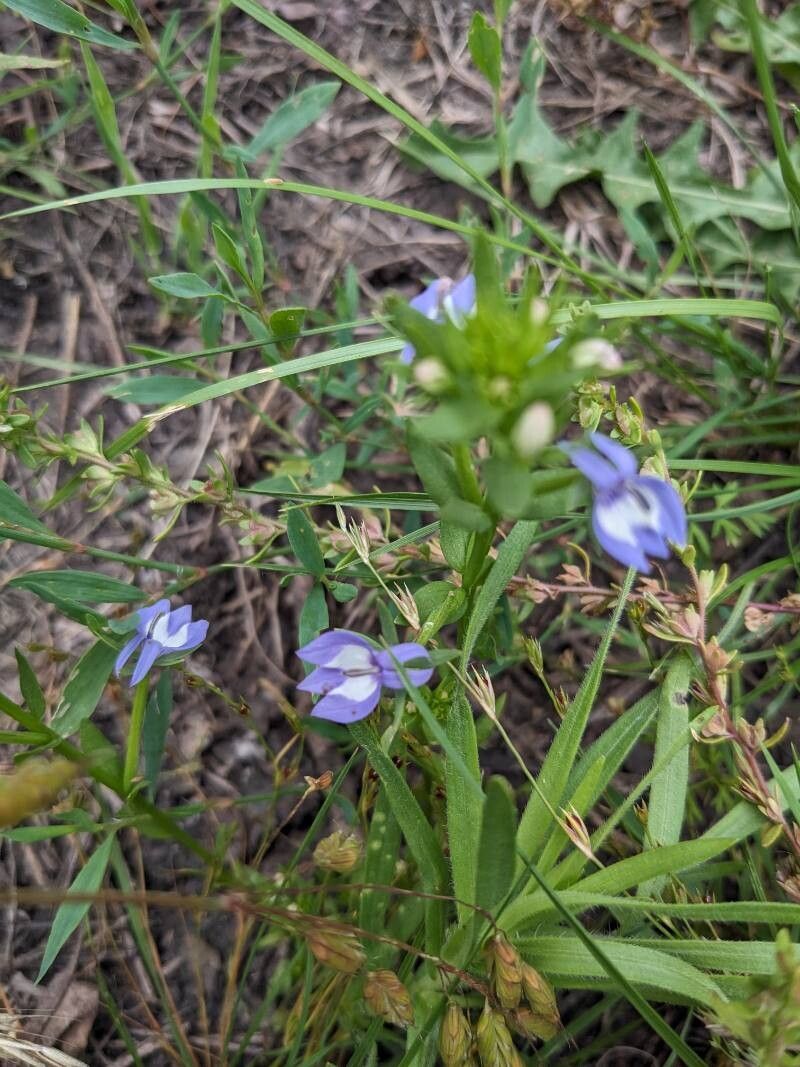
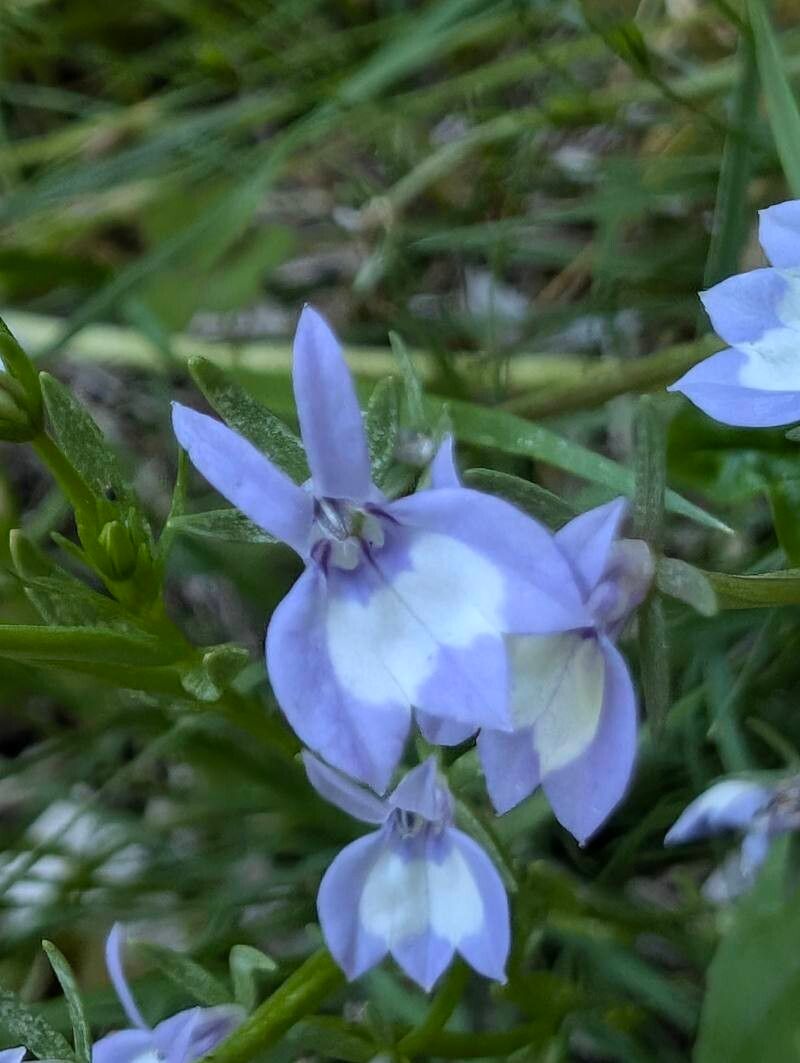
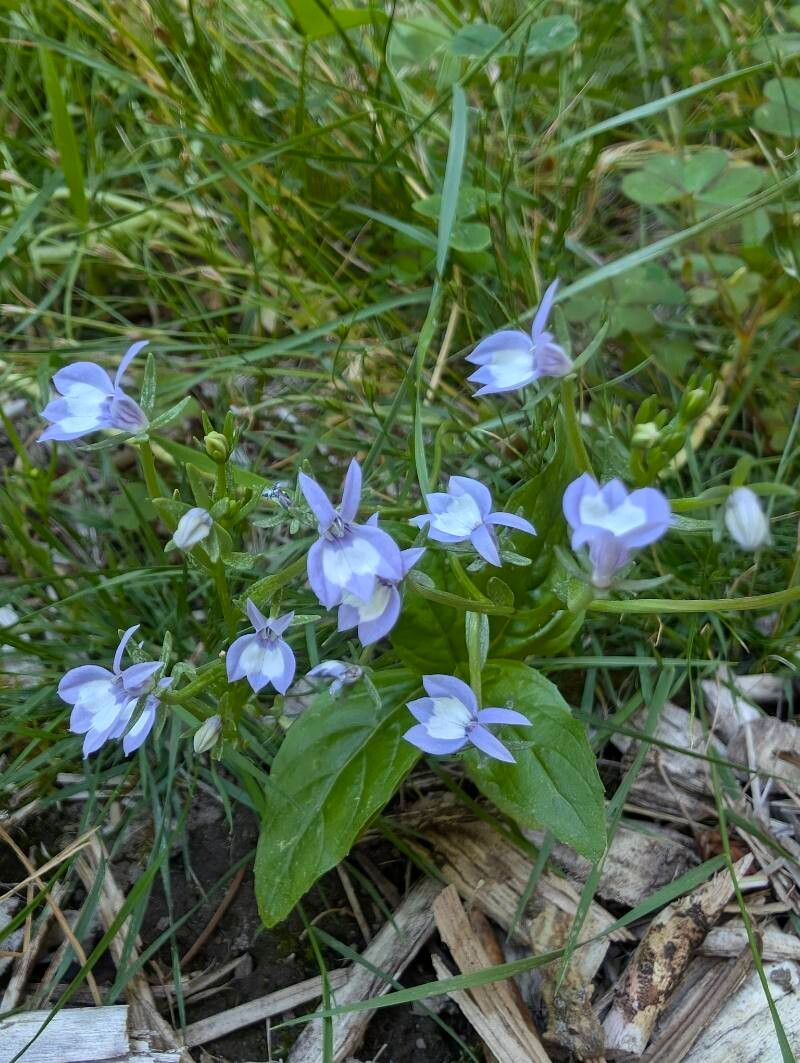
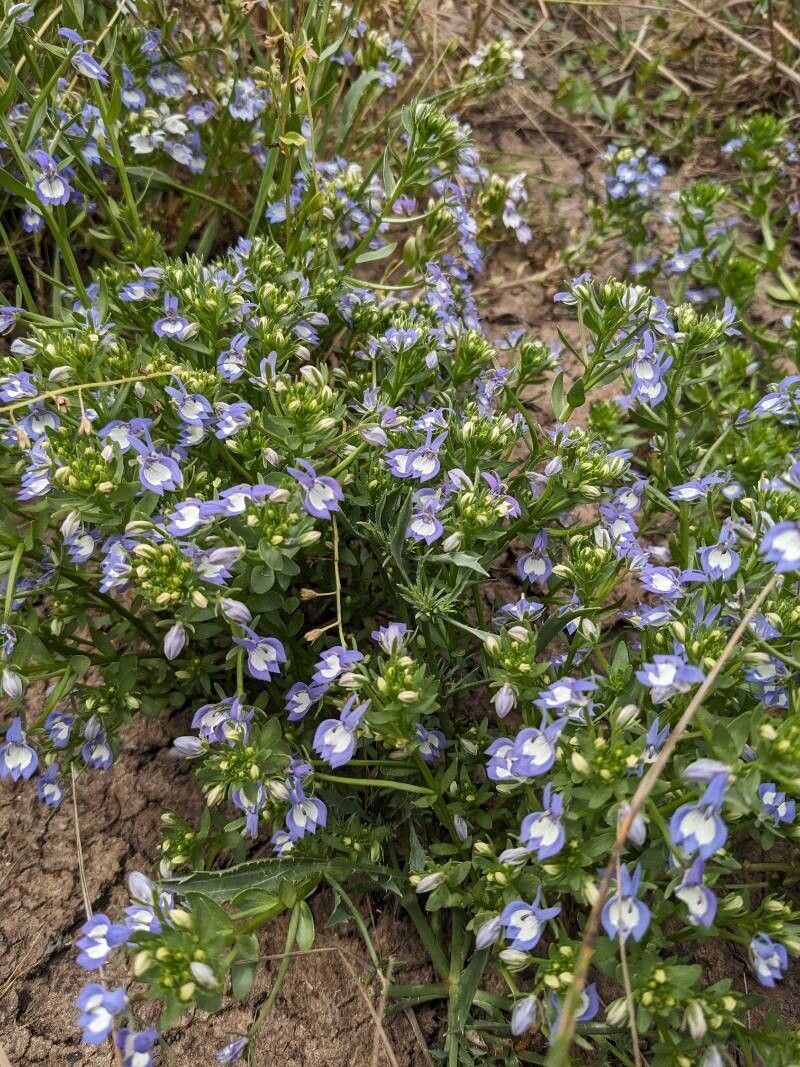
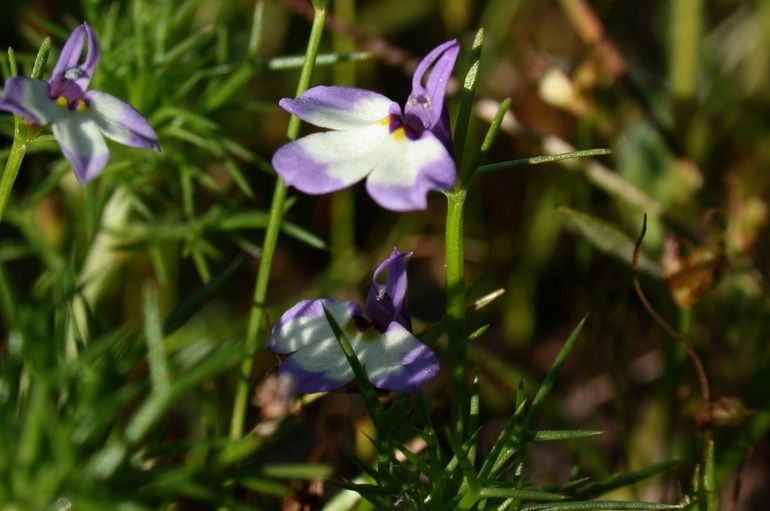
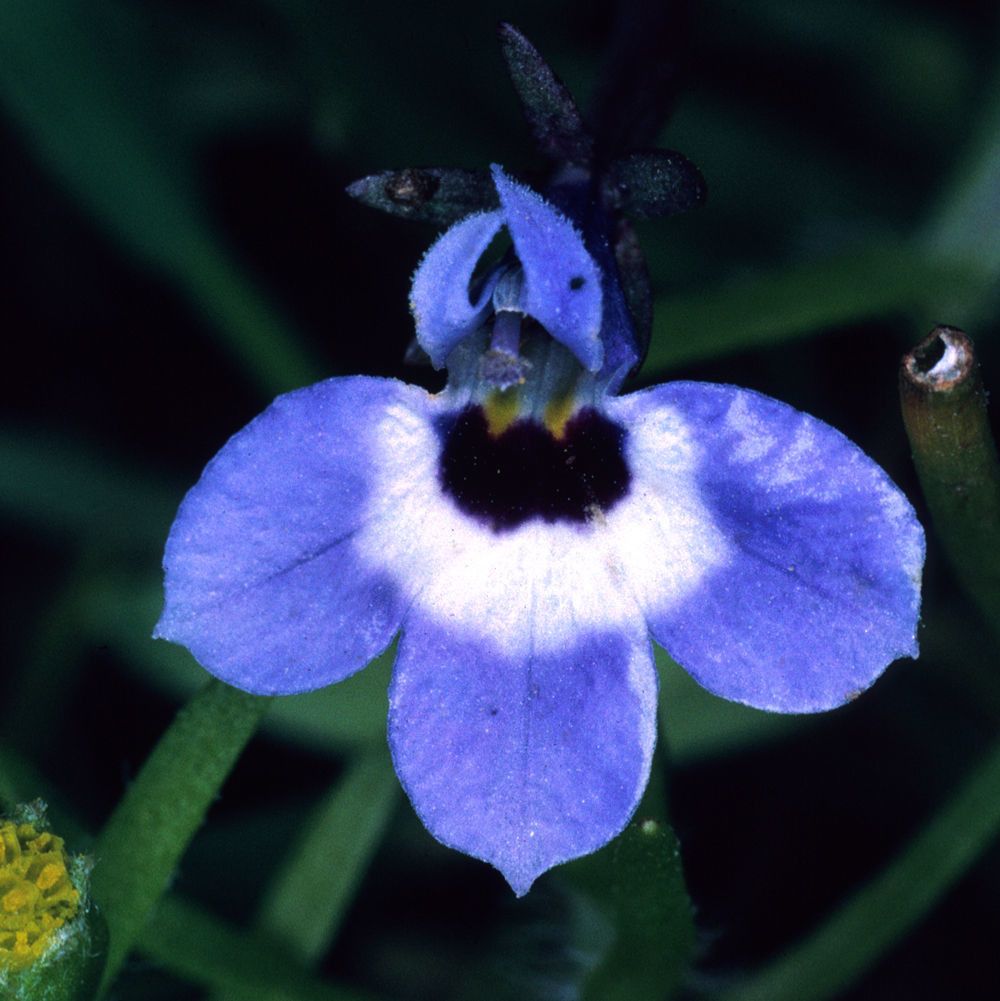
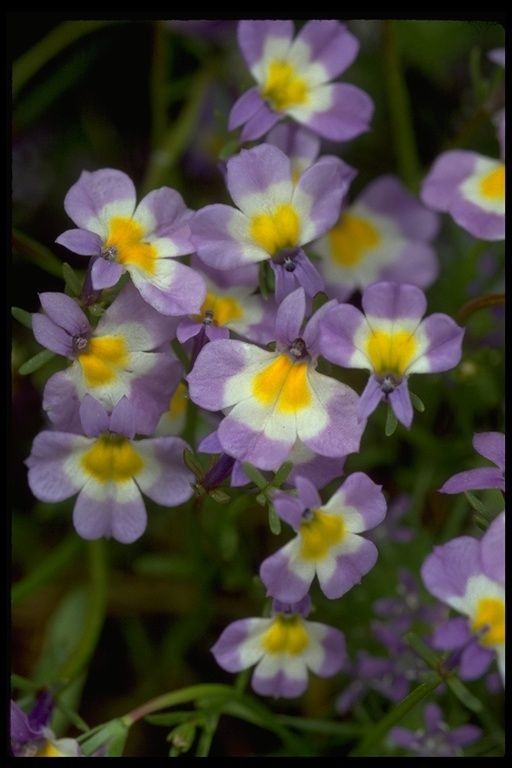
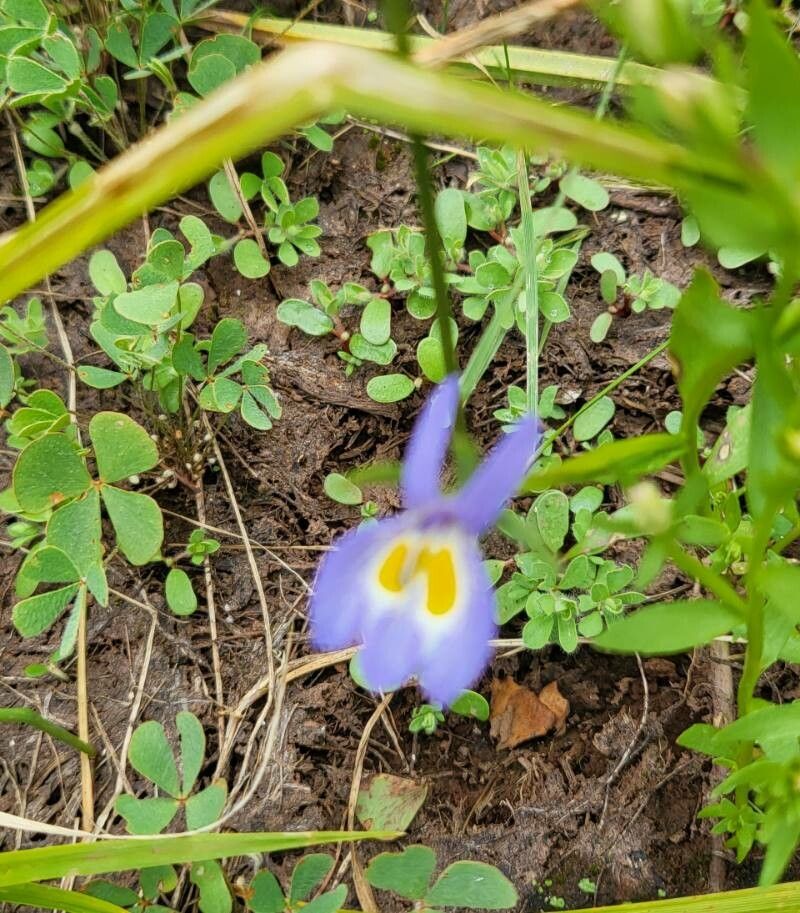
Downingia elegans is a species of flowering plants in the bellflower family known by the common names elegant calicoflower and Californian lobelia. This showy wildflower is native to western North America from California to British Columbia, where it is a resident of meadows and vernal pool ecosystems. This annual grows on a branching erect stem with many pointed leaves. At the top of each stem branch is one or more flowers, each one half to two centimeters wide. The tubular flower has two long, narrow, pointed upper lobes which are generally rich purple. The lower lip is fused into one three-lobed surface, which is purple with a large blotch of white in the center. The lobes may be quite pointed. There is sometimes some yellow coloration near the mouth of the tube.
Elegant calicoflower shows strong disease resistance and is usually not prone to illness. That said, it can be affected by pests and diseases found in its surroundings. These problems are typically mild. For care, this plant needs a moderate amount of attention. It should be pruned regularly to keep a neat appearance and healthy growth. Fertilizing can also encourage blooming. Elegant calicoflower is well suited to people with outdoor areas like a garden or patio and does not demand extensive gardening experience. It may require more care when grown indoors.
How to keep Downingia Elegans.
Light
Elegant calicoflower comes from bright, open habitats where it flourishes in full sun. It can tolerate partial sun but prefers direct sunlight for optimal growth. This annual and biennial plant is known for its sun-loving nature.
Water
The elegant calicoflower thrives in moist environments and requires consistent hydration without becoming waterlogged. To maintain its optimal health, it is essential to water it twice a week. When grown outdoors, the calicoflower aligns with natural rain patterns, which significantly influence its growth and blooming phases.
Temperature
Elegant calicoflower can tolerate a wide range of temperatures, but its distribution may still be limited by various combinations of water and heat conditions. It performs best in warm summer climates with sufficient rainfall or watering. Extended periods of cloudy, rainy weather or prolonged high temperatures increase the chance that Elegant calicoflower will die. In winter, adequate protection from cold can enhance the plant's survival rate.
Fertilizer
Once most of Elegant calicoflower’s blooms have opened to full size, resume fertilizing. When the flowers are at peak production, apply fertilizer every three to four weeks as conditions allow. Then, when the plant begins producing fewer new blooms, stop fertilizing; there’s no need to feed it once it can no longer produce more flowers.
Pruning
To ensure your calicoflowers thrive, it's important to prune them properly from early to late spring. The key techniques include removing spent flowers and unhealthy stems. This not only improves the plant's health but also enhances air circulation and reduces the risk of disease. It's crucial to use clean, sharp tools to prevent damage and promote vigorous growth.
Botanical profile.
- Plant Type
- Herb
- Life Cycle
- Annual
- Genus
- Downingia
- Family
- Campanulaceae
- Hardiness Zone
- 7-10
- Mature Height
- 5 cm to 30 cm
- Mature Spread
- 5 cm to 15 cm
- Leaf Color
- Green
- Leaf Type
- Deciduous
- Flower Color
- Blue, White
- Flower Size
- 0.51 cm to 1.02 cm
- Bloom Time
- Late spring, Early summer
- Planting Time
- Spring
- Harvest Time
- Mid summer, Late summer
Other names.