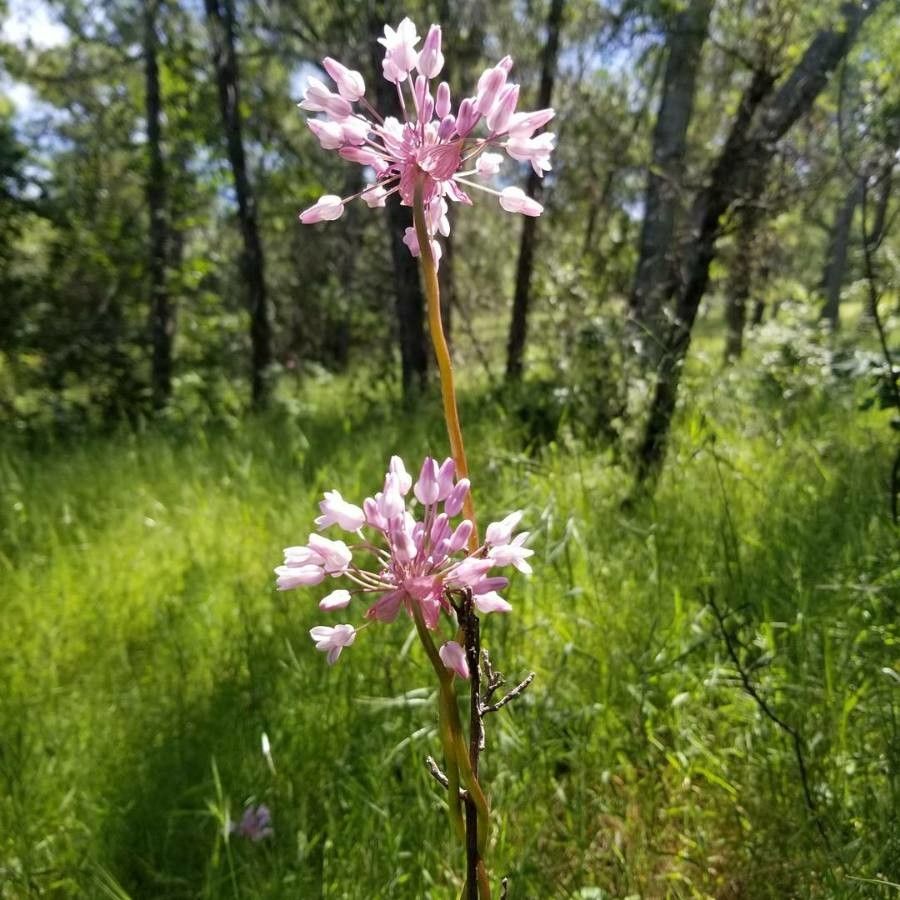
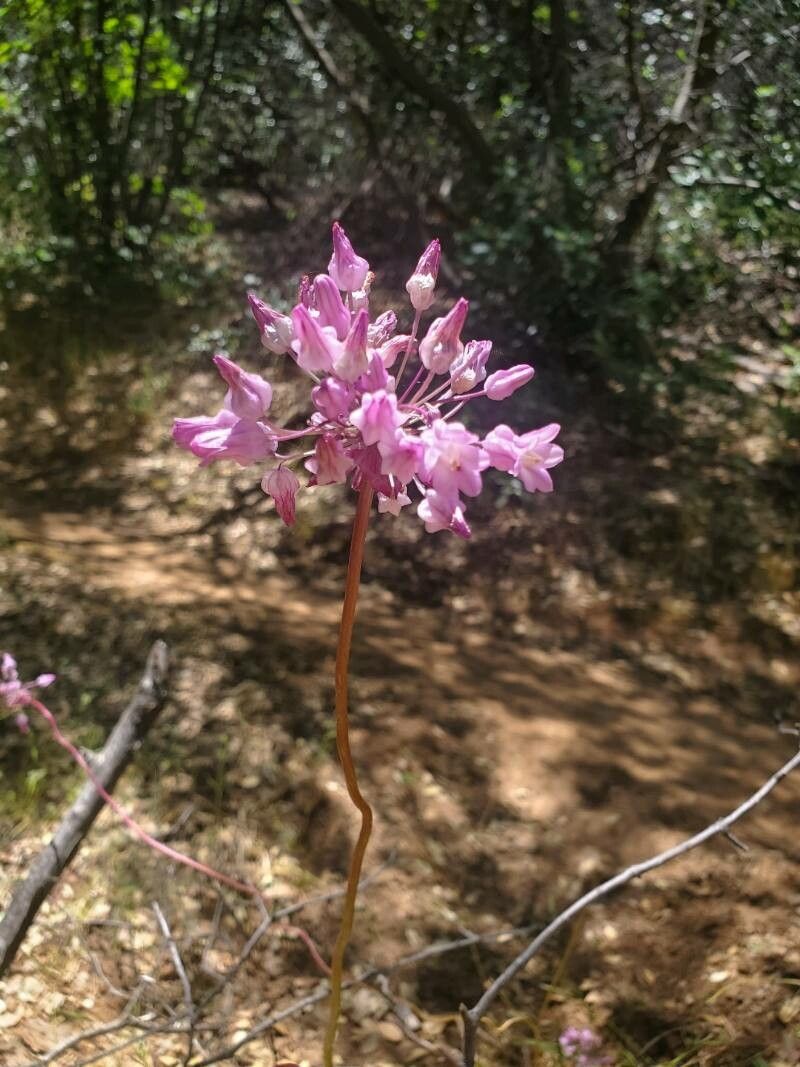
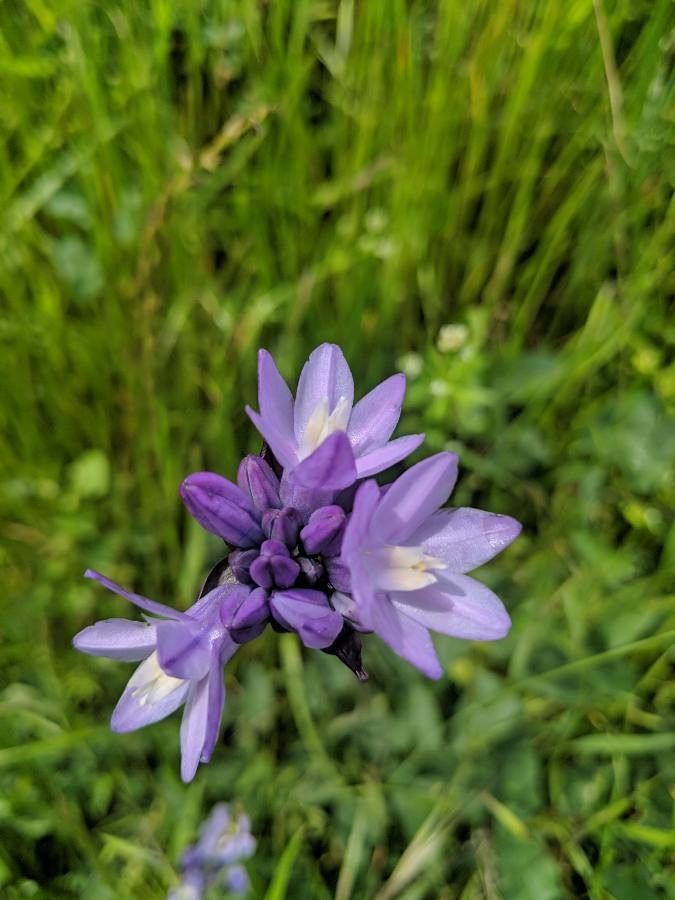
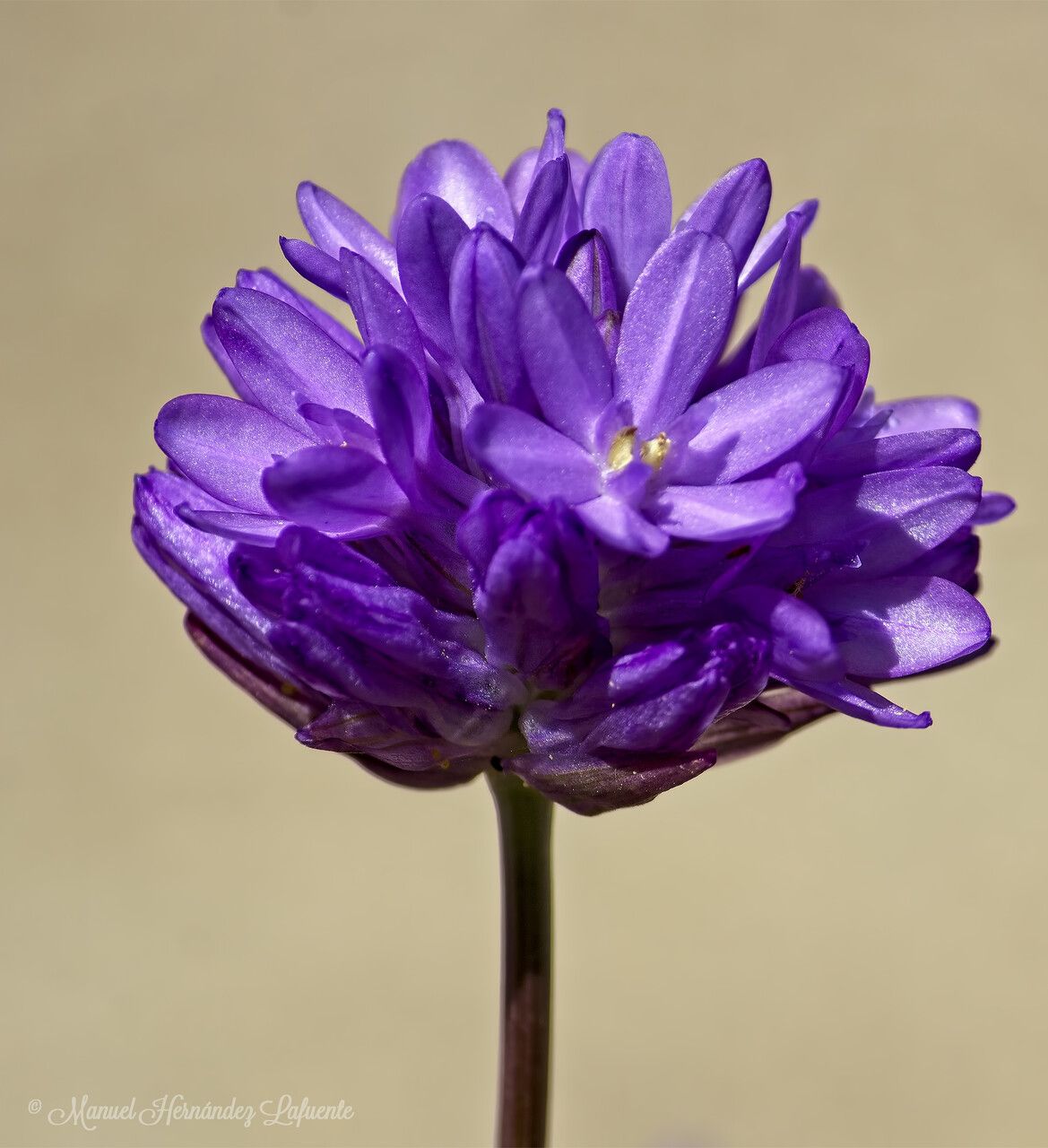
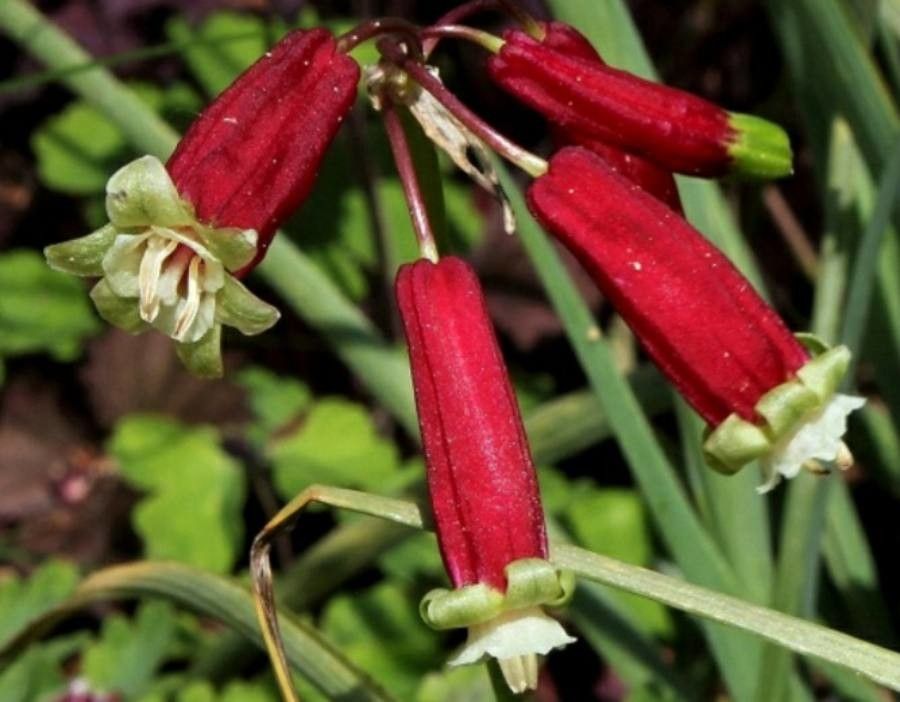
Dichelostemma volubile is a species of flowering plant known by the common names twining snakelily and twining brodiaea. This wildflower is endemic to the mountain foothills of California, where it grows in scrub and woodland. Dichelostemma volubile grows tall, erect, naked stems topped with spherical inflorescences of up to 30 densely packed pink flowers. Each flower is a tube up to a centimeter long with a spreading corolla of six petal-like lobes. The purplish or reddish stems may twine tightly around each other and occasionally other plants.
Twining snakelily is fairly resistant to disease and typically does not readily develop illnesses. However, it can be vulnerable to pests and diseases present in its surroundings. These problems are usually mild. Regarding care, this plant requires moderate maintenance. It should be pruned regularly to keep a tidy appearance and support healthy growth. Applying fertilizer can also stimulate flowering. Twining snakelily is suitable for anyone with outdoor space, such as a garden or patio, and does not demand extensive care experience. It may need more attention when grown indoors.
How to keep Dichelostemma Volubile.
Light
Twining snakelily grows best with ample sunlight, which is essential for its healthy development. It can also tolerate places where light is somewhat reduced. In its natural environment it prefers sunny locations. Nevertheless, too much sun can be damaging, and too little sunlight can hinder its growth.
Water
The twining snakelily thrives in moderate moisture and prefers well-drained soil with a weekly watering schedule. It adapts well to both dry and wet conditions, adjusting its growth to match seasonal rainfall. This adaptation allows it to make optimal use of water in different climates.
Temperature
Twining snakelily is a plant adapted to temperate climates and typically thrives where temperatures range from 59 to 100 °F (15 to 38 ℃). To ensure its robust growth, recreate those climatic conditions and adjust temperatures to reflect seasonal variations.
Fertilizer
For Twining snakelily, the primary time to apply fertilizer is in early spring as the flowers are developing. Using an appropriate fertilizer promotes better blooms and helps Twining snakelily produce attractive flowers. Fertilizing at this time supports strong flowering during the season and supplies energy for dormant growth phases.
Pruning
To keep your twining snakelily healthy and vigorous, prune it from early to late spring. This will help enhance its growth and improve air circulation. Be sure to remove any dead stems and trim dense areas to maintain its shape and encourage blooming. Pruning before the growing season also aids in the plant's recovery and boosts both bloom quality and overall vigor.
Botanical profile.
- Plant Type
- Herb
- Life Cycle
- Perennial
- Genus
- Dichelostemma
- Family
- Asparagaceae
- Hardiness Zone
- 8-11
- Mature Height
- 3.66 m
- Mature Spread
- 15 cm to 30 cm
- Leaf Color
- Green
- Leaf Type
- Deciduous
- Flower Color
- Pink
- Flower Size
- 1.02 cm
- Bloom Time
- Mid spring, Late spring
- Planting Time
- Spring, Summer, Autumn
- Harvest Time
- Early summer, Mid summer
Other names.
Reader questions.
How should I water my Twining snakelily to keep it healthy?
To best care for the Twining snakelily, it is important to use filtered water at room temperature or slightly warmer. Tap water may have harmful particles, so filtering is advised. Cold water may shock the plant, which is accustomed to warm environments. It's also best to avoid overhead watering, as it can lead to problems with the foliage. Instead, thoroughly water the soil with your filtered room temperature water until it is completely soaked. This helps the roots to stay moist and expand, allowing them to gather the necessary nutrients from the soil.
Why should I add fertilizer to my Twining snakelily plant?
Ensuring that the leaves of the Twining snakelily look great and serve their function relies heavily on fertilization. Proper fertilization will result in consistent leaf color and a healthy texture. Additionally, fertilization has positive effects below the soil's surface, promoting the growth of new roots and maintaining existing ones. This means that fertilization not only keeps the plant healthy in the present but also enhances its ability to absorb soil nutrients in the long term.
What are the sunlight requirements for Twining Snakelily?
Twining Snakelily requires full sun, which means it needs above 6 hours of sunlight daily, but it can also tolerate partial sun, receiving about 3-6 hours of sunlight. It's essential to observe how sunlight moves through your garden to ensure you find a location that offers the right balance of light, fulfilling the plant's needs for healthy growth. Additionally, while Twining Snakelily thrives in sunlight, both too much direct sunlight and too little can adversely affect its growth, indicating the importance of finding that perfect sweet spot.
What is the ideal temperature range for the Twining snakelily?
The Twining snakelily is well adapted to temperate climates and thrives in environments where temperatures range from 59 to 100°F (15 to 38°C). To ensure the plant's robust growth, it's important to recreate such climatic conditions, adjusting temperatures in accordance with seasonal changes. The Twining snakelily also has some cold tolerance, typically not requiring additional protection when temperatures are above -5°C. However, if temperatures are expected to drop below -5°C, temporary cold protection measures, such as wrapping the plant in plastic film, fabric, or other materials, should be taken. These protective measures should be removed once temperatures rise again.
What should I do if I give my Twining snakelily too much water or too little water?
Overwatering is a more common issue than underwatering for the health of your Twining snakelily. When this plant receives too much water, its stems and leaves may wilt and turn yellow. Overwatering can also lead to diseases like root rot, mold, and mildew, which can be fatal. Although less common, underwatering is still possible and results in brittle, brown leaves. Pay close attention to signs of overwatering and take action promptly. Diseases like root rot may become irreversible if not addressed quickly. Reduce watering immediately if you notice early signs of overwatering and consider replacing poorly draining soil with a loose, well-draining potting mix. If your Twining snakelily shows signs of drought stress, simply increase watering until the signs subside.
When should I fertilize my Twining snakelily for the best results?
If you grow your Twining snakelily outdoors, it will send out new growth in early spring. This is a sign to start fertilizing for the year. Typically, one application of fertilizer in the spring is enough for a Twining snakelily. But, if you want to maximize its growth, you can fertilize it multiple times throughout the spring and early summer. In this case, you should feed it about once every month to a month and a half.
How can artificial lighting support the growth of Twining Snakelily indoors?
When natural sunlight is insufficient, especially indoors, artificial lighting can be a crucial support for the growth of Twining Snakelily. For optimal growth, plants require adequate lighting, and artificial lights provide a solution by mimicking natural sunlight. LED lights are recommended due to their ability to offer specific wavelengths needed by plants. Full sun plants need 30-50W/sq ft of artificial light, partial sun plants require 20-30W/sq ft, and full shade plants should have 10-20W/sq ft. Proper placement of the light source should be 12-36 inches above the plant, and it's important to adjust the duration to mimic natural daylight hours, typically 8-12 hours per day.
How does the Twining snakelily react to low temperatures?
The Twining snakelily has a moderate tolerance to low temperatures, thriving best when the temperature is above 15°C. During winter, the plant should be kept above -5°C to avoid cold damage. If temperatures fall below -10°C, the leaves of the Twining snakelily may start to droop, indicating stress. While the plant can recover from mild cases, in severe scenarios, the leaves will wilt and eventually fall off. To protect the plant from low temperatures, frost-damaged parts should be trimmed off. Additionally, wrapping the plant in non-woven fabric or cloth and constructing a wind barrier can help shield it from cold winds.
How frequently should I water my Twining snakelily?
If your Twining snakelily is in a pot, the most precise way to determine if it needs water is by checking the moisture level with your finger. If the top two to three inches of soil are dry, it's time to water it. If your Twining snakelily is planted in the ground outdoors, you can use the same method to test the soil. When the first few inches of soil have dried out, it's also time to water it. Usually, during the spring and early fall, you'll need to water this plant about once a week using this method. However, when it gets extremely hot, you may need to increase watering to twice or more per week. It's worth mentioning that mature, well-established Twining snakelilies have a remarkable ability to withstand drought.
When is the best time to not give fertilizer to my Twining snakelily?
During the late fall and winter, your Twining snakelily goes into a dormant phase, meaning it stops growing. It's important to avoid fertilizing it during this time. In the spring and summer, if you decide to fertilize, gradually decrease the frequency as summer approaches because the snakelily's growth rate slows down. Overall, it's not a good idea to fertilize the snakelily when the weather is excessively hot or the soil is extremely dry as it can put stress on the plant and cause it to die prematurely.
What are the symptoms of inadequate lighting for Twining Snakelily?
Symptoms of inadequate lighting in Twining Snakelily can include small leaves, with new leaves growing smaller in size compared to mature ones. The plant may exhibit leggy or sparse growth, with longer spaces between leaves or stems, leading to a thin appearance. Early leaf drop can occur as the plant conserves resources in low light, and there might be slower or no new growth as it enters a survival mode. Leaves can appear lighter in color or develop chlorosis, turning yellow from a lack of chlorophyll and nutrients. Excessive sunlight might result in symptoms like sunscald, leaf curling, wilting, or leaf scorching, all of which negatively affect the plant's health.
What precautions should be taken for the Twining snakelily during high temperatures?
In summer, it's crucial to ensure that the Twining snakelily's environment does not exceed 38°C. Temperatures over 43°C may cause the leaves to lighten in color, dry and wither at the tips, curl, and increase the plant's susceptibility to sunburn. To mitigate these effects, sunburned and dried-up parts of the plant should be trimmed away. Moving the plant to a shaded location or using a shade cloth to block the midday and afternoon sun can also protect it. Additionally, watering the plant in the morning and evening will help keep the soil sufficiently moist.