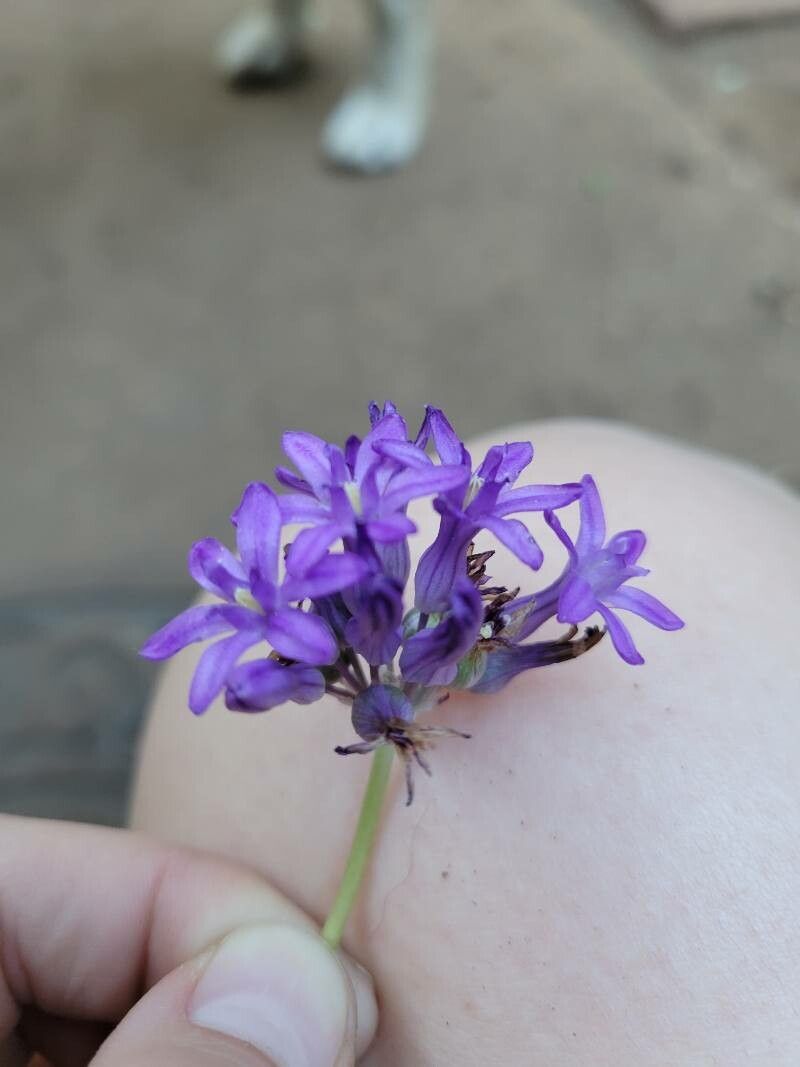
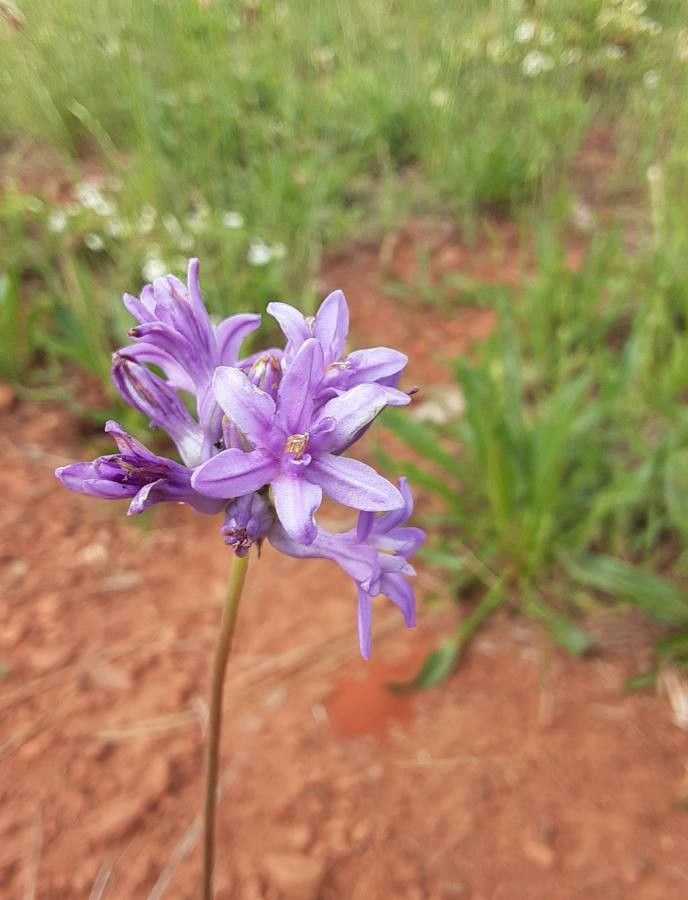
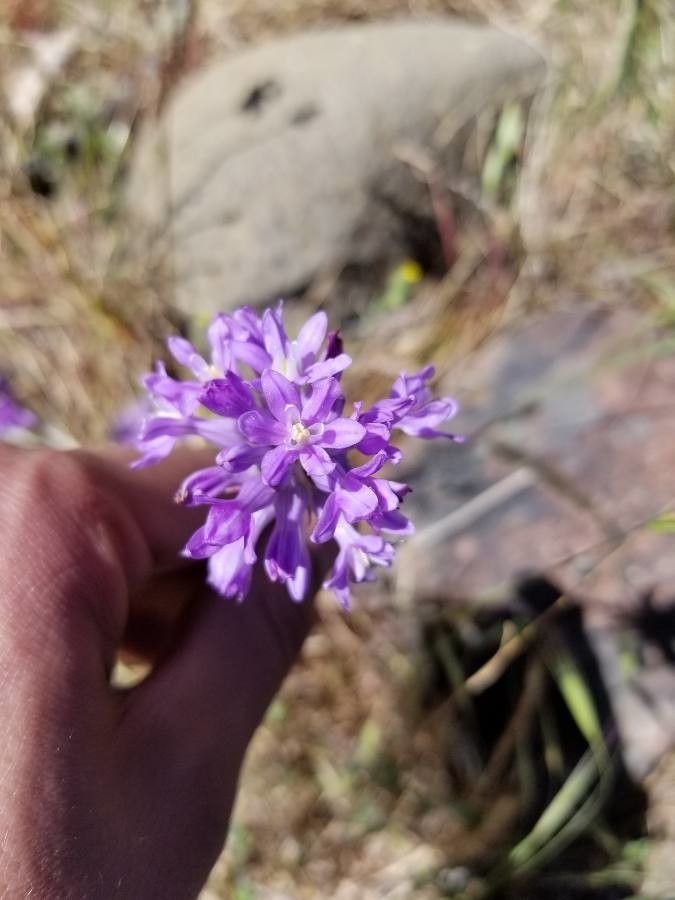
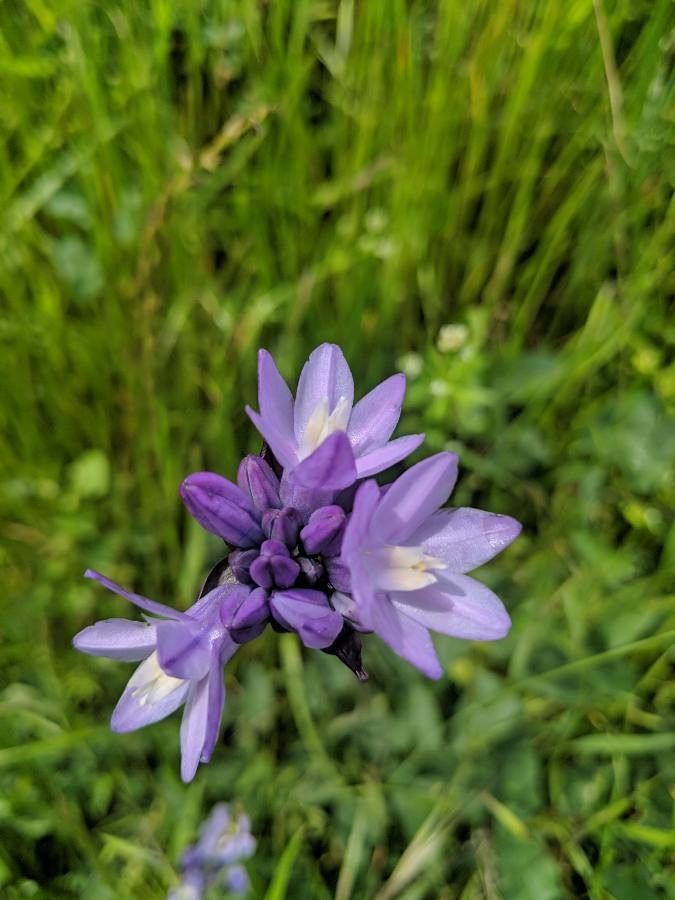
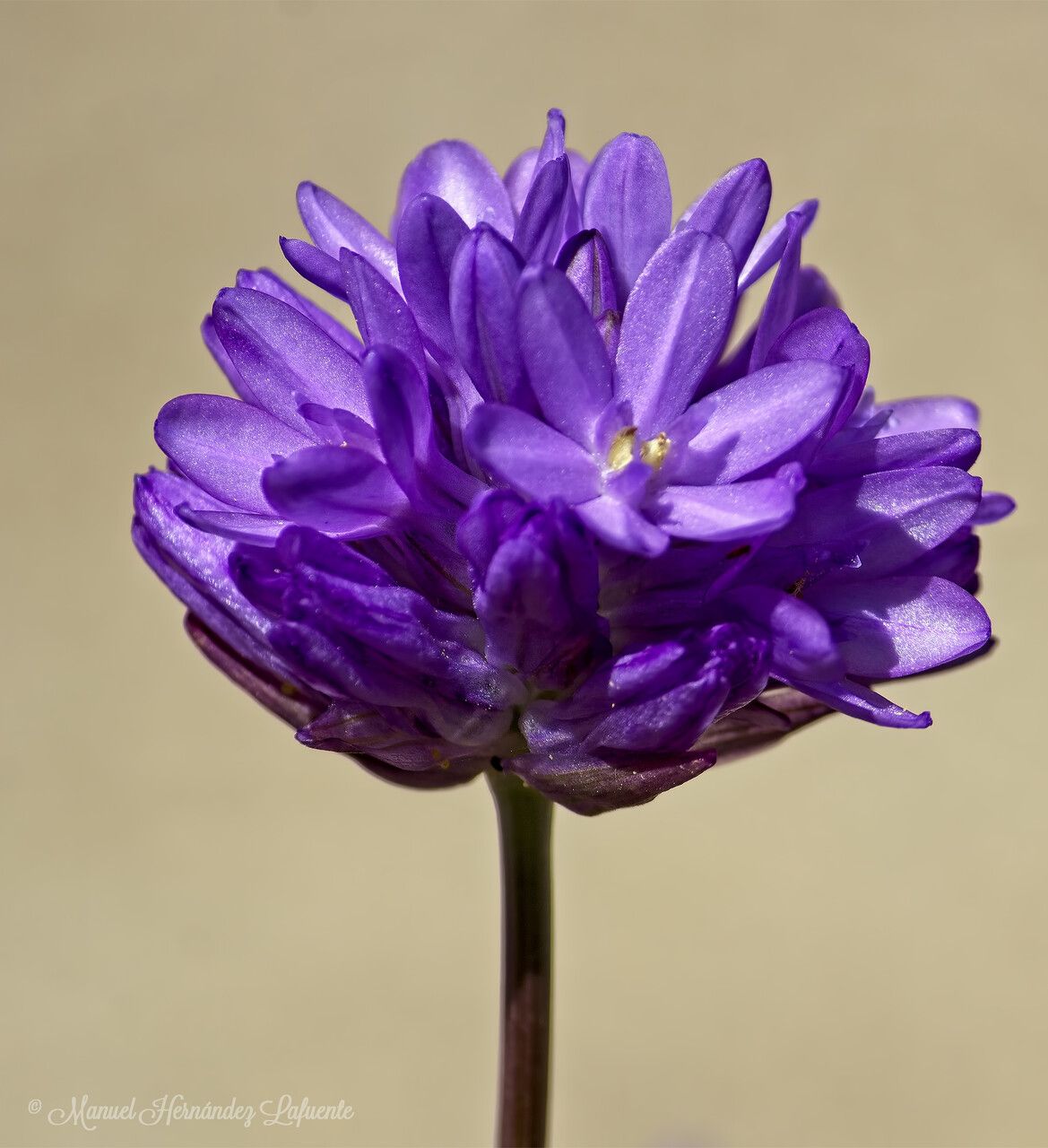
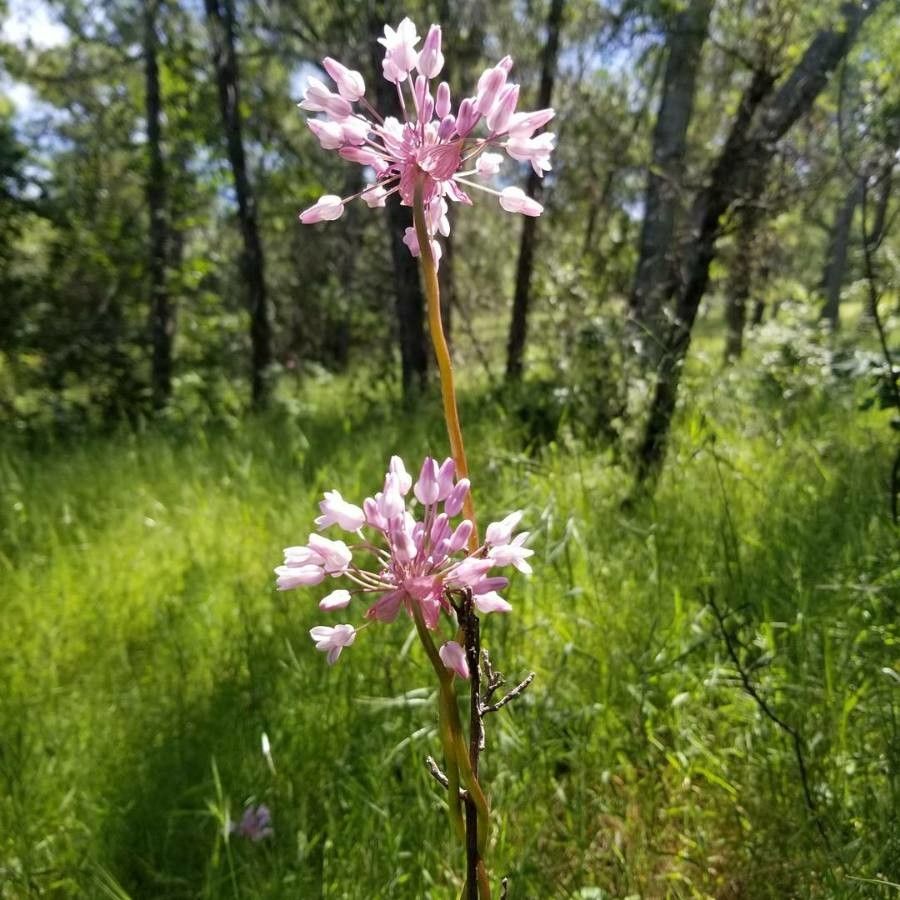
Dichelostemma multiflorum is a species of flowering plant known by the common names round-tooth snake-lily, many-flower brodiaea and wild hyacinth (although the latter name is shared with a number of other taxa). It is native to California and Oregon, where it grows in hills, mountains, and inland grasslands. It is a perennial wildflower erecting a tall, naked stem topped with a spherical inflorescence of up to 35 densely packed purple or pink-purple flowers. Each flower is a tube about a centimeter long with six petal-like lobes arranged in a starlike corolla. The lobes may curl back slightly.
Roundtooth snakelily is fairly disease-resistant and usually not prone to illnesses. However, it can be affected by pests and diseases present in its surroundings. These infections are typically mild. In terms of care, the plant needs a moderate amount of maintenance. It should be pruned regularly to maintain a neat appearance and healthy growth. Fertilizing can also help encourage flowering. Roundtooth snakelily is suitable for anyone with outdoor space, such as a garden or patio, and does not require extensive care experience. It may need more attention when grown indoors.
How to keep Dichelostemma Multiflorum.
Light
Roundtooth snakelily is a sun-loving herbaceous perennial native to open habitats and commonly found in meadows and grasslands. It prefers full sun but can also tolerate partial sun.
Temperature
Roundtooth snakelily can tolerate a wide range of temperatures, but its distribution may still be constrained by different combinations of moisture and heat. It grows best in warm summer conditions with enough rainfall or watering. Long stretches of cloudy, rainy weather, as well as extended high temperatures, can raise the probability of Roundtooth snakelily dying. In winter, adequate protection from cold can enhance the plant's survival rate.
Fertilizer
The primary time to fertilize Roundtooth snakelily is in early spring when the flowers are forming. Using the correct fertilizer promotes better blooms and helps Roundtooth snakelily produce attractive flowers. Fertilizing in early spring ensures strong flowering during the season and supplies energy for dormant growth phases.
Pruning
To help the roundtooth snakelily flourish, it's important to prune it in early spring. This involves cutting away dead stems and thinning out older ones to improve air circulation. Removing spent blooms, a process known as deadheading, can extend the flowering period. Timely pruning promotes strong growth and helps prevent disease, resulting in a more vibrant display.
Botanical profile.
- Plant Type
- Herb
- Life Cycle
- Perennial
- Genus
- Dichelostemma
- Family
- Asparagaceae
- Hardiness Zone
- 6-9
- Mature Height
- 30 cm to 91 cm
- Mature Spread
- 15 cm to 30 cm
- Leaf Color
- Green
- Leaf Type
- Deciduous
- Flower Color
- Lavender, Pink
- Flower Size
- 1.02 cm to 2.03 cm
- Bloom Time
- Mid spring, Late spring
- Planting Time
- Spring, Summer, Autumn
- Harvest Time
- Early summer, Mid summer
Other names.