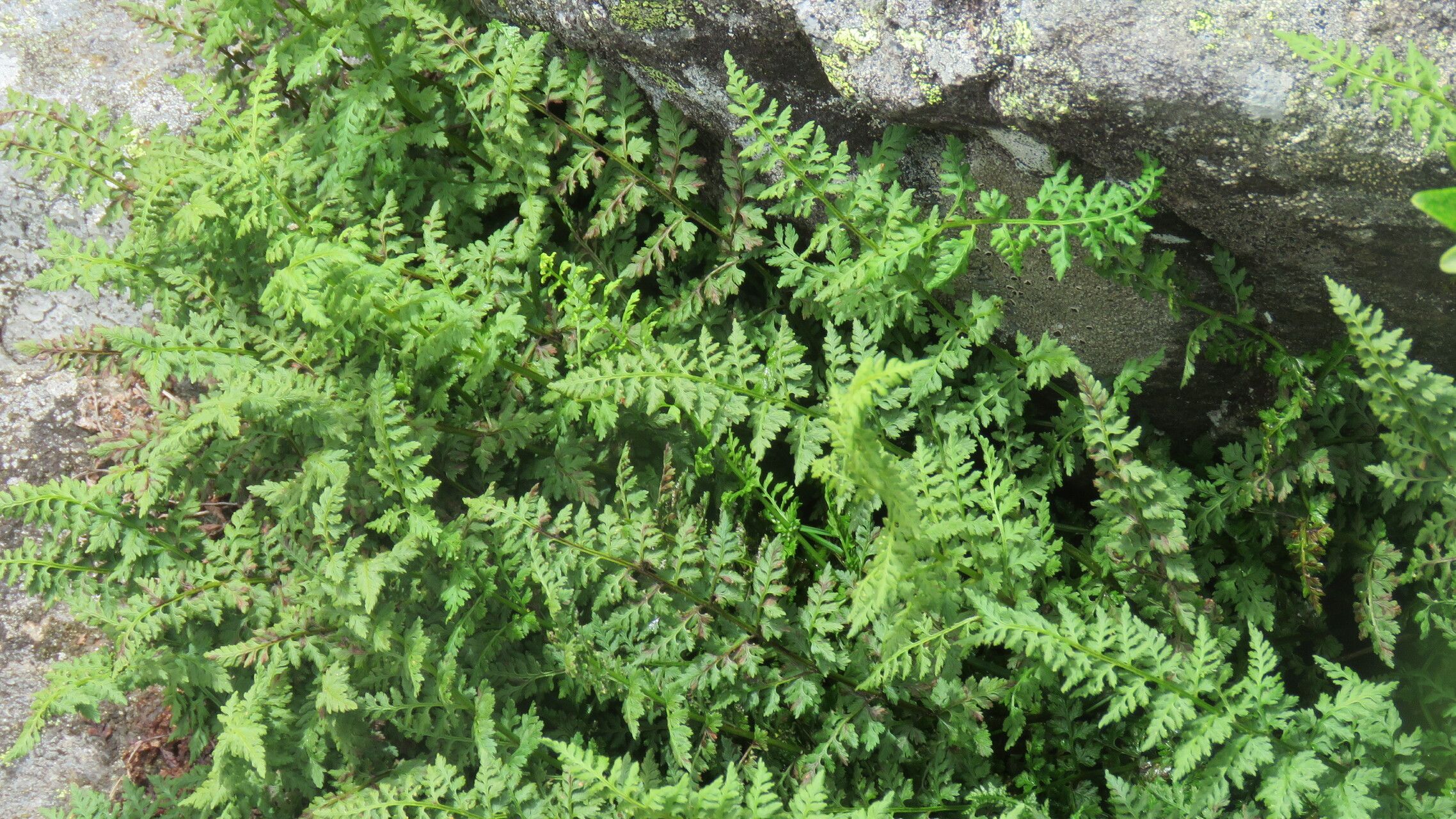
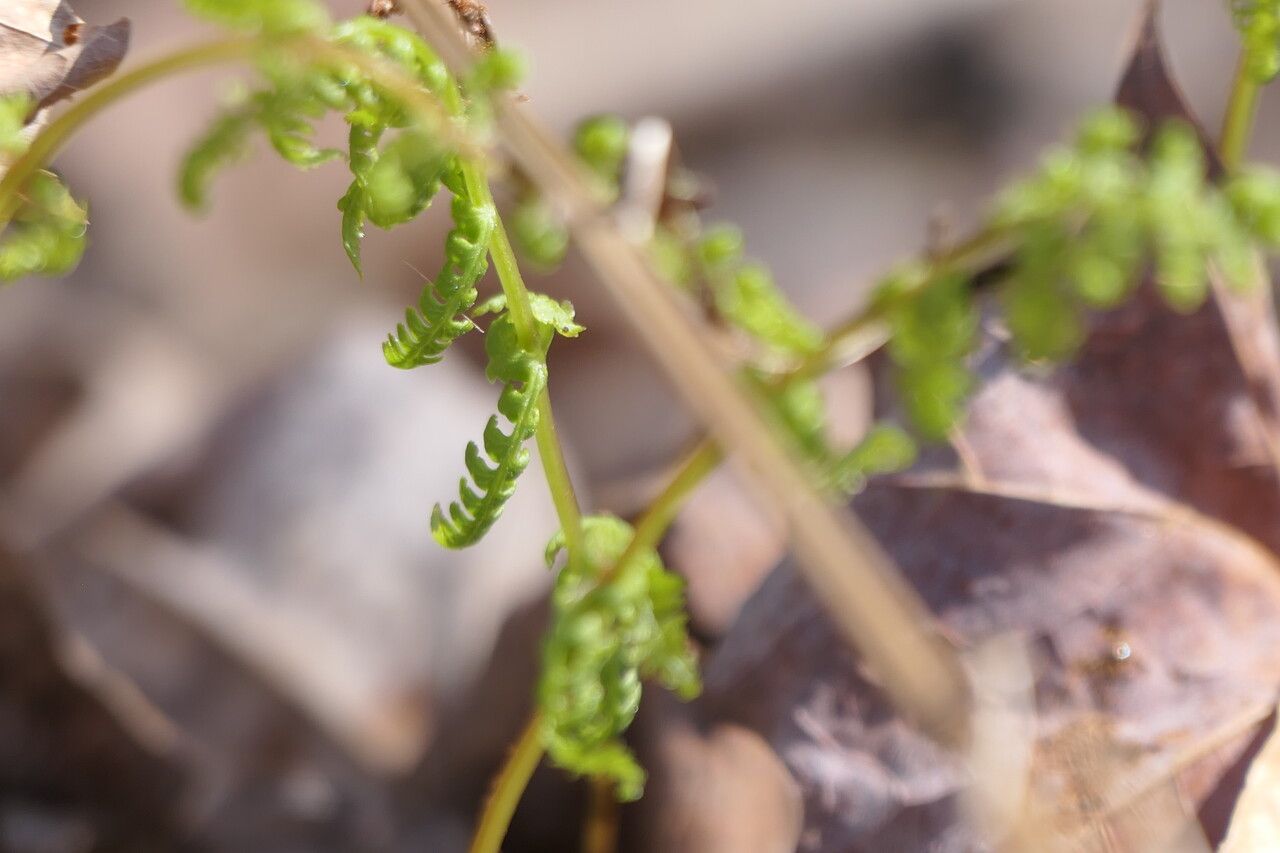
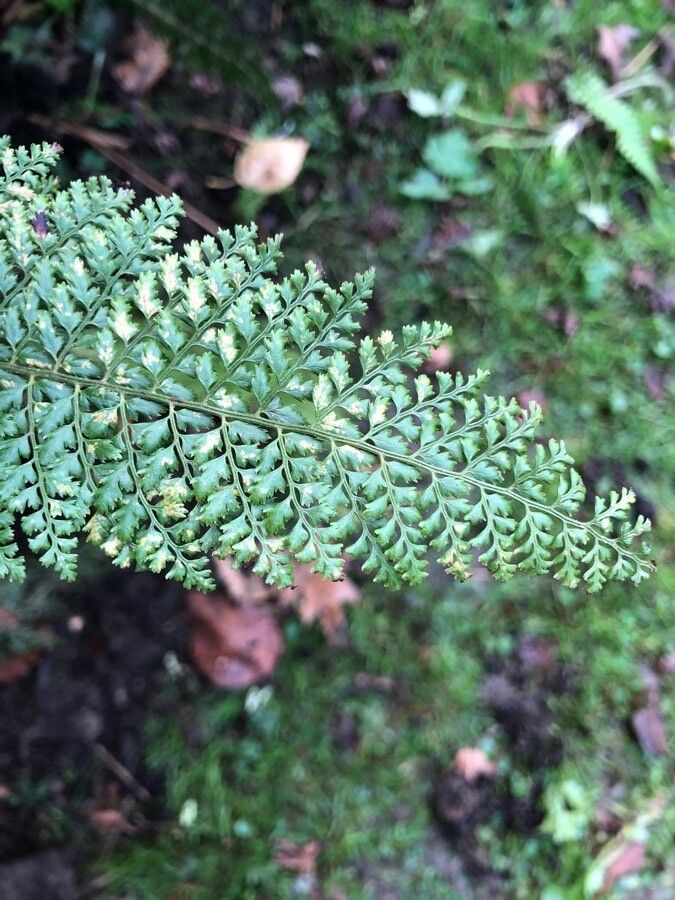
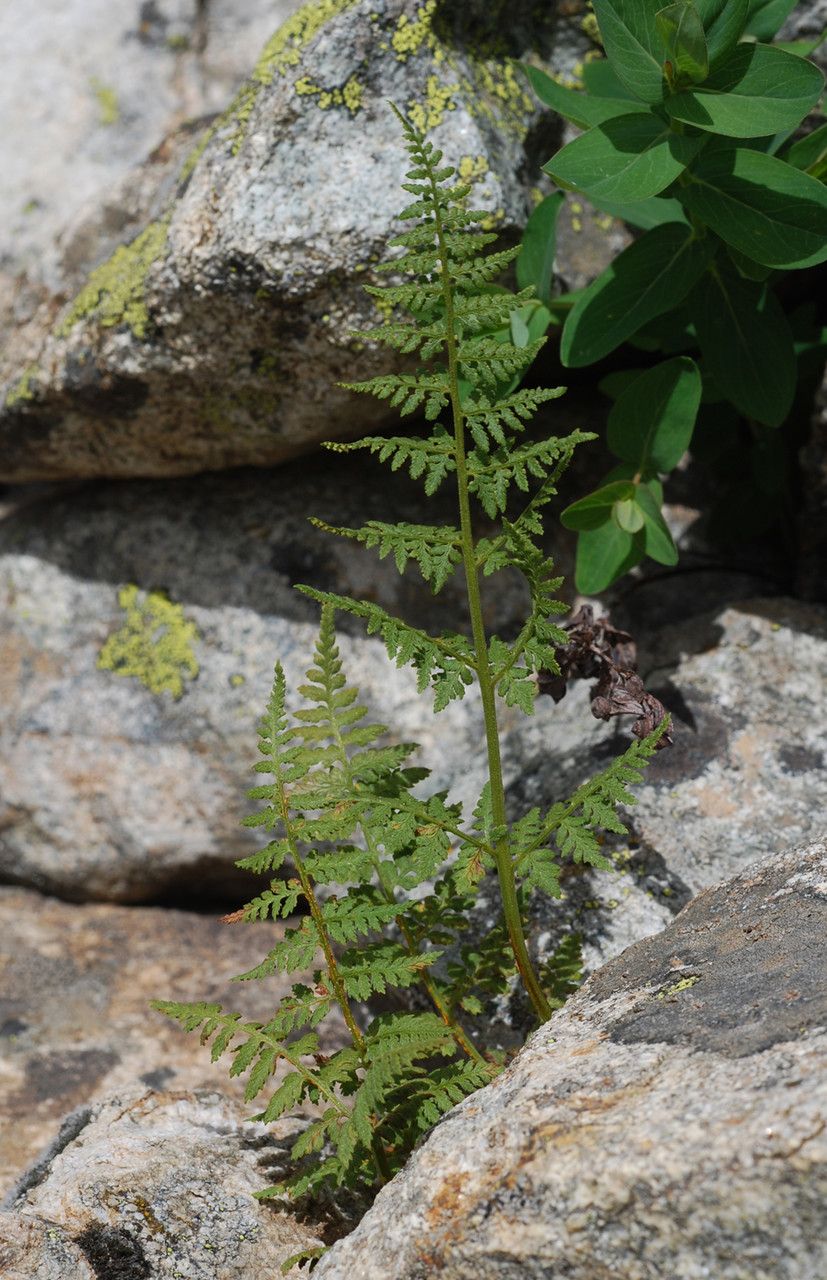
Cystopteris tenuis, commonly known as the slender bladder fern, is a small species of fern that belongs to the family Cystopteridaceae. Native to North America, this fern can be found in a variety of habitats, including rocky slopes, cliffs, and moist woodlands.
The slender bladder fern boasts a delicate appearance, with fronds that reach up to 30 cm in length and are segmented into small leaflets. These leaflets are narrow, pointed at the tips, and exhibit a bright green hue. The fronds emerge from a central rosette of leaves, which grow from an underground rhizome.
This plant is notable for its resilience to dry conditions, thanks to its deep root system that can access moisture even during drought periods. Additionally, it can adapt well to areas with low light levels.
The slender bladder fern plays a crucial role in ecosystems by providing habitat for various insects, including moths and butterflies, which use it as a source of food or shelter during their life cycles.
Overall, Cystopteris tenuis is an attractive plant species that enhances the beauty and diversity of its surroundings while offering ecological benefits to local wildlife populations.
Upland brittle bladderfern has strong resistance to disease and is typically not vulnerable to illnesses. Nevertheless, it can be affected by pests and diseases found in its environment. Such infections are generally mild. Regarding care, this plant needs moderate maintenance. It should be pruned regularly to preserve an attractive appearance and encourage healthy growth. Applying fertilizer can also help stimulate flowering. Upland brittle bladderfern is appropriate for anyone with outdoor areas like a garden or patio and does not demand extensive gardening experience. It may need extra attention when cultivated indoors.
How to keep Cystopteris Tenuis.
Light
Upland brittle bladderfern is native to habitats like forest understories or rocky areas, which provide natural shade. It prefers partial sun but can adapt to full sun or full shade, showing its hardy, adaptable nature.
Temperature
Upland brittle bladderfern can tolerate a wide spectrum of temperatures, but its range may still be restricted by particular combinations of moisture and heat. It performs best in warm summer conditions with sufficient rainfall or watering. Extended periods of cloudy, rainy weather, as well as prolonged high temperatures, can raise the probability of Upland brittle bladderfern dying. In winter, adequate protection from cold can increase the plant’s chances of survival.
Fertilizer
One fertilizer application in spring is typically enough for Upland brittle bladderfern, though repeated feedings can optimize growth. Apply fertilizer roughly every month to six weeks. Fertilization improves leaf appearance and function, helping maintain even color and a healthy texture. It also promotes root development and nutrient uptake for long-term plant health.
Pruning
The upland brittle bladderfern thrives in moist, shady environments and features delicate fronds. To promote new growth and maintain overall health, prune dead or damaged fronds from early to late spring. Regularly removing yellowing leaves can improve air circulation and reduce the risk of disease, helping to maintain the plant's attractive shape.
Botanical profile.
- Plant Type
- Herb
- Life Cycle
- Perennial
- Genus
- Cystopteris
- Family
- Aspleniaceae
- Hardiness Zone
- 3-8
- Mature Height
- 10 cm to 30 cm
- Mature Spread
- 15 cm to 25 cm
- Leaf Color
- Light Green, Pale Green
- Leaf Type
- Deciduous
- Planting Time
- Spring, Summer, Autumn