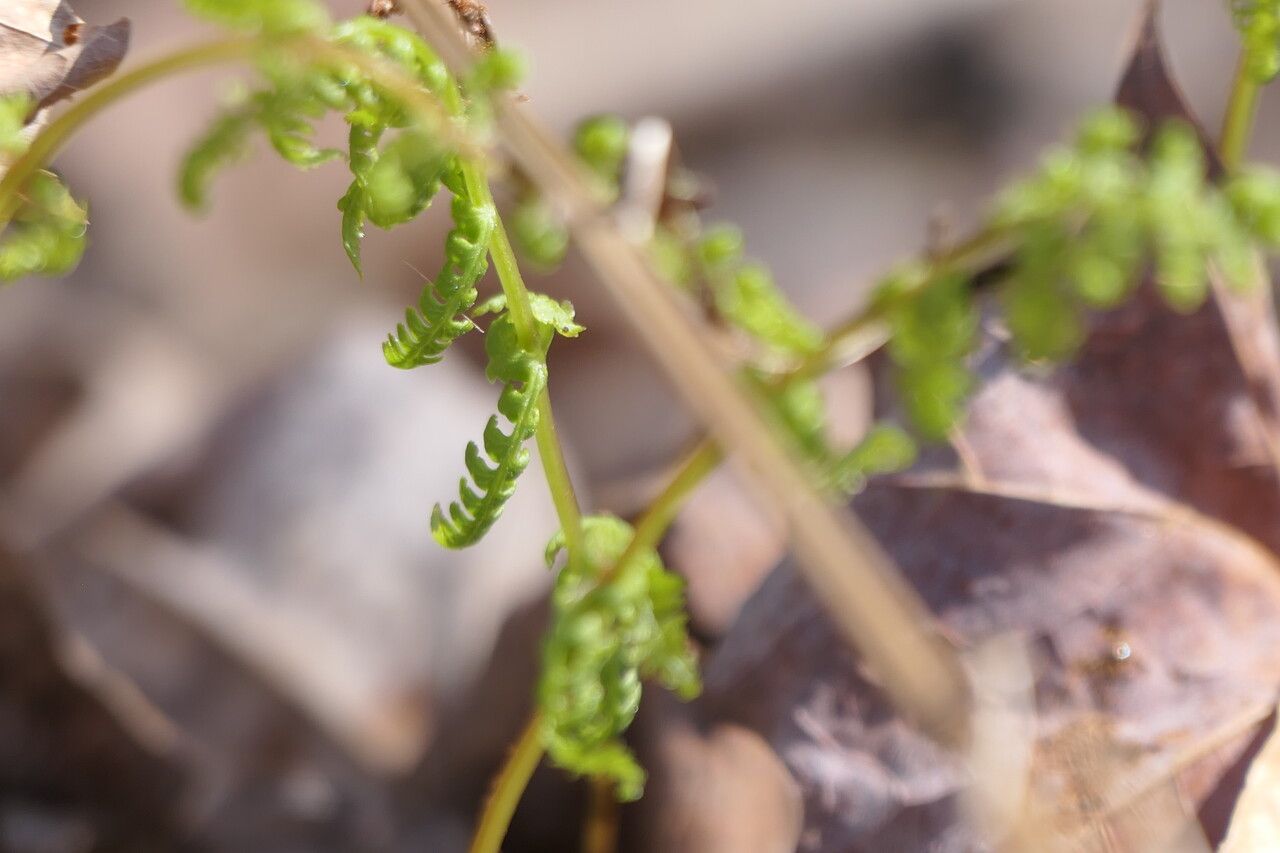
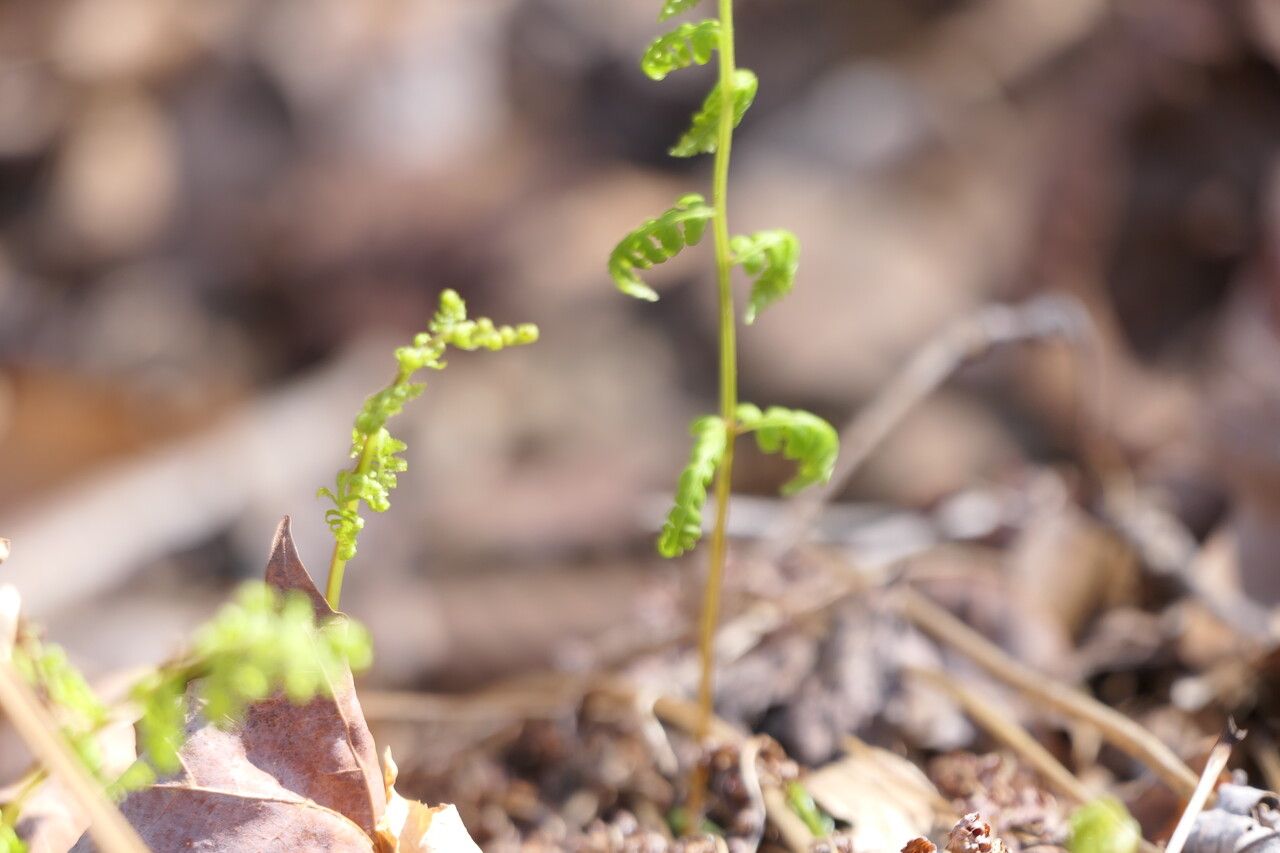
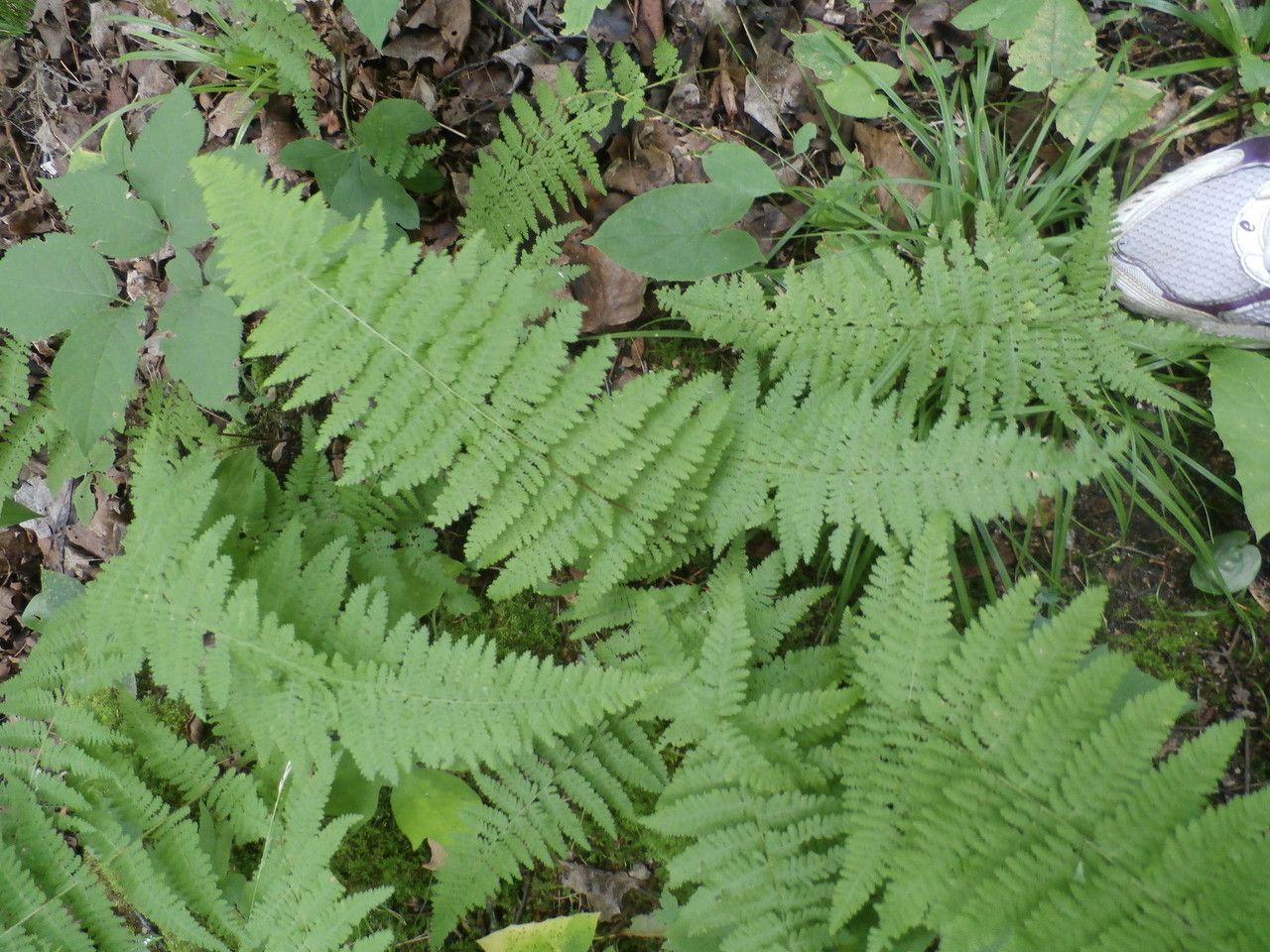
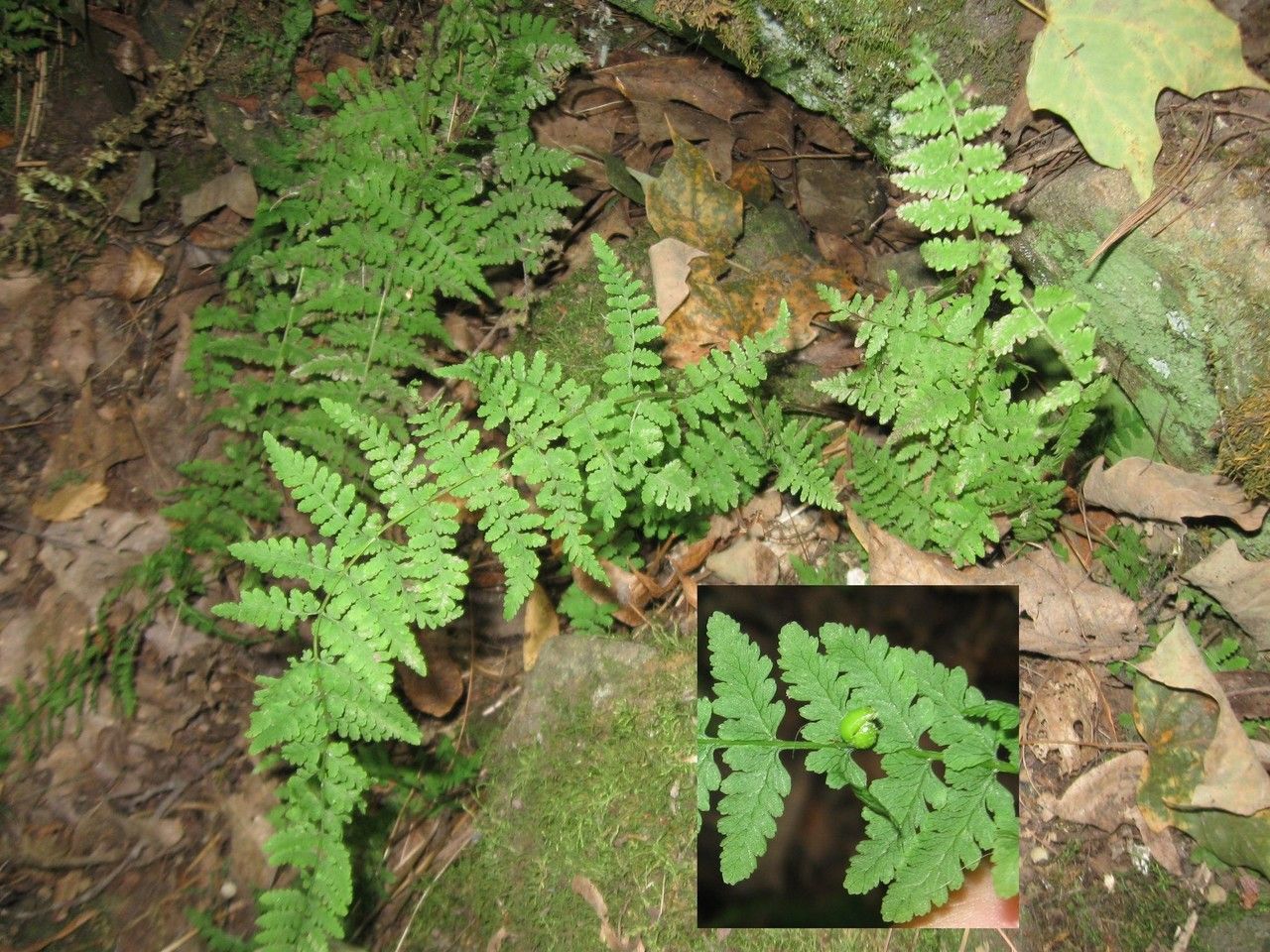
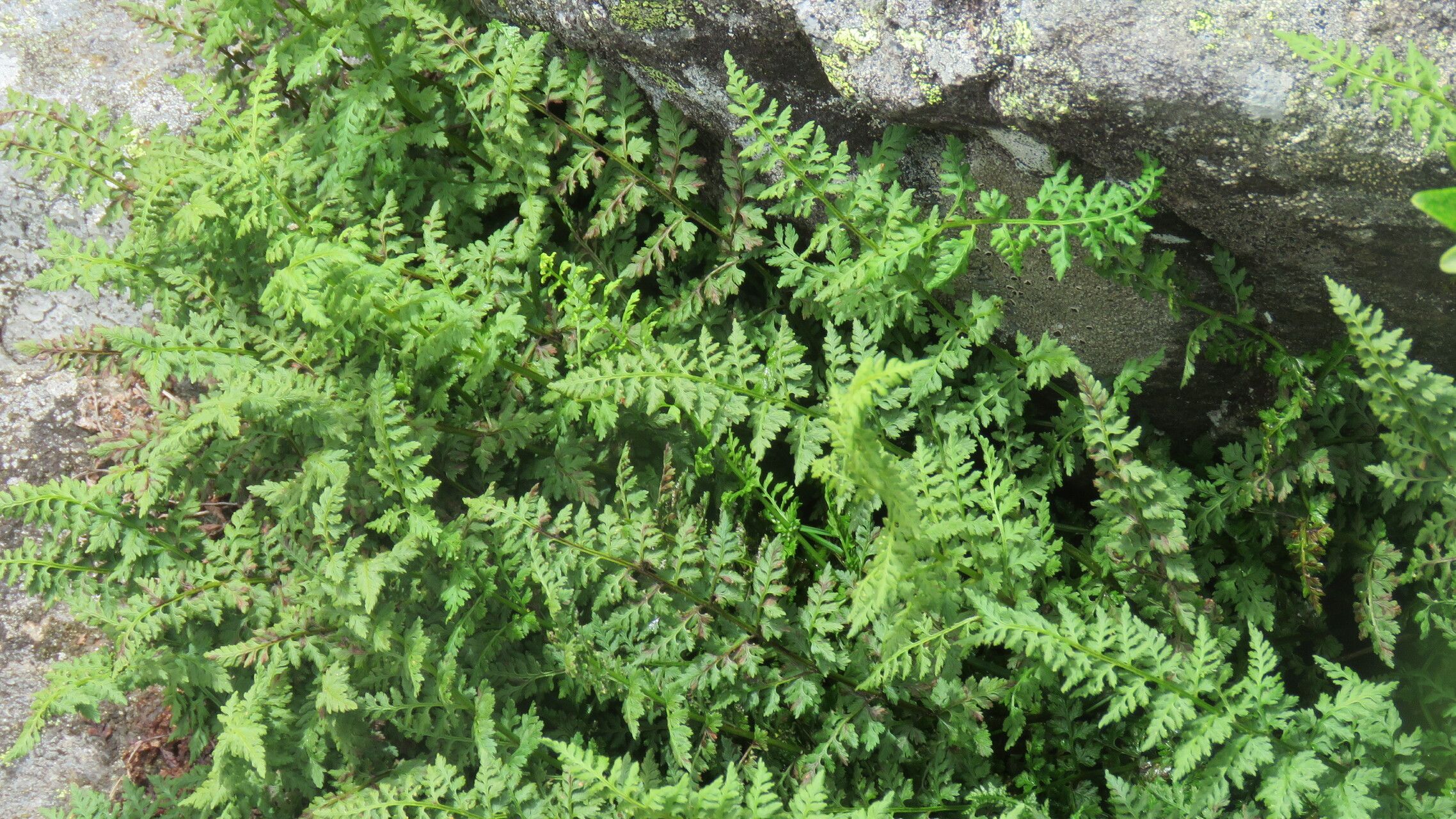
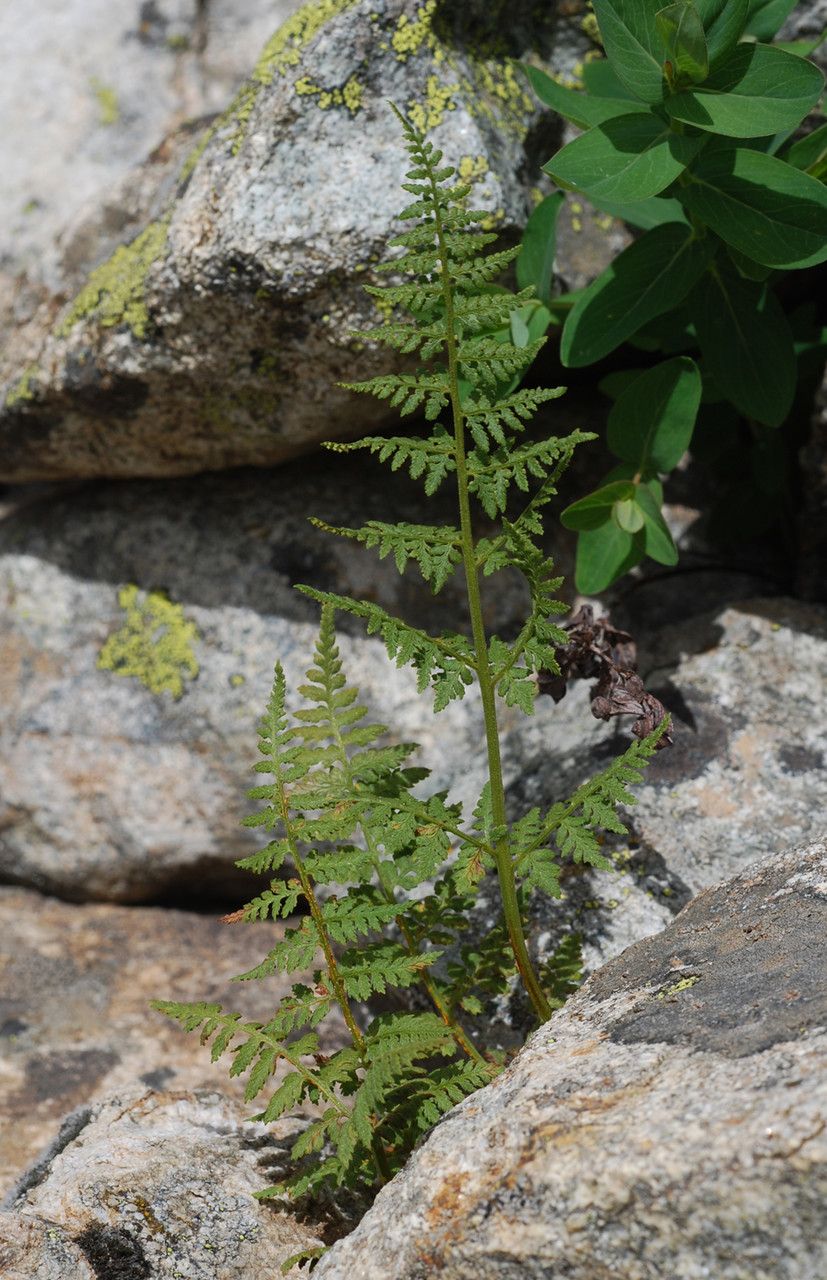
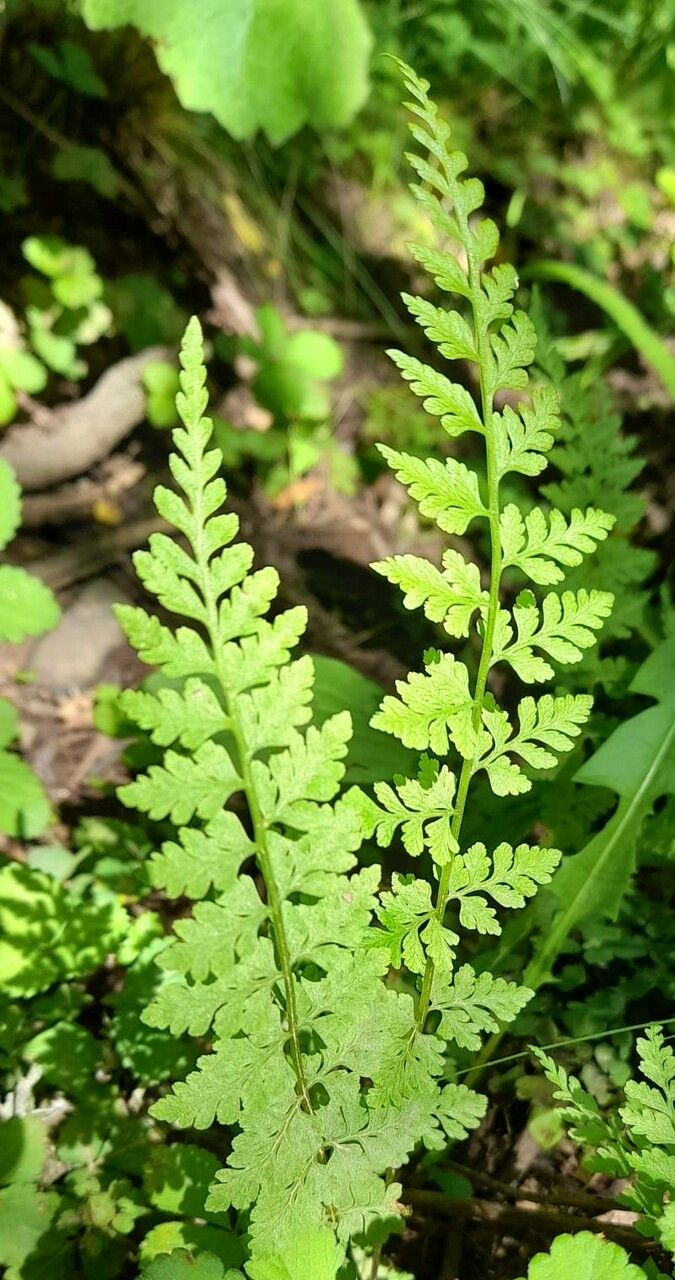
Cystopteris bulbifera, commonly known as the bulblet fern, is a species of fern in the Cystopteridaceae family. Native to North America, it can be found in diverse habitats such as rocky slopes, forests, and wetlands.
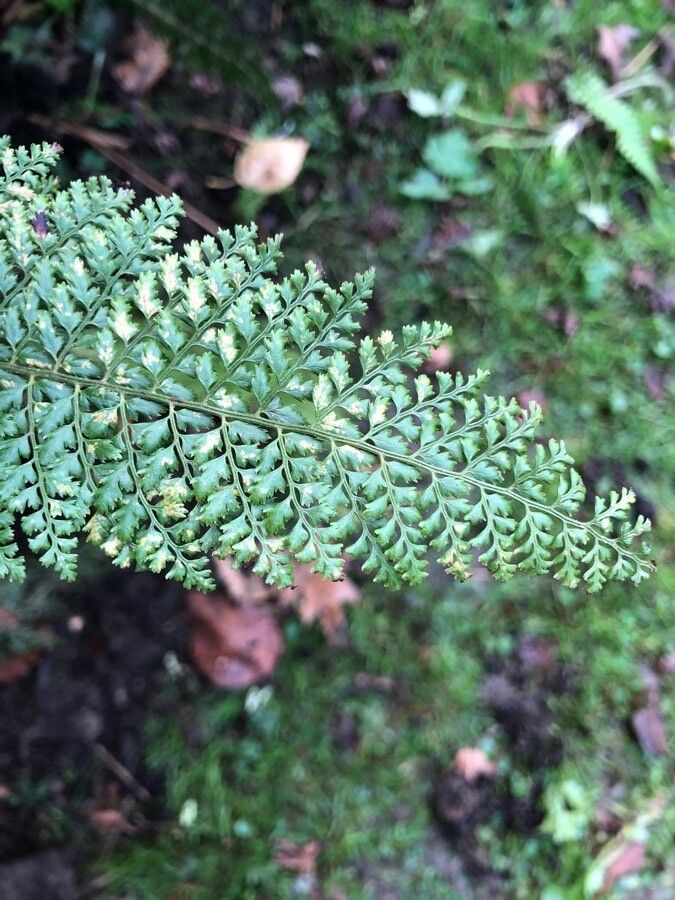
The bulblet fern employs a unique reproductive strategy, producing small bulbils on its fronds. These bulbils can grow into new plants once they fall off, which allows the plant to spread rapidly and efficiently within its environment.
The fronds of Cystopteris bulbifera are delicate, light green, and triangular, tapering toward the tip. They can grow up to 30 cm long and feature small leaflets along either side of the stem.
This plant prefers moist soil conditions but can tolerate some drought once established. Though it is tolerant of shade, it thrives better in partial sunlight.
Cystopteris bulbifera has been used medicinally by Native American tribes to treat various ailments, including fevers, coughs, and wounds.
Overall, this unique fern species plays an important role in its ecosystem by providing habitat for wildlife and offering aesthetic appeal with its delicate foliage.
Bulblet bladderfern is fairly disease-resistant and typically does not suffer from many illnesses. However, it can be affected by pests and diseases present in its environment. These issues are usually mild. In terms of care, the plant requires moderate maintenance. It should be pruned regularly to maintain a pleasing appearance and healthy growth. Fertilizing can also help encourage flowering. Bulblet bladderfern is suitable for anyone with outdoor space, such as a garden or patio, and does not demand extensive care experience. It may need more attention when grown indoors.
How to keep Cystopteris Bulbifera.
Light
Bulblet bladderfern grows best in moderate sunlight but can tolerate environments with a complete absence of light. The plant performs optimally under these lighting conditions because photosynthesis is sufficient. Excessive sunlight can cause stress, while too little light can hinder proper growth and development. It originally comes from habitats where sunlight is filtered through tree canopies.
Water
The bulblet bladderfern thrives in moist environments and prefers regular moisture, though it has moderate drought tolerance. To maintain optimal hydration, it should be watered twice a week. This fern is best suited for outdoor cultivation, where it can benefit from rainwater, mimicking its natural growth cycles.
Temperature
Native to temperate regions, the bulblet bladderfern does best in temperatures ranging from 41 to 89.6 °F (5 to 32 ℃). Because it prefers cooler conditions, minor adjustments may be necessary to keep temperatures within that range during periods of extreme heat or cold.
Fertilizer
One fertilizer application in spring is typically enough for Bulblet bladderfern, though multiple feedings can maximize growth. Feed every month to six weeks. Fertilization improves the leaves' appearance and function, helping maintain even color and a healthy texture. It also promotes root development and nutrient uptake for long-term plant health.
Pruning
The Bulblet Bladderfern is a delicate fern known for producing bulbils on its fronds. To promote healthy growth, prune the plant from early to late spring by cutting any damaged fronds near the base. Regular pruning helps maintain the fern's vigor and can prevent disease. Be sure to use sharp, clean tools to minimize the risk of infection.
Botanical profile.
- Plant Type
- Herb
- Life Cycle
- Perennial
- Genus
- Cystopteris
- Family
- Aspleniaceae
- Hardiness Zone
- 4-8
- Mature Height
- 76 cm
- Mature Spread
- 61 cm
- Leaf Color
- Green
- Leaf Type
- Deciduous
- Bloom Time
- Summer, Fall
- Planting Time
- Spring, Summer, Autumn
Other names.
Reader questions.
How should I water my Bulblet bladderfern?
To properly water the Bulblet bladderfern, it is recommended to use filtered water at room temperature. Tap water may contain harmful particles that can negatively affect the plant. It is important to use water that is at room temperature or slightly warmer because the Bulblet bladderfern is accustomed to a warm environment and cold water can be a shock. Avoid watering from above as it can cause issues with the foliage. Instead, pour the filtered room temperature water directly onto the soil until it is completely soaked. This method helps moisturize and spread the roots, allowing them to gather necessary nutrients from the soil.
Why should I add fertilizer to my Bulblet bladderfern?
The main structure of the Bulblet bladderfern is made up of its leaves. Fertilization is important for maintaining healthy and attractive leaves. Proper fertilization ensures consistent color and a healthy texture. It also benefits the plant below the soil's surface by promoting new root growth and maintaining existing roots. Fertilizing your plant not only keeps it healthy in the present, but also helps it absorb nutrients from the soil more effectively in the future.
What are the sunlight requirements for Bulblet bladderfern?
The Bulblet bladderfern requires moderate sunlight but can also thrive in areas with a complete absence of light. It grows best under light conditions similar to its original habitat, which includes areas with filtered sunlight through tree canopies. The plant requires about 3-6 hours of sunlight for 'partial sun' conditions and less than 3 hours of sunlight for 'full shade' conditions. It is advised to observe how sunlight moves through your garden to ensure the plants are placed in spots that provide the optimal balance of light and shade.
What is the native climate for bulblet bladderfern?
The bulblet bladderfern is native to temperate regions, thriving best in a temperature range of 41 to 89.6 °F (5 to 32 °C). It has a strong preference for cooler environments, indicating a need for adjustments during extreme temperatures to maintain its ideal conditions.
What should I do if I give my Bulblet bladderfern too much water or too little water?
Overwatering can harm your Bulblet bladderfern by causing wilting and discoloration of its stems and leaves. It can also lead to diseases like root rot, mold, and mildew, which can be fatal to the plant. While underwatering is less common, it can still happen, causing brittle and brown leaves. It is important to detect signs of overwatering early to prevent irreversible damage. If you notice these signs, reduce your watering schedule and check the soil's drainage. Replace poor-draining soil with a loose, well-draining potting mix. If your plant is not receiving enough water, simply increase watering until the signs subside.
When should I fertilize my Bulblet bladderfern?
If you grow your Bulblet bladderfern outdoors each year, it will send out new shoots in early spring, indicating that it's time to fertilize. Usually, a single application of fertilizer in spring is sufficient. However, if you want to maximize growth, you can fertilize multiple times from spring to early summer, preferably once every month to a month and a half.
How can artificial lighting be used for Bulblet bladderfern indoors?
Indoor Bulblet bladderfern plants require adequate lighting for optimal growth, especially when natural sunlight is insufficient. Artificial lights, such as LED lights, are recommended because they can be customized to provide specific wavelengths needed by the plants. Full sun plants need 30-50 watts per square foot, partial sun plants need 20-30 watts per square foot, and full shade plants need 10-20 watts per square foot of artificial light. The light source should be placed 12-36 inches above the plant to mimic natural sunlight, and most plants need 8-12 hours of light per day to mimic natural daylight hours.
How does bulblet bladderfern handle cold temperatures?
Bulblet bladderfern has a strong resistance to cold, typically not requiring special frost protection measures during winter. However, when temperatures are expected to fall below -30°C, it's important to provide extra protection, such as covering the plant with soil or straw. It's also advisable to water the plant abundantly before the first freeze in autumn to ensure the soil remains moist and to prevent drought and water scarcity during the winter and early spring.
How frequently should I water my Bulblet bladderfern?
If your Bulblet bladderfern is in a pot, the best way to check if it needs water is by sticking your finger into the soil. If the top two to three inches of soil are dry, then it's time to water it. The same method can be used if you have your Bulblet bladderfern planted outdoors in the ground. Once again, if the top few inches of soil are dry, it needs watering. Typically, during spring and early fall, watering once a week is sufficient. However, in extremely hot weather, you may need to water it twice a week or even more. Nevertheless, mature and well-established Bulblet bladderferns have a remarkable ability to withstand drought.
When is the best time to not fertilize my Bulblet bladderfern?
During late fall and winter, your Bulblet bladderfern will go into a dormant phase, halting new growth. It is important to avoid fertilizing your Bulblet bladderfern during this time. If you do choose to fertilize in the spring and summer, gradually reduce the amount of fertilizer as summer approaches since the growth rate of your Bulblet bladderfern will slow down. Overall, it is not advisable to fertilize your Bulblet bladderfern when the weather is excessively hot or the soil is extremely dry. Fertilizing under these conditions can cause stress and premature death for your Bulblet bladderfern.
What are the symptoms of inadequate light for Bulblet bladderfern?
When Bulblet bladderfern is grown indoors with insufficient light, it may exhibit symptoms such as smaller new leaves, leggy or sparse growth, faster leaf drop, slower or no new growth, lighter-colored new leaves, chlorosis (leaves turning yellow), sunscald (damage from intense sunlight exposure), leaf curling (as a defense mechanism against excessive sunlight), wilting (due to increased water loss), and leaf scorching (dry and crispy leaf edges from excessive sunlight). These symptoms indicate a light deficiency or excessive light exposure that can negatively affect the plant's health.
What should be done if a bulblet bladderfern experiences low temperatures?
The bulblet bladderfern is quite cold-tolerant and performs best when temperatures are above 5°C, but should be kept above -25°C during winter. If temperatures fall below -30°C, there might not be noticeable changes during winter, but there could be a decrease in sprouting or even no sprouting in the spring. In such cases, any parts that have failed to sprout by spring should be removed.