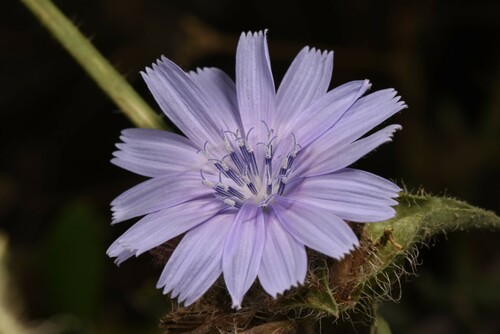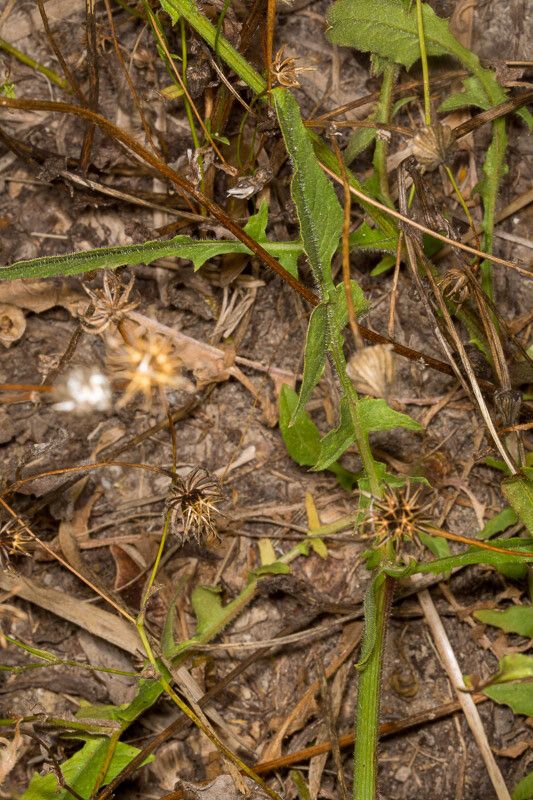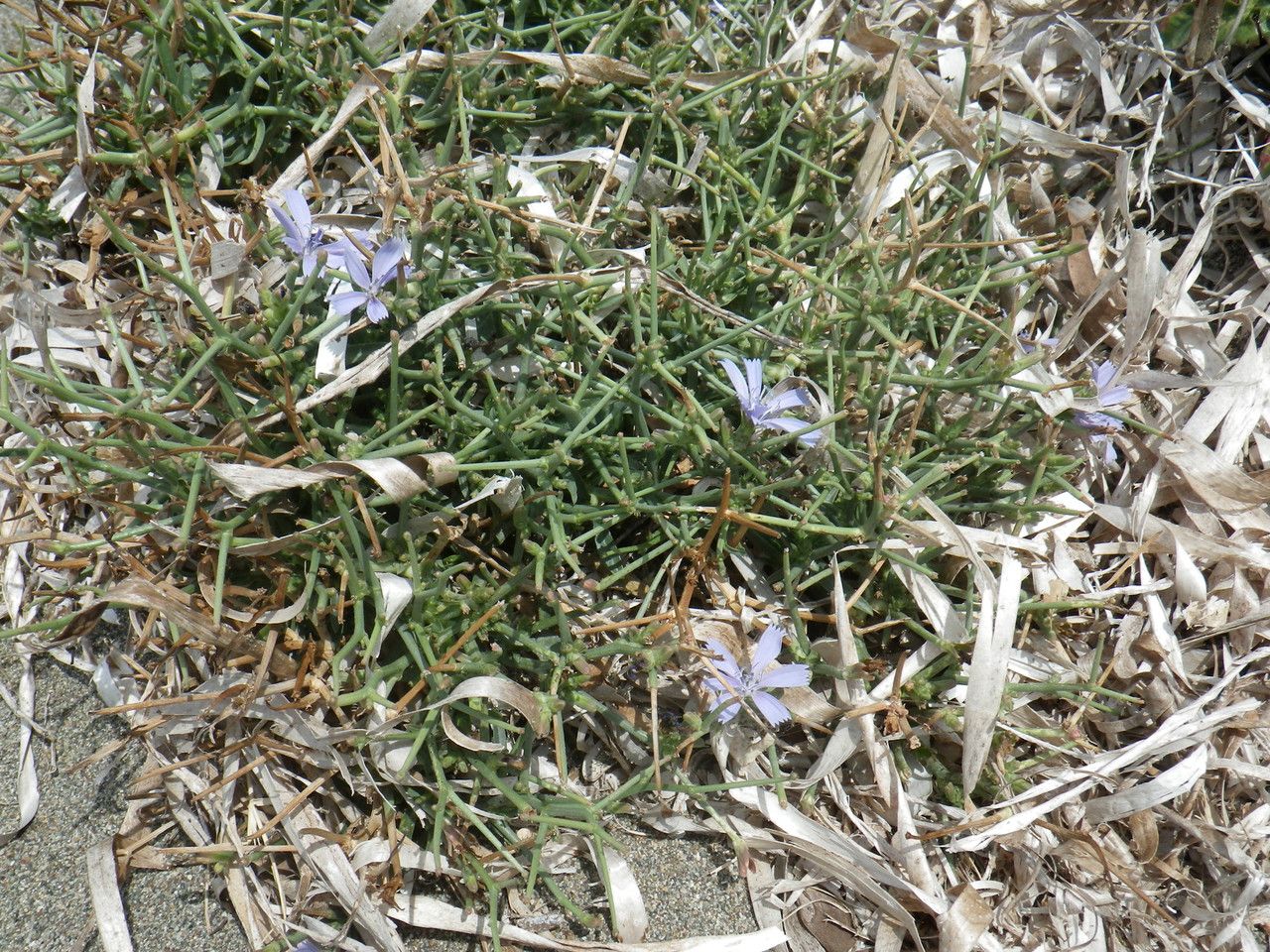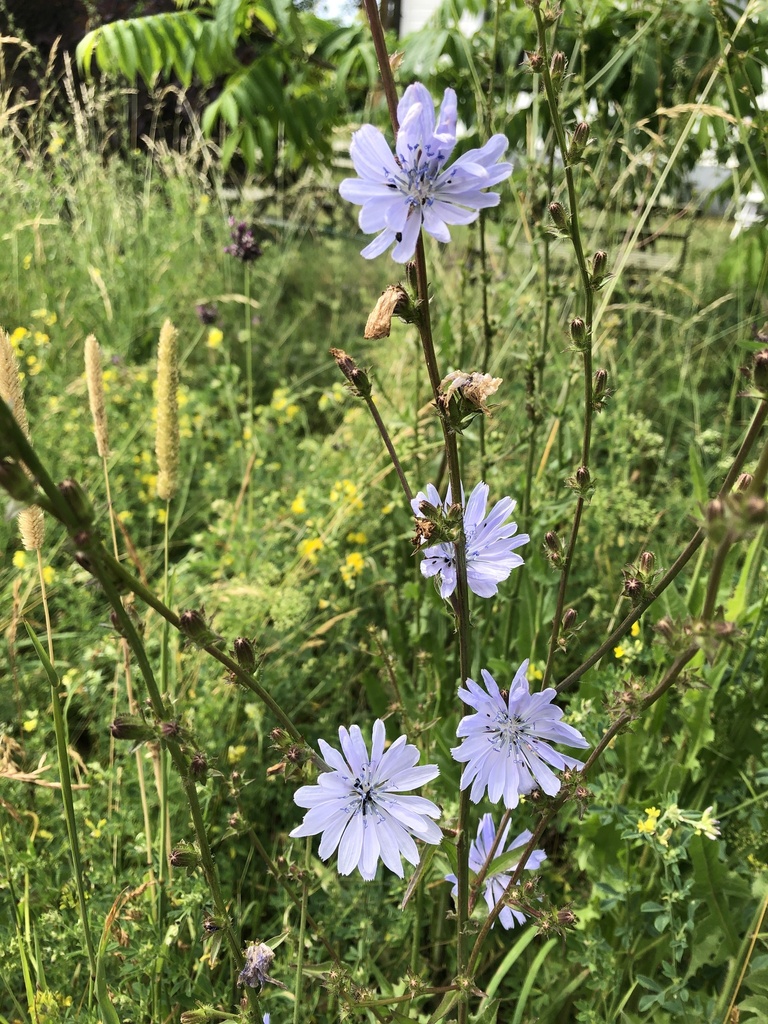
Common chicory (Cichorium intybus) is a somewhat woody, perennial herbaceous plant of the family Asteraceae, usually with bright blue flowers, rarely white or pink. Native to the Old World, it has been introduced to North America and Australia. Many varieties are cultivated for salad leaves, chicons (blanched buds), or roots (var. sativum), which are baked, ground, and used as a coffee substitute and food additive. In the 21st century, inulin, an extract from chicory root, has been used in food manufacturing as a sweetener and source of dietary fiber.Chicory is grown as a forage crop for livestock. "Chicory" is also the common name in the United States for curly endive (Cichorium endivia); these two closely related species are often confused.
Chicory is fairly disease-resistant and typically does not experience many illnesses. Still, it can be affected by pests and diseases present in its surroundings. These problems are usually not serious. As for care, this plant requires moderate maintenance. It should be pruned regularly to keep a neat appearance and support healthy growth. Fertilizing can also encourage flowering. Chicory works well for anyone with outdoor space, such as a garden or patio, and does not demand extensive care experience. It may need more attention when grown indoors.
How to keep Cichorium Intybus.
Light
Chicory does best in places that get sunlight for most of the day. Its preferred growing conditions mirror its native environment, where sun exposure is plentiful. It can also survive in locations where sunlight is regular but not constant. Excessive or insufficient light can harm its growth and overall health.
Water
Common chicory flourishes in conditions with moderate moisture, ideally when there is consistent soil moisture and weekly watering. As a herbaceous perennial, it efficiently utilizes water with the help of its deep taproot system. This system allows the plant to tap into deeper water sources, making it less reliant on rainfall than shallow-rooted plants.
Humidity
This plant will thrive in moderate humidity, which is probably the level in your home. However, misting it a few times a week can be very beneficial. Make sure the room has good ventilation.
Temperature
Chicory is native to environments where temperatures rarely fall below 68°F (20°C) or rise above 95°F (35°C). It flourishes within this temperature band, making it ideal for regions with a temperate climate.
Fertilizer
Usually a single fertilizer application in spring is adequate for Chicory, though repeated feedings can maximize growth. Feed about once a month to every month and a half. Fertilizing improves the leaves' appearance and function, encouraging even color and a healthy texture. It also promotes root development and nutrient uptake, supporting the plant's long-term health.
Pruning
Common chicory, known for its beautiful blue flowers and medicinal roots, benefits from pruning in early to late spring to promote growth and maintain health. By removing dead stems, you can boost the plant’s vitality. However, it's important to avoid significant pruning during the flowering period to preserve the blooms. These practices not only improve the appearance of common chicory but also are rewarding for dedicated gardeners.
Pot & Repot
When repotting Chicory, select a pot 1-2 inches (2.5–5.1 cm) larger that has good drainage. Use a well-draining potting mix. Repot in spring or fall, making sure the root ball sits slightly below the rim of the flower pot. Water well after repotting and place the plant in a warm location with indirect sunlight.
Toxicity
This herb is not considered toxic.
Further reading →
The toxicity and danger assessments provided are for reference only. We do not assure their accuracy, so it's crucial not to depend on them. Seek professional advice when necessary for accurate guidance.
Botanical profile.
- Plant Type
- Herb
- Life Cycle
- Perennial, Biennial, Annual
- Genus
- Cichorium
- Family
- Asteraceae
- Hardiness Zone
- 3-7
- Mature Height
- 0.3 m to 1.37 m
- Mature Spread
- 30 cm to 61 cm
- Leaf Color
- Green
- Leaf Type
- Deciduous
- Flower Color
- Blue
- Flower Size
- 3.05 cm to 5.08 cm
- Bloom Time
- Early summer, Mid summer
- Planting Time
- Spring, Summer, Autumn, Winter
- Harvest Time
- Mid summer, Late summer
- Native Area
- Turkey, Sweden, India, Austria, Slovakia, Montenegro, Pakistan, Slovenia, Morocco, Croatia, Belarus, Uzbekistan, Russia, Iraq, Germany, Estonia, Oman, Romania, Latvia, Belgium, Moldova, Portugal, Netherlands, Saudi Arabia, France, Tajikistan, Tunisia, Czech Republic, Cyprus, Bulgaria, Poland, Armenia, Greece, Ukraine, Serbia, Lebanon, Lithuania, Norway, China, Afghanistan, Kyrgyzstan, Kazakhstan, Italy, Spain, Switzerland, Denmark, Mongolia, Finland, Iran, Albania, Ireland, United Kingdom, Hungary, Algeria, Azerbaijan, Turkmenistan
Other names.
Reader questions.
When Should I Water My Common Chicory?
Determining when to water common chicory involves monitoring several key indicators. Ensuring the soil's moisture level at a depth of 1-2 inches is paramount; water the plant when this soil layer feels dry. Visual signs such as wilting leaves, changes in leaf color, and slowed growth also signal the need for watering. Additionally, environmental conditions, particularly during hot and dry weather, will increase the plant's watering needs. However, it's important to avoid watering when the soil remains moist to prevent risks associated with over-watering, such as root rot, while also being mindful not to delay watering excessively to avoid wilting or stunted growth.
Why should I put fertilizer on my Common chicory plant?
Proper fertilization is essential for maintaining the health and appearance of Common chicory. By fertilizing this plant, you can ensure that its leaves remain vibrant in color and have a healthy texture. Fertilization also supports the growth of new roots and helps maintain the existing root system, allowing the plant to absorb nutrients from the soil more effectively both now and in the future.
What are the sunlight requirements for common chicory?
Common chicory requires full sun, meaning it needs more than 6 hours of sunlight daily to thrive optimally. It can also grow in partial sun conditions, which involves around 3-6 hours of sunlight. Observing the movement of sunlight through your garden helps in selecting spots that offer a balance of light and shade, ensuring the plants remain healthy and happy.
What is the ideal temperature range for growing Common Chicory?
Common Chicory, or Cichorium intybus, flourishes in environments where the temperature stays between 68°F (20°C) and 95°F (35°C). This temperature range is ideal for its growth, making it suitable for regions with a temperate climate. The plant demonstrates a high tolerance to cold, not requiring additional frost protection in winter. However, to prepare for winter, it's advisable to water the plant generously before the first freeze in autumn to keep the soil moist and help prevent drought and water scarcity during the colder months.
How Should I Water My Common Chicory?
Watering common chicory effectively requires a dedicated approach. A watering can with a narrow spout is ideal, as it directs water to the base of the plant, minimizing soil saturation and preventing water from reaching the foliage, which the plant does not favor. Utilizing a moisture meter can help ensure that watering is precise, providing the plant with the dry to slightly damp soil conditions it prefers. Direct watering at the plant's base, particularly during the growing season, is recommended, while keeping the leaf foliage dry to avoid disease.
When should I fertilize my Common chicory to get the best results?
If you grow your Common chicory outdoors, it will start new growth in early spring. This is a sign that it's time to fertilize. Usually, one round of fertilizer in the spring is enough. But if you want to maximize growth, you can fertilize multiple times during spring and early summer. In that case, you should fertilize about once a month to a month and a half.
What are the essential growing conditions for common chicory?
Common chicory thrives best in areas where it can enjoy predominant sun exposure throughout the day, mimicking its native habitat conditions. While it prefers abundant sunlight, it can also sustain growth with consistent but less intense sunlight exposure. Both overexposure and underexposure to sunlight can adversely affect its growth and health. When natural light is not sufficient, especially in indoor settings or during winter, artificial lighting can be used to promote optimal growth. LED lights are often recommended for indoor gardening, providing specific light wavelengths needed by plants. The intensity and duration of artificial lighting should be adjusted based on the plants' natural light requirements.
How does Common Chicory respond to low temperatures?
Common Chicory is extremely cold-tolerant, capable of withstanding winter temperatures above -35°C. Despite its resilience, if temperatures fall below -35°C, there may not be noticeable damage during winter, but the plant could show a decreased sprouting rate or fail to sprout at all in the spring. The recommended solution for plants affected by extreme cold is to remove any parts that have not sprouted in the spring.
How Much Water Does Common Chicory Really Need?
The water requirement for common chicory depends on several factors including the plant and pot size, with the plant's deep taproot system indicating a need for deep, regular watering. Generally, a medium-sized pot of common chicory requires about 1-2 liters of water per session. Proper hydration is indicated by glossy and vibrant leaves, firm stems, and abundant flowering. Conversely, signs of over-watering include yellowing leaves and root rot, while under-watering leads to wilting and drooping. To prevent issues, ensure good drainage and allow the soil to dry slightly between waterings. Applying mulch can help retain soil moisture.
When is it best to not use fertilizer on my Common chicory?
During the late fall and winter, your Common chicory goes through a dormant phase and does not produce new growth. It is best to avoid fertilizing it during this time. In the spring and summer, if you choose to fertilize, gradually reduce the amount as summer approaches because the growth rate of your Common chicory will slow down. It is important to note that it is not advisable to fertilize during extremely hot weather or when the soil is overly dry. Fertilizing in such conditions can stress your Common chicory and lead to premature death.
What are the symptoms of inadequate lighting in common chicory?
Inadequate lighting can lead to several issues in common chicory, including smaller new leaves, leggy or sparse growth, faster leaf drop, sluggish or halted growth, and leaves developing irregular color patterns or appearing paler. Conditions such as chlorosis, where leaves lose their green color, sunscald, leaf curling, wilting, and leaf scorching are also prevalent symptoms of incorrect lighting. These symptoms indicate either too much or too little light exposure, affecting the plant's ability to photosynthesize and maintain health.
What should I do if Common Chicory is exposed to high temperatures?
Common Chicory does not tolerate high temperatures well. Exposure to temperatures above 35°C can halt its growth and increase susceptibility to rot. To protect the plant under high temperature conditions, you should trim away any sunburned or dried-up parts of the plant. Relocating the plant to a shade or using a shade cloth can protect it from the harsh midday and afternoon sun. Additionally, watering the plant in the morning and evening can help keep the soil adequately moist under such conditions.