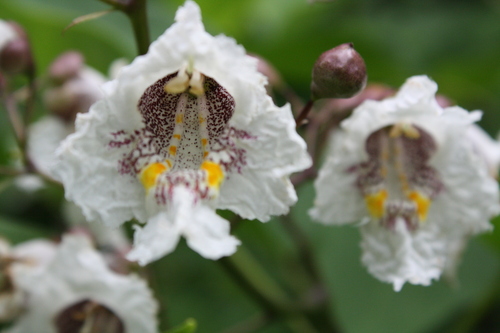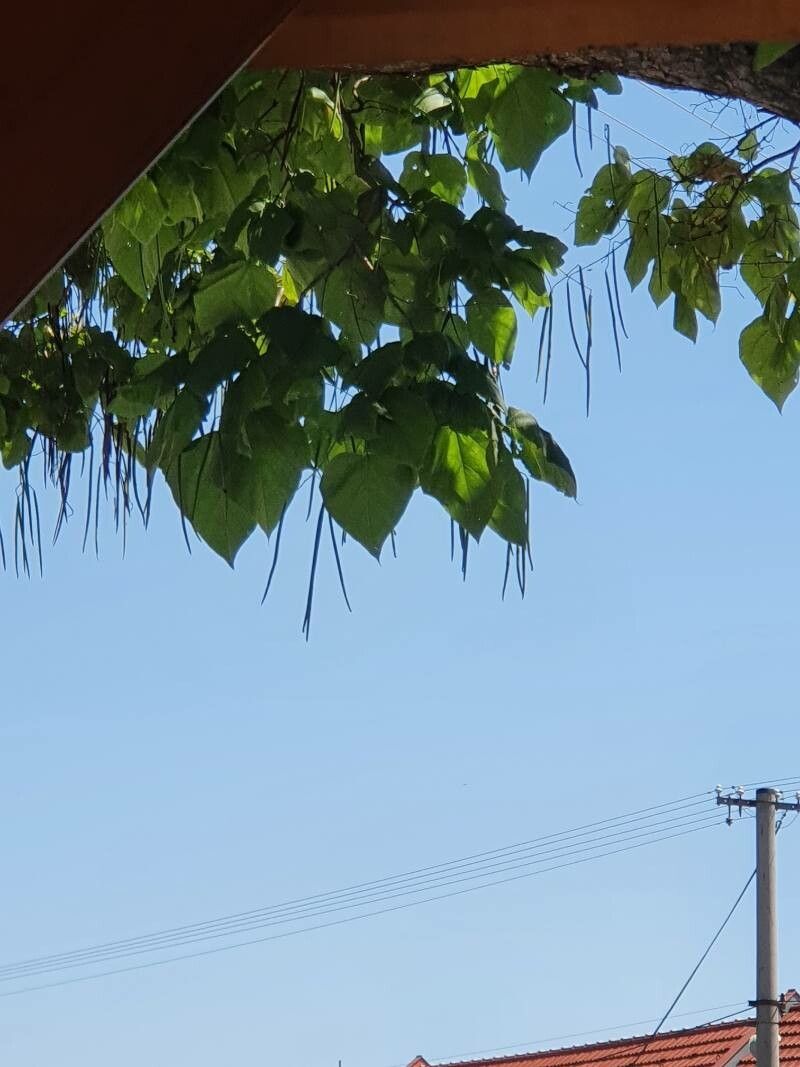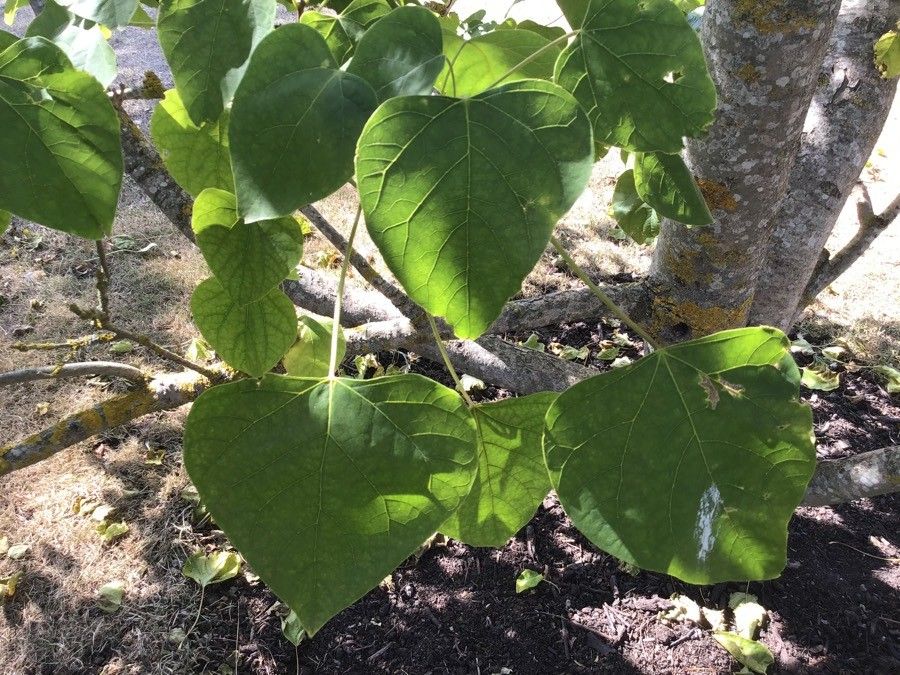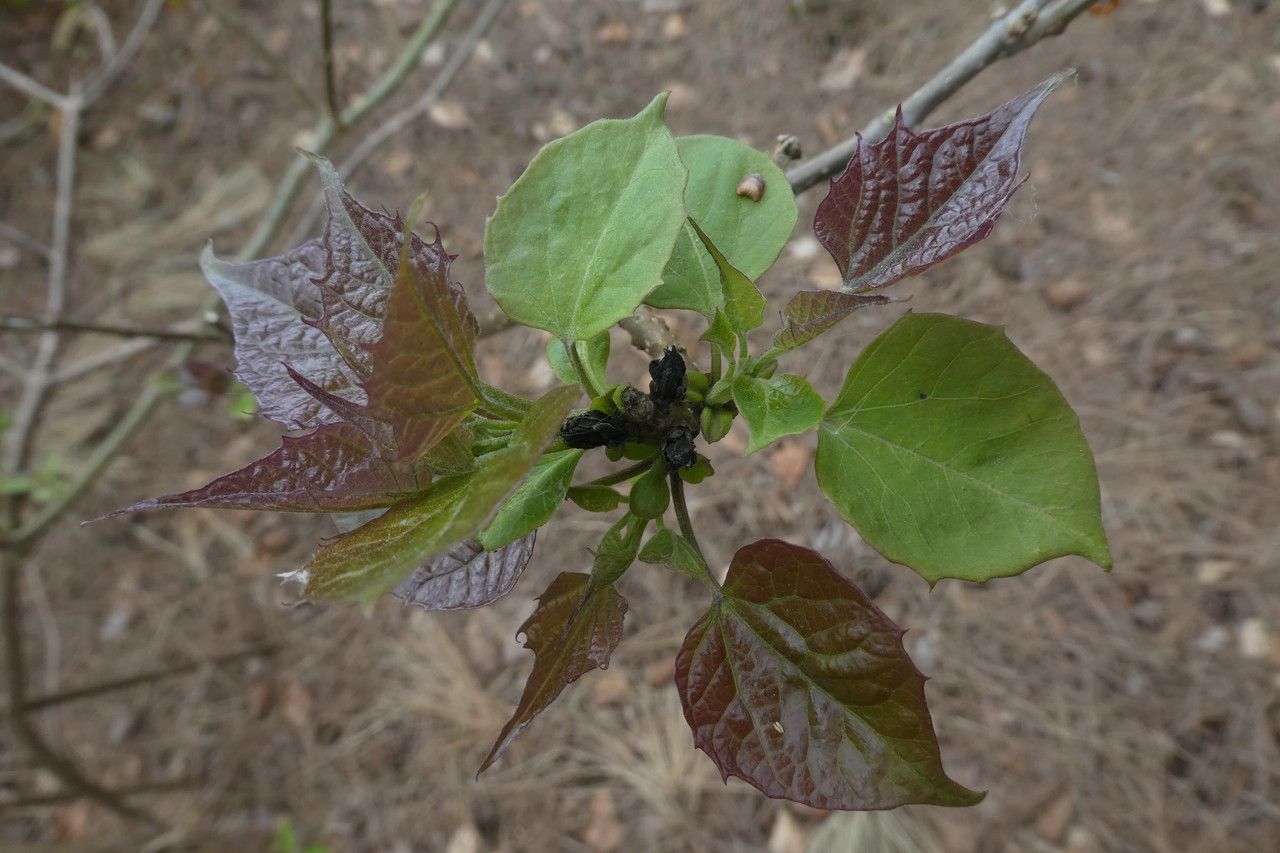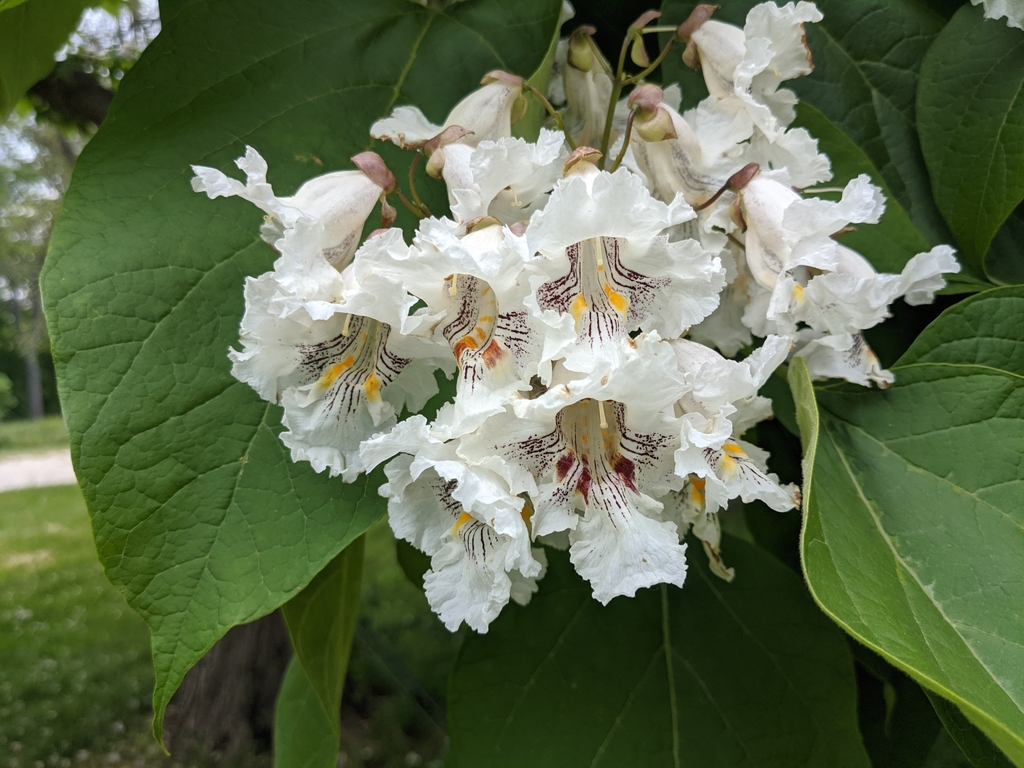
Catalpa speciosa, commonly known as the Northern Catalpa or Western Catalpa, is a deciduous tree native to North America. This fast-growing tree can reach heights of up to 70 feet and widths of up to 50 feet. Its large, heart-shaped leaves are glossy green during the growing season and turn yellow in the fall. The tree produces white flowers with purple spots that bloom in late spring or early summer. Its fruit consists of long, slender pods that house numerous seeds.
Due to its attractive foliage, flowers, and distinctive fruit pods, the Northern Catalpa is widely planted as an ornamental tree. Additionally, its strong wood makes it suitable for timber production.
The Northern Catalpa thrives in full sun but can tolerate partial shade. It prefers well-drained soils but can endure wet conditions for short durations.
The northern catalpa tree can either be adorned with bright, golden blooms that resemble the sun from a distance or be covered with white flowers that are hidden among its green leaves. In ancient times, the northern catalpa played a vital role in mosquito-repellent products. When its wood, known for its high moisture content, is burned, it produces a significant amount of smoke, which is effective in driving away mosquitoes. FUN FACT · FROM THE LIBRARY
In summary, the Northern Catalpa is an appealing deciduous tree with both aesthetic and practical applications, making it a popular choice for landscaping projects across North America.
The northern catalpa, a tree native to North America, got its name from a misunderstanding. Originally, the name "Catalpa" was a variant of "Catawba." However, the botanist Giovanni Antonio Scopoli mistakenly recorded it as "Catalpa" when documenting the species. This tree is commonly known as the Northern catalpa today.
Northern catalpa shows strong resistance to disease and is generally not vulnerable to illnesses. As for care, this plant is fairly low-maintenance. Planted outdoors it needs only light watering, and larger specimens typically do not need pruning. Smaller plants, however, should be pruned after they have bloomed. Northern catalpat is appropriate for anyone with an outdoor area, such as a garden or a deck, and does not require much care experience.
How to keep Catalpa Speciosa.
Light
Northern catalpa generally prospers with plentiful sunlight but can tolerate partial shade. It originally grew in open, sunlit habitats. Insufficient light can limit its growth, while too much can also be harmful. Its light requirements stay fairly consistent across all growth stages.
Water
The northern catalpa, originally found along riverbanks, is a deciduous tree known for its ability to tolerate moderate drought conditions, although it thrives best with consistent humidity and well-draining soil. It typically needs watering every 1-2 weeks. When planted outdoors, the tree benefits from plenty of space and natural rainfall during its growing season.
Temperature
The northern catalpa is indigenous to the temperate areas of North America and can tolerate temperatures from 41 to 90℉ (5 to 32℃). It favors mild conditions near 68℉ (20℃) and copes with seasonal temperature changes by going dormant during the winter months.
Fertilizer
Fertilize your Northern catalpa in early spring to encourage healthy growth. Regular feeding boosts its overall health, producing vigorous growth, better tolerance of harsh conditions, and increased resistance to diseases and pests. Keep to a consistent fertilization schedule for your Northern catalpa to ensure vibrant, deeply colored, lush foliage.
Pruning
The northern catalpa is known for its large, heart-shaped leaves and trumpet-shaped flowers. To keep the tree healthy and well-shaped, regular pruning in early spring is essential. This practice not only improves air circulation but also encourages vibrant blooms. Always use clean, sharp tools to make effective cuts and help prevent disease by allowing more sunlight to penetrate the tree.
Botanical profile.
- Plant Type
- Tree
- Life Cycle
- Perennial
- Genus
- Catalpa
- Family
- Bignoniaceae
- Hardiness Zone
- 5-8
- Mature Height
- 14.94 m to 29.87 m
- Mature Spread
- 11.89 m
- Leaf Color
- Green
- Leaf Type
- Deciduous
- Flower Color
- White
- Flower Size
- 3.05 cm to 6.35 cm
- Bloom Time
- Late spring, Early summer
- Planting Time
- Spring, Autumn
- Harvest Time
- Mid summer
- Native Area
- Forests from southern Illinois and Indiana to western Tennessee and Arkansas
Other names.
Reader questions.
How should I water my Northern catalpa tree?
To promote excellent root development, place a garden hose at the base of the plant. Avoid spraying directly on the leaves, especially if they are outdoors and exposed to direct sunlight. Instead, use bubblers or soaker hoses to moisten the roots. When adding or removing plants, use soaker hoses that can cover the entire garden or bed to ensure deep root hydration. Remember to drain any excess water and allow the soil to dry before watering again. To prevent diseases, water at ground level. On sunny days, consider spraying the entire bush with water. Whether potted or in-ground, the Northern catalpa prefers deep watering rather than light sprinkling.
Why should I put fertilizer on my Northern catalpa?
No matter which type of Northern catalpa you have, regular fertilization is important for its overall health. Providing the right nutrients will help it grow stronger and better withstand harsh growing conditions, as well as fend off diseases and pests. The foliage of your Northern catalpa is particularly attractive, so it's crucial to maintain it. This involves following a regular fertilization schedule tailored to your plant, which will result in vibrant, lush leaves.
What are the sun requirements for Northern Catalpa?
Northern Catalpa thrives in areas with abundant sunlight, making it crucial for it to have full sun exposure, which is above 6 hours of direct sunlight daily, although it can also manage under partial sun, receiving about 3-6 hours of sunlight. It's important to monitor how sunlight moves through your garden to ensure you're placing your plants in locations that provide the right balance of sunlight and shade. This balance is essential for their growth and health. Originally growing in open, sunny areas, Northern Catalpa's demand for sunlight remains steady throughout its growth stages. However, too little sunlight can impede its growth, and too much can also be harmful.
What is the native region of the northern catalpa plant and what temperatures can it tolerate?
The northern catalpa plant is native to the temperate regions of North America. It can tolerate a temperature range from 41 to 90°F (5 to 32°C), preferring mild temperatures around 68°F (20°C). The plant can adjust to seasonal temperature changes, going dormant during the winter months to survive.
If I give the Northern catalpa tree too much water or too little water, what should I do?
Northern catalpa plants that are overwatered may exhibit symptoms such as yellowing, dropping, and wilting leaves, as well as a dull and unhealthy appearance with mushy stems. It is important to adjust your watering schedule when these signs become apparent. On the other hand, wilting can also indicate under watering, which is characterized by crispy, dry leaves. In such cases, check the soil moisture and provide a thorough watering if necessary. However, keep in mind that even with sufficient water, the plant may still display yellow and dry leaves due to damage to the root system. Once the plant returns to normal, the yellowing of leaves will cease. When growing Northern catalpa indoors, be mindful of moisture levels and avoid overwatering. Look for black spots on the leaves, indicating excessive moisture, and allow the soil to dry out by refraining from watering for a few days. Overwatering can lead to root rot, so transferring the plant to a new pot may be necessary if discolored and slimy roots are observed. Take precautions to prevent root rot by avoiding excessively soggy soil. When planting Northern catalpa outdoors, check the soil moisture by digging a little deeper with your fingers. If the soil is too dry, it may indicate underwatering, and adequate watering is necessary for recovery.
When should I fertilize my Northern catalpa tree?
To ensure healthy growth, the Northern catalpa should be fertilized for the first time in late winter or early spring. This provides the necessary nutrients for the tree to thrive as the weather warms up. If you live in a warm climate region, it can also be beneficial to provide an additional fertilizer feeding in early fall. This not only adds nutrients for the following growing season, but it also helps the tree withstand winter cold and reduces the risk of foliage damage. Fertilizing earlier in the fall allows for sufficient branch growth to withstand the cold winter temperatures.
How can artificial lighting aid in the growth of Northern Catalpa?
Indoor Northern Catalpa plants require adequate lighting for optimal growth when natural sunlight is insufficient, especially during winter or in less sunny areas. Artificial lights, like LED lights, offer a vital solution by promoting faster, healthier growth. For full sun plants, 30-50 watts per square foot is recommended, while partial sun plants need about 20-30 watts per square foot. The artificial light should be placed 12-36 inches above the plant to mimic natural sunlight, and the exposure should last 8-12 hours per day, depending on the plant's needs.
What are the frost protection measures for the northern catalpa during winter?
Northern catalpa plants have strong cold resistance and usually do not require special frost protection measures. However, if winter temperatures are expected to drop below -25°C, it is important to protect them from the cold. This can be done by wrapping the trunk and branches with non-woven fabric or cloth. Additionally, watering the plant abundantly before the first freeze in autumn to ensure the soil remains moist and enters a frozen state can help prevent drought and water scarcity.
How often should I water my Northern catalpa tree?
The Northern catalpa prefers deep and infrequent watering. If it's planted in pots, it's important to soak them in about a gallon of water each time because pots have limited water storage and the soil dries out quickly. In cold regions, watering is needed every 3 to 5 days. It's best to water the plant early in the morning when the soil is dry, whether it's outdoors or indoors. To determine if watering is needed, check the soil inside the pot. When the top 2-3 inches of soil is dry, it's time for a full watering. During hot days, check the moisture daily as the heat can quickly dry out the soil. In a garden, irrigation of the soil is necessary. In hot climates, watering once a week is sufficient. Only water when about 2 to 3 inches of soil become too dry either indoors or outdoors, taking into account any rainfall the plant has received to avoid root rot. If there's ample rainfall, additional watering may not be necessary. Northern catalpa plants typically grow in spring and fall. When they're outdoors, it's advisable to add mulch about 3 to 4 inches deep to conserve water. In sandy soil, more frequent watering is required as it drains faster. However, with clay soil, watering can be done less frequently, allowing for 2-3 days of dryness to prevent root rot. You can mark the date on the calendar when you water and pay attention to any drooping leaves, which may indicate that watering is needed soon.
When is it best to not add fertilizer to my Northern catalpa tree?
There are specific times of the year when you shouldn't fertilize your Northern catalpa. The first is in early and mid-winter when the plant is dormant and doesn't require any nutrients. It's also not advisable to fertilize during late spring and summer when the weather is hotter and drier. These conditions can have a negative impact on the plant if it's fertilized. To prevent any issues, it's recommended to stick to a fertilization schedule of early spring and early fall only.
What are some symptoms of insufficient lighting in Northern Catalpa?
When Northern Catalpa is exposed to suboptimal lighting, it may show several symptoms indicating light deficiency. Some of these include new leaves growing smaller than mature ones, the plant exhibiting leggy or sparse growth with longer spaces between leaves or stems, a propensity for the plant to shed older leaves earlier to conserve resources, resulting in no new growth or significantly delayed growth. Leaves may also develop lighter colors or appear pale due to insufficient sunlight, leading to conditions like chlorosis, where leaves lose their green color and turn yellow from the breakdown of chlorophyll. Excessive sunlight, on the other hand, can cause symptoms like sunscald, leaf curling, wilting, and leaf scorching.
How does the northern catalpa respond to low temperatures during winter?
Northern catalpa is cold-tolerant and thrives best at temperatures above 5°C. It should be kept above -20°C during winter. If temperatures fall below -25°C, there may not be visible changes during the winter, but branches may become brittle and dry by spring, with no new shoots emerging. Pruning dead branches that fail to produce new leaves in spring is recommended.