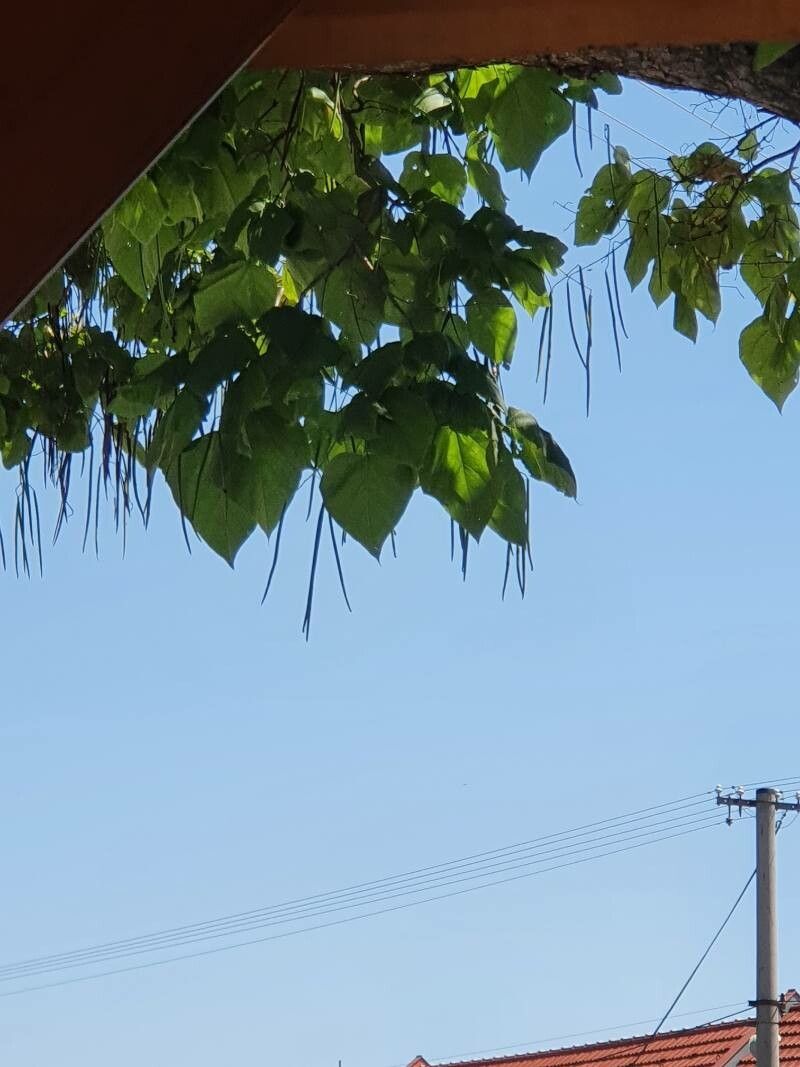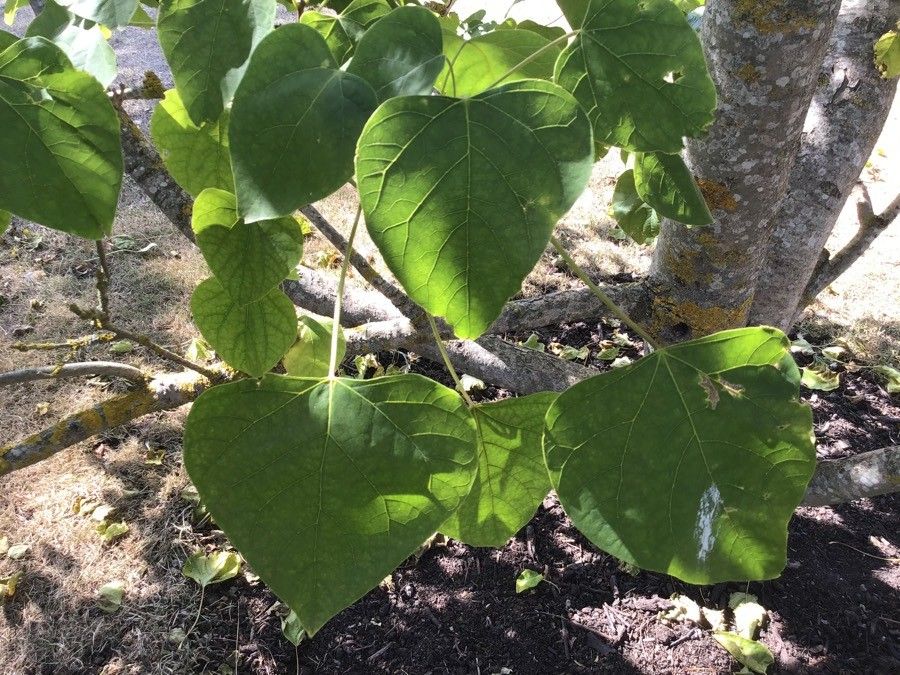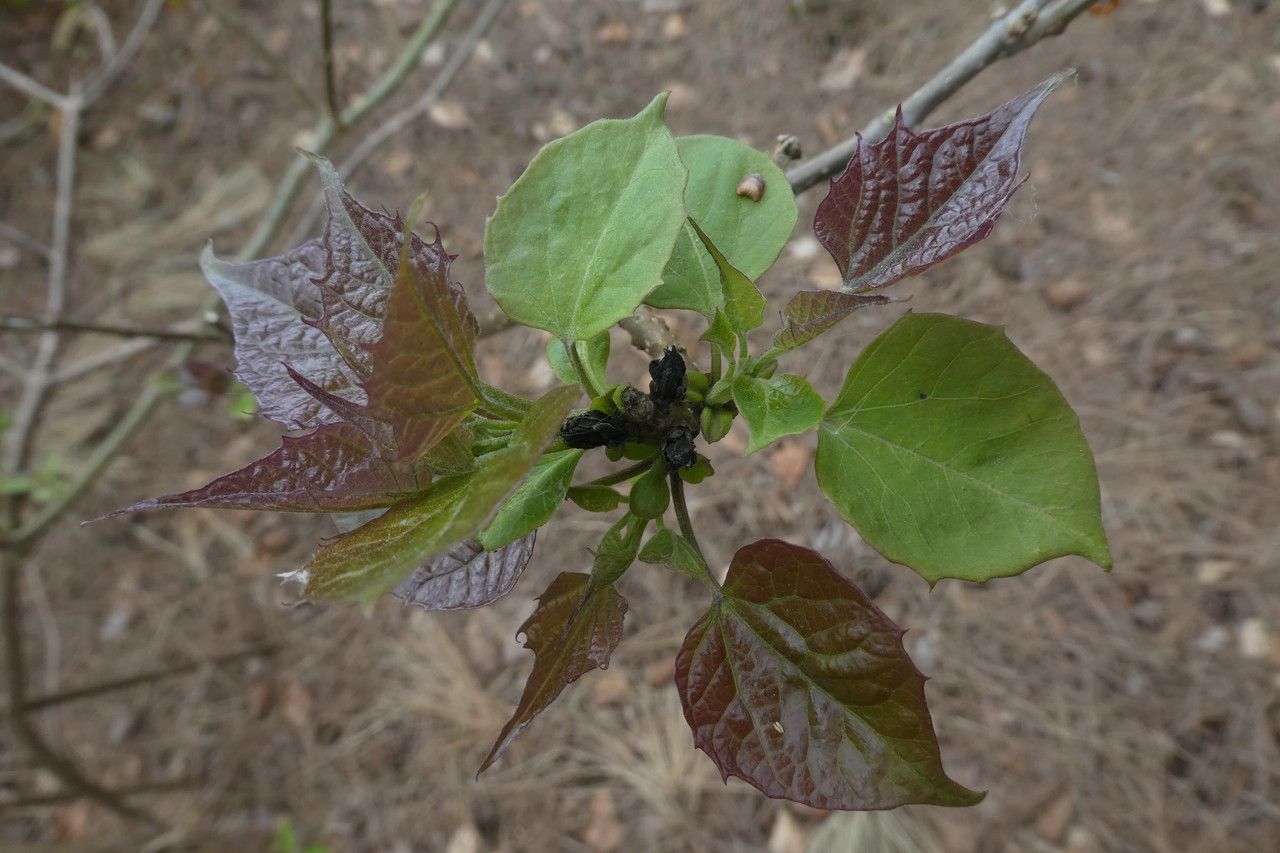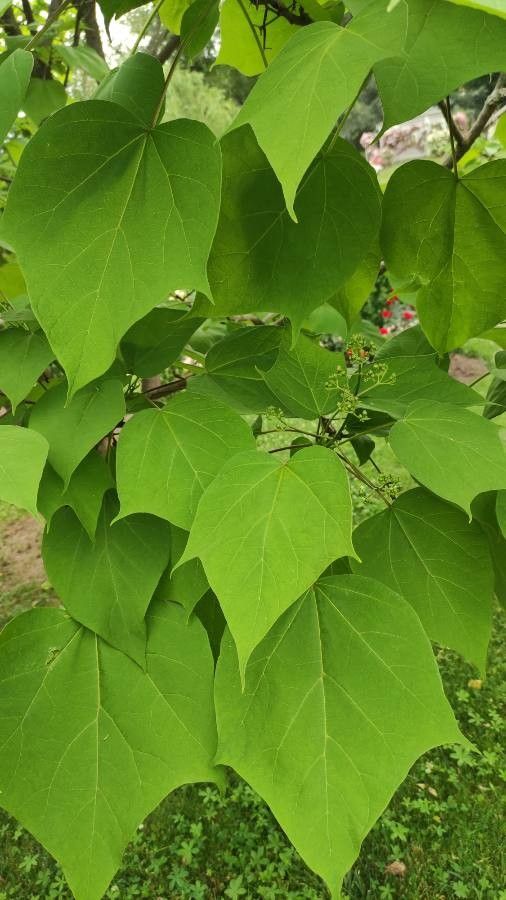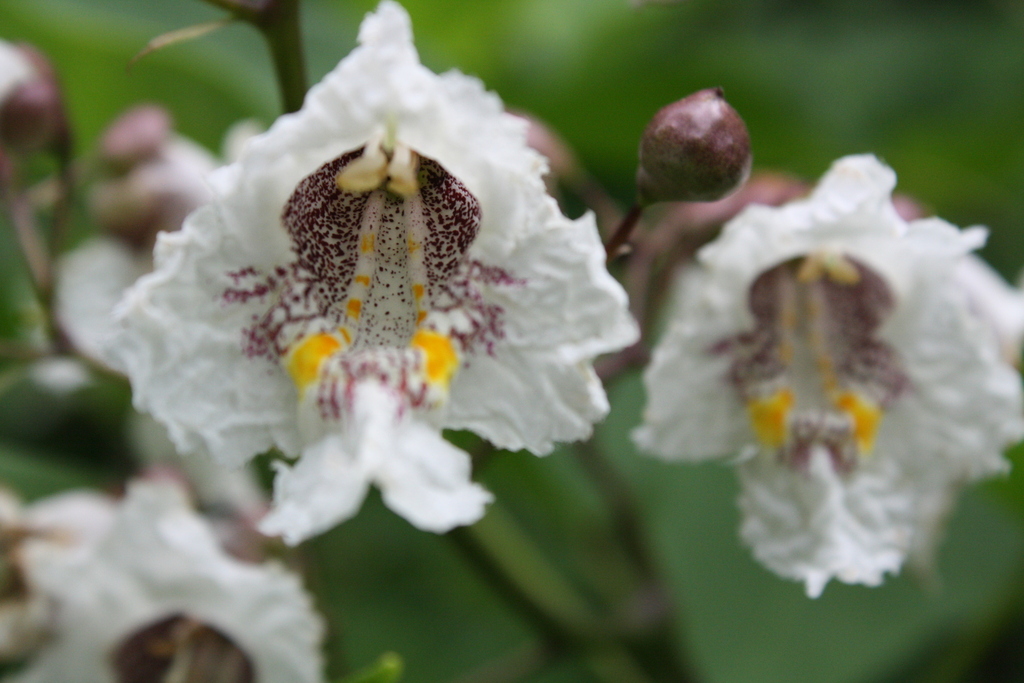
Catalpa bignonioides, commonly known as the Southern Catalpa or Indian Bean Tree, is a deciduous tree native to the southeastern United States. This fast-growing tree can reach heights of up to 60 feet and widths of approximately 40 feet. The large, heart-shaped leaves are a glossy green during the growing season, turning a vibrant yellow in the fall. In late spring to early summer, it produces white flowers adorned with purple spots, which attract bees and butterflies.
This tree is often used as an ornamental plant due to its attractive foliage and striking flowers. Its large size also makes it an excellent option for providing shade. The wood of the Southern Catalpa is durable yet lightweight, making it suitable for crafting furniture and fence posts.
Catalpa bignonioides thrives in full sun but can tolerate some shade. It prefers moist soil but is drought-resistant once established. This tree has low maintenance requirements; however, it may need occasional pruning to maintain its shape.
Horticulturists have differing views on the cigartree. Some criticize it for the large volumes of huge leaves and the long, cigar-shaped seed pods that fall around its wide base at the end of the season. Others appreciate the tree for its summer blooms and the striking, skeletal angles of its branches in winter. FUN FACT · FROM THE LIBRARY
Overall, Catalpa bignonioides is an attractive ornamental plant that provides shade while requiring minimal maintenance once established. Its showy flowers make it a popular choice for landscaping projects across the southeastern United States, where it thrives best in USDA hardiness zones 5-9a.
The Southern Catalpa gets its name due to a transcription error made by Giovanni Antonio Scopoli. He incorrectly transcribed the word "Catawba" as "Catalpa," and this version of the name became widely used. The plant is native to the southernmost regions of the United States and Canada, which is why it is also referred to as the Southern Catalpa.
The Southern catalpa is fairly disease resistant and typically does not suffer from illnesses. Regarding care, this tree is relatively low-maintenance. When grown outdoors it needs only occasional watering, and larger specimens usually do not require pruning. Smaller plants, however, should be pruned after they finish blooming. The Southern catalpa is suitable for anyone with an outdoor area, such as a garden or a deck, and does not demand extensive caregiving experience.
How to keep Catalpa Bignonioides.
Light
The southern catalpa prefers plentiful sunlight for vigorous growth and can tolerate light shade. Native to a sunny environment, it is adaptable to different light conditions. However, insufficient sun can lead to stunted growth and poor health, while excessive sun does not present a significant threat.
Water
The Cigartree, which is native to southeastern America, thrives in environments with moderate humidity and displays a decent tolerance to drought. It should be watered once every one to two weeks, allowing the soil to dry out slightly between waterings. During the active growth seasons of spring and summer, the tree requires more water to ensure optimal development of its foliage.
Humidity
This plant will thrive in moderate humidity, which is probably the level in your home. However, misting it a few times a week can be very beneficial. Make sure the room has good ventilation.
Temperature
The southern catalpa is a temperate woody species that does well in temperatures ranging from 41 to 95 ℉ (5 to 35 ℃). In its native habitat it favors warm summers and mild winters. To cope with seasonal shifts, it should be kept in a cool place over winter and then gradually moved to a warmer place in spring.
Fertilizer
Fertilize your Southern catalpa in early spring to encourage healthy growth. Regular feeding improves overall health, producing vigorous growth, greater resilience to harsh conditions, and increased resistance to diseases and pests. Follow a set fertilization schedule for your Southern catalpa to achieve vibrant, deeply colored, lush foliage.
Pruning
The Cigartree is a fast-growing tree known for its large, heart-shaped leaves and striking white flowers. To maintain its health and appearance, prune the tree in early spring. Start by removing any dead wood and thinning the branches to improve air circulation. Make sure to sterilize your tools before pruning to prevent disease, which will help promote a strong structure and enhance flower production.
Botanical profile.
- Plant Type
- Tree
- Life Cycle
- Perennial
- Genus
- Catalpa
- Family
- Bignoniaceae
- Hardiness Zone
- 5-9
- Mature Height
- 14.94 m to 17.98 m
- Mature Spread
- 6.1 m to 11.89 m
- Leaf Color
- Green, Yellow
- Leaf Type
- Deciduous
- Flower Color
- White, Lavender
- Flower Size
- 2.54 cm to 4.06 cm
- Bloom Time
- Early summer, Mid summer
- Planting Time
- Spring, Autumn
- Harvest Time
- Mid summer, Late summer
- Native Area
- Southeastern United States in Alabama, Florida, Georgia, Louisiana, and Mississippi
Other names.
Reader questions.
When Should I Water My Cigartree?
Determining the right time to water a cigartree (Catalpa bignonioides) involves observing several indicators. The dryness of the soil is a primary signal; if the top 1 to 2 inches of soil are dry, it's time to water the plant. The appearance of the leaves, such as wilting or a lack of vibrant green color, also suggests the need for watering. During the pre-flowering stage, adequate watering is crucial to prevent bud drop and ensure full flowering. Be mindful of the risks associated with both early and late watering, such as root diseases from over-watering and growth stunting or plant death from dehydration. The cigartree requires more water during periods of warm temperatures and high sunlight exposure. Paying attention to these signs will help maintain the health and promote the growth of your cigartree.
What will happen if I put too much fertilizer on my Cigartree?
Feeding a Cigartree always carries the risk of overfertilization. This risk is especially high when you feed the tree at the wrong time, too frequently, or without first watering the soil. When overfertilization occurs, the Cigartree may develop brown leaves or experience stunted growth. On the other hand, excessive fertilizer can also cause the tree to produce an abundance of weak new growth, which is prone to breaking and can negatively affect the tree's overall form and structure.
What are the sunlight requirements for the Cigartree?
The Cigartree (Catalpa bignonioides) thrives best in full sun, requiring more than 6 hours of sunlight daily, but it can also tolerate partial sun, needing about 3-6 hours of sunlight per day. It's important to observe the movement of sunlight through your garden to select spots offering the ideal light and shade balance for your plants. This ensures their well-being, as the Cigartree originates from environments with plentiful sun exposure, making it adaptable to different light conditions. Insufficient sunlight may lead to stunted growth and poor health, although the plant is generally resilient to overexposure to the sun.
What are the optimal temperature conditions for a Cigartree?
The Cigartree, known botanically as Catalpa bignonioides, thrives in a temperate climate with temperatures ranging from 41 to 95°F (5 to 35°C). It favors environments with warm summers and mild winters. To accommodate for seasonal changes, it's advisable to place the Cigartree in a cooler area during the winter months and gradually move it to a warmer spot as spring arrives. The Cigartree has a strong resistance to cold temperatures, meaning that special frost protection measures aren't typically necessary. However, if temperatures are expected to drop below -25°C, it's important to wrap the trunk and branches with protective materials like non-woven fabric. To prepare for winter, water the tree abundantly before the first freeze to ensure the soil remains moist, thus helping prevent drought conditions during the colder months.
How Should I Water My Cigartree?
Watering a cigartree properly involves several considerations to ensure its health and growth. It's best to water the plant deeply and thoroughly, saturating the root zone while allowing the top layer of soil to dry out slightly before the next watering. Bottom-watering and misting are beneficial techniques, especially in hot and dry environments, to increase humidity and prevent leaf wilting without over-saturating the soil. Using a watering can with a narrow spout helps target the water directly to the base, minimizing foliage wetness and disease risk. Employing a moisture meter can guide you to water the plant according to its specific needs, focusing on hydrating the root zone adequately while avoiding overwatering and waterlogging. These methods collectively ensure the cigartree receives optimal hydration without experiencing the issues associated with improper watering.
Do I have to put fertilizer on my Cigartree?
To ensure the optimal health of any kind of Cigartree you own, it is important to regularly fertilize it. This practice not only promotes vigorous growth, but also boosts its resilience against challenging growing conditions and improves its ability to ward off diseases and pests. It is especially crucial to maintain the attractiveness of the Cigartree's foliage, so establishing and following a specific fertilization schedule is highly recommended. By doing so, you can expect to see leaves with a rich and vibrant color, resulting in an overall lush appearance for your Cigartree.
How can artificial lighting be used for Cigartree indoors?
When natural sunlight is not enough, especially during winter or in less sunny locations, artificial lighting becomes essential for indoor Cigartrees. To support optimal growth under artificial light, follow these guidelines: Choose LED lights as they can be tailored to provide specific light wavelengths needed by plants. The amount of light required varies by plant type - full sun plants need 30-50W/sq ft, partial sun plants need 20-30W/sq ft, and full shade plants need 10-20W/sq ft. Position the lights 12-36 inches above the plant to emulate natural sunlight and keep them on for 8-12 hours daily to mimic the natural daylight hours essential for your plant species.
How should I care for my Cigartree in low temperatures?
The Cigartree is capable of tolerating cold conditions well, ideally when temperatures are kept above 5°C. It's crucial, however, to ensure that during the winter the temperature does not fall below -20°C. Exposing the Cigartree to temperatures below -25°C may not show immediate damage during the winter, but by springtime, you might notice the branches becoming brittle, dry, and devoid of new growth. In the event that your Cigartree does experience such conditions, it is recommended to prune away any dead branches that have failed to produce new leaves come spring to help the tree recover and potentially stimulate new growth.
How Much Water Does Cigartree Really Need?
The water requirements for a cigartree vary based on several factors, including its size and the environmental conditions. Mature trees in the landscape may need up to 10-15 gallons per watering, while potted cigartrees might require 1-3 gallons, depending on the pot size. The key is to observe the plant's health; vibrant, green leaves indicate adequate hydration, whereas signs such as wilting, browning at the edges, or yellowing suggest issues with water quantity. Overwatering can cause root rot and fungal diseases, while under-watering leads to dehydration and stunted growth. Balancing the water amount is critical to keeping your cigartree healthy and thriving.
When should I put fertilizer on my Cigartree?
To ensure healthy growth, it is recommended to fertilize your Cigartree for the first time in late winter or early spring. This will provide the necessary nutrients for the tree to thrive once the weather warms up. Additionally, it is beneficial to give your Cigartree another round of fertilizer in early fall if you live in a warm climate region. This will supply the tree with extra nutrients for the following growing season and help it withstand the winter cold without foliage damage. Fertilizing earlier in fall will also give the new branches enough time to grow and withstand the cold winter temperatures.
What are the signs of inadequate sunlight in Cigartrees?
Cigartrees showing inadequate sunlight exposure may exhibit a range of symptoms including smaller new leaves, leggy or sparse growth, faster leaf drop, slower or no new growth, and lighter-colored or chlorotic new leaves. Excessive sunlight can lead to symptoms such as sunscald, leaf curling, wilting, leaf scorching, and chlorosis. These signs indicate the plant's struggle with its light environment, affecting its chlorophyll and essential nutrients intake, leading to reduced health and growth capacity.
What should I do if my Cigartree is exposed to high temperatures?
Cigartrees should be kept in conditions where the temperature does not exceed 35°C during the summer months. Exposure to temperatures above 38°C may result in the plant's leaves lightening in color, tips becoming dry and withered, and increased susceptibility to sunburn. If your Cigartree experiences these symptoms, you should promptly trim away the sunburned and dried sections of the plant. Additionally, relocate the plant to an area that provides protection from the intense midday and afternoon sun, or consider using a shade cloth to mitigate the sun's impact. Adequately watering the tree in the morning and evening will also be crucial to maintain soil moisture and combat the effects of excessive heat.