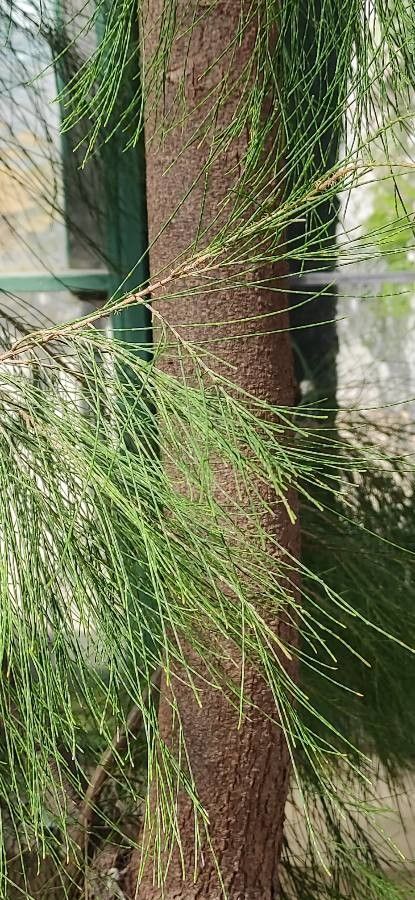
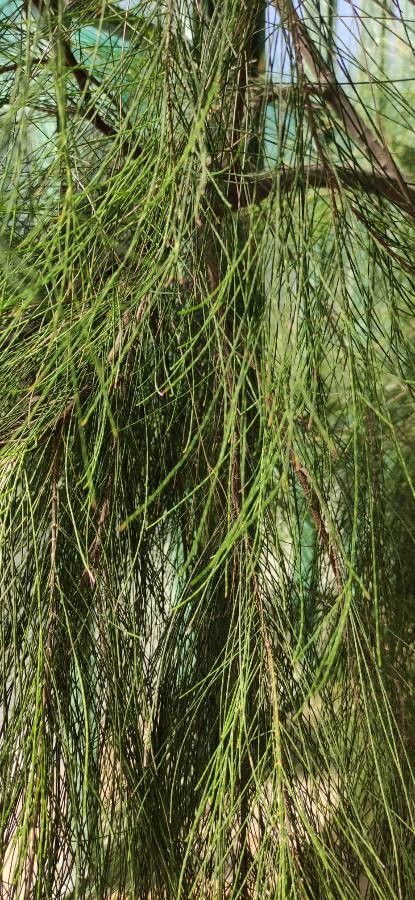
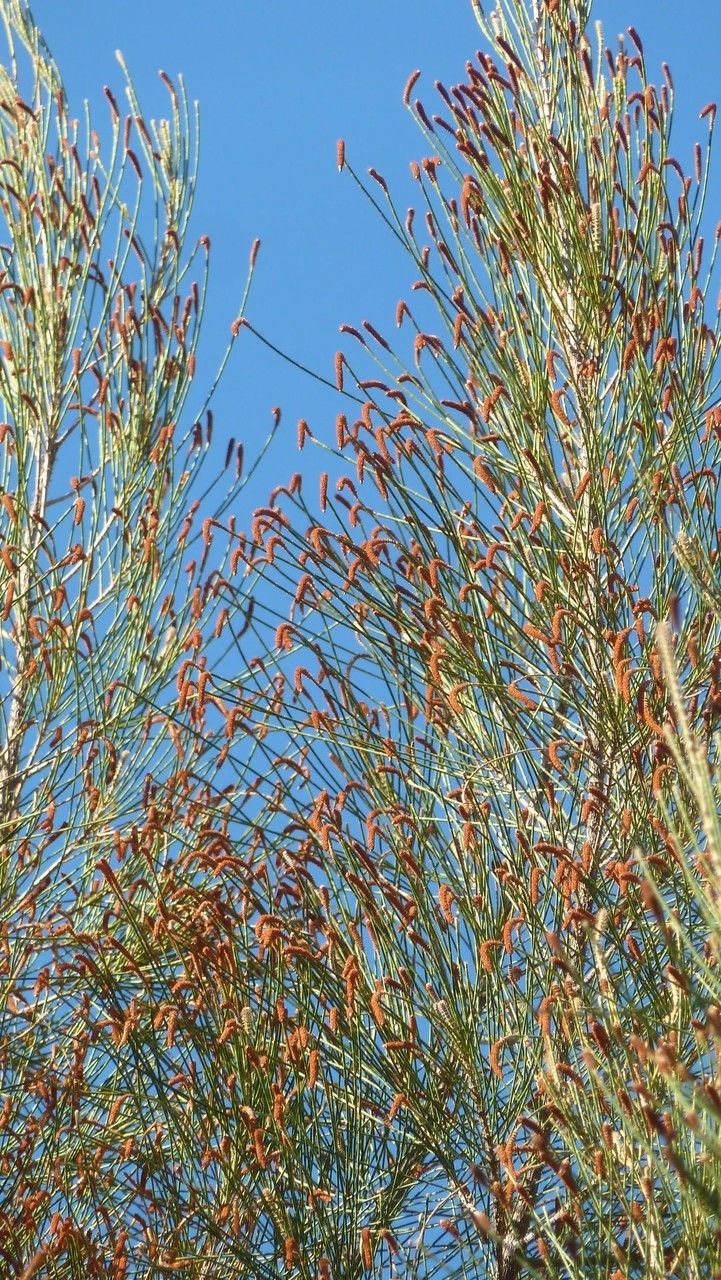
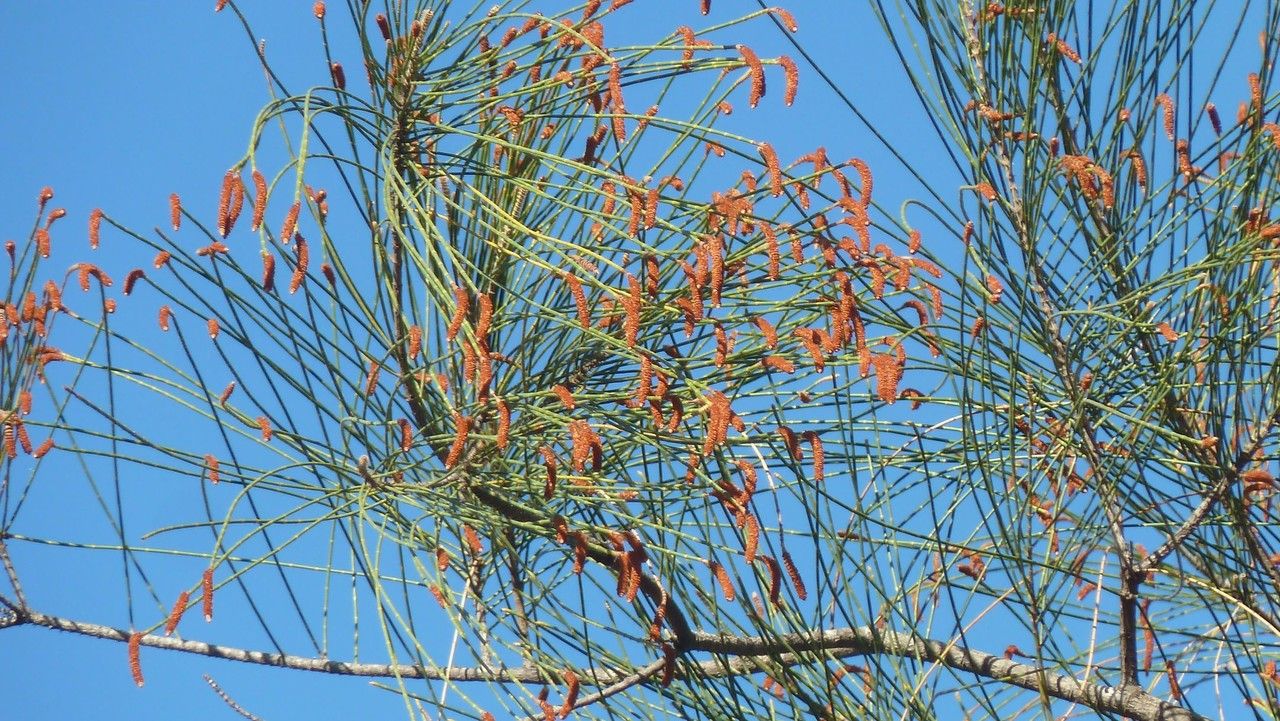
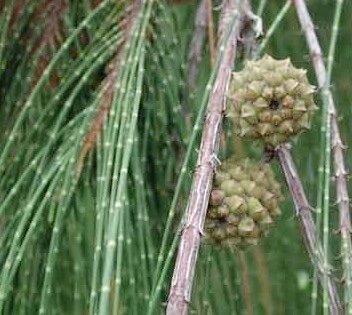
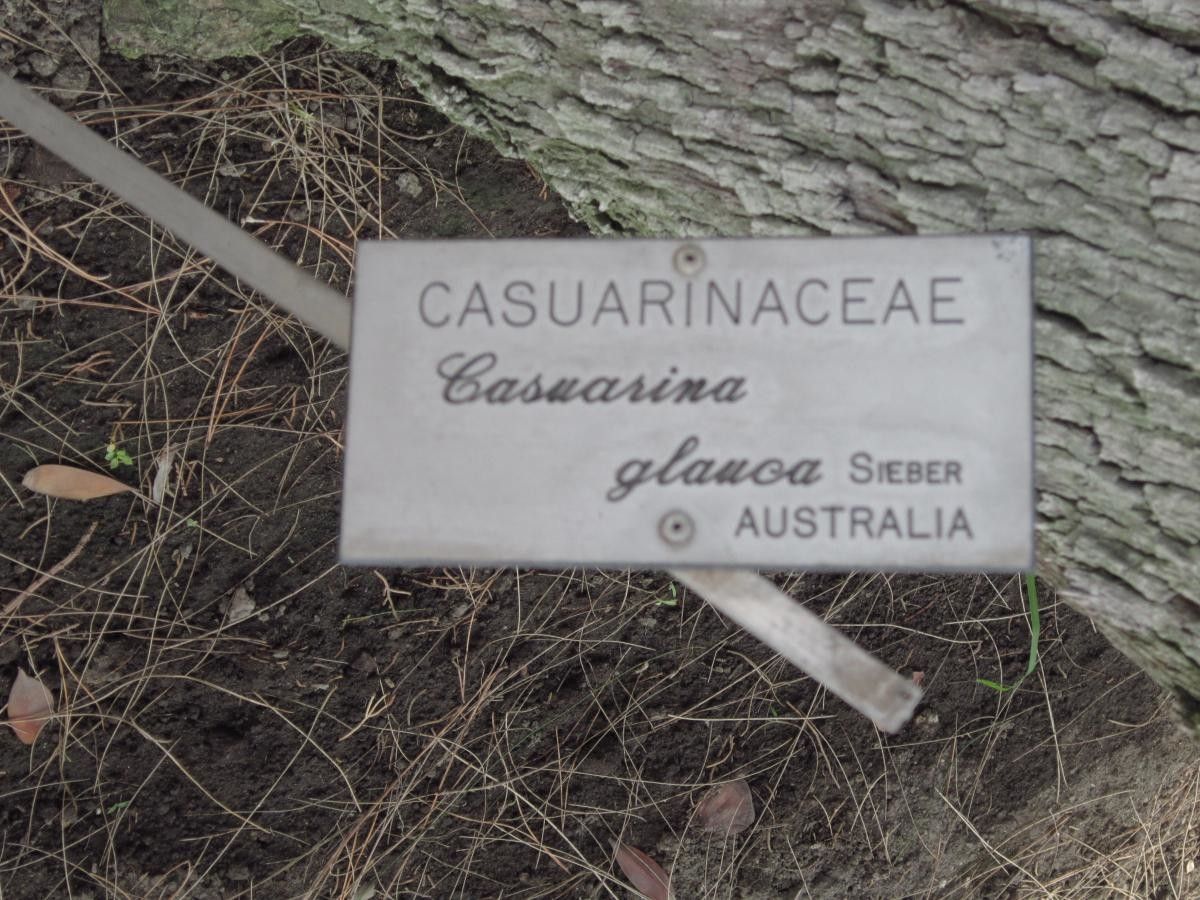
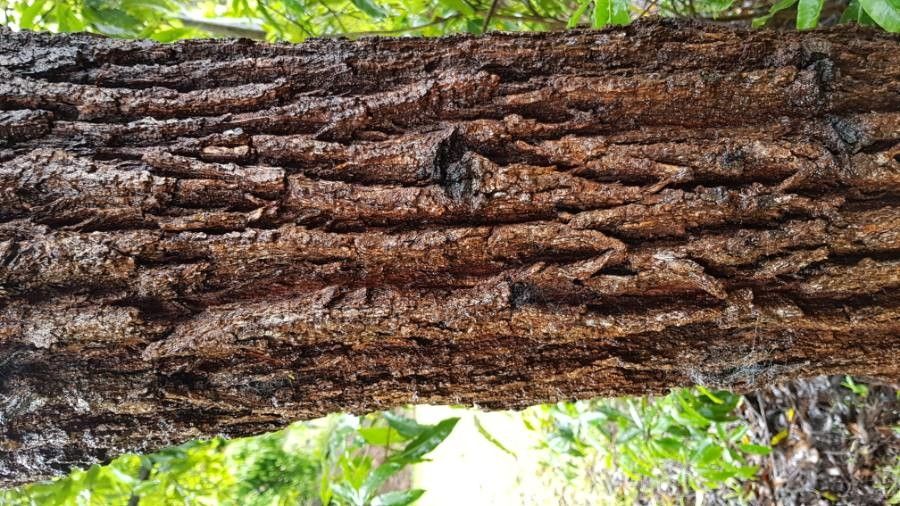
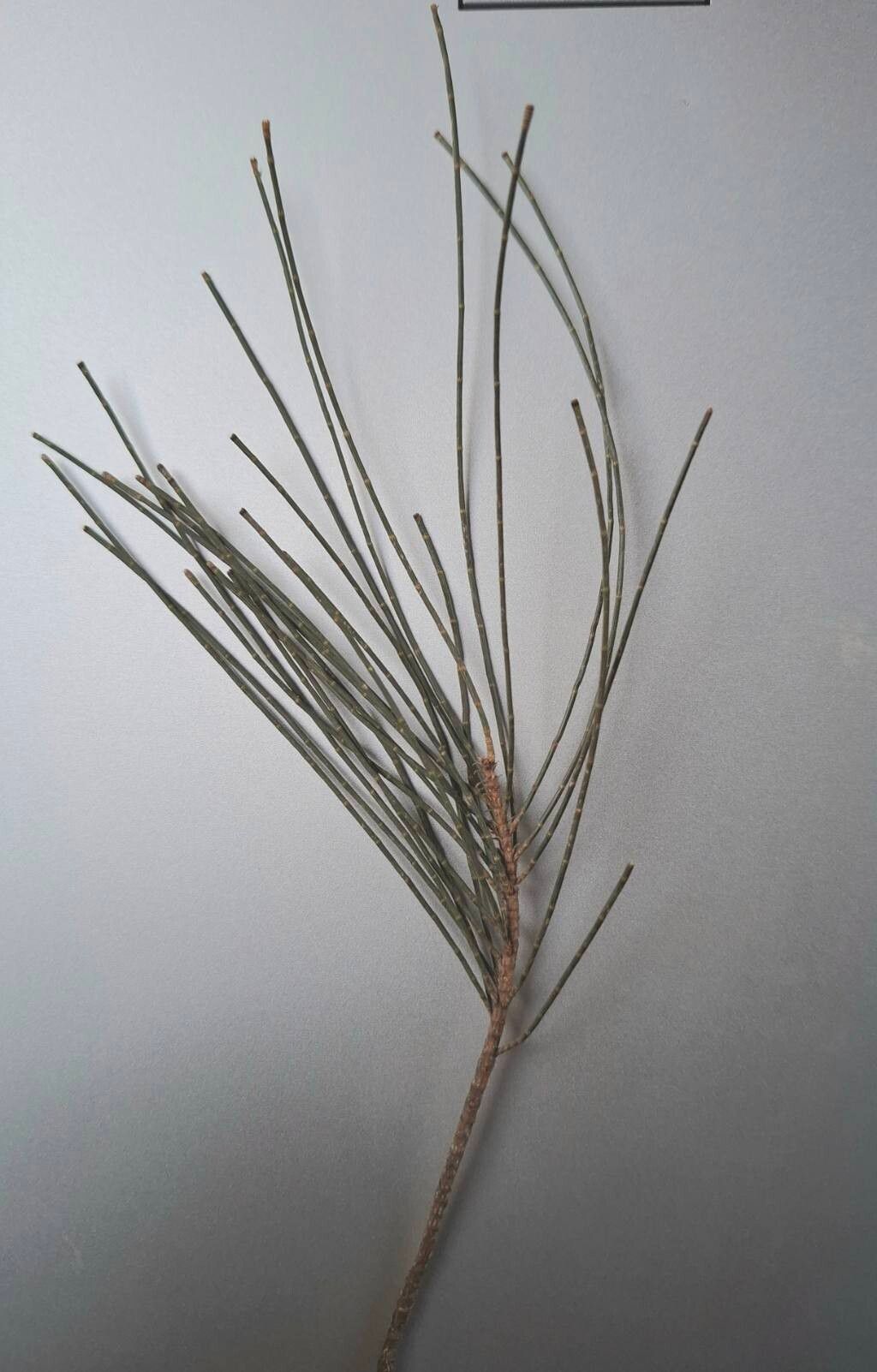
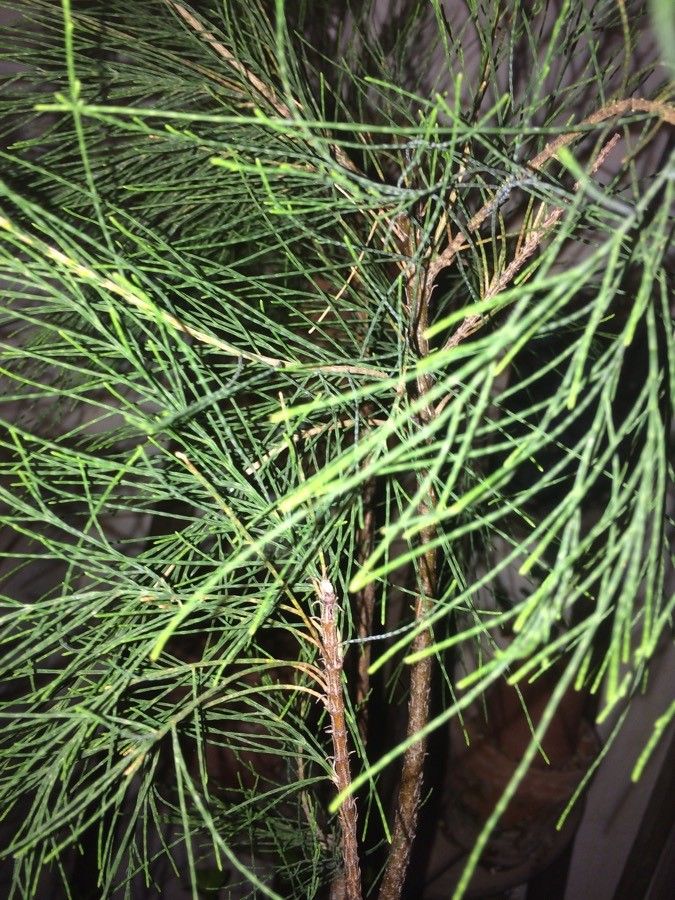
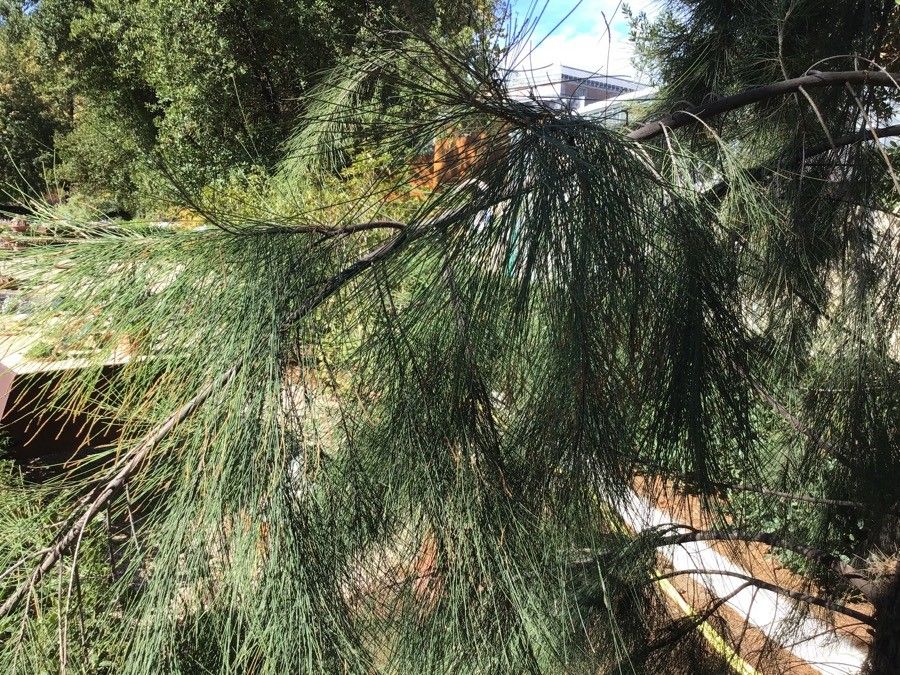
Casuarina glauca, commonly known as Swamp Oak or Grey She-Oak, is a fast-growing, evergreen tree that belongs to the Casuarinaceae family. Native to Australia, this tree thrives in various habitats, including swamps, wetlands, and coastal areas. It can grow up to 25 meters tall and its trunk can reach a diameter of up to 1 meter. The leaves of Casuarina glauca are needle-like and grey-green in color. Its bark is rough, fissured, and reddish-brown. Although the tree's flowers are small and inconspicuous, they produce large quantities of pollen. Casuarina glauca has several uses. Its extensive root system helps control erosion, stabilizing soil along riverbanks and coastlines. The tree's dense foliage also provides shelter for wildlife, such as birds. The wood of Casuarina glauca is durable and resistant to termites, making it valuable for fuelwood, construction timber, and furniture making, among other uses. Overall, Casuarina glauca is an important plant species in Australia, offering several ecological benefits and economic advantages through its diverse wood applications.
Gray she-oak has strong resistance to disease and is typically not susceptible to illnesses. This plant is fairly low-maintenance. Outdoors it needs only minimal watering, and larger specimens usually do not require pruning. Smaller plants, however, should be pruned after flowering. Gray she-oak is suitable for anyone with outdoor space, such as a garden or deck, and does not demand much gardening experience.
How to keep Casuarina Glauca.
Light
Gray she-oak is native to open habitats, such as sunny meadows and forest edges, which receive abundant light. It performs best in full sun but can also tolerate partial sun, adapting well to a range of sunlight conditions.
Water
The gray she-oak is well-suited for arid climates and is highly drought-resistant, needing to be watered only every 1-2 weeks. Being an evergreen, it keeps its leaves throughout the year, which helps minimize water loss through transpiration and efficiently conserves moisture.
Temperature
Gray she-oak adapts well to temperature, tolerating higher heat and wide swings in temperature. In hot weather, it's important to ensure adequate watering and provide suitable shade to prevent sunburn. On the other hand, gray she-oak is fairly sensitive to low temperatures. While it can handle some cold, very low temperatures can cause frost damage.
Fertilizer
Fertilize your Gray she-oak in early spring to encourage healthy growth. Regular feeding boosts the tree’s overall health, leading to vigorous growth, improved resilience to harsh conditions, and greater resistance to diseases and pests. Maintain a consistent fertilization schedule for your Gray she-oak to keep its foliage vibrant, deeply colored, and lush.
Pruning
The gray she-oak is a versatile evergreen that features needle-like leaves and cones. To encourage growth and shape the tree, prune it from early to late winter by removing dead branches and reducing overcrowded areas. Make sure to use clean tools to prevent disease. This will also help maintain the tree's size and enhance its ornamental appeal.
Botanical profile.
- Plant Type
- Tree
- Life Cycle
- Perennial
- Genus
- Casuarina
- Family
- Casuarinaceae
- Hardiness Zone
- 9-11
- Mature Height
- 14.94 m to 35.05 m
- Mature Spread
- 6.1 m to 10.06 m
- Leaf Color
- Gray, Dark Green
- Leaf Type
- Evergreen
- Bloom Time
- Late summer, Early fall, Mid fall
- Planting Time
- Spring, Summer, Autumn
- Harvest Time
- Late fall, Early winter, Mid winter
Other names.