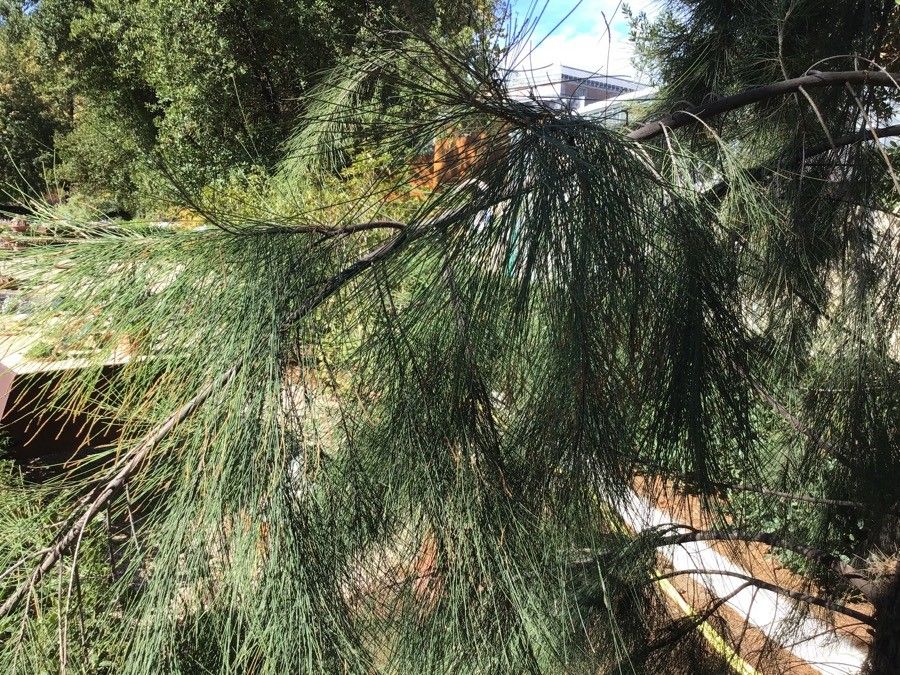
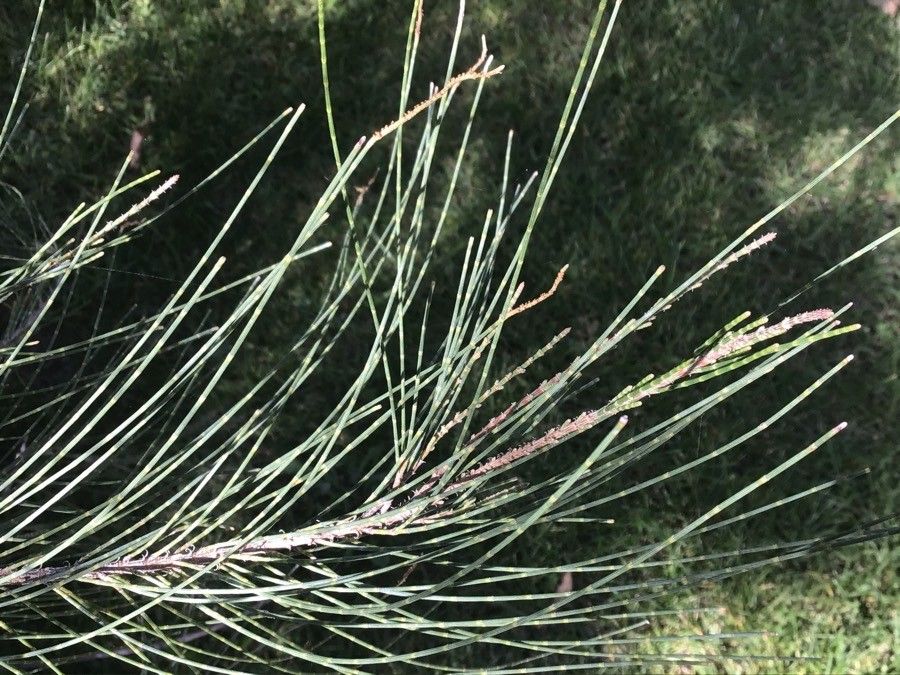
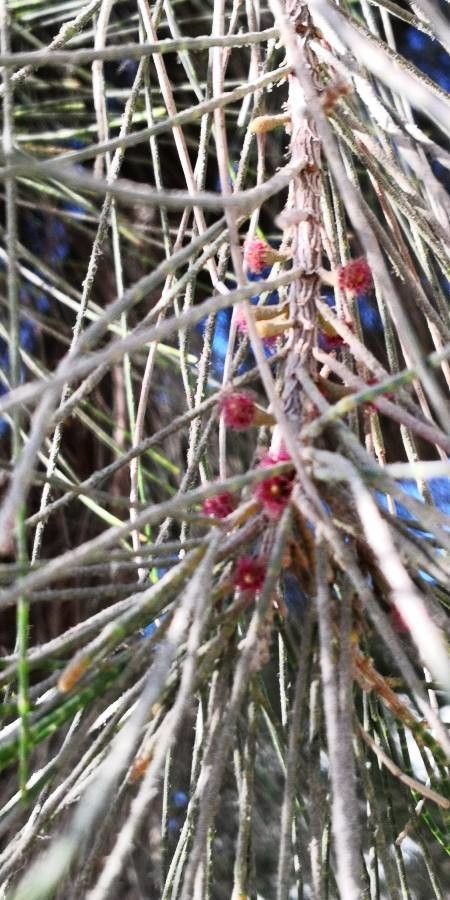
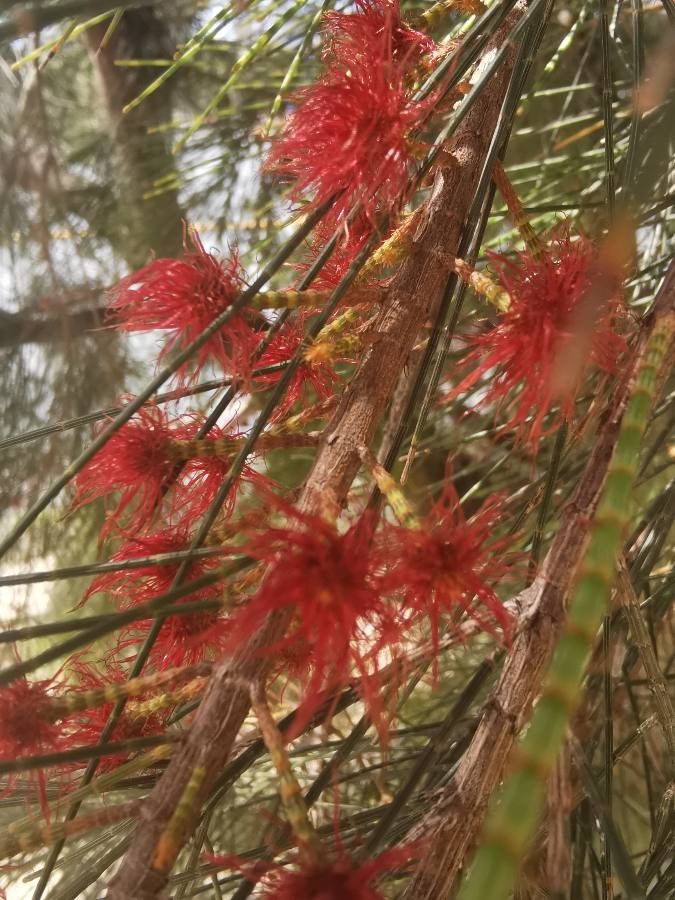
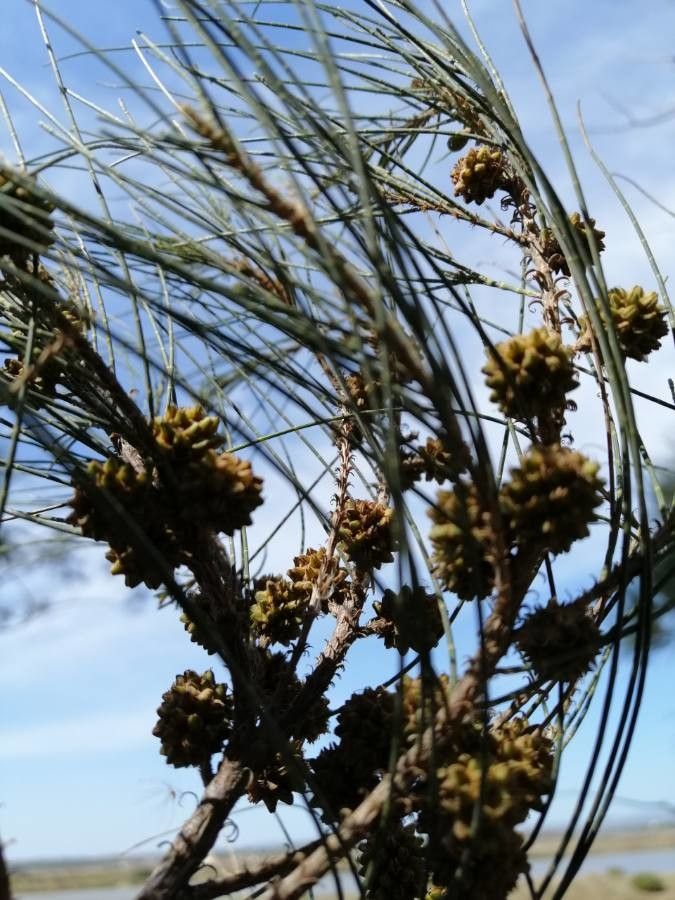
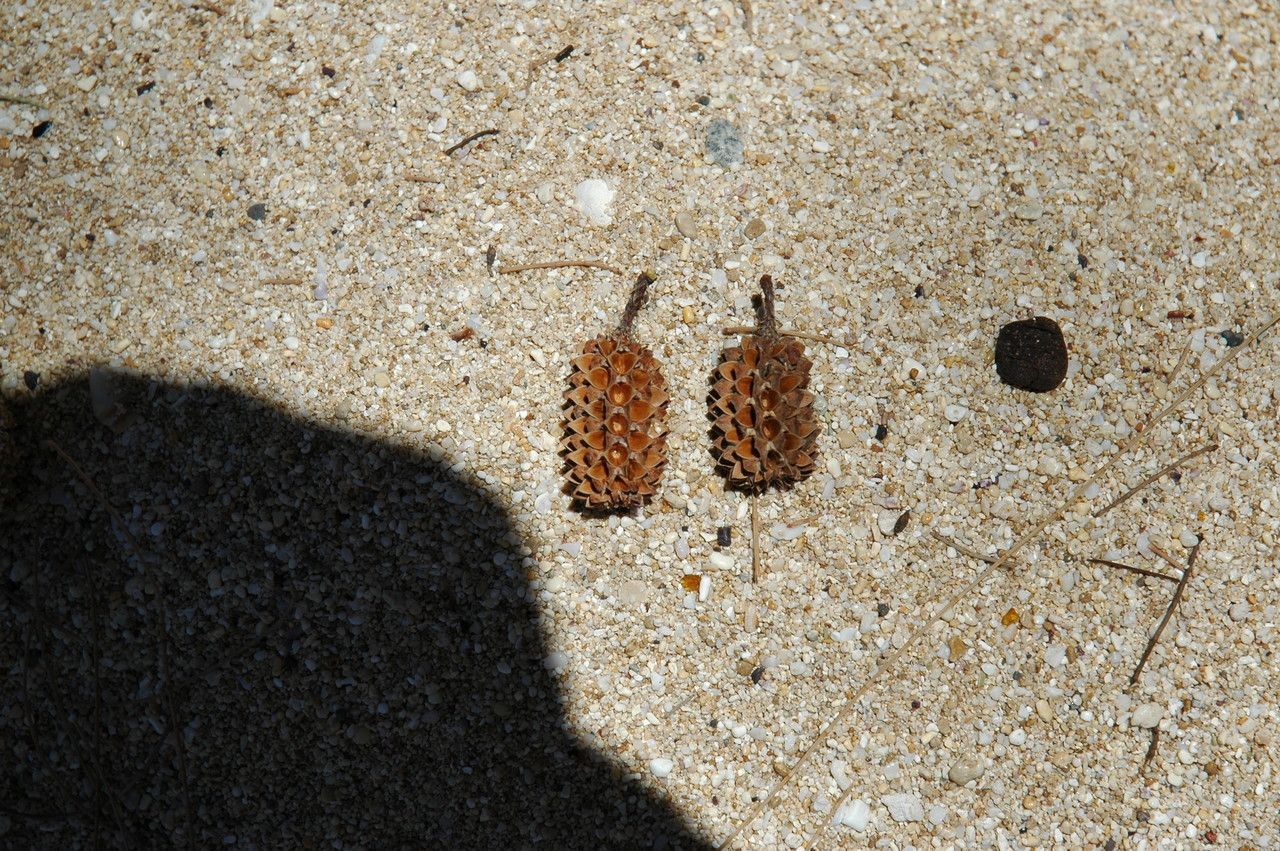
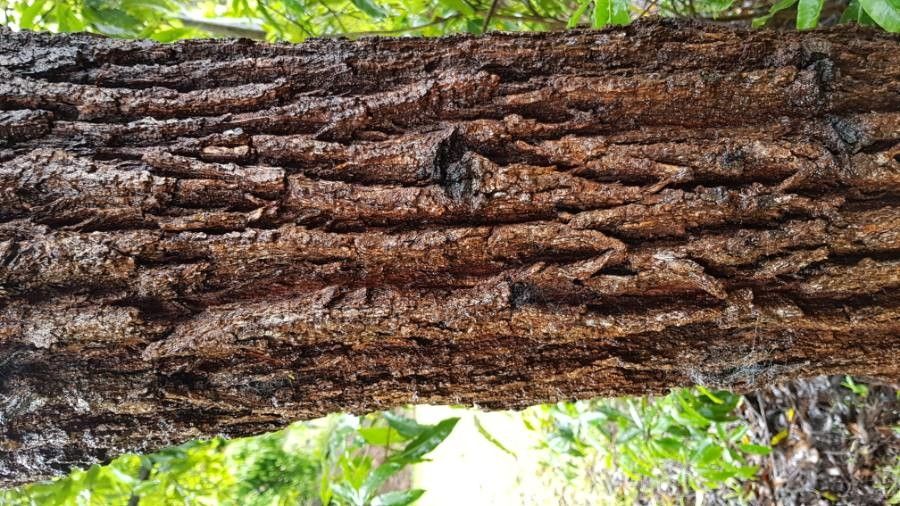
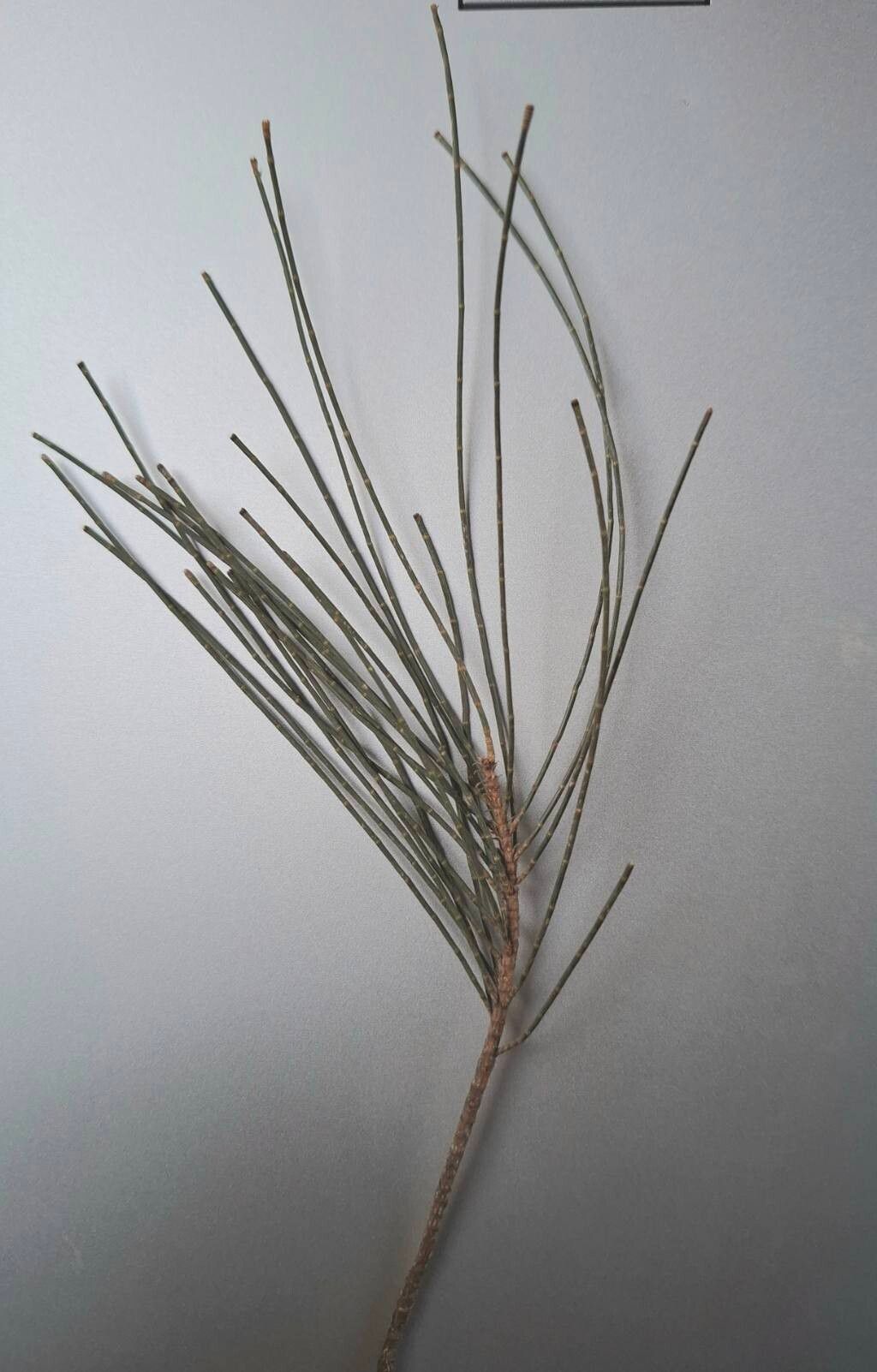
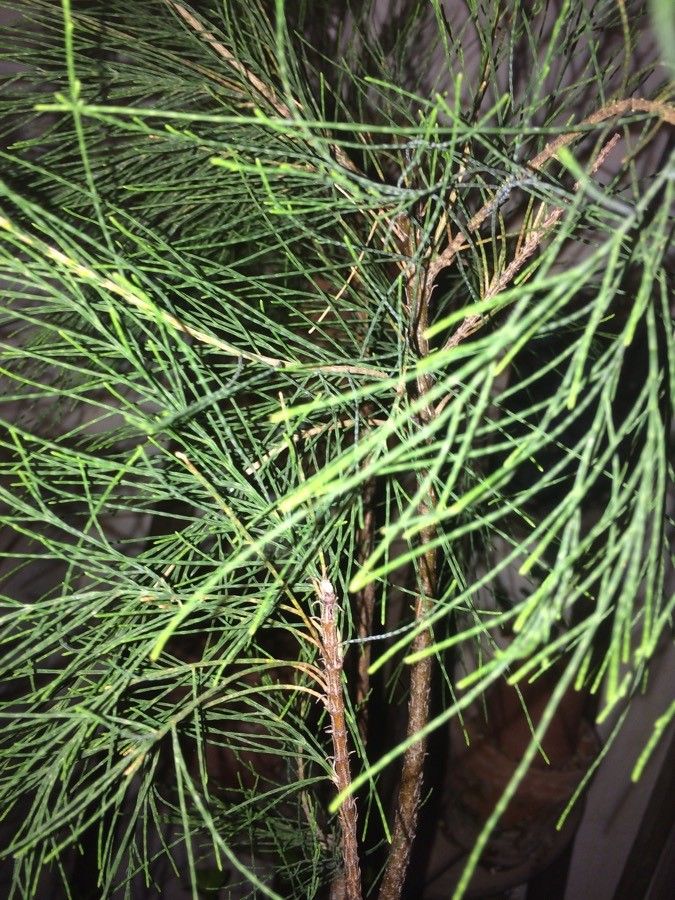
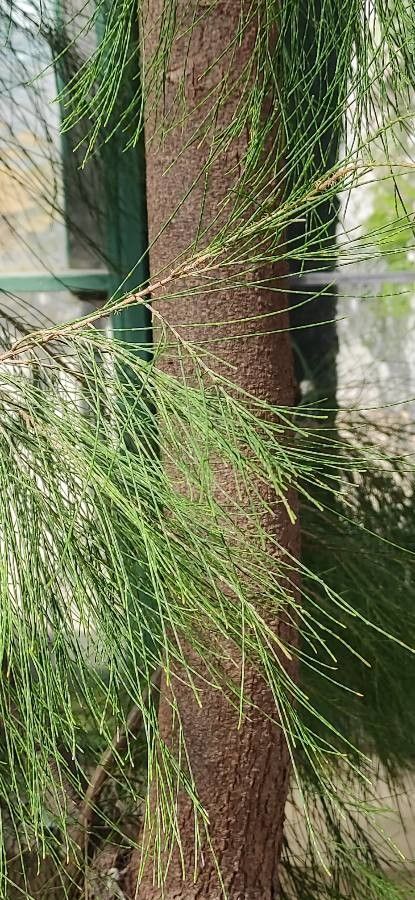
Casuarina equisetifolia, common names Coastal She-oak or Horsetail She-oak (sometimes referred to as the Australian pine tree or whistling pine tree outside Australia), is a she-oak species of the genus Casuarina. The native range extends throughout Southeast Asia, Northern Australia and the Pacific Islands; including Thailand, Myanmar, Vietnam, Malaysia, Singapore, Brunei, Indonesia, East Timor, and the Philippines (where it is known as agoho pine), east to Papua New Guinea, French Polynesia, New Caledonia, and Vanuatu, and south to Australia (north of Northern Territory, north and east Queensland, and north-eastern New South Wales). Populations are also found in Madagascar, but it is doubtful if this is within the native range of the species. The species has been introduced to the Southern United States and West Africa. It is an invasive species in Florida, South Africa, India and Brazil.
The beach sheoak is resistant to disease and is generally unlikely to suffer from illnesses. Regarding care, this plant is fairly low-maintenance. When grown outdoors it needs little watering, and larger specimens typically do not need pruning. Smaller plants, however, should be pruned after they finish flowering. Beach sheoak is suitable for anyone with an outdoor area, such as a garden or deck, and does not demand extensive gardening experience.
How to keep Casuarina Equisetifolia.
Light
Beach sheoak does best with plenty of sun but also tolerates moderate sunlight. Coming from areas that generally get abundant sunshine, it grows well where light is ample. However, too much sun or too little can damage the plant, leading to stunted growth or wilting.
Water
The beach sheoak thrives in sandy, coastal, and saline environments where there is moderate moisture and consistent humidity. While it can tolerate occasional dry periods, it is best to water the plant every 1-2 weeks. Ideally suited for outdoor growth, the beach sheoak's development is most effective during the rainy season, as this aligns with its optimal water uptake needs.
Humidity
This plant needs special care because it loves high humidity levels of 60-80% or more. The best way to achieve this is by placing a humidifier near the plant. Daily misting is also essential! Make sure the room has good ventilation.
Temperature
The beach sheoak is native to tropical areas and typically prefers temperatures of 68 to 100 ℉ (20 to 38 ℃). It can tolerate somewhat cooler conditions in winter but may be damaged if exposed to freezing temperatures. If grown where winters are cooler, consider planting it in a sheltered location to protect it from cold winds.
Fertilizer
Fertilize your Beach sheoak in early spring to encourage healthy growth. Regular feeding improves its overall health, leading to vigorous development, greater resilience in difficult conditions, and enhanced resistance to pests and diseases. Keep a set fertilization schedule for your Beach sheoak to maintain vibrant, deeply colored foliage and a lush appearance.
Pruning
The beach sheoak is known for its wispy foliage and rapid growth. To maintain its health and appearance, it's important to prune the plant from early to late winter. The main techniques include removing dead branches and thinning out crowded areas. Light pruning is recommended to prevent stress on the plant. This approach not only helps manage the size and shape of the sheoak but also encourages healthier growth and reduces the risk of disease, particularly during the dormant season.
Pot & Repot
When repotting Beach sheoak, select a pot 1-2 inches (2.5–5.1 cm) larger with ample drainage. Use a well-draining potting mix. Repot in spring or fall, making sure the root ball sits slightly lower than the rim of the flower pot. Water thoroughly after repotting and place it in a warm spot with indirect sunlight.
Botanical profile.
- Plant Type
- Tree
- Life Cycle
- Perennial
- Genus
- Casuarina
- Family
- Casuarinaceae
- Hardiness Zone
- 9-11
- Mature Height
- 29.87 m
- Mature Spread
- 6.1 m to 11.89 m
- Leaf Color
- Green
- Leaf Type
- Evergreen
- Flower Color
- Red
- Flower Size
- 2.54 cm
- Bloom Time
- Mid spring, Late spring, Early summer
- Planting Time
- Spring, Autumn
- Harvest Time
- Mid summer, Late summer
- Native Area
- Solomon Islands, Malaysia, Indonesia, Vietnam, Myanmar, Vanuatu, Philippines, Papua New Guinea, Fiji, Brunei, Thailand
Other names.
Reader questions.
What should I do if I give too much or too little water to my Beach sheoak?
Outdoor plants, especially newly planted ones or seedlings, are prone to lack of watering. It is important to ensure sufficient watering for a few months when the tree is small or recently planted. Once the roots are established, Beach sheoaks can usually rely on rain for moisture. When planted in pots, overwatering is more likely to occur with Beach sheoaks. If you accidentally overwater your plant, take immediate action to remedy the situation. Stop watering the plant right away to minimize the damage. Then, remove the Beach sheoak from the pot and inspect its roots. If you find no signs of root rot, you can return the plant to its container. If there are signs of root rot, trim away affected roots and apply a fungicide to prevent further damage. Finally, repot the Beach sheoak in well-draining soil. For underwatered Beach sheoaks, simply water the plant more frequently. Underwatering is usually an easy problem to fix. When the plant lacks water, its leaves will droop, dry out, and fall off. With sufficient watering, the leaves will quickly regain their fullness. Adjust your watering frequency as soon as you notice signs of underwatering.
Why is it necessary to fertilize my Beach sheoak?
No matter which type of Beach sheoak you have, regular fertilization is essential for maintaining its overall health. By providing the proper nutrients, you can promote robust growth and enhance its ability to withstand challenging growing conditions, as well as defend against diseases and pests. The foliage of your Beach sheoak is particularly appealing, so it's important to prioritize its protection. This involves establishing and sticking to a regular fertilization schedule that is tailored to your specific Beach sheoak. By doing so, you can encourage your plant to develop vibrant, lush leaves with a rich color.
What are the sunlight requirements for Beach sheoak?
Beach sheoak, or Casuarina equisetifolia, requires substantial exposure to sunlight to thrive, ideally flourishing in full sun conditions which mean above 6 hours of sunlight per day. It can also manage in partial sun, which amounts to about 3-6 hours of sunlight daily. Observing the movement of sunlight through your garden to find spots that provide a balance of light and shade will greatly benefit the plants, ensuring their health and happiness.
What is the native climate for Beach Sheoak?
Beach Sheoak (Casuarina equisetifolia) is native to tropical regions, preferring temperatures between 68 to 100 °F (20 to 38 °C). While it can tolerate slightly cooler temperatures during the winter, it may suffer if exposed to freezing temperatures. It's recommended to plant Beach Sheoak in sheltered locations to protect them from cold winds in areas with cooler winters.
How often should I water my Beach sheoak tree?
For most outdoor plants, rainfall is usually sufficient for normal growth. However, if your area doesn't get much rain, you should water your plants adequately every 2 weeks in the spring and fall. In the summer, you'll need to water more frequently. In the winter, when plants need less water due to slower growth, you can water less often or even not at all. If your Beach sheoak is young or newly planted, you should water it more frequently to help it establish and grow into a drought-tolerant plant. For potted plants, there are two main ways to determine how often to water your Beach sheoak. The first option is to follow a predetermined watering schedule of once a week or once every other week. However, this approach may not work well because it doesn't consider the specific growing conditions of your Beach sheoak. Your watering frequency should also vary depending on the season. During the summer, when the plant needs more water, a predetermined schedule may not be enough. Instead, you can base your watering frequency on the moisture level of the soil. Ideally, you should wait until the top two to four inches of soil, about one-third to one-half depth of the pots, have completely dried out before watering again.
When should I fertilize my Beach sheoak?
To ensure healthy growth, fertilize your Beach sheoak for the first time in late winter or early spring. This will provide the necessary nutrients for the sheoak to resume healthy growth when the weather warms up. Additionally, if you live in a warm climate region, it is beneficial to fertilize the sheoak again in early fall. This will add extra nutrients to the soil for the following growing season and help the sheoak withstand the winter cold without foliage damage. Fertilizing earlier will also allow the new branches enough time to grow and withstand the cold winter.
What are the key essentials for growing Beach sheoak?
Growing Beach sheoak successfully entails ensuring it has substantial exposure to sunlight, as it originates from environments with abundant sunlight. Healthy growth is supported where the sun is plentiful. However, excessive sunlight or insufficient sun can harm the plant, leading to issues like stunted growth or wilting. In situations where natural sunlight is lacking, especially during winter or in less sunny spaces, artificial lighting can be a vital solution. Adequate artificial lighting supports faster, healthier growth, with considerations for the type of light, wattage, distance from plant, and duration of light exposure being essential for mimicking natural sunlight conditions effectively.
How should Beach Sheoak be protected from cold temperatures?
Beach Sheoak has some level of cold tolerance, requiring no special measures if temperatures stay above 0°C. However, should temperatures drop below 0°C, temporary measures for cold protection are necessary. Wrapping the plant with plastic film, fabric, or other materials can help, but it's important to remove these protective measures once the temperature rises to avoid potential damage.
How much water does my Beach sheoak plant need?
When watering your Beach sheoak, it's important to note that it doesn't always require a lot of water. If only a few inches of soil have dried out since the last watering, you can promote healthy growth by giving it about five to ten ounces of water each time. You can also gauge the water volume based on the moisture level of the soil. Keep track of how many inches of soil have dried out before watering again. To ensure your Beach sheoak receives enough moisture, water the soil layers that have become dry since the last watering. If more than half of the soil is dry, consider giving it more water until you see excess water draining from the pot's holes. If your Beach sheoak is planted outside in an area that receives ample rain, it may not need extra watering. However, when it's young or still establishing, make sure it gets 1-2 inches of rain per week. As it grows and becomes established, it can rely solely on rainwater. Only in situations where the weather is hot and there has been no rainfall for 2-3 weeks should you provide a full watering to prevent stress.
When is it best to not give fertilizer to my Beach sheoak?
There are certain times of the year when you should avoid fertilizing your Beach sheoak. Firstly, in the early and mid-winter months when the plant is dormant and doesn't require feeding. Secondly, it's not recommended to fertilize during late spring and summer when the weather is hotter and drier. Fertilizing during these times can have a negative impact on your Beach sheoak. To prevent any issues, stick to a fertilization schedule that involves feeding only in early spring and early fall.
What symptoms indicate that Beach sheoak isn't receiving adequate sunlight?
Symptoms indicating that Beach sheoak isn't receiving adequate sunlight include new leaves growing smaller than mature ones, leggy or sparse growth, quick leaf drop, halted growth, paler new leaves, conditions like chlorosis or sunscald, leaf curling, wilting, and leaf scorching. These signs suggest that the plant is either receiving too much sunlight or not enough, both of which can hamper its health. Adjusting the plant's exposure to light, whether moving it to a sunnier spot or utilizing artificial lighting, can mitigate these issues.
What are the signs of low temperature distress in Beach Sheoak?
When temperatures fall below -5°C, Beach Sheoak may show signs of distress, such as drooping leaves. While the plant can recover from mild cases, severe cold can cause leaves to wilt and eventually fall off. To protect against future cold events, damaged parts should be trimmed off, and the plant should be wrapped with non-woven fabric or cloth, alongside constructing a wind barrier for added protection.