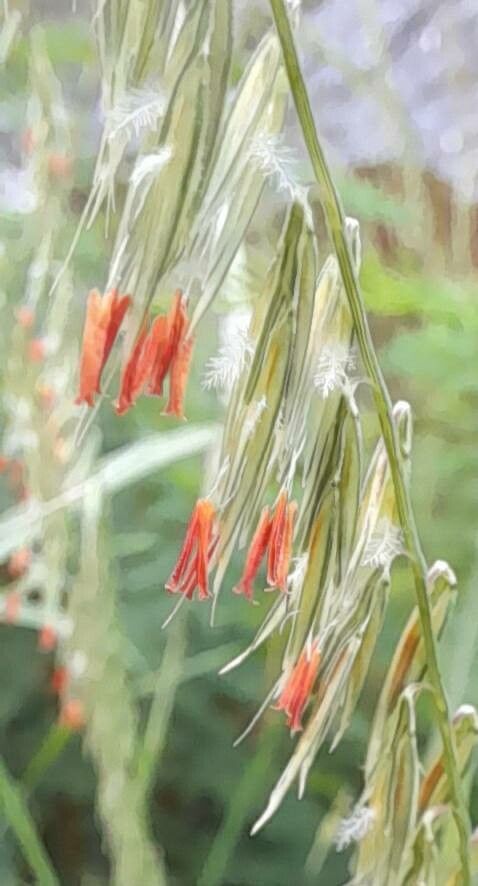
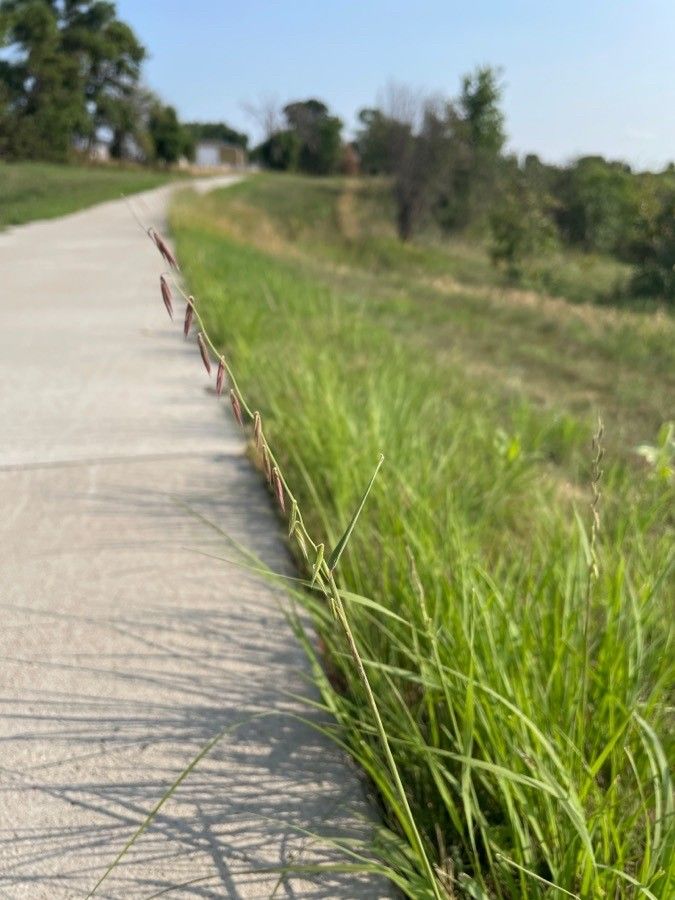
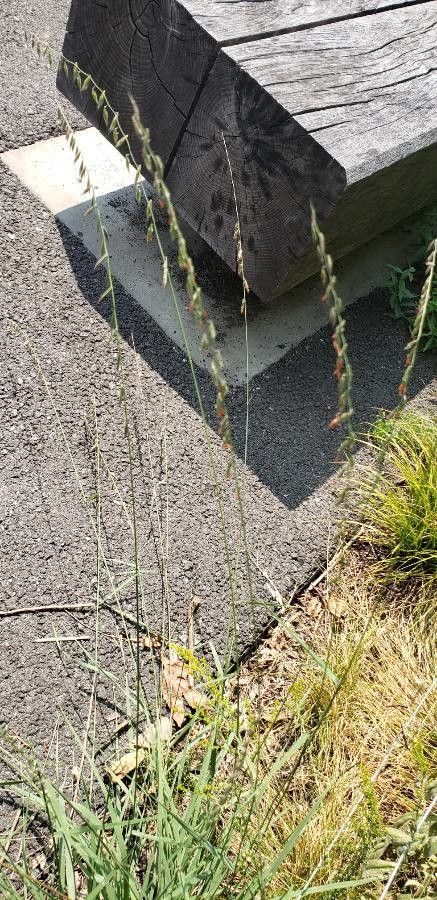
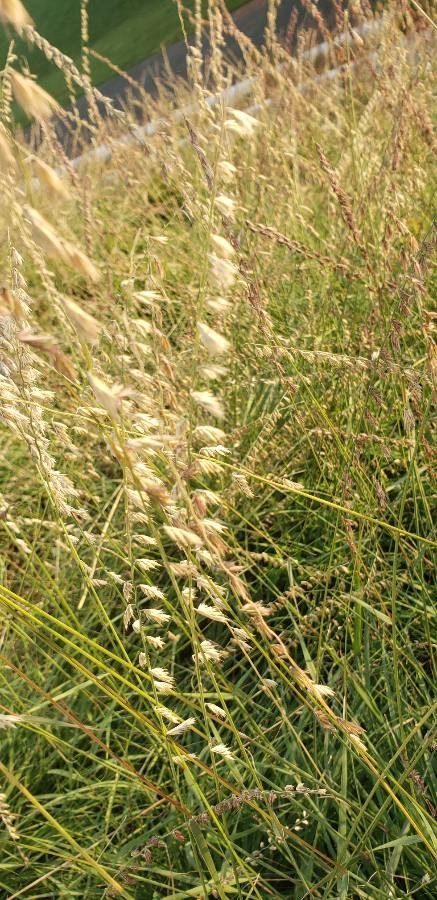
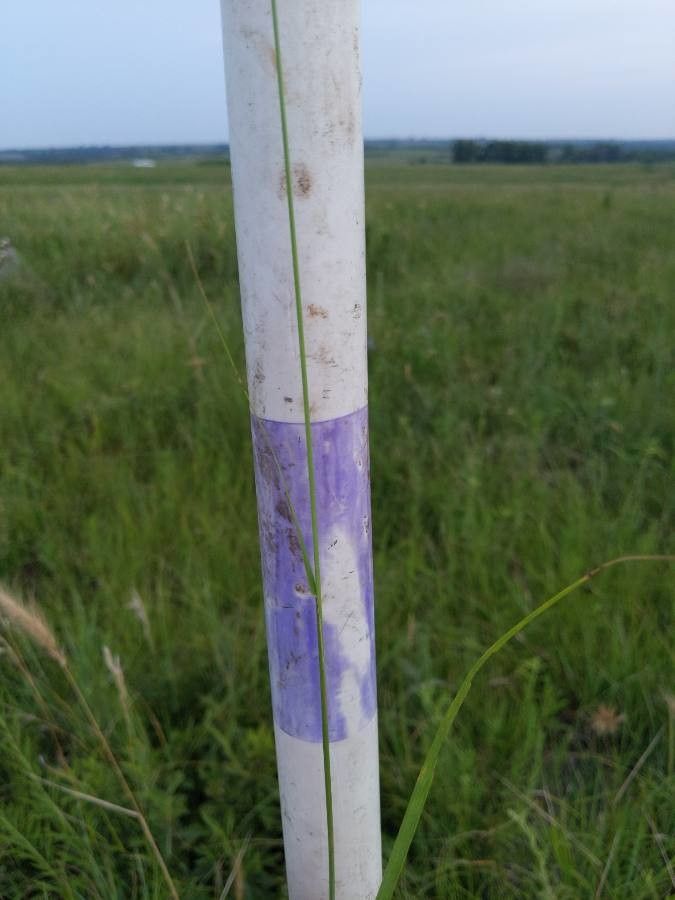
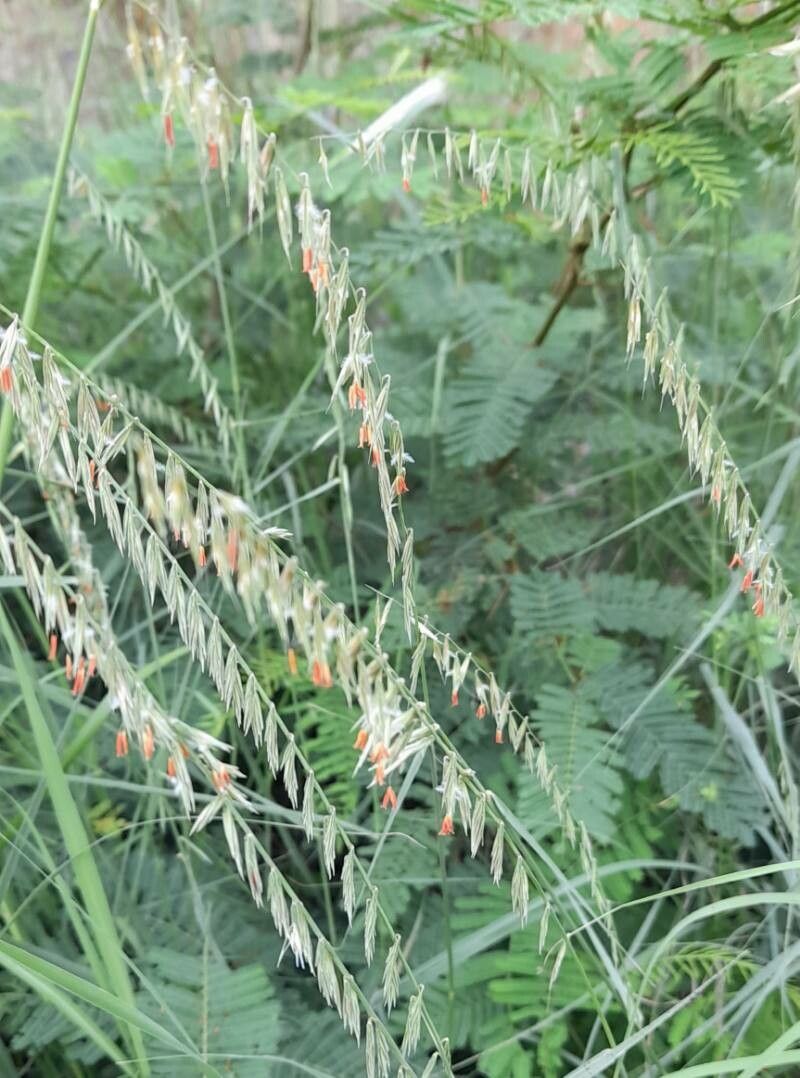
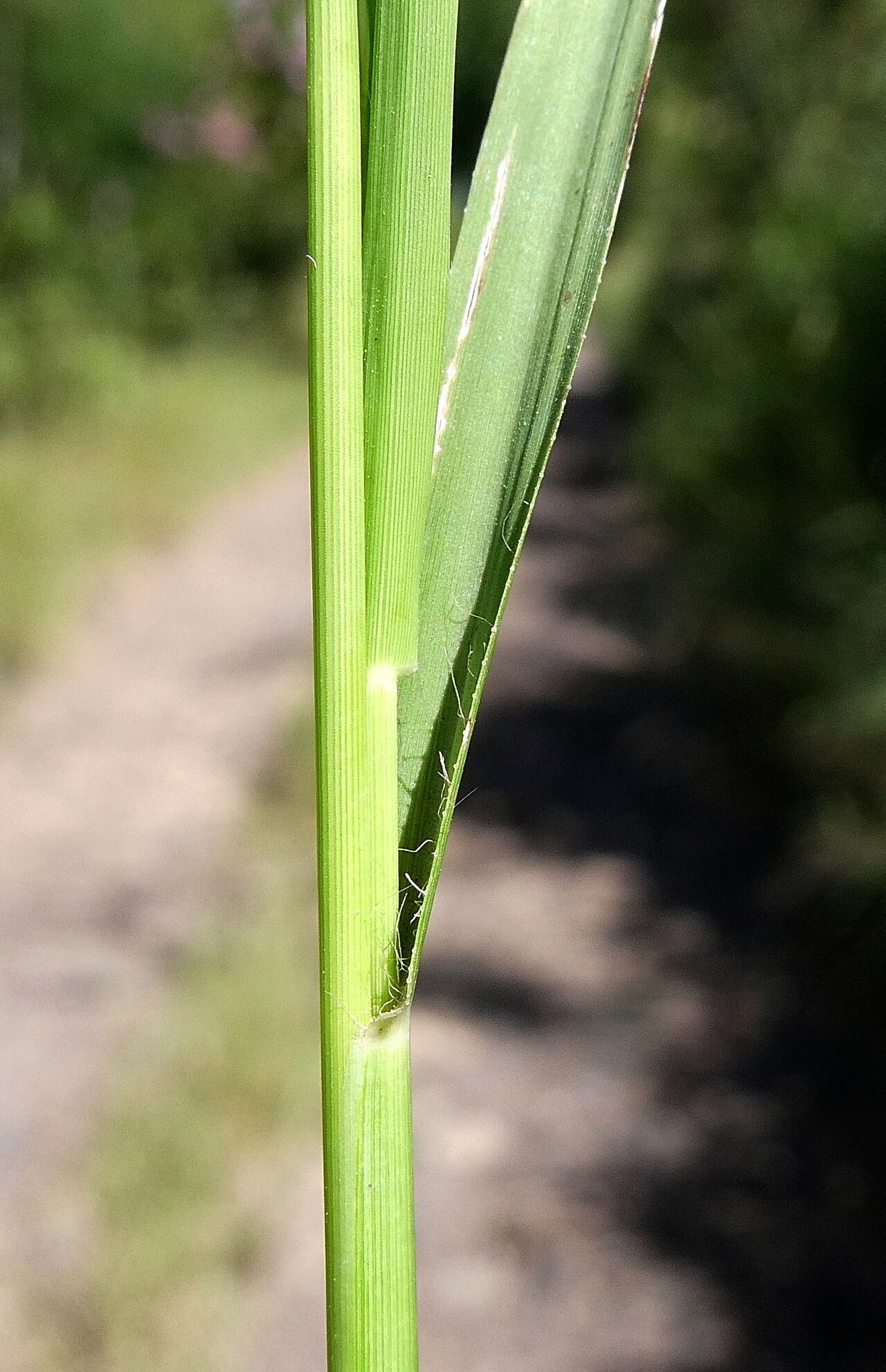
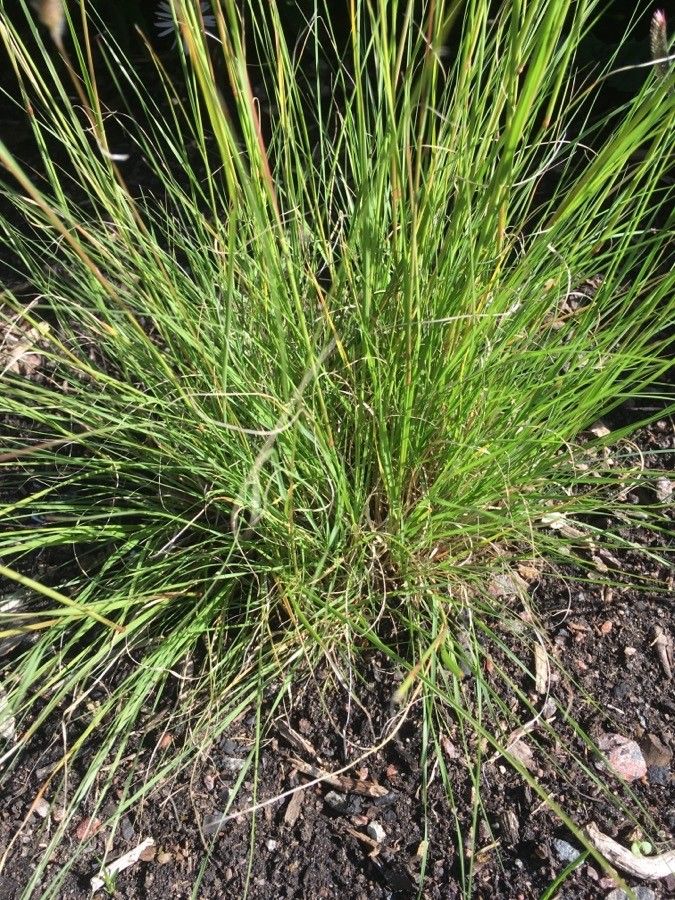
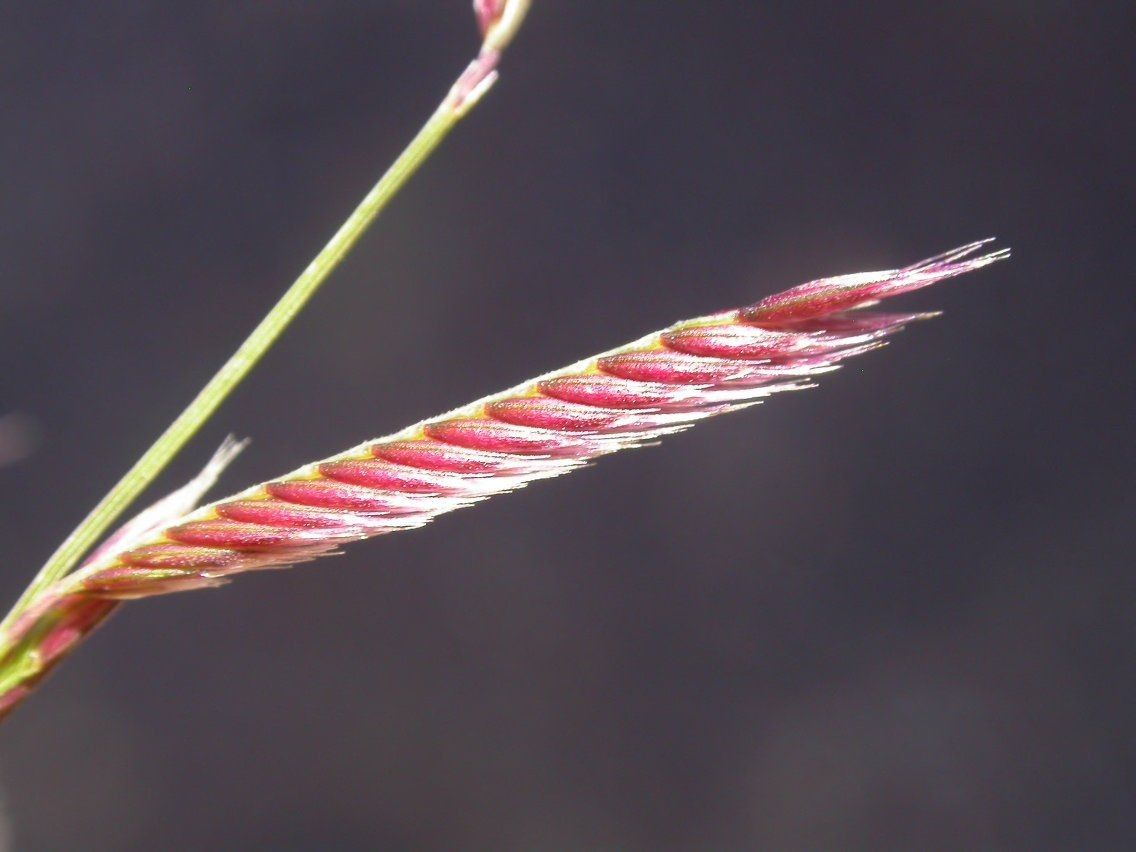
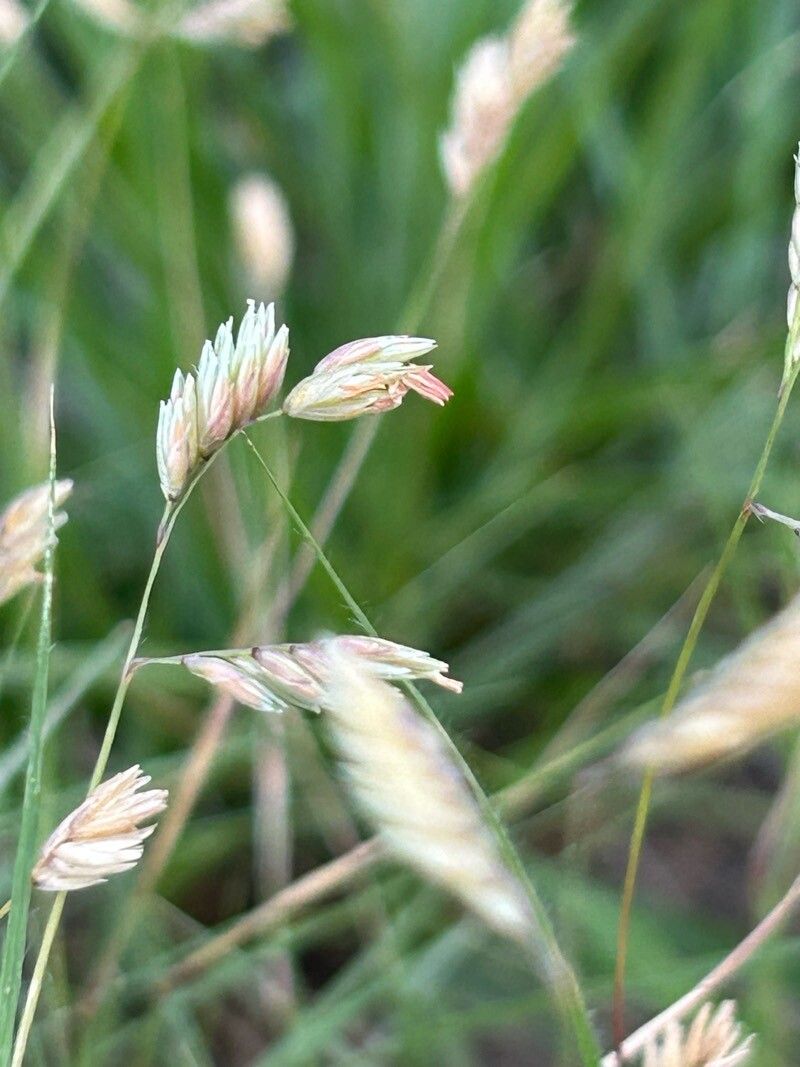
Bouteloua curtipendula, commonly known as Sideoats Grama, is a warm-season perennial grass native to North America. It typically grows in clumps and can reach heights of 2-3 feet. The plant features narrow, blue-green leaves that can grow up to 12 inches long.
One of the most distinctive characteristics of Bouteloua curtipendula is its seed heads. These are arranged along one side of the stem, resembling a row of oats. The seed heads can be up to 6 inches long and turn reddish-brown as they mature.
Sideoats Grama thrives in well-drained soils and prefers full sun exposure, though it can tolerate some shade. Once established, it is drought-tolerant but may require occasional watering during prolonged dry spells.
Bouteloua curtipendula offers several ecological benefits. It provides food for wildlife such as birds and small mammals, helps stabilize soil erosion on slopes or hillsides, and improves soil health through its deep root system, which aids in water infiltration and nutrient cycling.
Overall, Bouteloua curtipendula is an attractive grass species that adds aesthetic value to landscaping projects while offering significant ecological benefits for wildlife habitats and restoration projects.
Side-Oats Grama has strong resistance to diseases and generally does not suffer from them. Still, it can be vulnerable to pests and illnesses present in its environment, though such infections are typically mild. Regarding upkeep, this plant needs a moderate level of care. Regular pruning is necessary to preserve a neat appearance and encourage healthy growth. Applying fertilizer can also assist in increasing flowering. Side-Oats Grama is appropriate for anyone who has outdoor areas like a garden or patio and does not demand extensive gardening experience. When kept indoors, it may need a higher level of care.
How to keep Bouteloua Curtipendula.
Light
Side-Oats Grama needs a substantial amount of sunlight to develop vigorously, as is typical in its native habitats. Every stage of growth, from seedling to full maturity, benefits from this. It does best with prolonged daily sun exposure. It performs poorly with too little light, resulting in stunted growth, while extra sunlight beyond that does not aid its development.
Water
Side-Oats Grama, well-suited for arid prairies, thrives with minimal moisture, needing water only every two weeks. This drought-tolerant and resilient plant prefers full sun exposure and is usually grown outdoors. It demonstrates an impressive ability to sustain itself during intense heat.
Temperature
Side-Oats Grama is native to areas where temperatures fluctuate between 41 and 95 °F (5 to 35 ℃). It prefers cooler climates and may need shaded protection during hotter seasons.
Fertilizer
One spring application of fertilizer is generally adequate for Side-Oats Grama, though multiple treatments can optimize growth. Apply every month to six weeks. Fertilization improves leaf appearance and function, maintaining even color and a healthy texture. It also promotes root development and nutrient uptake for sustained plant health.
Pruning
Side-Oats Grama is a hardy perennial grass known for its drought tolerance and distinctive seed spikes. Pruning it in early spring to a height of 2-3 inches offers several benefits: it removes old growth, encourages new shoots, enhances the plant's appearance, improves air circulation, and reduces the risk of disease. This supports robust growth in garden landscapes.
Pot & Repot
When repotting Side-Oats Grama, choose a pot 1-2 inches (2.5–5.1 cm) larger with good drainage. Use a well-draining potting mix. Repot in spring or fall, making sure the root ball sits slightly below the rim of the flower pot. Water thoroughly after repotting and place it in a warm spot with indirect sunlight.
Botanical profile.
- Plant Type
- Herb
- Life Cycle
- Perennial
- Genus
- Bouteloua
- Family
- Poaceae
- Hardiness Zone
- 4-9
- Mature Height
- 30 cm to 91 cm
- Mature Spread
- 61 cm
- Leaf Color
- Green, Yellow, Gray, Brown
- Leaf Type
- Deciduous
- Flower Color
- Tan
- Flower Size
- 2.54 cm
- Bloom Time
- Summer
- Planting Time
- Spring, Autumn
- Harvest Time
- Late summer, Early fall, Mid fall
- Native Area
- Colombia, Honduras, Mexico, Guatemala, Bolivia, Venezuela, Peru, El Salvador, Nicaragua, Ecuador, Costa Rica
Other names.
Reader questions.
How should I water my Side-Oats Grama grass?
To best care for the Side-Oats Grama plant, it is recommended to use filtered, room temperature water. Tap water may contain harmful particles, so filtered water is preferable. The plant is accustomed to warm environments, so cold water should be avoided as it can be a shock to the plant. It is also advised not to water the plant overhead, as it can cause issues with the foliage. Instead, thoroughly soak the soil with filtered, room temperature water. This helps to keep the roots moist and encourages their growth and nutrient absorption.
Why do I have to put fertilizer on my Side-Oats Grama?
The main structure of the Side-Oats Grama is made up of its leaves. Fertilization is an important way to ensure that these leaves look great and function properly. Proper fertilization will help maintain the consistent color and healthy texture of the leaves. It also benefits the plant below the soil's surface by promoting new root growth and maintaining existing roots. This means that fertilization not only keeps the plant healthy currently but also improves its ability to absorb soil nutrients in the future.
What are the sunlight requirements for Side-Oats Grama?
Side-Oats Grama requires more than 6 hours of sunlight daily to grow robustly. It's critical for its development from seedling to maturity, thriving in extended periods of sunlight each day. Inadequate sunlight leads to stunted growth, while excessive sun isn't beneficial either. To ensure your plants receive the perfect balance of light and shade, observe the sunlight's movement through your garden, choosing spots that meet these needs.
What is Side-Oats Grama and where is it native to?
Side-Oats Grama, botanically known as Bouteloua curtipendula, is native to regions that experience a wide temperature range between 41 to 95 °F (5 to 35 °C). It thrives best in cooler climates and may need protection from direct sun during the hotter seasons.
What should I do if I give my Side-Oats Grama grass too much or too little water?
Overwatering is a common problem for the health of Side-Oats Grama, while underwatering is less common due to the plant's drought tolerance. When overwatered, the stems and leaves wilt and turn yellow. Prolonged overwatering can cause diseases like root rot, mold, and mildew, which can kill the plant. Underwatering, though rare, can result in brittle and brown leaves. It is essential to recognize signs of overwatering early on because some diseases, like root rot, cannot be fixed if left too long. If you notice signs of overwatering, reduce watering and check the soil drainage. If the soil doesn't drain well, replace it with a loose, well-draining potting mix. If your Side-Oats Grama lacks water, increase regular watering until signs improve.
When should I fertilize my Side-Oats Grama?
If you grow your Side-Oats Grama outdoors, it will start growing again in early spring. This is a sign that it's time to fertilize it. You can usually get away with fertilizing it once in the spring. But if you want it to grow as much as possible, you can fertilize it multiple times between spring and early summer, about once every month to a month and a half.
How can artificial lighting be used for Side-Oats Grama when natural sunlight is insufficient?
When natural sunlight is insufficient, especially during winter or in less sunny spaces, artificial lighting becomes crucial for Side-Oats Grama's growth. LED lights are recommended due to their ability to provide specific wavelengths needed by the plant. Full sun plants require 30-50W/sq ft, partial sun plants 20-30W/sq ft, and full shade plants 10-20W/sq ft of artificial light. The light source should be placed 12-36 inches above the plant to mimic natural sunlight and be kept on for 8-12 hours per day, depending on the plant species' need.
Does Side-Oats Grama require special frost protection measures during winter?
Side-Oats Grama possesses a strong resistance to cold and typically does not need special frost protection measures. However, if winter temperatures are expected to drop below -30°C, it's important to protect the plant with coverings such as soil or straw. Watering the plant abundantly before the first freeze in autumn is also recommended to ensure the soil remains moist and to prevent drought and water scarcity during winter and early spring.
How many times should I water my Side-Oats Grama?
If your Side-Oats Grama plant is in a pot, the easiest way to check if it needs water is to insert your finger into the soil. If the top two to three inches of soil are dry, it's time to water it. If you have planted your Side-Oats Grama outdoors in the ground, you can use a similar method to test the soil. When you find that the top few inches of soil have dried out, it's time to water. In spring and early fall, this usually means watering once a week. In extremely hot weather, you may need to water it twice a week or more. However, mature, well-established Side-Oats Grama plants are quite resistant to drought.
When shouldn't I put fertilizer on my Side-Oats Grama?
During the late fall and winter, your Side-Oats Grama goes into a dormant phase and stops growing. So, it's best not to fertilize it during this time. However, in the spring and summer, if you decide to use fertilizers, gradually decrease the amount as summer approaches because the growth rate of your Side-Oats Grama will slow down too. Remember, it's not a good idea to fertilize your Side-Oats Grama when the weather is unusually hot or when the soil is extremely dry. Fertilizing in these conditions can stress your Side-Oats Grama and cause it to die prematurely.
What are the symptoms of improper lighting for Side-Oats Grama?
Symptoms of improper lighting for Side-Oats Grama include smaller new leaves compared to mature ones, leggy or sparse growth, faster leaf drop, slower or halted new growth, paler new leaves, and conditions such as chlorosis, sunscald, leaf curling, wilting, and leaf scorching. These symptoms indicate insufficient sunlight or overexposure, impacting the plant's health.
How does Side-Oats Grama react to low and high temperatures?
Side-Oats Grama is cold-tolerant, doing best in temperatures above 5°C and ideally kept above -25°C during winter. At temperatures below -30°C, it may not show immediate damage, but sprouting during spring could be reduced or absent. In high temperatures, particularly above 35°C, the plant can exhibit signs of stress such as lighter leaf color, curling leaves, susceptibility to sunburn, and in severe cases, wilting and drying out.