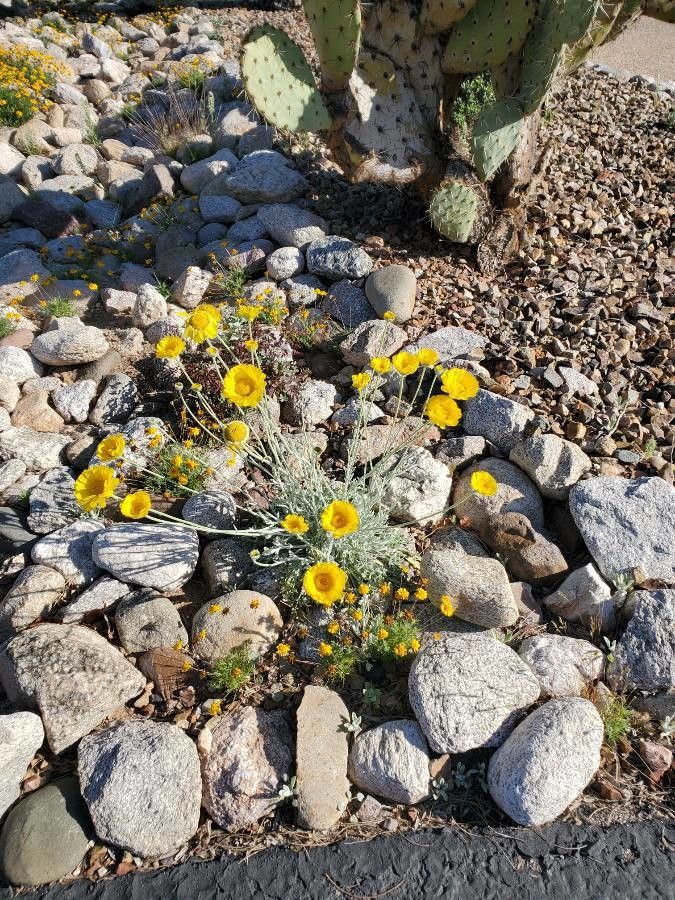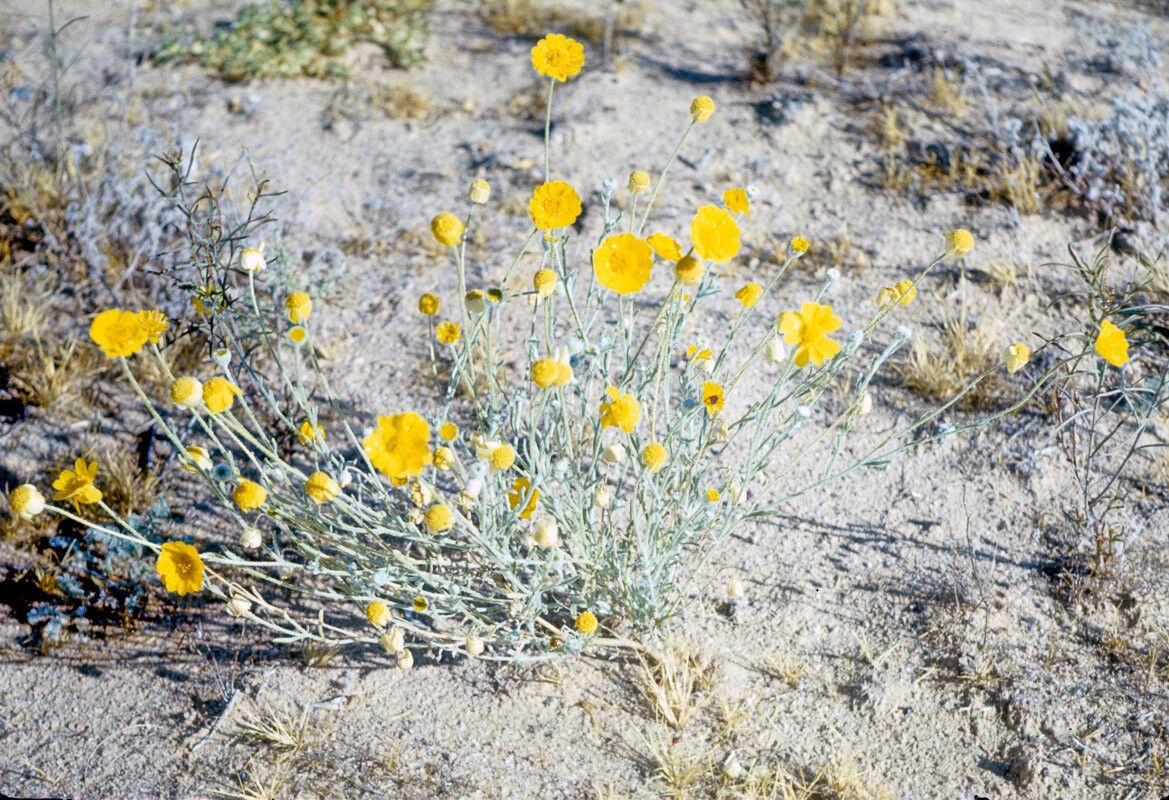
Baileya pleniradiata is a North American species of flowering plant in the daisy family, Asteraceae. It is known by the common name woolly desert marigold. It is native to desert regions of the southwestern United States and northern Mexico, where it grows in sandy habitats. It has been found in the States of Chihuahua, Sonora, Baja California, Arizona, Utah, and Nevada.
Woolly desert marigold is fairly disease-resistant and generally not prone to illnesses. However, it can be affected by pests and diseases present in its environment. These issues are typically mild. In terms of care, the plant requires moderate maintenance. Regular pruning is needed to maintain appearance and support healthy growth. Fertilizing can also help encourage flowering. Woolly desert marigold is suitable for anyone with an outdoor space, such as a garden or patio, and does not demand extensive care experience. It may need more attention when grown indoors.
How to keep Baileya Pleniradiata.
Light
The woolly desert marigold is a perennial herbaceous plant that thrives in the sunlight and is native to open habitats, frequently flourishing in meadows and grasslands. It has a propensity for full sun exposure, however, it can also withstand conditions of partial sunlight.
Water
The woolly desert marigold is well-suited for arid environments and demonstrates a high tolerance for drought. To mimic its natural habitat, water the plant twice a week. Ideally grown outdoors, the woolly desert marigold needs full sunlight and well-draining soil to avoid root rot caused by excess moisture.
Temperature
The woolly desert marigold is native to the tropics, an area characterized by hot and damp climatic conditions. It has, therefore, adapted adequately to heat and moisture. The plant isn't fond of abrupt shifts in temperature and favors a steady thermal condition, emphasizing the need to prevent indoor temperature inconsistency. It generally doesn't withstand cooler climates and demands elevated temperatures to grow. If the temperature in its surroundings falls excessively, the growth of the plant might halt, or it could potentially perish.
Fertilizer
The woolly desert marigold necessitates the maximum fertilizer during its primary growth stage, which mainly takes place in the spring, summer, and early autumn. Fertilizing is critical to supply vital nutrients that could be deficient in the ground, facilitating robust root and stem growth, and appealing leaves, which is a distinct characteristic of this specific plant.
Pruning
The Woolly Desert Marigold is a low-maintenance plant with its distinctive woolly leaves and bright yellow flowers. For optimal growth and blooming, it's important to prune it from early to late spring. This will help remove dead foliage and ensure good air circulation. Annual pruning also prevents the plant from becoming leggy, helping it maintain its shape and promote robust flowering.
Botanical profile.
- Plant Type
- Herb
- Life Cycle
- Perennial
- Genus
- Baileya
- Family
- Asteraceae
- Hardiness Zone
- 8-11
- Mature Height
- 30 cm to 61 cm
- Mature Spread
- 30 cm to 46 cm
- Leaf Color
- Light Gray
- Leaf Type
- Evergreen
- Flower Color
- Yellow
- Flower Size
- 5.08 cm to 6.35 cm
- Bloom Time
- Mid spring, Late spring, Summer, Fall
- Planting Time
- Spring, Autumn
- Harvest Time
- Summer, Fall, Early winter
- Native Area
- Mexico