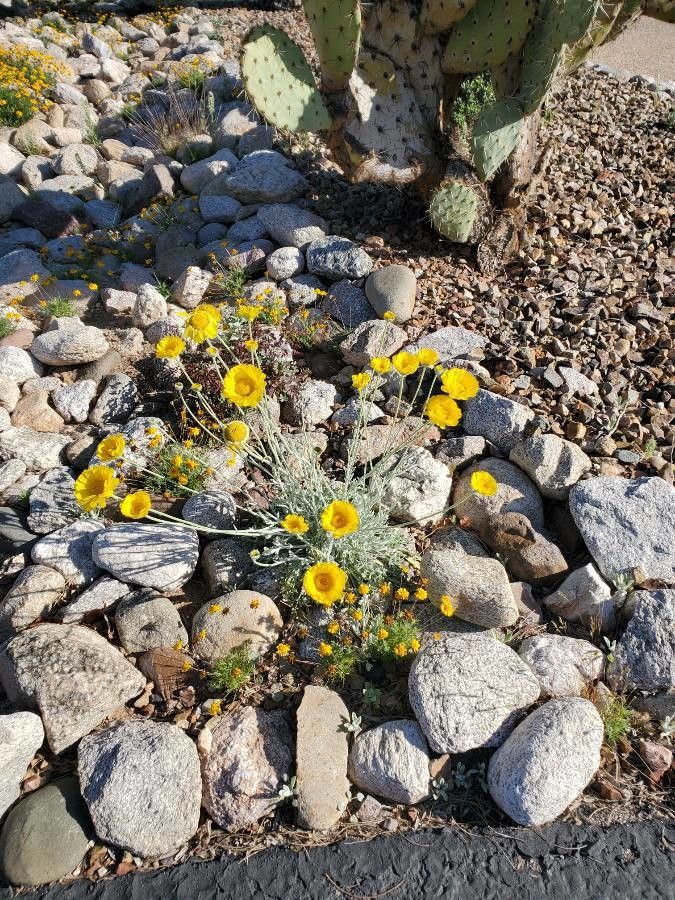
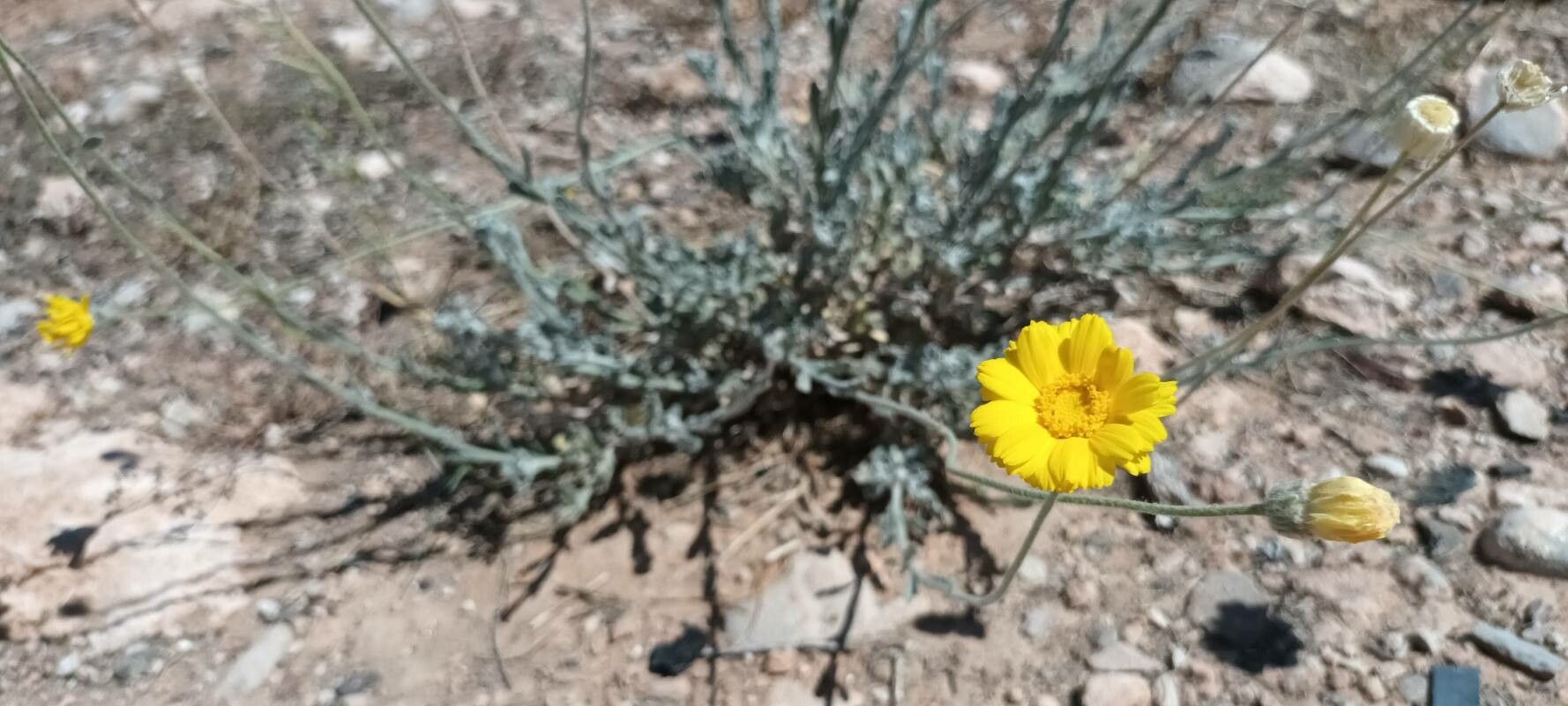
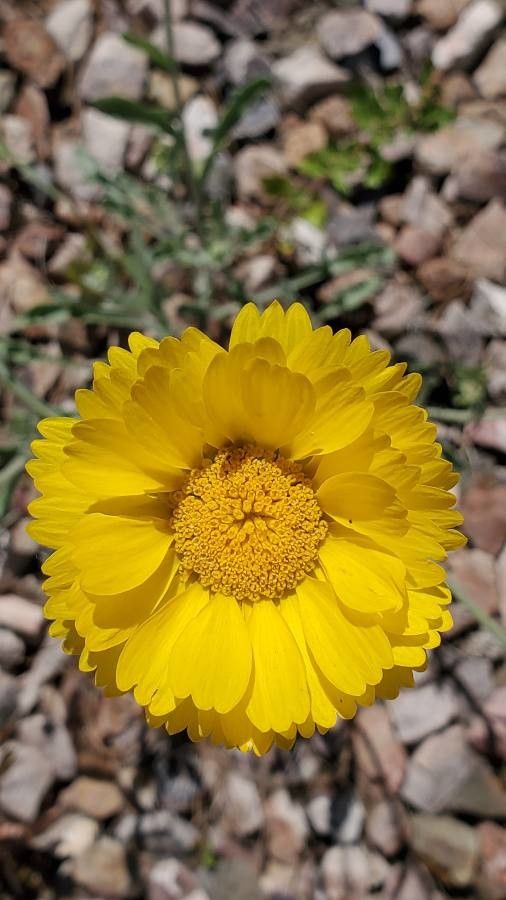
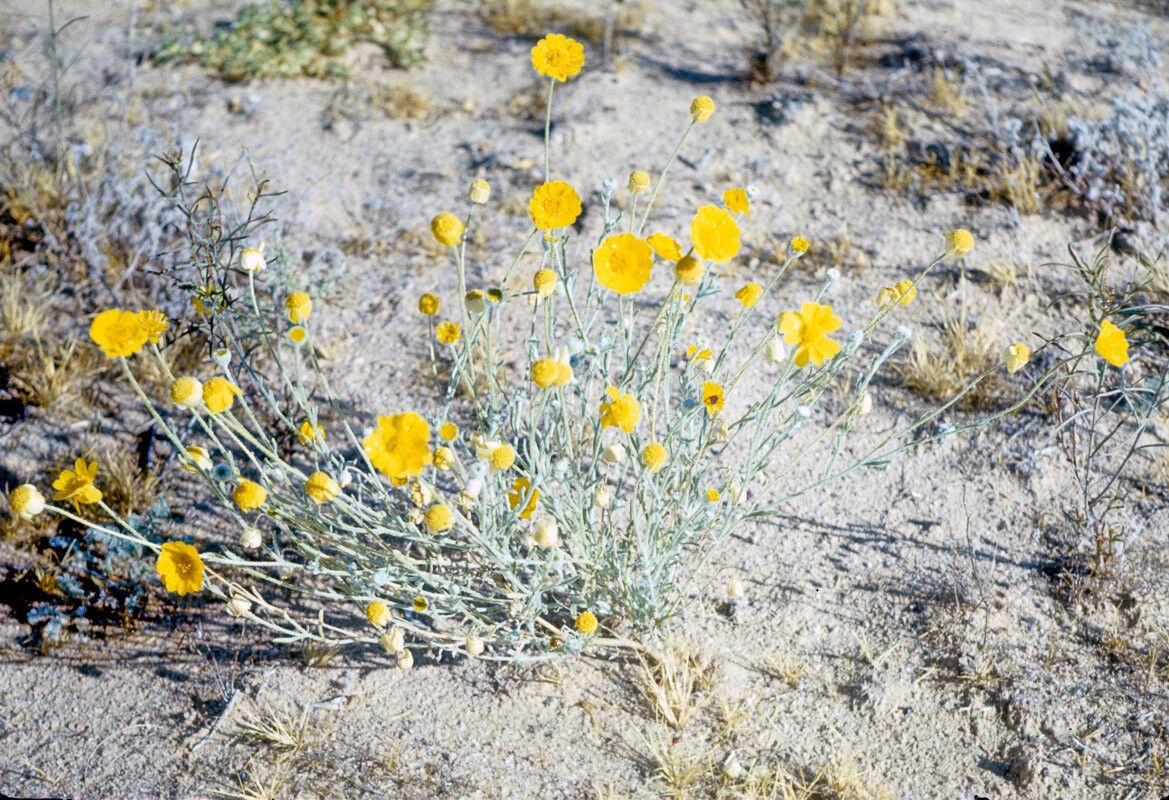
Baileya multiradiata, commonly known as the desert marigold, is a perennial plant belonging to the Asteraceae family. Native to the southwestern United States and northern Mexico, it thrives in arid regions such as deserts, dry washes, and rocky slopes.
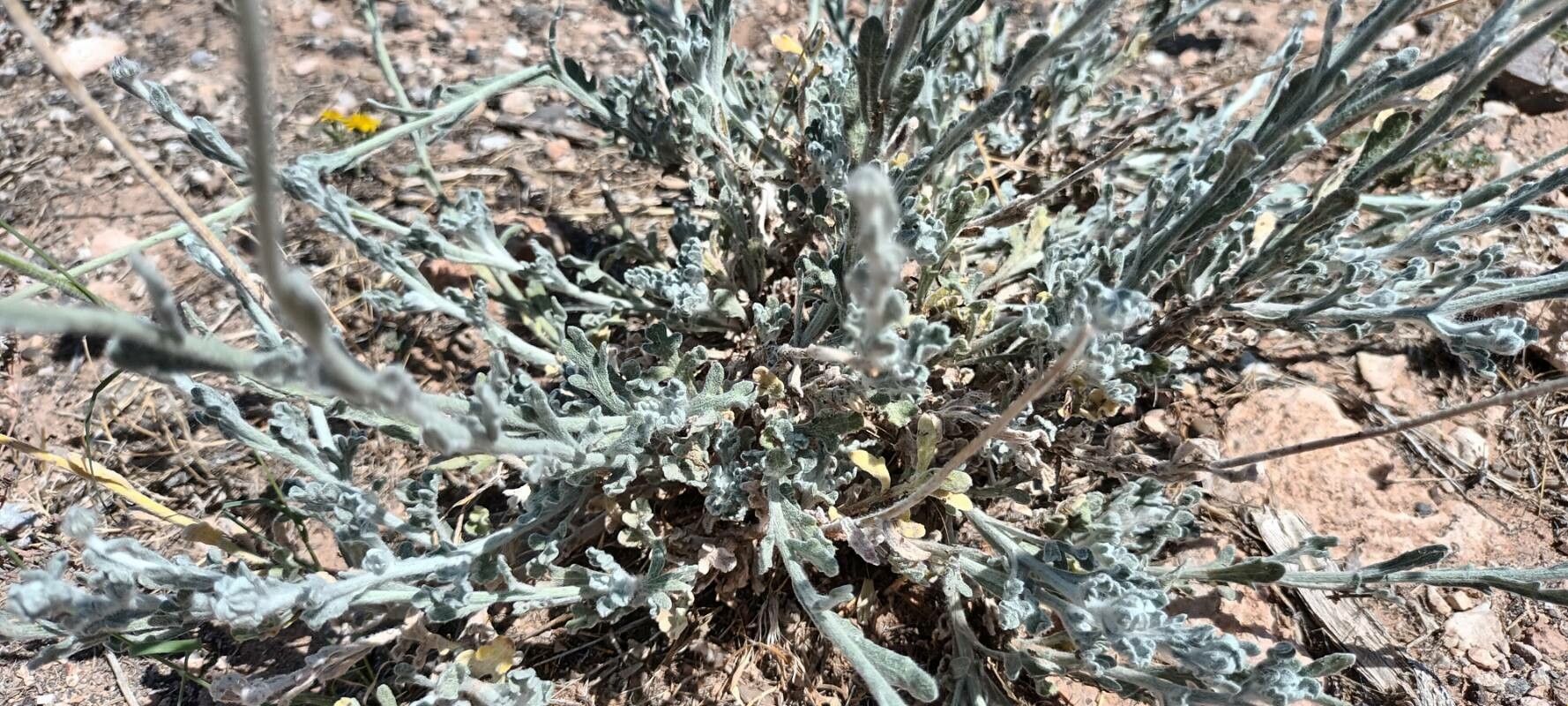
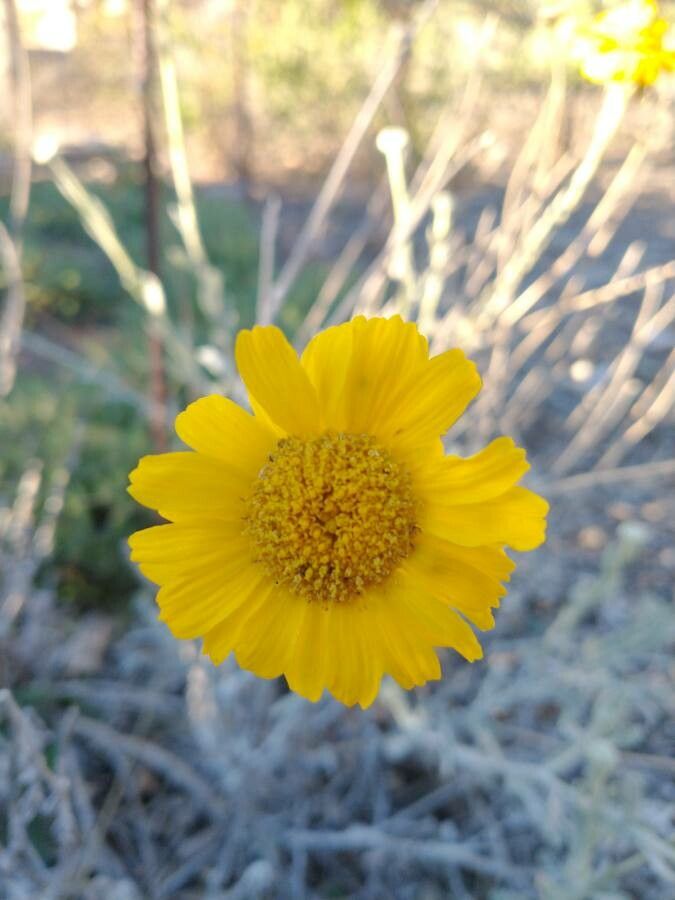
The plant exhibits a compact growth habit with multiple stems that can reach up to 2 feet in height. Its leaves are gray-green, deeply lobed, and have toothed edges. The flowers of Baileya multiradiata are bright yellow with multiple petals arranged around a central disk.
The desert marigold typically blooms from February through May, but can continue to flower sporadically throughout the year if conditions are favorable. It serves as an important source of nectar for pollinators, including bees and butterflies.
For centuries, Native American tribes have utilized Baileya multiradiata for its medicinal properties, particularly its anti-inflammatory effects. The plant also holds cultural significance for some tribes, who incorporate it into traditional ceremonies.
In summary, Baileya multiradiata is an attractive plant that adds vibrant color to arid landscapes while providing ecological benefits by attracting pollinators.
Desert Marigold is fairly disease-resistant and usually does not suffer from illnesses. Still, it can be affected by pests and diseases present in its environment. Such problems are typically minor. Regarding upkeep, this plant needs moderate care. Regular pruning is required to keep it looking tidy and to support healthy growth. Applying fertilizer can also encourage blooming. Desert Marigold is well suited for anyone with outdoor areas like a garden or patio and does not demand extensive gardening experience. It can need more attention when grown indoors.
How to keep Baileya Multiradiata.
Light
Desert Marigold does best with plenty of light, as found in its native desert habitat. While it prospers under those conditions, it can also adapt even in the absence of light. However, insufficient illumination can cause suboptimal growth, whereas excessive exposure may scorch the leaves.
Water
Desert Marigold thrives in arid environments, displaying excellent drought tolerance. It only needs to be watered once every three weeks. Preferring well-draining soil, this plant is perfect for xeric landscapes and water-conservation gardens, making it an excellent choice for regions facing water restrictions.
Temperature
Desert Marigold is suited to surviving in its native sun-drenched habitats, where temperatures range from 68 to 100 °F (20 to 38 °C). This plant prefers warmth, so when growing it, replicate these conditions, especially during colder months.
Fertilizer
The best time to fertilize a Desert Marigold is in early spring, as it emerges from dormancy and starts active growth. Fertilization supplies essential nutrients for healthy development. Although Desert Marigold has fairly low fertilizer requirements, applying fertilizer annually can boost its survival and result in better, longer-lasting blooms.
Pruning
The Desert Marigold is known for its bright yellow blooms and its ability to tolerate drought. To promote growth and flowering, prune from early to late spring, removing any dead stems and spent flowers. For the best results, minimal intervention is recommended. This approach not only enhances the plant's appearance and prevents legginess but also boosts its resilience against pests and diseases.
Botanical profile.
- Plant Type
- Herb
- Life Cycle
- Perennial, Annual, Biennial
- Genus
- Baileya
- Family
- Asteraceae
- Hardiness Zone
- 7-11
- Mature Height
- 15 cm to 46 cm
- Mature Spread
- 15 cm to 23 cm
- Leaf Color
- Gray, Light Gray
- Leaf Type
- Evergreen
- Flower Color
- Yellow
- Flower Size
- 2.54 cm to 5.08 cm
- Bloom Time
- Mid spring, Late spring, Summer, Fall, Early winter
- Planting Time
- Autumn
- Harvest Time
- Summer, Fall, Early winter, Mid winter
- Native Area
- Mexico
Other names.
Reader questions.
What is the ideal temperature range for Desert Marigold?
Desert Marigold thrives in its native environments, where temperatures typically range from 68 to 100 °F (20 to 38 °C). These conditions mirror the plant's preference for warmth, highlighting the importance of maintaining a warm environment for the plant, particularly during the colder months.
Is Desert Marigold resistant to cold?
Yes, Desert Marigold boasts significant cold resistance, and it generally does not require special frost protection measures during winter. However, in extremely cold climates where temperatures are expected to drop below -15°C, it is crucial to provide additional cold protection by covering the plant with soil or straw. Additionally, watering the plant abundantly before the first freeze in autumn to maintain moist soil can help protect it through winter and early spring.
What should be done if Desert Marigold experiences temperatures below -15°C?
If Desert Marigold is exposed to temperatures below -15°C, although there might not be visible damage in winter, sprouting may be affected in spring, resulting in decreased sprouting or a complete lack thereof. In such cases, any parts of the plant that have failed to sprout by spring should be removed.
How does high temperature affect Desert Marigold, and what measures should be taken?
During the summer, it's crucial to ensure that Desert Marigold remains below 38°C (100°F). Temperatures exceeding 43°C can cause the leaves to lighten in color, curl, become prone to sunburn, and in severe cases, lead to the plant wilting and drying out. Mitigating these effects involves trimming away the damaged parts of the plant, relocating it to a shaded area or using a shade cloth to protect it from the intense midday and afternoon sun, and watering it in the morning and evening to maintain soil moisture.