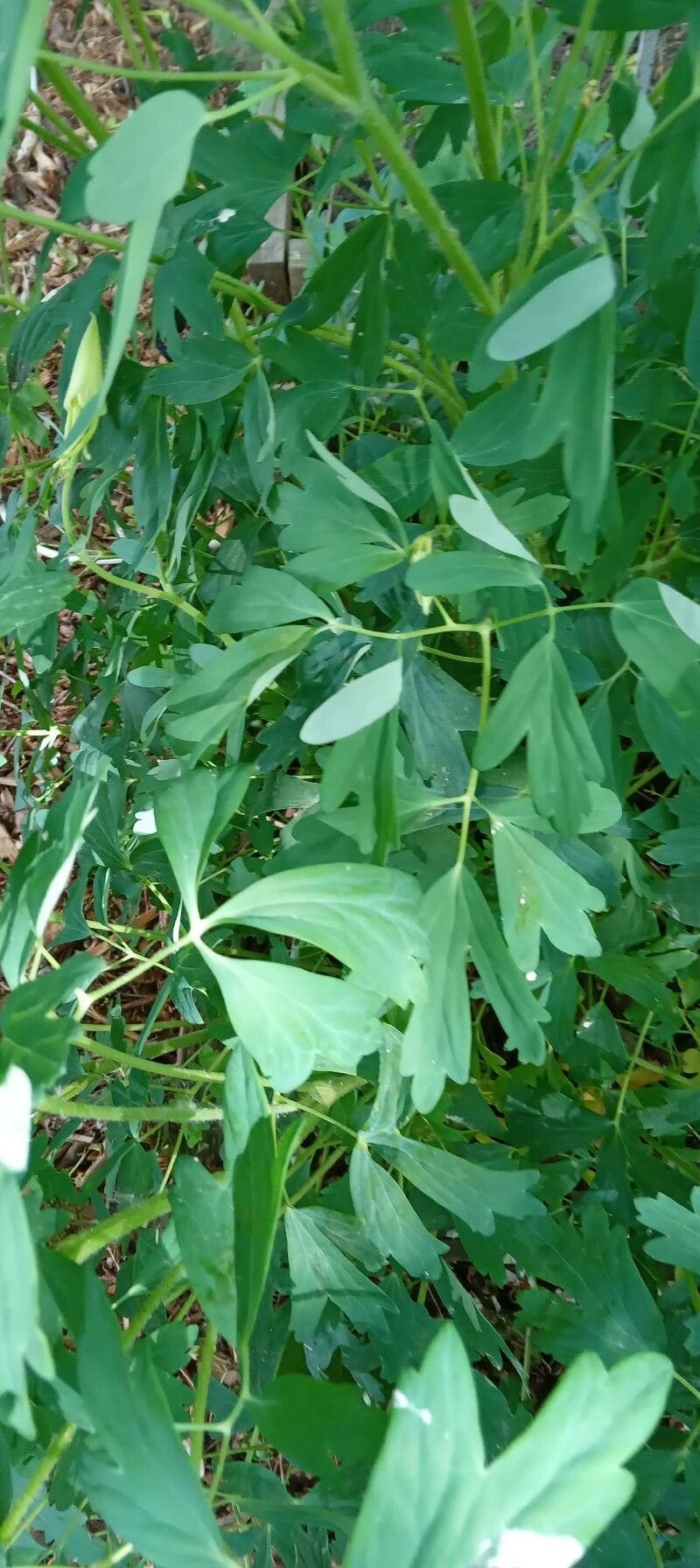
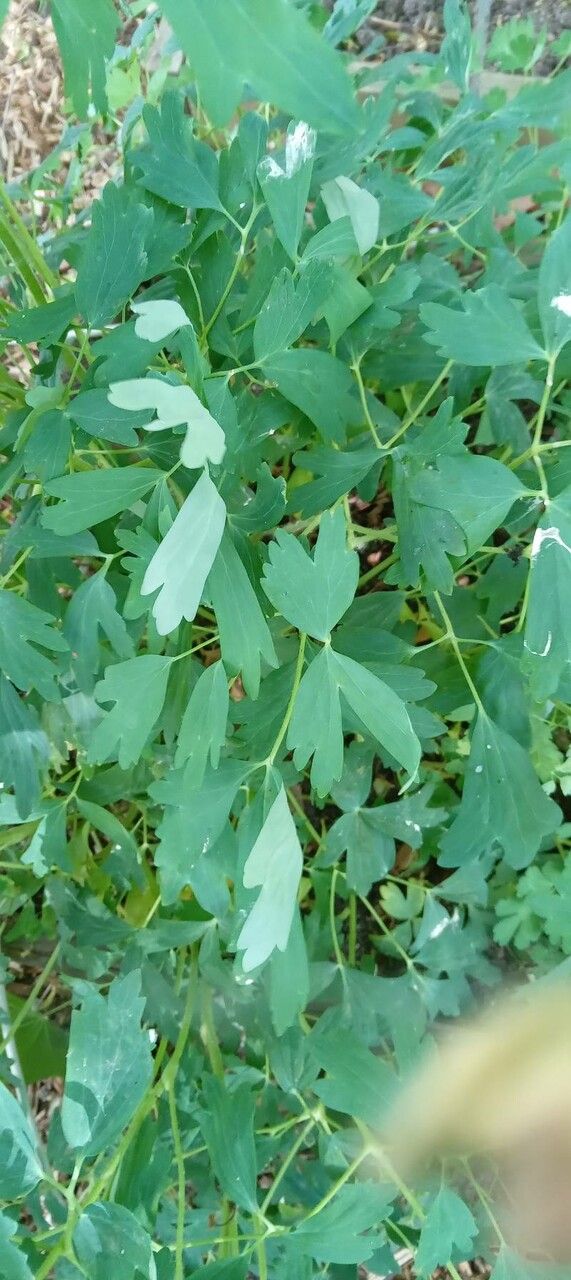
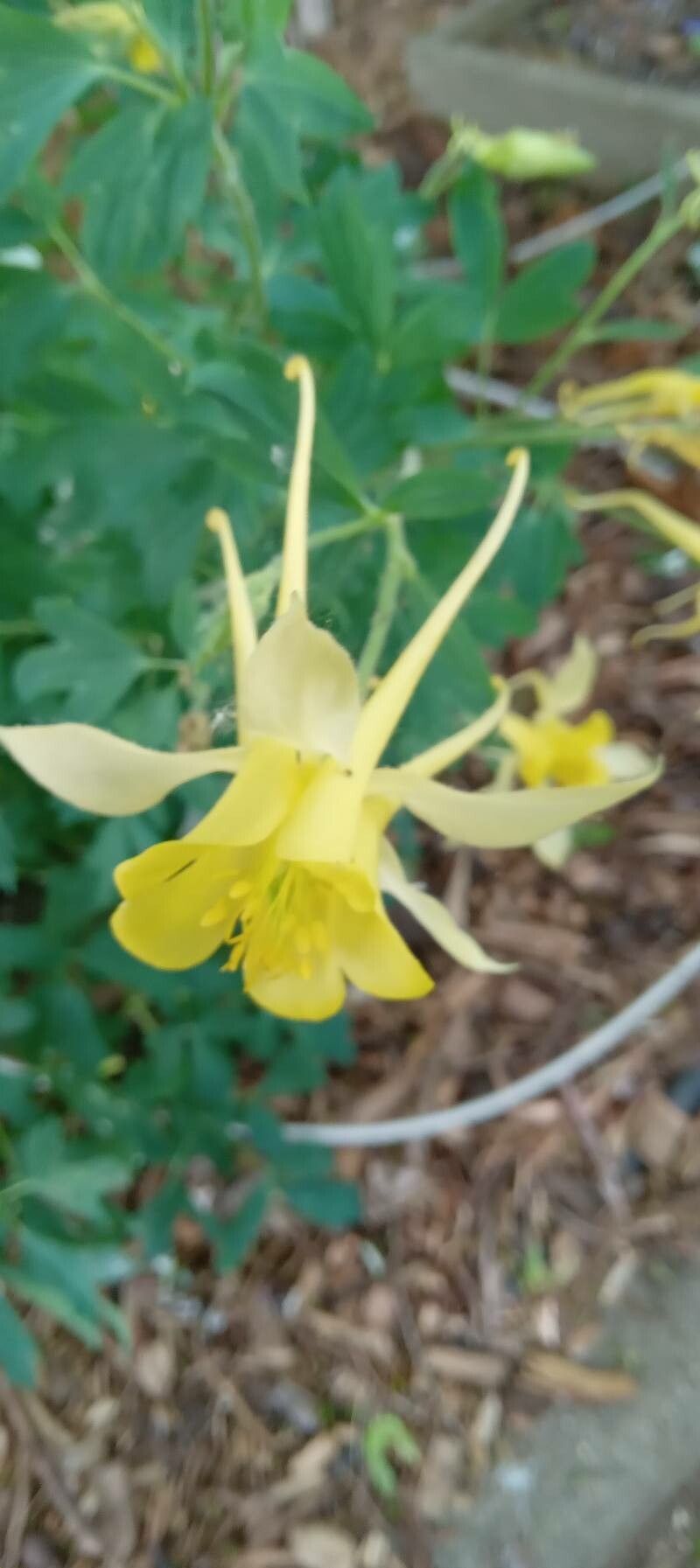
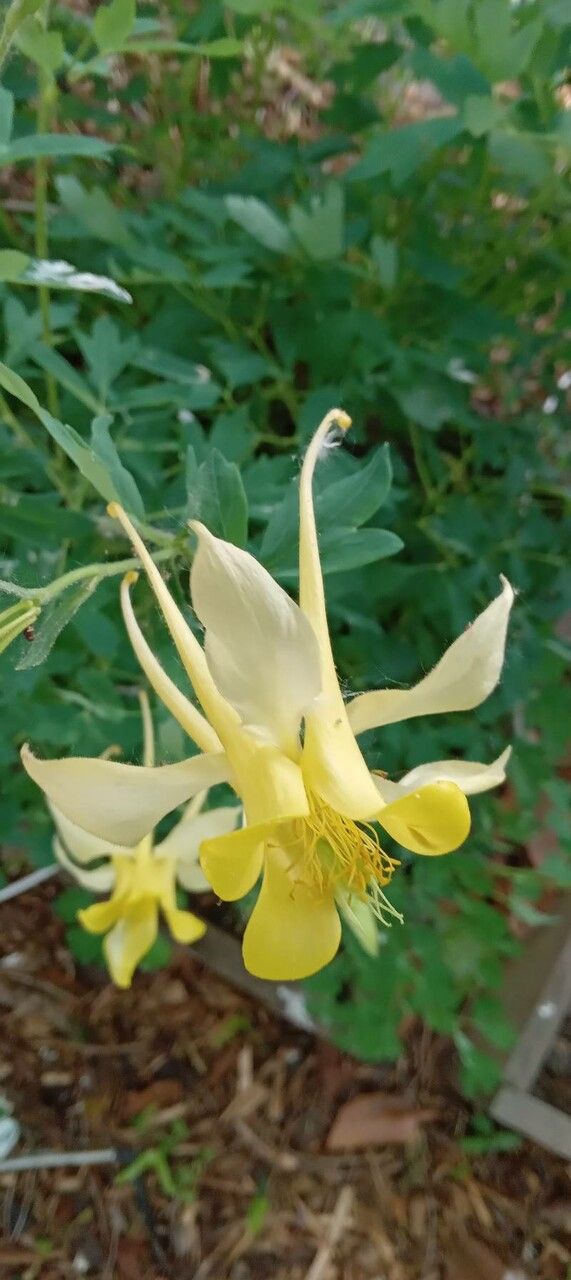
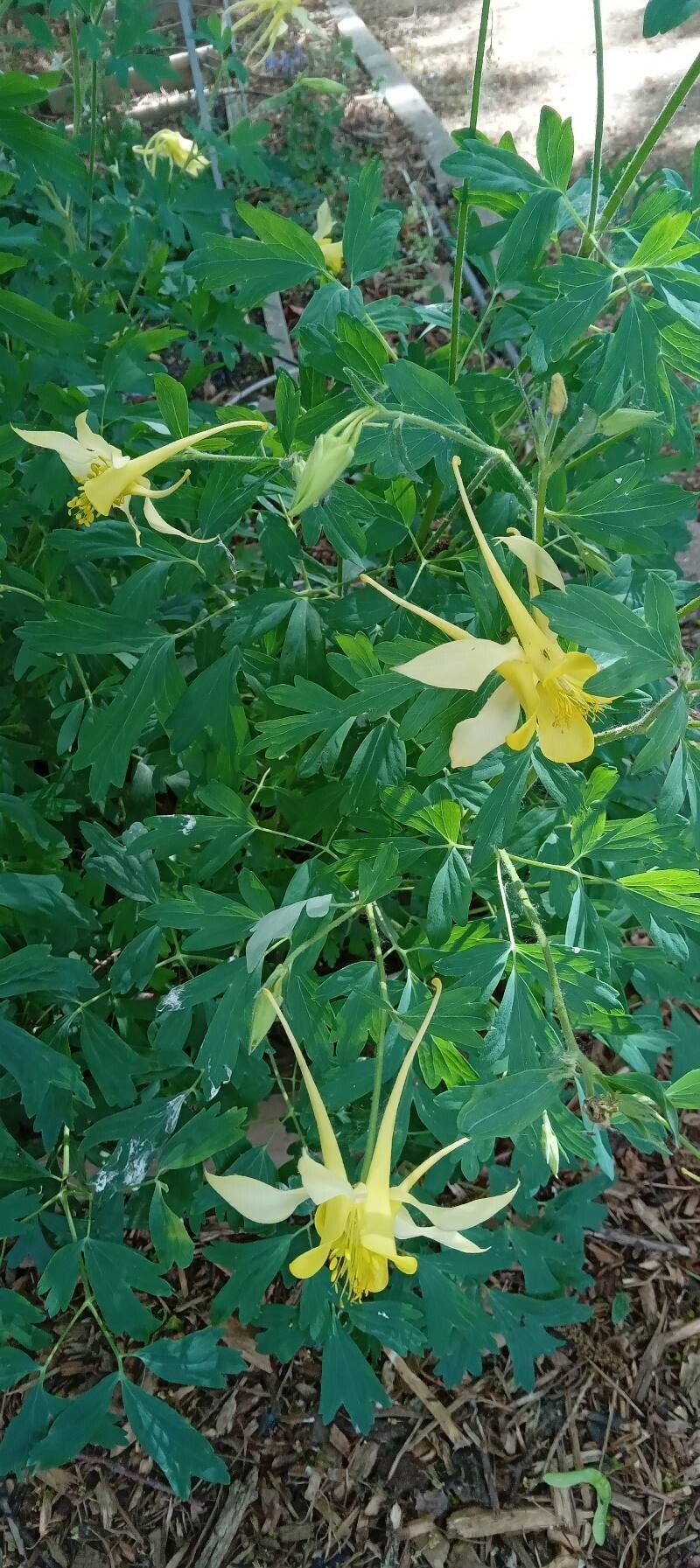
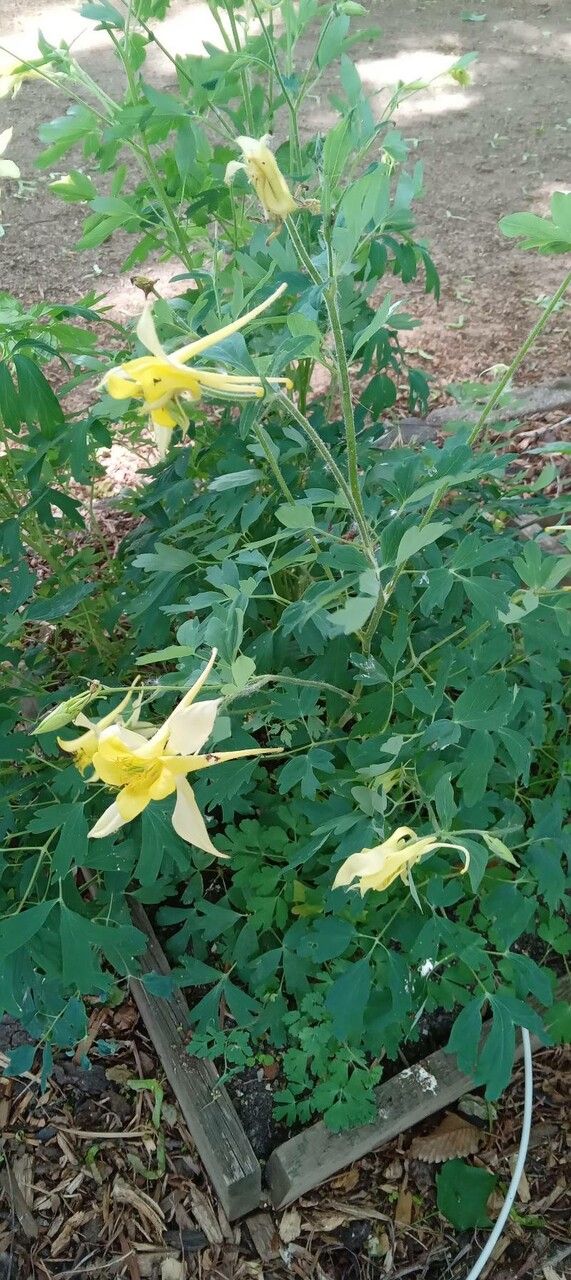
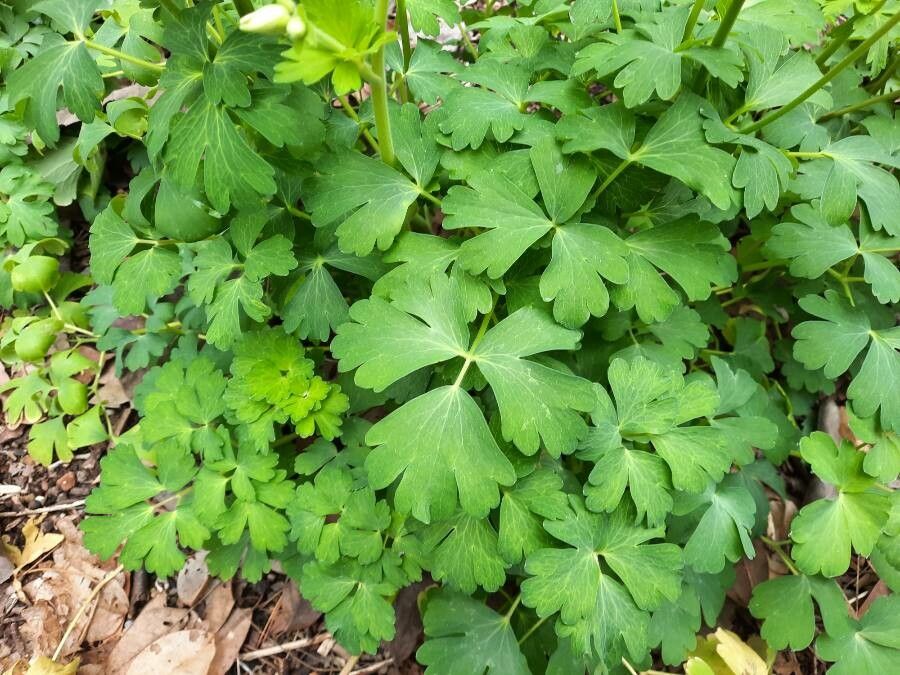
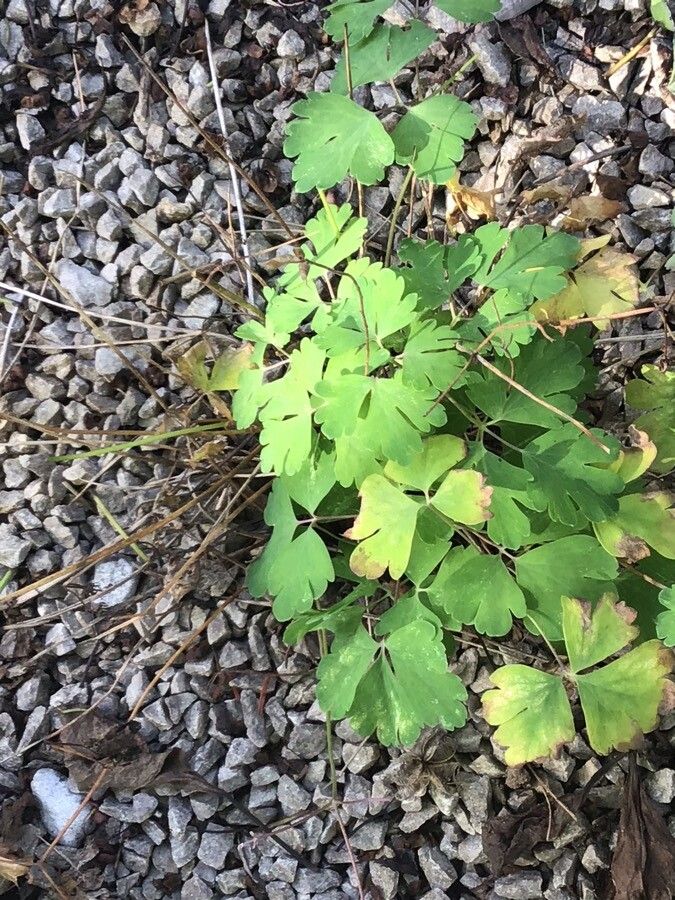
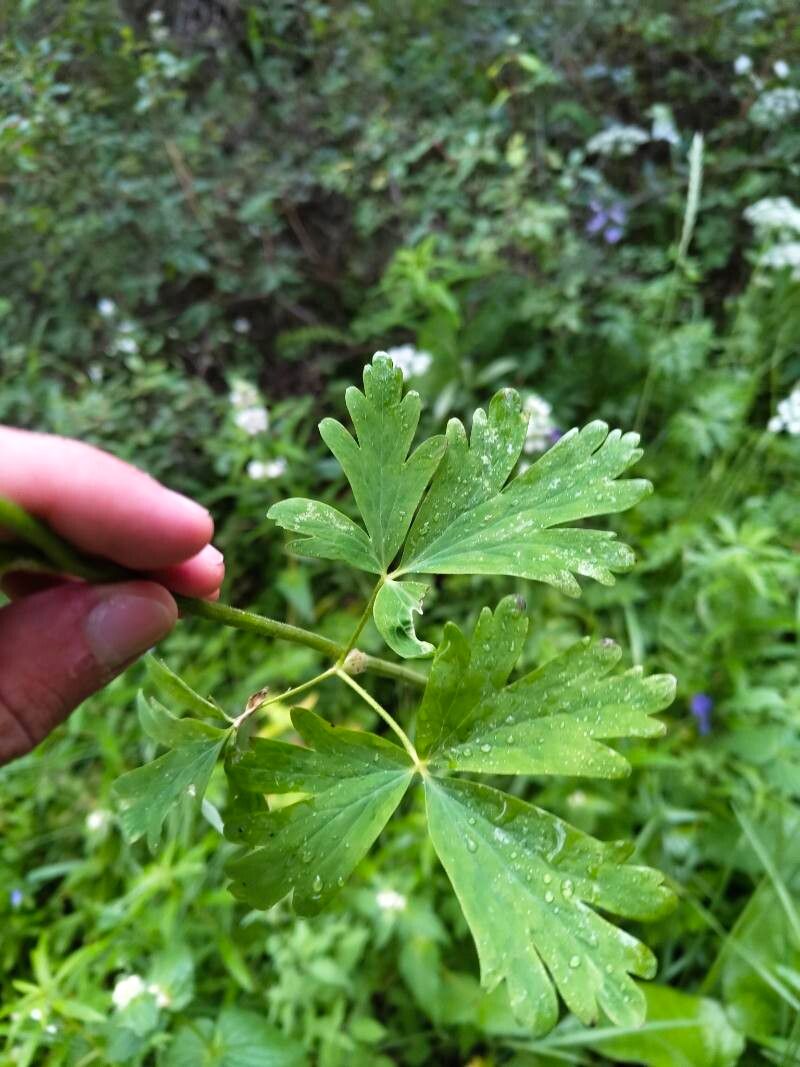
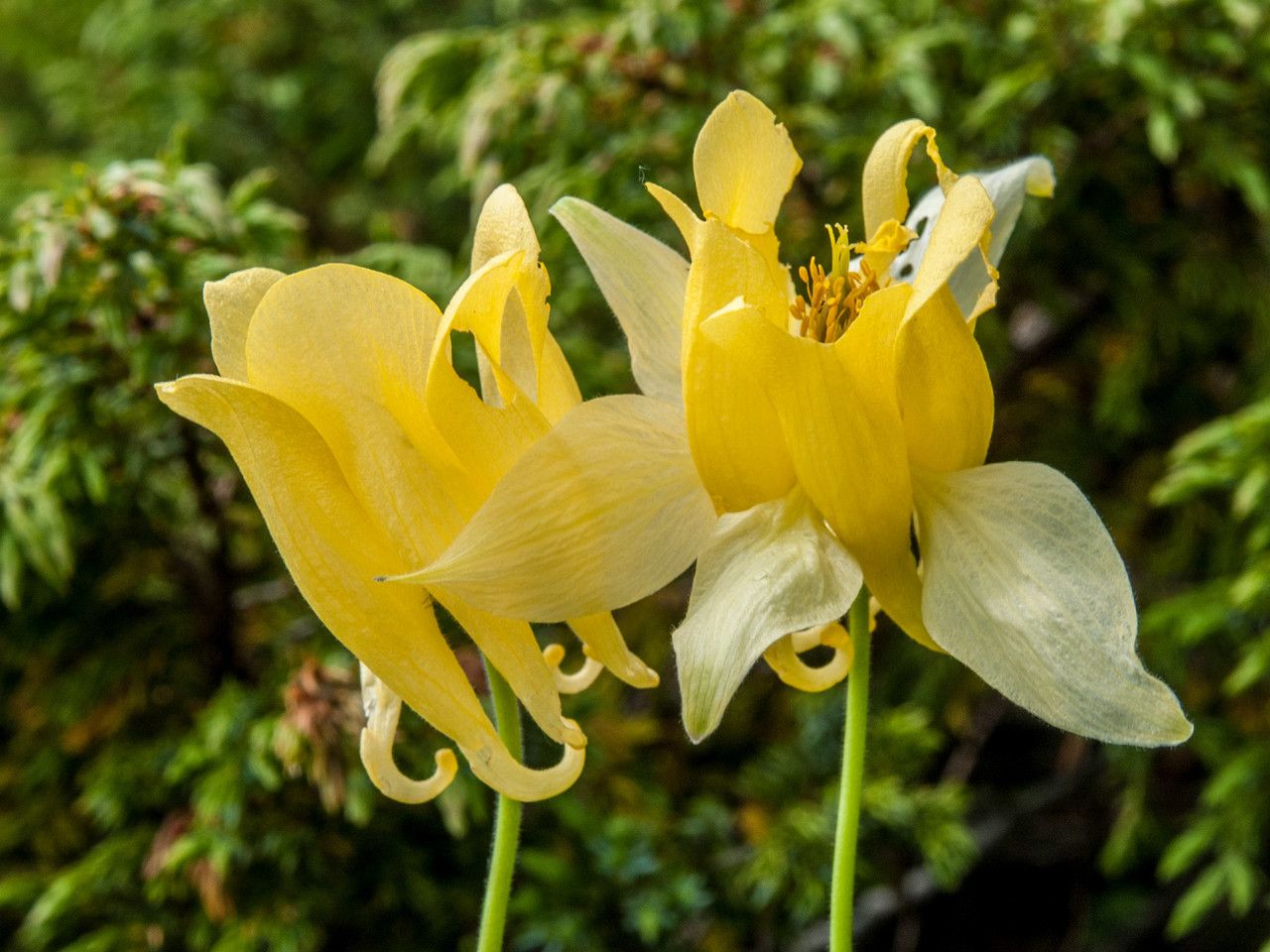
Aquilegia chrysantha, the golden columbine, is a perennial herbaceous plant native to the southwestern United States from extreme southern Utah to Texas and northwestern Mexico. The ferny leaves have three leaflets with three lobes and grow from the base and off the flowering stems. The flowers, which appear in May and early June, grow on a long stem above the leaves and have five pointed yellow sepals and five yellow petals with long spurs projecting backwards between the sepals. At the center of the flower are many yellow stamens. The cultivar ‘Yellow Queen’ has gained the Royal Horticultural Society’s Award of Garden Merit.
Golden columbine is fairly resistant to disease and usually does not suffer from disease problems. Still, it can be vulnerable to pests and diseases present in its environment. These issues are typically minor. In terms of care, the plant requires moderate maintenance. It should be pruned regularly to maintain a neat appearance and support healthy growth. Fertilizing can also encourage flowering. Golden columbine is suitable for anyone with outdoor space, such as a garden or patio, and does not demand extensive care experience. It may need more attention when grown indoors.
How to keep Aquilegia Chrysantha.
Light
The golden columbine prefers moderate sun, doing especially well when light is given in a somewhat sheltered way. It can, nonetheless, tolerate a generous amount of sun. Native to habitats with varying light levels, the plant can grow healthily if exposure is managed carefully. Too much or too little sun can potentially harm its wellness.
Water
The golden columbine flourishes in humid areas where there's consistent moisture. For optimal health, it requires watering once a week. Being an herbaceous perennial, it goes dormant during the colder months, which significantly lowers its water requirements.
Temperature
Golden columbine naturally occurs in habitats where temperatures range from 32 to 100 °F (0 to 38 ℃). It grows best in these moderate climates. In colder or hotter seasons, adjusting its temperature conditions can help it grow optimally.
Fertilizer
The best time to fertilize a Golden columbine is in early spring, when it is coming out of dormancy and starting active growth. Fertilizing supplies essential nutrients needed for healthy growth. Although Golden columbine has fairly low fertilizer requirements, an annual application can improve its survival and encourage stronger, longer-lasting blooms.
Pruning
Golden columbine is easily recognized by its bright yellow flowers and fern-like leaves. To encourage blooming and promote vigorous growth, it benefits from early spring pruning. Regular maintenance is important to prevent disease and enhance the plant's health. Additionally, applying mulch helps retain moisture and protect the roots.
Botanical profile.
- Plant Type
- Herb
- Life Cycle
- Perennial
- Genus
- Aquilegia
- Family
- Ranunculaceae
- Hardiness Zone
- 2-11
- Mature Height
- 0.3 m to 1.22 m
- Mature Spread
- 30 cm to 46 cm
- Leaf Color
- Green
- Leaf Type
- Deciduous
- Flower Color
- Yellow, Gold
- Flower Size
- 6.35 cm
- Bloom Time
- Late spring, Early summer, Mid summer
- Planting Time
- Spring
- Harvest Time
- Early summer, Mid summer
- Native Area
- Mexico
Other names.
Reader questions.
How should I water my Golden columbine plant?
To properly water the Golden columbine, it is recommended to use filtered water at room temperature. Tap water may contain harmful particles. The ideal temperature for the water is room temperature or slightly warmer to avoid shocking the plant, as it is accustomed to a warm environment. It is also advised to avoid overhead watering, which can lead to foliage issues. Instead, gently water the soil with filtered water until it is completely soaked. This helps moisturize the roots and promotes their growth and nutrient absorption.
Why should I put fertilizer on my Golden columbine?
Fertilization plays an important role in the growth of Golden columbines and other plants. It provides essential nutrients that support their overall development above and below the ground. Despite this, Golden columbines have relatively low fertilization requirements and can sometimes survive without it. However, annual fertilization can greatly benefit them, ensuring their survival and promoting the production of vibrant, long-lasting flowers. Therefore, those who want their Golden columbines to thrive should consider regular fertilization.
What are the sunlight requirements for Golden Columbine?
Golden Columbine thrives in conditions where it can receive sunlight in moderation. It is capable of withstanding a generous amount of sun but prefers environments that offer a balance of light and shade. The plant requires partial sun, about 3-6 hours of sunlight, or full sun, which is above 6 hours of sunlight. It's important to observe how sunlight moves through your garden to ensure the plants get a perfect balance of light and shade, ensuring their happiness.
What are the ideal temperature conditions for Golden Columbine?
Golden Columbine thrives in environments with a temperature range from 32 to 100 °F (0 to 38 °C), flourishing best in these moderate climate conditions. It has strong cold resistance, typically not requiring special frost protection measures during winter, unless temperatures are expected to drop below a critical limit. During colder or hotter seasons, adjusting its temperature conditions can enhance its growth.
What should I do if I give my Golden columbine too much or too little water?
Overwatering and underwatering can harm the health of your Golden columbine, but overwatering is more common. Too much water can cause wilting, yellowing of the plant's stems and leaves, and even diseases like root rot, mold, and mildew that can be fatal. Underwatering is less likely, as the Golden columbine can tolerate drought well. However, if underwatering occurs, the plant's leaves may become brittle and brown. It's important to recognize signs of overwatering early on. Some diseases caused by overwatering, like root rot, may not be fixable if left unattended for too long. If you notice early signs, reduce your watering immediately. Check the soil quality and replace it with a loose, well-draining potting mix if it drains poorly. If your Golden columbine shows signs of not receiving enough water, simply water more regularly until the signs disappear.
When should I fertilize my Golden columbine?
The Golden columbine benefits from fertilization during late winter to early spring when it transitions from dormancy to active growth. Fertilizing during this time helps promote healthy growth and gives the plant a strong start for the season. Although early spring is generally the best time to fertilize, fall is also acceptable. However, it is not recommended to feed the Golden columbine during summer and winter.
How can artificial lighting benefit indoor Golden Columbine plants?
Indoor Golden Columbine plants require adequate lighting to grow optimally, especially when natural sunlight is insufficient. Artificial lights, such as LED, can be customized to provide specific wavelengths that benefit plant growth. For full sun plants, 30-50W/sq ft of artificial light is recommended, 20-30W/sq ft for partial sun plants, and 10-20W/sq ft for full shade plants. The light source should be placed 12-36 inches above the plant to mimic natural sunlight, and the plants typically need 8-12 hours of light per day. These measures help promote faster, healthier growth.
How should Golden Columbine be cared for in winter?
In winter, Golden Columbine's strong cold resistance means it usually does not need special frost protection. However, if winter temperatures are expected to drop below its growth temperature limit, it's important to provide cold protection by covering the plant with soil or straw. Additionally, watering the plant abundantly before the first freeze in autumn to ensure the soil remains moist can help prevent drought and water scarcity during winter and early spring.
How frequently should I water my Golden columbine plant?
If your Golden columbine is in a pot, the most precise way to determine if it needs water is by sticking your finger into the soil. If the top two to three inches of soil are dry, it's time to water. If you're growing your Golden columbine outdoors in the ground, you can use a similar method to test the soil. Again, if the top few inches of soil have dried out, it's time to water. Typically, during the spring and early fall, you'll need to water this plant about once a week using this method. However, during extremely hot weather, you may need to increase watering to twice a week or even more. It's worth noting that mature and well-established Golden columbines can endure drought and show impressive resilience.
When is it not a good idea to fertilize my Golden columbine?
To avoid overfertilization and its potential complications, it is best to only fertilize your Golden columbine in late winter and early spring. A single annual feeding during this time is sufficient due to the plant's low fertilization needs. It is important to refrain from fertilizing during the rest of the growing season, including summer and fall, unless you did not fertilize in spring. In that case, it is acceptable to fertilize in the fall. Additionally, there is no need to fertilize during winter when the Golden columbine is in a dormant phase and does not produce new growth. Therefore, it is not recommended to fertilize during most of the winter.
What are the symptoms of improper sunlight exposure in Golden Columbine?
Symptoms of improper sunlight exposure in Golden Columbine include smaller new leaves, leggy or sparse growth, faster leaf drop, slower or no new growth, lighter-colored new leaves, chlorosis (yellowing leaves due to the breakdown of chlorophyll), sunscald (damage from intense exposure causing pale or necrotic spots), leaf curling (a mechanism to minimize water loss), wilting (loss of turgor pressure due to excessive transpiration), and leaf scorching (brown, dry edges from excessive sunlight). These symptoms indicate the plant's struggle with either too much or too little light.
What are the symptoms of Golden Columbine being affected by low temperature?
Golden Columbine is cold-tolerant and thrives best above its suitable growth temperature minimum. If kept above its tolerable growing temperature minimum during winter, it generally maintains well. Below its limit growth temperature, there may not be noticeable changes during winter, but a decrease in sprouting or even a lack of sprouting might occur in spring. The solution for parts that have failed to sprout in spring is to remove them.