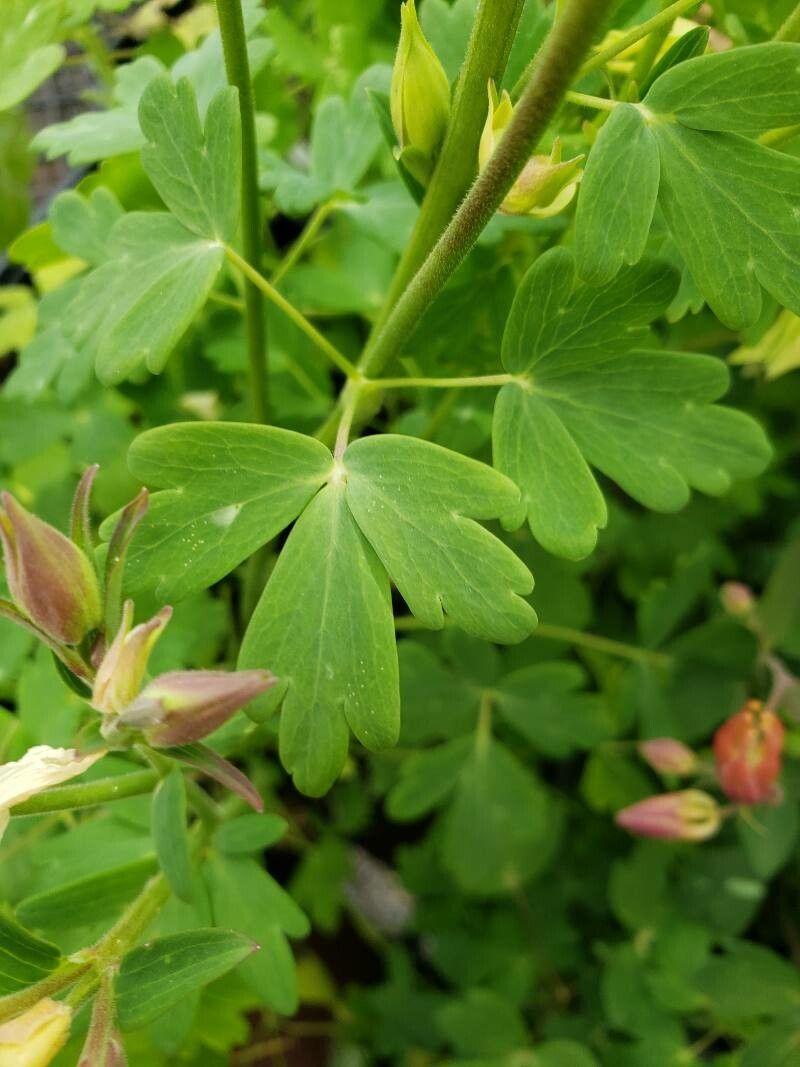
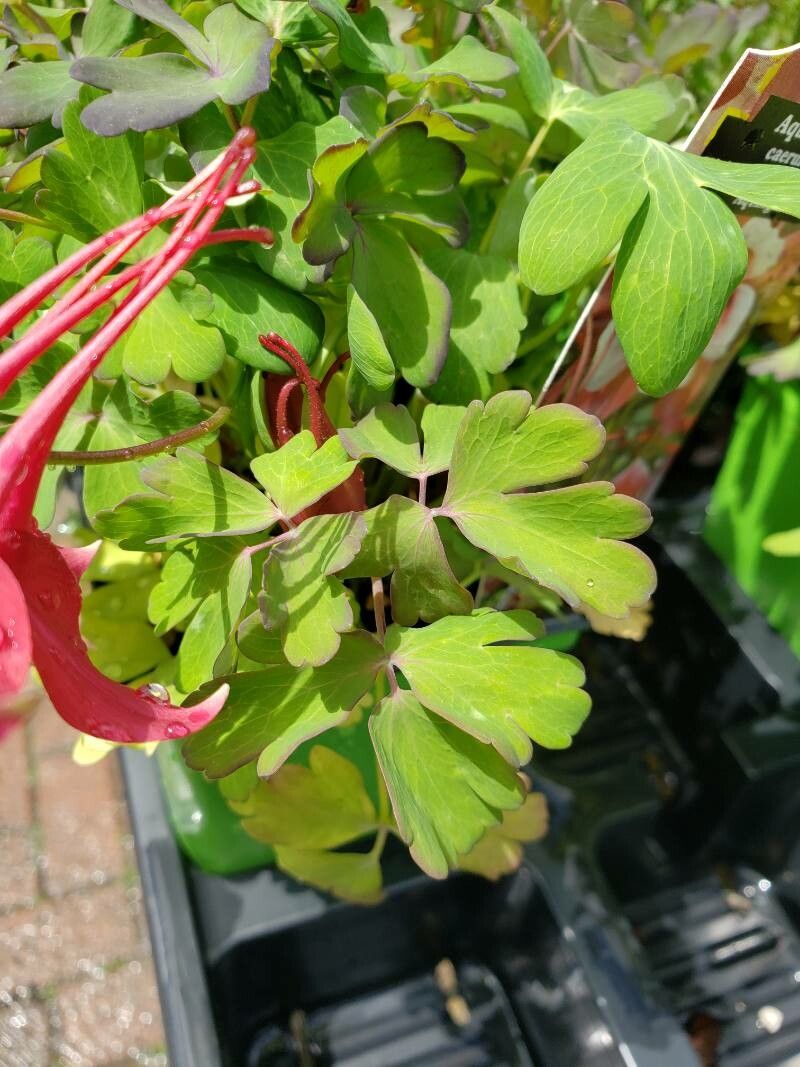
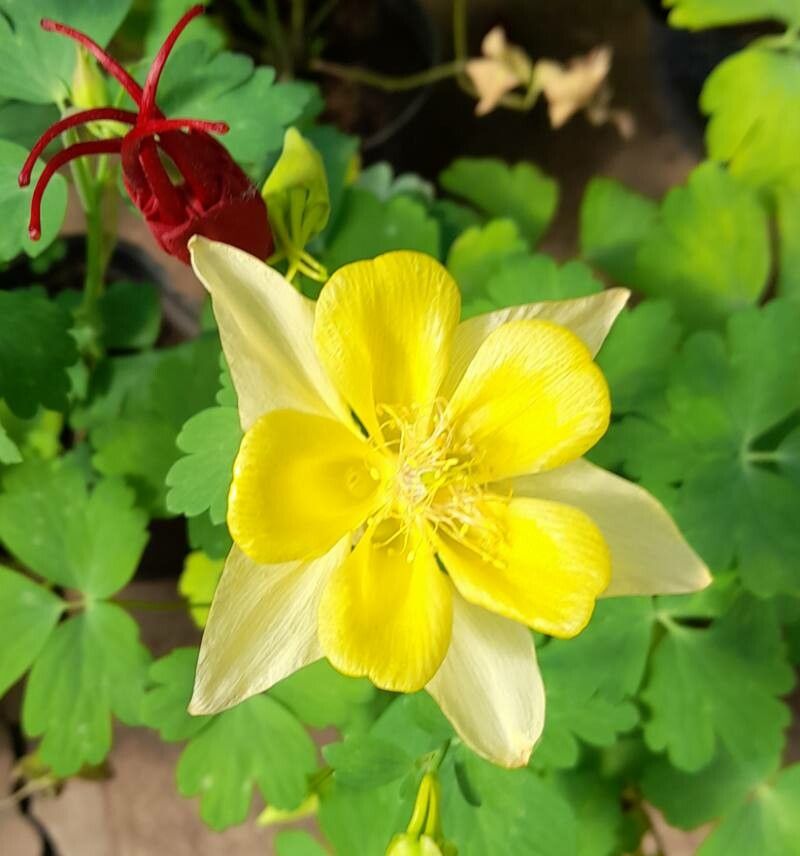
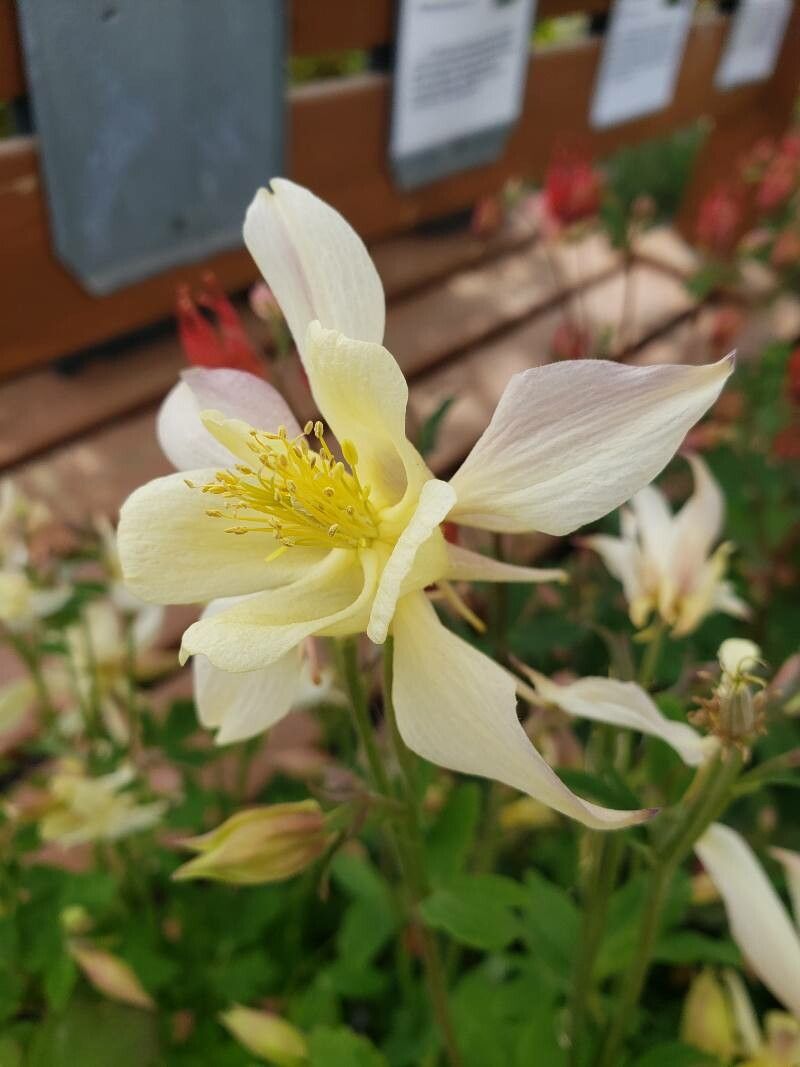
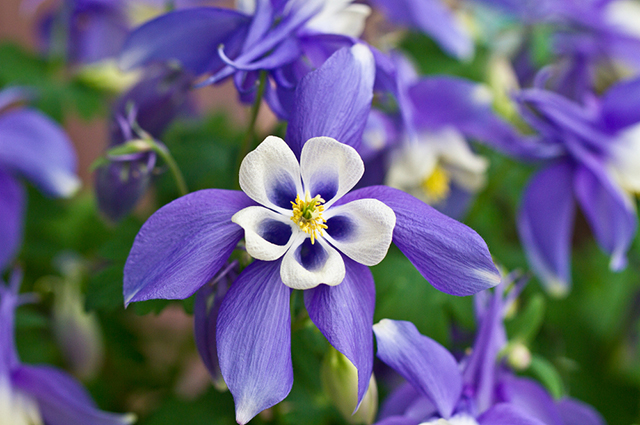
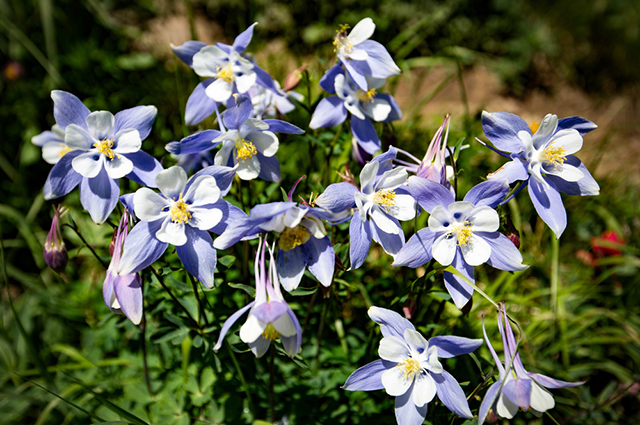
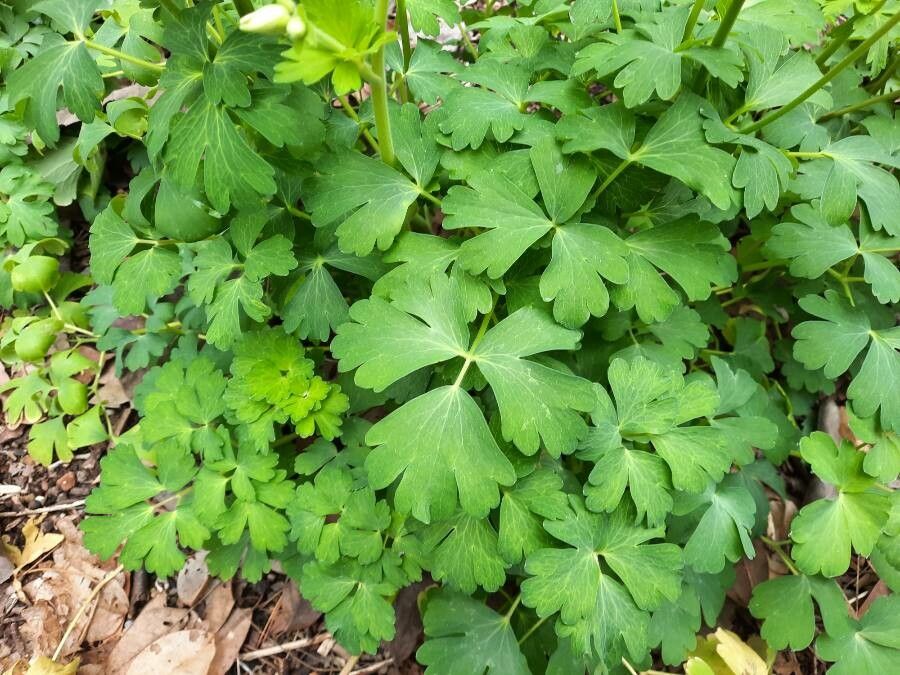
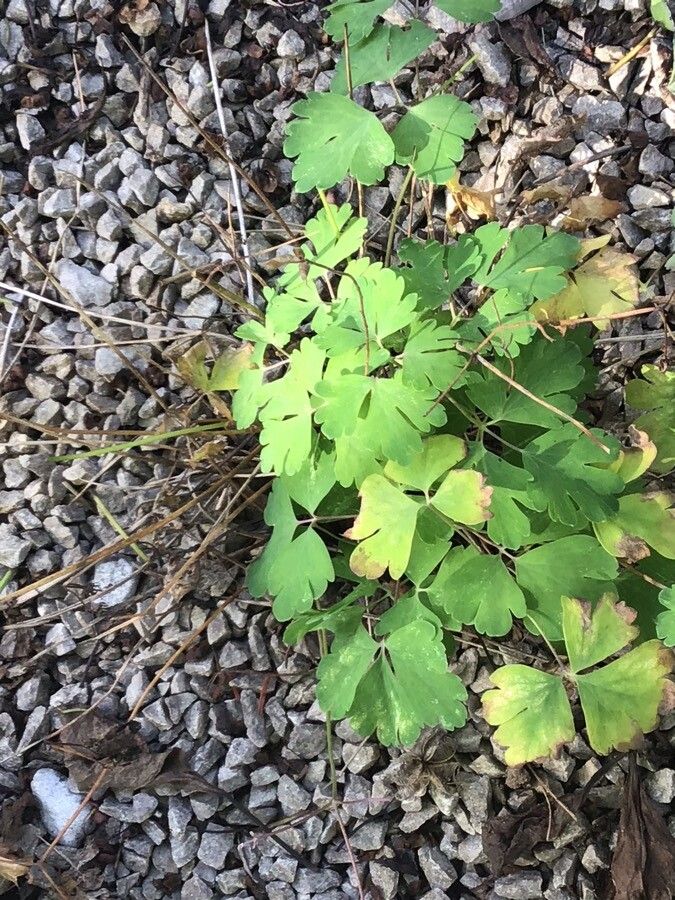
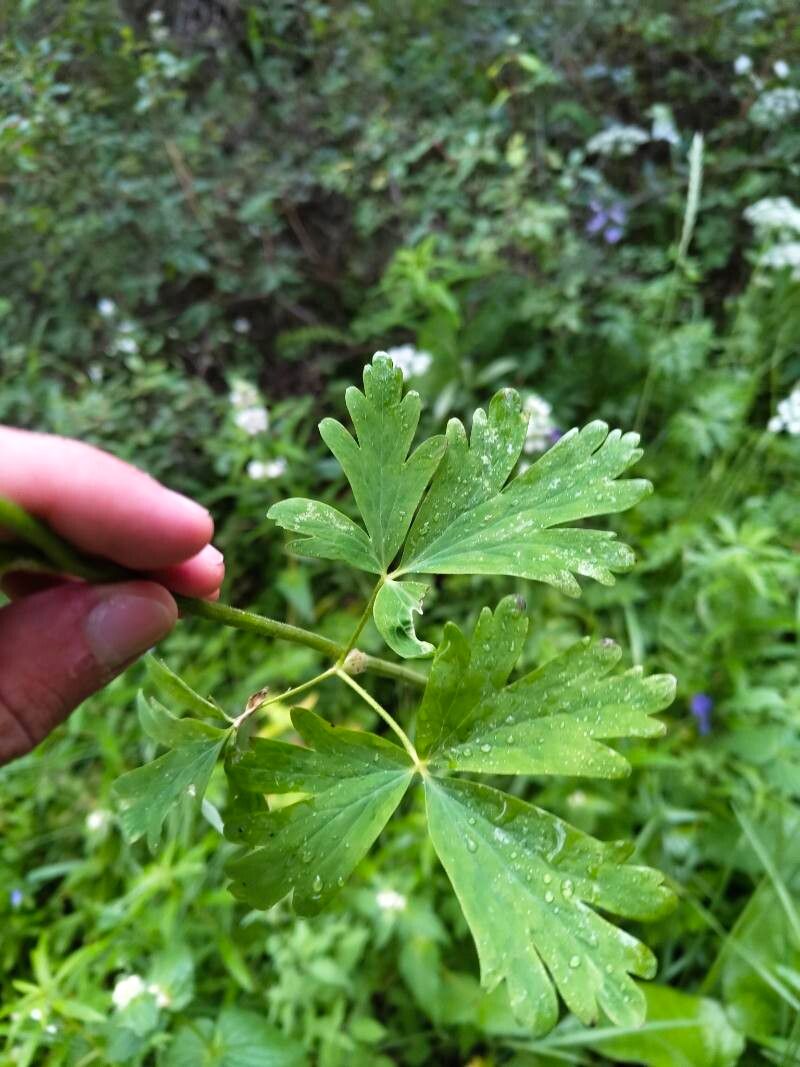
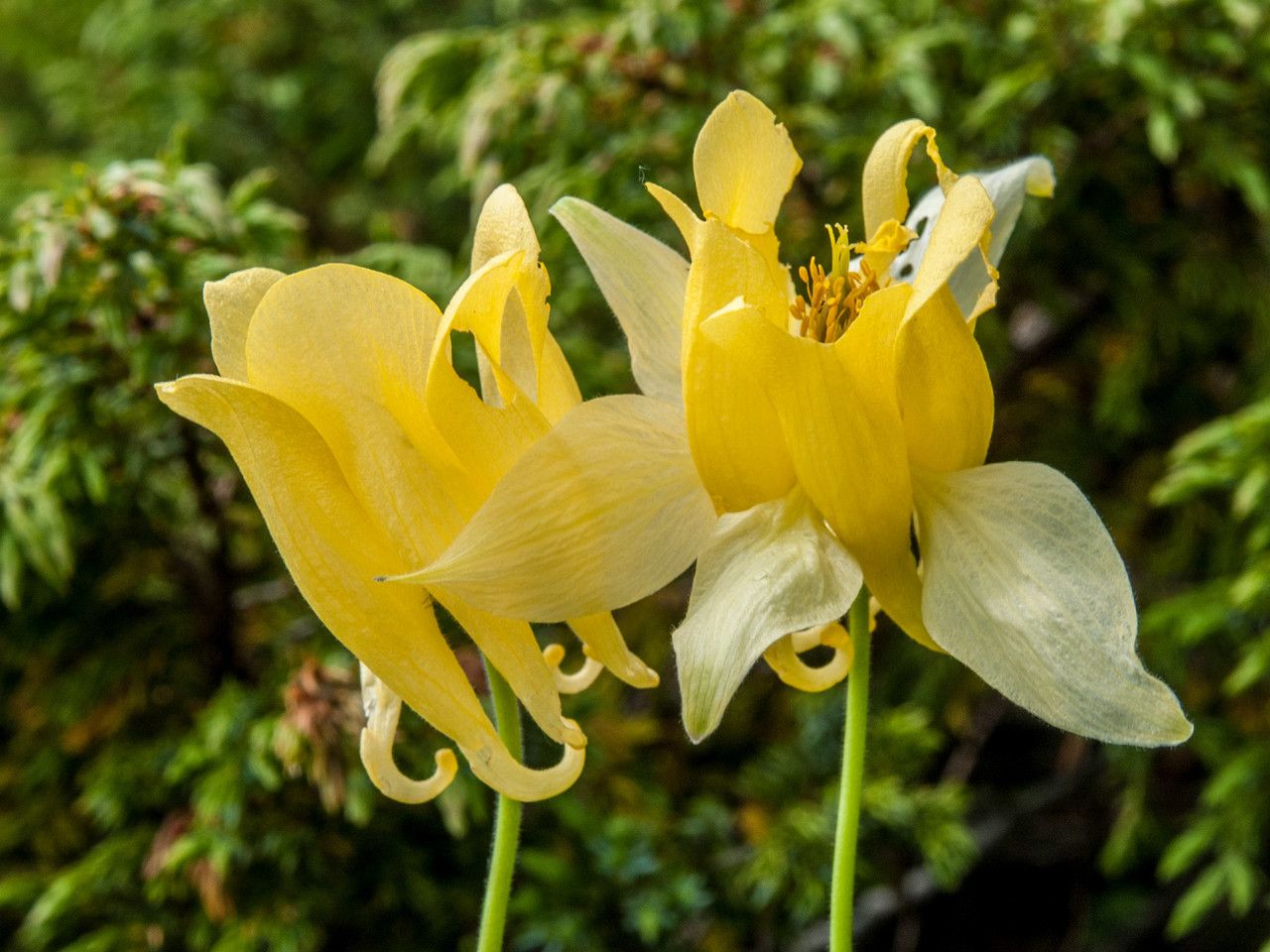
Aquilegia caerulea, commonly known as the Colorado blue columbine, is a perennial flowering plant in the Ranunculaceae family. Native to North America, this plant thrives in various habitats, including meadows, woodlands, and rocky slopes. It can grow up to 60 cm tall and is characterized by its distinctive blue-violet flowers with white centers that bloom from late spring to early summer. The flowers are also notable for their unique shape, featuring five spurs that resemble eagle talons.
Aquilegia caerulea prefers well-drained soil and can thrive in both full sun and partial shade. It is a hardy plant capable of tolerating cold temperatures and drought conditions once it has become established. The Colorado blue columbine attracts pollinators such as bees and hummingbirds with its nectar-rich flowers.
Historically, Native American tribes have used this plant for its anti-inflammatory properties. However, it is important to note that all parts of the Aquilegia genus are toxic if ingested.
Overall, Aquilegia caerulea is a beautiful addition to any garden or landscape. Its striking blooms and ability to attract pollinators, combined with its low maintenance requirements once established, make it a highly desirable plant for suitable growing conditions.
How to keep Aquilegia Caerulea.
Water
Columbines are tough plants that can withstand severe environments. They are drought-resistant plants. Though columbines will not grow without frequent watering, a negligent gardener will not be able to kill them after a week or two of neglect. Water columbines just when the soil begins to dry following the last soaking. Wait a day or two if the soil is still damp before watering. However, you should not let the soil totally dry between waterings.
Temperature
Columbine is heat sensitive, so colder conditions will result in more blooms. Summer temperatures will cause the plant to fall dormant.
Pruning
Deadheading your columbine blooms helps the established plants save energy, but it also prevents them from self-seeding. Remove wasted blossoms if you don't want your columbine plants to self-sow. You may even collect and store the seeds yourself. If you want the blooms to self-seed, leave the flower heads on until they self-seed. Cut your leaves to the ground in the autumn, and keep the soil insulated with mulch. This will guarantee that your plants survive the winter and blossom the next year.
Toxicity
The seeds and roots of columbine plants contain cardiogenic toxins that can cause severe gastrointestinal symptoms and heart palpitations if consumed in large amounts. The taste is unpleasant, however, so it is rare that humans or other animals consume it in large enough quantities to be dangerous.
Further reading →
The toxicity and danger assessments provided are for reference only. We do not assure their accuracy, so it's crucial not to depend on them. Seek professional advice when necessary for accurate guidance.
Botanical profile.
- Plant Type
- Herbaceous perennial
- Genus
- Aquilegia
- Family
- Ranunculaceae
- Bloom Time
- Late spring and early summer
- Native Area
- Meadows and woodlands of northern hemisphere
Other names.