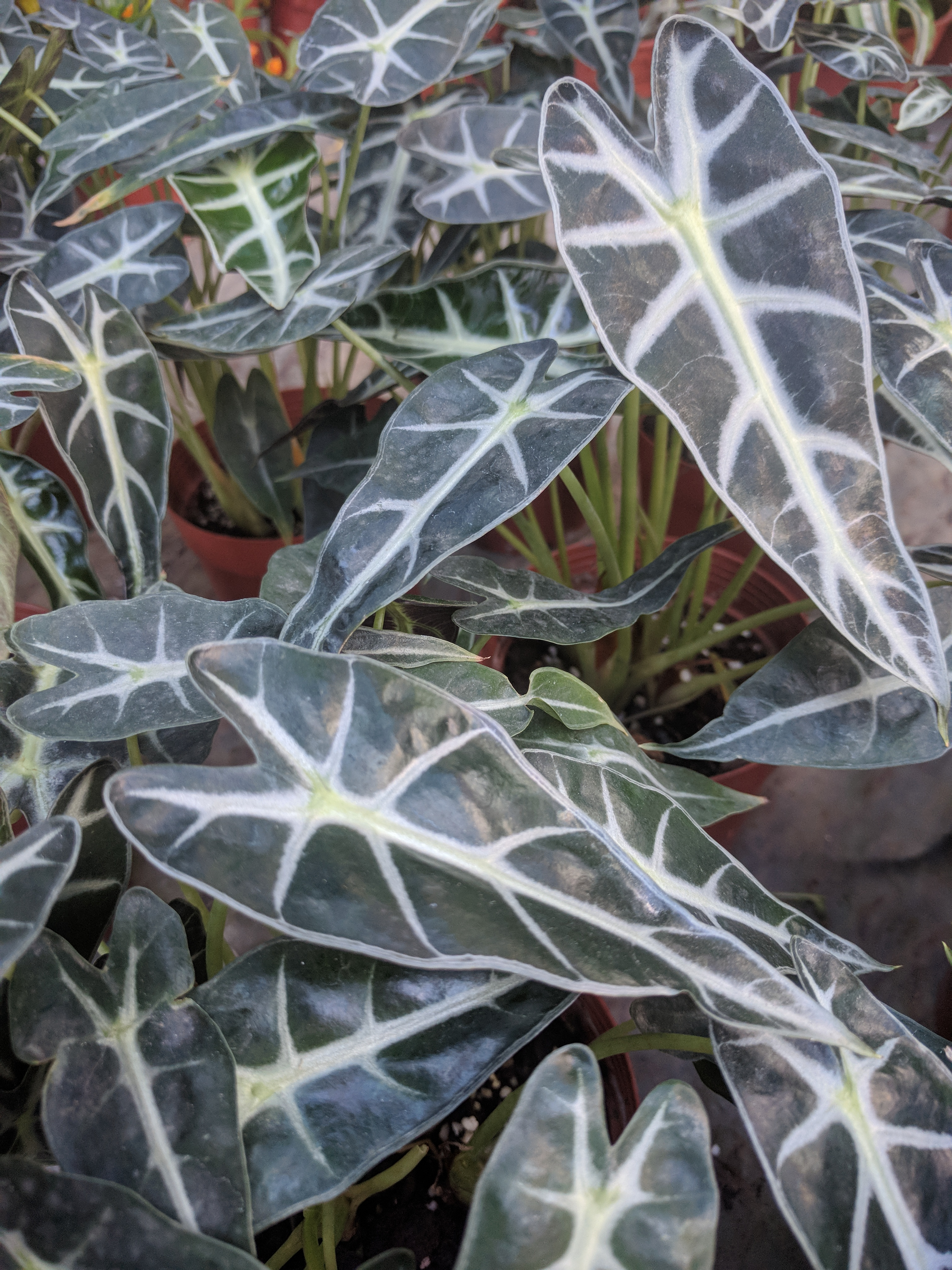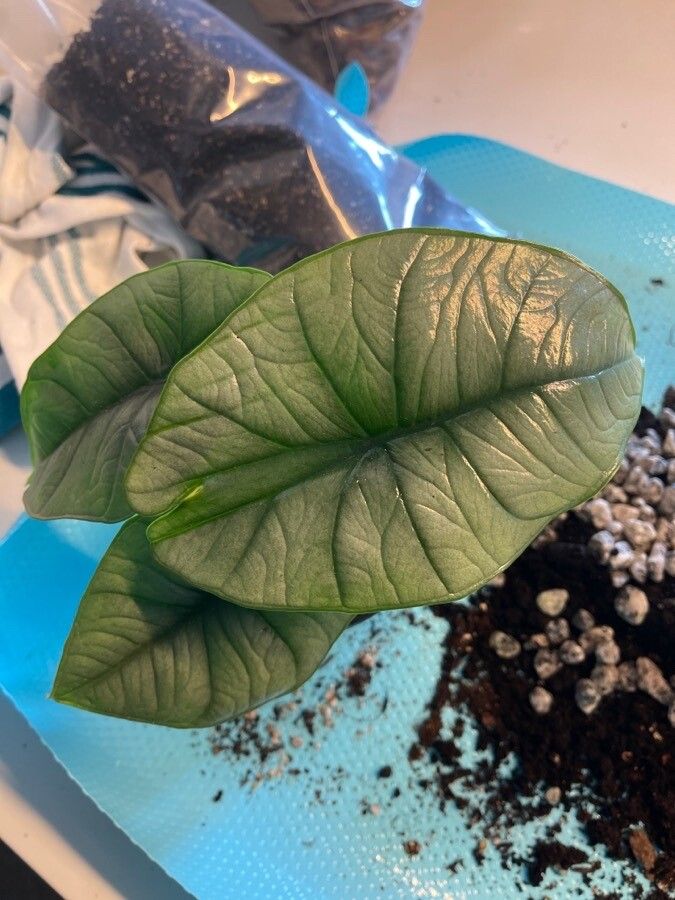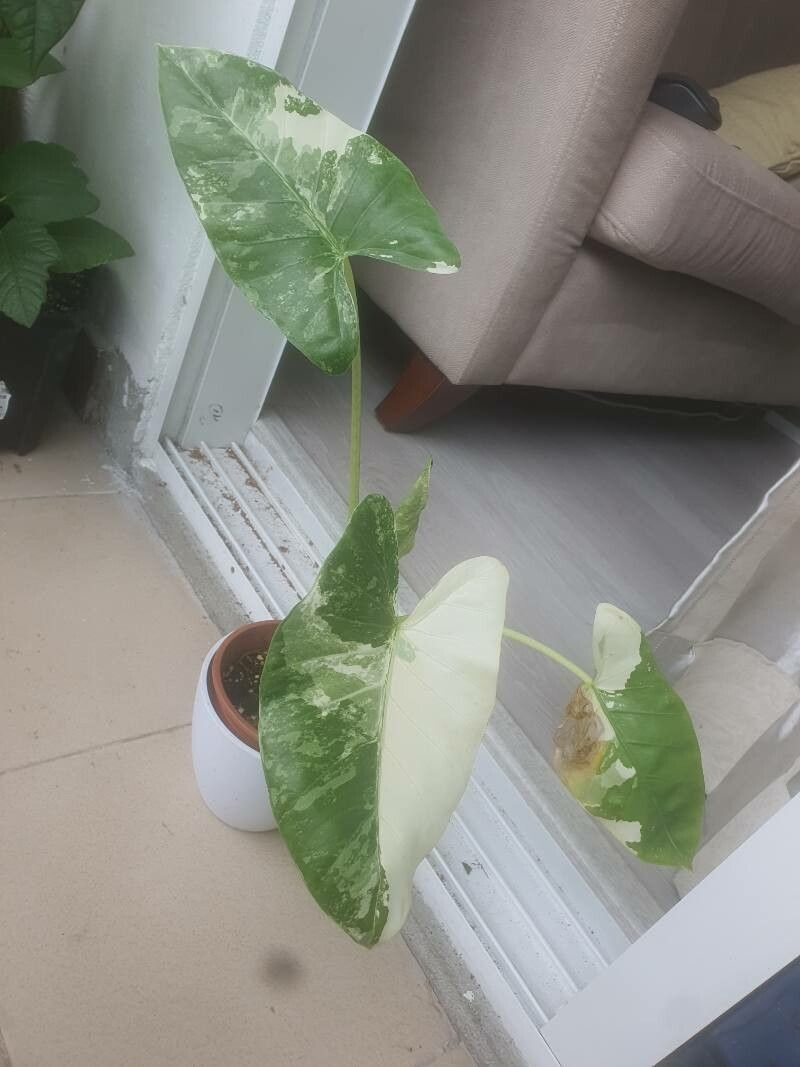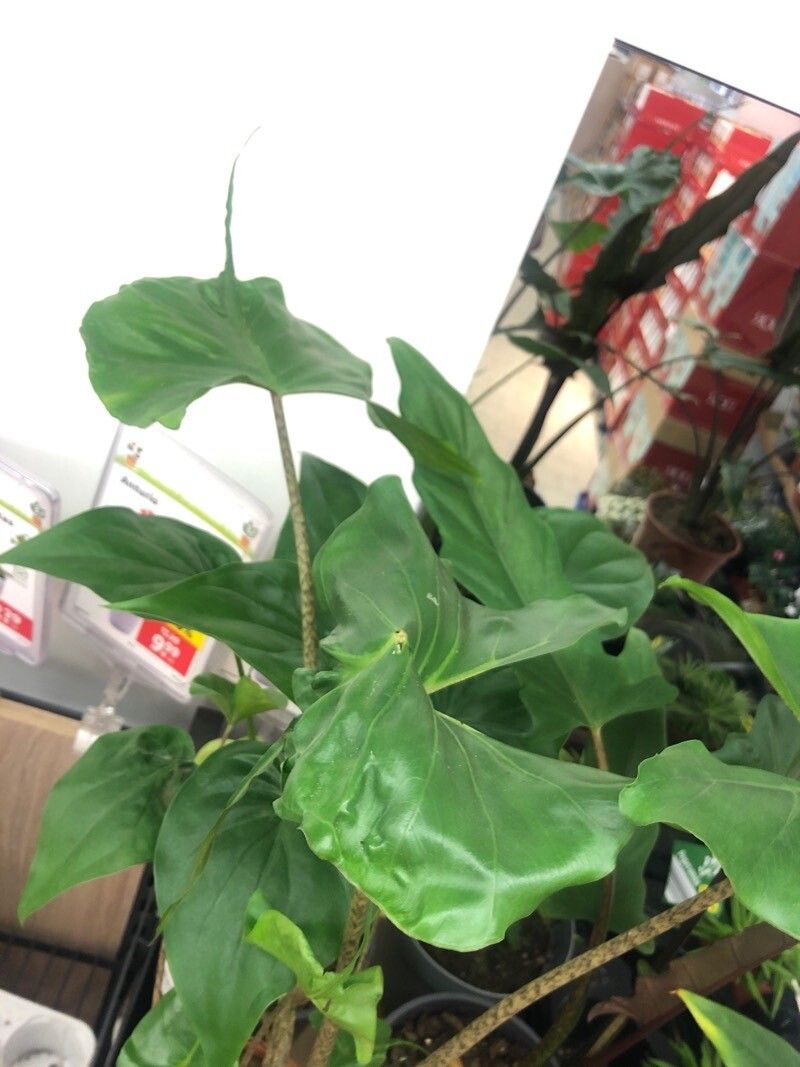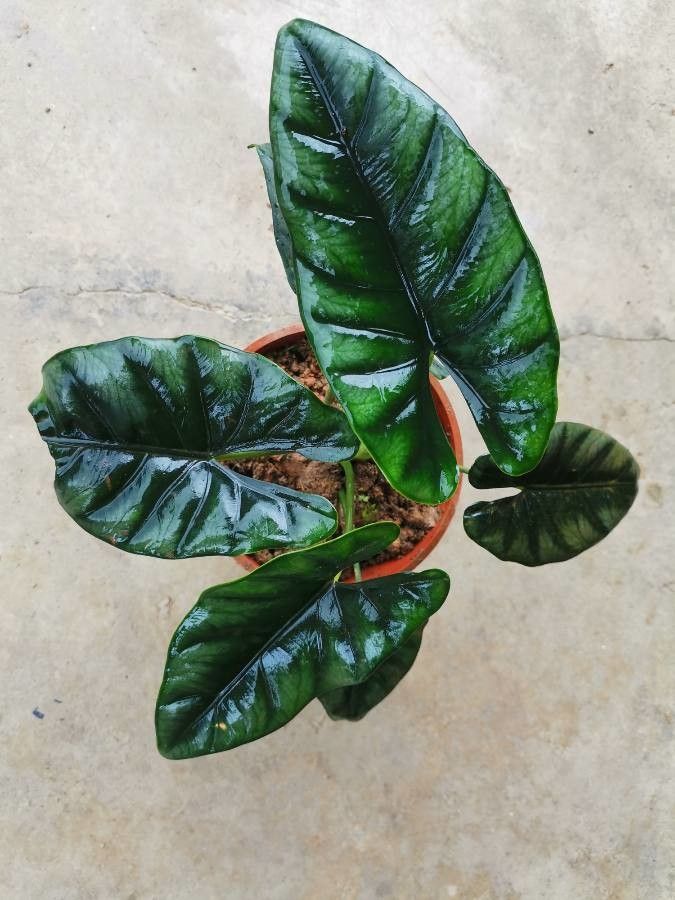
Alocasia reversa is a species of flowering plant in the family Araceae, native to Borneo. In its native habitat it is found on limestone outcrops, so as a houseplant it does not need heavy watering. It gets its specific epithet from the fact that its color pattern is reversed from the typical Alocasia, that is, its coloration is darker on and near the veins.
Reverse Alocasia has strong resistance to disease and is generally not prone to illnesses. It can, however, be vulnerable to leaf spots when light and ventilation are poor or when it is overwatered. The plant is rated easy to care for, as it mainly requires regular watering and little else. Reverse Alocasia is well suited to people who do not have much time or energy to dedicate to routine care.
How to keep Alocasia Reversa.
Light
The Reverse Alocasia naturally thrives in locales like forest understories or stony regions, where it receives natural shade. It best flourishes under partial sunlight, but it's flexible enough to adjust to either total sun or complete shade, showcasing its adaptable and resilient characteristics.
Temperature
The Reverse Alocasia hails from the tropics, an area known for its warm and humid climate. Therefore, this plant has adapted to thrive in environments with high heat and moisture. Inconsistent temperature changes are not favorable for it, and it prefers a consistent temperature setting. This is why it’s imperative to keep indoor temperature stable. The plant generally isn't resistant to cold temperatures and it needs warmer conditions to grow. A significant drop in temperature could lead to halted growth or even death of the plant.
Fertilizer
During the active growth period of the Reverse Alocasia, which mainly takes place in spring, summer, and the start of fall, it needs a lot of fertilizer. The requirement to fertilize is crucial as it offers the vital nutrients that the soil might lack, facilitating the development of robust roots and stems, and enhancing the plant's foliage, which is an important characteristic of this specific plant.
Pot & Repot
During the spring or summer when warmth is abundant, rehouse the Reverse Alocasia in a slightly bigger pot that has proper drainage. After repotting, soak it with water thoroughly and position it in a location with bright, indirect sunlight. A moss pole could be beneficial in providing support as the plant matures.
Botanical profile.
- Plant Type
- Herb
- Life Cycle
- Perennial
- Genus
- Alocasia
- Family
- Araceae
- Hardiness Zone
- 10-12
- Mature Height
- 0 cm to 3 cm
- Mature Spread
- 40 cm to 76 cm
- Leaf Color
- Green
- Leaf Type
- Evergreen
- Flower Color
- White
- Flower Size
- 5.08 cm to 7.62 cm
- Bloom Time
- Summer, Early fall
- Planting Time
- Spring, Summer, Autumn
- Harvest Time
- Late summer, Fall