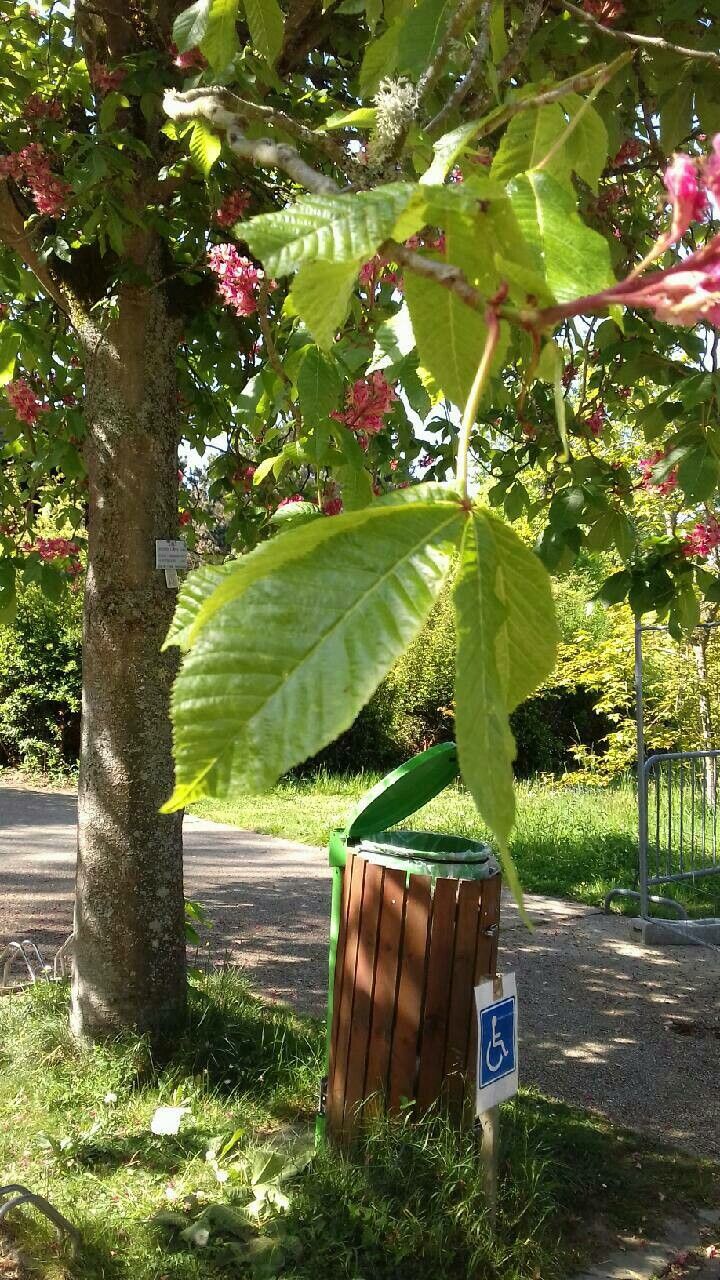
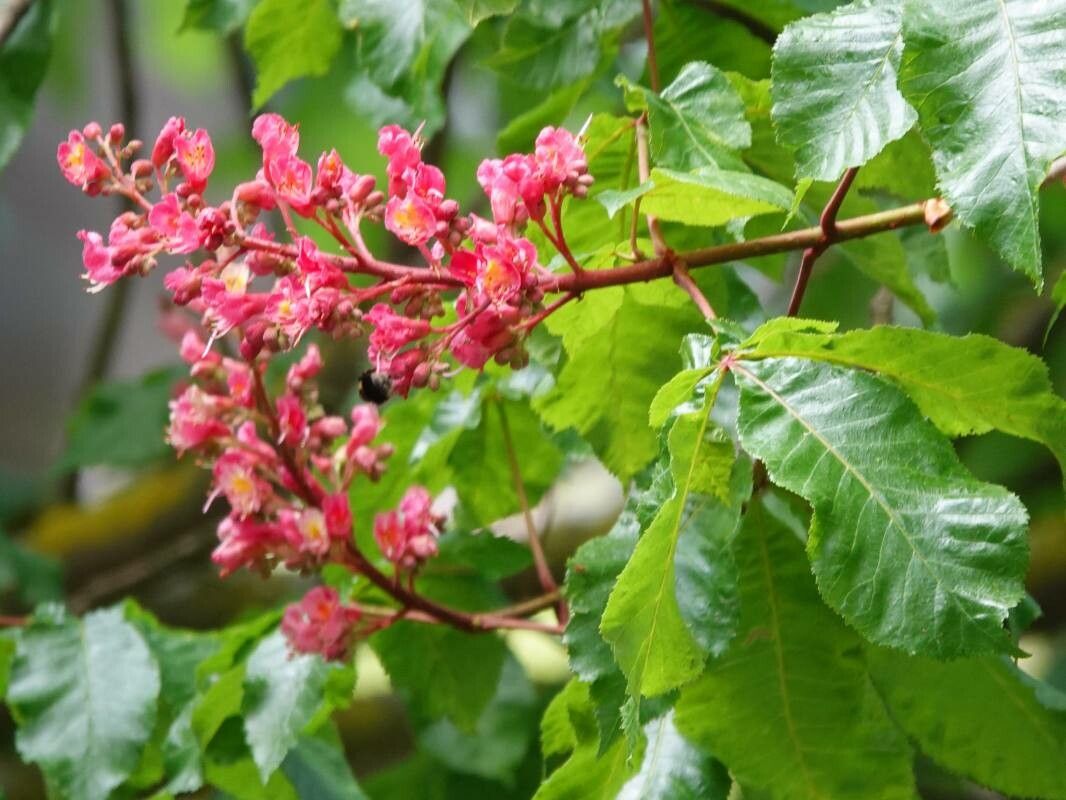
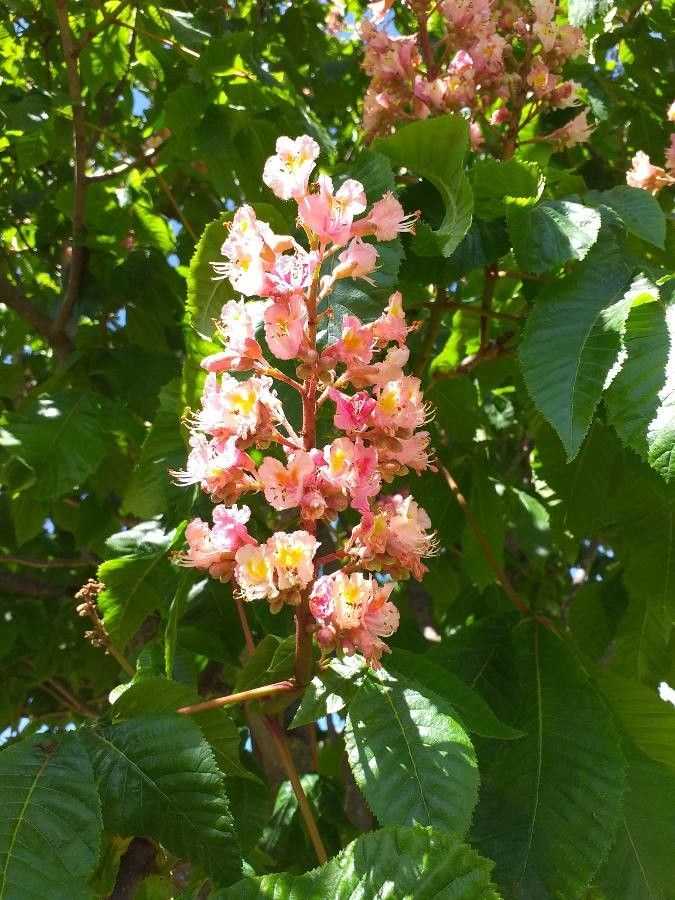
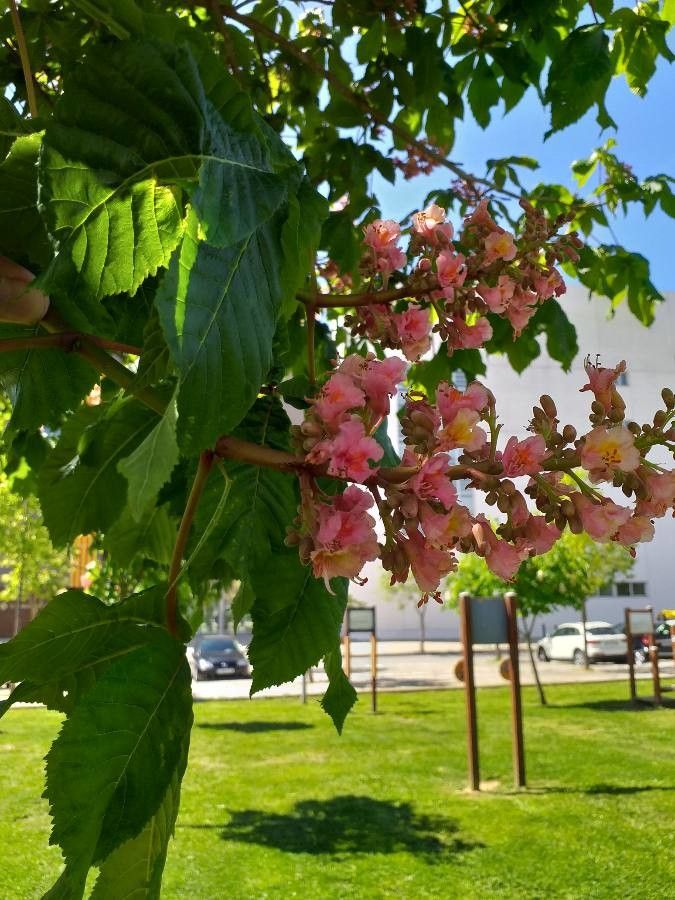
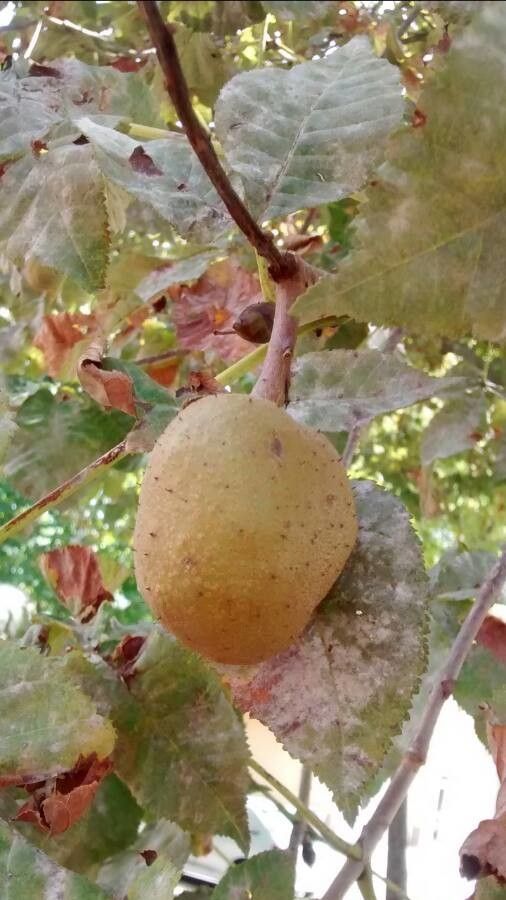
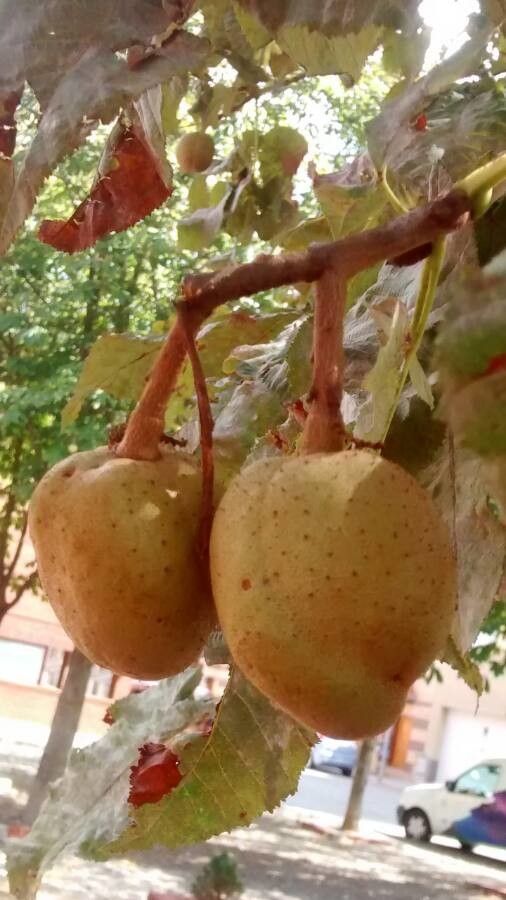
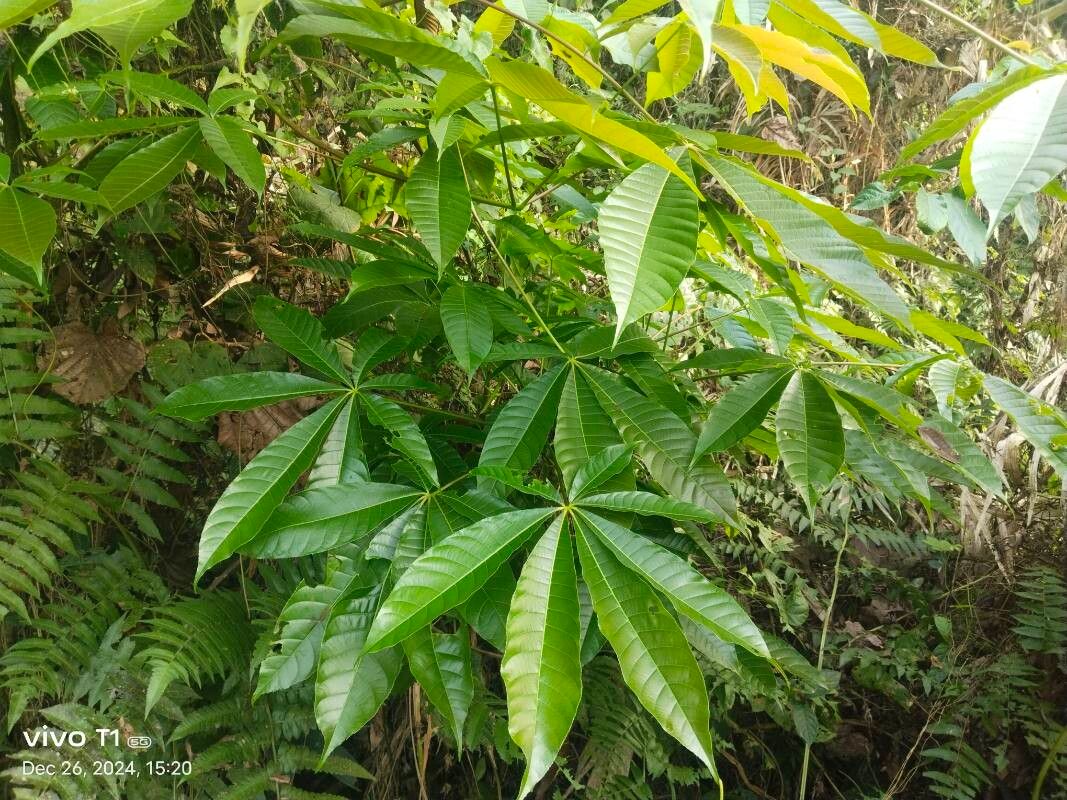
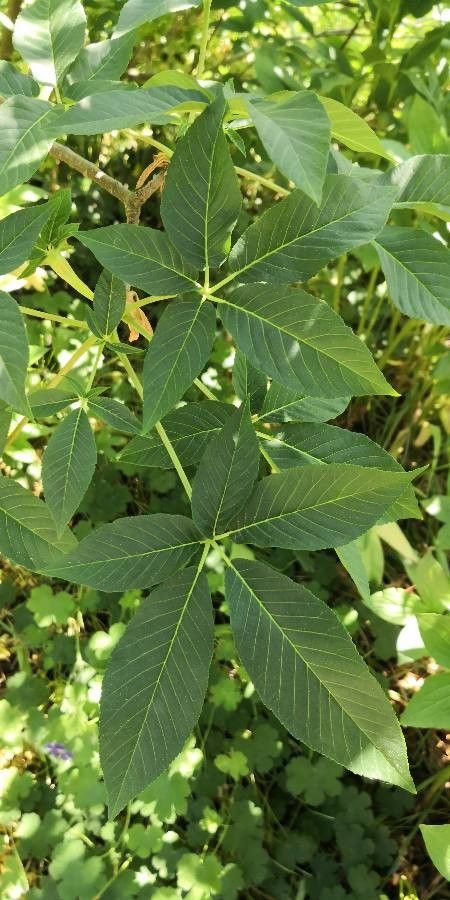
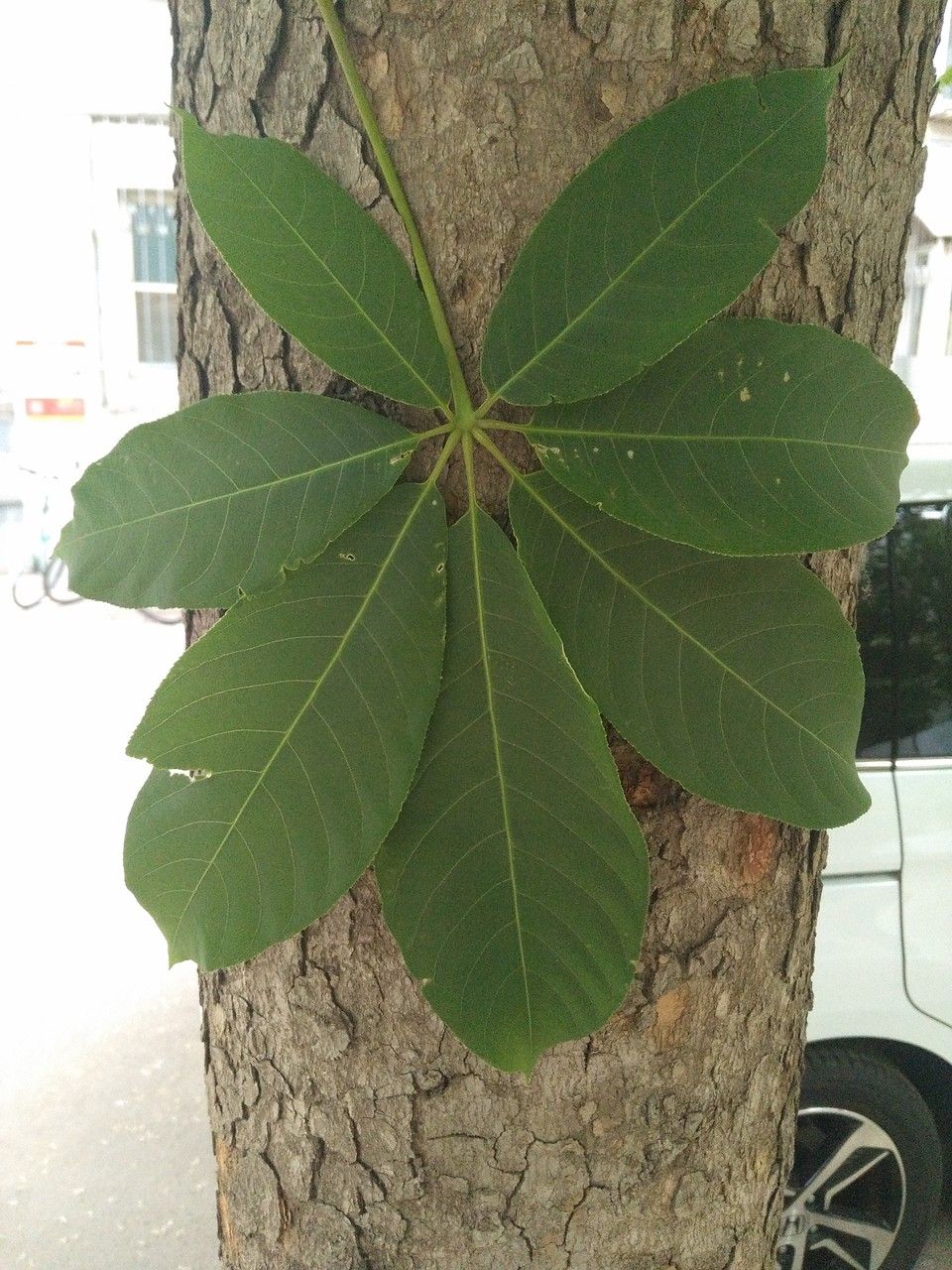
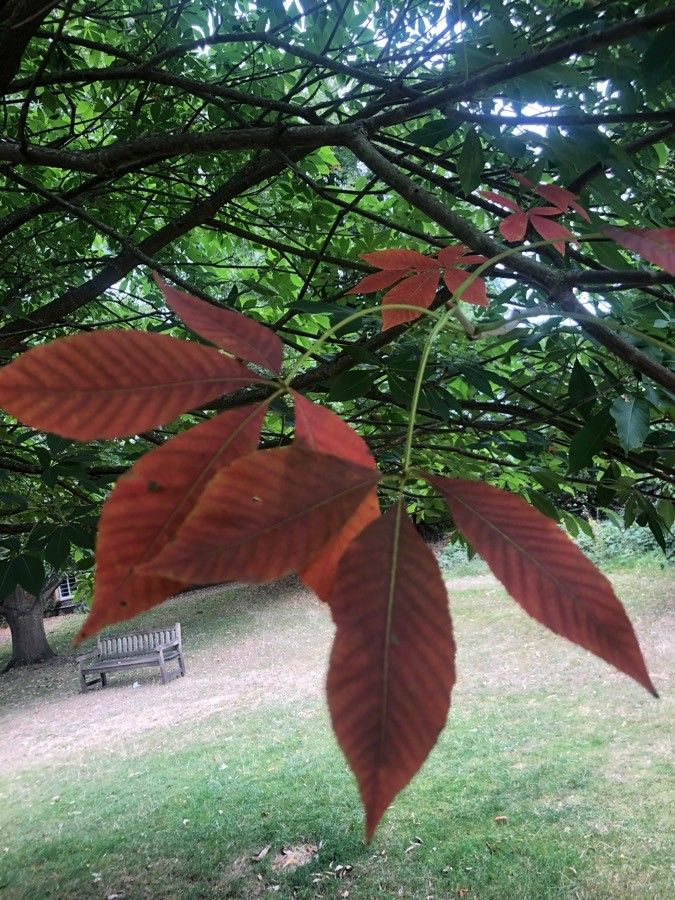
Aesculus × carnea, commonly known as the red horse chestnut, is a deciduous tree that belongs to the Sapindaceae family. It is a hybrid of Aesculus hippocastanum and Aesculus pavia. The tree can grow up to 30 feet tall and has an upright habit with a rounded crown. Its leaves are dark green and palmate, featuring five to seven leaflets that are 4 to 6 inches long.
In late spring or early summer, the red horse chestnut blooms with showy panicles of bright red flowers that attract bees and butterflies. The fruit is a spiny capsule containing one or two shiny brown seeds.
This plant prefers full sun to partial shade and well-drained soil. It can tolerate drought conditions once established but requires regular watering during its first few years of growth.
The red horse chestnut is commonly used as an ornamental tree in parks, gardens, and along streetscapes due to its attractive flowers, foliage, and overall appearance. However, it is important to note that all parts of the plant are toxic if ingested by humans or animals.
Overall, Aesculus × carnea is an attractive hybrid tree species known for its showy springtime flowers, making it popular among gardeners who want something unique for their landscape designs. Despite its beauty, caution should be exercised due to the plant's toxicity if ingested by humans or animals.
The Ohio buckeye is resistant to disease and is generally not susceptible to illnesses. In terms of care, this plant is fairly low maintenance. Planted outdoors, it needs only minimal watering, and larger plants typically do not require pruning. Smaller plants, however, should be pruned after they finish blooming. The Ohio buckeye is suitable for anyone with outdoor space, such as a garden or deck, and does not demand much care experience.
How to keep Aesculus Carnea.
Light
The Ohio buckeye does best in full sun, though it can tolerate areas of shade. Plenty of sunlight is important for its healthy development. Too little sun can cause poor growth, while too much sun may cause some leaf scorch.
Water
Native to temperate regions, the bottlebrush buckeye thrives in moist soils with consistent watering, ideally every two weeks. While it shows moderate drought tolerance, mulching is recommended for outdoor plants to help retain moisture and support growth during the active growing season.
Temperature
The ohio buckeye is native to Ohio and grows well in a range of temperatures from 15 ℉ (-9.4 ℃) to 35 ℉ (1.7 ℃). It prefers warmer temperatures, however, and can withstand heat up to 90 ℉ (32.2 ℃). In the summer, it is best to give the ohio buckeye some shade to prevent heat stress. In the winter, it is important to protect the plant from freezing temperatures by providing adequate insulation or by moving it indoors if necessary.
Fertilizer
Fertilize your Ohio buckeye in early spring to encourage healthy growth. Regular feeding boosts its overall health, leading to vigorous growth, greater tolerance of harsh conditions, and improved resistance to pests and diseases. Keep a steady fertilization schedule for your Ohio buckeye to maintain vibrant, deeply colored, and lush foliage.
Pruning
To keep your bottlebrush buckeye healthy and attractive, it's best to prune it in early spring. This allows you to remove any damaged branches, improve air circulation, and encourage new growth. Avoid pruning once the growing season starts, as this can harm flower production. With regular care, you can prevent diseases and pests, ensuring your bottlebrush buckeye remains in excellent condition.
Botanical profile.
- Plant Type
- Tree
- Life Cycle
- Perennial
- Genus
- Aesculus
- Family
- Sapindaceae
- Hardiness Zone
- 7-9
- Mature Height
- 14.94 m to 24.99 m
- Mature Spread
- 6.1 m to 11.89 m
- Leaf Color
- Green
- Leaf Type
- Deciduous
- Flower Color
- Yellow, Green, Orange
- Flower Size
- 2.03 cm to 3.05 cm
- Bloom Time
- Mid spring, Late spring
- Planting Time
- Spring
- Harvest Time
- Mid summer
Other names.
Reader questions.
How should I water my Bottlebrush buckeye?
To ensure excellent root development, it is recommended to place a garden hose at the base of the plant. It is important to avoid spraying water directly on the leaves. If the plant is exposed to direct sunlight outdoors, the leaves will require more watering. One option is to use bubblers to moisten the roots of each plant. Soaker hoses can also be used to cover the entire garden or bed, especially when adding or removing plants, as this helps the roots to go deeper. After watering, make sure to drain any excess water and wait for the soil to dry before watering again. Watering at ground level is advised to prevent diseases. On a sunny day, it may be beneficial to spray the entire bush with water. Whether the plant is potted or in-ground, it is important to remember that Bottlebrush buckeye prefers deep watering rather than light sprinkling.
Why is it important to add fertilizer to my Bottlebrush buckeye plant?
To help your Bottlebrush buckeye thrive and produce beautiful blooms, it's important to fertilize it. Fertilizing in early spring is a great way to ensure excellent flowers during that season. Additionally, fertilizer provides your Buckeye with the energy it needs to store in the ground during its dormant growth phases. By giving it extra nutrients during fall planting or late spring, you can help it store more energy to use once active growth resumes.
How many hours of sunlight per day does Bottlebrush buckeye need to grow well?
To promote healthy growth, it is important to provide Bottlebrush buckeye with at least 3-6 hours of sunlight daily. This is the minimum requirement, as most plants that tolerate partial sunlight can also thrive in full sunlight. However, these plants are more adaptable because they require less light for photosynthesis compared to plants that specifically need full sunlight or partial shade.
What is the best temperature for Bottlebrush buckeye?
To help Bottlebrush buckeye thrive, it's important to maintain a specific temperature range. Ideally, keep them between 65-75℉(18-25℃). While they can tolerate temperatures outside of this range, it's best to stay within a few degrees of these limits whenever possible. On the upper end, Bottlebrush buckeye can withstand temperatures between 75-85℉(25-30℃), but it's better to avoid the higher end as it can restrict growth and cause damage or death if it exceeds 85℉(30℃) for extended periods. On the lower end, they can handle temperatures as low as 5℉(-15℃). Overall, cooler temperatures are more favorable for Bottlebrush buckeye.
What should I do if I give too much or too little water to the Bottlebrush buckeye plant?
If an overwatered Bottlebrush buckeye is experiencing issues, such as yellowing leaves, leaf drop, and wilting, the plant may appear dull and unhealthy with mushy stems. It is advisable to adjust watering schedules when these signs begin to show. Additionally, wilting can also indicate under watering, characterized by crispy and dry leaves. In this case, it is necessary to check the soil's dryness and provide sufficient watering. While enough water can help the Bottlebrush buckeye recover, the damaged root system may result in dryness and yellowing leaves persisting for a few days. Once the plant returns to normal, the yellowing of leaves will cease. It is advisable to regularly monitor indoor Bottlebrush buckeye plants for moisture levels, avoiding overwatering and checking for black spots. If black spots are present, allow the soil to dry out by withholding water for a few days. Overwatering can lead to root rot, indicating the need to transfer the plant to a different pot if discolored and slimy roots are observed. It is crucial to prevent root rot by avoiding overly soggy soil. When planting Bottlebrush buckeyes outdoors, it is recommended to dig a little deeper and check the soil's moisture with fingers. If the soil feels too dry, it may indicate underwatering, requiring adequate watering for plant recovery.
When should I fertilize my Bottlebrush buckeye?
To effectively fertilize Bottlebrush buckeye, timing is crucial. Applying fertilizer while the plant is still dormant results in ineffective use and wastage due to rainwater washing it away. The first application of fertilizer should be done in early spring, followed by monthly applications until early summer.
What kind of sunlight does the Bottlebrush buckeye require?
Bottlebrush buckeye thrives in full or part sun, with a preference for direct morning light. However, during summers, it is important to shield them from the intense afternoon sun to prevent leaf burn and maintain their overall appearance and health.
Does Bottlebrush buckeye need different temperatures during different stages of growth?
To ensure the proper growth of Bottlebrush buckeye at each stage, it is important to maintain temperatures between 65-75℉ (18-25℃). While these plants can withstand colder temperatures better than hotter ones, growth may be affected if the temperature drops below 5℉ (-15℃). If you plan to continue growing Bottlebrush buckeye throughout winter, make sure to keep the room temperature above this threshold to avoid any slowdown in growth.
How many times should I water my Bottlebrush buckeye plant?
The Bottlebrush buckeye prefers deep and infrequent watering, especially when planted in pots. To prevent the soil from drying out quickly, it is recommended to soak them in a gallon of water each time. In colder regions, watering should be done every 3 to 5 days. It is best to water the plant early in the morning when the soil is dry, whether it's grown outdoors or indoors. Check the soil inside the pot to determine if watering is needed; if the top 2-3 inches of soil is dry, it's time for a full watering. During hot days, check the moisture daily as the heat can quickly dry out the soil in the pot. If you have a garden, irrigation of the soil is necessary. In hot climates, watering once a week is sufficient, but make sure to water only when you notice the top 2 to 3 inches of soil becoming too dry. Take into consideration the amount of rainfall and avoid adding additional water to prevent root rot. Bottlebrush buckeye typically grows during spring and fall, so adding mulch about 3 to 4 inches deep when grown outdoors can help conserve moisture. Sandy soil requires more frequent watering due to faster drainage, while clay soil requires less frequent watering (2-3 days to dry the plant) to avoid root rot. Marking the watering dates on a calendar can be helpful, especially if you notice the leaves starting to droop, as it may indicate that watering is needed soon.
When is it best not to fertilize my Bottlebrush buckeye?
To ensure optimal blooming, avoid using nitrogen-rich fertilizer for Bottlebrush buckeye. Look for a fertilizer that contains lower levels of nitrogen compared to other nutrients. It is important not to fertilize the plant during late autumn, as excessive growth before winter can be detrimental. Additionally, avoid fertilizing during hot and dry periods, as dry soil does not effectively deliver fertilizer and can stimulate growth that requires additional water. Ideally, fertilize the plant earlier in the season when temperatures are cooler. Lastly, be cautious of applying fertilizer near other plants or lawns as Bottlebrush buckeye can absorb excess fertilizer, which may lead to over-fertilization.
Can the sun harm the Bottlebrush buckeye plant? How can I keep my Bottlebrush buckeye safe from damage caused by the sun and heat?
Indoor Bottlebrush buckeye can be harmed by direct sunlight when moved outside. To avoid overexposure, it's best to gradually move pots from shade to a brighter spot. However, even plants used to the sun can be damaged by extreme heat. During a heatwave, it's vital to keep the soil consistently moist so plants can handle the excessive heat. To protect sensitive Bottlebrush buckeye during extreme weather, move container plants to shady areas or use a shade cloth.
Here are three tips to help you control the temperature of your Bottlebrush buckeye.
Here are some tips to help you take care of your Bottlebrush buckeye tree: Tip #1: Watch for signs of heat damage. If your Bottlebrush buckeye gets too hot, there are warning signs to look out for. The leaves may start to turn brown and the branches might begin to fall off. This happens because the branches are dying as the tree tries to conserve moisture. To prevent this, try to keep temperatures lower and water your tree more frequently when it's exposed to heat. Tip #2: Don't let your Bottlebrush buckeye get too cold. While this tree prefers cooler environments, dropping temperatures too quickly can cause freeze damage. If the temperature in your growing area goes below 5℉(-15℃), the water in the tree can freeze and cause the cell walls to burst and the bark to crack. This could slow down growth and even cause parts of the tree to die. So, be mindful of the temperature and protect your Bottlebrush buckeye from extreme cold. Tip #3: Use shade and ventilation to regulate temperature. If you notice that your Bottlebrush buckeye is overheating, you can provide shade and improve ventilation to cool it down. If you don't have access to air conditioning or fans, using shade and ensuring good airflow can help bring temperatures back to the optimal range. However, remember to expose your plant to sunlight once the temperature is stable. Bottlebrush buckeye needs plenty of sun to grow properly, so don't keep it in the shade for too long.