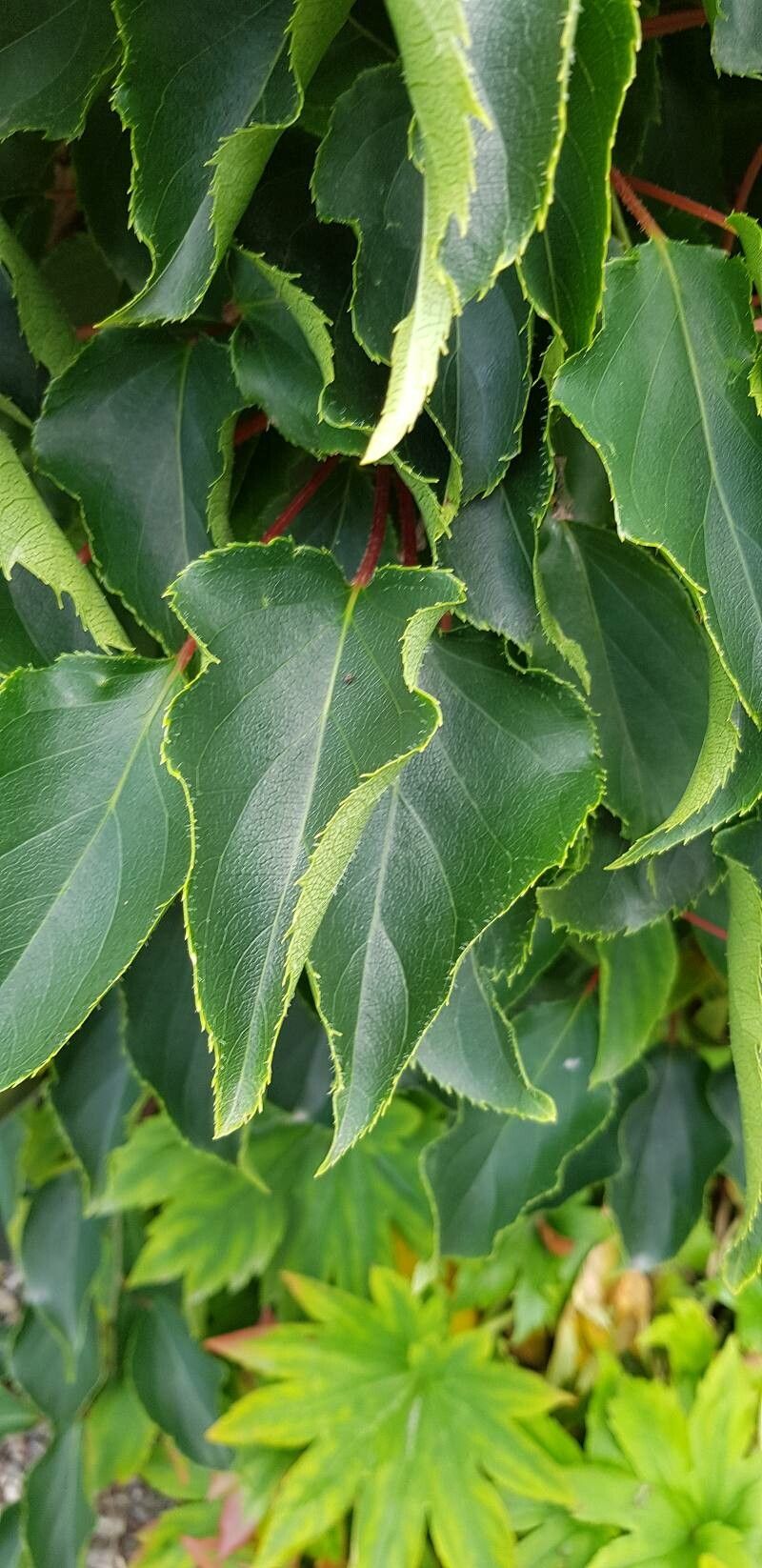
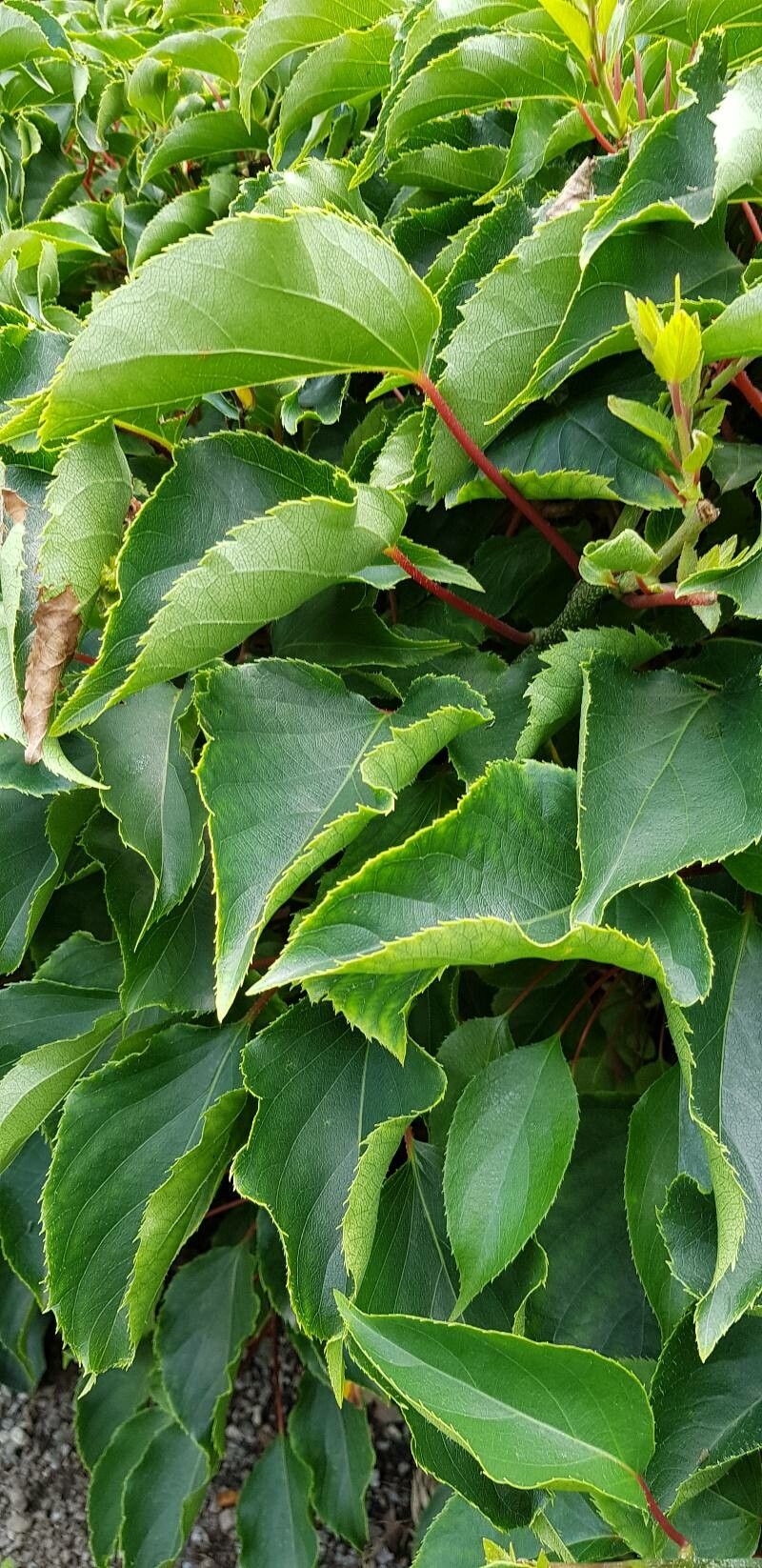
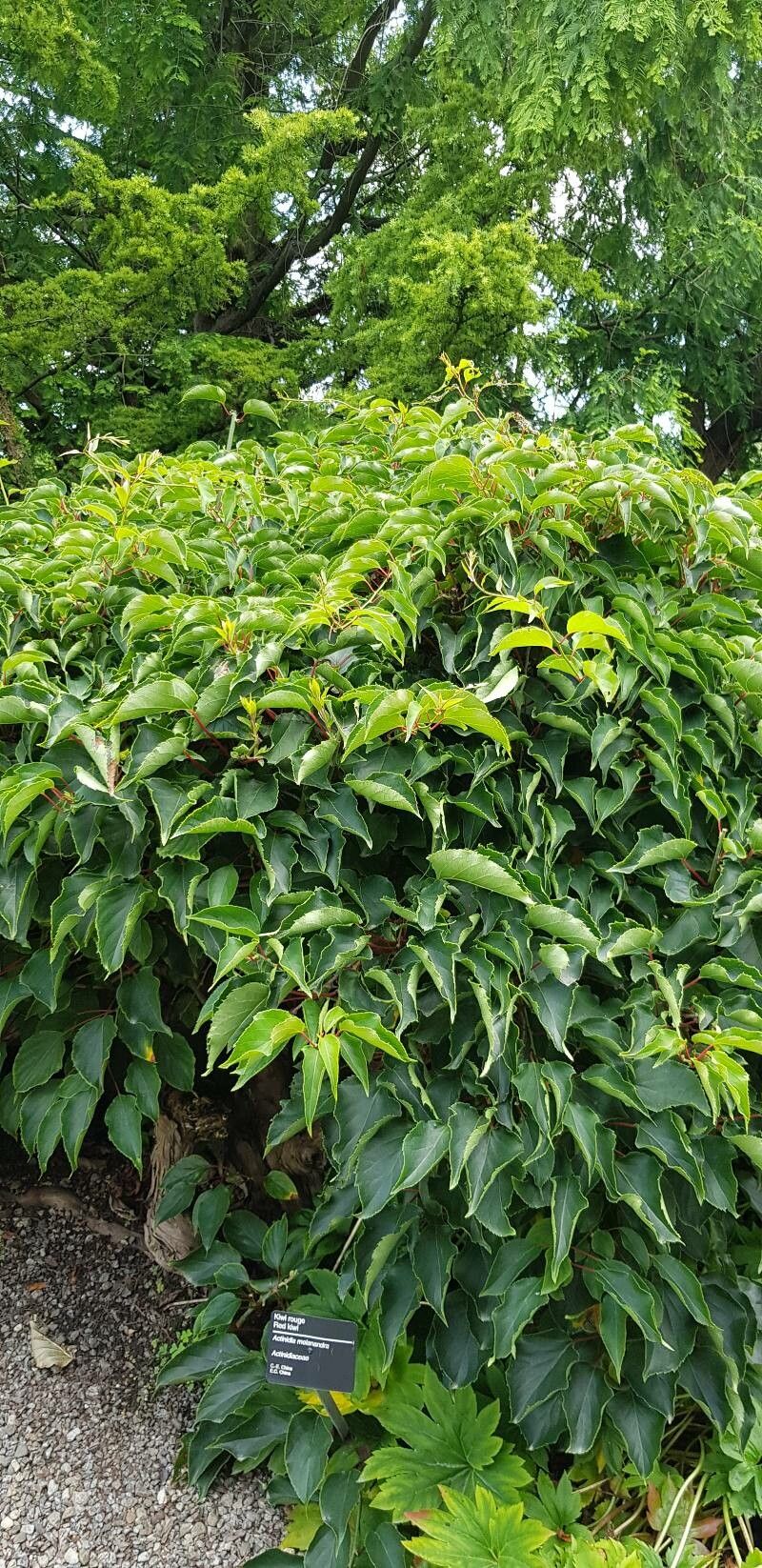
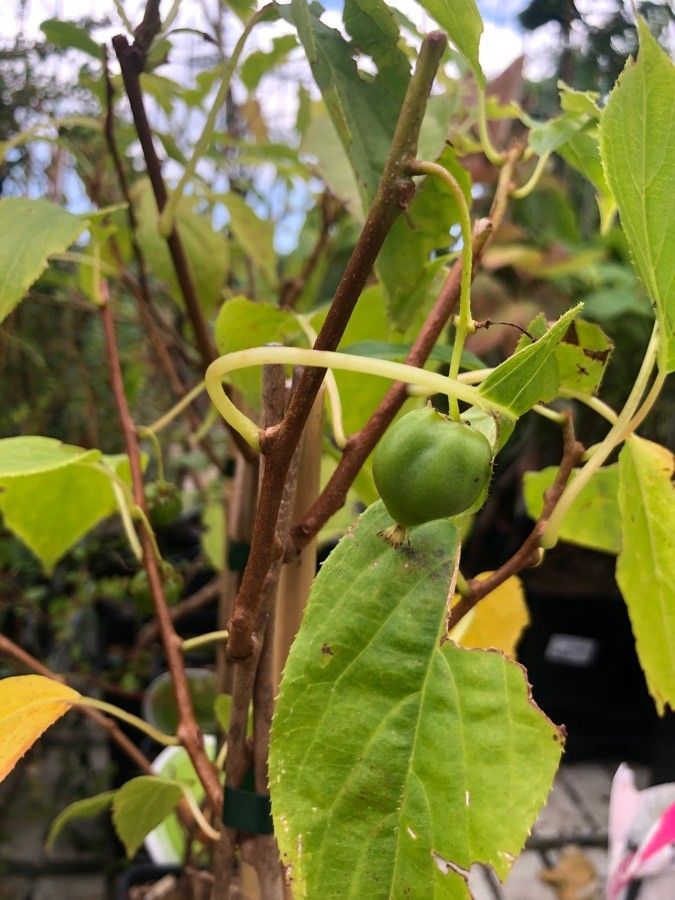
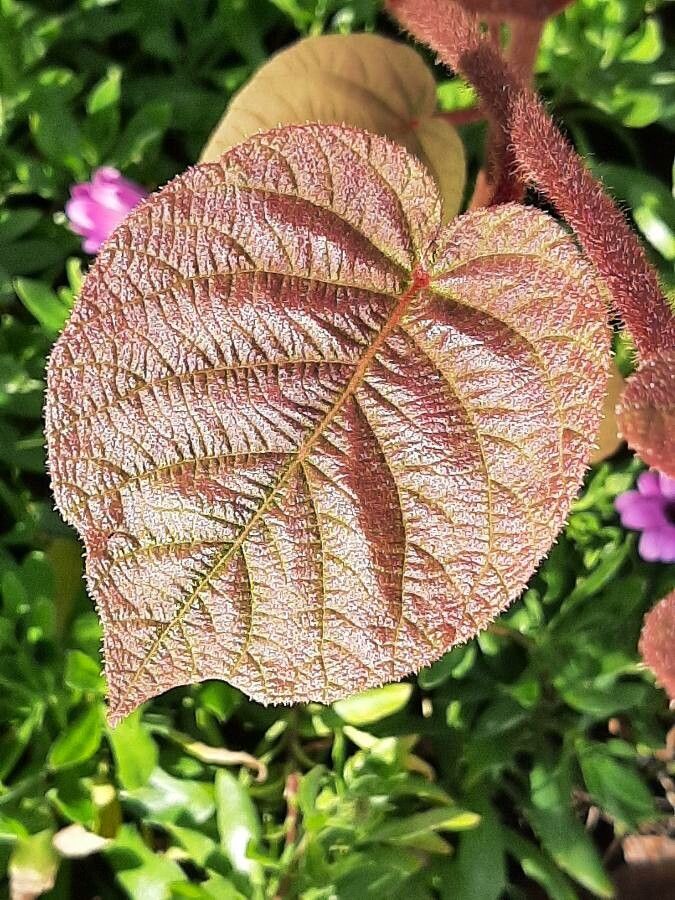
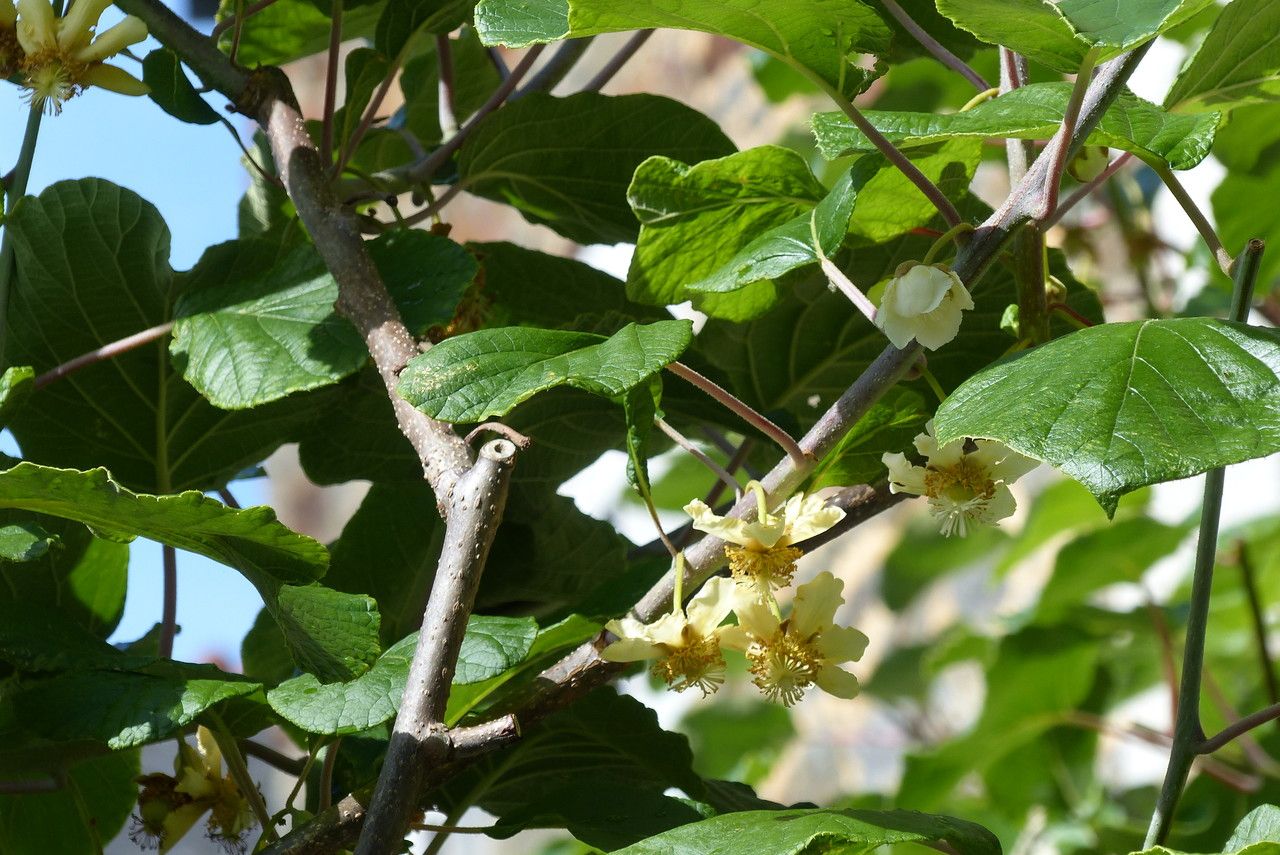
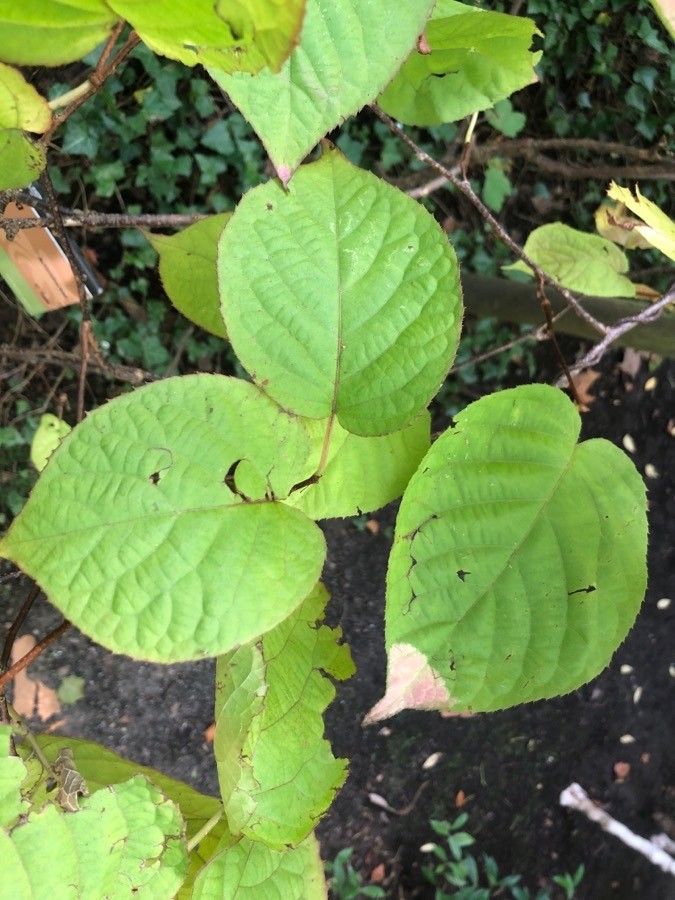
Actinidia melanandra, known as purple kiwi or red kiwi is a fruiting plant in the genus Actinidia, which contains three commercially grown species of kiwifruit. The plant is native to parts of Hubei, Sichuan, and Yunnan provinces of China. The fruit has a fuzzy purple skin with reddish flesh. Although the fruit is edible, is not commercially cultivated, however it is occasionally sold as a landscape plant under the erroneous name Actinidia melandra.
Actinidia melanandra is fairly disease-resistant and typically does not suffer from illnesses. Still, it can be affected by pests and diseases present in its environment. These problems are usually mild. Regarding care, this plant needs moderate maintenance. It should be pruned regularly to retain a neat appearance and support healthy growth. Fertilizing can also encourage flowering. Actinidia melanandra is well suited for anyone with outdoor space, such as a garden or patio, and does not demand extensive care experience. It may need more attention when grown indoors.
How to keep Actinidia Melanandra.
Light
Actinidia melanandra naturally occurs in habitats like forest understories and rocky sites, where it grows in natural shade. It prefers partial sun but can adapt to full sun or full shade, showing its versatility and hardiness.
Temperature
Actinidia melanandra is highly adaptable to a variety of climatic conditions, from very hot summers to cold winters. Nonetheless, it has a specific optimal temperature range for growth. If temperatures become too high, the plant is susceptible to heat and humidity stress, which can cause it to die. In areas where temperatures approach the lower limit of its cold tolerance, it is important to provide insulation to protect the plant.
Fertilizer
The Actinidia melanandra plant needs adequate nutrients to produce fruit optimally. Fertilize in early spring to promote new growth and flower development. Regular fertilization keeps the plant healthy, encourages tastier fruit, and prevents nutrient deficiency problems like yellowing leaves and poor fruit production.
Pruning
Actinidia melanandra grows best with the right care, including strategic pruning in early spring. This involves removing dead wood, thinning out dense areas, and training the shoots. Regular pruning promotes healthy growth and plentiful fruit production, ensuring long-term vitality and increased yields.
Botanical profile.
- Plant Type
- Vine, Herb
- Life Cycle
- Perennial
- Genus
- Actinidia
- Family
- Actinidiaceae
- Hardiness Zone
- 7-10
- Mature Height
- 4.88 m to 7.92 m
- Mature Spread
- 3.05 m to 4.88 m
- Leaf Color
- Green, Dark Green
- Leaf Type
- Deciduous
- Flower Color
- White, Yellow
- Flower Size
- 2.54 cm
- Bloom Time
- Early summer, Mid summer
- Planting Time
- Spring, Summer
- Harvest Time
- Early fall, Mid fall
- Native Area
- China
Other names.